


On this page
A dress is the one garment a petite shopper cannot fully rescue with a hem. Trousers can be shortened and sleeves can be taken up, but the point where the bodice meets the skirt either lands in the right place or it does not. Add the layers of fall and winter, and the margin shrinks even more.
Tights, boots, and coats all cut the body into new segments, and each cut either lengthens the line or breaks it. This guide covers twelve dresses grouped by where they get worn: casual weekends, the office, and holiday gatherings. Each one comes with notes on hem, waist, and layering for frames of 5’4″ and under.

Why Fall and Winter Change the Math for Petite Dresses
In summer, a dress stands alone. In cold months, it shares the stage with at least three other things, and each one affects proportion.
Coat length. A coat that ends well below the dress hem hides the dress and makes the body look shorter. A coat that ends at or just above the hem keeps the lines in step.
Tights and boots. Tights in a color that matches the shoe create a single long column. A contrasting pair breaks the leg at the ankle. Boots work the same way, and the point where the boot top meets the hem matters.
Fabric weight. Heavy knits and thick wool add bulk across the torso. Mid-weight fabrics with some drape suit small frames better than stiff, thick ones.
Sleeves. Winter dresses usually have long sleeves, and sleeves that are even half an inch too long swallow the hand. They also make the shoulder seam sit in the wrong spot on a narrow frame.

What to Check Before Buying
Petite sizing is built for women 5’4″ and under, and it adjusts more than hem length. Eileen Fisher’s petites guide covers how fit is adjusted across the garment.
A simple trick helps when shopping online. Compare the stated shoulder-to-hem length with a dress you already own that ends where you like. That single number says more than a size chart.
Then check three spots:
- Waist: The seam or belt should land at your natural waist, not below it.
- Shoulders: The seam should sit at the edge of the shoulder, not drooping down the arm.
- Neckline: Deep V-necks can plunge too low on a short torso, so a modest V or crew neck is safer.
Four Casual Dresses for Weekends and Errands
Casual dresses carry the same rules as dressier ones, only with softer fabrics. The cozy winter outfits guide has more on keeping comfortable clothing looking intentional.
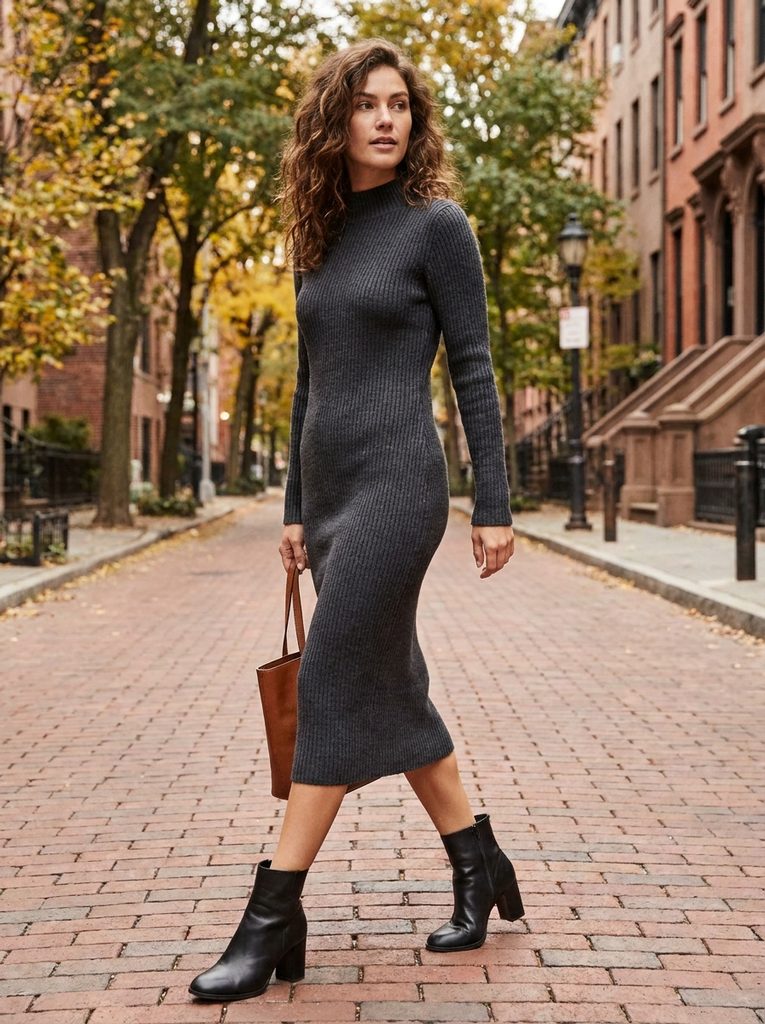
1. The Ribbed Knit Sweater Dress
A fitted rib in a mock or crew neck, ending at the knee. Wear it with ankle boots, and add a thin belt if the waist needs defining. The vertical ribs lengthen the body, which a flat knit does not do as well.
Choose a fine or medium gauge rather than a chunky one. Heavy knits add width at the hips, and the dress should skim, not cling.
2. The Corduroy Pinafore Over a Turtleneck
A short corduroy pinafore in rust, forest, or camel layered over a fitted turtleneck, with tights and loafers. The pinafore ends above the knee, and the fitted layer underneath keeps the torso neat.
Fine-wale corduroy looks smoother on a small frame than wide-wale. The straps should sit on the shoulder without sliding.

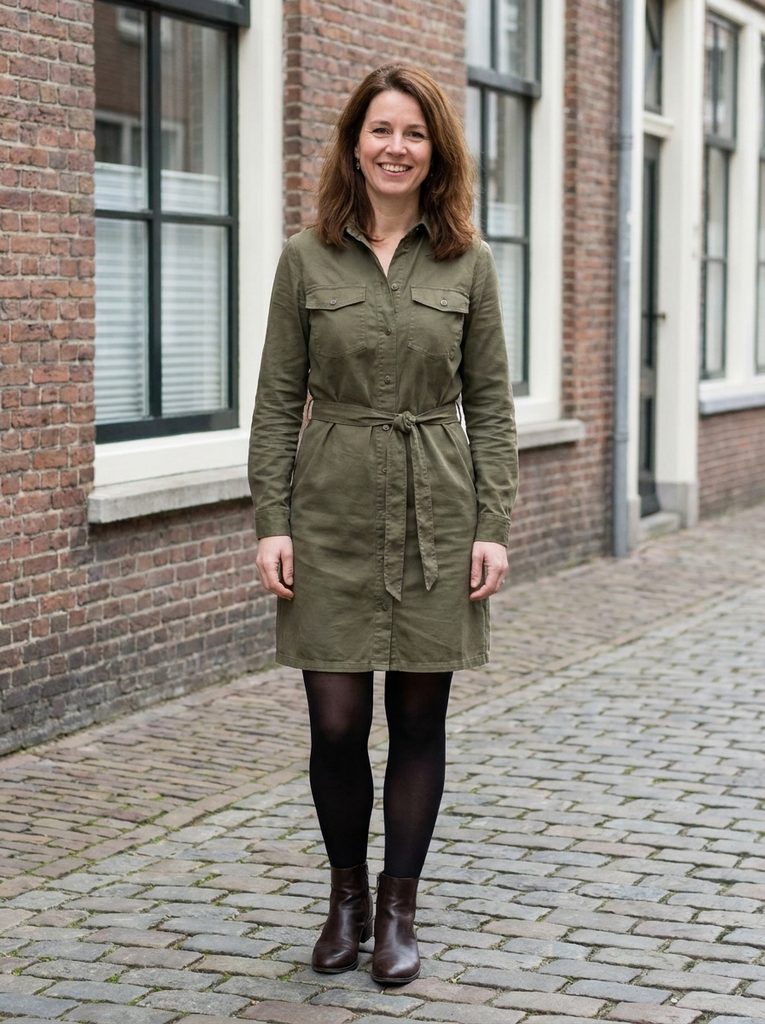
3. The Belted Twill or Flannel Shirt Dress
A shirt dress in twill or soft flannel, belted at the natural waist, with opaque tights and ankle boots. Roll the sleeves to three-quarter length for a neater arm line.
The belt matters, since a shirt dress without one tends to hang straight and hide the waist. Keep the hem at the knee or just above.
4. The Jersey Wrap With Tall Boots
A long-sleeve jersey wrap dress ending just above the knee, with tall boots that cover the gap. A wrap defines the waist and the V-neckline lengthens the neck.
The guide to knee-high boot outfits for every hemline length shows how boot height and hem meet. Matching the boot to the tights keeps the line unbroken.

Four Dresses for the Office
Work dresses need to hold their shape through a day of sitting, walking, and carrying a bag. The office outfit formulas guide covers coordinated outfits that stretch across a week.
5. The Wool-Blend Sheath
- Wear it with: A cropped blazer or fine cardigan, sheer or opaque tights, and pointed pumps.
- Check: A sheath should end at the knee, with darts that sit at the bust and waist of a shorter torso. Wool blends hold their shape better than pure knits.

6. The Ponte A-Line
- Wear it with: Opaque tights in a color that matches the shoes, a thin belt, and a structured bag.
- Check: Ponte is thick enough to hide lines but flexible enough to move. The skirt should flare gently from the waist and stop at the knee.

7. The Long-Sleeve Crepe Wrap
- Wear it with: Kitten heels or pointed flats, small earrings, and a long coat in a neutral tone.
- Check: The wrap should close at the natural waist, and the sleeves should end at the wrist bone. Matte crepe hangs without clinging.

8. The Knit-Top, Pleated-Skirt Dress
- Wear it with: Ankle boots or loafers, tights, and a long cardigan if the office is cold.
- Check: This style looks like a sweater and skirt in one piece. The pleats should be fine and begin at the waist, since wide pleats add volume at the hips.

Four Dresses for Holiday Gatherings
Holiday dressing leans toward richer fabrics and deeper colors. For more on planning a full evening, the Christmas Eve outfit ideas cover coats, shoes, and layering.
9. The Stretch Velvet Wrap in Bottle Green
A wrap dress in stretch velvet, ending at the knee, with long sleeves and a V-neck. Add black tights and block-heel pumps. Deep green looks rich under warm indoor lighting.
Stretch velvet moves better than pure velvet and resists crushing when you sit. Keep jewelry to small earrings so the fabric carries the look.
Swap: Burgundy or midnight blue works the same way.

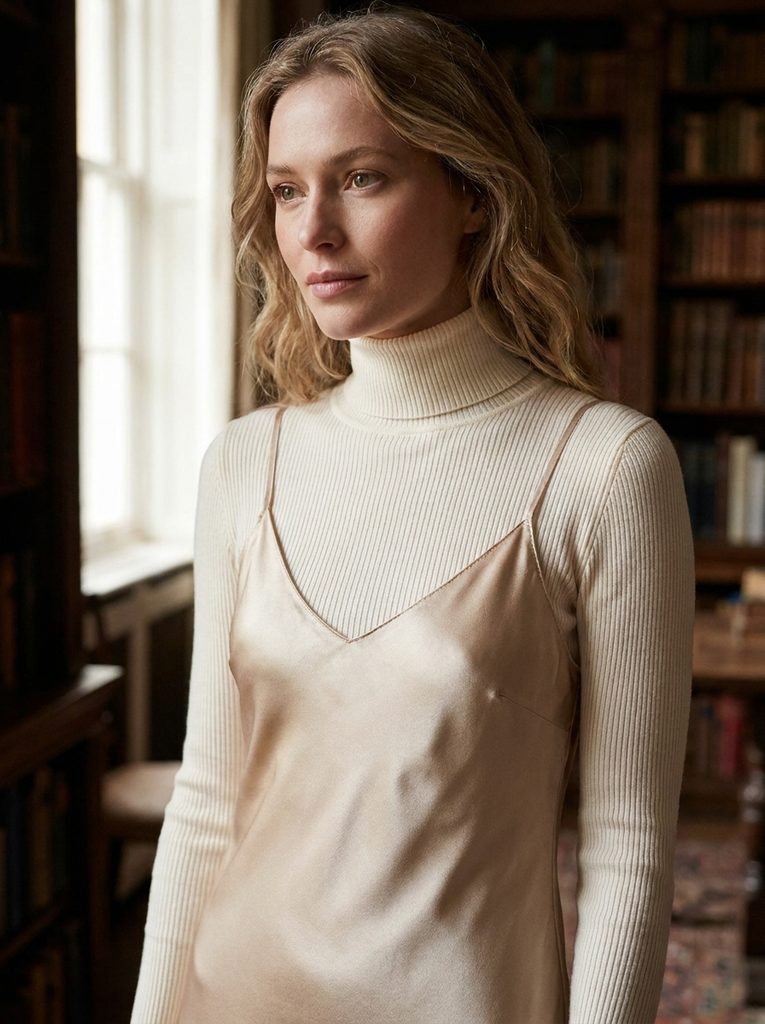
10. The Satin Slip Over a Fine Turtleneck
A knee-length satin slip dress layered over a thin, fitted turtleneck in a matching or neutral tone. Add tights and ankle boots or pumps. The layering makes a summer piece work for winter.
Choose a heavier satin with a matte face, since it hangs better and hides creases. The turtleneck should be fitted so it does not bunch under the straps.
Swap: Replace the turtleneck with a fitted long-sleeve tee for a more casual evening.
11. The Jacquard Fit-and-Flare
A fit-and-flare dress in jacquard or brocade with a subtle pattern, ending at or just above the knee. Add pointed pumps and sheer tights. The structured fabric holds the shape of the skirt.
Choose a small-scale pattern, which suits a short frame better than a large motif. The waist should sit high with a clean seam.
Swap: A solid tonal jacquard looks quieter if you prefer less pattern.

12. The Lurex Knit Sweater Dress
A fine knit dress with a thread of metallic lurex, in black, navy, or deep plum, ending at the knee. Wear it with sheer or opaque tights and heeled boots.
The shimmer appears only when the light hits it, so it reads as festive without sequins. A fine gauge keeps the silhouette sleek.
Swap: Pair with flat boots for daytime gatherings and heels for the evening.

Tights, Boots, and Coats That Keep the Line Long
Once the dress is chosen, three small choices complete the outfit.
Tights should match your shoes or sit close to your dress color. Matching tones create a long line from hem to toe, while strong contrast cuts the leg at the ankle. Opaque tights suit colder days, and sheer ones suit warmer rooms.
Boots work best when the top meets the hem or sits just below it. A gap of bare skin or a different color of tights between boot and hem splits the leg into pieces.
Coats should end at or just below the dress hem. A long coat with a belt keeps the waist visible, while a very long, loose one overwhelms the frame. Scarves should be light enough to tuck inside the coat.

Alterations Worth Paying For
Even petite sizing rarely fits perfectly. A few small adjustments make a large difference:
- Hem: Shortening a dress by an inch can fix the proportion in minutes.
- Sleeves: Taking up sleeves at the cuff keeps the shoulder seam in place.
- Straps: Shortening straps lifts the bodice to the right height.
- Waist: A small dart at the back can bring the waist seam to the right spot.
A good dress rarely needs more than one of these, and a tailor can usually do it quickly. Start with a dress that already fits the shoulders, since that is the hardest part to change, and let the rest follow.

Ella is a fashion and beauty writer who shares inspiring ideas about hairstyles, nail designs, wedding outfits, and seasonal fashion trends. She loves discovering fresh styles and creating…
View Author Profile →





2 Comments