
On this page
- What Fabric Actually Controls in a Wedding Dress
- Silk and the Family of Fabrics Made From It
- Satin: A Weave, Not a Fiber
- Lace: A Detail That Behaves Like a Fabric
- Tulle: More Than Just Skirt Volume
- Crepe: The Quiet Favorite
- Taffeta and the Fabrics That Hold Their Shape
- Velvet and Cooler-Season Weddings
- How Fabric Weight Changes the Way a Dress Actually Wears
- Fabric and the Season of the Wedding
- How Fabric Reads in Photographs
- Blended and Synthetic Fabrics Worth Knowing
- Questions Worth Asking Before You Commit to a Fabric
- Bringing Fabric Into the Rest of the Bridal Look
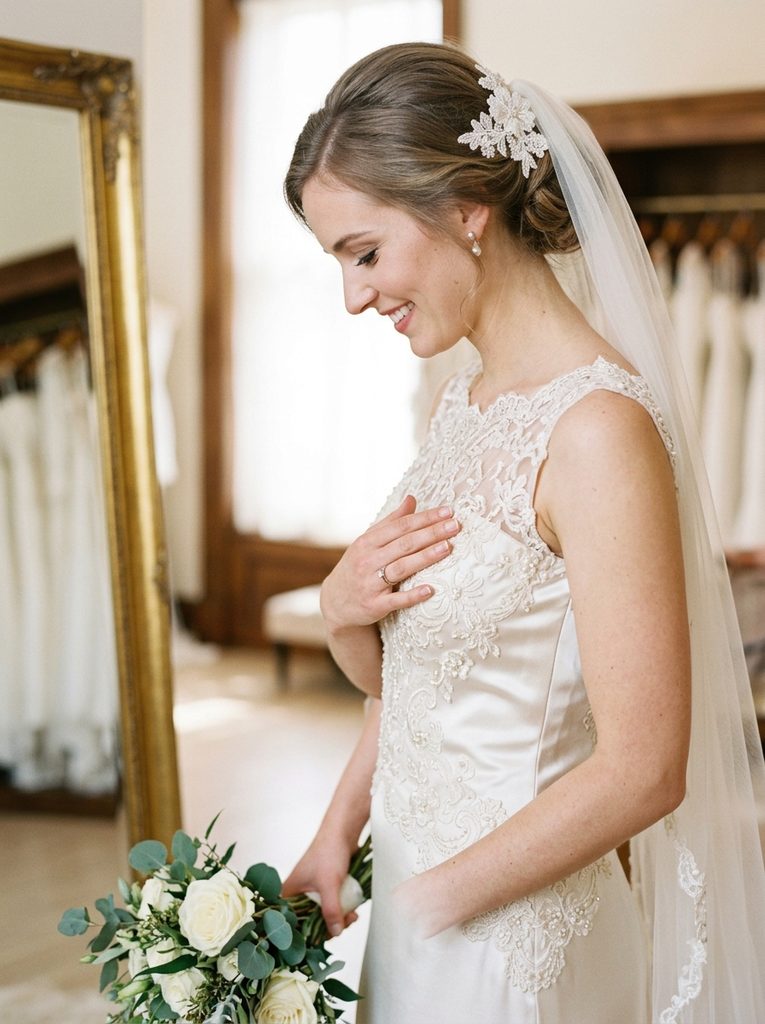
Most people shopping for a wedding dress start with silhouette. Ball gown or sheath, strapless or sleeved, the shape gets decided first and the fabric gets treated almost like an afterthought, something the seamstress or the boutique will sort out later. Then the first sample gets pulled off the rack, and it becomes obvious that fabric was never really a side detail at all.
Two dresses can share the exact same cut and look nothing alike once fabric enters the picture. One skims the body and pools softly on the floor. The other holds its shape like armor and rustles with every step. Neither is better. They are simply doing different jobs, and knowing what those jobs are makes trying on dresses a lot less confusing.
What Fabric Actually Controls in a Wedding Dress
Fabric decides four things at once: how a dress moves, how it photographs, how comfortable it feels over a long day, and roughly what it costs. A heavy structured fabric can hold a dramatic skirt shape without a single layer of tulle underneath, while a soft, fluid one needs help from boning or lining to keep any shape at all.
Weight also affects heat. A bride getting married outdoors in July has very different needs than one getting married in a stone chapel in December, and the fabric under the lace or beading matters more here than most people expect walking into a first appointment.
None of this requires memorizing textile terminology before a fitting. It just helps to know what a name like “mikado” or “chiffon” is actually describing, since bridal salons tend to use these words as though everyone already knows them.
Silk and the Family of Fabrics Made From It
Silk is a natural fiber, not a single fabric, which is part of why “silk dress” can mean several very different things depending on how that fiber gets woven.
Silk mikado is heavy, structured, and slightly stiff to the touch, closer to card stock than to a scarf. It holds sculptural shapes on its own, which is why it shows up so often in modern ball gowns and dresses with clean, architectural lines. It does not drape or cling, and it can feel warm to wear in summer heat because of its density.
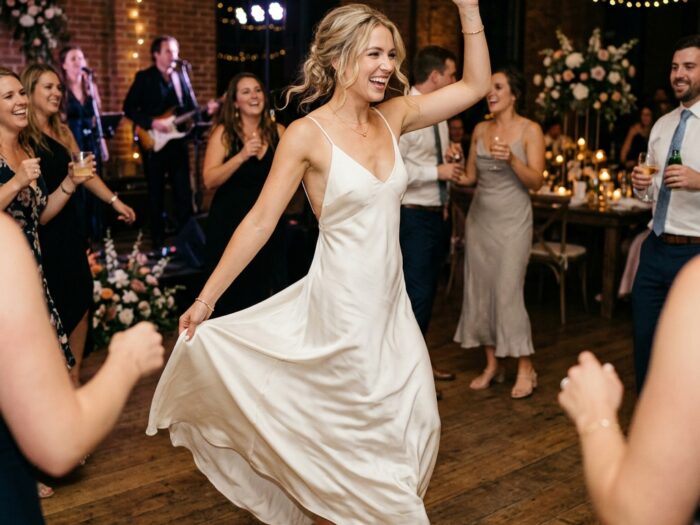
Silk charmeuse sits at the opposite end. It has a glossy front and a matte back, falls close to the body, and moves with a liquid quality that other fabrics rarely match. It is a common choice for slip-style or bias-cut gowns, though its smooth surface can also highlight any lumps or seams underneath, so it usually needs careful, well-fitted lining.
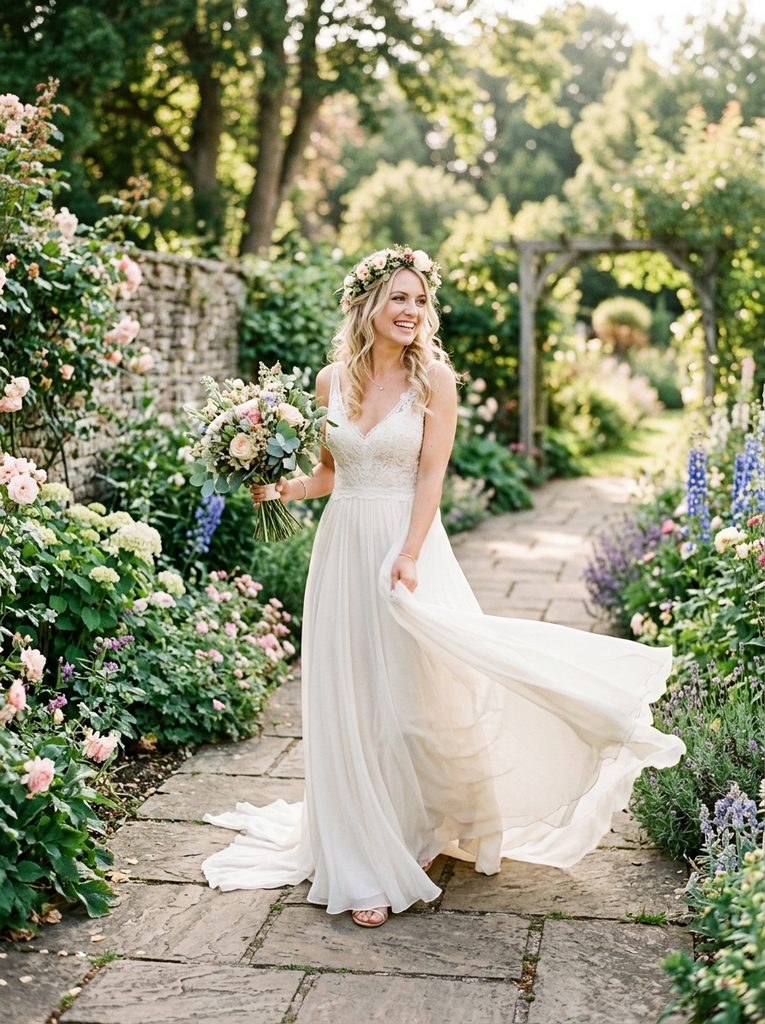
Silk chiffon is sheer, lightweight, and almost weightless in the hand. It is rarely used for an entire bodice on its own but appears constantly as an overlay, a sleeve, or a flowing skirt layer over a sturdier lining. It moves easily in wind, which makes it popular for outdoor and beach ceremonies.
Silk organza is crisp and slightly transparent, with more body than chiffon but far less weight than mikado. It holds a gentle structure in ruffles, full skirts, and layered details without adding real bulk, and it has a subtle sheen rather than a strong shine.
Silk shantung and dupioni both have a slightly rough, uneven texture created by irregularities in the raw silk thread. This texture, sometimes called slub, gives the fabric a handmade, slightly matte quality and a distinctive dry rustle when it moves, which some brides love and others find too crisp for their taste.
Genuine silk in any of these forms tends to sit at the higher end of a bridal budget, partly because of the fiber itself and partly because of the skill needed to sew it well.
Satin: A Weave, Not a Fiber
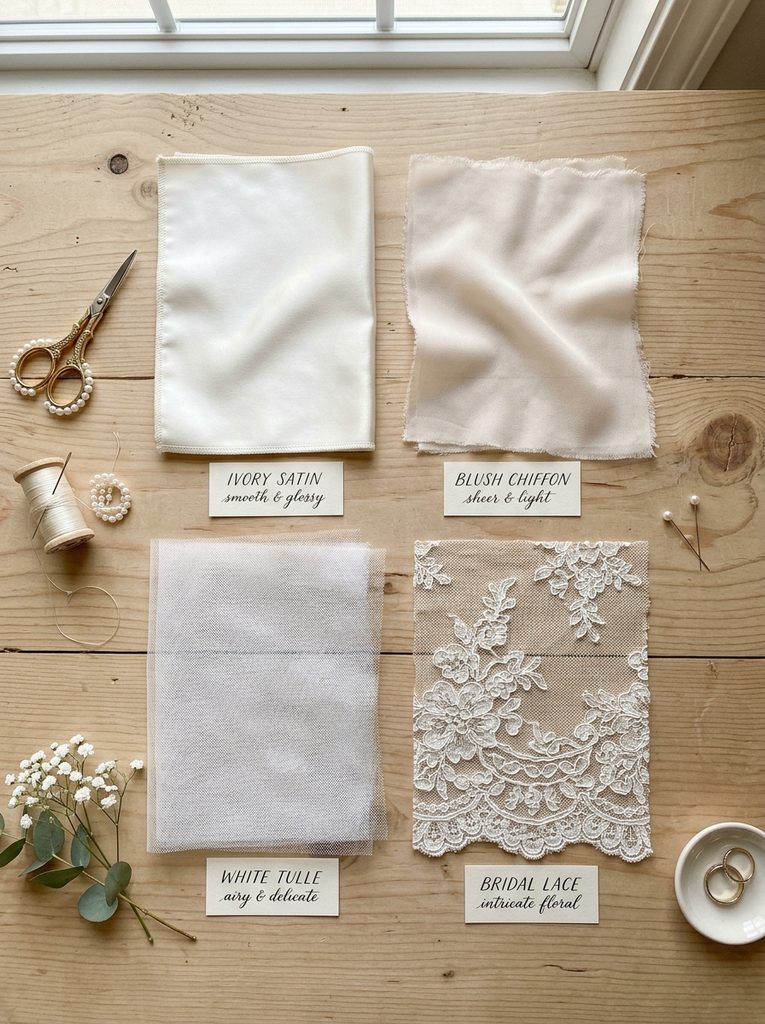
This is one of the more common points of confusion in a bridal appointment. Satin is not a type of fiber at all. It is a weave structure, which means the word “satin” tells you almost nothing about what the fabric is actually made from until someone specifies further.
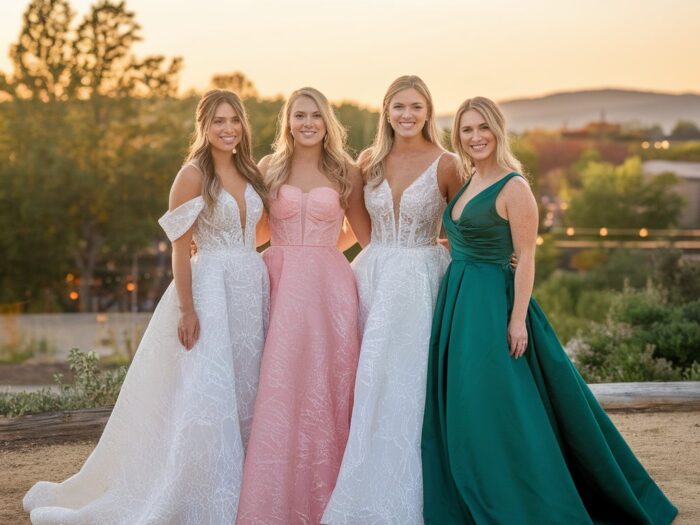
Silk satin exists, and it behaves closer to charmeuse than most people expect, smooth and fluid with a soft, low-key shine. Far more common in bridal is polyester satin or a poly-blend duchess satin, which mimics the same glossy surface at a lower cost and with more structure. Duchess satin in particular has become one of the most requested bridal fabrics of the past several years, since it holds a clean, sculpted shape while still looking rich in photographs.
The practical difference between silk and synthetic satin comes down to hand feel and breathability more than appearance. Synthetic satin can trap more heat against the skin over a long day, while silk satin breathes more easily, though it also creases more visibly and needs gentler handling before the ceremony.
Lace: A Detail That Behaves Like a Fabric
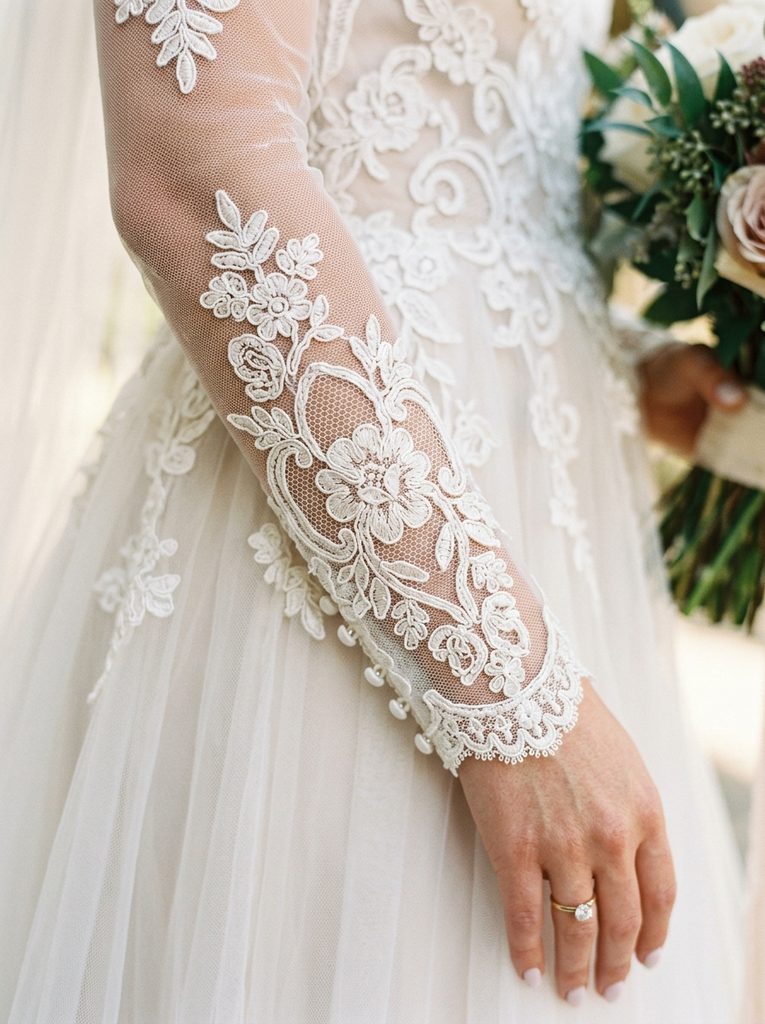
Lace rarely stands entirely on its own in a wedding dress. It usually sits over a structural lining, which means the lining underneath matters almost as much as the lace pattern itself when it comes to how the finished dress actually feels.
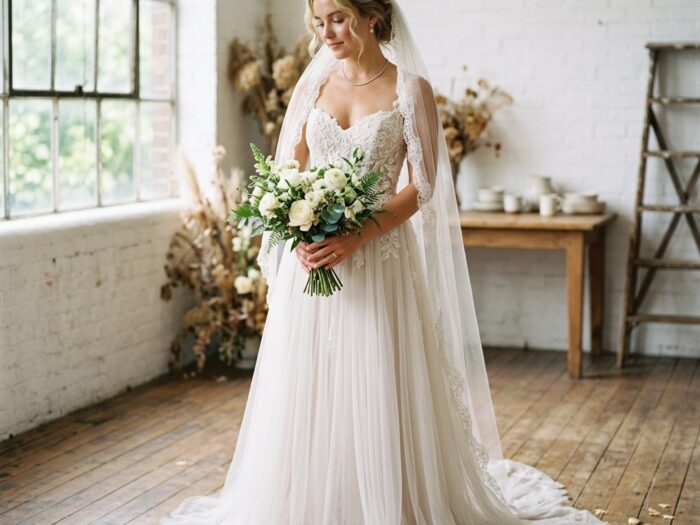
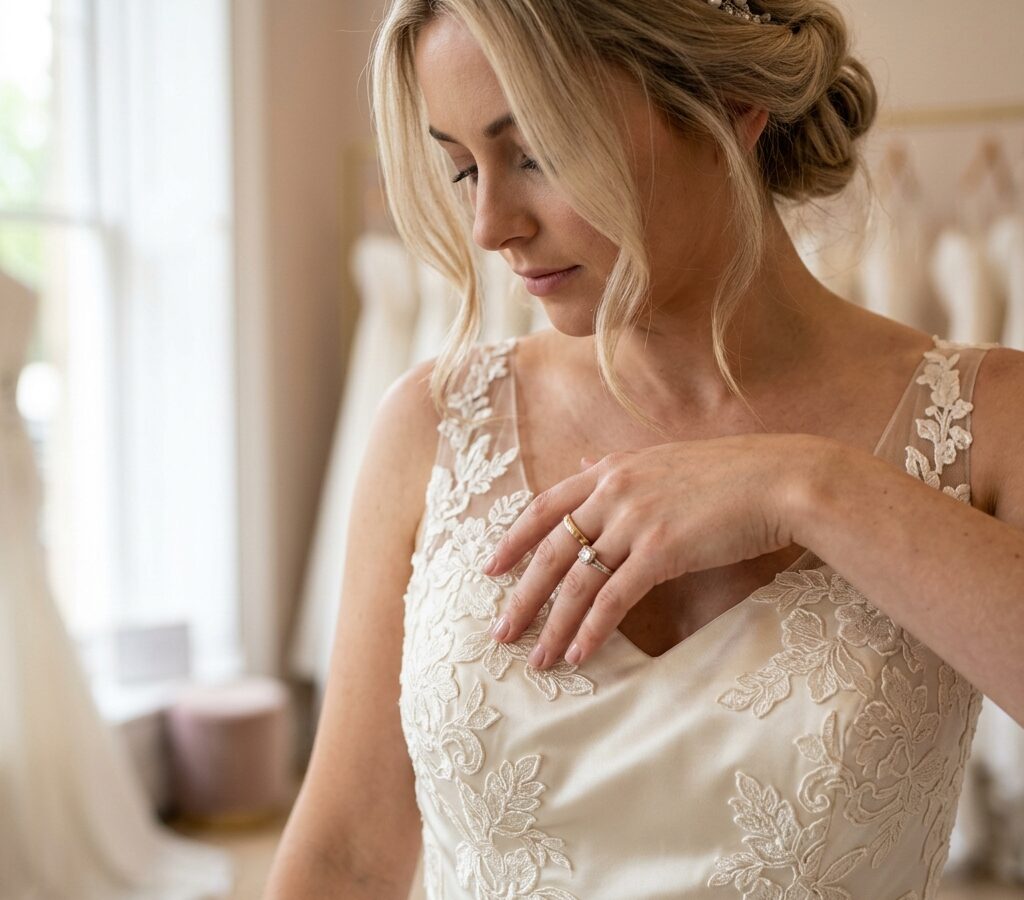
Chantilly lace is fine, delicate, and often scalloped along the edges, with an open, airy pattern that reads as soft and romantic rather than heavy. Alençon lace is denser and more raised, often outlined with a cord that gives the motifs a slightly three-dimensional texture you can feel under a fingertip. Guipure lace has no sheer mesh background at all, since the motifs connect directly to one another, which makes it bolder, heavier, and better suited to structured silhouettes than to soft, flowing ones.
Beaded and appliqued lace adds weight on top of whatever the base lace already carries, which is worth asking about directly if a full-coverage lace bodice is part of the plan. A heavily beaded lace overlay can add noticeable weight across the shoulders and back by the end of a long reception.
Tulle: More Than Just Skirt Volume
Tulle gets treated as background material, the layer under a skirt that creates fullness without anyone paying much attention to it directly, but it comes in more variations than that reputation suggests.
Soft English net tulle is fine, almost weightless, and creates gentle volume without stiffness. Illusion tulle is even finer and nearly invisible against the skin, which is why it shows up so often in illusion necklines and sleeves, letting a dress look sheer while a structural layer underneath does the real supporting work. Structured tulle holds more shape and adds visible fullness to a skirt, which matters for anyone picturing a dramatic ball gown silhouette rather than a soft, fluid one.
Tulle also interacts directly with neckline choices, since a sheer illusion panel only reads as intended depending on what sits underneath it. Anyone drawn to a sheer bodice detail is usually also weighing neckline shape at the same time, since the two decisions tend to get made together rather than separately.
Crepe: The Quiet Favorite
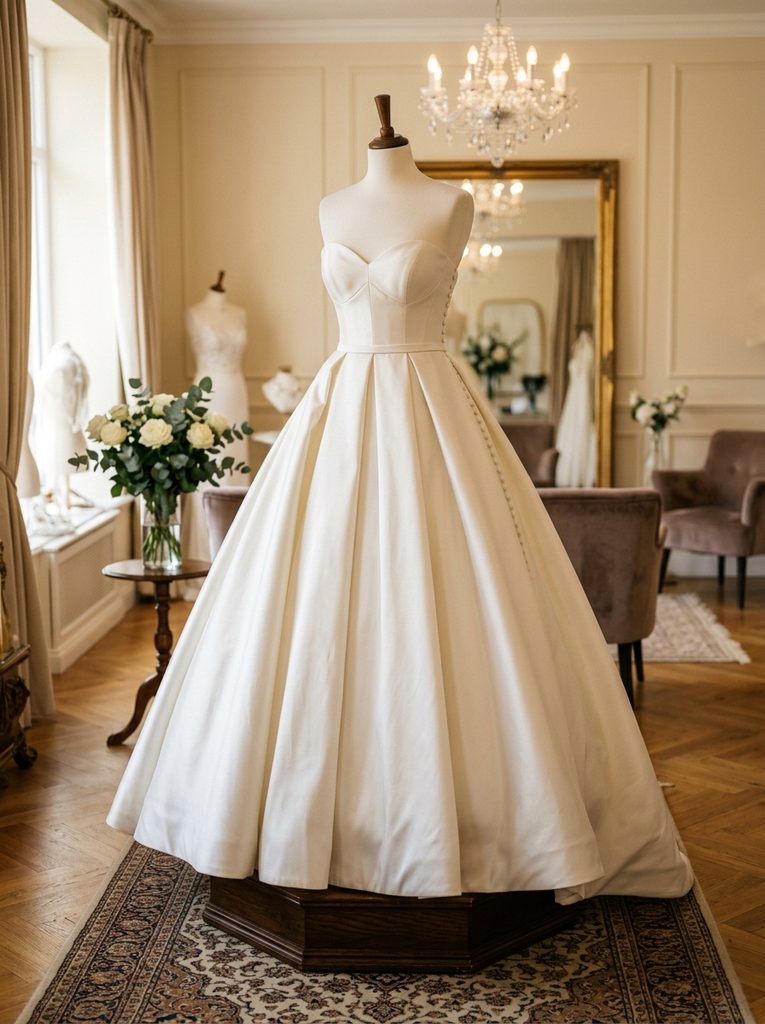
Crepe has had a steady rise in bridal fashion over the past several years, mostly because it solves a problem that satin and mikado cannot. It drapes close to the body like charmeuse, but without the high shine, giving it a matte, almost chalky surface that photographs softly rather than reflecting light back at the camera.
Crepe also moves without clinging as tightly as jersey or a bias-cut charmeuse would, which makes it more forgiving through the midsection while still following the body’s natural line. It has become a common choice for minimalist bridal styles, second-look reception dresses, and any ceremony where a bride wants movement without the fuller volume of tulle or organza underneath.
Taffeta and the Fabrics That Hold Their Shape
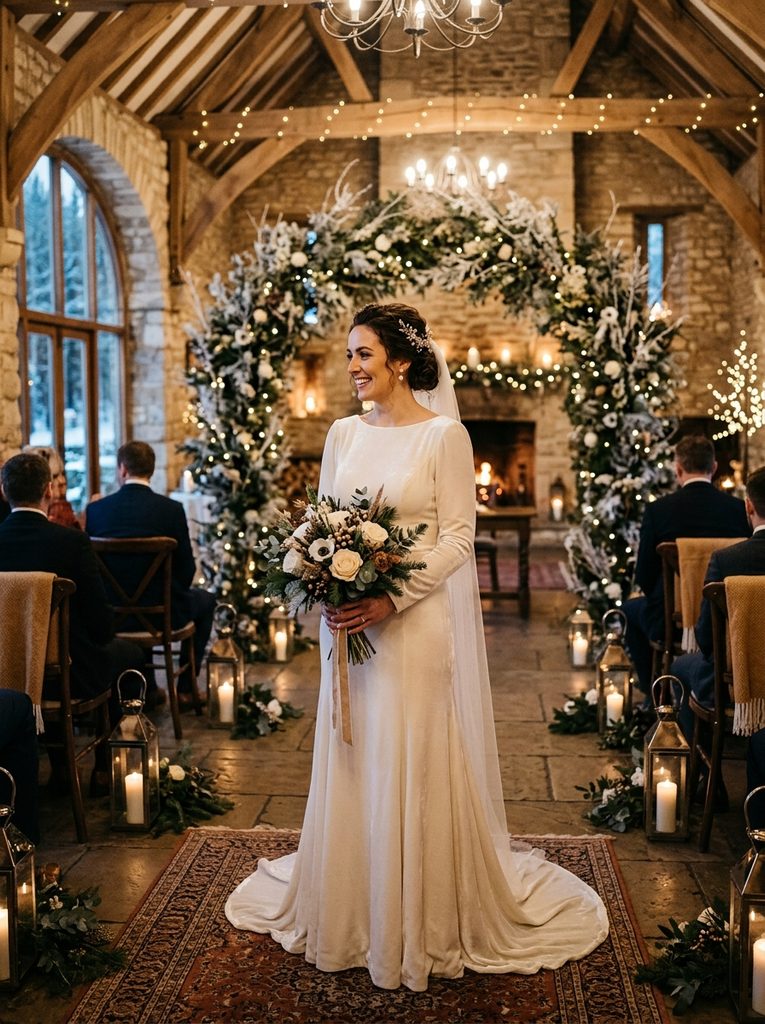
Taffeta is crisp, smooth, and slightly stiff, with a distinct rustle that some brides find charming and others find distracting during a quiet ceremony. It holds structured shapes exceptionally well, particularly in full skirts, bows, and sculptural details, without needing as much internal support as a softer fabric would.
Because taffeta does not stretch or drape, it shows every seam and dart clearly, which means a well-fitted taffeta gown depends heavily on precise tailoring. A slightly imperfect fit is far more visible in taffeta than it would be in a forgiving fabric like crepe or chiffon.
Velvet and Cooler-Season Weddings
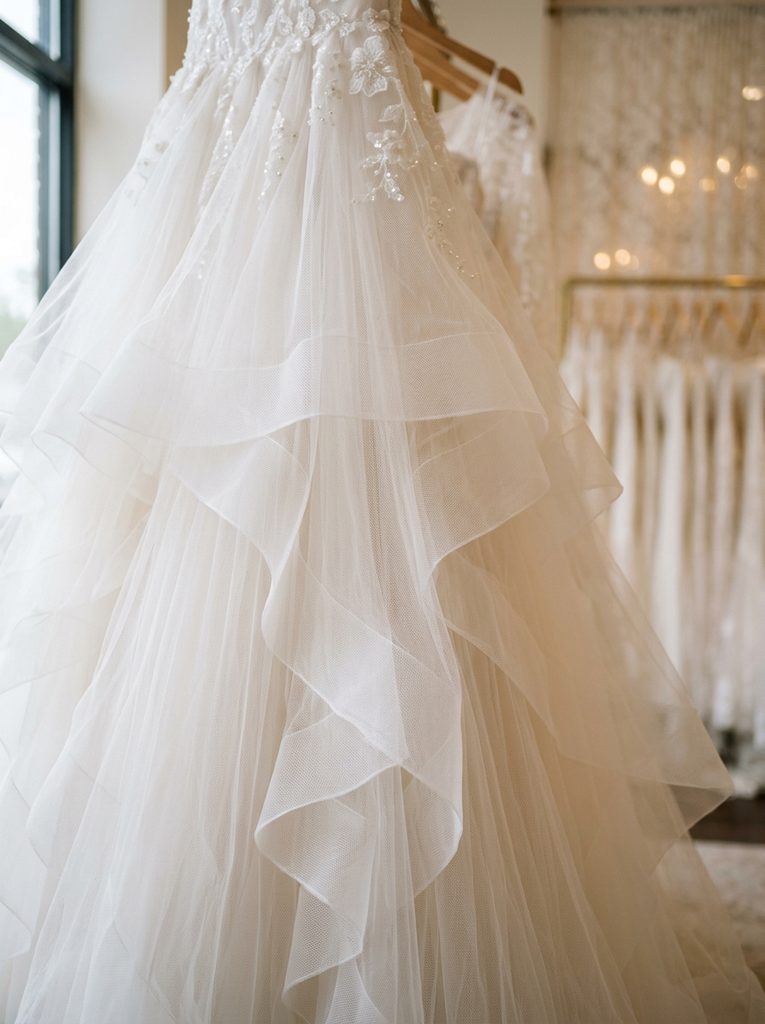
Velvet has moved from a niche choice into a genuine bridal option, particularly for fall and winter ceremonies. Its dense, soft pile gives it real warmth and a rich, deep color saturation that other fabrics cannot quite replicate, since light absorbs into velvet rather than bouncing off a shiny surface.
It is heavier than nearly every other fabric on this list, which makes it a poor fit for a hot outdoor wedding but a natural choice for an evening ceremony in a cooler month. Velvet also photographs with a moodier, softer quality under warm indoor lighting, which is part of why it has become popular for winter bridal editorials and real weddings alike.
How Fabric Weight Changes the Way a Dress Actually Wears
Weight is easy to overlook while looking at a fabric swatch, but it becomes obvious after several hours in the dress. A heavy mikado ball gown holds its shape beautifully in photographs, but it can feel substantial by the end of a reception, particularly around the shoulders if the bodice carries any of that weight without a supportive foundation underneath.
Lighter fabrics like chiffon and soft tulle feel almost effortless by comparison, though they generally need more layering to achieve the same visual fullness a single layer of taffeta or mikado could provide on its own. Neither approach is wrong, but it is worth trying on a dress and actually sitting, walking, and raising your arms in it, rather than judging comfort from a few minutes standing in front of a mirror.
Fabric and the Season of the Wedding
Climate plays a bigger role in fabric choice than most people plan for at the start of the process. A dense, structured fabric that looks stunning in a bridal magazine can become genuinely uncomfortable during an outdoor ceremony in high summer heat, while a lightweight chiffon or organza gown might feel thin and cold at an evening ceremony in early winter.
- Warm weather and outdoor ceremonies tend to suit chiffon, lightweight crepe, and soft tulle, all of which allow more airflow against the skin.
- Cooler seasons and evening ceremonies pair well with mikado, taffeta, or velvet, which add warmth along with visual weight.
- Beach and destination weddings generally favor the lightest options available, since humidity and movement both become more noticeable in a heavier fabric.
- Indoor, climate-controlled venues offer the most flexibility, since temperature is less of a limiting factor than at an uncovered outdoor site.
How Fabric Reads in Photographs
Photographers often bring up fabric before brides think to ask about it themselves, since certain textures behave very differently under flash and natural light. High-shine fabrics like satin and charmeuse can catch harsh light and occasionally overexpose in a photo, particularly under direct flash, while matte fabrics like crepe and mikado tend to hold detail more evenly across a range of lighting conditions.
Textured fabrics, including shantung, guipure lace, and structured tulle, tend to photograph with more visible depth and dimension than a completely flat, smooth fabric would. This becomes especially noticeable in black-and-white wedding photography, where texture often does more visual work than color ever could.
Blended and Synthetic Fabrics Worth Knowing
Not every bridal fabric needs to be a natural fiber to look and perform well, and budget plays a real role in this part of the decision for most brides. Polyester satin, poly-blend chiffon, and synthetic tulle have all improved significantly in quality over the past decade, and a well-made synthetic gown can be difficult to distinguish from its silk counterpart in photographs.
The trade-offs tend to show up in touch and temperature rather than appearance. Synthetic fabrics generally retain more heat, wrinkle differently than natural fibers, and can feel slightly less breathable over a full day of wear. For a shorter ceremony or a cooler season, this difference is often minor enough that it does not affect the overall experience much at all.
Questions Worth Asking Before You Commit to a Fabric
A handful of practical questions tend to matter more once a dress is actually being worn than they do while flipping through a lookbook.
- How does this fabric feel after sitting for twenty minutes, not just standing?
- Does the bodice fabric need a separate lining, and how does that change the overall weight?
- How does this specific fabric handle wrinkles after being packed or transported to a venue?
- Will this fabric need pressing again on the wedding day, and who is responsible for that step?
- How does the fabric respond to the venue’s typical temperature, both indoors and out?
Asking a stylist or seamstress these questions directly during a fitting tends to reveal far more than reading a fabric description online ever could, since the same fabric name can be manufactured to different weights depending on the designer.
Bringing Fabric Into the Rest of the Bridal Look
Fabric choice rarely stays isolated from the rest of a wedding-day look. A heavier, structured fabric like mikado tends to pair with more minimal hair and makeup, letting the dress carry the visual weight on its own, while a softer, flowing fabric like chiffon often works well alongside more romantic, undone bridal hairstyles.
Fabric finish also connects to some of the other decisions made earlier in the planning process, including neckline and overall silhouette, both of which behave differently depending on what they are made from. For anyone still working through those choices alongside fabric, the wider bridal dresses collection covers those related details in more depth.
There is no single correct fabric for every bride, venue, or season. A gown that feels stiff and unfamiliar on one person can feel like exactly the right amount of structure on another, and the only real way to know is to touch the fabric, put it on, and move around in it before deciding anything else.

Ella is a fashion and beauty writer who shares inspiring ideas about hairstyles, nail designs, wedding outfits, and seasonal fashion trends. She loves discovering fresh styles and creating…
View Author Profile →