
On this page
- Why Neckline Matters More Than Almost Any Other Detail
- The Major Neckline Styles, One by One
- Matching Necklines to General Body Shape
- Necklines and Bust Size, Considered Separately
- Necklines and Silhouette: How They Work Together
- Necklines by Venue and Season
- Necklines for Petite and Taller Frames
- Common Mistakes to Avoid When Choosing a Neckline
- What to Consider Beyond Body Shape
- A Simple Way to Narrow Down Your Options
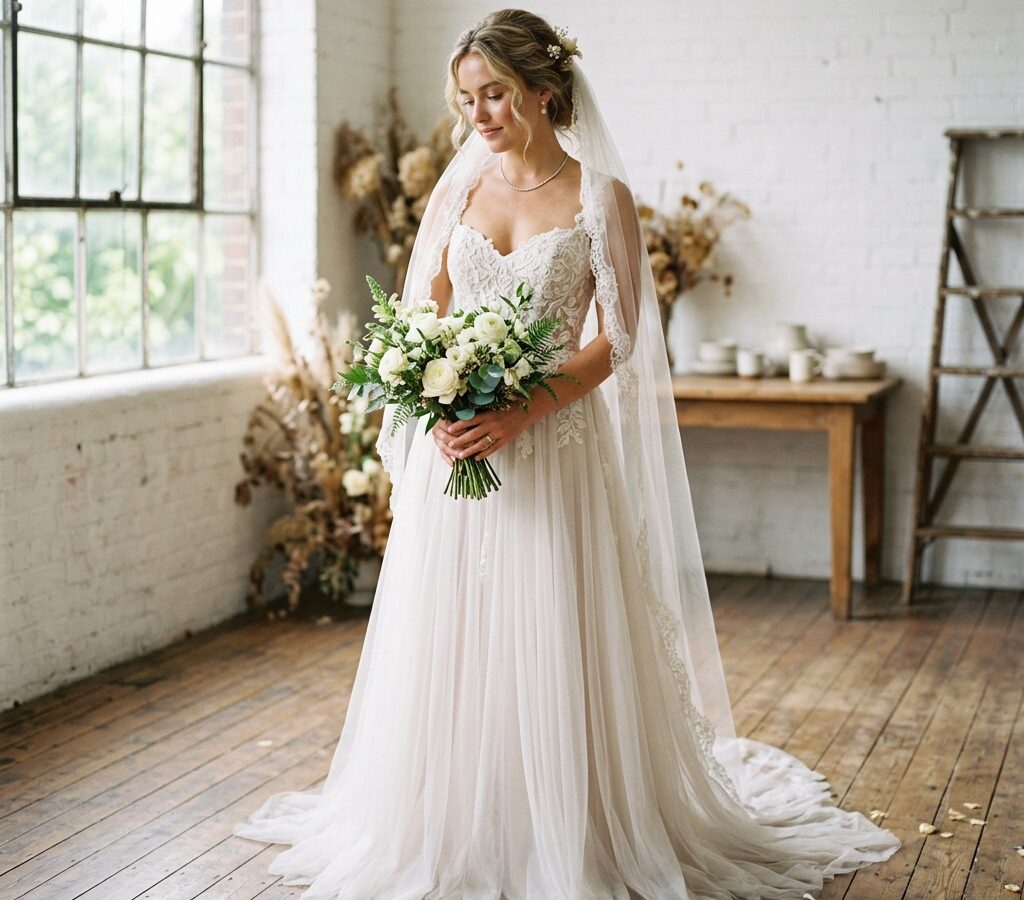
Out of every decision that goes into choosing a wedding dress, neckline is one of the first things people notice, both in person and in photographs. It frames the face, draws the eye toward or away from certain proportions, and sets the overall mood of the gown before anyone even registers the skirt or the fabric.
With so many neckline names floating around, sweetheart, illusion, bateau, portrait, it is easy to feel unsure where to even start. This guide breaks down the major neckline styles one at a time, then looks at how different body proportions tend to interact with each shape.
Why Neckline Matters More Than Almost Any Other Detail
A wedding dress has a lot of moving parts, silhouette, fabric, train length, embellishment, but the neckline sits closest to the face and collarbone, which makes it the detail most directly tied to how the whole dress reads in a photo.
A neckline can visually widen or narrow the shoulders, lengthen or shorten the appearance of the torso, and draw attention up toward the face or down toward the bodice. Two dresses with an identical skirt can look completely different depending on what happens above the waist, which is part of why so many bridal stylists start the fitting conversation with neckline before anything else.
The Major Neckline Styles, One by One
Sweetheart
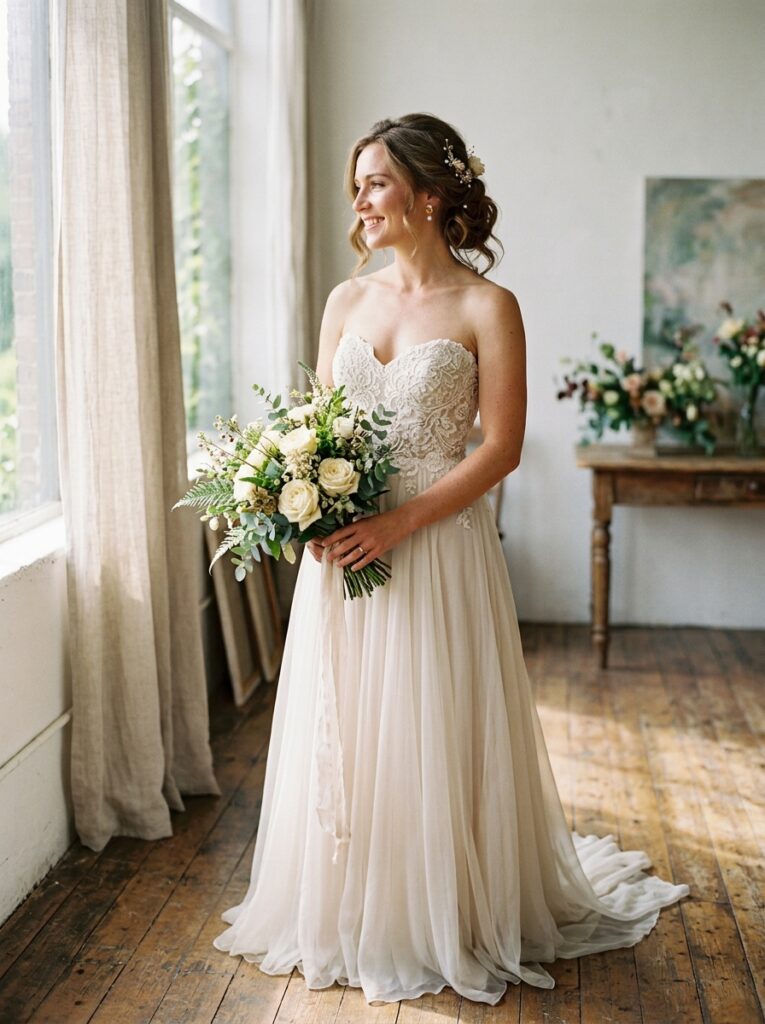
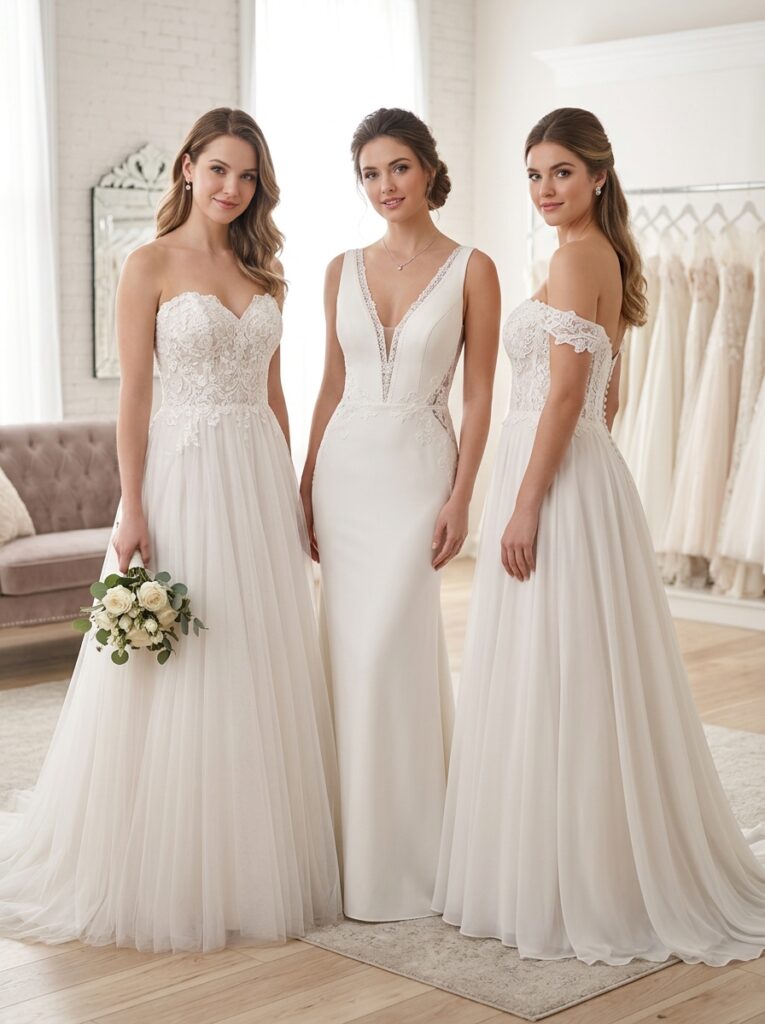
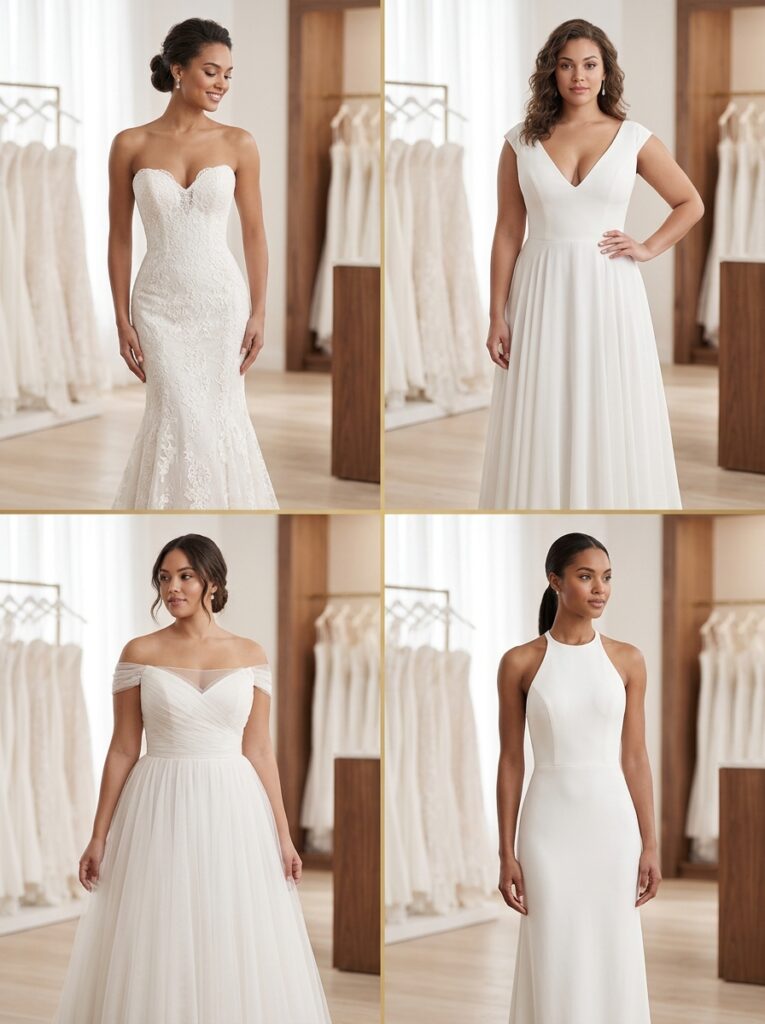
The sweetheart neckline curves inward at the center and rises at the sides, echoing the top of a heart shape. It has remained one of the most requested bridal necklines for decades because the soft curve suits a wide range of bust sizes and pairs easily with ball gown, A-line, and fit-and-flare skirts. In 2026, designers are pairing the classic shape with sheer corset panels or detachable sleeves, which lets the same neckline shift between romantic and modern depending on styling.
V-Neck
A V-neckline draws a straight diagonal line from the shoulders down toward the center of the chest, which elongates the neck and creates a vertical line down the torso. This makes it a common recommendation for anyone hoping to lengthen their overall silhouette. Depth varies widely, from a subtle dip to a deep plunge, so the same basic shape can read as modest or dramatic depending on how far it extends.
Off-the-Shoulder and Bardot
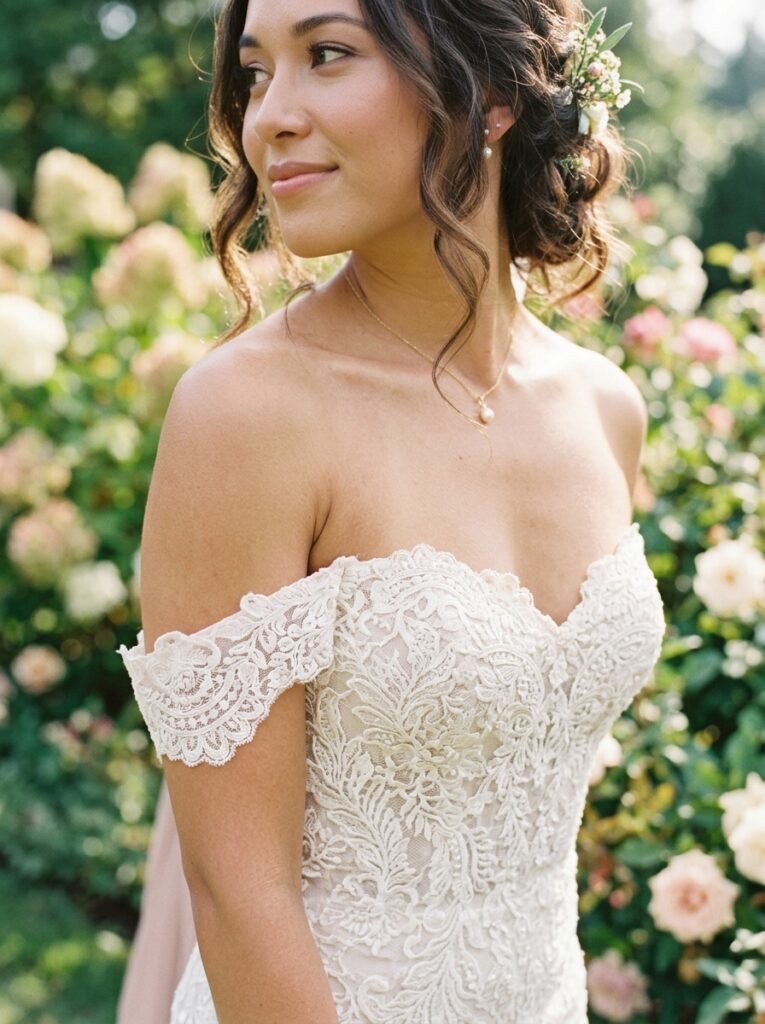
Off-the-shoulder necklines sit just below the shoulder, leaving the collarbone and upper arms exposed while the fabric rests across the top of the arms. This creates a horizontal line at the shoulder, which tends to soften a broader shoulder line and adds romance without needing an elaborate bodice. The style has become especially popular in 2026 bridal collections, often referred to as a Bardot neckline after its resemblance to mid-century French style icons.
Halter
A halter neckline wraps around the back of the neck, leaving the shoulders bare while providing more support at the bust than a strapless style. Because the fabric meets high at the neck, it tends to visually widen the upper chest area, which suits some proportions more than others depending on shoulder width.
Square
A square neckline forms a straight horizontal line across the chest that meets straight vertical lines at each side, creating a clean, structured shape. This neckline provides more built-in support than a soft curve, which makes it a practical option for anyone who wants a strapless or thin-strap silhouette without worrying about the bodice shifting throughout the day.
Scoop
A scoop neckline curves in a wide, shallow arc from shoulder to shoulder, sitting lower than a jewel neckline but without the sharp point of a sweetheart or V-neck. It reads as soft and a little vintage, and it tends to draw attention toward the collarbone and face rather than the bust itself.
Bateau, or Boat Neck
A bateau neckline runs in a nearly straight line from shoulder to shoulder, sitting close to the collarbone at both the front and back. This creates a wide horizontal line across the top of the chest, which visually broadens the shoulder area. It pairs particularly well with a fitted sheath or column silhouette, where the structure at the top balances a narrow skirt.
Illusion
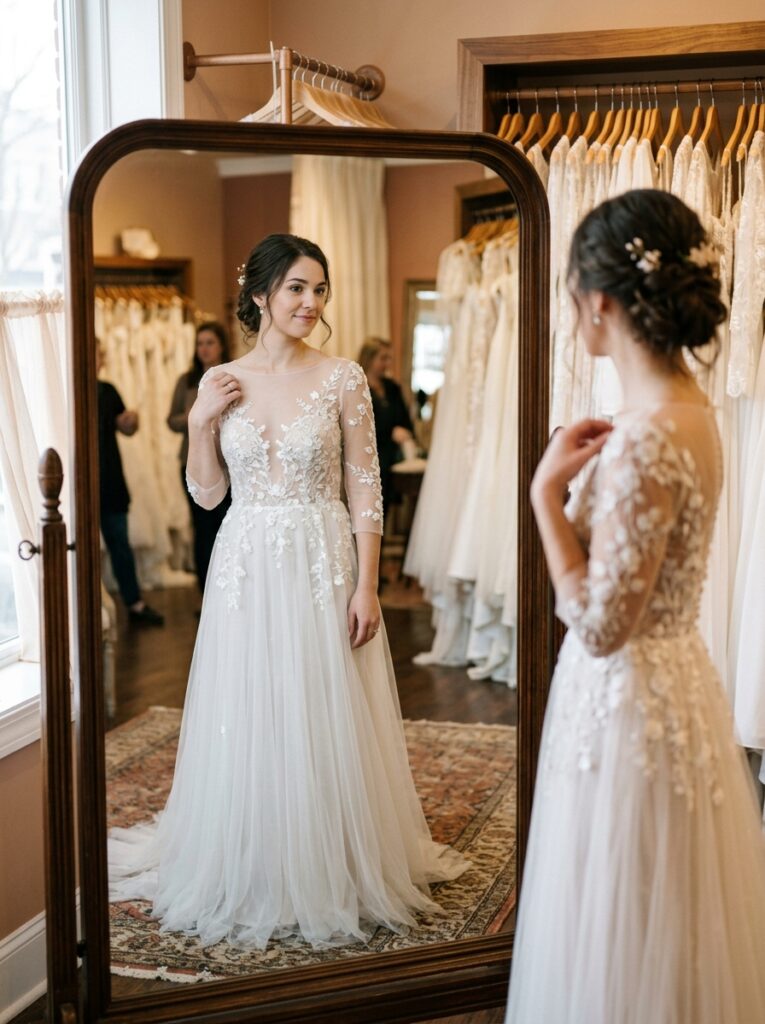
An illusion neckline uses sheer mesh or tulle, often layered with lace or beading, to create the appearance of exposed skin while still providing coverage. This technique lets a dress look dramatically low or high without sacrificing support, since the actual structural bodice sits underneath the illusion fabric. It has become a popular way to combine a modest look with a more daring shape.
High Neck
A high neckline sits close to the base of the throat, often paired with long sleeves for a fully covered, vintage-inspired look. This style tends to suit smaller busts particularly well, since it does not compete for attention the way a lower, more structured neckline might.
One-Shoulder
A one-shoulder neckline covers only one side of the chest and shoulder, leaving the other bare. This asymmetry creates a striking, modern line and tends to draw the eye diagonally across the body, which can add visual interest to an otherwise simple silhouette.
Strapless
A strapless neckline sits straight across the chest with no straps at all, relying entirely on the structure of the bodice for support. It remains one of the most flexible bridal necklines because it pairs with nearly any skirt shape and leaves room to add a detachable sleeve, cape, or shrug later in the day if preferences change.
Matching Necklines to General Body Shape
Body shape is usually described in a handful of broad categories, and while no one fits perfectly into a single label, these general patterns can help narrow down a starting point.
Hourglass
An hourglass shape has a defined waist with roughly balanced shoulders and hips. Almost any neckline works well here, since the natural waist definition already creates balance. Sweetheart and V-neck shapes are frequently chosen because they echo the existing curve of the figure rather than fighting against it.
Pear, or Wider Hips
A pear shape carries more width through the hips than the shoulders. Necklines that add visual width up top, like off-the-shoulder, sweetheart, or a wider scoop, help balance the lower body by drawing attention upward and outward across the collarbone.
Apple, or Fuller Midsection
An apple shape tends to carry more fullness through the midsection, with a less defined waistline. V-neck and sweetheart necklines both create a vertical line that elongates the torso, while scoop necklines open up the chest area without adding bulk at the center.
Rectangle, or Athletic
A rectangle shape has shoulders, waist, and hips that are all fairly similar in width, without a strongly defined curve at any point. Necklines like sweetheart or off-the-shoulder introduce curve and softness at the top of the body, which can create the impression of more shape overall.
Inverted Triangle, or Broader Shoulders
An inverted triangle shape carries more width through the shoulders than the hips. V-neck and scoop necklines both narrow the visual line across the top of the chest, which softens a broader shoulder line rather than emphasizing it further.
Necklines and Bust Size, Considered Separately
Bust size does not always align neatly with overall body shape, so it is worth considering on its own alongside the categories above.
- Fuller bust: Square, V-neck, and scoop necklines tend to offer both visual balance and practical support, since their structure holds the bodice in place more reliably than a soft, unstructured shape.
- Smaller bust: High necklines, halter styles, and structured strapless bodices with added padding or boning can create shape and definition where a very open neckline might otherwise look flat.
- Broader shoulders: V-neck and scoop necklines narrow the visual line at the top of the chest, while halter and bateau styles tend to add width and are worth trying on carefully before committing.
- Narrower or petite shoulders: Off-the-shoulder and structured strapless necklines both add visual width and softness at the shoulder line, which can help balance a smaller frame.
Necklines and Silhouette: How They Work Together
The neckline does not exist in isolation from the rest of the dress, and certain pairings tend to show up again and again for good reason.
- Ball gowns often pair with sweetheart or off-the-shoulder necklines, since the dramatic fullness of the skirt is balanced by a softer, more structured top.
- A-line silhouettes work with almost any neckline, which is part of why this shape remains one of the most commonly chosen bridal silhouettes overall.
- Fitted sheath or column dresses often pair with bateau, halter, or high necklines, since the structure at the top complements the narrow line of the skirt.
- Fit-and-flare gowns frequently use sweetheart or V-neck shapes, echoing the curve introduced at the hip with a matching curve at the bust.
Necklines by Venue and Season
Where and when a wedding takes place can influence which necklines feel most appropriate, beyond body shape alone.
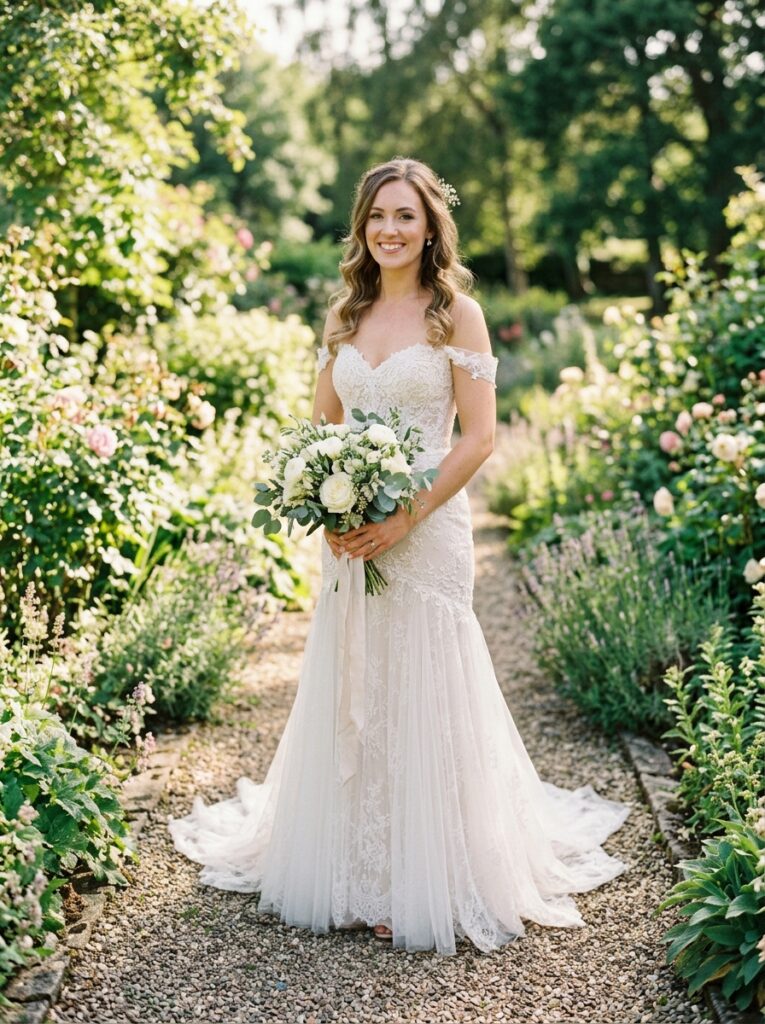
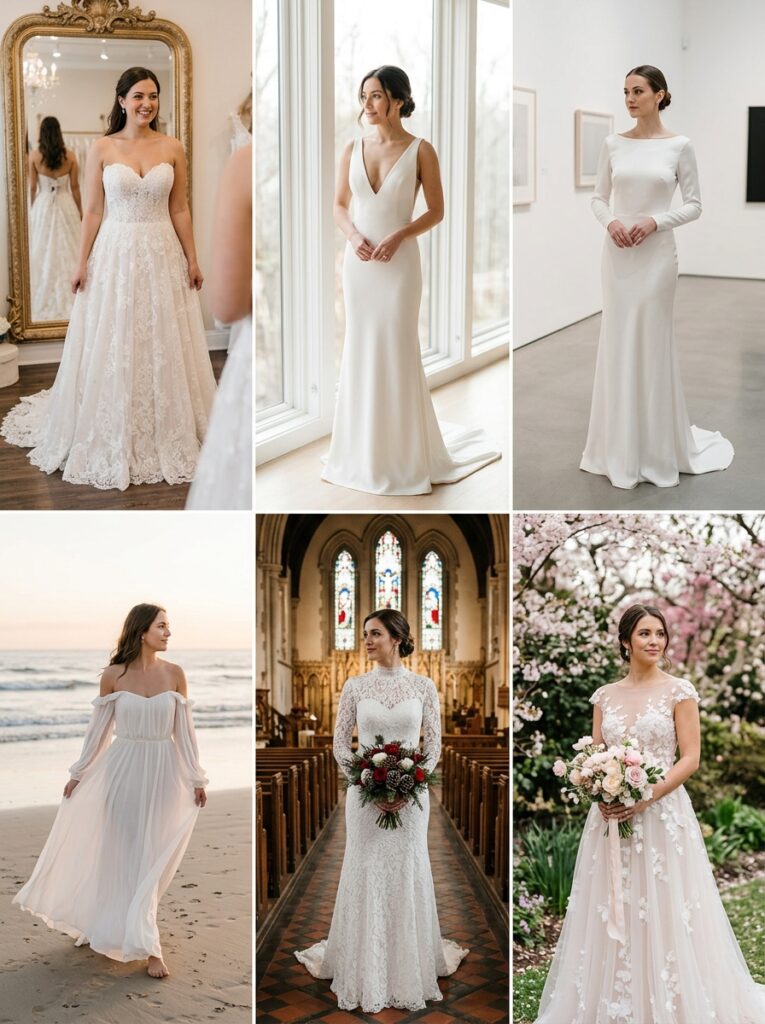
- Garden and outdoor ceremonies tend to suit softer, romantic necklines like off-the-shoulder, sweetheart, or scoop, which fit the relaxed, natural setting.
- Beach weddings often lean toward halter or simple strapless necklines, both of which work well with lighter fabrics and warmer temperatures.
- Black-tie and formal indoor venues frequently favor more structured necklines, like square, illusion, or high neck, which read as more formal in photographs.
- Cathedral or traditional religious ceremonies sometimes call for additional coverage, where an illusion neckline or a detachable topper over a lower neckline can offer flexibility between the ceremony and reception.
Necklines for Petite and Taller Frames
Height changes how a neckline reads almost as much as bust size or shoulder width does, and it is worth considering separately from the body-shape categories above.
On a petite frame, a very wide or heavily embellished neckline can sometimes overwhelm a smaller torso, pulling visual weight upward in a way that shortens the overall silhouette. A more subtle sweetheart, a modest scoop, or a fitted V-neck tends to keep proportions balanced without competing with the rest of a shorter frame. Vertical lines in general, whether from a V-neck or a line of buttons down the bodice, tend to add the impression of extra height.
On a taller frame, there is generally more room to experiment with wider, more dramatic necklines like an off-the-shoulder Bardot style or a bold square shape, since a longer torso can support more visual detail without looking crowded. Horizontal lines, like a bateau or halter, also tend to work more comfortably on a taller frame, where they read as balanced rather than shortening.
Neither height nor body shape should be treated as a strict rulebook, since personal style and comfort often override any general guideline, but understanding why certain shapes tend to work can make trying on dresses feel less like guesswork.
Common Mistakes to Avoid When Choosing a Neckline
A handful of choices tend to cause regret after the fact, even when the neckline itself was well made.
- Choosing a neckline based on a single photo of someone else. The same neckline can look completely different depending on bust size, torso length, and posture, so a style that looked perfect on a friend or an influencer will not necessarily translate the same way.
- Ignoring how a neckline performs after several hours. Some structured shapes that look flawless in a fitting room can shift slightly after a long day of movement, which is worth testing by moving around, sitting, and raising your arms during a fitting.
- Overlooking how the neckline interacts with accessories. A statement necklace paired with an already busy illusion neckline can look cluttered, while the same necklace might work beautifully with a simple scoop or square shape.
- Prioritizing trend over comfort. A neckline that is popular in a given year is not automatically the right choice for every body or every level of personal comfort with coverage.
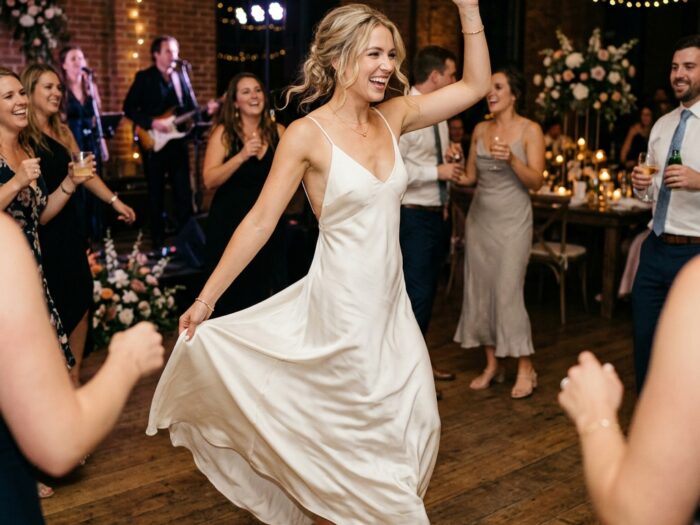
- Skipping the walk-and-sit test. Necklines like strapless or off-the-shoulder styles can shift more than expected when sitting down or dancing, so testing this in the fitting room avoids surprises later.
What to Consider Beyond Body Shape
Body shape is a useful starting point, but a few other factors matter just as much when narrowing down a final choice.
- Comfort and movement. A neckline that looks striking in a photo but feels restrictive during a full day of hugging guests, dancing, and sitting through a long reception is worth reconsidering.
- Support needs. Fuller busts in particular benefit from trying on structured options in person, since how a neckline actually holds up over several hours matters more than how it looks in a single still photo.
- Personal comfort with coverage. Some brides feel most confident with more coverage regardless of what a body-shape chart suggests, and personal comfort should generally outweigh a general guideline.
- Fabric weight. A heavier fabric like mikado or structured satin behaves differently around the neckline than a soft, drapey crepe, even with the exact same cut.
Trying on several different necklines in person, rather than relying only on a chart or a photo, remains the most reliable way to find out how a shape actually looks and feels on an individual body.
A Simple Way to Narrow Down Your Options
For anyone feeling overwhelmed by the number of choices, a short process tends to make the decision more manageable.
- Note your general body shape and bust size using the categories above as a loose starting point rather than a strict rule.
- Choose two or three necklines that align with that starting point, rather than trying to consider all of them at once.
- Pair each shortlisted neckline with a silhouette that suits your venue and personal style.
- Try on physical samples where possible, since fabric drape and personal comfort often shift the final decision more than a chart alone would suggest.
- Once a neckline feels right, consider how it pairs with the rest of the bridal look, including hair and accessories, to make sure the overall picture feels cohesive.
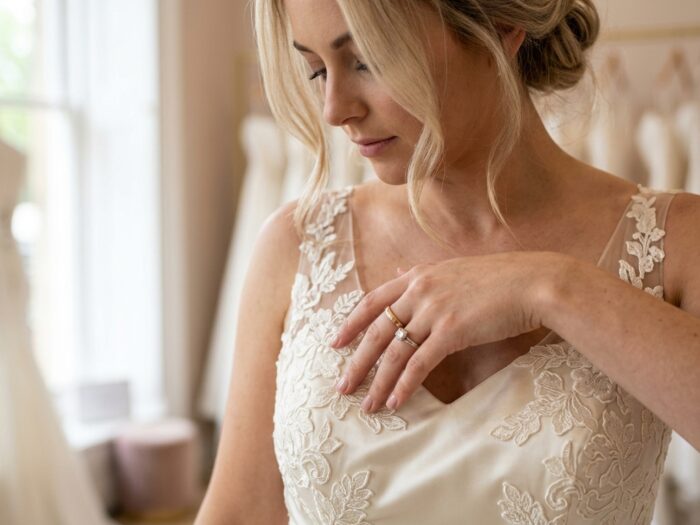
That last step matters more than it might seem. A neckline that leaves the shoulders and collarbone exposed pairs differently with an updo than it does with hair worn down, so it is worth browsing bridal hairstyle ideas once a neckline direction feels settled. The same goes for smaller details like bridal nail inspiration, since a hand resting near an off-the-shoulder or illusion neckline in photos is often more visible than brides expect.
Choosing a wedding dress neckline does not have to mean memorizing a long list of technical terms or forcing a body into a category that does not quite fit. Understanding what each shape actually does, and how it interacts with proportion, gives a much clearer starting point than guessing from a single photo ever could.
For a wider look at bridal styling beyond necklines, the wedding dresses collection covers silhouettes, fabrics, and seasonal considerations in more depth.

Ella is a fashion and beauty writer who shares inspiring ideas about hairstyles, nail designs, wedding outfits, and seasonal fashion trends. She loves discovering fresh styles and creating…
View Author Profile →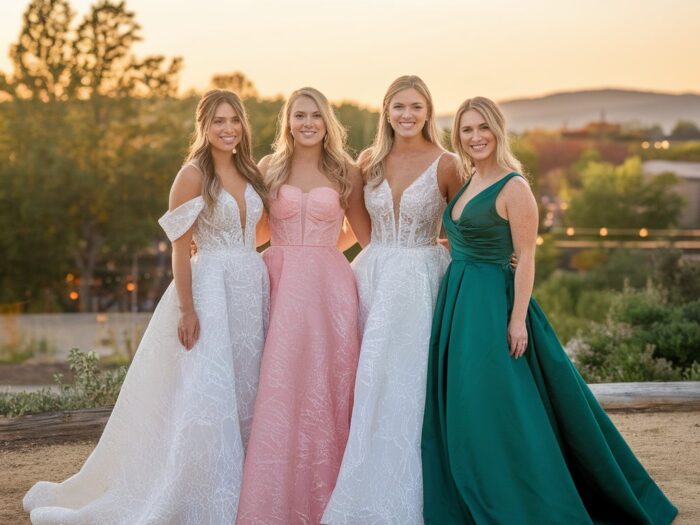
7 Comments