

On this page
- Why Most Closet Clean-Outs Solve the Wrong Problem
- Questions About What’s Actually in the Closet
- Questions About Why Certain Pieces Never Get Worn
- Questions About Gaps, Not Just Excess
- Questions to Ask Before Letting Something Go
- Questions About the System, Not Just the Clothes
- Common Traps That Undo a Clean-Out a Few Months Later
- A Simple Way to Use These Questions During an Actual Clean-Out
Most closet clean-outs start the same way. Everything comes out, gets sorted into keep, donate, and maybe piles, and goes back in roughly the same arrangement it started in, just slightly smaller. A few weeks later, the closet feels crowded again, not because new clothes appeared, but because the actual problem was never really addressed in the first place.
A pile-and-sort approach treats a closet clean-out as a sorting problem, when it is usually a decision-making problem wearing a sorting problem’s clothes. The real work happens before anything gets pulled off a hanger, in the questions that determine whether a piece earns its place back in the closet or not. This guide walks through those questions, organized by what they actually reveal, rather than jumping straight to a keep-or-toss checklist.
Why Most Closet Clean-Outs Solve the Wrong Problem
A closet that feels overcrowded is rarely overcrowded in every category equally. It usually has too much of a few specific things, three nearly identical black tops, five pairs of jeans in slightly different washes, while genuinely lacking in others, like a single reliable blazer or a pair of shoes that actually matches most of what gets worn.
Sorting by keep-or-donate without first understanding this imbalance tends to remove volume without fixing the underlying issue. The closet gets smaller, but the same overrepresented categories often survive the cut simply because there are more of them to choose from, while the genuine gaps remain exactly as thin as they were before.
Asking better questions before touching a single hanger reframes the process from removing things to understanding what the closet is actually doing, and what it should be doing instead.
Questions About What’s Actually in the Closet
Before deciding what stays or goes, it helps to get an honest read on what is actually happening with each piece, rather than what was true when it was purchased.
How Often Has This Actually Been Worn in the Last Year?
Memory is unreliable here, and it consistently overestimates how often a piece actually leaves the closet. A dress worn to one wedding two years ago might feel like a regular part of the rotation simply because the memory of wearing it is vivid, even though it has not been touched since. Answering this question honestly, rather than based on how a piece feels emotionally, tends to surface far more candidates for removal than expected.
Does This Still Fit the Life You’re Living Now?
A closet often holds onto clothing that made sense for a previous job, a different climate, or an earlier stage of life, long after that context has changed. A wardrobe full of blazers built for a corporate office does not necessarily serve someone who has since moved into a more casual or remote work situation, regardless of how well made those blazers are.
Is This Damaged, or Does It Just Need Attention?
Not everything that looks worn out actually needs to be discarded. A missing button, a loose hem, or a stain that a simple treatment could remove are all fixable issues, and separating genuinely damaged pieces from ones that just need a small repair prevents good clothing from being discarded unnecessarily.
Questions About Why Certain Pieces Never Get Worn
Some clothing sits untouched not because it is unwanted, but because something specific is getting in the way of actually wearing it, and identifying that obstacle matters more than simply noting that the piece goes unworn.
Is It the Fit, the Color, or the Occasion?
A piece might go unworn because it no longer fits comfortably, because its color does not coordinate with anything else currently owned, or because it was bought for an occasion that rarely comes up. Each of these problems has a different solution: tailoring, a different styling approach, or accepting that the occasion itself is too rare to justify keeping the piece in regular rotation.
Does It Require an Outfit That Doesn’t Exist Yet?
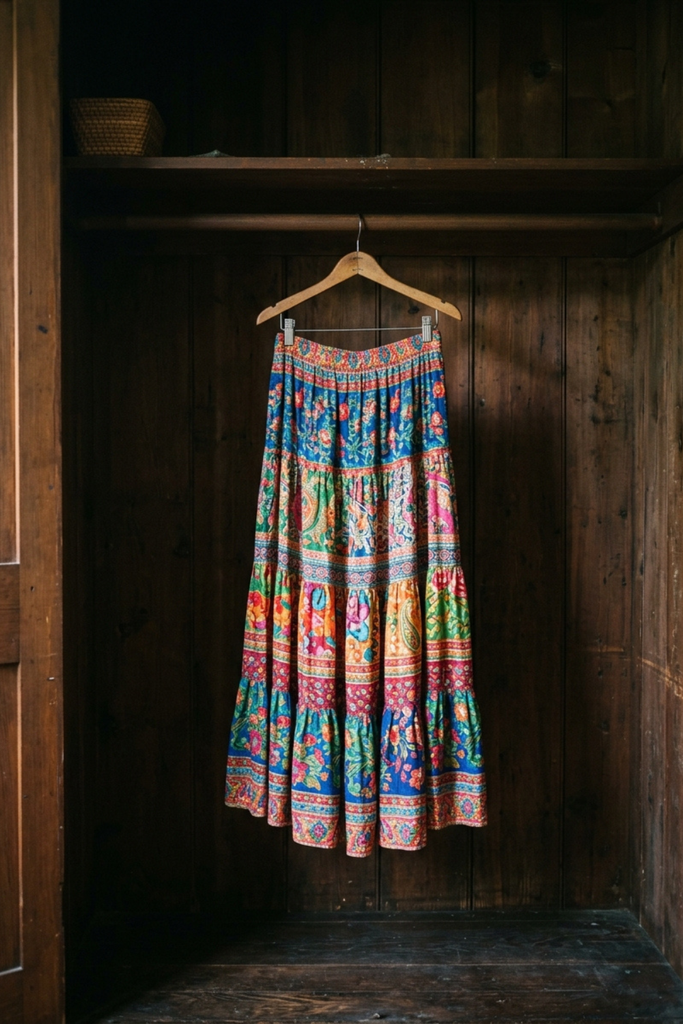
Some clothing sits unused simply because the rest of the outfit needed to make it work was never actually built. A colorful skirt purchased on its own, without the neutral top or shoe that would make it wearable day to day, can sit untouched for a long time, not because the skirt itself is a problem, but because the supporting pieces around it were never assembled.
Are You Keeping It for Who You Used to Be, or Who You’re Becoming?
Clothing sometimes represents an identity rather than a practical need, a style phase that has passed, or an aspirational version of daily life that never quite materialized. This is worth naming honestly, since a piece kept purely for what it represents rather than how it actually gets used will likely keep sitting untouched regardless of how many clean-outs it survives.
Does It Reflect Your Own Taste, or Someone Else’s Opinion of You?
Gifts, hand-me-downs, and pieces bought to match a partner’s or friend’s suggestion sometimes end up in a closet without ever quite matching personal taste. These items can be harder to let go of than a simple unworn piece, since removing them can feel like rejecting the person who gave the recommendation rather than just editing a wardrobe. Separating the relationship from the garment itself, keeping the memory or the gesture in mind while still being honest about whether the piece gets worn, makes this kind of decision noticeably easier.
Questions About Gaps, Not Just Excess
A closet clean-out that only removes things misses half the point. Understanding what is missing matters just as much as understanding what to let go of.
What Do You Keep Reaching For and Not Having?
A recurring frustration, needing a specific color, fabric, or fit that consistently is not there, points to a genuine gap worth addressing rather than a piece worth adding on impulse. This kind of gap tends to repeat itself across multiple outfit attempts, which makes it easier to identify than a one-off wish for something new.
Which Category Is Overrepresented and Which Is Thin?
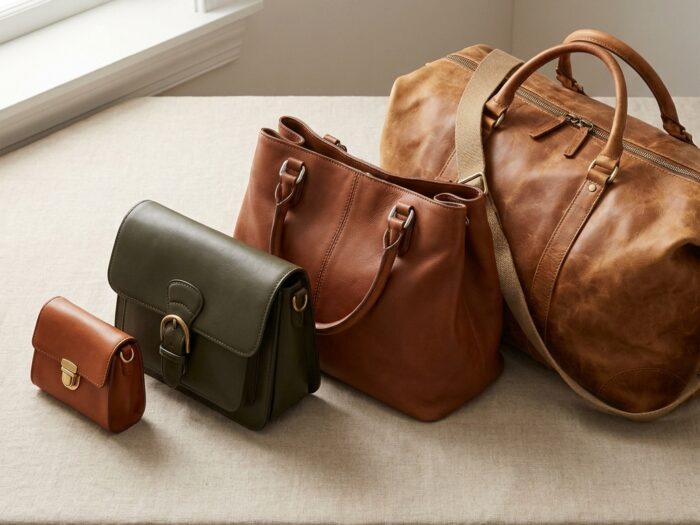
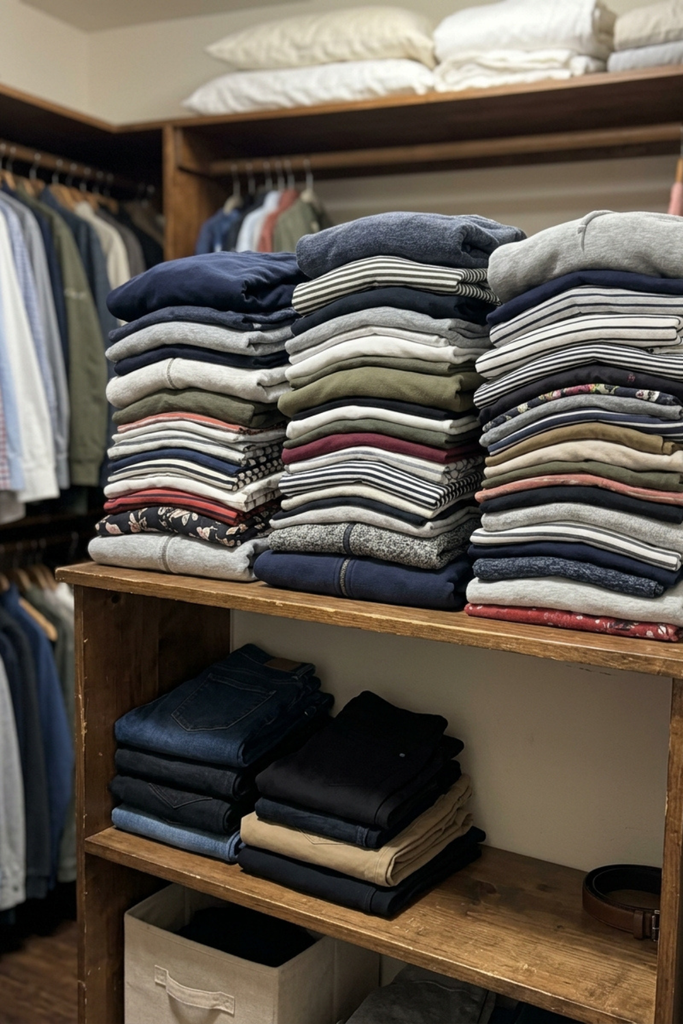
Sorting the closet by category rather than by color or occasion, tops, bottoms, outerwear, shoes, tends to reveal imbalances that are hard to see when everything is mixed together. A closet with fifteen tops and only two bottoms that pair well with most of them has a structural problem no amount of removing tops alone will solve. The handbag sizes guide walks through a very similar category audit specifically for handbags, and the same logic applies just as directly to a full closet.
Questions to Ask Before Letting Something Go
Once a piece has been identified as a candidate for removal, a few final questions help confirm that decision rather than second-guessing it later.
Would You Buy This Again Today?
This question cuts through sentiment and sunk cost more effectively than almost any other. A piece that would not be purchased again, given a fresh, unbiased choice, rarely earns its place back in a closet just because it was expensive or barely worn.
Is This Guilt, Sentiment, or Genuine Usefulness?
Clothing kept out of guilt over the money spent, or sentiment tied to a specific memory, serves a different purpose than clothing kept because it gets worn regularly. Both guilt and sentiment are valid reasons to keep something, as long as they are acknowledged honestly rather than disguised as practical usefulness. A piece kept for sentiment can be stored separately from an active, in-use wardrobe, which resolves the emotional tension without letting it clutter daily decision-making.

Questions About the System, Not Just the Clothes
Sometimes a closet feels chaotic not because of what it contains, but because of how it is organized, and this is worth examining before assuming every problem can be solved by removing more clothing.
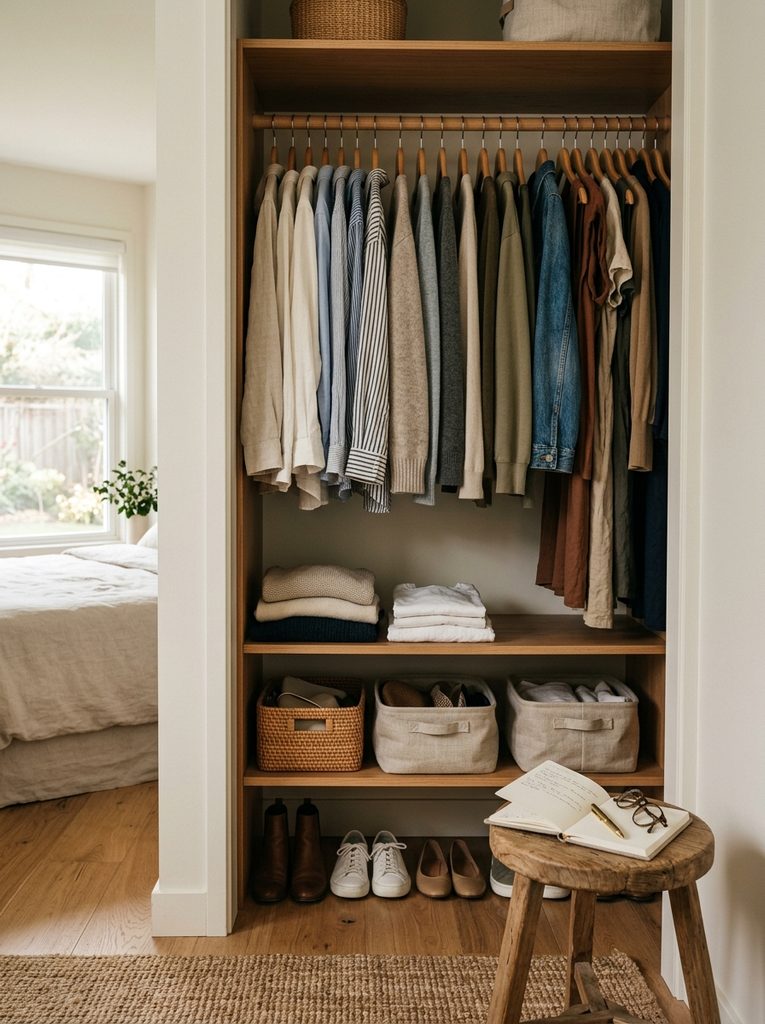
Can You See Everything You Own?
A closet where items are stacked, crammed, or stored out of sight tends to get used less efficiently than one where everything is visible at a glance. Pieces that cannot be seen easily are effectively invisible during the actual process of getting dressed, regardless of how useful they might be.
Does Your Storage Match How You Actually Get Dressed?
A closet organized by category, all shirts together, all bottoms together, works well for some people, while others get dressed more efficiently with outfits or color groupings kept together. Neither approach is inherently correct, but a mismatch between how a closet is organized and how someone actually thinks while getting dressed can make even a well-edited wardrobe feel harder to use than it should.

Common Traps That Undo a Clean-Out a Few Months Later
Even a thoughtful clean-out can slowly unravel if a few recurring habits go unaddressed once the closet is back in daily use.
Replacing a donated item with something nearly identical is one of the most common ways a newly edited closet drifts back toward its old imbalance. Letting go of a fourth black top only to buy a fifth a few weeks later solves nothing, even if the specific top changed. Watching for this pattern, and asking whether a replacement is filling a genuine gap or simply repeating a category that was already overrepresented, helps a clean-out actually hold.
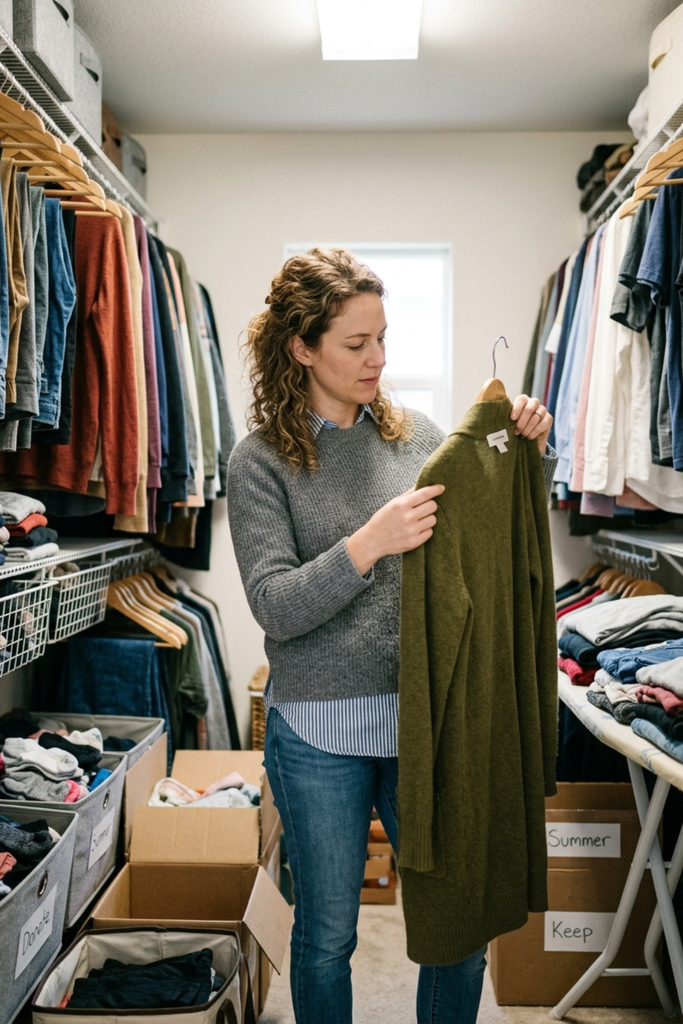
Storing seasonal or sentimental pieces in the same space as an active daily wardrobe is another common trap. When out-of-season coats or keepsake pieces sit mixed in with everyday clothing, they quietly take up visual and physical space that makes the whole closet feel more crowded than the actively used wardrobe actually is. Moving these pieces to separate, clearly labeled storage keeps the daily closet feeling as edited as it was immediately after the clean-out.
Finally, skipping a periodic follow-up pass tends to let small amounts of clutter accumulate unnoticed. A short check-in every few months, even just five minutes spent asking a handful of the same questions again, catches drift early, long before it turns into another full clean-out months down the line.
A Simple Way to Use These Questions During an Actual Clean-Out
Rather than treating this list as a checklist to run through once per item, a more efficient approach groups the questions into three passes across the whole closet.
The first pass focuses on usage and fit: pulling anything not worn in the last year, anything that no longer fits the current version of daily life, and anything genuinely damaged beyond a simple repair. The second pass looks at the reasons behind non-use for everything remaining, identifying which pieces need a small styling fix, a tailoring adjustment, or an honest acknowledgment that they represent a phase rather than a current need. The third pass steps back from individual pieces entirely to look at category balance, noting where the closet is overrepresented and where it is genuinely thin, which then becomes a shopping guide for anything added afterward rather than a random impulse purchase.
This three-pass approach takes longer than a single afternoon of piling clothes into keep-or-donate bags, but it tends to produce a closet that stays edited rather than slowly refilling with the same imbalance a few months later. The goal of a clean-out was never really about owning less. It was about owning things that actually get used, in proportions that match how life is actually lived day to day, which requires understanding a wardrobe rather than simply reducing it.
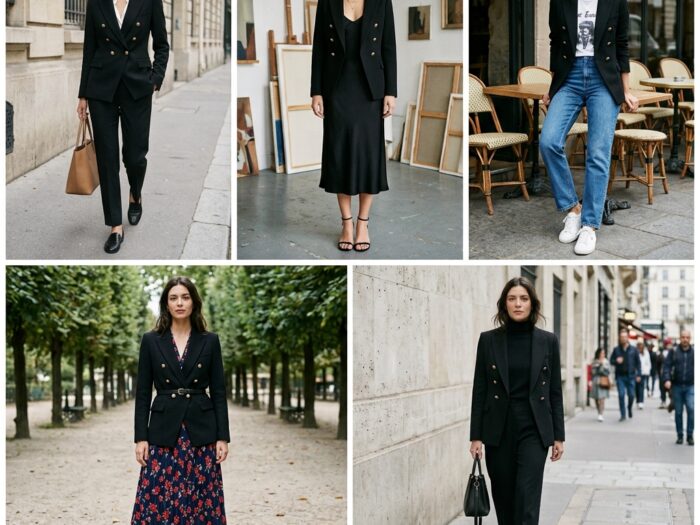
For anyone using a clean-out as a starting point to rebuild a more functional wardrobe afterward, the fall capsule wardrobe guide shows what a genuinely balanced, gap-free rotation can look like once the imbalances above have been identified and addressed. Versatile pieces like a single well-chosen blazer are also worth prioritizing during a rebuild, since a jacket capable of multiple distinct looks does more work in a closet than several narrower, single-purpose pieces ever could.
A closet clean-out done through honest questions rather than a quick sort tends to feel different afterward, not just lighter, but genuinely more useful, since everything remaining earned its place rather than simply surviving a single pass of decluttering.

Ella is a fashion and beauty writer who shares inspiring ideas about hairstyles, nail designs, wedding outfits, and seasonal fashion trends. She loves discovering fresh styles and creating…
View Author Profile →