
On this page
- Where the Second Dress Trend Actually Comes From
- Why Brides Choose to Change at All
- What a Second Look Usually Means
- Second-Look Styles Worth Knowing
- Timing the Change
- The Logistics Nobody Mentions Until It’s Time to Plan
- Budgeting for a Second Look
- Fabric Matters More the Second Time Around
- Hair and Beauty Between the Two Looks
- How a Second Look Changes the Photography
- Is a Second Look Actually Worth It?
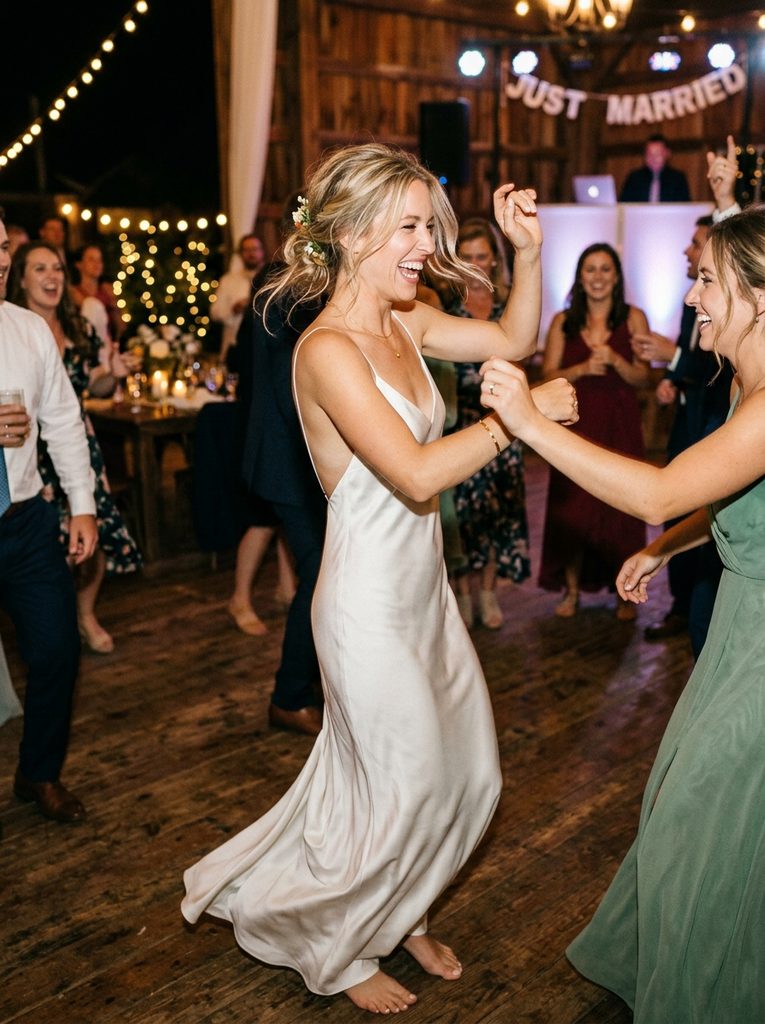
Somewhere between the ceremony and the last song of the night, a growing number of brides are slipping out of their gown and into something else entirely. Not a robe, not loungewear, but a second, fully intentional outfit built specifically for the second half of the wedding day.
It sounds like a small logistical detail until you picture the actual moment. A bride disappears for fifteen minutes during dinner and comes back in a completely different silhouette, lighter, shorter, easier to move in, while the room barely notices the gap. It has become common enough that bridal designers now build entire lines around it, and it is worth understanding why before deciding whether it fits your own day.
Where the Second Dress Trend Actually Comes From
The idea is not new. Celebrities and royalty have swapped gowns between ceremony and reception for decades, mostly for photography and formality reasons rather than comfort. What has changed recently is who does it and why.
A second look used to signal a certain kind of budget, a dress built for the aisle and another built purely for effect. Today the motivation has shifted toward something more practical. Brides are choosing a second outfit because the first one, however beautiful, was never designed with six hours of dancing in mind.
Why Brides Choose to Change at All
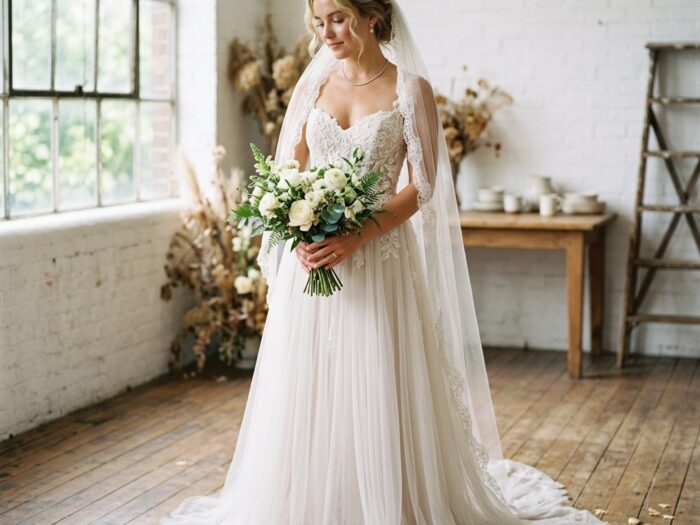
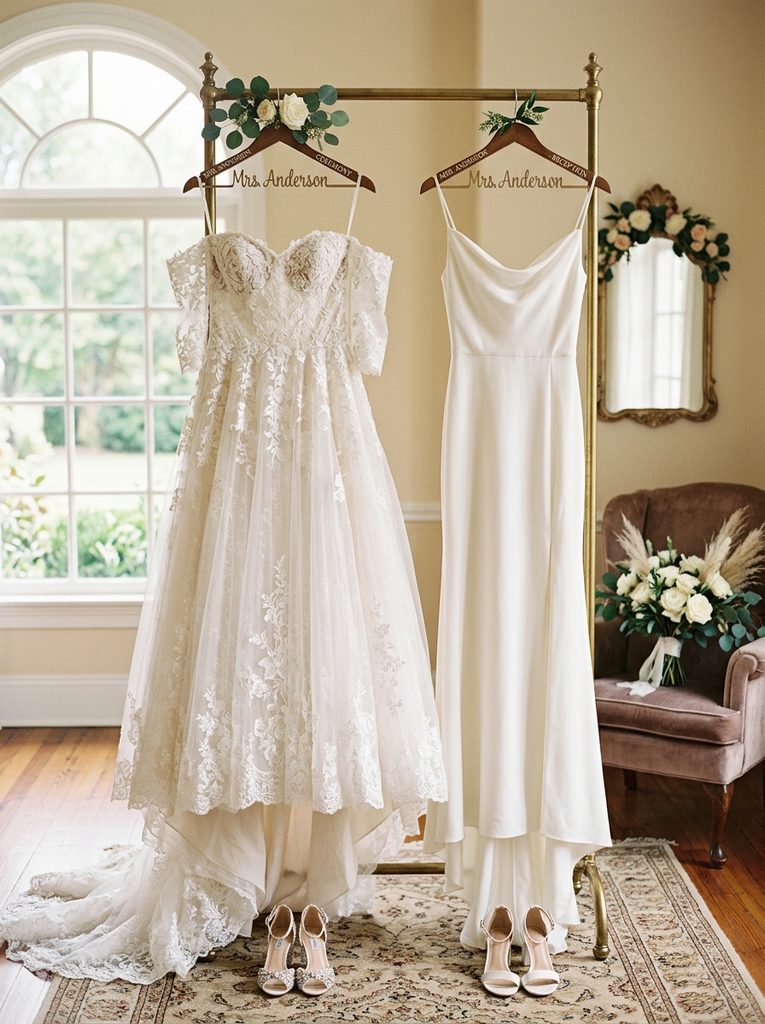
A wedding gown is usually built for a specific job: to look extraordinary walking down an aisle and standing still for photos. Trains, structured bodices, and heavy beading all serve that moment extremely well, and serve a crowded dance floor much less well.
Comfort over a long day tops the list of reasons brides give. A gown that felt fine for a two-hour ceremony can feel very different by hour eight, particularly around the ribs, shoulders, or a fitted waistline that was never meant to be sat in for an entire dinner service.
Protecting the original dress matters to some brides, especially with heirloom gowns, rented dresses, or anything they hope to preserve, sell, or pass down. A dance floor is unpredictable, and drinks, dust, and enthusiastic guests all pose a real risk to delicate fabric or embellishment.
Wanting two distinct moods drives the decision for others. A formal ball gown ceremony followed by a relaxed, high-energy reception can call for two different outfits the same way a bride might change earrings between the ceremony and the party, just on a larger scale.
Practical movement plays a role too. Trains need bustling, structured skirts limit certain dance moves, and some brides simply want the freedom to move without thinking about fabric at all once the formal portion of the day is over.
What a Second Look Usually Means
A second look does not have to mean an entirely new gown bought at full price. In practice, it covers a wide range of options, some requiring significant planning and others requiring almost none.
At the simplest end, some brides remove a single element, a heavy overskirt, a cathedral train, a jacket, or a cape, revealing a simpler dress that was underneath the whole time. At the more involved end, a bride changes into a completely separate outfit, sometimes in a different color entirely, purchased or rented specifically for the reception.
Second-Look Styles Worth Knowing
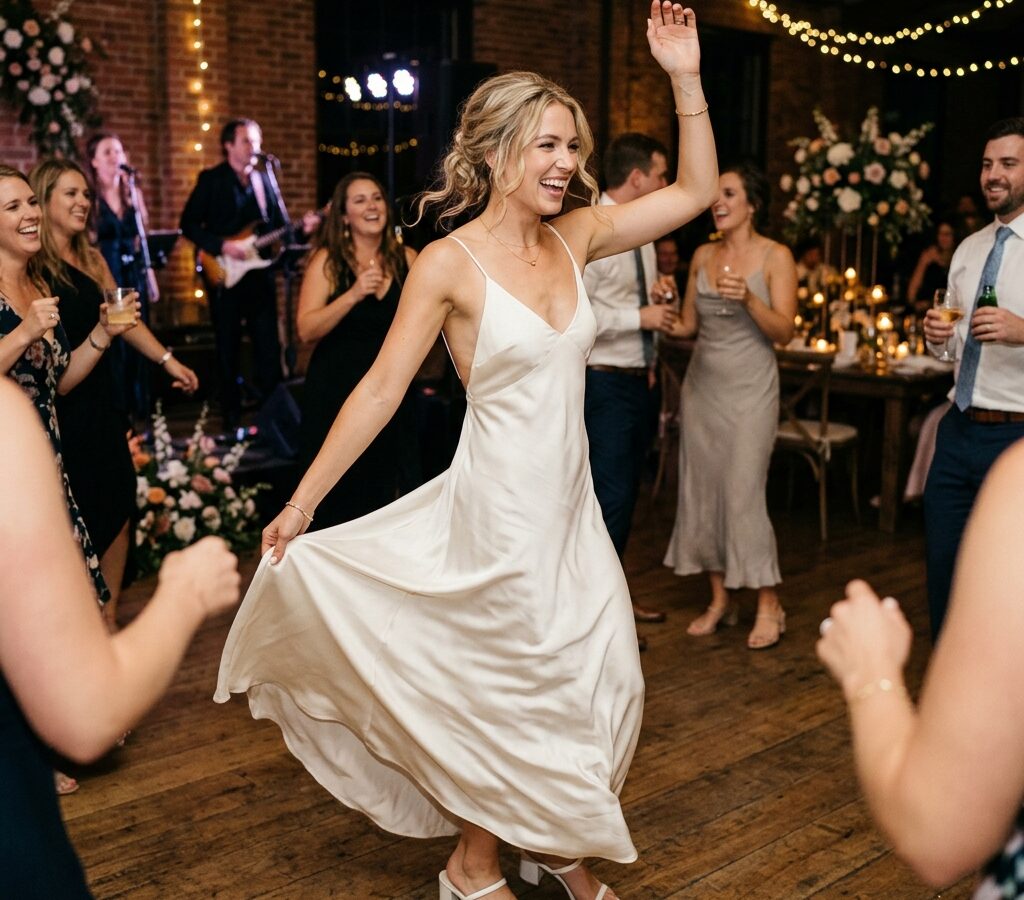
Slip dresses have become one of the most popular reception choices, largely because they are lightweight, easy to move in, and often available at a fraction of the cost of a full bridal gown. A silk or satin slip in ivory or blush reads as intentional rather than casual, while still feeling worlds lighter than a structured ceremony gown.
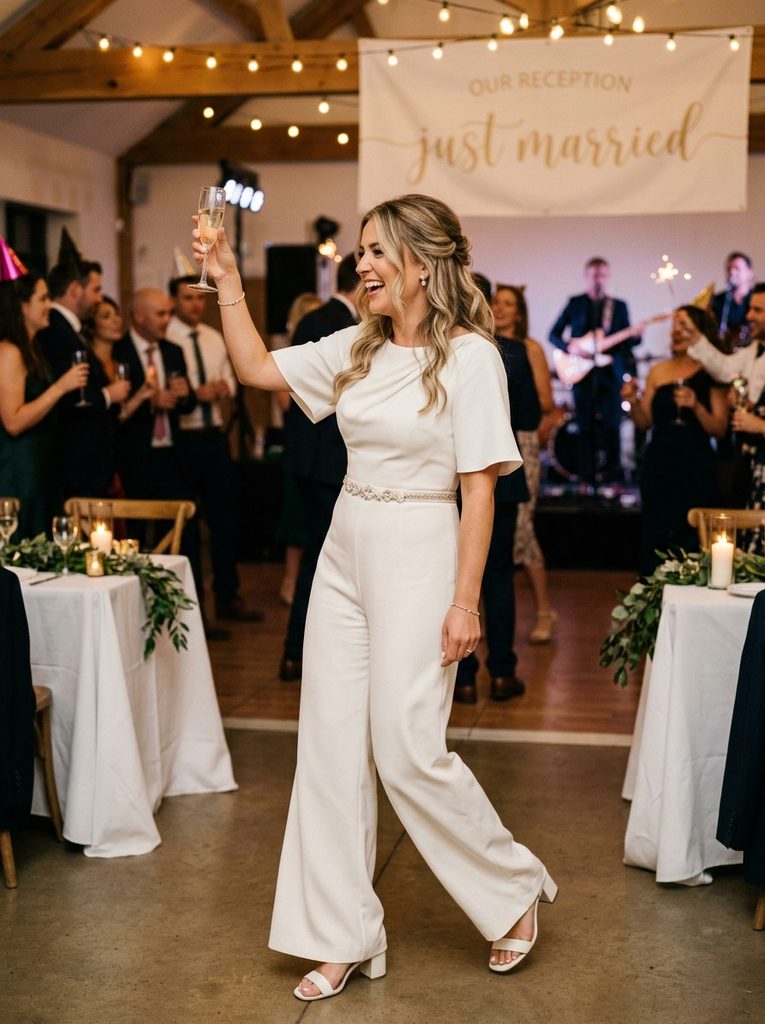
Bridal jumpsuits offer full mobility and have grown in popularity partly because they photograph distinctly from a traditional gown, giving a reception gallery a different visual tone than the ceremony photos.
Convertible or two-in-one gowns are built with the change in mind from the start. A detachable skirt, cape, or overlay comes off to reveal a simpler dress underneath, all from a single purchase rather than two separate outfits. This tends to be the most budget-friendly route to a genuine second look.
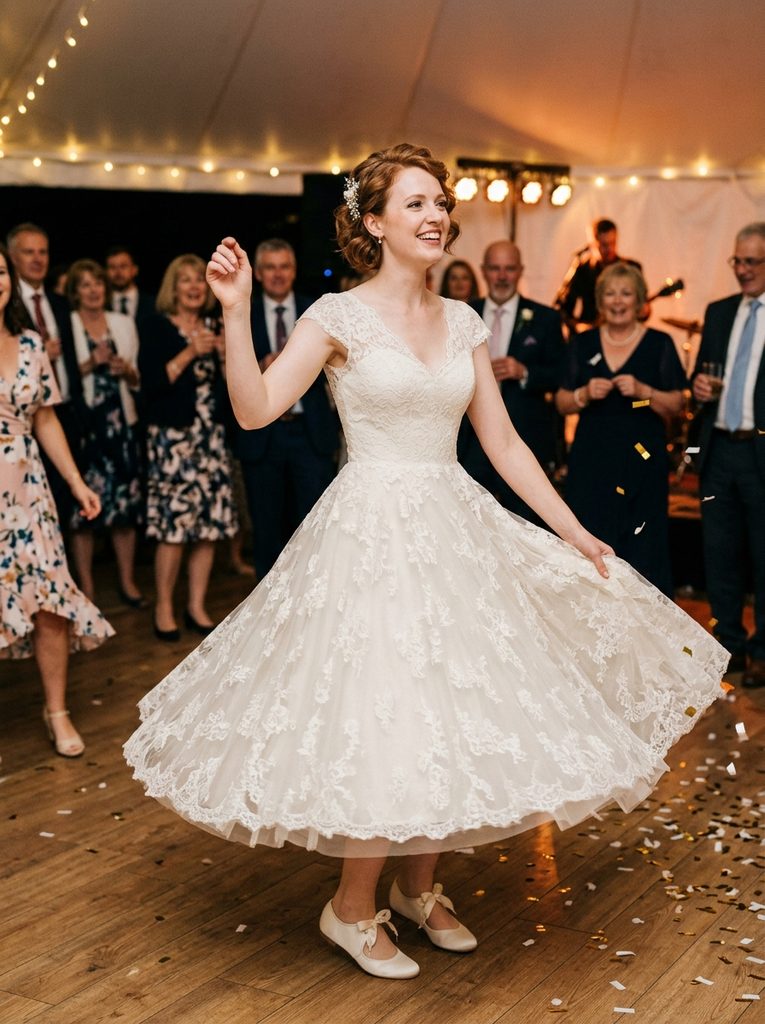
Mini or tea-length dresses give brides a shorter hemline for dancing while still keeping a clearly bridal silhouette, often in a similar fabric or color family to the ceremony gown so the two looks feel connected rather than mismatched.
Detachable overskirts and trains let a bride keep the exact same base dress for both parts of the day while dramatically changing its silhouette, which solves the movement problem without requiring a second outfit at all.
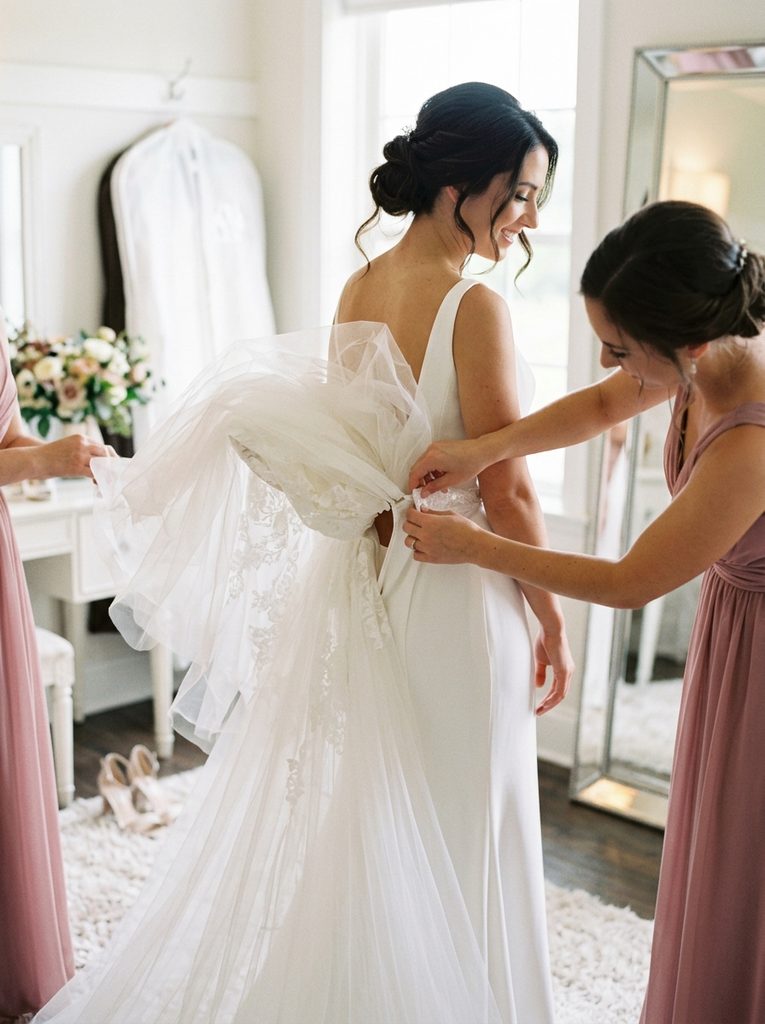
A color change, moving from stark white to ivory, blush, or even a pale color entirely, gives a reception a different visual identity without changing the silhouette much at all, and has become a popular middle-ground option.
Timing the Change
Most brides who choose a second look change somewhere between the end of formal photos and the start of open dancing, often during a natural lull like dinner service or the cutting of the cake. Changing before the first dance is common, since it lets a bride move freely for the moment guests are most likely to be watching closely.
Some brides change earlier, right after the ceremony and before the reception begins, particularly if the ceremony gown had a long train or veil that would be impractical for an entire evening. Others wait until later in the night, keeping the ceremony gown through dinner and speeches before changing closer to when dancing picks up.
There is no single correct timing. It depends more on what problem the second look is solving, whether that is a train that needs bustling constantly, a bodice that needs a break, or simply a desire to feel different for the second half of the night.
The Logistics Nobody Mentions Until It’s Time to Plan
A second look adds a few moving pieces that are worth planning for well before the wedding day itself.
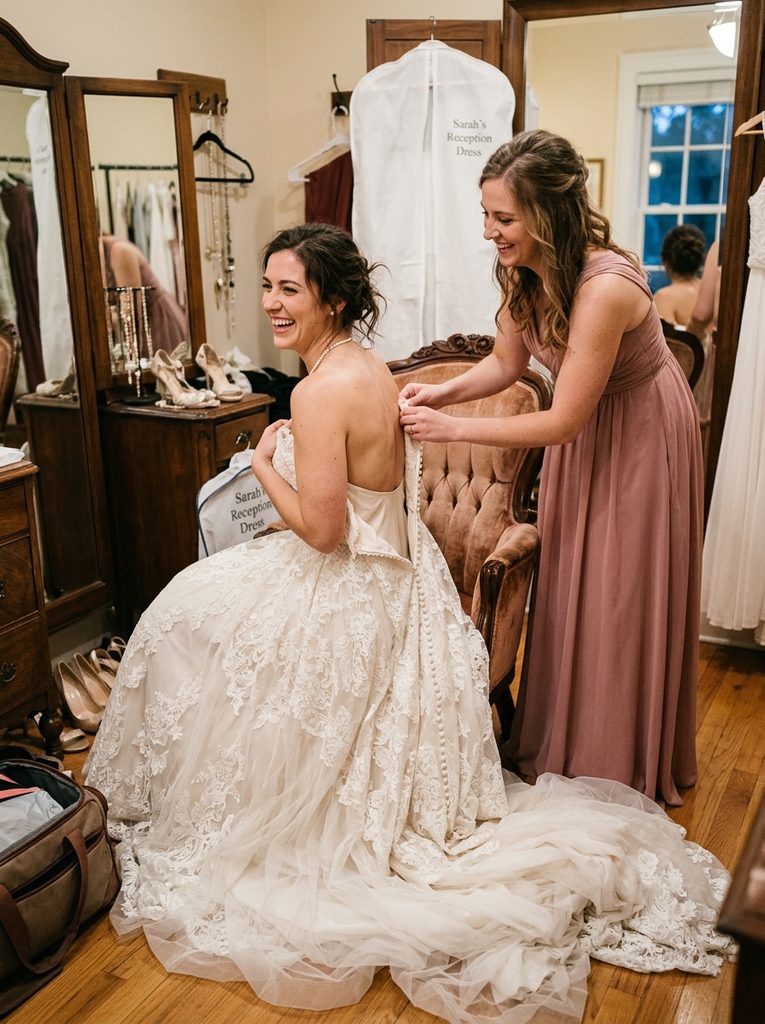
- A helper is essential. Getting out of a fitted, buttoned, or laced gown alone is difficult, so a bridesmaid, mother, or the same person who helped with the original dressing usually needs to be available and briefed on timing.
- A private space needs to be arranged. Most venues have a bridal suite or similar room, but it is worth confirming this in advance rather than assuming one will be available exactly when needed.
- The original gown needs somewhere safe to go. A padded hanger, garment bag, or a designated spot away from food and drink keeps the first dress protected once it comes off.
- Hair and makeup may need a quick touch-up. Changing tops or necklines can shift how hair sits against the shoulders, so a few minutes with a stylist or a touch-up kit is worth building into the timeline.
- The photographer and planner should know the schedule. A second look loses some of its impact if the photographer is not positioned to capture the reveal, so this detail belongs on the day-of timeline rather than left as a surprise.
Budgeting for a Second Look
Cost varies enormously depending on which route a bride takes, and it is worth thinking about this early rather than adding a second outfit as an afterthought once the ceremony gown budget is already spent.
A convertible gown with a detachable piece often costs less overall than two separate dresses, since it is a single purchase built to serve both purposes. A simple slip dress bought off the rack, rather than through a bridal boutique, can be one of the most affordable second-look options available, particularly since it does not need to carry the same construction or embellishment as a ceremony gown.
Renting a second dress has also become more common, especially for brides who want a distinct reception look without paying full price for an outfit worn for only a few hours. Some brides offset the cost by choosing a simpler, less expensive ceremony gown and putting more of the overall dress budget toward the piece they know they will actually be dancing in.
Fabric Matters More the Second Time Around
Whatever direction a second look takes, fabric choice tends to matter even more than it did for the ceremony gown, since comfort and movement are usually the entire point of changing in the first place.
Lightweight, breathable fabrics like crepe, charmeuse, or a soft jersey blend tend to suit reception wear far better than the heavier, structured fabrics common in ceremony gowns. A fabric that moves easily and does not restrict the arms or hips makes a real difference once dancing actually starts, and it is worth paying attention to how a second-look fabric feels in motion, not just how it looks standing still.
Hair and Beauty Between the Two Looks
A second look often comes with a small hair or beauty adjustment, even if the overall style stays largely the same. Taking hair down from an updo, removing a veil, or swapping out statement earrings for something smaller can shift the whole mood of the second outfit without requiring an entirely new look.
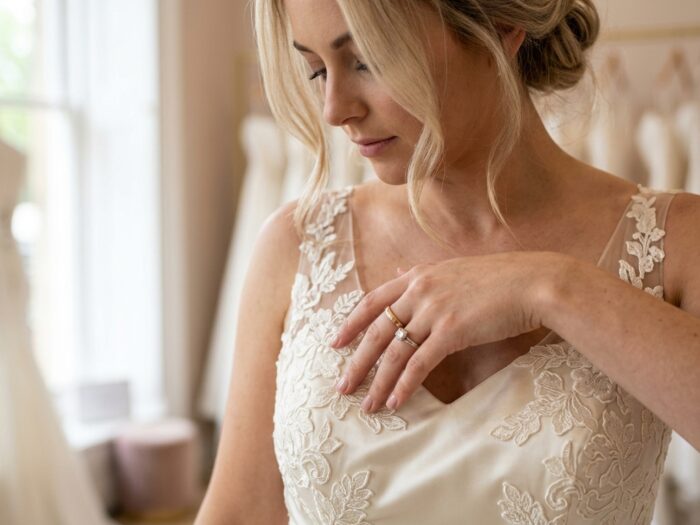
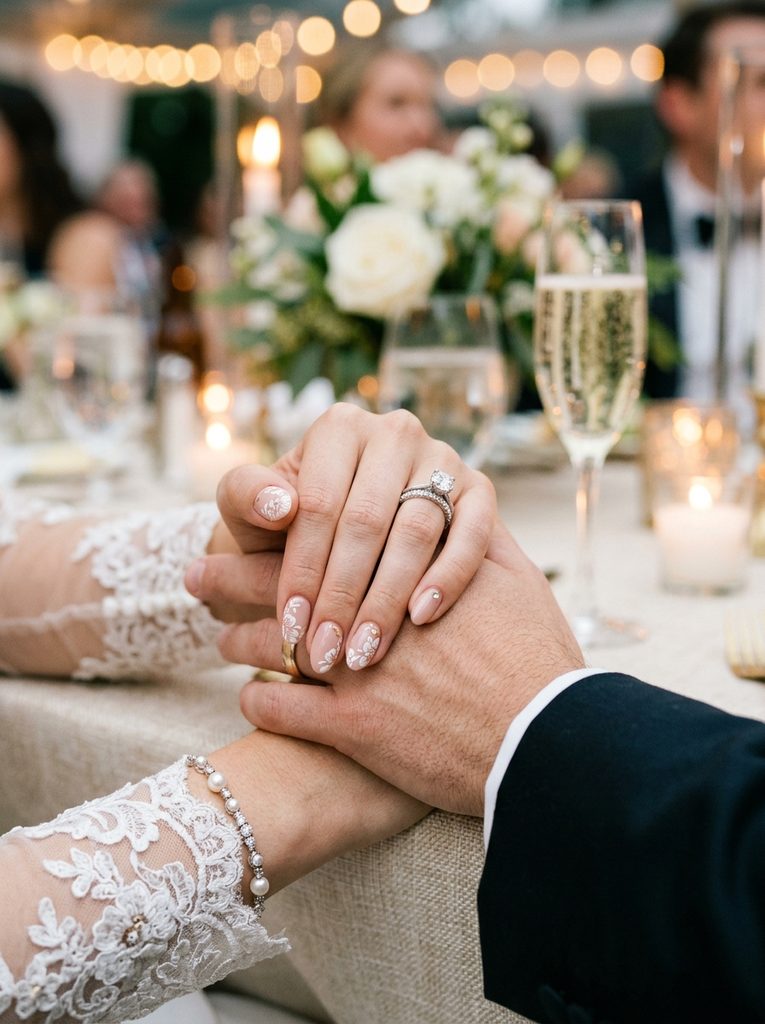
For brides planning this kind of transition, it helps to think through both halves of the day at once, choosing a ceremony hairstyle that can be easily loosened or adjusted rather than one that has to be completely redone. The bridal hairstyle collection covers several styles that hold up well through exactly this kind of midday change. Nails are worth a similar thought, since hands appear constantly in reception photos, and a set chosen with ring shots and photography in mind tends to carry through both parts of the day without needing any adjustment at all.
How a Second Look Changes the Photography
Photographers who work regularly with brides planning a second look tend to treat it as its own mini moment rather than a background wardrobe change. The reveal itself, walking back into the reception in a new silhouette, often gets photographed deliberately, sometimes with the same attention given to the initial walk down the aisle.
A second look also gives a wedding gallery genuine visual variety. Reception photos in a lighter, more relaxed outfit tend to read differently from the formal ceremony portraits, which some couples specifically want when they picture how the full album will feel once it is finished.
Is a Second Look Actually Worth It?
A second look is not a requirement, and plenty of brides wear one dress all day without a single regret. It tends to make the most sense for a few specific situations rather than as a default choice for every wedding.
- A ceremony gown with a long train, heavy fabric, or a highly structured bodice that would genuinely limit dancing and movement later in the night.
- A desire to protect a particularly delicate, sentimental, or expensive gown from the wear a dance floor inevitably brings.
- A wedding with a long reception, since comfort matters more over eight hours than it does over three or four.
- A couple who wants a visibly different reception mood, whether that means a shorter hemline, a different color, or simply less formality.
For a shorter reception, a gown that already feels comfortable to move in, or a bride who genuinely wants to wear one dress the whole day for sentimental reasons, skipping a second look entirely is just as valid a choice. The decision comes down to comfort, budget, and how much a bride actually wants to manage a mid-event outfit change on what is already a long, full day.
Anyone weighing this decision alongside other bridal choices, including neckline and silhouette, may find it easier to plan both dresses at once rather than treating the second look as an afterthought added once the ceremony gown is already finalized. The two decisions tend to work better when they are made with each other in mind from the start.

Ella is a fashion and beauty writer who shares inspiring ideas about hairstyles, nail designs, wedding outfits, and seasonal fashion trends. She loves discovering fresh styles and creating…
View Author Profile →