
On this page
- Why Rhinestones Became the Bridal Nail Default
- Fine-Line Nail Art for Delicate, Hand-Drawn Detail
- Textural Finishes That Add Dimension Without Sparkle
- Negative Space Designs for a Modern, Architectural Look
- Hand-Painted Botanical and Nature-Inspired Detail
- Subtle Dimensional Work Without Gems
- Choosing a Technique That Suits the Rest of the Bridal Look
- What to Bring to a Nail Art Consultation
- Common Mistakes When Moving Beyond Rhinestones
- A Manicure With Its Own Kind of Detail
Search for bridal nail inspiration and the results settle into a pattern fast: a French tip with a single rhinestone at the cuticle, repeated across hundreds of nearly identical photos. Rhinestones aren’t wrong, they photograph well and plenty of brides love the sparkle, but they’ve become such a default that “bridal nail art” and “rhinestone accent” have started to mean almost the same thing in most inspiration searches.
There’s a wider range of technique available for brides who want something with more detail than a plain manicure but don’t want gems as the main event. Fine-line work, texture, subtle dimension, and painted detail can all read as distinctly bridal without a single crystal involved, and several of these techniques actually hold up better over a long wedding day than rhinestones do, since there’s nothing raised on the nail surface to catch or snag.
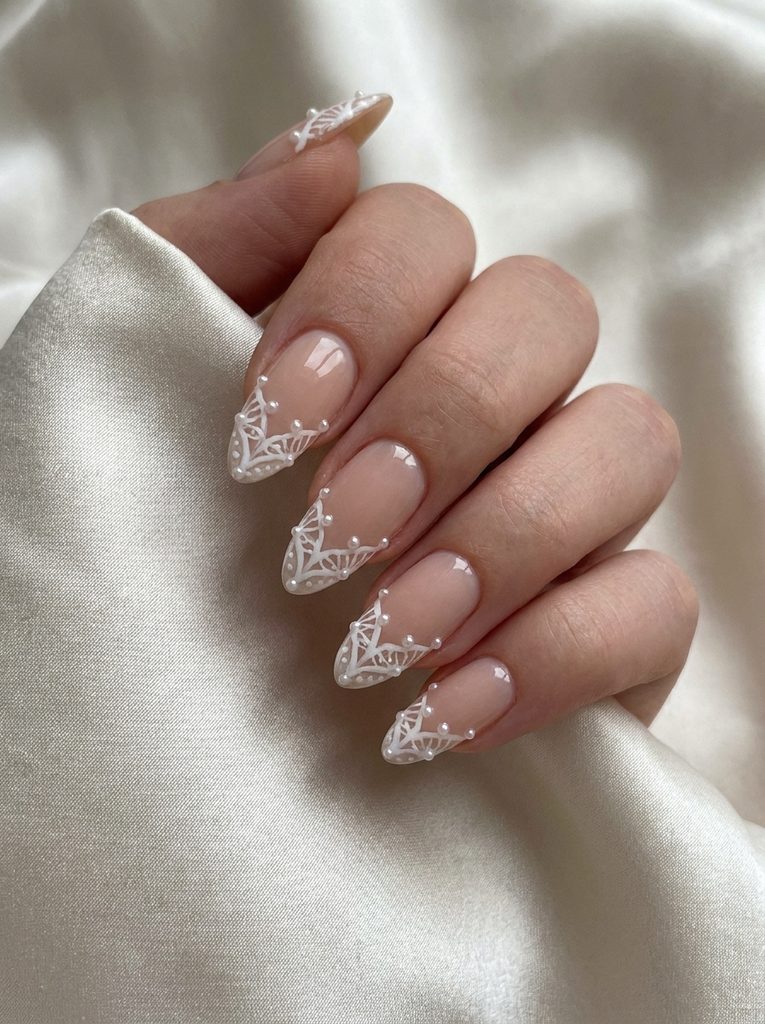
Why Rhinestones Became the Bridal Nail Default
Rhinestones solve a specific problem efficiently: they add visible sparkle and a sense of occasion to a manicure with very little technical skill required to apply them well. A technician can place a single crystal at the cuticle in seconds, and it photographs reliably under almost any lighting condition, which explains why it became the fastest, most repeatable way to make a plain manicure feel like a bridal one.
That efficiency is exactly why it’s everywhere, and also why it can end up looking slightly generic rather than considered. The techniques below take a bit more time at the appointment, but they produce a manicure that looks intentional rather than like a standard add-on selected from a laminated menu.
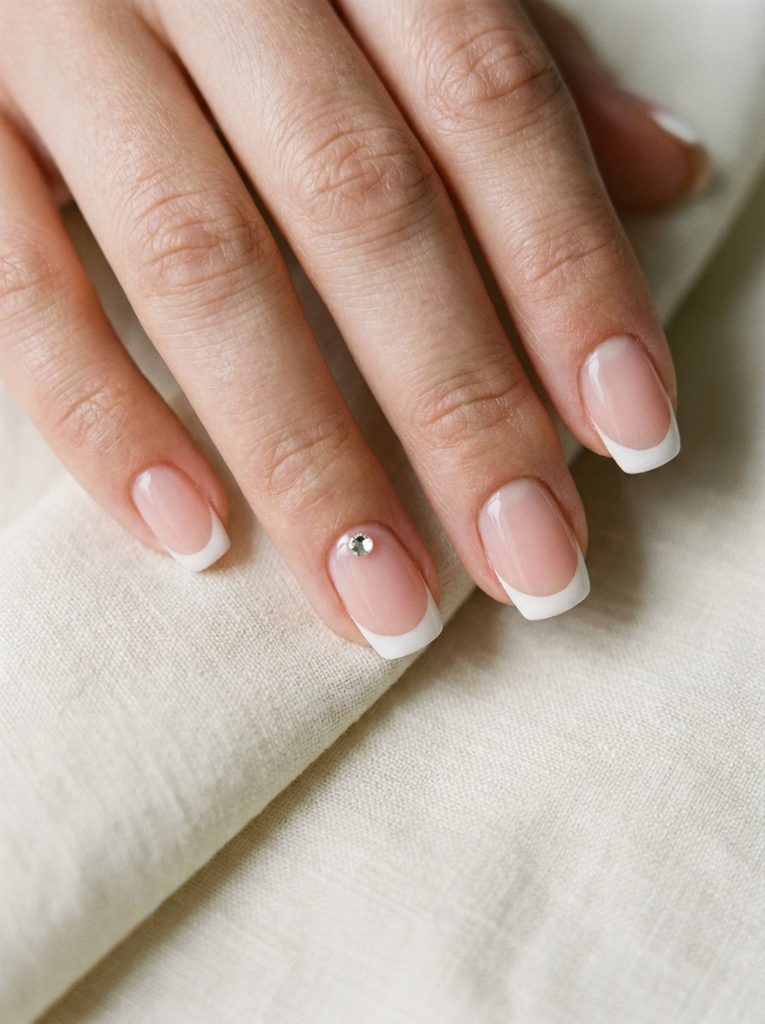
Fine-Line Nail Art for Delicate, Hand-Drawn Detail
Fine-line work uses a thin brush or a detailing tool to paint delicate linework directly onto the nail, and it’s become one of the more popular alternatives to rhinestones specifically because it photographs as intricate without adding any texture or dimension to the nail’s surface.
A single delicate vine or floral line tracing along the cuticle or the side of the nail gives a manicure a hand-drawn, almost botanical quality that reads as more personal than a repeated crystal placement. Fine gold or silver linework, used sparingly rather than covering the whole nail, adds a metallic detail similar to what rhinestones provide visually, catching light and adding a sense of occasion, without any raised surface. A thin, single-line French tip, drawn freehand rather than using a straight guide, gives the classic bridal French manicure a slightly looser, more artisanal feel than the crisp, uniform version most people default to.
This technique depends heavily on a steady hand and some genuine nail art experience, so it’s worth confirming a chosen technician has specific fine-line experience rather than assuming any nail artist can execute it well on short notice.
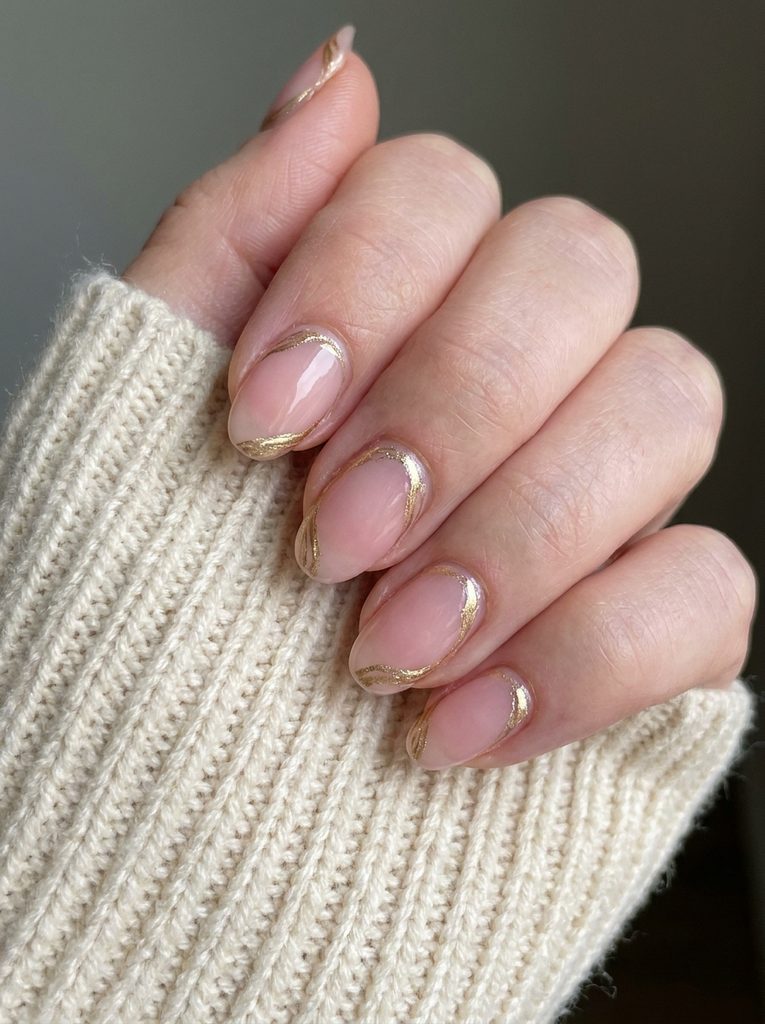
Textural Finishes That Add Dimension Without Sparkle
Texture offers a completely different route to a manicure that reads as more than a flat single color, using finish and surface treatment rather than added embellishment to create visual interest.
A matte top coat over a glossy base, applied only to part of the nail, in a shape like a crescent moon at the cuticle or a soft geometric line, creates contrast using finish alone. Cat-eye or magnetic polish, which uses a suspended metallic pigment that shifts with a magnet before curing, produces a soft, shimmering line effect that moves with the light in a way flat polish can’t replicate, and it tends to photograph as genuinely three-dimensional despite being completely flat to the touch. A subtle marbled or watercolor effect, blending two or three soft, closely related tones directly into each other, creates a design with real depth and movement without a single hard edge or added element.
These techniques tend to hold up particularly well through a long wedding day, since there’s no embellishment sitting proud of the nail surface that could catch on fabric, hair, or a veil the way a raised rhinestone occasionally can.
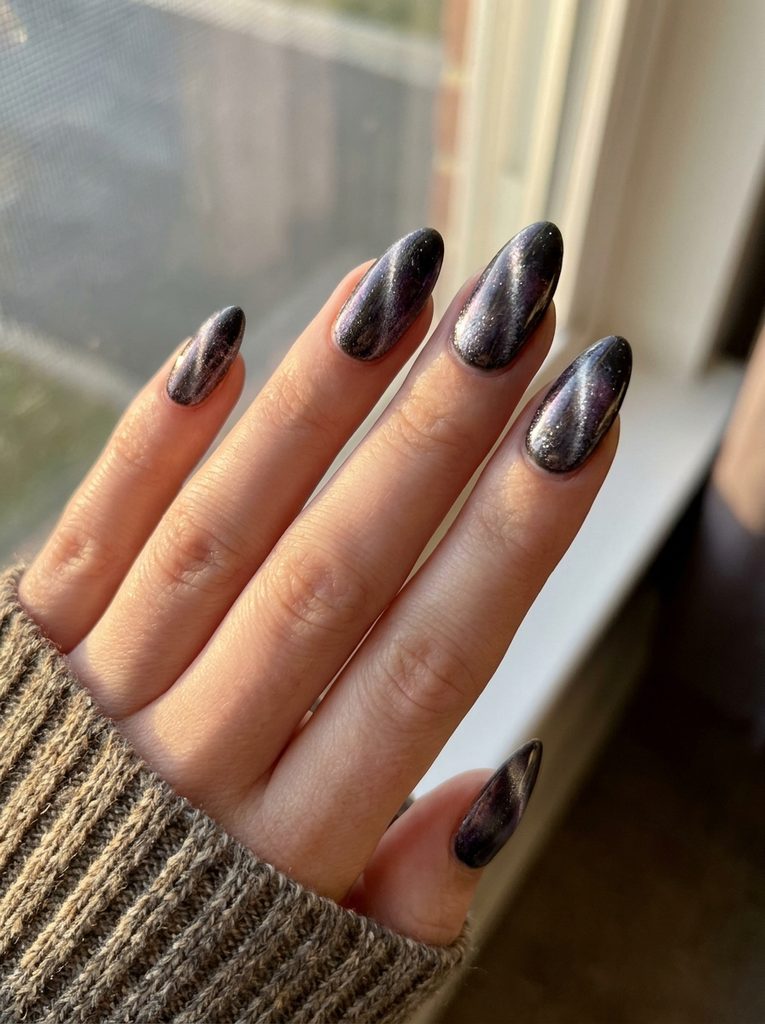
Negative Space Designs for a Modern, Architectural Look
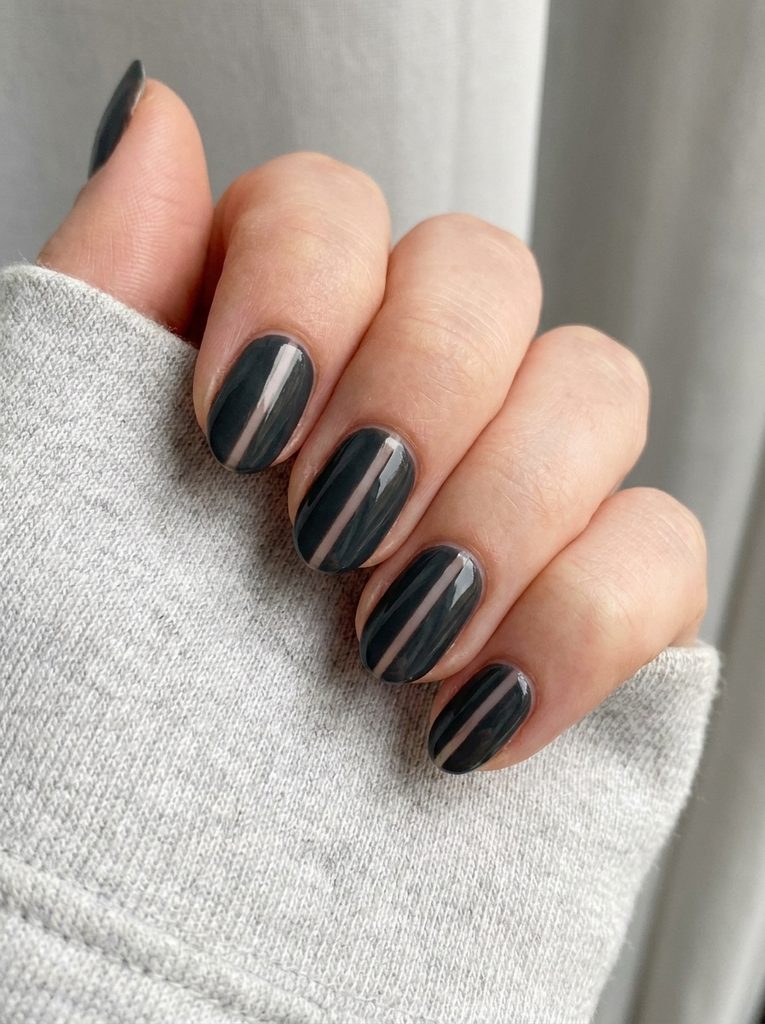
Negative space nail art leaves part of the natural nail bare or sheer, using the contrast between polish and exposed nail to create a design, which tends to suit brides drawn to a more minimal or architectural aesthetic than traditional bridal nail art usually offers.
A thin unpainted line running through an otherwise solid, opaque polish creates a clean geometric detail that reads as modern and deliberate. A sheer base with only the tip or a small crescent at the cuticle painted in solid color lets the natural nail show through the rest of the nail, producing a design that feels architectural rather than decorative. Negative space paired with fine-line detail, a bare section outlined with a thin painted edge, combines two of these non-rhinestone techniques into a single design that’s more intricate than either used alone.
This category of design tends to photograph especially cleanly in close-up hand shots, since the contrast between painted and bare nail reads clearly even at macro range, similar to how nail shape itself changes how a ring shot turns out.
Hand-Painted Botanical and Nature-Inspired Detail
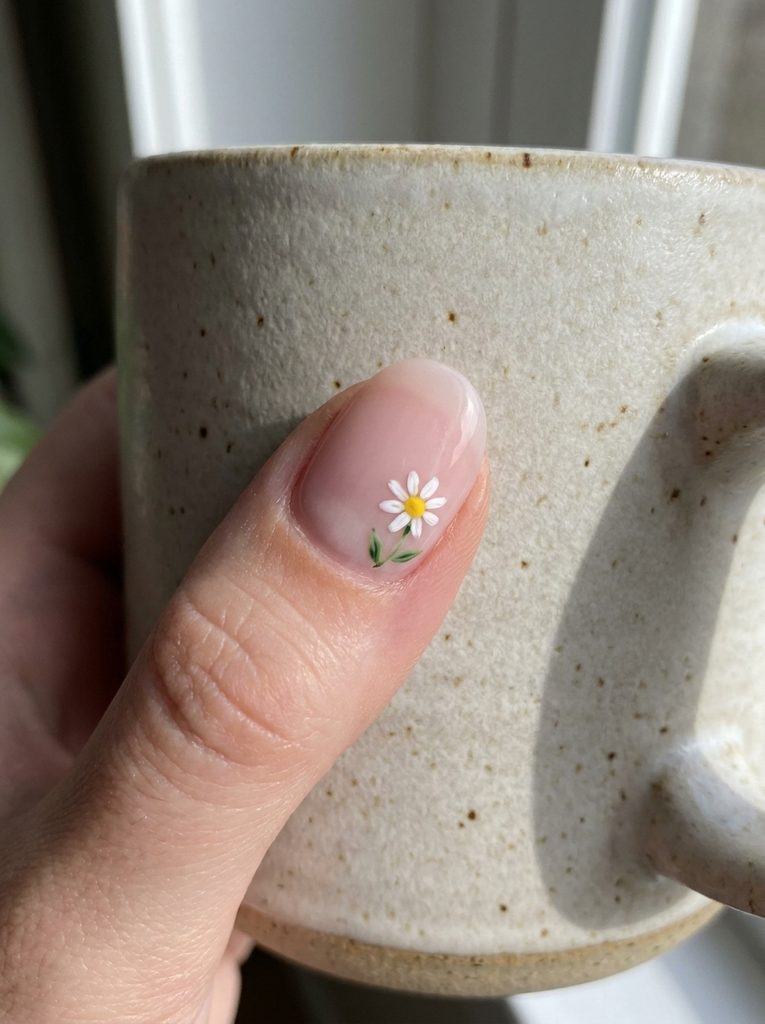
For brides whose wedding has a strong floral or garden theme already, hand-painted botanical nail art extends that theme onto the hands in a way that feels considered rather than incidental.
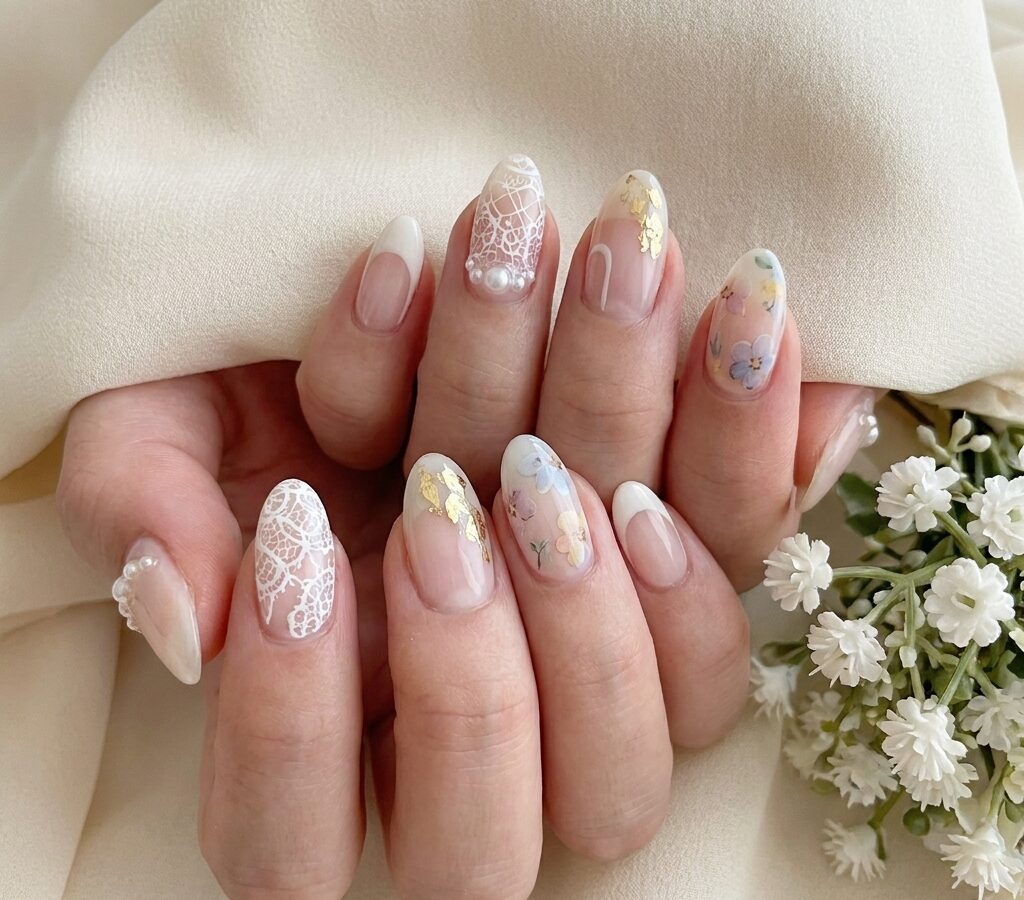
A single small, precisely painted flower on one or two accent nails, rather than a full floral pattern across all ten, keeps the detail subtle enough to read as bridal rather than overly literal. Delicate leaf or vine linework, painted in a soft green or a tone matching the wedding’s greenery, works particularly well layered over a neutral or sheer base. A pressed, dried flower petal, sealed under a clear or sheer top coat, offers a genuinely dimensional, textural alternative that uses an actual botanical element rather than a painted representation of one, and it photographs with a soft, organic quality rhinestones can’t replicate.
This style requires real hand-painting skill from a technician, so it’s worth requesting to see a portfolio of similar work specifically, rather than assuming a technician comfortable with standard bridal French tips can also execute detailed botanical painting.
Subtle Dimensional Work Without Gems
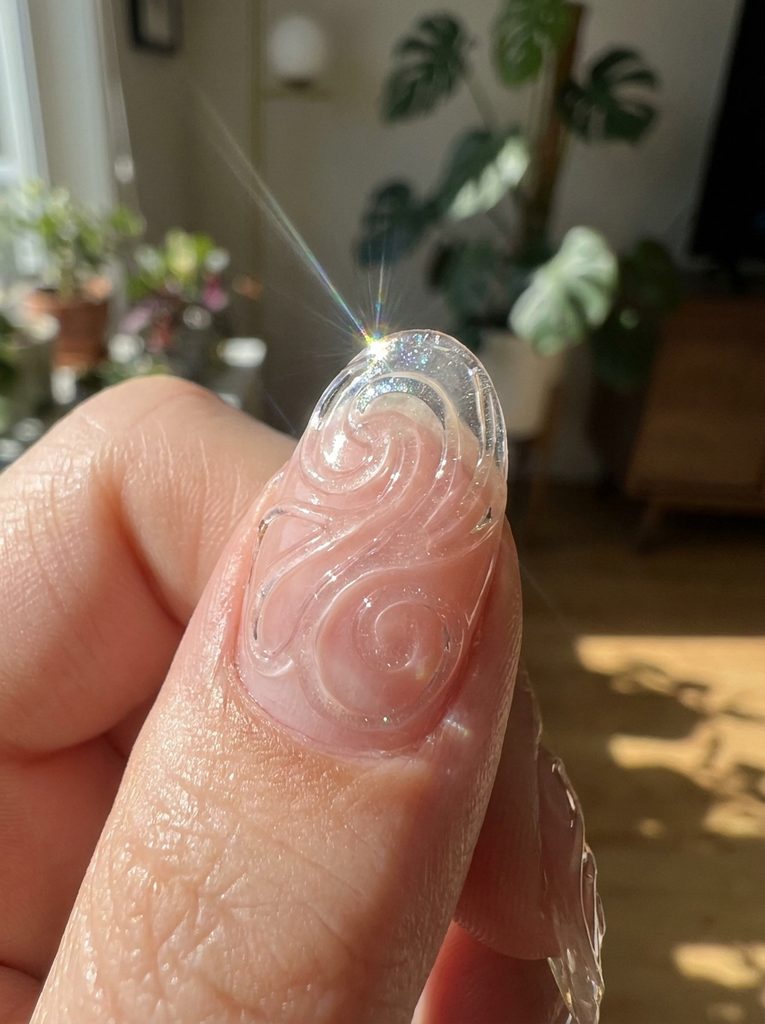
For brides who want some genuine three-dimensional detail on the nail without a rhinestone providing it, a few sculptural techniques offer texture and dimension through the polish or gel itself rather than an added embellishment.
Fine, raised linework created with gel rather than flat polish adds a delicate embossed quality, a subtle ridge the light catches differently than it catches the flat nail around it. A small sculpted design element, a tiny gel bow or a delicate raised swirl, built directly from gel rather than adhered as a separate piece, gives the same kind of dimensional interest a rhinestone provides while staying entirely part of the nail’s own surface rather than something attached to it. A soft, subtly raised marble or textured pattern using a specialized gel technique creates tactile interest that photographs as intricate without a single crystal anywhere in the design.
Choosing a Technique That Suits the Rest of the Bridal Look
Not every nail art technique suits every bridal aesthetic equally well, and it’s worth choosing based on the overall wedding-day look rather than picking a design purely from inspiration photos in isolation.
Fine-line and negative space designs tend to suit a more minimal, modern bridal look, the kind that favors clean silhouettes and quiet detail over heavy embellishment elsewhere. Textural finishes like cat-eye or soft marbling work well for brides with a slightly more romantic, dreamy overall aesthetic, since the shifting, soft quality of these finishes echoes that same mood. Hand-painted botanical detail naturally suits a garden or outdoor wedding with a strong floral presence throughout the rest of the day’s styling, tying the nails visually back to the flowers rather than existing as an unrelated detail.
What to Bring to a Nail Art Consultation
Because several of these techniques require more skill and planning than a standard rhinestone accent, the consultation conversation benefits from being more specific than it might be for a simpler design.
Bringing clear, close-up reference photos of the actual technique, not just the general color or mood, gives a technician an accurate sense of what’s being requested, since fine-line work, negative space, and dimensional gel detail all require noticeably different skills and tools. It’s worth asking directly whether a technician has done the specific technique before and, where possible, asking to see photos of their own previous work in that style rather than assuming general nail art experience automatically covers every technique shown here.
Scheduling a trial appointment for any of the more intricate techniques, particularly hand-painted or dimensional gel work, follows the same logic as testing a hair or shape choice well ahead of the wedding, since some designs take more than one attempt to get exactly right, and that adjustment period needs to happen before the actual wedding date, not during it.
Common Mistakes When Moving Beyond Rhinestones
A few recurring issues tend to show up when brides choose a more detailed nail art technique without fully planning around what it actually requires.
- Assuming any nail technician can execute fine detail work well. Standard bridal manicure experience doesn’t automatically include fine-line painting or dimensional gel sculpting, which are genuinely different skill sets.
- Choosing a technique without a trial run first. Intricate designs benefit from at least one practice attempt before the wedding day itself, especially for anything hand-painted.
- Overloading every nail with detail. A single accent nail or a subtle detail repeated across just two or three nails often reads as more intentional than the same level of detail applied to all ten.
- Picking a technique that doesn’t suit the venue or activity level. Delicate raised gel work can be more vulnerable to snagging during an especially active reception than a flat, textural finish would be.
- Not asking how the design will hold up over the full day. Some techniques, particularly hand-painted detail without a protective top coat, need extra sealing to survive hours of hand-washing, dish contact, and general wear.
A Manicure With Its Own Kind of Detail
Rhinestones will always have a place in bridal nail art, they’re reliable, they photograph well, and plenty of brides love exactly that effect. But they’re not the only way to make a manicure feel considered and occasion-appropriate. Fine linework, texture, negative space, hand-painted botanical detail, and subtle dimensional gel work all offer a different kind of intricacy, one built from technique and finish rather than an added embellishment, and several of them hold up just as well, sometimes better, through a full day of wear.
For brides still deciding on the overall nail shape and length before adding any design element, the guide to bridal nail shapes that photograph well in ring shots is worth reading first, since shape and length both affect how much space any of these techniques actually have to work with. The nail design collection also covers additional color and finish ideas worth browsing alongside these techniques.

Ella is a fashion and beauty writer who shares inspiring ideas about hairstyles, nail designs, wedding outfits, and seasonal fashion trends. She loves discovering fresh styles and creating…
View Author Profile →