
On this page
- Why Shape Advice Written for Long Nails Doesn’t Apply Here
- Shapes That Actually Work on a Short Natural Nail
- Building Length Without Committing to a Dramatic Extension
- What to Expect If Growing Out Starts Early
- Working With a Nail Technician Who Understands the Starting Point
- Camouflaging Uneven Cuticles and Nail Bed Texture
- Choosing Polish and Finish That Support the Shape
- What to Test at a Trial Appointment
- Common Missteps When Planning Around Bitten Nails
- A Manicure That Works With the Nails You Actually Have
- SEO Title
- SEO Description
- Slug
- Focus Keyword
- Image Prompts
- ALT Text
Most bridal nail advice starts from an assumption that quietly leaves a lot of brides out of the conversation: a reasonably long, even natural nail bed to work with. For brides who bite their nails, that starting point doesn’t exist, and a lot of standard shape advice, almond, coffin, long oval, simply doesn’t translate onto a nail bed that’s short, uneven, or still recovering from years of habit.
This isn’t a guide about stopping the habit before the wedding. That’s a separate conversation, and plenty of brides walk down the aisle with bitten nails and never think about it again once gloves come off and rings go on. This is a practical look at which shapes and which approaches actually work with a short or uneven natural nail, so the manicure looks intentional rather than like a workaround.
Why Shape Advice Written for Long Nails Doesn’t Apply Here
Almond, stiletto, and long coffin shapes all rely on a certain amount of length and a relatively even, healthy nail bed underneath the tip. Almond in particular needs enough natural nail to taper toward a point without the shape collapsing into something closer to round. None of that is available when the natural nail barely clears the fingertip or when one nail is noticeably shorter than the one next to it, which is extremely common with habitual biting.
The more useful question for a bitten-nail bride isn’t which shape looks best in the abstract, it’s which shape and which building technique work with a short, sometimes uneven, occasionally sensitive nail bed to produce something that photographs and feels finished. That’s a different design problem than the one most nail inspiration boards are solving.
Shapes That Actually Work on a Short Natural Nail
A handful of shapes are specifically forgiving of limited length, and understanding why helps explain which direction to point a nail technician during a consultation.
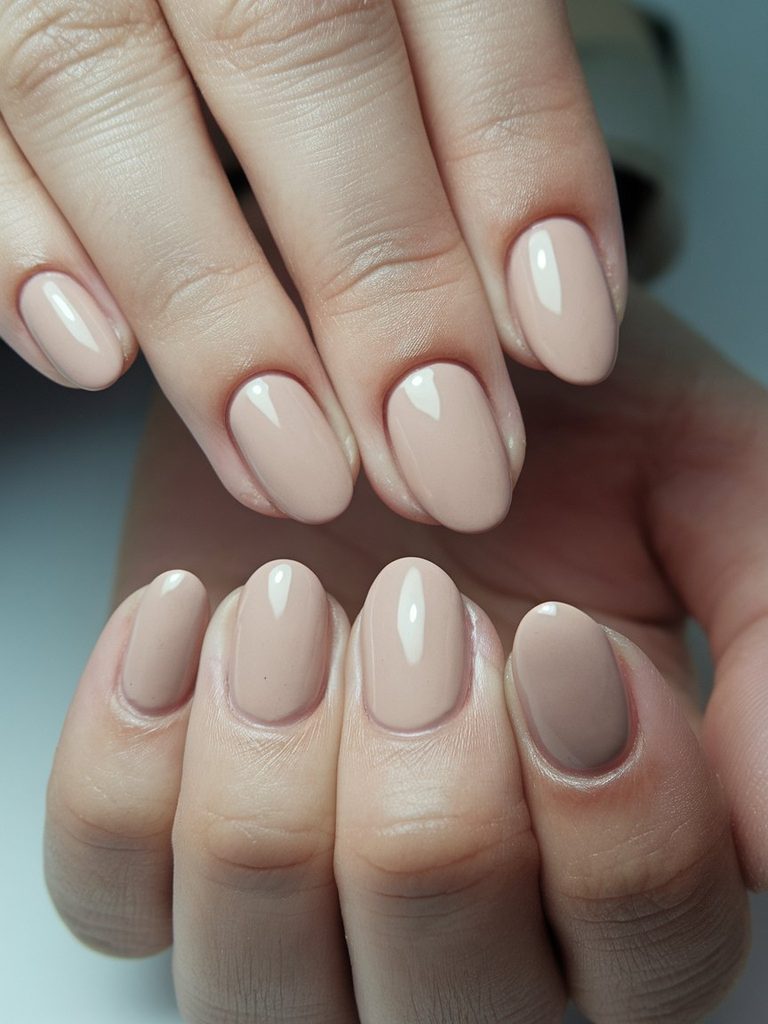
Round is the most forgiving shape available for a very short nail bed, since it follows the natural curve of the fingertip almost exactly rather than trying to build in a taper or a flat edge that needs length to read properly. A round shape on a short nail looks deliberate rather than like a smaller version of a longer shape.
Soft square with rounded corners, sometimes called a soft squoval, gives a bit more visual structure than round while still working on limited length. The flat tip reads cleanly even when there isn’t much of it, and the rounded corners avoid the slightly severe look a sharp square edge can have on a very short nail.
A slightly extended round or squoval, built with a small amount of tip extension using gel or acrylic rather than trying to grow the natural nail out first, bridges the gap between a fully natural short shape and something with a bit more presence. This isn’t the same as a long extension; the goal is a few extra millimeters that let the shape read clearly in photos without looking obviously artificial.
Almond and coffin shapes aren’t entirely off the table if some form of extension is part of the plan, but they generally need more added length to work than round or soft square does, which means they depend more heavily on the extension itself doing the shaping rather than the natural nail contributing much to the final look.
Building Length Without Committing to a Dramatic Extension
For brides who want a bit more length than their natural nail currently offers but don’t want the maintenance or the look of a long extension, a few in-between options exist.
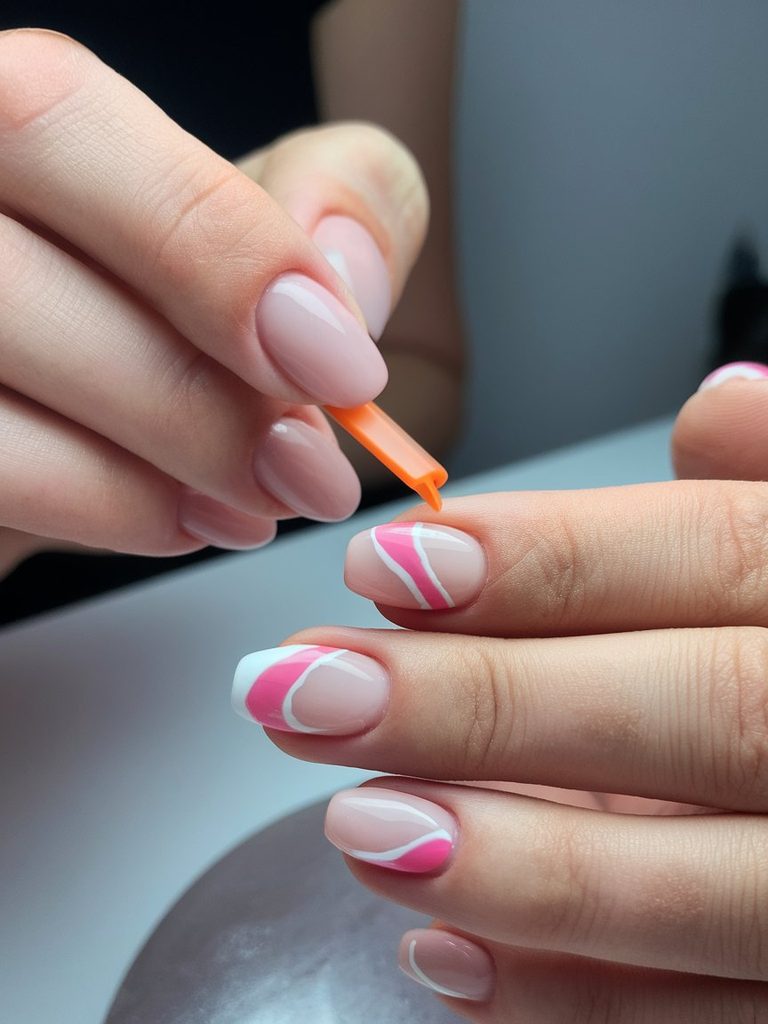
A gel overlay with minimal tip extension adds structure and a small amount of length directly over the natural nail, strengthening it in the process rather than covering it with something entirely separate. This tends to suit brides who bite intermittently or who have some natural nail to work with but want it reinforced and slightly extended rather than replaced.
Dip powder builds a hard, protective layer over the natural nail with a small amount of added length and tip definition, and it tends to hold up well against the kind of light picking or nail-adjacent habits that often accompany biting, since the surface is considerably harder than a natural nail or standard polish.
Press-on nails, fitted specifically to the width and shape of the natural nail bed rather than a generic size, have improved enough in recent years to look considerably more natural than older versions, and they offer a temporary option for the wedding day itself without requiring weeks of growing out or maintaining an extension beforehand.
Silk or fiberglass wraps reinforce a very short or weak natural nail without adding significant length, which suits brides who want their actual nail strengthened and protected rather than extended, particularly if the nail bed is sensitive from recent biting.
What to Expect If Growing Out Starts Early
For brides with enough lead time before the wedding, even a partial growing-out period changes what’s realistically achievable, and it’s worth understanding the general timeline rather than assuming either extremes, fully grown or still short, are the only outcomes.
Nail growth averages a few millimeters per month, though this varies by individual and by how consistently biting has stopped or slowed in the lead-up to the wedding. A bride starting a strengthening routine three to four months out typically has enough time to see a meaningful difference in length and evenness, even if the nail hasn’t reached a dramatic length by the wedding date. Less lead time, four to six weeks, still allows for some improvement in nail bed health and evenness, which makes a bigger visual difference than people often expect, even without much added length.
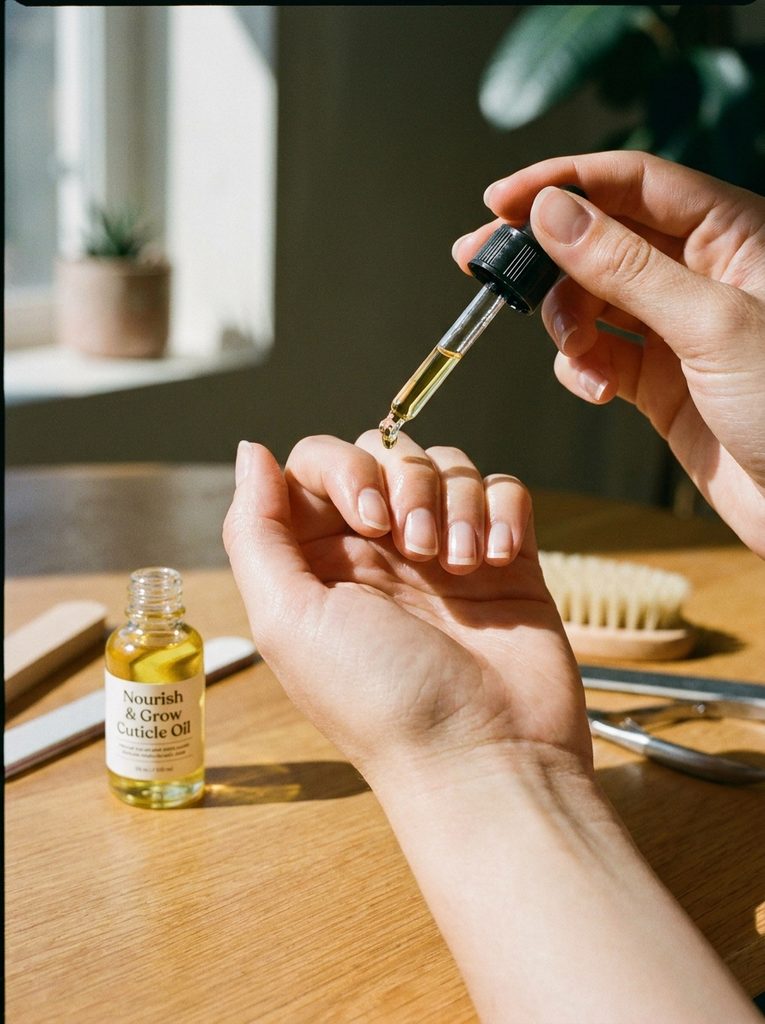
Cuticle oil applied consistently, along with a base coat formulated to strengthen rather than just protect, tends to support whatever natural growth is happening during this window. None of this requires a dramatic lifestyle change to be worth doing, even small, consistent care in the weeks before a wedding tends to produce a visibly healthier-looking nail bed by the day itself, regardless of how much length actually grows in.
Working With a Nail Technician Who Understands the Starting Point
Not every nail technician has extensive experience working with bitten or significantly uneven nail beds, and it’s worth being upfront about this during a consultation rather than assuming any technician can adapt on the spot.
Bringing a few reference photos of nails that are closer to the actual starting point, rather than only bringing photos of the desired end result, helps a technician understand what they’re actually working with and plan the shape and extension approach accordingly. It also helps to mention specifically whether any nails are more uneven, shorter, or more sensitive than others, since brides who bite often have significant variation from finger to finger rather than a uniform starting point across all ten nails.
A technician experienced with bitten nails will often suggest a slightly different approach for the most damaged or uneven nails compared to the healthier ones, rather than forcing the same shape and length across every nail regardless of what the natural nail bed can actually support. This kind of individualized approach tends to produce a far more even, finished-looking result than insisting on identical treatment across all ten fingers.
Camouflaging Uneven Cuticles and Nail Bed Texture
Beyond shape and length, the skin and texture immediately surrounding a bitten nail often need some attention of their own, since this is frequently what makes a manicure look unfinished even when the shape and polish are well chosen.
A cuticle treatment focused on softening and gently pushing back rather than aggressive cutting tends to suit nail beds that have been under stress from biting, since overly aggressive cuticle work can irritate skin that’s already sensitive. A slightly opaque or milky polish finish, rather than a completely sheer or glass-like finish, can help visually even out minor texture differences across the nail bed that a fully transparent polish would make more obvious.
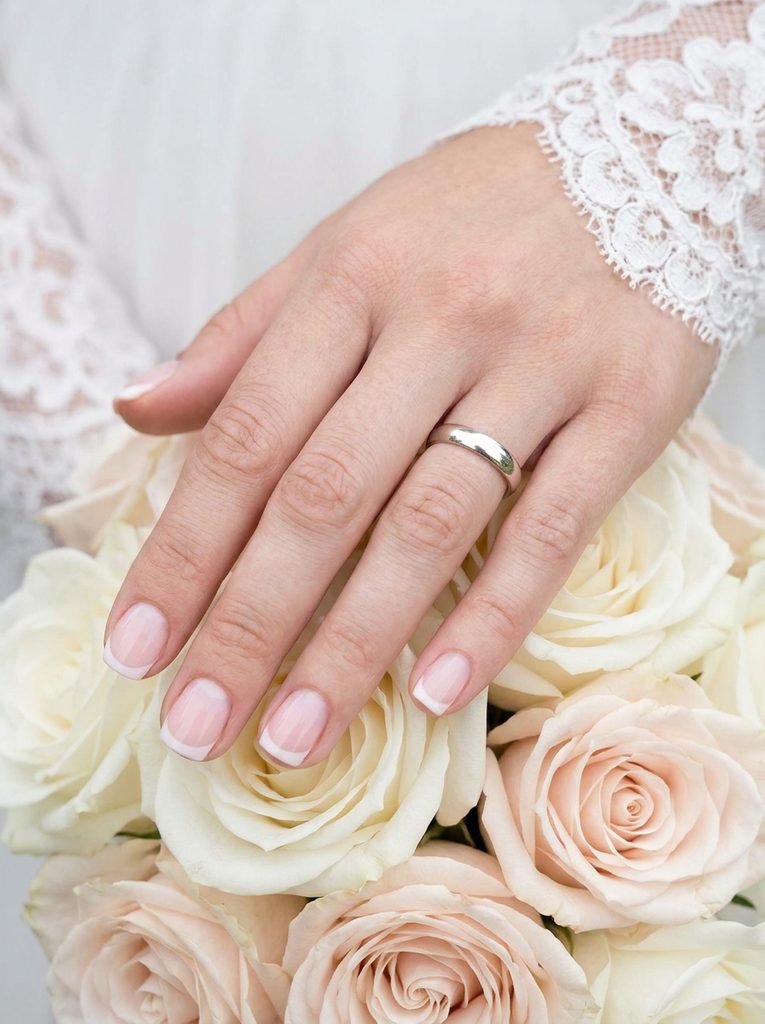
French tips or a soft ombre finish also tend to draw the eye toward a clean, defined tip line rather than toward the nail bed itself, which works in favor of a bride whose nail bed has more texture or unevenness than her nail tip does. This is less about hiding anything and more about choosing a finish that naturally directs attention to the part of the nail that’s easiest to make look polished.
Choosing Polish and Finish That Support the Shape
Certain finishes genuinely photograph and wear better on a shorter, less uniform nail bed than others, which makes finish a meaningful part of this planning conversation rather than an afterthought.
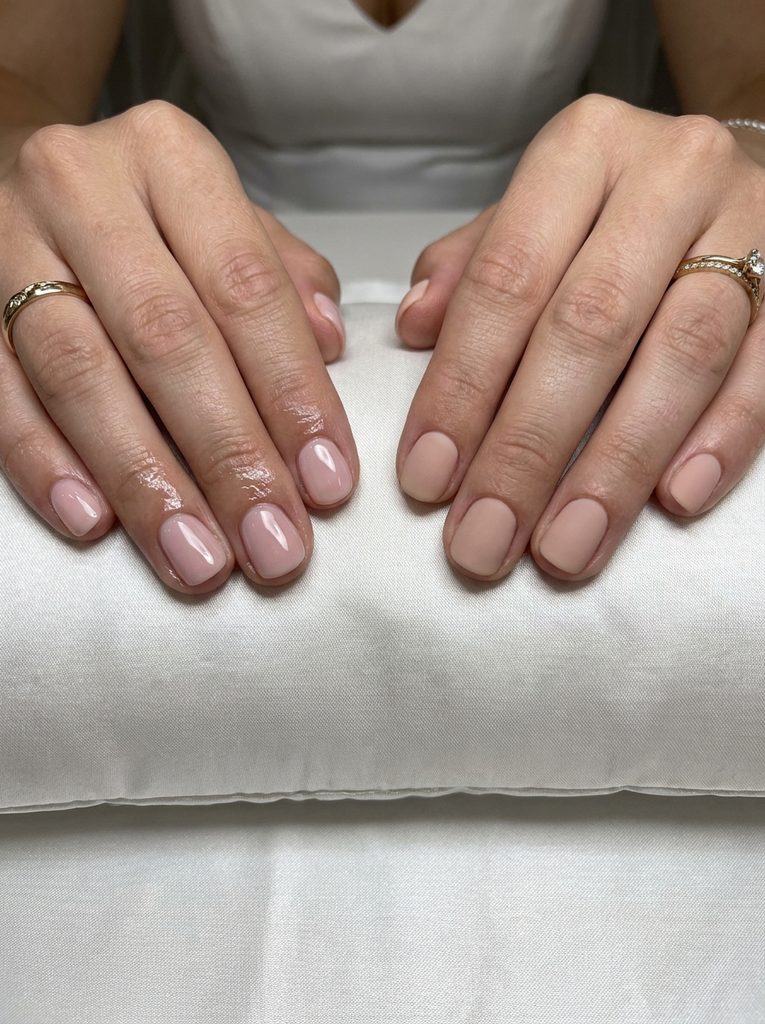
A glossy, opaque finish in a soft neutral or classic bridal white tends to give a short nail more visual presence than a sheer or barely-there polish would, since the solid color reads clearly even without much length to display it on. Chrome and heavily reflective finishes, while striking on longer nails, can sometimes emphasize surface irregularities on a shorter or more uneven nail bed, since the high shine reflects texture as readily as it reflects light in a flattering way.
A matte finish, less common for bridal looks but worth considering, tends to soften the appearance of minor texture differences better than a high-gloss finish does, which can work in favor of a nail bed still recovering some evenness in the weeks before the wedding.
What to Test at a Trial Appointment
A nail trial for a bitten-nail bride benefits from testing slightly different things than a standard bridal nail trial would, since durability and comfort matter as much as how the shape photographs.
Testing how a chosen extension or overlay actually feels during normal daily tasks, typing, doing up a zipper, anything involving fine motor movement, matters more here than it typically would, since brides recovering from biting sometimes find any added length briefly takes adjustment. It’s also worth specifically asking how the chosen approach, gel overlay, dip powder, or press-ons, will need to be maintained or touched up in the weeks leading up to the wedding, since a bitten nail bed can behave less predictably than an established, healthy natural nail when it comes to how an overlay or extension holds over several weeks.
If a bride is still actively working on reducing biting in the lead-up to the wedding, mentioning this directly to the technician allows them to choose a product and shape that will look intentional even if the underlying nail bed changes somewhat, shrinking slightly if a nail breaks or grows unevenly, between the trial and the wedding day itself.
Common Missteps When Planning Around Bitten Nails
A few recurring choices tend to work against a bitten-nail bride more than the biting itself ever does.
- Choosing a shape designed for long nails and hoping extensions will make it work. Almond and stiletto in particular need a certain proportion of length to read correctly, and forcing them onto a very short starting point often looks less finished than a shape actually suited to shorter nails.
- Skipping cuticle and skin care in favor of focusing only on the nail itself. The skin around a bitten nail is often what makes a manicure look unfinished, not the nail shape or polish choice.
- Assuming every nail can be treated identically. Bitten nail beds frequently vary significantly from finger to finger, and an approach that doesn’t account for this tends to look less even than one that does.
- Waiting until the week of the wedding to address nail health. Even a few weeks of consistent cuticle care and a strengthening base coat make a visible difference that a single pre-wedding appointment can’t replicate.
- Not mentioning nail-biting history to the technician at all. A technician working blind, without knowing the nail bed’s actual history and sensitivity, is more likely to suggest an approach that doesn’t hold up as well as one chosen with that context in mind.
A Manicure That Works With the Nails You Actually Have
A bitten nail bed isn’t a smaller, less finished version of a standard bridal manicure waiting to be corrected. It’s a different starting point, one that calls for shapes built around shorter length, finishes that support rather than expose texture, and a technician who plans around the actual nail bed rather than a generic bridal template. Round and soft square shapes, modest extensions rather than dramatic ones, and a bit of early attention to cuticle and nail health tend to produce a manicure that looks every bit as intentional and polished as one built on a longer, more uniform natural nail.
For brides thinking through the rest of their bridal beauty details at the same time, the nail design collection covers a broader range of shapes and finishes worth browsing, and the guide to bridal nail shapes that photograph well in ring shots is a useful next read once a base shape and length feel settled, since several of the same photography considerations apply once extensions or an overlay are in place.
SEO Title
Bridal Nail Shapes for Brides Who Bite Their Nails
SEO Description
Bridal nail shapes and techniques suited to short or uneven bitten nails, covering shape choice, gentle extensions, and nail bed care before the wedding.
Slug
bridal-nail-shapes-brides-who-bite-nails
Focus Keyword
bridal nail shapes for bitten nails
Image Prompts
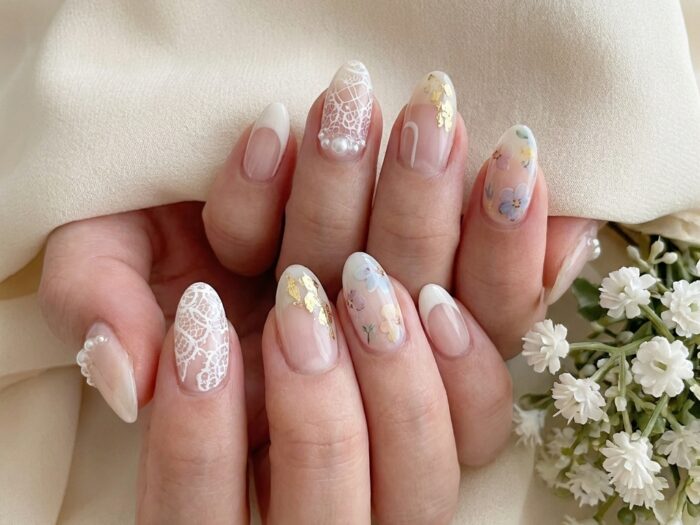
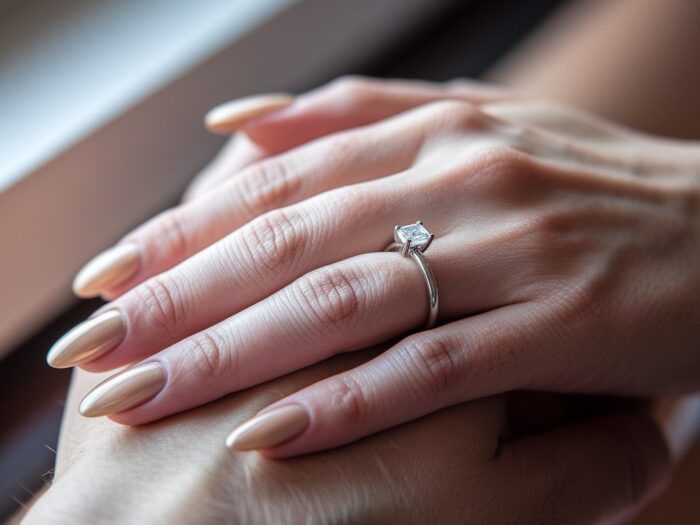
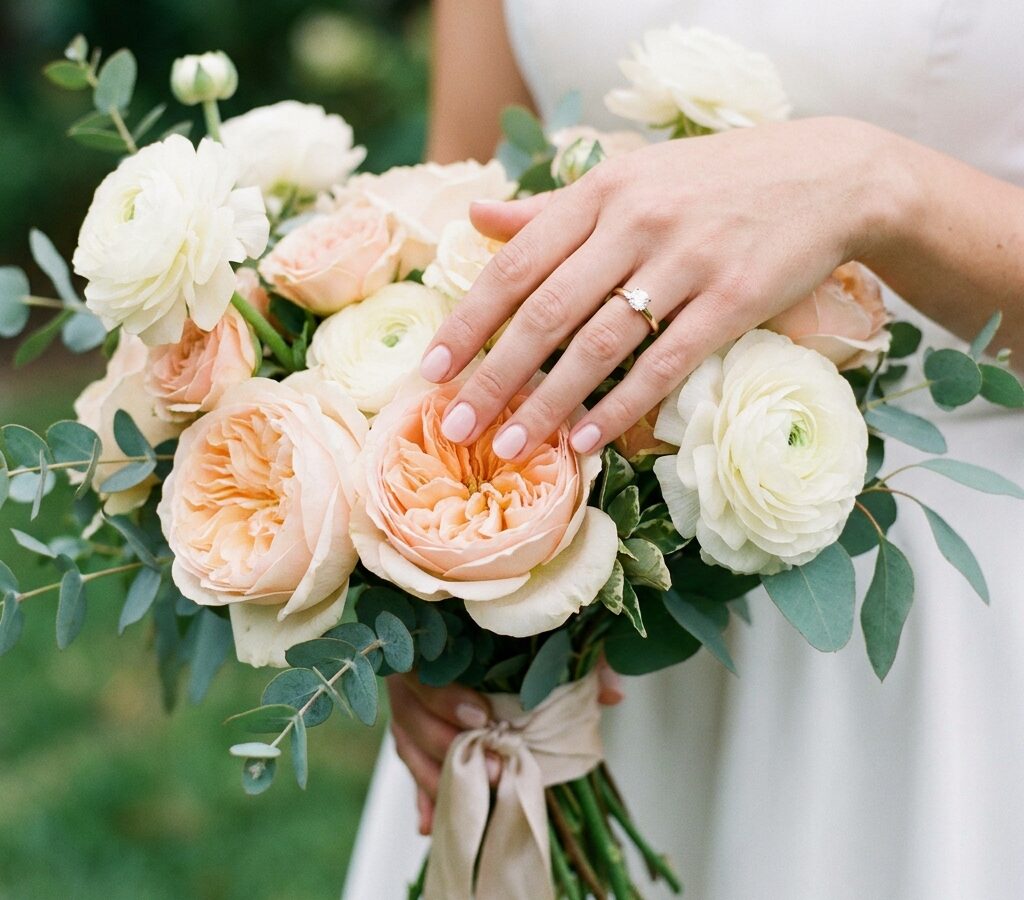
Feature Image Prompt: A photorealistic bridal beauty photograph of a bride’s hand with a short round manicure in soft neutral polish, resting elegantly near a bouquet, soft natural light, realistic skin and nail texture, editorial bridal photography with shallow depth of field.
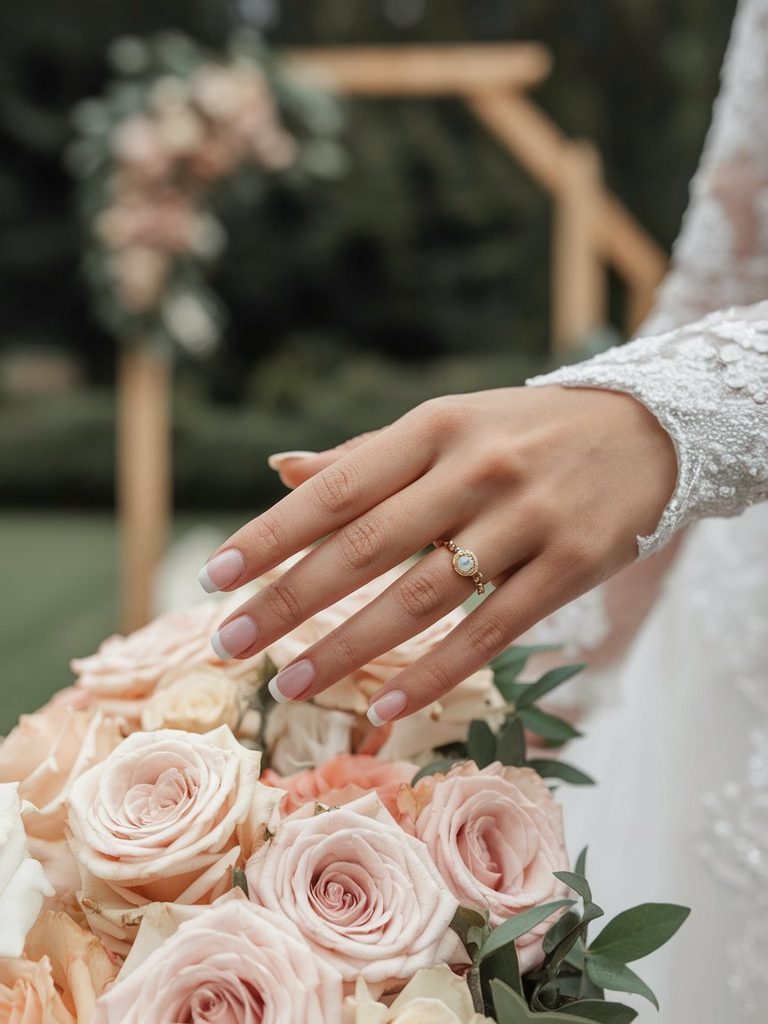
Image Prompt 1 (Why Long-Nail Shape Advice Doesn’t Apply): A photorealistic close-up photograph of a hand with short, natural-length nails in a clean round shape and soft polish, natural window light, realistic skin and nail texture, editorial beauty photography style.
Image Prompt 2 (Shapes That Work on Short Nails): A photorealistic close-up photograph showing round and soft square nail shapes side by side on short natural nails, neutral polish, soft studio lighting, realistic detail and texture.
Image Prompt 3 (Building Length Without Drama): A photorealistic close-up photograph of a nail technician applying a gel overlay with slight tip extension to a short natural nail, natural salon lighting, realistic hand and nail texture, professional beauty photography.
Image Prompt 4 (Growing Out Timeline): A photorealistic close-up photograph of a hand with cuticle oil being applied to short, healthy-looking nails, soft natural light, realistic skin texture, calm editorial beauty photography style.
Image Prompt 5 (Camouflaging Cuticles and Texture): A photorealistic close-up photograph of a bride’s hand with a soft French tip manicure on short nails, gentle natural lighting, realistic skin and nail detail, elegant bridal beauty photography.
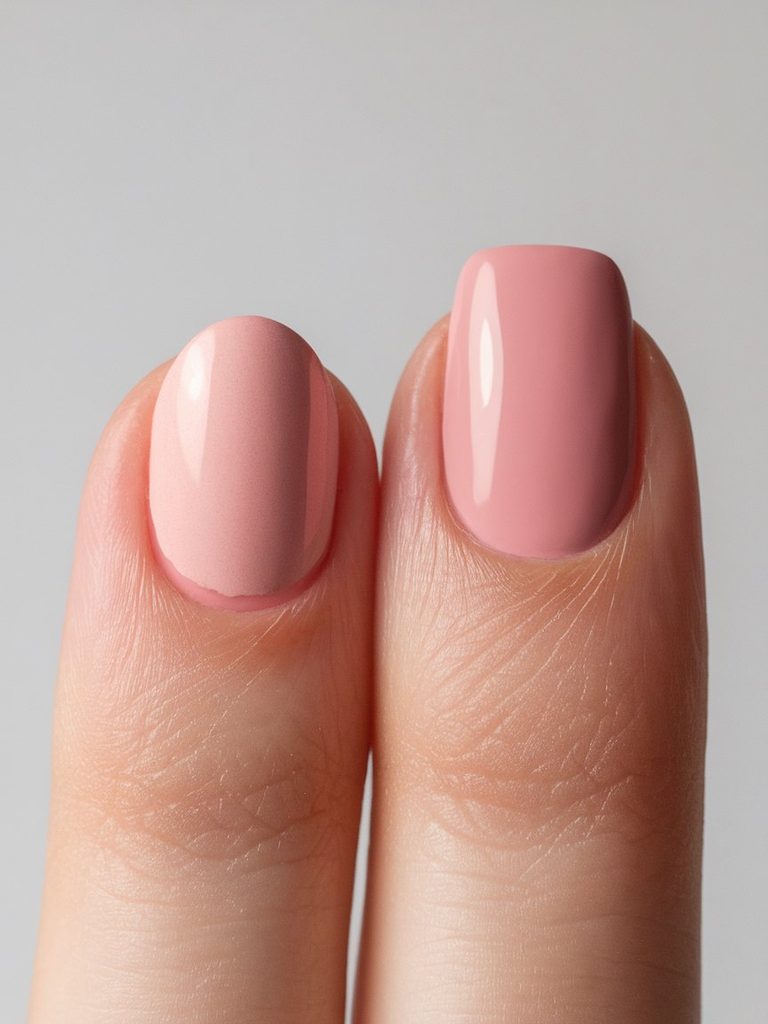
Image Prompt 6 (Polish and Finish): A photorealistic close-up photograph comparing a glossy opaque polish and a matte polish on short bridal nails, soft even lighting, realistic texture and color detail, editorial beauty photography style.
ALT Text
- Feature: Bride’s hand with a short round manicure resting near a bouquet
- Close-up of short natural nails in a clean round shape with soft polish
- Round and soft square nail shapes compared side by side on short nails
- Nail technician applying a gel overlay with slight extension to a short nail
- Cuticle oil being applied to short, healthy-looking natural nails
- Bride’s hand with a soft French tip manicure on short nails
- Glossy and matte polish finishes compared on short bridal nails

Ella is a fashion and beauty writer who shares inspiring ideas about hairstyles, nail designs, wedding outfits, and seasonal fashion trends. She loves discovering fresh styles and creating…
View Author Profile →