

On this page
- What “Quiet Luxury” Actually Means for Nails
- The Core Color Families Worth Knowing
- Pairing Nail Color With Jewelry Metal
- DIY at Home or a Salon Gel Application
- Finishes That Keep Color Feeling Quiet
- Nail Shape and Length That Support the Look
- The One-Element Rule
- Subtle Ways to Add Interest Without Breaking the Mood
- Considering Skin Tone Alongside Color
- What Pushes a Minimalist Look Into “Trying Too Hard”
- Maintenance Habits That Match the Aesthetic
- A Simple Way to Build a Winter Rotation
- Adjusting the Look for Different Occasions
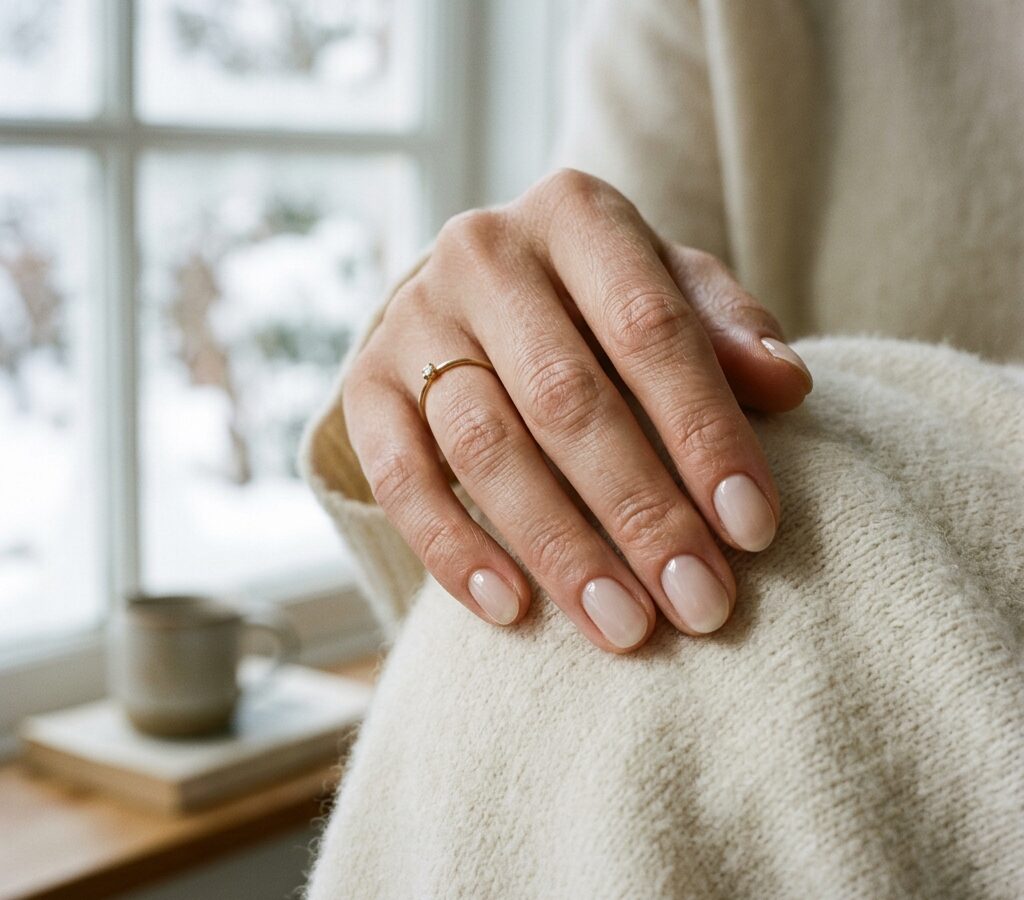
Quiet luxury started as a wardrobe idea, built around soft neutrals, quality fabric, and the absence of visible logos. It has since made its way to the manicure table, where the same principles apply. Instead of bold color or elaborate nail art, the focus shifts to healthy-looking nails, a few carefully chosen shades, and finishes that catch light without demanding attention.
This does not mean color disappears entirely. It means color gets edited down to a handful of tones that feel considered rather than decorative, paired with a shape and finish that support the same understated mood.
What “Quiet Luxury” Actually Means for Nails
The phrase gets used loosely, so it helps to define what actually separates a quiet-luxury manicure from a plain one.
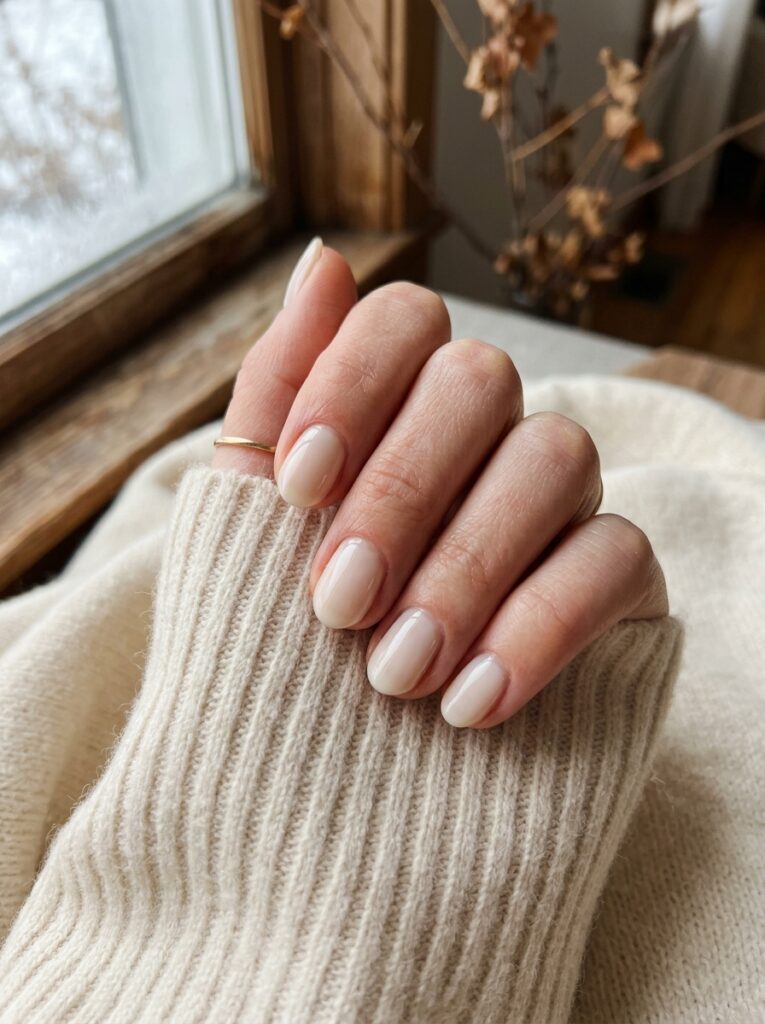
A quiet-luxury nail look is not the same as a completely bare nail. It is built around soft, wearable color that enhances the natural nail rather than covering it up entirely. The nail bed itself, well-shaped, evenly buffed, with tidy cuticles, matters as much as the polish color sitting on top. This is part of why the look reads as more expensive than a plain nude polish, even though the color itself might be nearly identical: the overall condition of the nail is doing a lot of the visual work.
The other defining feature is restraint. A quiet-luxury manicure typically commits to one color family and one finish, rather than layering multiple effects, glitter, chrome, and hand-painted detail, onto the same set. The goal is a manicure that looks intentional and put together without competing for attention against an outfit or jewelry.
The Core Color Families Worth Knowing
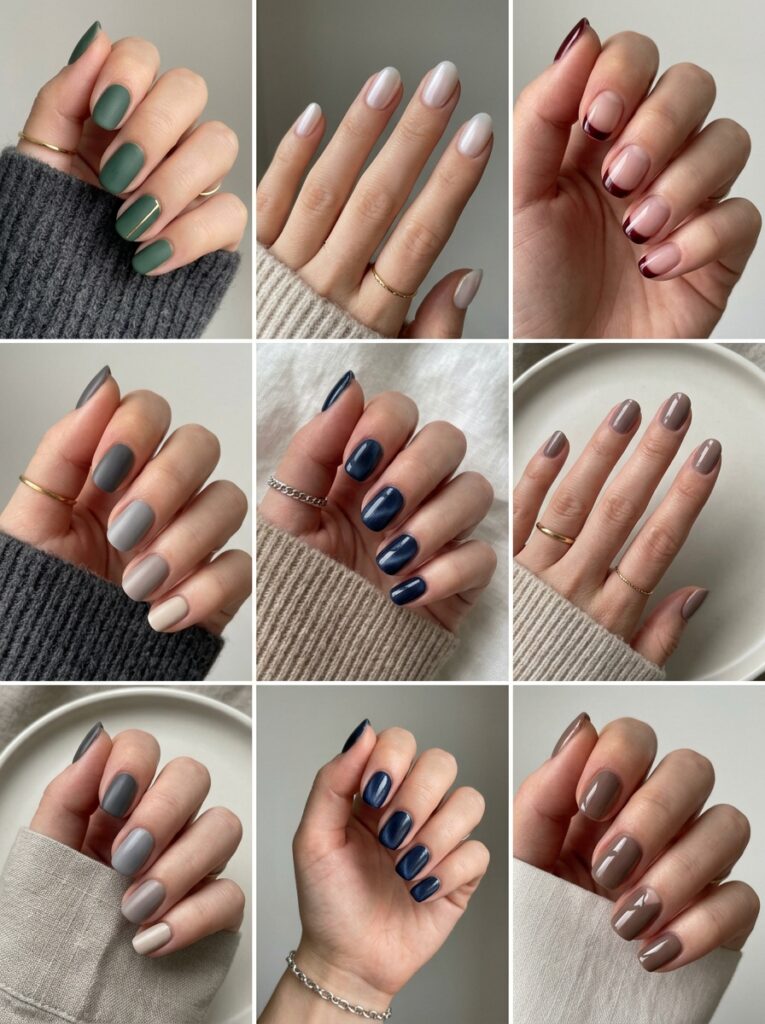
Winter’s quiet-luxury palette tends to fall into a handful of related color families, each with its own mood.
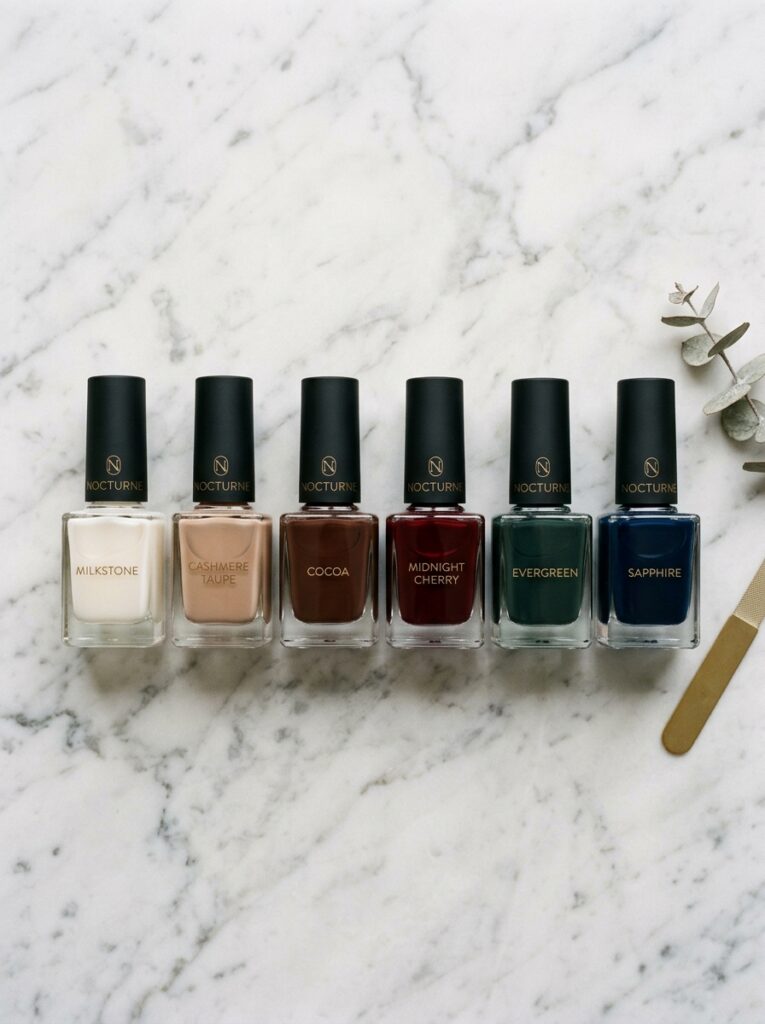
Milky Neutrals
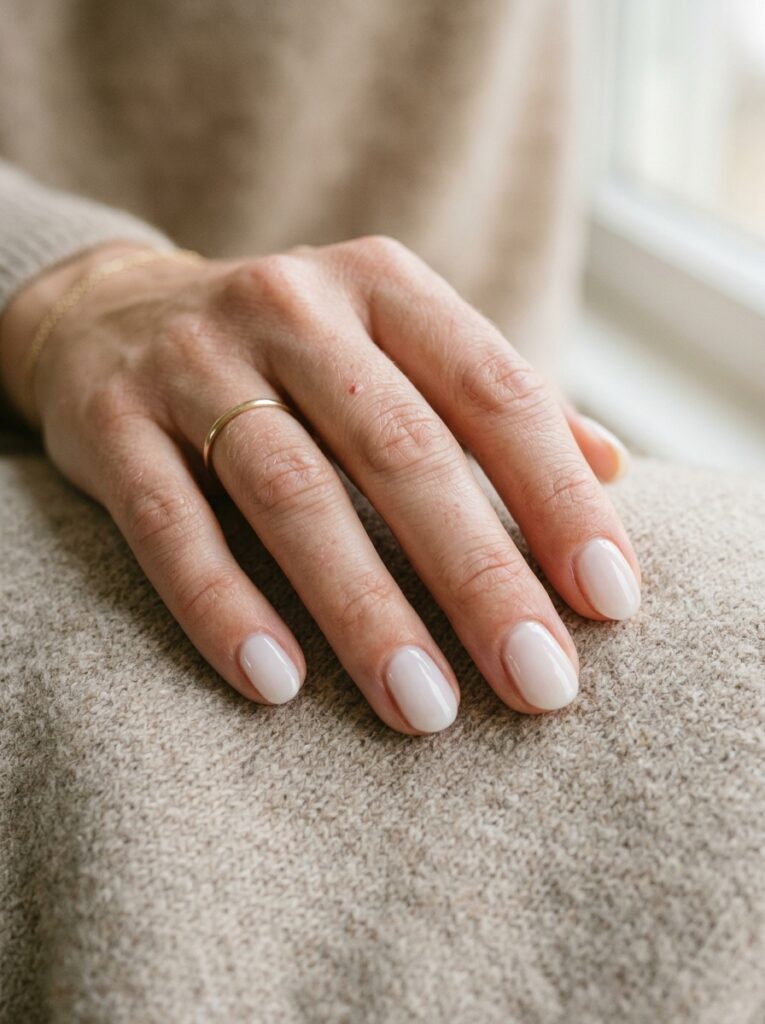
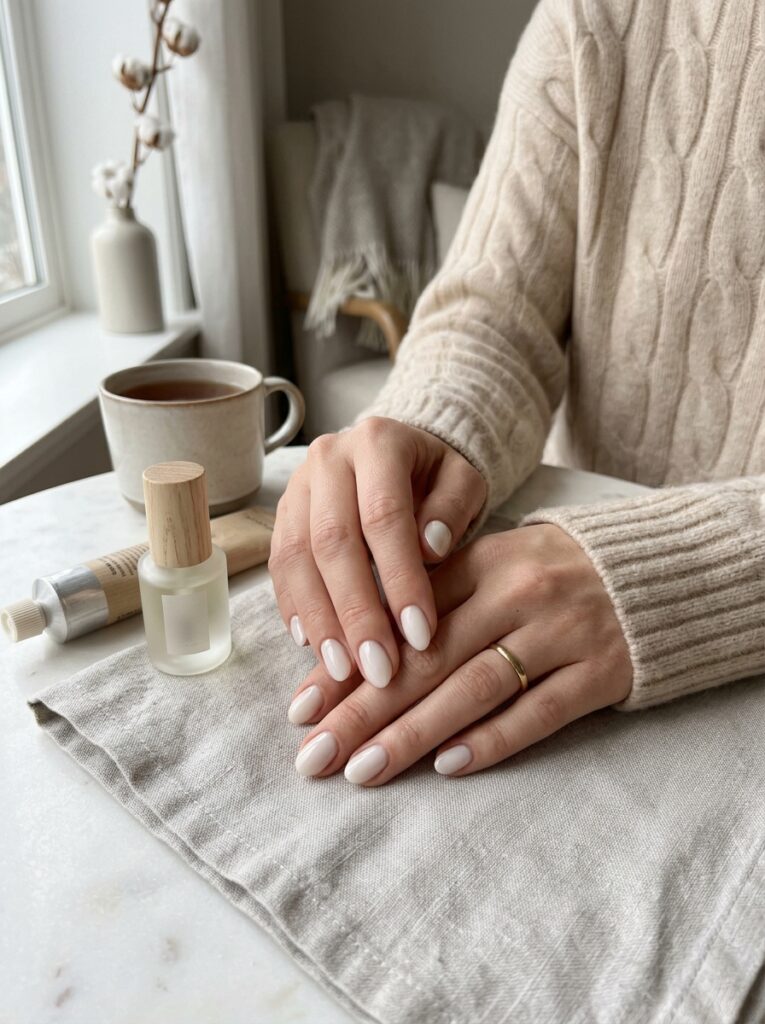
Milky white, porcelain pink, and vanilla tones sit at the center of this trend. These shades are usually sheer or semi-sheer, letting some of the natural nail show through rather than fully opaque coverage. A single thin coat gives a barely-there wash of color, while two coats build toward a slightly more opaque, milky finish. Both approaches stay firmly within the minimalist range.
Warm Cashmere Beiges and Taupes
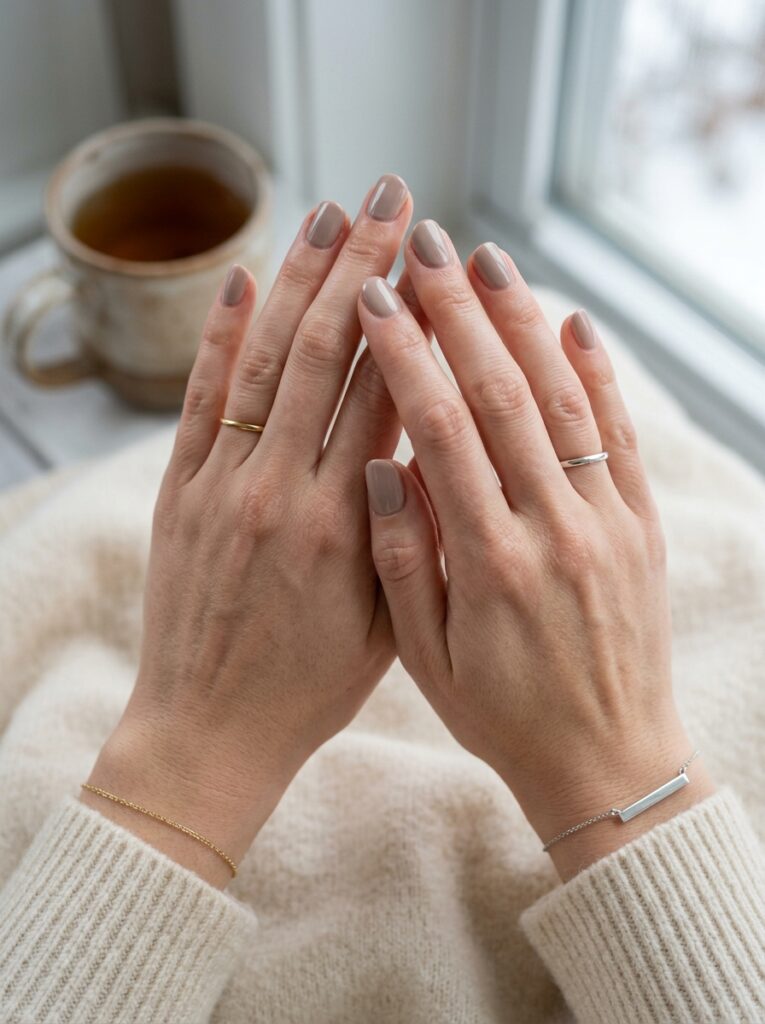
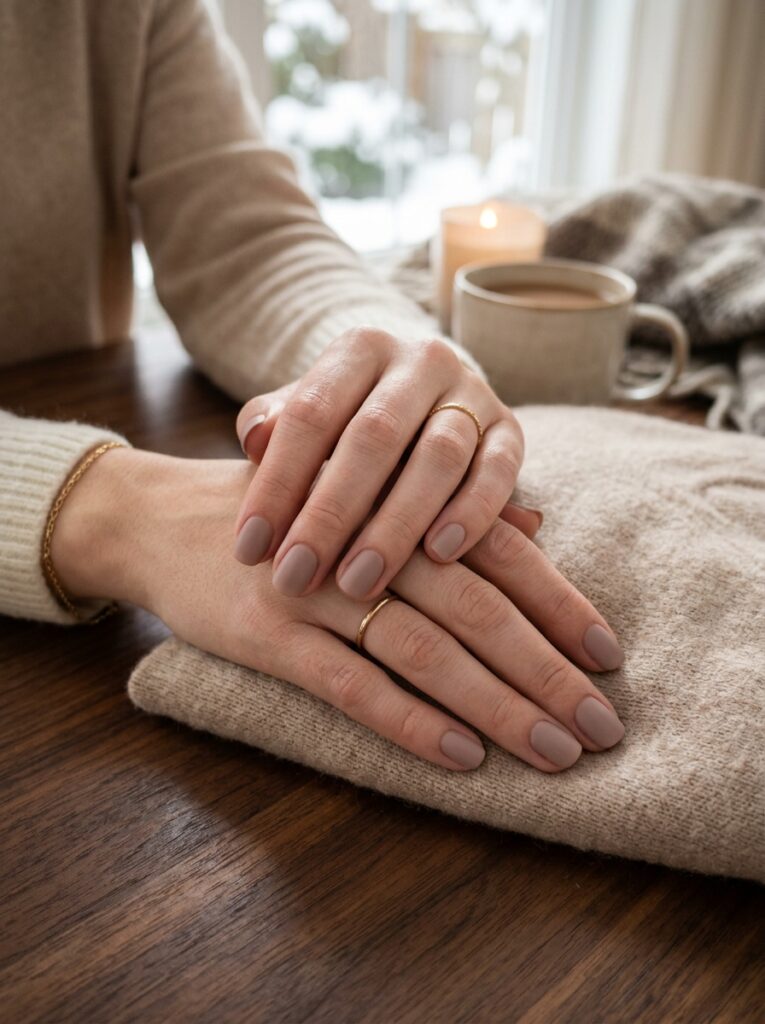
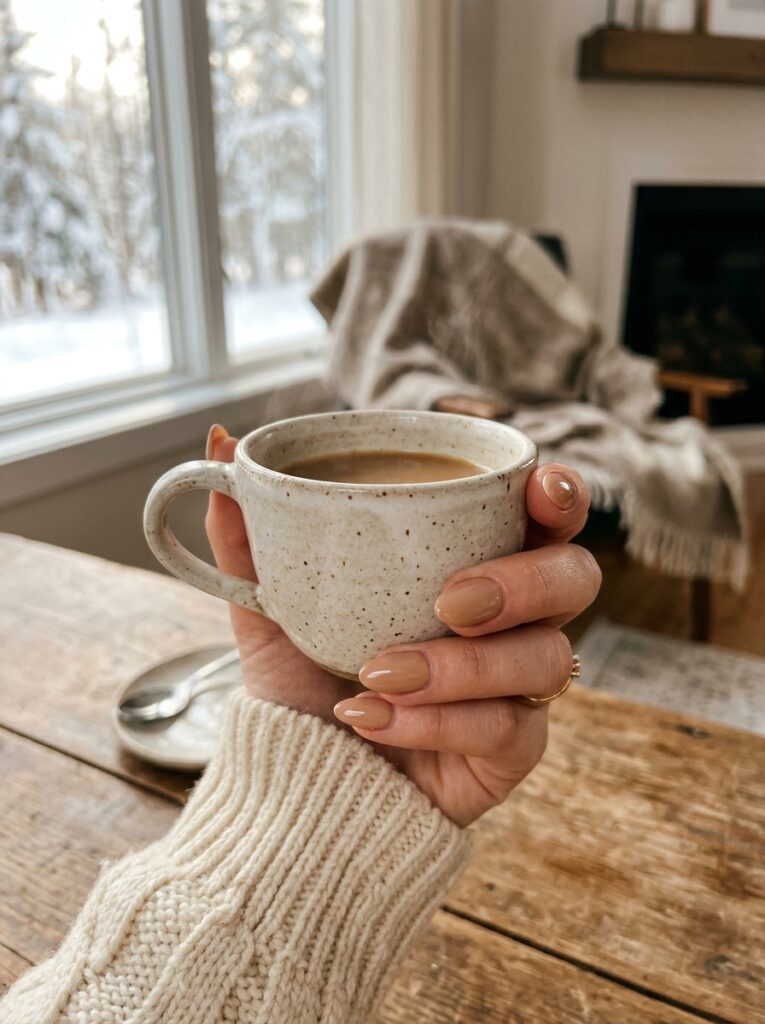
Warm beige, oat, and taupe tones have earned the nickname “cashmere nails” for the way they echo the color of a soft winter sweater. These shades read as more expensive than a plain nude, largely because the warmth in the undertone keeps them from looking flat or washed out against the skin.
Cooled-Down Cocoa and Espresso
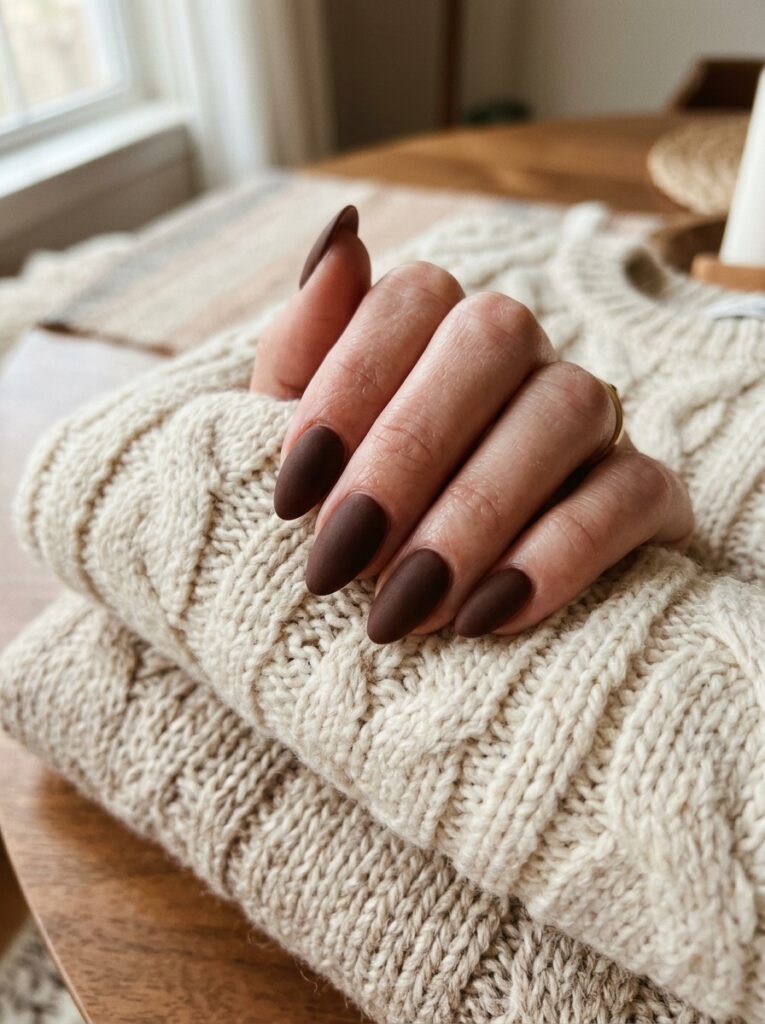
Brown has become one of the defining neutrals of the season, though the specific tone matters. Rather than a warm, orange-leaning brown, this winter’s cocoa and espresso shades lean slightly cooler and softer, which keeps them feeling calm rather than heavy. These deeper browns work particularly well paired with gold jewelry and neutral, tailored outfits.
Deep, Muted Reds and Cherry Tones
Red remains a mainstay through winter, but the quiet-luxury version leans toward a deeper, blue-based cherry or oxblood rather than a bright, classic red. These moodier reds carry the same confidence as a traditional red manicure while fitting more naturally into a muted winter wardrobe.
Quiet Greens
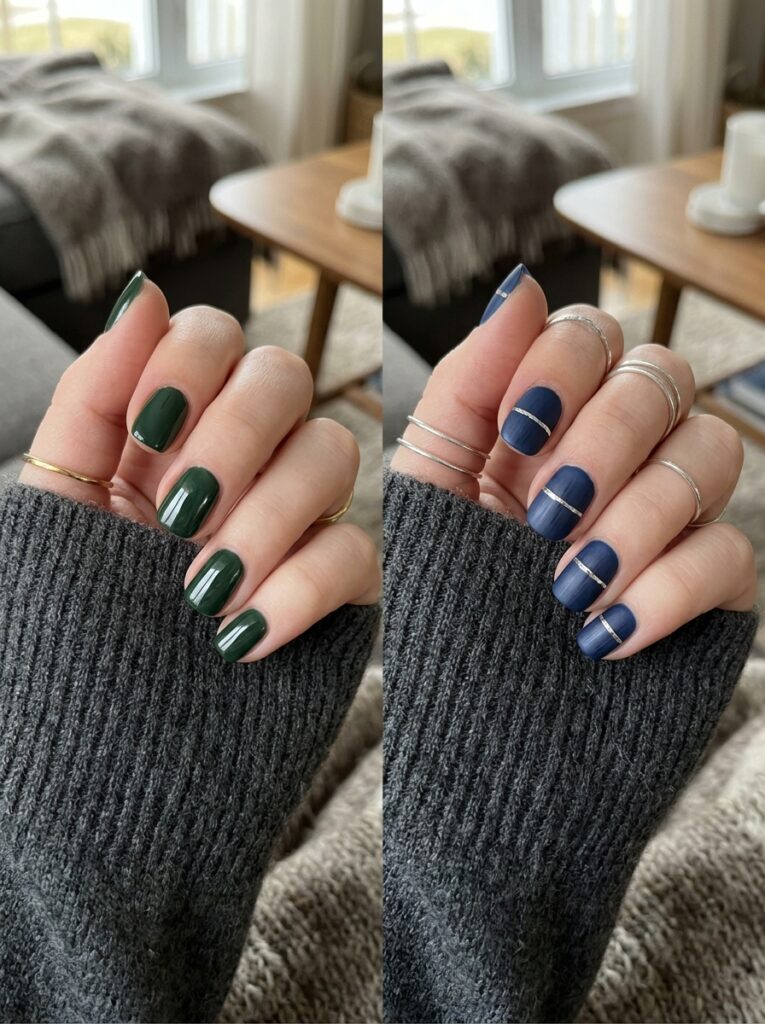
Dark forest and deep emerald green have become a favorite among the same audience drawn to quiet luxury, since the color reads as rich and sophisticated without being loud. A single glossy coat of deep green pairs easily with both everyday knitwear and dressier holiday looks.
Navy and Ink Blue
Navy works well as either a standalone color or a base for subtle detail, since its darkness reads as neutral in low light while still offering more depth than black. It tends to suit almost any nail shape and pairs easily with both gold and silver jewelry.
Soft Lilacs and Elegant Greys
A quieter alternative to the deeper tones above, muted lilac and soft grey shades bring a slightly cooler, more delicate mood to the same restrained approach. These colors work particularly well for anyone who wants a hint of color beyond the neutral family without moving toward a warmer brown or red. A pale grey in particular can read as almost architectural against a monochrome winter outfit.
Pairing Nail Color With Jewelry Metal
Since quiet luxury as a broader aesthetic pays close attention to how pieces work together, the metal tone of jewelry worn alongside a manicure is worth considering.
Warm neutrals like cashmere beige, cocoa, and warm milky pink tend to sit particularly well next to gold jewelry, since both share an underlying warmth that reinforces the same mood. Cooler tones, navy, soft grey, and the chilled version of espresso brown mentioned earlier, tend to pair more naturally with silver or platinum pieces, where the coolness in both the polish and the metal complements rather than competes.
This is not a strict rule, since mixed metals have become common in everyday jewelry, but noticing which direction your typical jewelry leans can help narrow down a color choice that feels cohesive with the rest of what you already wear.
DIY at Home or a Salon Gel Application
Several of the finishes and colors described here are realistic to apply at home, while others hold up better with a professional application.
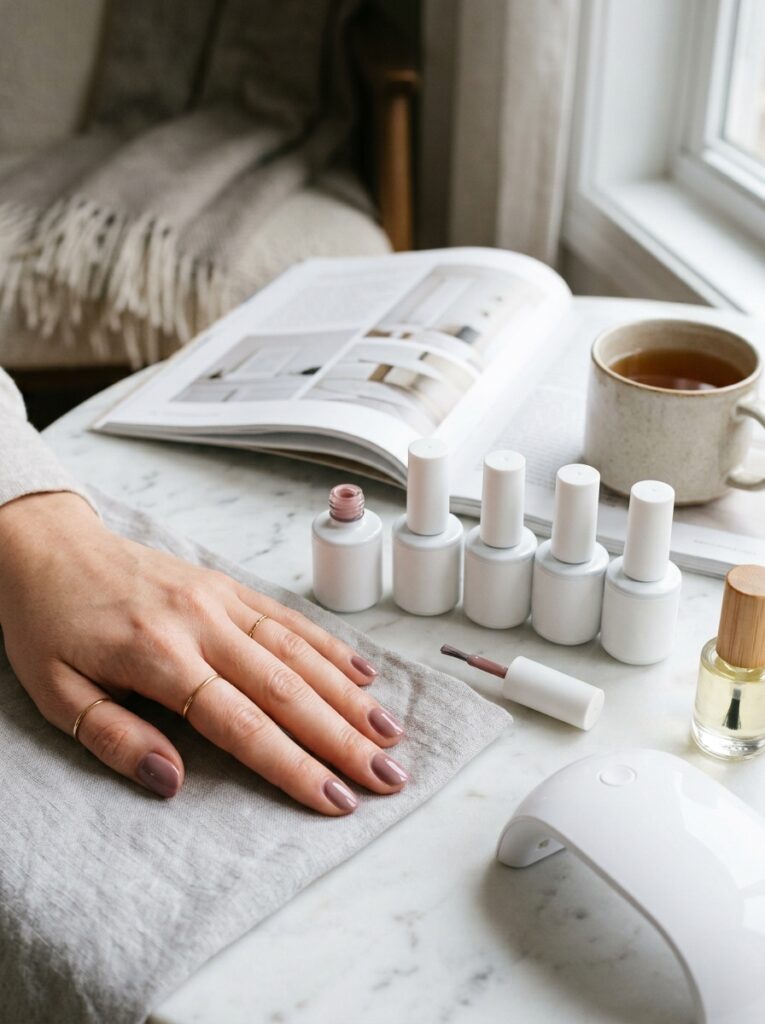
A sheer wash of milky neutral or a solid cocoa brown in regular polish is straightforward enough to apply at home, particularly with a base coat that helps sheer color sit evenly. Achieving a soft, subtle chrome or pearl topper, however, often looks cleaner with a gel system applied at a salon, since gel formulas tend to hold these finer, more delicate finishes more evenly than regular polish does over multiple days of wear. Velvet matte finishes also tend to last longer and resist premature dulling when applied as a gel rather than a standard matte topcoat.
For anyone maintaining a rotation of a few core shades through the season, keeping the simpler, more universally flattering neutrals in an at-home routine while reserving salon visits for the finishes that need more precise application tends to balance cost and result effectively.
Finishes That Keep Color Feeling Quiet
Color is only part of the equation. Finish plays an equally large role in whether a manicure reads as understated or attention-grabbing.
Sheer Washes vs. Built-Up Opacity
A sheer wash of color, applied in a single thin coat, lets light pass through to the natural nail underneath, creating a soft, almost translucent effect. Building up to two or three coats increases opacity while staying within the same soft color family, giving more coverage without moving into a bold, fully saturated look.
Soft Pearl and Chrome Toppers
Rather than the high-shine, mirror-like chrome finishes popular in past seasons, this year’s version leans more subtle. A sheer chrome or pearl topper applied over a solid neutral base adds a gentle, light-reflective quality without the loud, metallic statement of a full chrome manicure.
Glossy vs. Velvet Matte
A high-gloss finish keeps a manicure looking polished and clean, particularly well suited to milky neutrals and reds. A soft velvet matte finish, by contrast, mutes shine almost entirely, which can add a slightly more dramatic, dimensional quality to deeper browns and greens while still staying within a muted overall mood.
Nail Shape and Length That Support the Look
Shape and length influence how a color reads almost as much as the polish itself.
Short to medium oval, squoval, and soft almond shapes tend to suit the quiet-luxury aesthetic best, since they keep the focus on the hand itself rather than on a dramatic, elongated silhouette. Very long, sharply pointed shapes tend to shift a manicure toward a bolder statement, even when the color chosen is a soft neutral, simply because the length itself draws more attention.
This does not mean longer nails are off-limits entirely. A longer almond or coffin shape can still read as quiet and understated as long as the color and finish stay restrained, but shorter, rounder shapes require less deliberate styling to land in the right mood.
The One-Element Rule
A useful shorthand for staying within quiet-luxury territory is choosing only one standout element per manicure: an interesting color, an interesting finish, or a small design detail, but rarely more than one at once.
A deep cherry red in a plain glossy finish is one element. A milky neutral with a subtle pearl topper is one element. Adding a bold color, a shimmering finish, and hand-painted detail all to the same set moves the manicure out of minimalist territory and into a much busier look, regardless of how well each individual piece is executed.
Subtle Ways to Add Interest Without Breaking the Mood
For anyone who wants a small amount of detail without abandoning the overall restraint, a few techniques stay within the spirit of the trend.
Espresso French Tip
Swapping the traditional white tip for a soft espresso or cocoa brown line keeps the classic French manicure shape while updating the color to fit a winter, quiet-luxury palette. The effect is subtle enough to read as considered rather than decorative.
A Single Cat-Eye Accent Nail
Rather than applying a shimmering cat-eye finish across the entire set, limiting it to one accent nail, often the ring finger, adds a small amount of light-catching interest while leaving the rest of the hand in a plain, matching color.
Controlled Opacity as a Design Choice
Rather than adding a separate design element, some of the most current minimalist looks simply vary opacity within a single color family, layering one thin coat on some nails and two or three on others, creating subtle variation without introducing a second shade or finish at all.
Considering Skin Tone Alongside Color
Undertone plays a role in how these neutral and muted shades actually read once applied.
Warmer skin undertones tend to pair particularly well with cashmere beiges, cocoa browns, and warm-leaning milky pinks, since the polish echoes rather than fights against the natural warmth in the skin. Cooler undertones often suit the chilled, less orange-leaning versions of cocoa and espresso mentioned earlier, along with navy, deep green, and blue-based cherry red, since these tones complement rather than clash with a cooler complexion.
Neither undertone is limited to only these families, but starting with a shade that naturally complements your own skin tone tends to require less adjustment than working against it.
What Pushes a Minimalist Look Into “Trying Too Hard”
A handful of choices tend to undercut the quiet-luxury mood, even when each individual element seems reasonable on its own.
- High-shine, full chrome across every nail. While chrome itself is not off-limits, a full mirror finish across the entire hand reads as a statement piece rather than something understated.
- Heavy glitter or dense, sparkling toppers. These add visual noise that works against the calm, restrained mood the rest of the look is built around.
- Multiple accent nails with different designs. One subtle accent, like a single cat-eye nail, fits the aesthetic. Several different accents across the same hand tend to look busy rather than considered.
- Very long nails paired with bold, saturated color. The combination of dramatic length and strong color pulls a look firmly out of minimalist territory, even if either element alone might have worked.
- Stark, bright white French tips. A crisp, high-contrast French tip reads as more classic-glam than quiet-luxury. Softening the tip color, as with the espresso version mentioned earlier, keeps the same shape while shifting the mood.
Maintenance Habits That Match the Aesthetic
Because a quiet-luxury manicure relies so heavily on the condition of the natural nail, a few maintenance habits matter more here than they might for a bolder, more decorated style.
- Regularly trimmed, shaped cuticles keep the base of the nail looking tidy, which matters more when there is less polish coverage to distract from it.
- A light buff before applying sheer polish smooths the nail surface, helping thin, translucent color sit evenly rather than highlighting any ridges underneath.
- Consistent moisturizing of the hands and cuticle area keeps the skin around the nail looking healthy, which becomes more noticeable against a soft, sheer polish than it would under a fully opaque, bold color.
- Regular fill-ins or reapplication before chipping becomes visible matters more here too, since a chipped sheer polish looks more obviously worn than a chip in a fully opaque color would.
A Simple Way to Build a Winter Rotation
For anyone putting together a season’s worth of quiet-luxury looks, a small, coordinated rotation tends to work better than picking colors at random.
- Choose one milky neutral for the most versatile, everyday option that pairs with nearly anything.
- Add one deeper tone, a cocoa brown, a muted cherry, or a forest green, for days that call for slightly more presence.
- Pick a single finish variation, like a soft pearl topper or a velvet matte, to use occasionally rather than as a default.
- Reserve any accent detail, like a single cat-eye nail or an espresso French tip, for one look at a time rather than combining several details at once.
- Keep nail shape and length consistent across the rotation, so the overall hand silhouette feels cohesive from one manicure to the next.
Working from this kind of short, coordinated list makes it easier to maintain the restrained, put-together feeling that defines the look, rather than approaching each manicure as an entirely separate decision.
Adjusting the Look for Different Occasions
Even within a minimalist approach, a small shift in color or finish can make a manicure feel appropriate for different parts of the winter season.
For everyday wear, a milky neutral or a warm cashmere beige in a plain glossy finish tends to work across nearly any setting without drawing extra attention. For a slightly more polished office or client-facing look, a cooled-down cocoa or a soft grey adds a touch more depth while staying firmly within professional territory. For evening or holiday occasions, a deep cherry red or forest green in a velvet matte finish, or a milky neutral with a subtle pearl topper, adds just enough presence for a dressier setting without abandoning the overall restrained mood.
Making this kind of small adjustment, rather than switching to an entirely different, bolder style for special occasions, keeps the whole season feeling cohesive.
Quiet luxury on the nails is less about a single specific color and more about a consistent approach: soft, wearable tones, one clear finish choice at a time, and a natural nail bed kept in good condition underneath it all. The result is a manicure that looks effortless, even though the restraint behind it is anything but accidental.
For more seasonal nail inspiration, the seasonal nails collection covers looks across the rest of the year, and the broader nail inspiration category is worth exploring for additional ideas beyond the minimalist direction.

Ella is a fashion and beauty writer who shares inspiring ideas about hairstyles, nail designs, wedding outfits, and seasonal fashion trends. She loves discovering fresh styles and creating…
View Author Profile →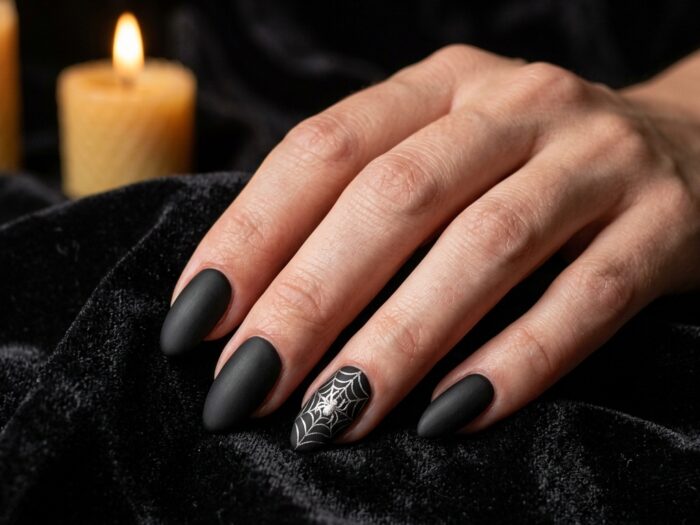
1 Comment