

On this page
- Why a Bob Can Outperform Long Hair on Fine Strands
- Blunt vs. Layered: The Central Debate for Fine Hair
- Bob Length Options and What Each One Does
- Bob Shapes and Variations Worth Considering
- Bangs That Pair Well With a Fine-Hair Bob
- Fine and Thin Versus Fine and Dense
- Matching Bob Shapes to Face Shape
- Parting and Root Placement
- Styling Techniques for Extra Body
- Color Techniques That Add Perceived Density
- What Tends to Work Against Fine, Flat Hair
- A Simple Approach to the Consultation
There is a common assumption that fine, flat hair should stay long, as if extra length automatically means extra options. In practice, the opposite is often true. Long hair gives gravity more to work with, and gravity is precisely what pulls fine strands flat against the scalp by midday. A well-cut bob removes a lot of that pulling weight, which is part of why so many people with thin, flat hair end up happier with a shorter cut than they expected to be.
This does not mean any bob will do. The specific length, the amount of layering, and even the parting all change how much volume a bob actually delivers. This guide walks through the choices that make the biggest difference for fine, flat hair specifically.
Why a Bob Can Outperform Long Hair on Fine Strands
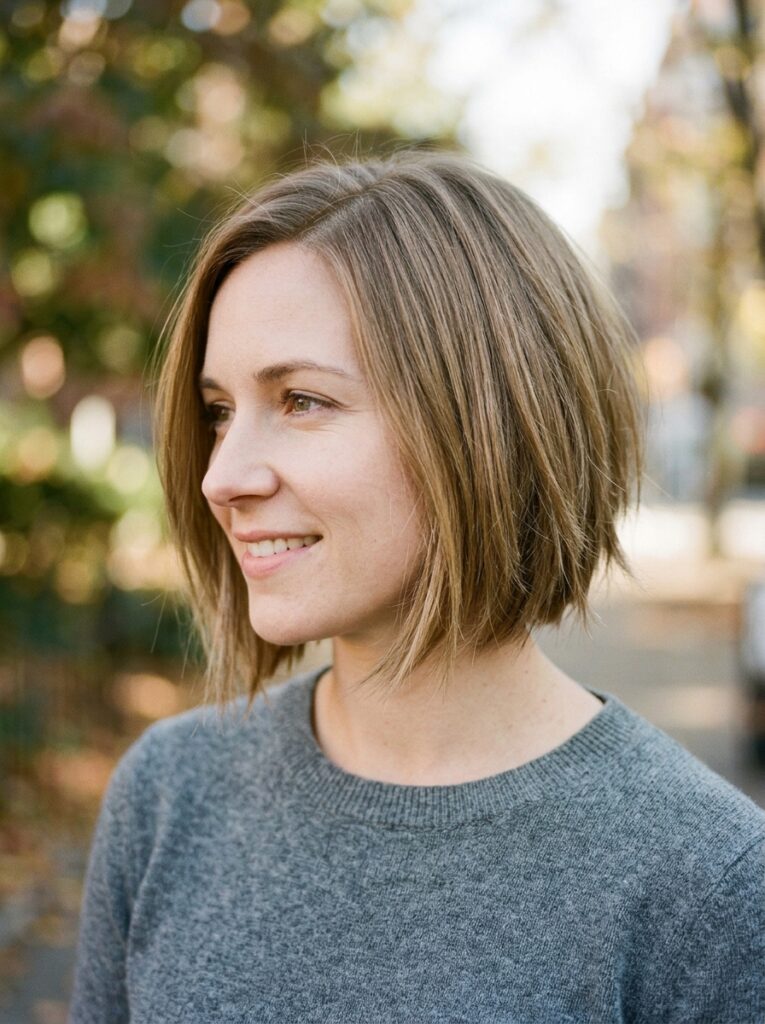
Fine hair refers to the width of each individual strand, and it has nothing to do with how many strands are on the head, that is density. Many people deal with both fine texture and lower density at once, and long length makes either one harder to disguise, since more length means more weight pulling the hair down and flattening any natural lift at the root.
A bob shortens that lever arm considerably. With less length for gravity to act on, the same amount of hair naturally sits with more lift and bounce. There is also a visual effect at play: the same number of strands packed into a shorter length appears denser than when spread across a longer length, simply because there is less empty space between the ends. This is why a chin-length bob can look noticeably fuller than the same hair grown out past the shoulders, even though the actual number of strands has not changed.

Blunt vs. Layered: The Central Debate for Fine Hair
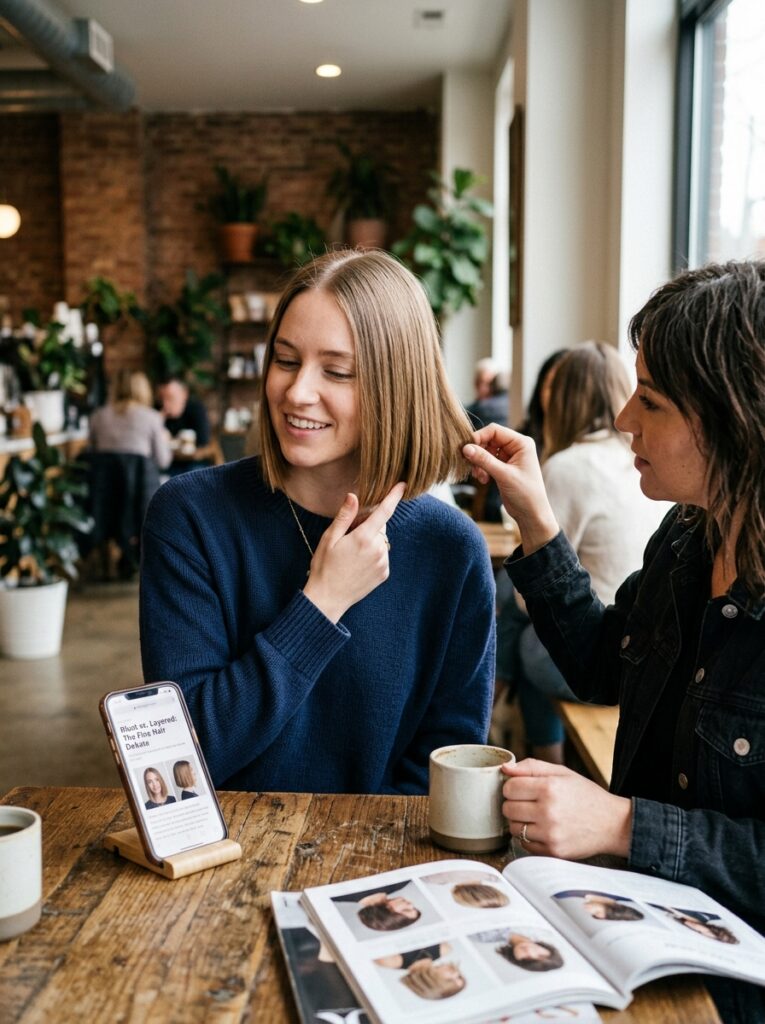
Almost every conversation about cutting fine hair eventually comes back to this question, and the answer matters more for a bob than for most other haircuts.
Why Blunt Often Wins
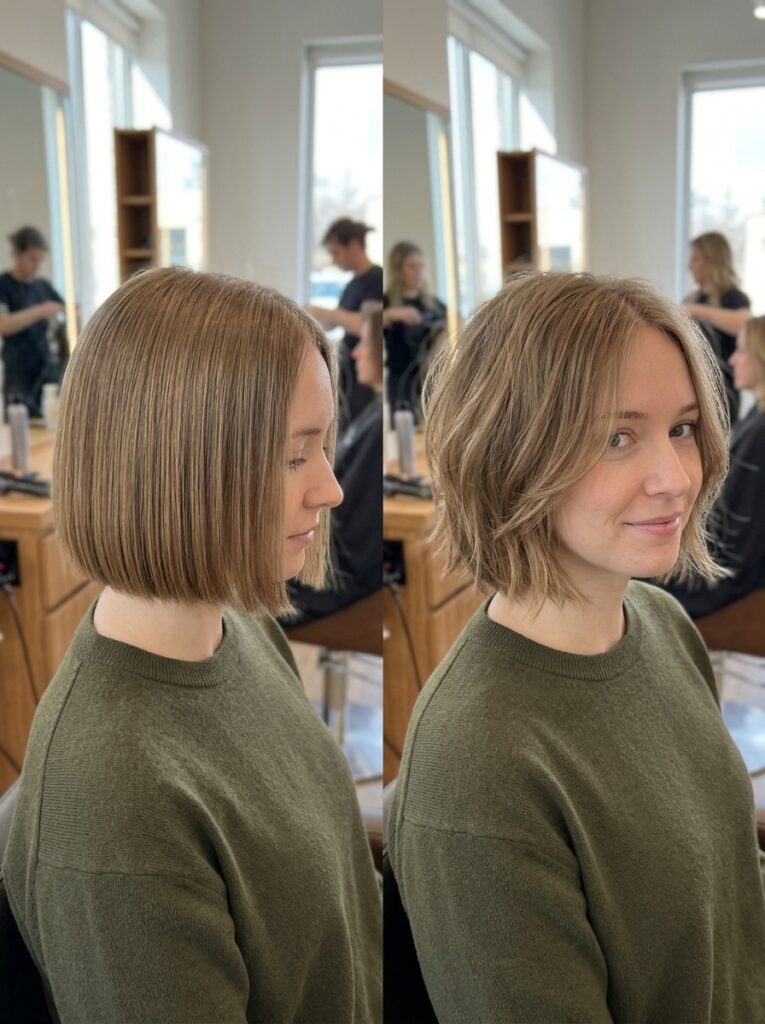
A blunt cut, where every strand ends at roughly the same length, creates a strong, unbroken edge along the perimeter of the haircut. Because the ends all line up, they read as denser when viewed together, similar to how a stack of paper looks thicker when the edges are perfectly aligned rather than staggered. For fine hair specifically, this blunt edge is one of the most reliable ways to create the appearance of thickness without adding a single extra strand.
When Some Layering Still Helps
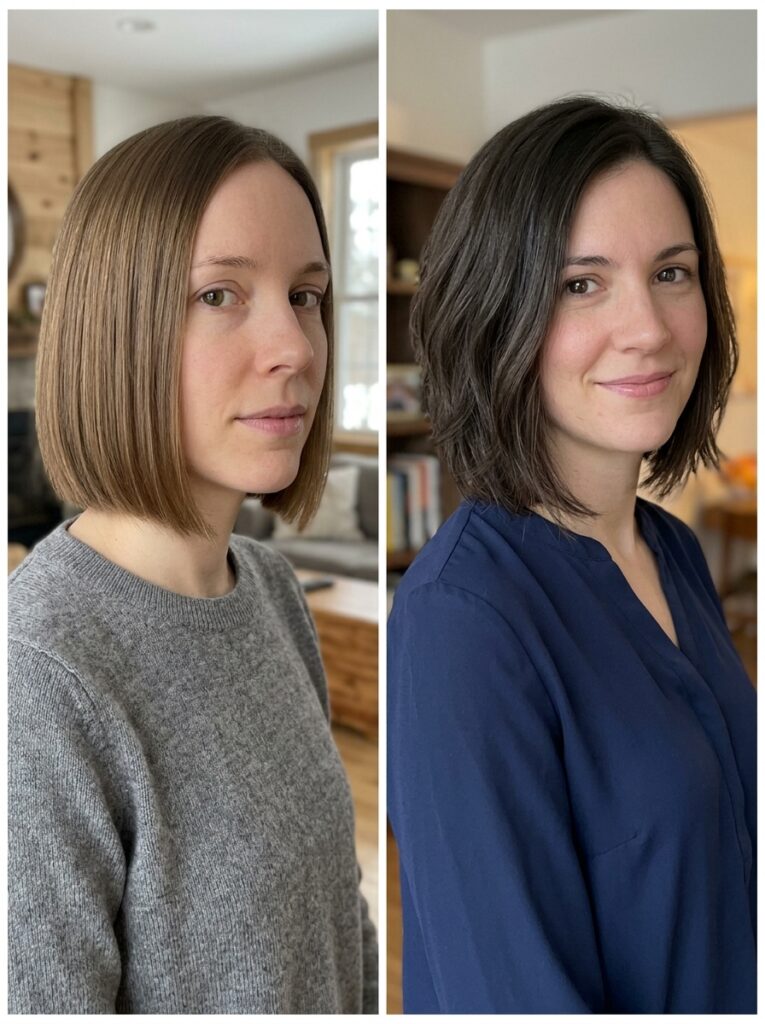
A completely blunt, one-length bob is not always the right call, particularly for thicker fine hair that has enough strands to create bulk even at a fine texture, or for anyone who wants more movement than a rigid blunt line provides. In these cases, very light internal layering, cut underneath the visible surface rather than throughout the whole head, can add movement without sacrificing the dense-looking perimeter that makes a blunt bob work in the first place.
The general rule that tends to hold up well is this: heavy, all-over layering removes weight and volume from fine hair, which is rarely the goal, while light internal layering can add movement without undermining the density illusion a blunt edge provides.
Bob Length Options and What Each One Does
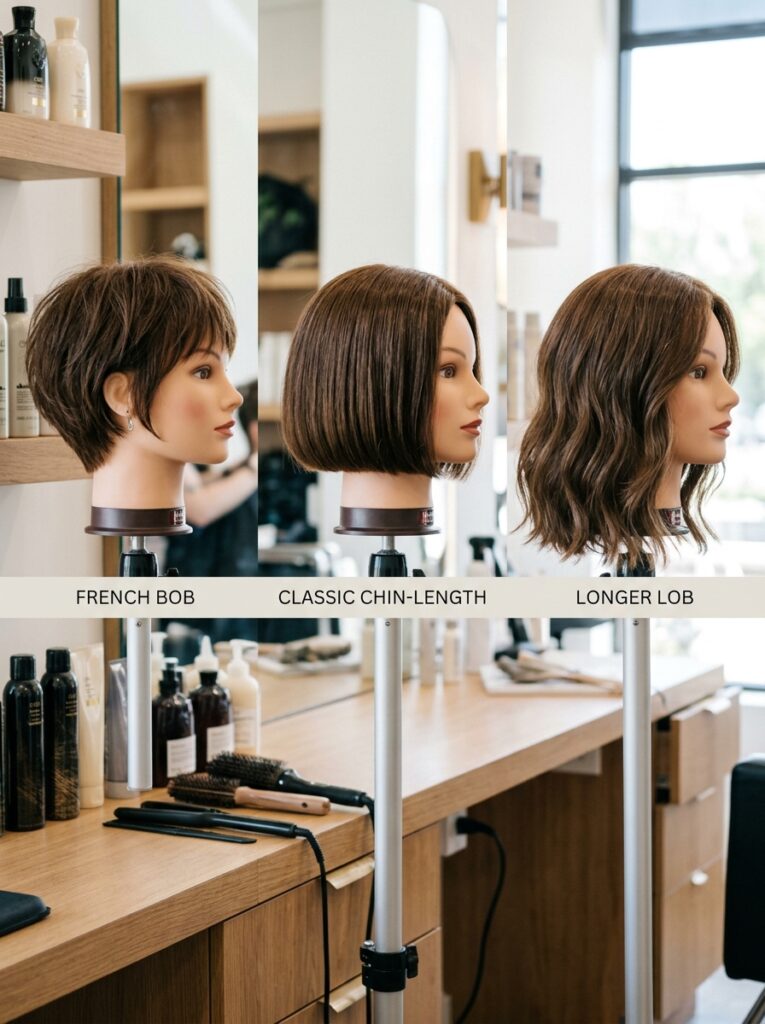
Bob length has its own effect on how full a fine-hair cut looks, independent of blunt versus layered.
The French Bob
Sitting at the lip line or just below, the French bob is one of the shortest bob variations. Its short length keeps weight minimal, which suits fine hair particularly well, though the dramatic shortness means very little room for hiding uneven growth between trims.
The Classic Bob
Landing anywhere from the jaw to the chin, the classic bob length balances a strong, dense-looking perimeter with enough length to still tuck behind the ears or add soft waves when desired. This range tends to be the most forgiving length for fine hair, since it is short enough to minimize weight but long enough to allow some styling flexibility.
The Lob
A lob, or long bob, sits at or near the collarbone. It offers the easiest transition from longer hair and pairs with nearly any face shape, but it does carry more length and therefore more weight than a chin-length bob. For genuinely flat, fine hair, a lob usually needs either a very precise blunt cut or added layering at the ends to avoid looking thin despite the shorter overall length compared to fully long hair.
Bob Shapes and Variations Worth Considering
Beyond length and layering, specific bob shapes bring their own advantages for fine, flat hair.
The Blunt Bob
Cut at a single, uniform length with no internal layering, the blunt bob is the most direct application of the density principle discussed earlier. A center part with a completely straight perimeter creates the strongest visual density, making this one of the most consistently recommended shapes for fine hair.
The A-Line Bob
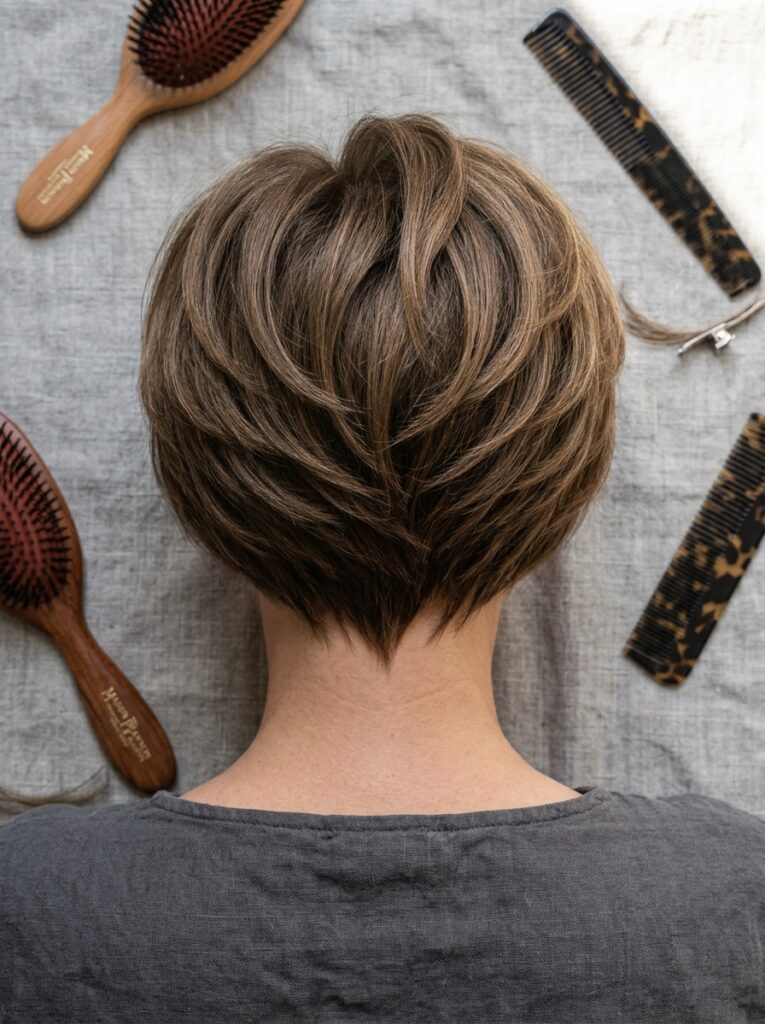
Slightly longer in the front and shorter in the back, the A-line bob creates a diagonal line that adds a sense of movement and visual interest. The graduated angle also tends to build a small amount of extra fullness toward the back of the head, which can help fine hair that looks particularly flat at the crown.
The Graduated or Stacked Bob
This shape builds noticeable volume at the back through short, layered stacking underneath a smoother top layer, while keeping the front longer and sleeker. The stacking technique specifically targets the area where fine hair often looks flattest, making it a strong option for anyone whose main concern is volume at the nape and crown rather than the front.
The Liquid or Perimeter Bob
A more recent variation, the liquid bob uses seamless internal layering and a polished, blunt-to-soft perimeter that moves fluidly when blow-dried smooth. It keeps most of the density benefits of a blunt cut while softening the harshest edges slightly, which some people find more versatile for both sleek and slightly tousled styling.
The Asymmetrical Bob
With one side cut noticeably longer than the other, an asymmetrical bob draws the eye across the face diagonally, which adds dimension and can make hair appear denser simply because the uneven line disrupts an otherwise flat, single silhouette.
The Pob, or Pixie-Bob Hybrid
Combining a very short, cropped side with a longer, sweeping section on the other, the pob creates dramatic contrast between closely cropped and longer hair. This is a bolder choice than the other variations here, but the sharp shift between short and long naturally interrupts flatness in a way a uniform length cannot.
Bangs That Pair Well With a Fine-Hair Bob
Adding bangs to a bob changes the framing around the face and can contribute meaningfully to how full the overall cut looks.
- Blunt, full bangs cut straight across add the same density effect as a blunt perimeter, this time concentrated at the forehead, which is often one of the first places fine hair starts to look sparse.
- Curtain bangs part down the middle and blend into the sides of the bob, softening the face without the heavier, more structured look of a full fringe.
- Wispy, soft bangs add texture and movement around the face, though they provide less of a density boost than a fully blunt fringe, since the uneven ends do not create the same solid line.
Any of these can be paired with most of the bob shapes above, though a fully blunt fringe tends to complement a blunt bob most naturally, since both rely on the same principle.

Fine and Thin Versus Fine and Dense
Not all fine hair behaves the same way, and it helps to know which category applies before settling on a final shape.
Fine hair paired with lower density, meaning fewer strands overall, benefits the most from a fully blunt approach with minimal layering anywhere, since there is simply less hair available to create bulk even with a heavier cut. Adding too much layering to this combination tends to remove volume the hair cannot easily spare.
Fine hair paired with higher density, meaning many strands that are each individually thin, can sometimes carry a small amount of internal layering without losing the density illusion, since there is more raw material underneath the surface to work with. This combination often has more flexibility across the bob variations described above, including shapes like the liquid bob or a lightly graduated cut that would overwhelm truly sparse hair.
Knowing which situation applies to your own hair, rather than assuming all fine hair needs the exact same treatment, makes the difference between a bob that looks intentional and one that looks accidentally thin.
Matching Bob Shapes to Face Shape
Face shape adds one more layer worth factoring in alongside hair texture and density.
- Round faces tend to suit an A-line bob or an asymmetrical shape, since the added length and angle at the jaw create a more elongated line rather than emphasizing roundness.
- Oval faces generally suit almost any bob variation, since balanced proportions rarely clash with a particular silhouette.
- Square or angular faces often look softened by a graduated or liquid bob, where the rounded, seamless layering takes some of the sharpness away from strong jaw angles.
- Heart-shaped faces, wider through the forehead and narrower at the chin, tend to suit a chin-length blunt bob or curtain bangs, both of which balance the width at the top of the face.
As with hair texture, these are general starting points rather than strict rules, and a stylist’s in-person assessment will usually refine these suggestions further.
Parting and Root Placement
Where a bob parts changes how much volume appears at the root, sometimes more dramatically than the cut itself.
A center part on a blunt bob tends to emphasize the symmetry and density of the cut, which works particularly well with a fully blunt shape. A deep side part, by contrast, creates a small amount of natural lift on the heavier side, since more hair falls to one side and pushes the roots up slightly on the other. A zigzag part breaks up the visibility of the scalp along a single line, which can make the roots look somewhat denser from a distance compared to a perfectly straight center part.
Switching the part occasionally, rather than wearing the same one every day, also helps prevent hair from becoming trained to lie flat in one specific direction over time.
Styling Techniques for Extra Body
Even a well-cut bob benefits from a few consistent styling habits, particularly at the roots.
- Root-lifting mousse, applied at the base before blow-drying, gives fine hair something to hold onto that plain water or a leave-in conditioner cannot provide on its own.
- A round brush blowout, drying the roots in the opposite direction of how they naturally fall before smoothing the rest, builds lasting lift that plain air-drying rarely achieves.
- Texture powder or dry shampoo at the roots adds grip and a matte finish that helps fine hair hold volume through the day, particularly useful on second-day hair.
- A flat iron used sparingly, mainly to smooth the surface rather than fully restyle the whole head, keeps a blunt bob’s edge crisp without adding unnecessary heat exposure.
- Sea salt spray, for anyone who prefers a more tousled version of a bob, adds texture and grip without the heaviness of a thicker styling cream.
Color Techniques That Add Perceived Density
Color placement can reinforce the same density illusion a good cut already provides.
A money piece, a face-framing highlight near the front, draws attention toward the face and adds contrast without requiring color throughout the whole head. Subtle balayage concentrated toward the ends, rather than starting close to the root, keeps the base color looking solid and full while still adding some dimension at the tips. Tonal color, where highlights and the base shade sit close together in depth, tends to look more cohesive on fine hair than high-contrast color blocking, which can sometimes emphasize how the hair lies flat rather than disguising it.
What Tends to Work Against Fine, Flat Hair
A handful of common choices consistently undercut the goals discussed above, even on an otherwise well-executed bob.
- Too much all-over layering. Removing weight throughout the entire head, rather than just internally, strips away the density a blunt or lightly layered bob relies on.
- Choosing a length that is too long for the hair’s natural weight. A lob or longer bob on very fine, flat hair sometimes ends up looking thinner than a shorter cut would, simply because there is more length for gravity to pull down.
- Heavy styling products applied throughout the length. Oils, creams, and serums applied beyond the ends tend to weigh fine hair down, undoing whatever lift a good blow-dry created.
- Skipping regular trims. Split or uneven ends disrupt the clean line a blunt bob depends on, and they tend to look sparser than healthy ends even at the same length.
- Wearing the same center part every day without variation. This trains hair to fall in one predictable, flat pattern over time, reducing the natural volume a fresh part can provide.
A Simple Approach to the Consultation
Walking into a bob consultation with specific language ready tends to produce a more predictable result than describing a general idea.
- Decide on a length range first, French bob, classic bob, or lob, based on how much weight your hair can comfortably support before looking flat.
- Ask specifically about internal versus all-over layering, and be clear that the goal is added movement without losing the dense perimeter a blunt line provides.
- Bring reference photos that show the back and sides of the cut, not just a front-facing photo, since much of a bob’s volume comes from the back shaping.
- Discuss a trim schedule upfront, since most bobs need attention every six to eight weeks to keep the shape and density looking intentional.
- Ask your stylist which parting they recommend based on your specific hairline and natural growth pattern, since this can shift slightly from the general guidance above.
A bob does not have to be a compromise for fine, flat hair. With the right length, the right balance of blunt versus layered cutting, and a few consistent styling habits, a shorter cut can often deliver more visible fullness than the same hair would carry at a longer length.
For more short hairstyle ideas beyond the bob specifically, the short hairstyles collection covers a range of cuts and textures, and the broader hairstyle inspiration category is worth browsing for additional direction.


Ella is a fashion and beauty writer who shares inspiring ideas about hairstyles, nail designs, wedding outfits, and seasonal fashion trends. She loves discovering fresh styles and creating…
View Author Profile →