

On this page
- Why Veils Tangle in the First Place
- The Attachment Point Matters More Than the Style Itself
- Updo Styles That Hold Up Well Under a Veil
- Half-Up and Down Styles That Minimize Tangling
- Removing a Veil Without Pulling Out Hair or a Style
- Working With a Stylist to Prevent Tangling From the Start
- Common Mistakes That Lead to a Tangled Veil
- Choosing What Actually Works for the Whole Day
Most veil complaints have nothing to do with how the veil looks and everything to do with what happens after it’s pinned in. A bride spins for a photo, a gust of wind catches the tulle, someone leans in for a hug, and suddenly a fistful of hair is knotted into the trim. By the time the reception starts, what looked flawless at 10am has turned into a slow, careful untangling project squeezed between toasts.
This isn’t really a veil problem. It’s a friction problem, and it comes down to how a specific hairstyle interacts with a specific fabric over the course of several hours of movement. Some styles create almost no opportunity for hair and veil to knot together. Others practically invite it. The difference has less to do with whether hair is up or down and more to do with texture, attachment point, and how much loose hair sits directly against the veil’s edge.
Why Veils Tangle in the First Place
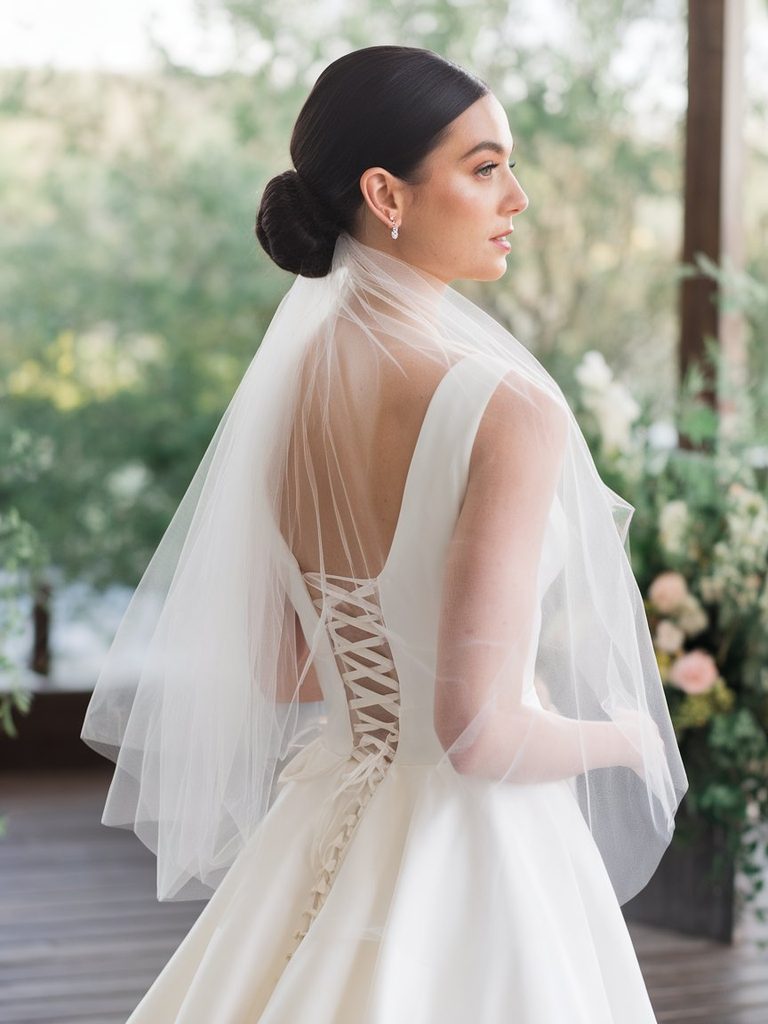
Tulle, the most common veil fabric, is woven from fine netting with a slightly rough, catch-prone texture. That roughness is part of what gives tulle its structure and its slight sparkle in photos, but it’s also exactly what grabs onto loose strands of hair. Every time the veil brushes against hair that isn’t secured, especially hair with any texture, waves, or flyaways, individual strands can work their way into the netting.
Illusion tulle and soft English net are somewhat gentler on hair than stiffer tulle, since the weave is finer and less textured, but neither is truly snag-proof. Silk and chiffon veils, though less common, catch hair less aggressively because the fabric is smoother, but they’re also heavier and drape differently, which changes how they behave throughout the day regardless of tangling risk.
The real issue isn’t the fabric alone. It’s the amount of hair left loose and unsecured directly in the zone where the veil rests and moves. A veil attached at the crown with a few inches of hair hanging freely right beneath the comb has far more opportunity to tangle than the same veil attached over a smooth, secured section, even in identical fabric.
The Attachment Point Matters More Than the Style Itself
Where a veil comb sits changes almost everything about how much tangling risk the rest of the hairstyle carries, regardless of whether the hair below it is up, half-up, or fully down.
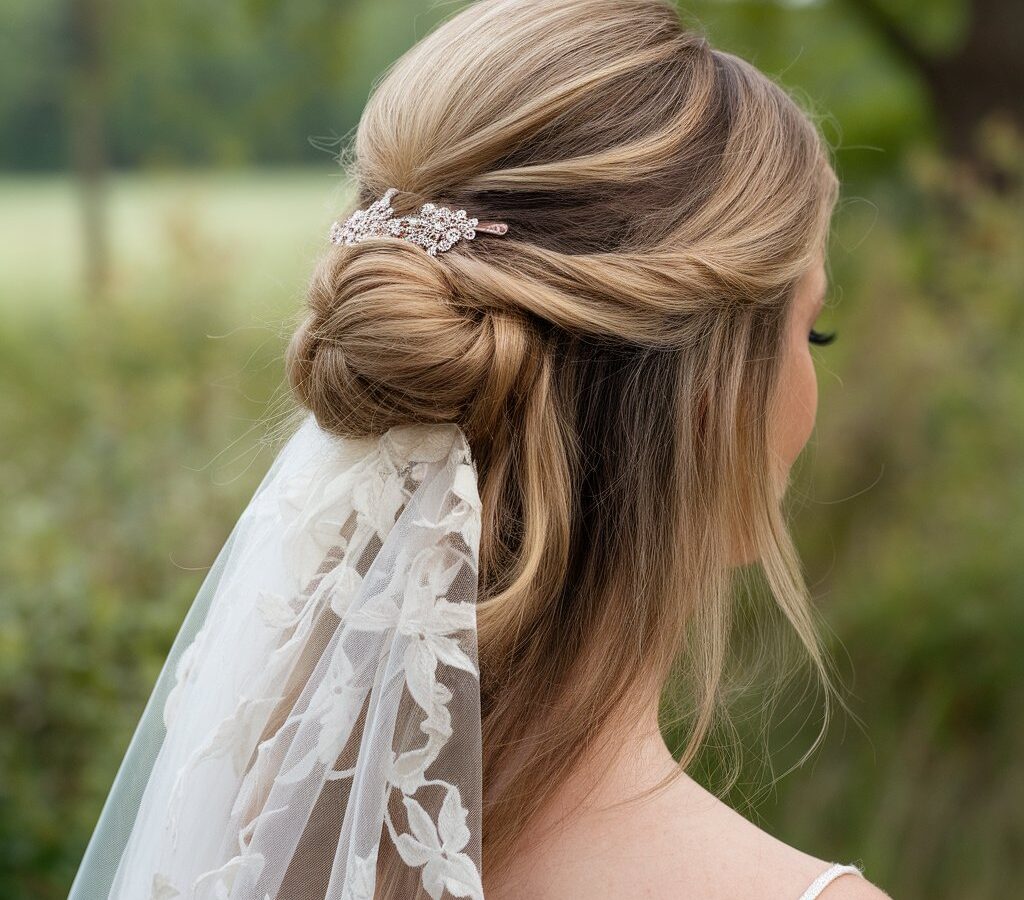
A comb secured directly into a smooth, pinned section, rather than into loose or textured hair, has less to snag against every time the veil shifts. This is why veils attached just behind a low bun or a smooth twist tend to stay cleaner throughout the day than veils pinned loosely into voluminous curls, even when the overall hairstyle looks similarly polished in early photos.
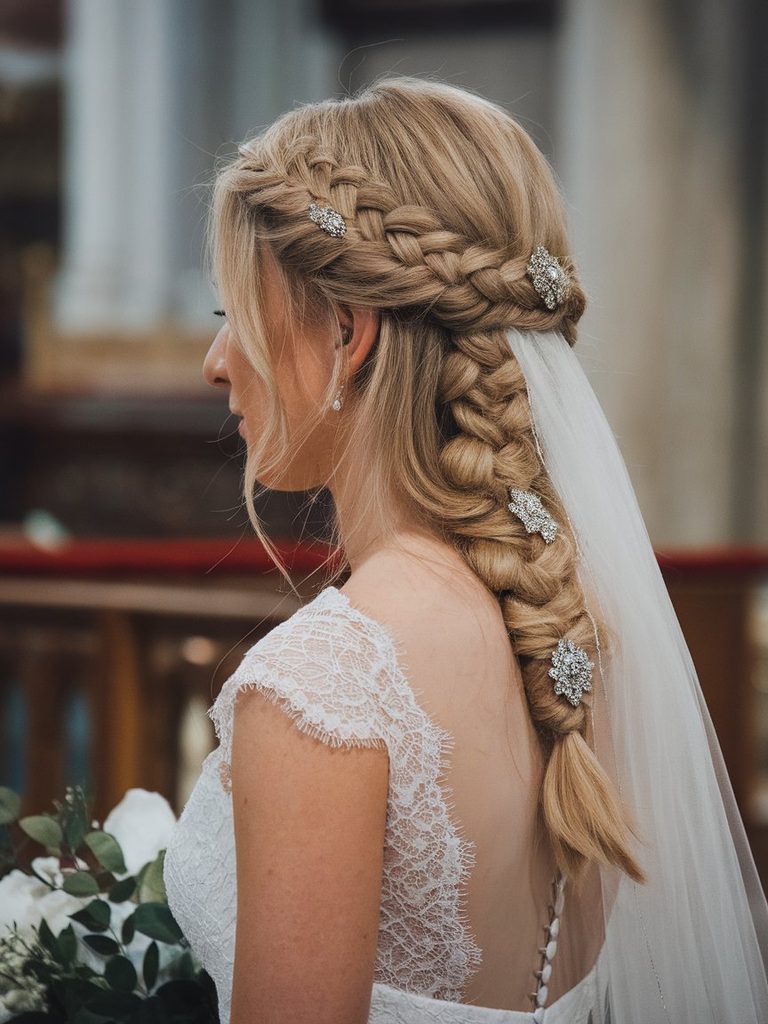
For brides who want hair down or half-up, the solution isn’t necessarily switching to an updo. It’s making sure the veil comb anchors into a small, deliberately smoothed or braided section rather than directly into the same loose curls the veil will spend the day brushing against. A stylist can create this kind of hidden anchor point without changing the overall down or half-up look at all.
Updo Styles That Hold Up Well Under a Veil
Fully secured updos generally create the least tangling risk simply because there’s less loose hair for the veil to catch on in the first place, though not every updo style is equally veil-friendly.
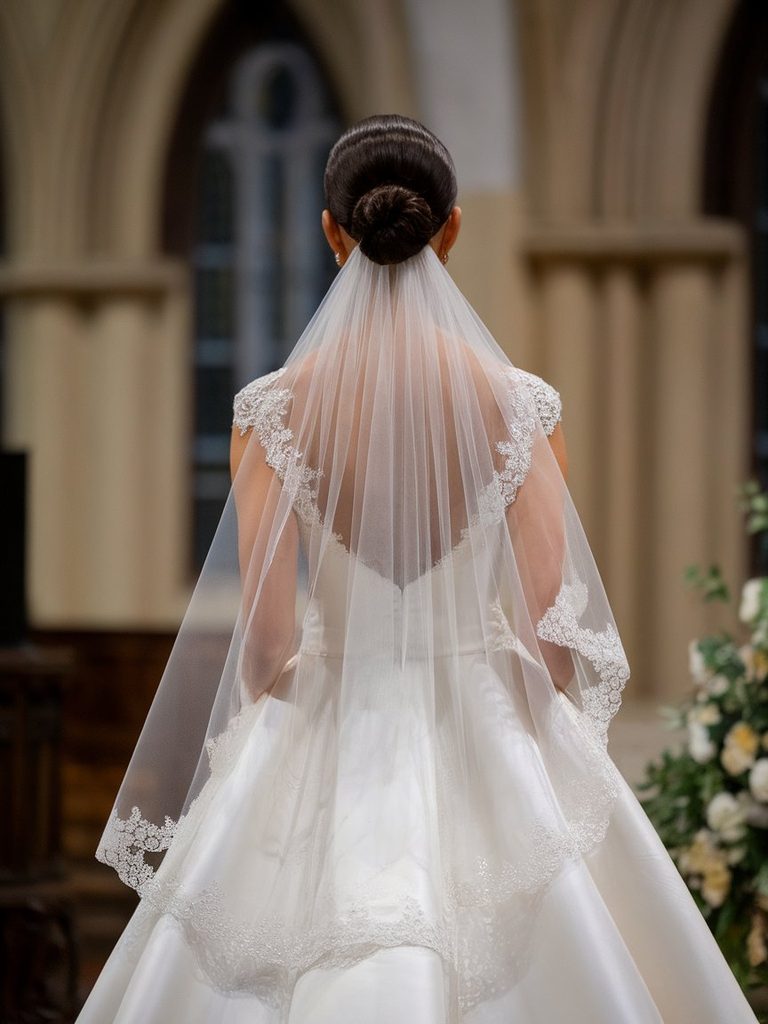
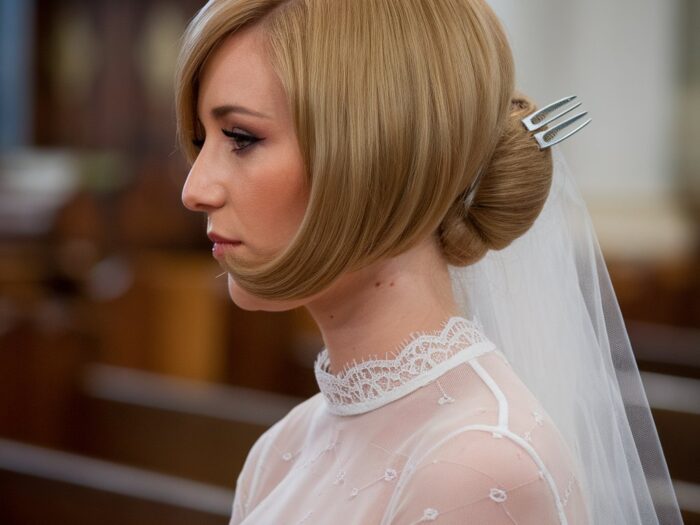
A smooth low bun or chignon is one of the most reliable choices, since the surface the veil rests against is flat and controlled rather than textured with loose pieces. A sleek French twist offers a similar benefit, with the added advantage of a natural seam where a comb can anchor securely without disturbing the smooth line of the style.
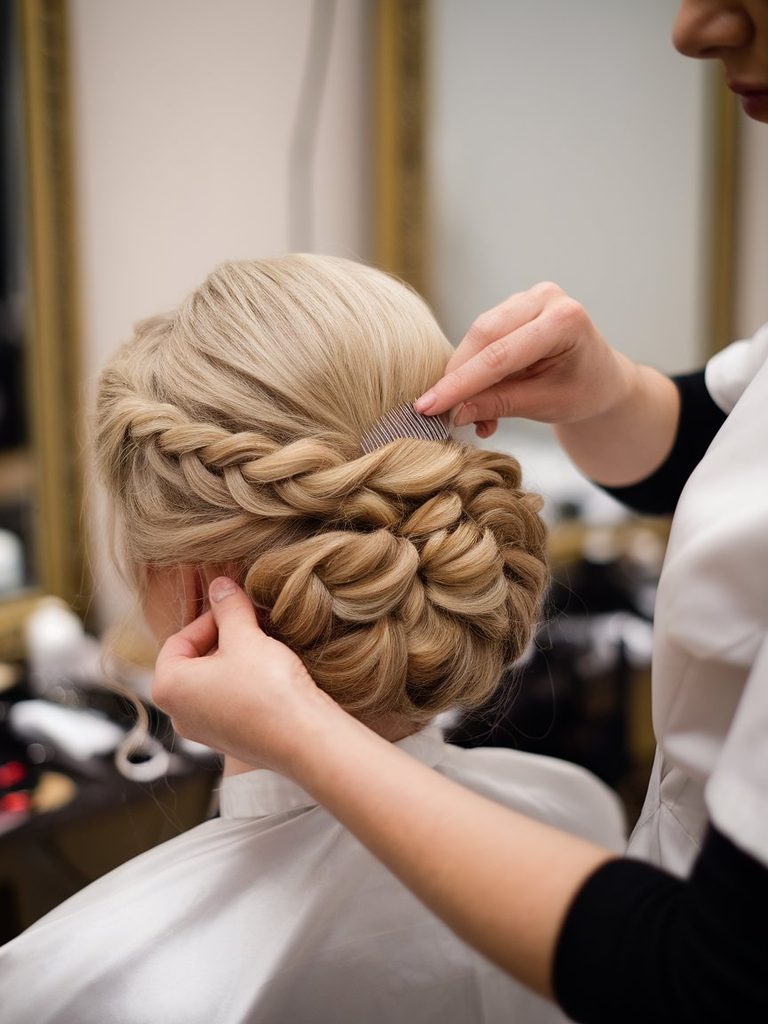
Braided updos, including a low braided bun or a woven crown braid, actually resist tangling better than many people expect, since the braid itself locks hair into a structure the veil can’t easily work its way into. This makes braided styles a strong option for brides who want texture and visual interest without the tangling risk that comes with loose curls.
Updos with a lot of face-framing pieces left out deliberately reintroduce some of the same risk a down style carries, just in a smaller, more contained area. If soft pieces around the face are part of the desired look, keeping them short enough that they don’t reach the veil’s resting point, or setting them with a light-hold product rather than leaving them completely loose, reduces how much they interact with the fabric.
Half-Up and Down Styles That Minimize Tangling
Down and half-up hairstyles can absolutely work under a veil without turning into a tangled mess, but they need a bit more intentional planning than an updo does.
A half-up style with a smoothed or braided crown section gives the veil comb a stable, snag-resistant anchor point while still leaving the rest of the hair down. This is often the best middle ground for brides who don’t want a full updo but are worried about tangling, since the section directly under the veil is controlled even though the rest of the hair moves freely.
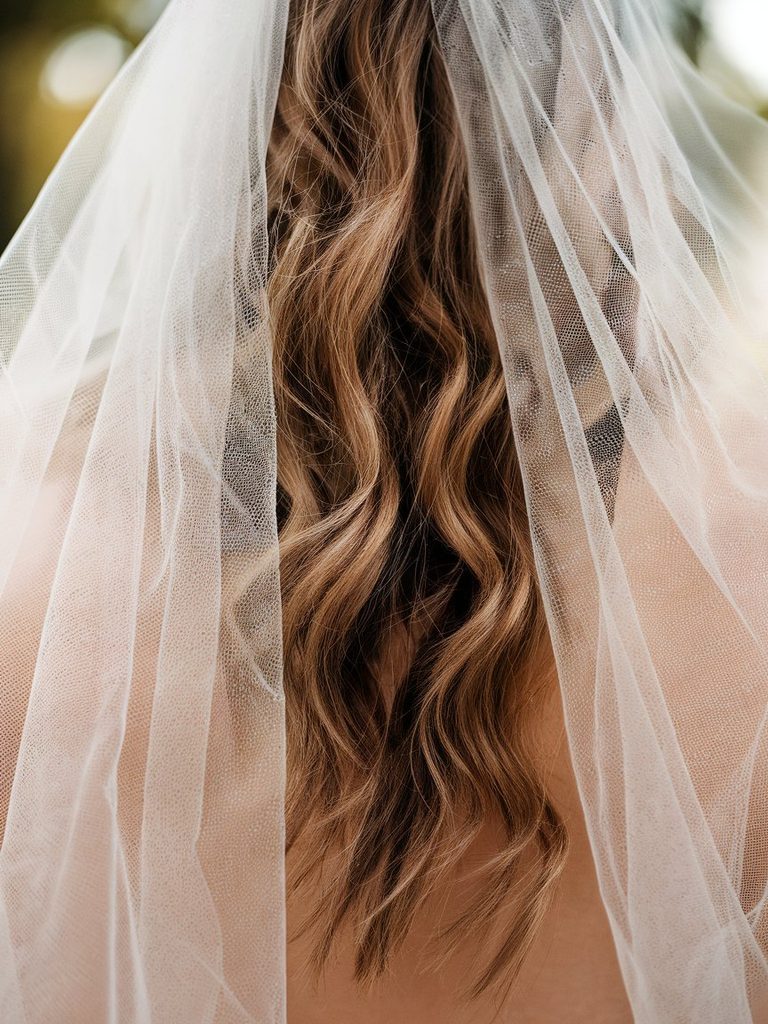
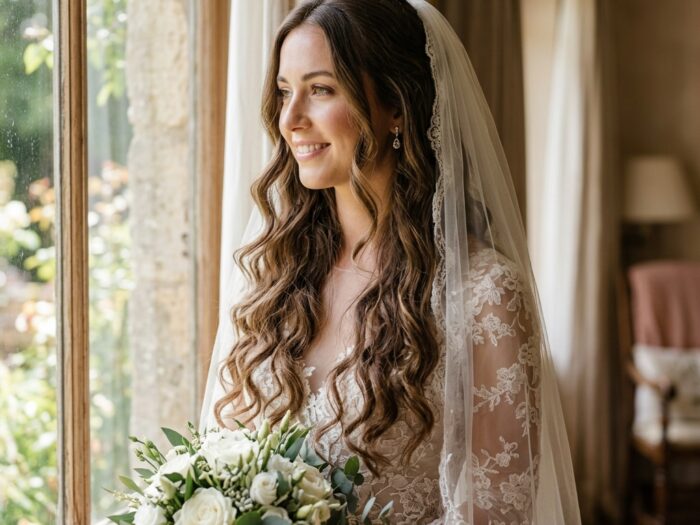
Loose waves with a light hold product, rather than freshly washed, ultra-soft curls, tend to tangle less than expected, since a bit of texture and grip actually keeps strands cohesive rather than flying individually into the veil’s netting. Fully soft, freshly-brushed-out curls with no texture product are, somewhat counterintuitively, more prone to tangling than curls set with some hold, because individual strands separate more easily and catch on the fabric one at a time.
Fully down, straight hair carries the highest tangling risk of any style, particularly in any wind or with repeated hugging and movement, simply because there’s no structure anywhere to keep strands grouped together. This doesn’t mean straight, down hair and a veil can’t be combined, but it does mean the veil attachment needs extra reinforcement, and the bride should expect to check and smooth the area periodically through the day.
Removing a Veil Without Pulling Out Hair or a Style
How a veil comes off matters just as much as how it goes on, and rushing this step is one of the most common ways hair ends up damaged or a style gets pulled apart in the process.
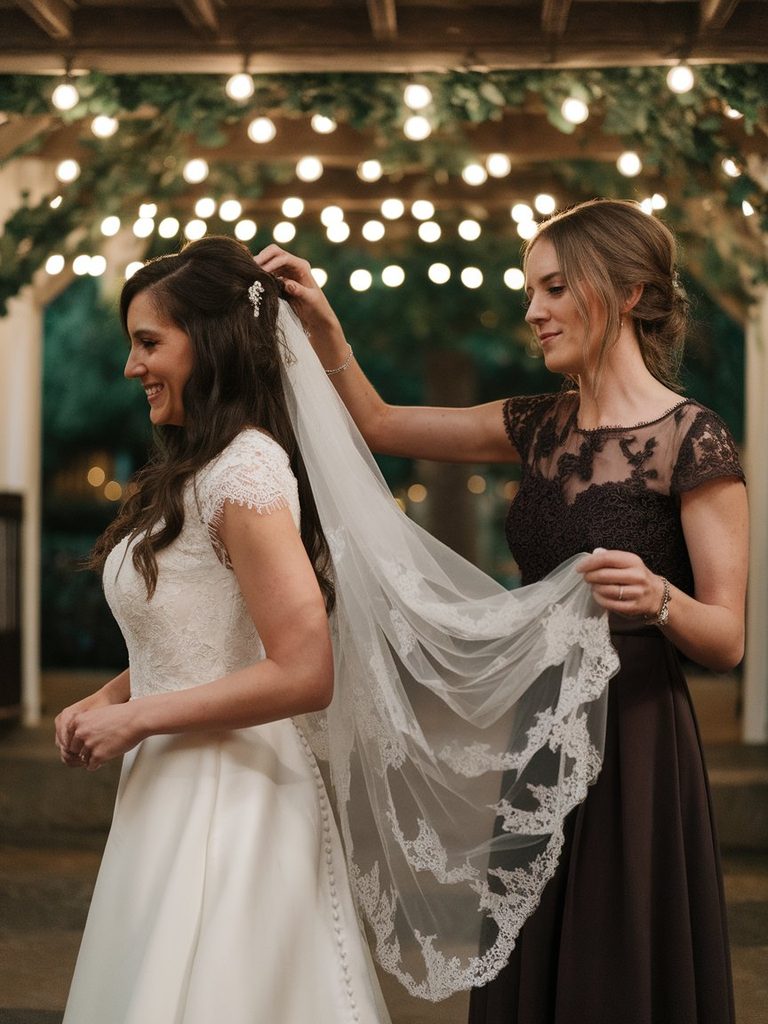
Removing the veil slowly, working from the comb outward rather than pulling the whole veil away in one motion, gives any lightly caught strands time to release rather than snapping or pulling free. If the veil resists at any point, stopping to gently work the caught section loose with fingers, rather than continuing to pull, prevents both hair breakage and damage to the veil’s trim.
For brides planning a reception look without the veil, having a bridesmaid or the hairstylist handle the removal, rather than doing it solo in a mirror, makes it much easier to spot and address a snagged section before it turns into a bigger tangle. This is also the moment a smoothed anchor point under the comb pays off most, since it’s almost always the loose hair around the comb, not the comb itself, that causes trouble on removal.
Working With a Stylist to Prevent Tangling From the Start
A hair trial focused only on how a style looks with the veil on misses the part that actually causes problems later: how the veil and hair interact once movement starts.
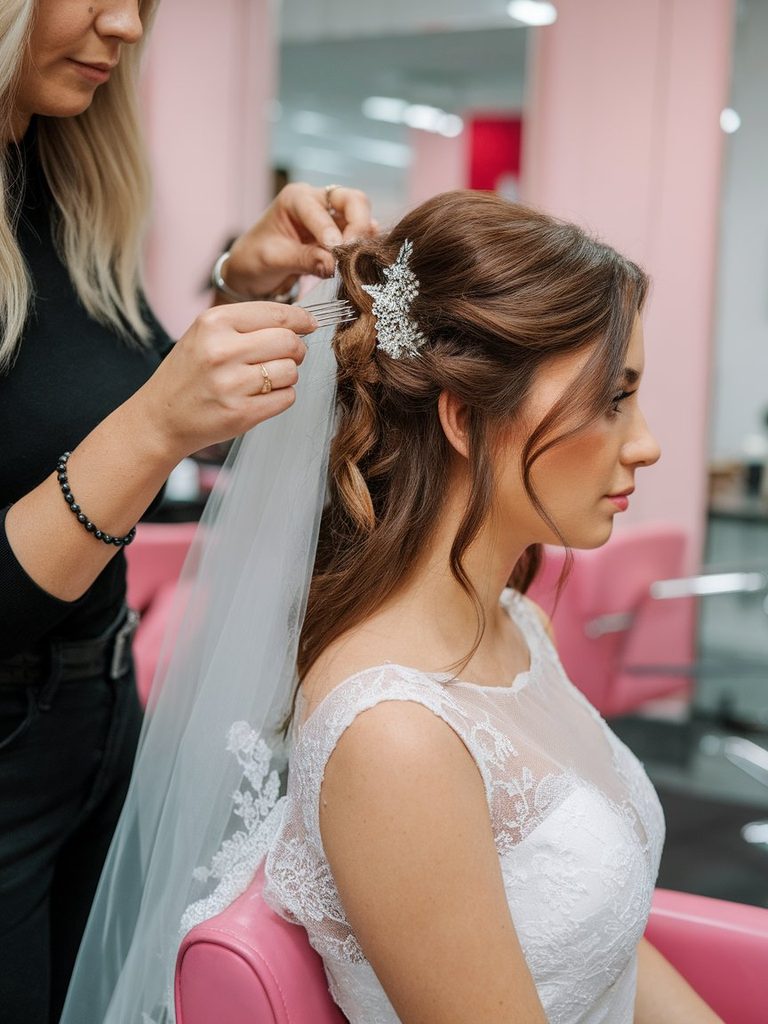
Asking a stylist to simulate some real movement during the trial, walking around, turning the head, even a gentle simulated hug, gives a much more honest preview of tangling risk than a few seconds of standing still for a photo. It’s also worth discussing the specific veil fabric directly with the stylist ahead of time, since a stiffer tulle and a soft illusion netting behave differently enough that the anchor point and surrounding hair prep may need to be adjusted based on the actual veil being worn.
For brides who haven’t yet finalized a specific hairstyle, raising the veil question early in that planning conversation, rather than as an afterthought once the style is already decided, makes it much easier to build in a tangle-resistant anchor point from the start rather than retrofitting one later.
Common Mistakes That Lead to a Tangled Veil
A handful of recurring choices account for most of the tangling brides deal with over the course of a wedding day.
- Attaching the comb directly into loose, unsecured hair. Even a beautifully styled loose curl offers nothing for the comb to hold onto except individual strands, which is exactly what tangles.
- Skipping any texture or hold product on down styles. Freshly washed, product-free hair separates into individual strands more easily, increasing surface area for the veil to catch on.
- Not testing movement during the hair trial. A style that looks perfect standing still can behave completely differently once dancing, hugging, and wind enter the picture.
- Pulling the veil off quickly at the end of the night. Rushing this step is one of the most common ways a caught strand turns into real hair breakage.
- Choosing a veil fabric without considering the hairstyle. A stiffer, more textured tulle paired with fine, loose hair is a higher-risk combination than the same style with a softer illusion netting.
Choosing What Actually Works for the Whole Day
The most veil-friendly hairstyle isn’t necessarily the most structured one. It’s the one where the veil’s attachment point sits against smooth, secured hair rather than loose, textured strands, regardless of whether the rest of the style is a sleek bun or soft waves left down. A little extra planning around that one small anchor point, tested with real movement at the trial rather than judged from a single still photo, tends to matter more than the overall style category ever does.
Brides finalizing a veil-friendly look often want the rest of the bridal details to line up at the same time. The guide to wedding dress necklines by body shape is worth a look for anyone still deciding on a gown, and nail design inspiration is a natural next stop once the hair and veil plan feels settled.

Ella is a fashion and beauty writer who shares inspiring ideas about hairstyles, nail designs, wedding outfits, and seasonal fashion trends. She loves discovering fresh styles and creating…
View Author Profile →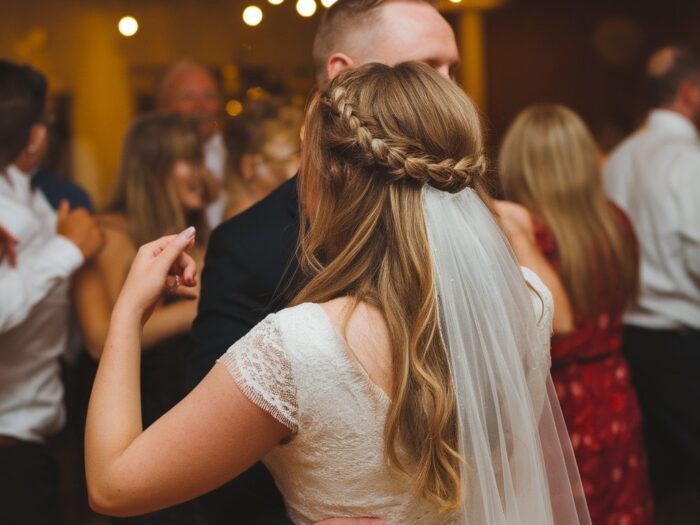
2 Comments