
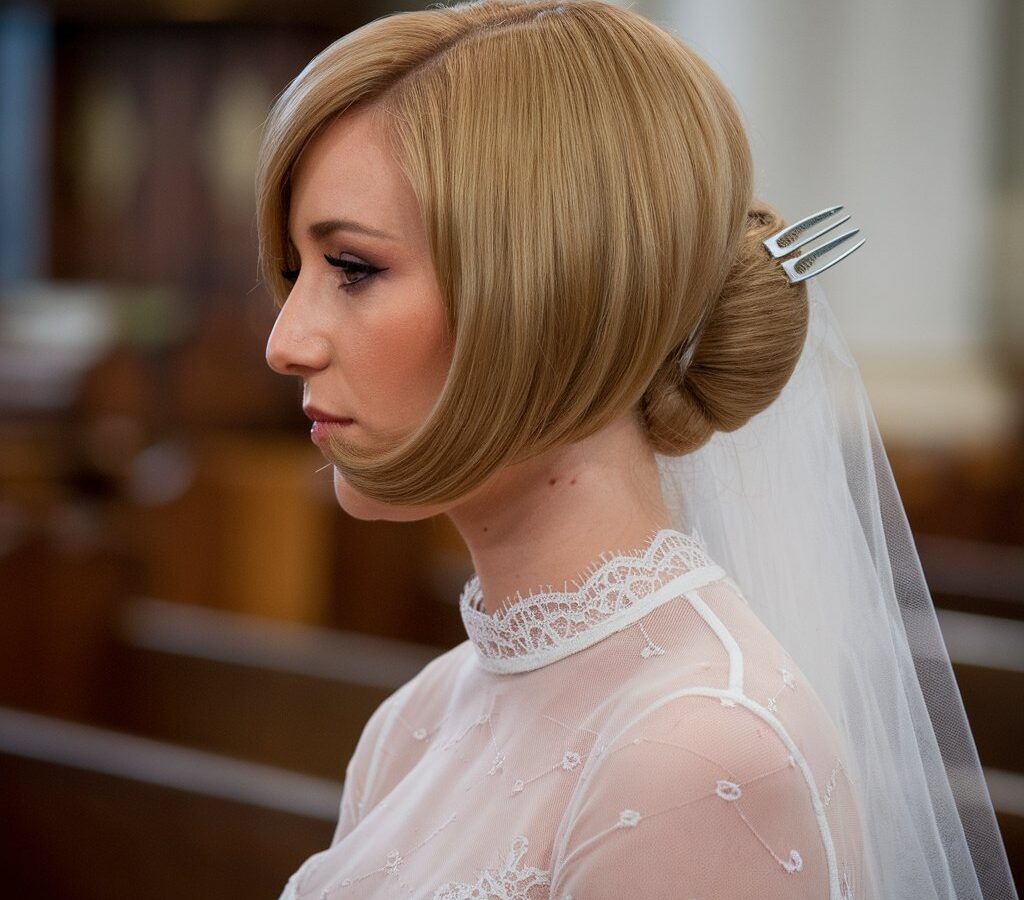
On this page
- Why Short Hair Doesn’t Actually Need the Extra Length
- What Short Actually Means for Styling Purposes
- Bridal Looks That Work Fully Updo-Style on Short Hair
- Half-Up and Accent Styles for Bob and Lob Lengths
- Building Structure With Pins, Texture, and Volume Instead of Length
- Working a Veil or Headpiece Into a Short Style
- Accessories That Add Polish Without Adding Length
- What to Bring Up During a Trial for Short Hair
- Common Mistakes That Push Brides Toward Extensions Unnecessarily
- Choosing a Style That Works With the Length You Have
The suggestion comes up almost automatically once a bride with short hair starts talking to a stylist about wedding day plans: have you considered extensions? It’s rarely meant as criticism, more as a reflexive answer to a question that hasn’t actually been asked yet, since most bridal hair inspiration is photographed on long hair by default. The assumption baked into that inspiration is that a bridal look needs length to look finished, and extensions become the shortcut to get there.
That assumption doesn’t hold up as well as it used to. Short hair, whether it’s a pixie, a bob, or something in between, has its own set of styling techniques that produce a polished, intentional bridal look without adding a single clip-in or tape-in piece. The difference is that these techniques lean on structure, volume, and precise pinning rather than on length, which means the planning conversation with a stylist needs to start from a different place than it would for someone with hair past their shoulders.
Why Short Hair Doesn’t Actually Need the Extra Length
Extensions solve a specific problem: they add length and sometimes volume to hair that doesn’t have either. But a lot of what makes bridal hair look finished has very little to do with length itself. A close, well-placed updo can look every bit as intentional as a cascading one. A sculpted pixie with defined waves reads as polished in a completely different way than a loose bridal wave does, but it reads as polished all the same.
Short hair also holds certain styles more predictably than long hair does. Length adds weight, and weight is exactly what pulls a curl or a set style flat over the course of a long day. A shorter length, particularly anything from a chin-length bob up to a lob, tends to hold a curl set or a pinned style with less drooping by the time the reception starts, simply because there’s less hair for gravity to work against.
None of this means extensions are wrong for brides who want them, some want the specific look longer hair provides and that’s a completely reasonable choice. But for brides who are only considering extensions because they assume short hair can’t produce a “real” bridal look on its own, it’s worth knowing that isn’t actually true.
What Short Actually Means for Styling Purposes
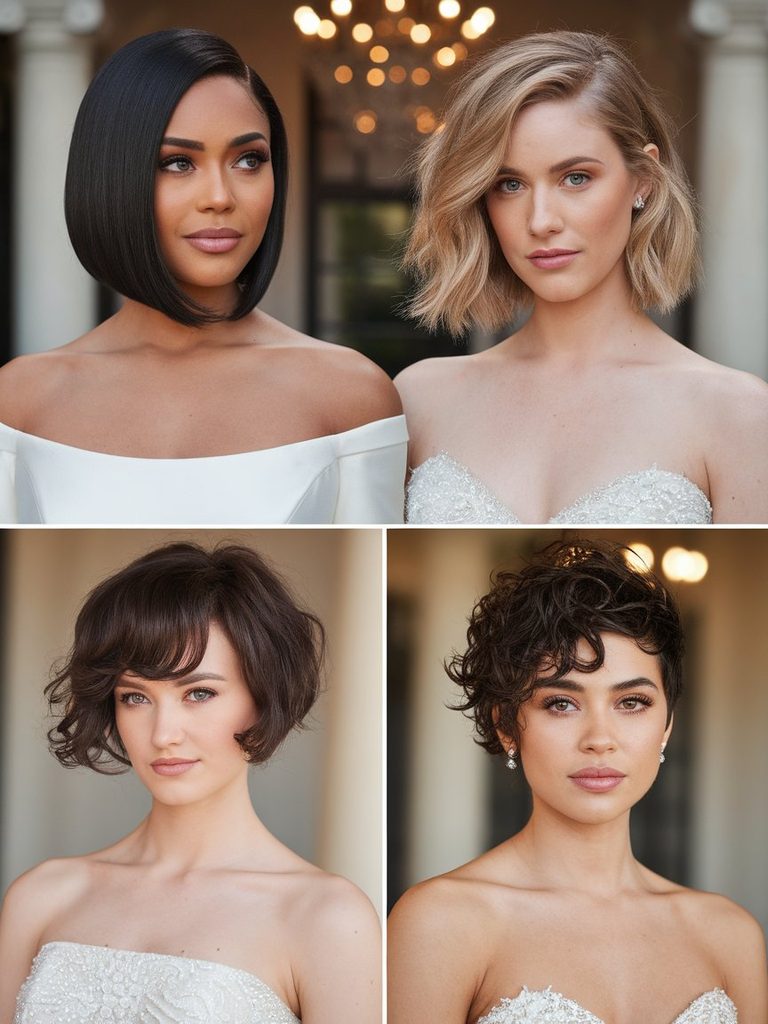
Not all short hair behaves the same way, and the specific length range changes which techniques are realistic and which aren’t.
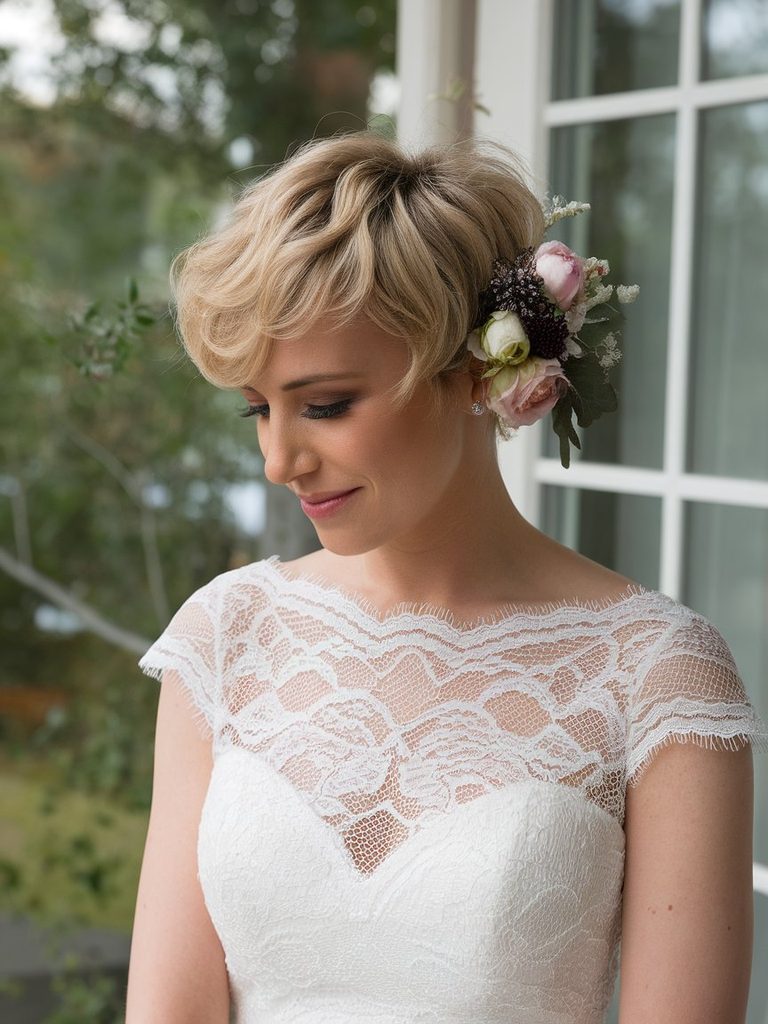
A pixie cut, generally anything above the chin, has the least length to work with but often the most texture and movement potential, especially if the cut has any layering built in. Styling here focuses on shape, definition, and finish rather than on gathering hair into any kind of updo, since there usually isn’t enough length for that.
A bob, roughly chin to jaw length, sits in a useful middle zone. There’s enough length for small, low-set styles like a tucked-under finish or a partial pin-back, but not quite enough for a traditional updo without some creative pinning.
A lob, generally collarbone length or just past it, has the most flexibility of the three. Low buns, twisted updos, and half-up styles are all genuinely achievable at this length, often with results that look nearly identical to what the same techniques would produce on longer hair.
Knowing which of these three categories a bride’s hair actually falls into changes the conversation with a stylist from the start, since a pixie and a lob are working with fundamentally different sets of options even though both count as “short” in casual conversation.
Bridal Looks That Work Fully Updo-Style on Short Hair
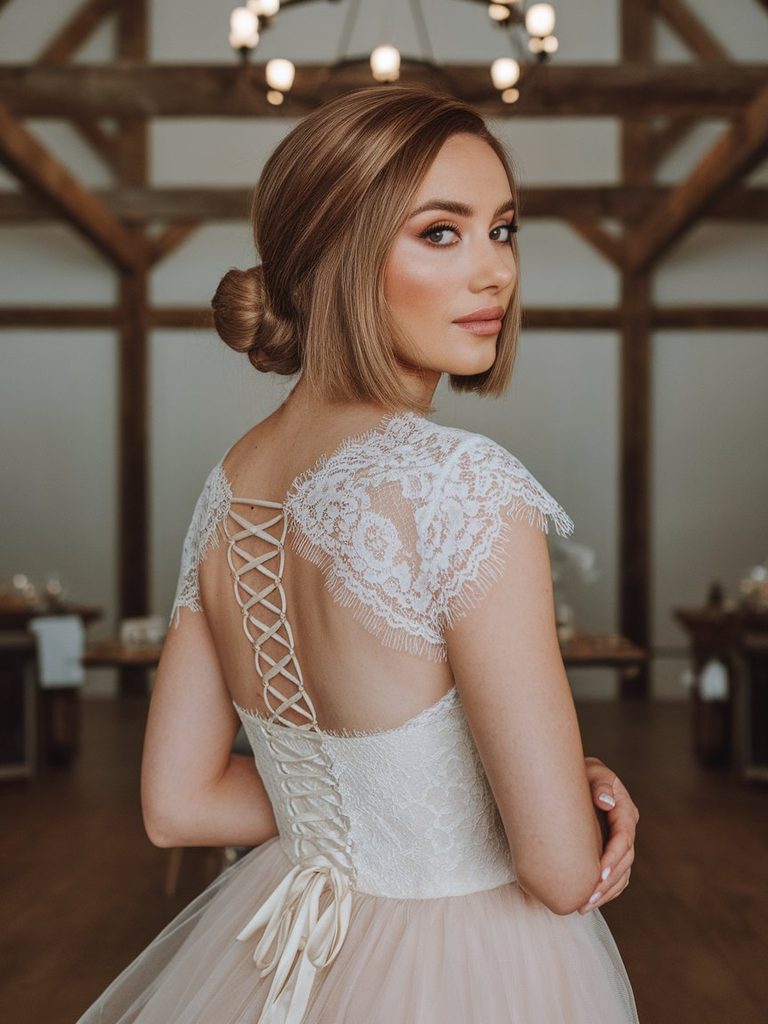
For bob and lob lengths especially, a genuine updo is more achievable than most brides expect, even without any added hair.
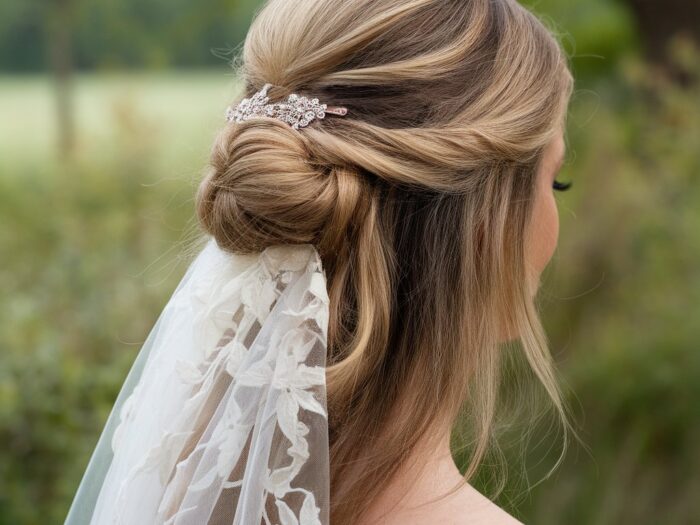
A low, tucked chignon works on hair as short as a longer bob, using small, carefully placed pins to roll the ends under rather than trying to gather the whole length into a traditional bun shape. The finished look reads as a classic low updo, even though the mechanics behind it are different from how the same style would be built on longer hair.
A pinned-back finger wave set is a strong option for pixie and short bob lengths that can’t be gathered at all. Rather than pulling hair away from the face, the entire style is set close to the head using pin curls or a finger-wave technique, which creates a sculpted, intentional look that reads as deliberately vintage-glam rather than simply “hair that’s too short to do anything with.”
A textured, slicked-back style works especially well on pixie cuts with enough length on top to smooth backward. This look leans into the short length rather than working around it, using a light pomade or gel to create a sleek, polished finish that photographs cleanly and holds for hours without any pinning at all.
Half-Up and Accent Styles for Bob and Lob Lengths
Brides with bob or lob-length hair who want some hair pulled back without going fully updo have more options than they might expect, provided the style is built around small, precise sections rather than one large gathered piece.
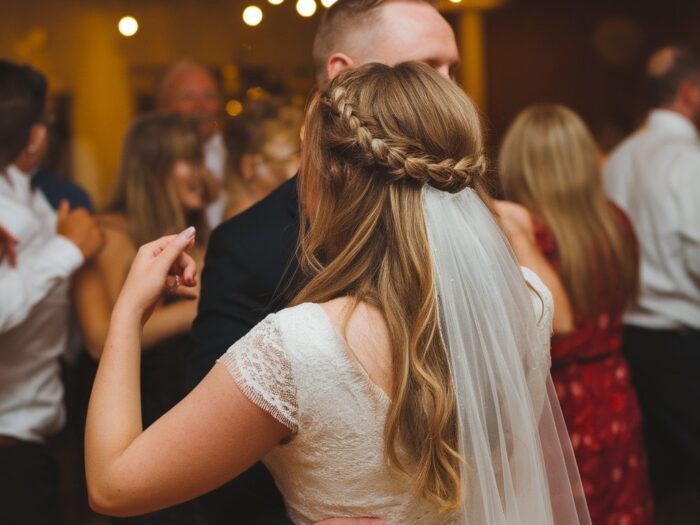
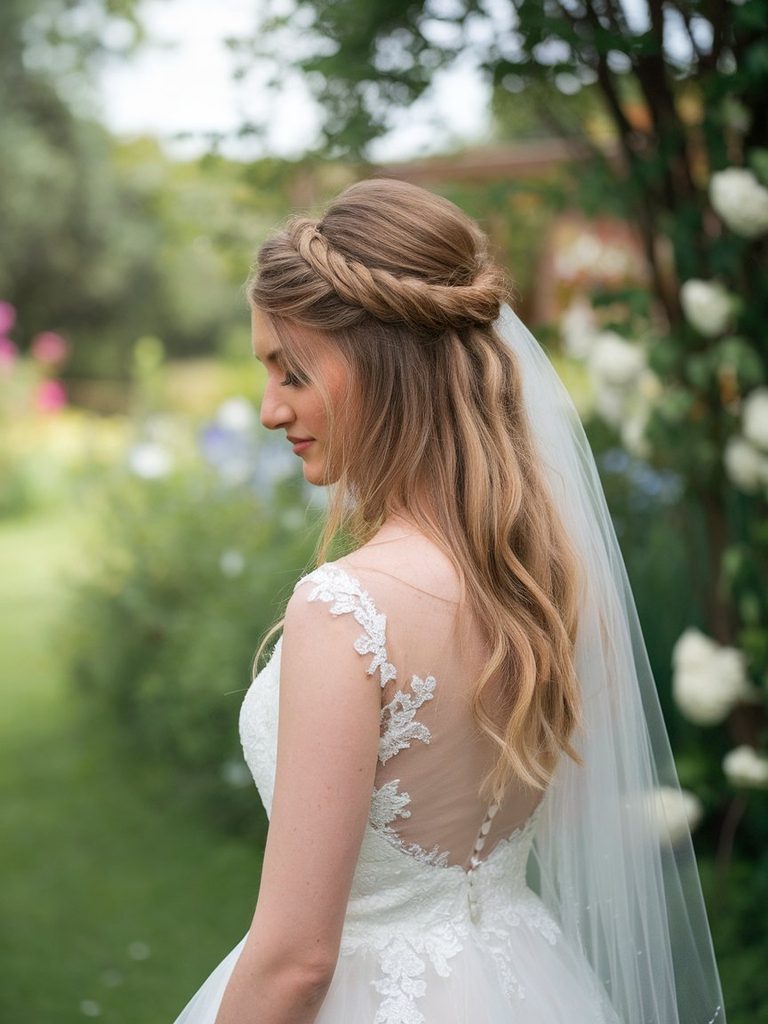
A twisted half-up crown takes just the top section of hair and twists it back into a small pinned knot or braid, leaving the rest of the length down. Because bob and lob hair is shorter, this half-up section often ends up looking fuller and more structured than the same style would on longer hair, since there’s proportionally less loose hair left hanging below it.
Two small twisted sections pinned at the back, rather than one central updo, give a similar structured effect using less length overall, which makes this a workable option even for shorter bobs that can’t support a single larger twist.
A single decorative pin or comb placed just above one ear, anchored into a small section rather than a full gathered updo, adds a deliberate styling detail without requiring enough length to pull the whole head of hair into any kind of knot.
Building Structure With Pins, Texture, and Volume Instead of Length
The real substitute for extensions isn’t a different haircut, it’s a different toolkit. Volume and structure do most of the work that length would otherwise be doing, and short hair actually responds to these tools with less effort than long hair does.
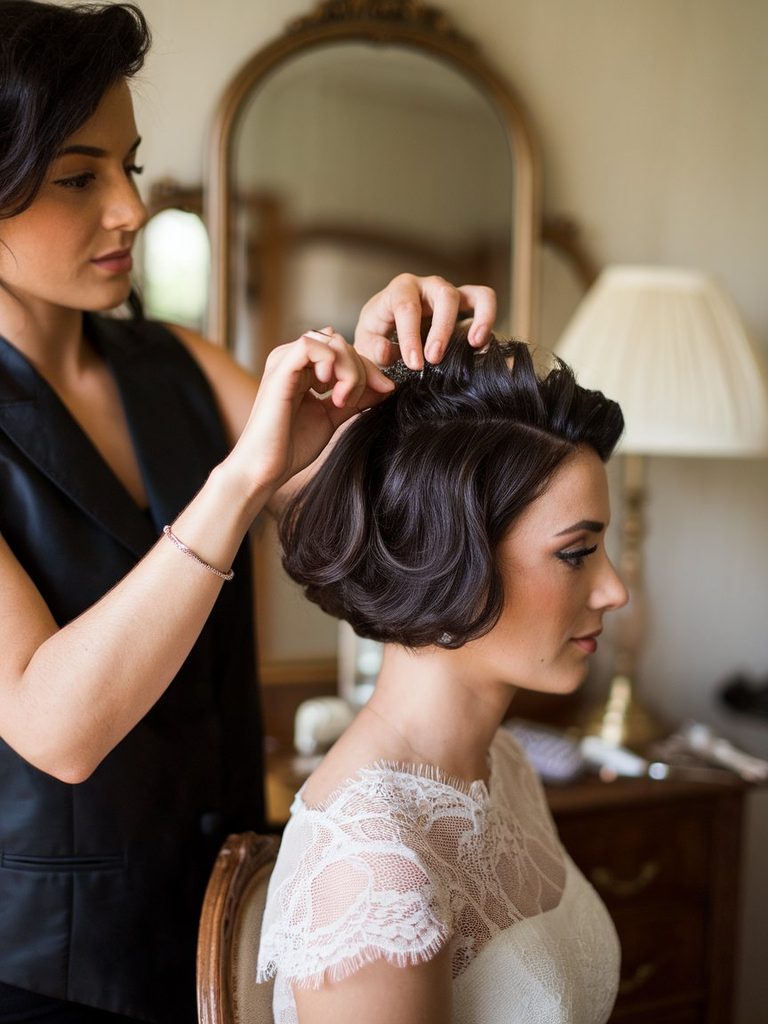
Backcombing at the crown, done lightly and smoothed over rather than left visibly teased, adds height and fullness that makes a short style read as more substantial without adding any length at all. This is particularly useful for pixie cuts, where a bit of lift at the crown balances the shorter sides and back.
A volumizing mousse or texturizing spray applied at the roots before any other styling gives short hair the same kind of grip and hold that longer hair gets from its own weight and natural texture. Without this step, short hair styled straight from a wash tends to look flatter and less intentional than the same cut styled with some texture built in first.
Small, strategically placed bobby pins, tucked in a hidden pattern rather than visible, are what actually keep a short bridal style secure through hours of movement. Because there’s less hair overall to anchor a pin into, placement matters more on short hair than it does on long hair, where there’s simply more material to work with.
Working a Veil or Headpiece Into a Short Style
Veils and headpieces on short hair work differently than they do on longer hair, mostly because there’s less length available to help anchor a comb securely, which makes attachment technique more important than it might be otherwise.
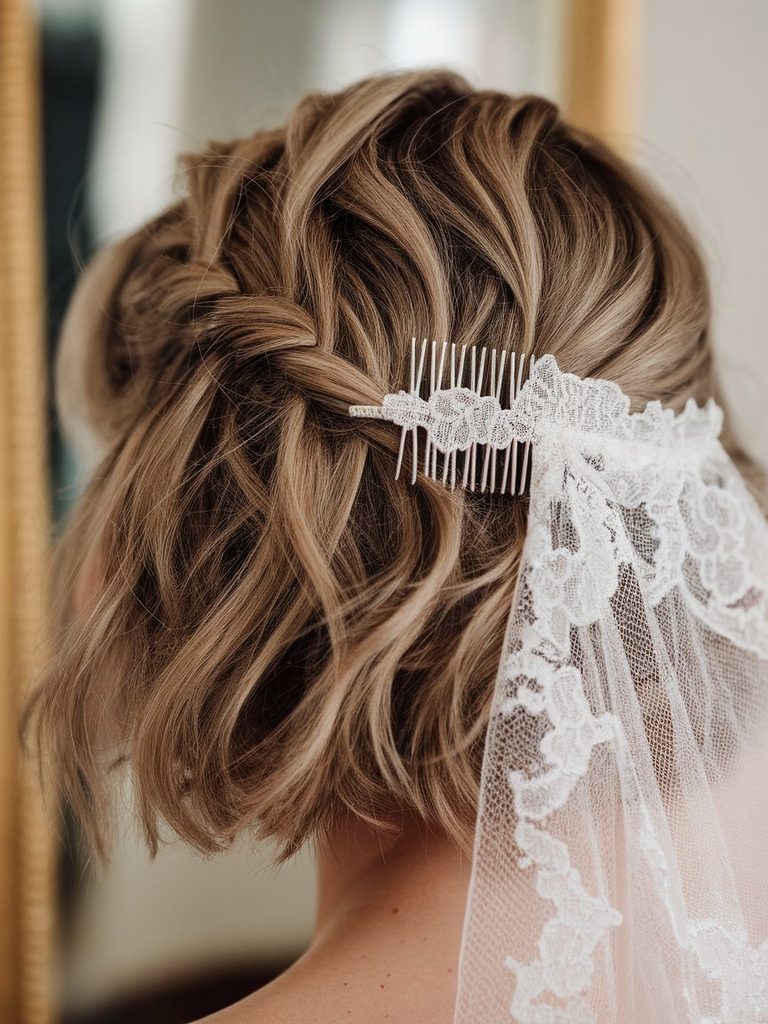
A veil comb anchored into a small, backcombed or texturized section near the crown holds more securely on short hair than one placed into smooth, freshly washed strands, for the same reason texture and attachment point matter on any length: loose, slippery hair gives a comb nothing to grip onto. On a pixie or short bob, this often means asking a stylist to build in a small amount of texture specifically at the attachment point, even if the rest of the style is sleek and smooth.
Headpieces that clip in flat against the head, rather than relying on height or volume to sit correctly, tend to work more naturally with short hair than tall, structural pieces do. A single hair vine, a flat comb, or a low-set clip generally reads as more proportionate on a pixie or bob than a large, structured headpiece designed with longer hair’s volume in mind.
Accessories That Add Polish Without Adding Length
For brides who want their short hair to feel a little more elevated for the day without changing the fundamental style, accessories do a lot of the work that extensions would otherwise be asked to do.
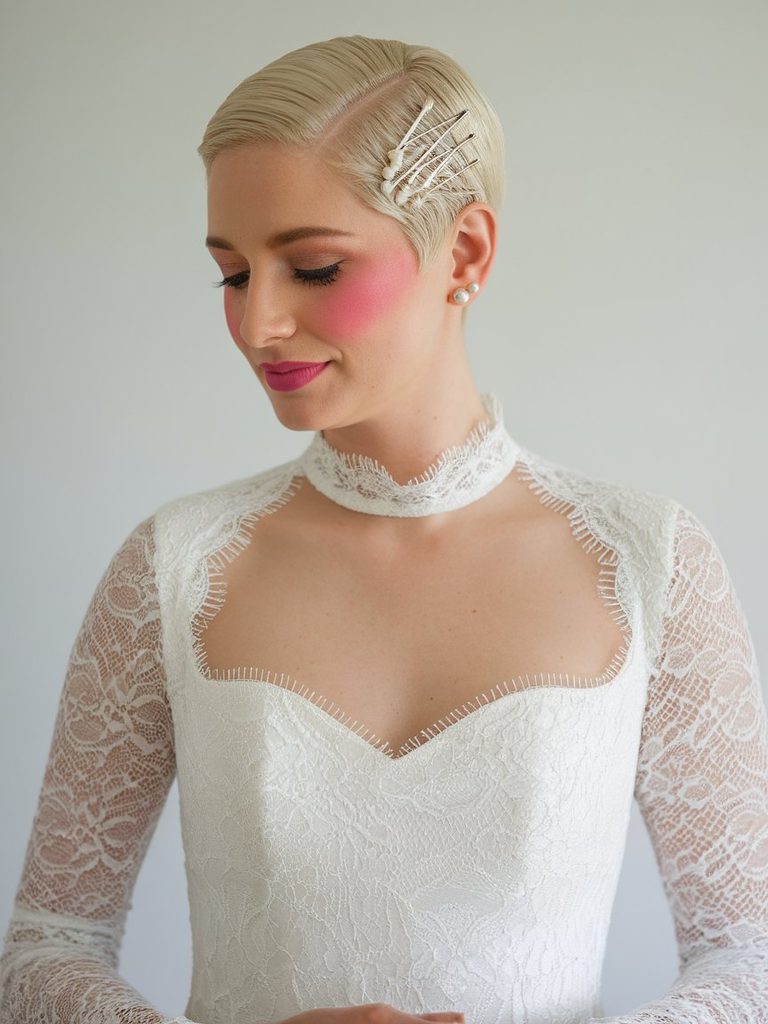
Pearl or crystal pins scattered through a textured, slicked style add visual interest and a sense of occasion without requiring any additional length to pin them into. A structured headband, particularly one with some height or embellishment at the crown, gives a short style a more formal silhouette instantly, since it draws the eye upward rather than relying on length to create visual weight. Fresh or preserved flowers tucked into a pin-curl set or a slicked-back style read as intentional, editorial choices on short hair specifically, since the style already has enough structure to support them without looking overloaded.
What to Bring Up During a Trial for Short Hair
A trial appointment for a short bridal style benefits from a slightly different conversation than a trial for longer hair, mostly because there’s less room to correct course if a chosen technique doesn’t actually work with the cut’s length and layering.
Bringing photos of styles on hair that’s genuinely similar in length, rather than styles on hair a few inches longer that only look short in the photo, gives a stylist a much more accurate starting point. It’s also worth testing how a chosen veil comb or headpiece actually feels and holds on the finished style during the trial itself, rather than assuming placement will work itself out on the day, since short hair offers less margin for adjustment than longer hair does.
Asking specifically how the style will be expected to change over several hours, since short hair styled with backcombing and texture product behaves differently by the evening than it does right after styling, helps set realistic expectations rather than judging the whole plan off how it looks in the first twenty minutes.
Common Mistakes That Push Brides Toward Extensions Unnecessarily
A few recurring assumptions account for most of the reason brides consider extensions before actually exploring what their own length can do.
- Only looking at inspiration photos shot on long hair. Nearly all mainstream bridal hair inspiration defaults to length, which makes short hair look like a limitation rather than a different starting point with its own techniques.
- Assuming an updo requires enough hair to fully gather. Several of the styles that read as updos on short hair are built with small sections and precise pinning rather than one large gathered piece.
- Skipping texture product because the hair is already short. Short hair actually benefits more from volumizing and texturizing steps than long hair does, since there’s no natural weight or length to create fullness on its own.
- Choosing a large, structural headpiece designed for longer hair. A piece proportioned for length and volume that short hair doesn’t have can end up looking mismatched rather than elevated.
- Not testing veil placement specifically for the shorter length. Attachment technique matters more on short hair, and skipping this step at the trial is one of the more common reasons a veil feels insecure on the actual day.
Choosing a Style That Works With the Length You Have
Short hair isn’t a smaller version of a long-hair bridal look with something missing. It’s a different starting point with its own set of techniques, ones that lean on structure, texture, and precise placement rather than on the weight and length that longer hair provides by default. A pixie styled with sculpted waves, a bob pinned into a tucked chignon, or a lob twisted into a half-up crown can all look every bit as finished and intentional as a longer, more traditionally “bridal” style, without a single extension involved.
For brides still finalizing other parts of the bridal look, the guide to wedding dress necklines by body shape is worth reading alongside hair planning, since neckline and hair length interact more than most brides expect going in. Anyone weighing a fully down or half-up option instead of an updo may also find it useful to look at what actually keeps a non-updo bridal style in place, since several of those same hold and texture principles apply directly to shorter lengths as well.

Ella is a fashion and beauty writer who shares inspiring ideas about hairstyles, nail designs, wedding outfits, and seasonal fashion trends. She loves discovering fresh styles and creating…
View Author Profile →