
On this page
- What Poetcore Actually Is
- The Four Ingredients of a Poetcore Outfit
- Poetcore Outfits for Seven Everyday Scenes
- Building a Palette That Reads as Literary
- The Pieces Worth Owning First
- Bags, Ties and Small Props
- Keeping Poetcore Out of Costume Territory
- Hair, Nails and Makeup for a Poetic Finish
- Building a Poetcore Wardrobe From What You Already Own
- FAQs
- A Closing Page
Poetcore starts with an odd premise: a wardrobe that looks like it belongs to someone who reads in the margins. The clothes are soft, a bit rumpled, and layered with intent. Nothing looks styled to within an inch of its life, yet nothing looks accidental either.
That balance is why the look has traveled so far from its search-trend origins. Pinterest’s 2026 forecast flagged poetcore as a style that thrives on texture, with wool, cotton, linen and outfits that look lived in, and runway coverage has since tied it to Ralph Lauren, Chanel and Altuzarra. This guide skips the mood-board talk and gets practical. You will find the ingredients that make an outfit read as literary, ideas organized by the scene you are dressing for, and a plan for building the look from clothes you may already own.

What Poetcore Actually Is
Poetcore is a romantic, bookish way of dressing built on knitwear, soft tailoring, vintage-leaning accessories and a muted palette. It borrows from libraries, cafés, lecture halls and notebooks without turning into a uniform.
It overlaps with other academic aesthetics, but the emphasis differs. Preppy dressing leans crisp and clubby. Dark academia leans moody and formal, with a lot of black and charcoal. Poetcore sits in between and is gentler than both: more drape, more softness, more evidence that the clothes have been lived in. A report on the aesthetic from FashionUnited notes that it welcomes the revival of the tie, which gives a sense of how much tailoring detail it tolerates.
A useful test: if the outfit could plausibly be worn to read a paperback on a rainy bench, it is probably poetcore. If it needs a stage, it has probably drifted into costume.
The Four Ingredients of a Poetcore Outfit
Most successful poetcore outfits share the same four qualities, whatever the exact pieces. Check an outfit against these before you leave the house.
Texture Does the Talking
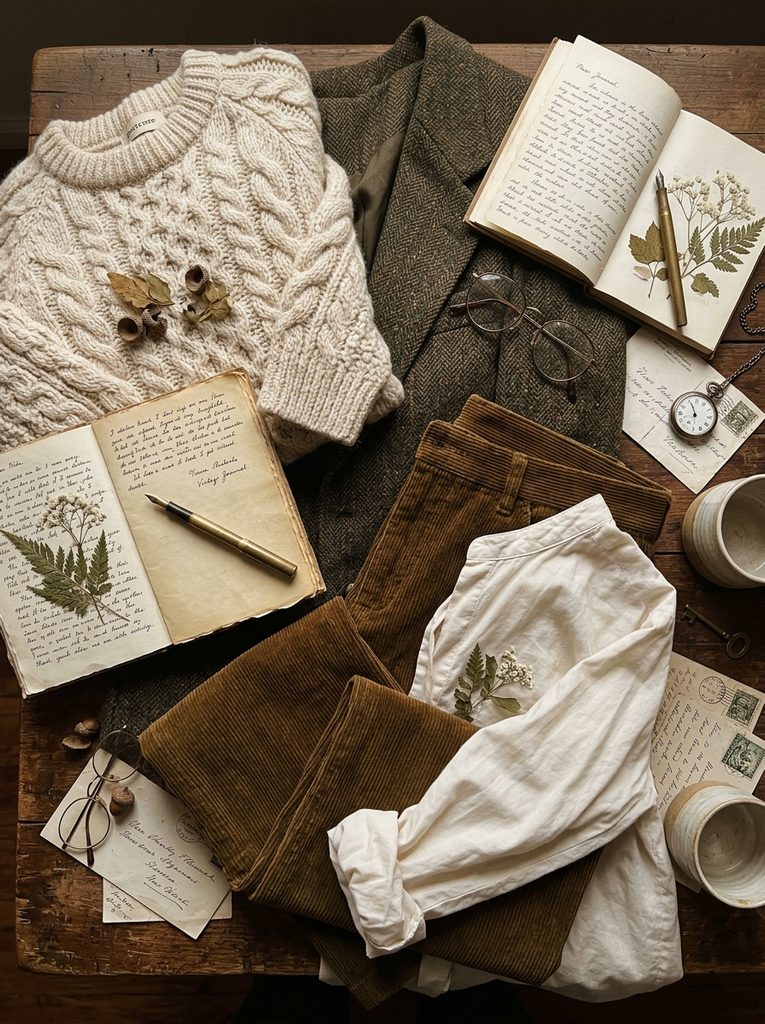
The look depends more on surface than on color. Think cable knit, brushed wool, corduroy, washed cotton, linen, tweed and soft suede. Two or three textures in one outfit give it depth without extra accessories.
A flat, smooth outfit rarely reads as poetic, no matter how many bookish details you add. A chunky knit over a crisp poplin collar, with corduroy trousers below, already says it.
Proportion That Looks Slightly Borrowed
Poetcore favors clothes that appear to have come from a thoughtful older relative’s closet: a slightly long blazer, a roomy cardigan, a high-collared blouse with a generous sleeve. The fit is intentional but relaxed.
The trick is to balance volume. If the top half is full, keep the bottom half narrower, such as straight trousers or a slim midi skirt. When both halves are voluminous, the outfit loses its shape and starts to look like a layered pile.
One Quirk Per Outfit
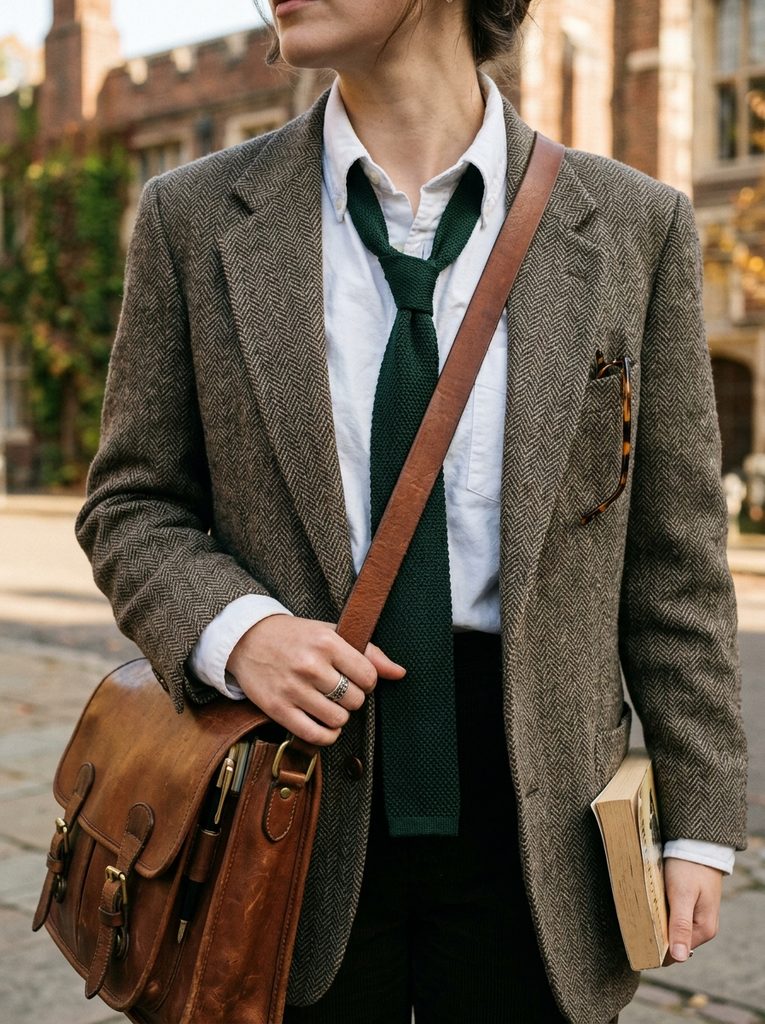
Every convincing look has a single odd, personal detail. It might be a narrow tie worn loose, a bow at the collar, a brooch, a leather satchel with a worn buckle, or striped tights. Pick one. Several quirks compete and tip the look toward costume.
Color That Looks Worn In
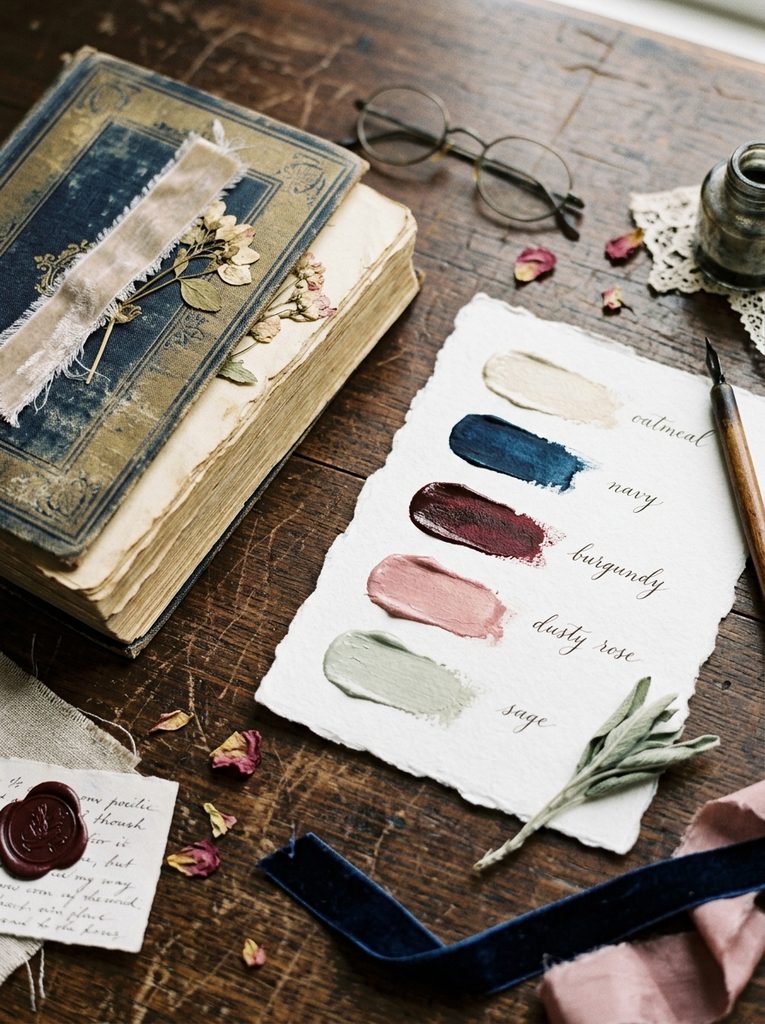
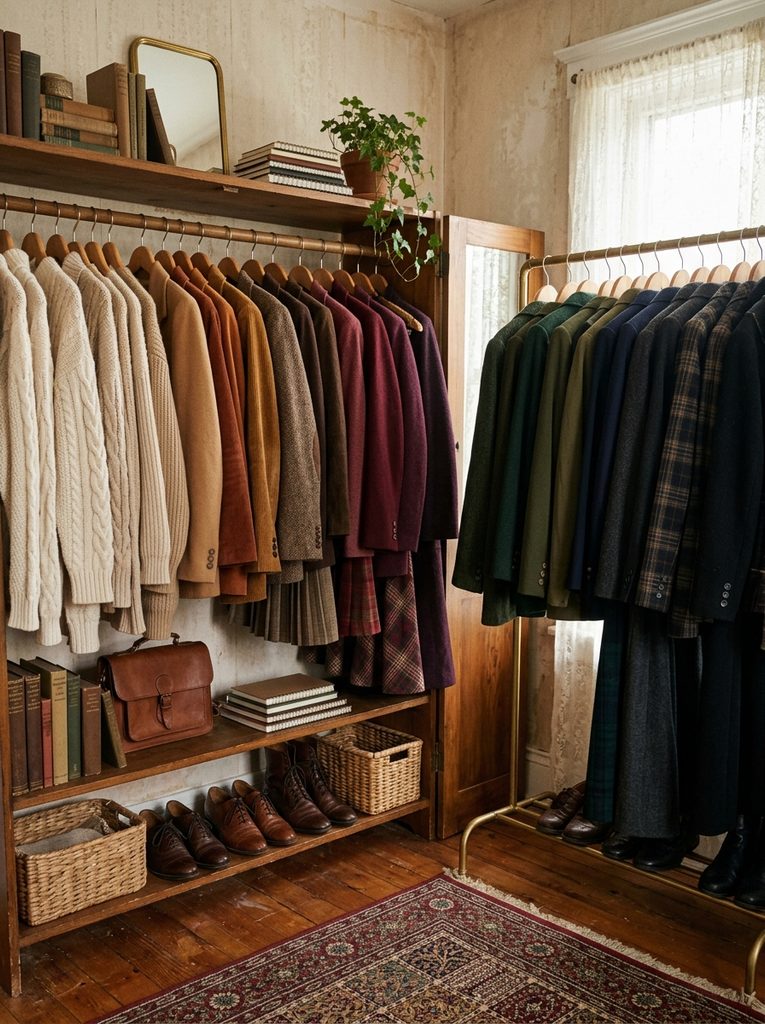
Poetcore palettes feel faded rather than fresh: oatmeal, ink navy, olive, rust, plum, mushroom, bottle green, ivory. Black works as a anchor, but it is rarely the star. Think of the colors of an old book cover, not a new one.
Poetcore Outfits for Seven Everyday Scenes
Instead of working garment by garment, it can help to dress for a setting. Each of the following builds in a different mood, so you can see how the same ingredients shift with the day.
The Bookshop Saturday
An easy, wandering day calls for comfort with a little polish. Start with straight-leg corduroy trousers in tobacco or deep green, then a cream fisherman knit, and a long open cardigan on top. Flat leather loafers or lace-up boots keep things practical for hours on your feet.
Add a canvas tote that can hold a few purchases. Keep jewelry minimal, perhaps a thin chain and small studs, because the knit and trousers already supply plenty of interest.
The Café Writing Hour
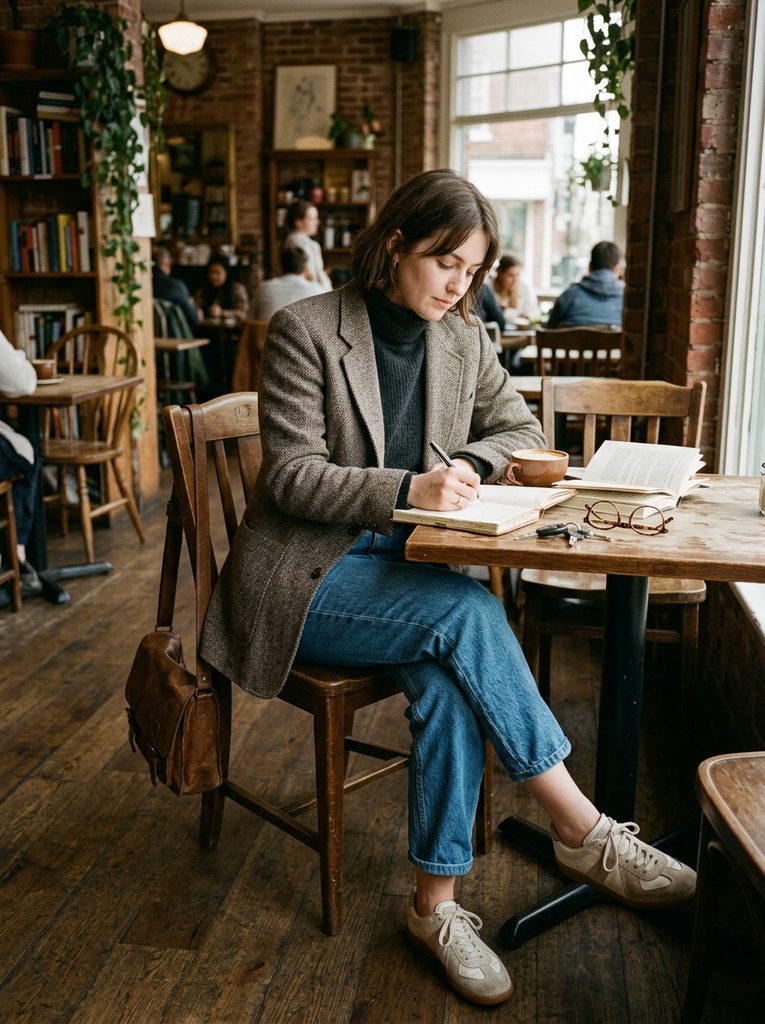
You may be sitting for hours, so softness matters. A ribbed turtleneck in oatmeal or charcoal sits well under a boxy tweed blazer with the sleeves pushed up. Pair them with wide, drapey trousers and soft ankle boots.
A scarf draped loosely, not wrapped tightly, adds warmth when the air conditioning bites. Choose a muted plaid or a plain wool in a slightly off color, such as moss or heather.
The Rainy Walk
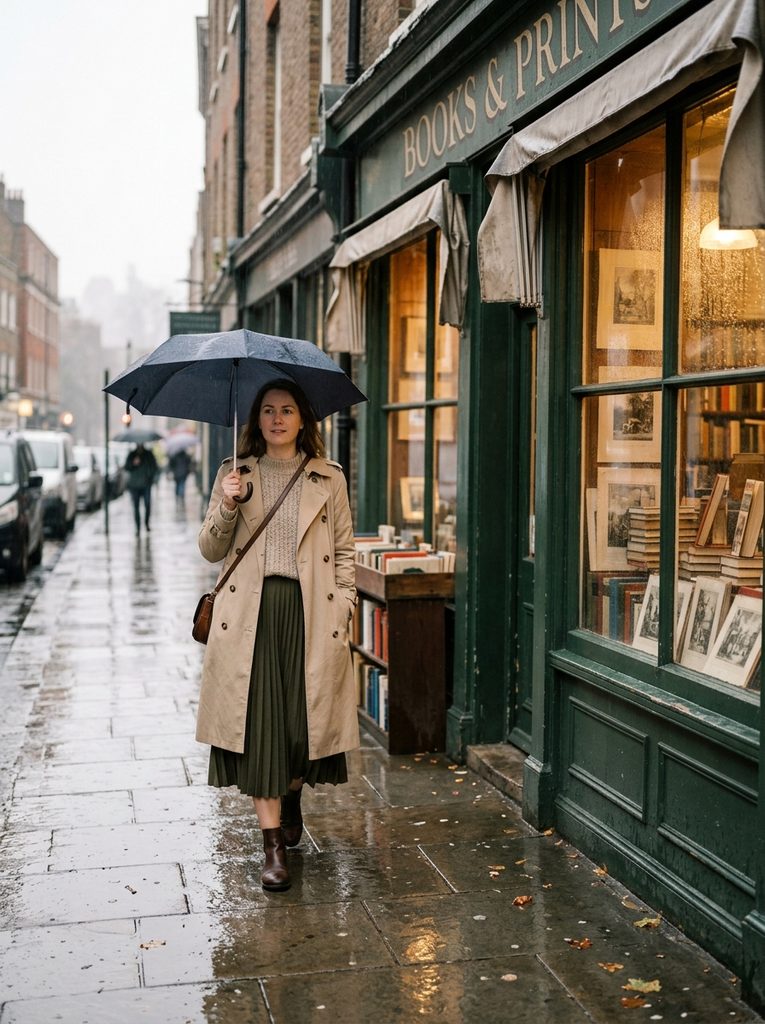
Weather is practically a poetcore character. A belted trench or a long wool coat in stone or olive is the natural base. Underneath, try a thick sweater and a midi skirt with knee-high boots, or straight jeans and waterproof leather shoes.
An umbrella in a plain dark color keeps the picture tidy. If you already own a trench, the ideas in scarf outfit ideas with trench coats this fall show several ways to bring a scarf into the mix.
The Office, Quietly Literary
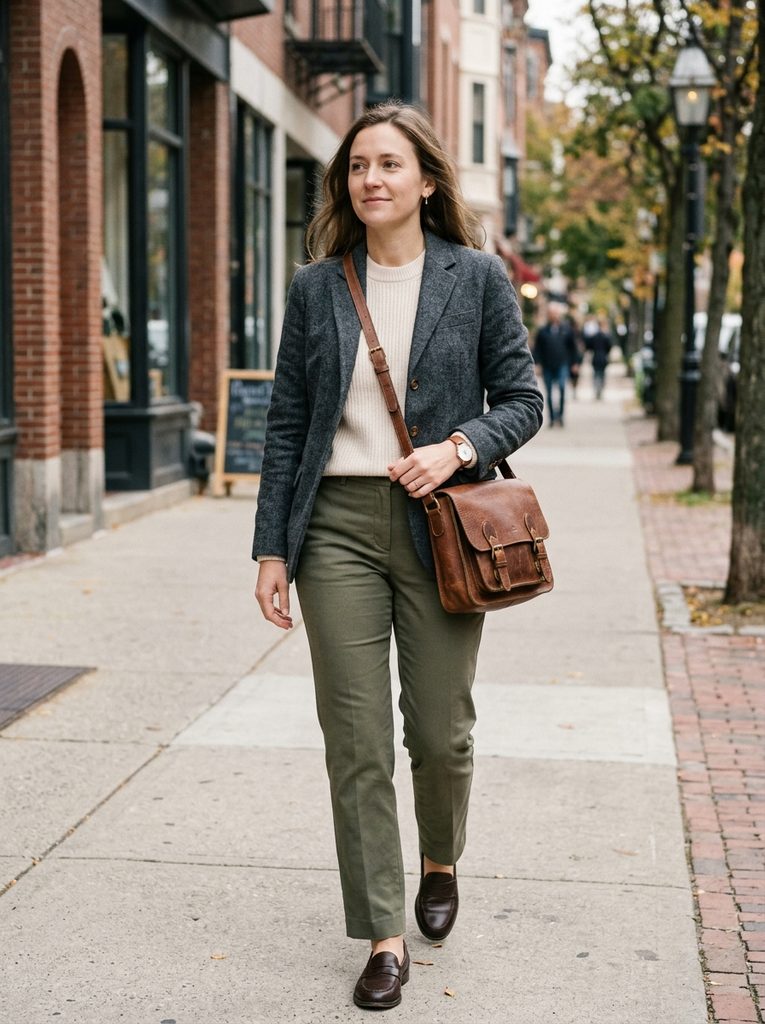
Workplaces rarely reward costume, so subtlety counts. A well-cut blazer in grey flannel, a soft button-down with a slightly oversized collar, and straight trousers form a base that suits most offices. The poetcore part comes from small touches: a slim knit tie worn loosely, a silk bow at the neck, or a leather satchel in place of a sleek tote.
Keep colors muted and the tailoring clean. A subtle herringbone or a fine check adds texture without drawing attention.
The Poetry Reading or Gallery Evening
For a night out with a quieter dress code, move toward richer fabrics. A velvet blazer in plum or bottle green over a silk-feel blouse and black trousers is a strong choice. Another is a long, dark knit dress with a structured jacket and sheer tights.
This is the right moment for a more decorative accessory, such as a pearl hair clip, a vintage-style drop earring, or a statement pin. If pins appeal to you, the placement and care ideas in brooch outfit ideas for preppy fall looks carry over well to this mood.
The Library Afternoon
Quiet spaces reward soft, silent fabrics. A cashmere-feel sweater, pleated midi skirt and flat Mary Janes make a calm combination. Add ribbed socks or opaque tights, and carry a bag with enough room for a notebook and a paperback.
This is also a good day for a layered neckline. A shirt collar peeking out from a crew-neck sweater looks deliberate and keeps the throat warm.
The Travel Day
Long journeys suit poetcore well because it values comfort. A roomy wool coat, a stretchy knit, easy trousers and sturdy flats cover every airport and train platform. A large scarf doubles as a blanket.
Choose a bag you can carry across the body and keep your passport and book within reach. Dark, tonal colors hide the creases of a long day.
Building a Palette That Reads as Literary
Color is where many attempts go wrong. Too bright, and the outfit loses its calm. Too uniformly dark, and it turns into a different aesthetic altogether. These three palettes cover most wardrobes.
Library neutrals. Oatmeal, ivory, taupe and soft grey, with one deeper accent such as chestnut. It is the easiest to start with and the most forgiving.
Autumn ink. Navy, forest green, burgundy and brown. These pair well with tweed, corduroy and wool, and they flatter most complexions in cooler light.
Faded romance. Dusty rose, sage, lavender-grey and cream. Better suited to blouses, light knits and spring layers, and effective when paired with a single dark piece for grounding.
Whichever palette you choose, repeat one shade twice in an outfit. A rust scarf with rust-toned boots, for example, ties the pieces together and makes the look feel composed.
If you enjoy planning around a limited color range, the approach in a ten-piece fall capsule wardrobe that actually repeats well offers a practical template for keeping your pieces coordinated.
The Pieces Worth Owning First
You do not need a full wardrobe overhaul. A handful of items can anchor dozens of outfits.
A Textured Blazer
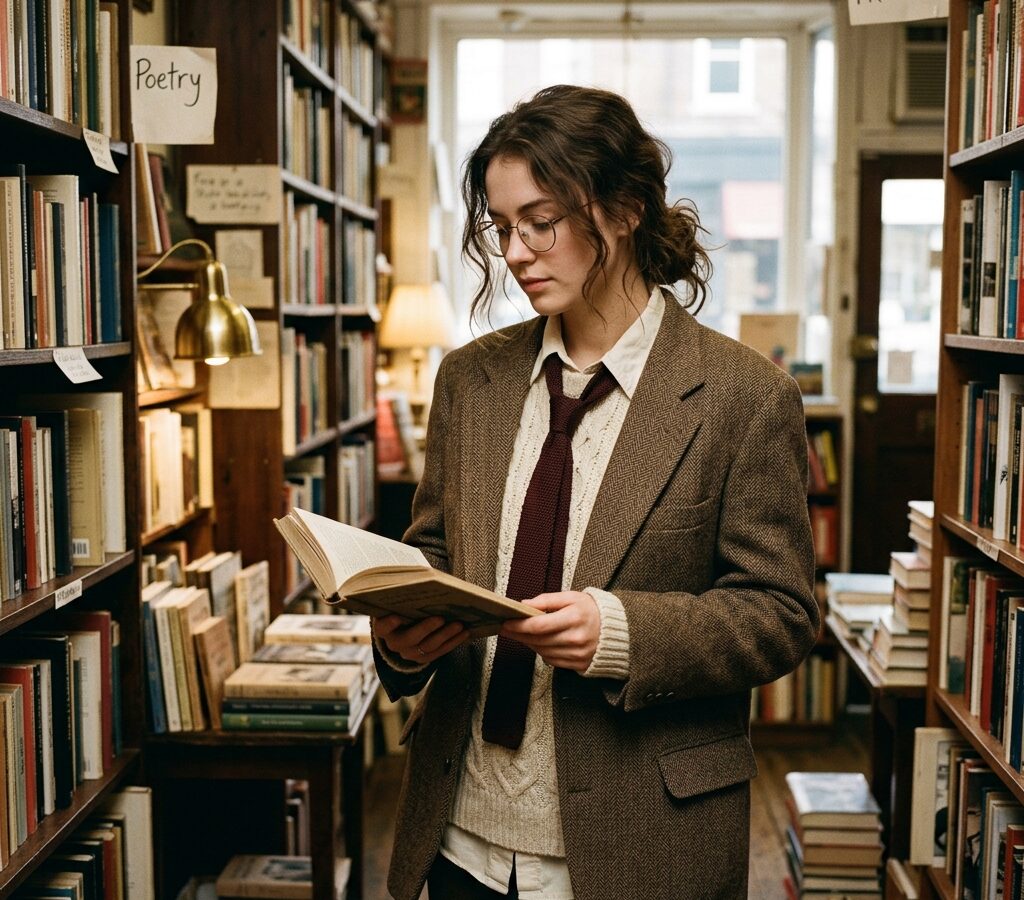
A tweed, flannel or corduroy blazer in a muted shade is the most versatile piece in the aesthetic. Look for a slightly relaxed shoulder and a length that hits the hip, so it layers over knits without bunching.
A Substantial Knit
Choose a cable knit, a fisherman sweater or a thick turtleneck. Natural fibers such as wool and cotton tend to look better as they age, which suits the worn-in spirit of the look.
A Collared Shirt With Character
A shirt in cotton poplin or a lightly crinkled linen works across seasons. A slightly oversized collar, a pleated front, or a subtle sleeve gather gives it a literary air without extra effort.
Straight or Pleated Trousers
Corduroy, wool-blend and cotton twill are all good. A high waist and a straight leg keep the line clean, which helps balance heavier tops.
A Midi Skirt
A pleated or softly gathered skirt in plaid, solid wool or dark cotton adds movement. It works with boots in cold months and flats when the weather warms.
A Long Coat
A trench, a wool overcoat or a cape-style coat completes the outer layer. Capes and ponchos have drawn interest on their own; Vogue Adria’s coverage reports that searches for cape outfits rose by 65 percent in Pinterest’s analysis, so a structured cape is a reasonable choice if you like the silhouette.
Bags, Ties and Small Props
Poetcore leans on accessories that suggest a life of reading and writing, but each one should earn its place.
The Satchel and Other Bookish Bags
Pinterest data noted by Vogue Adria shows searches for satchel bag aesthetic rising by 85 percent, which fits the trend’s fondness for structured, buckled leather. A good satchel holds a laptop or notebook, sits comfortably against the hip, and gets better with scuffs.
When choosing, think about the proportions of the bag against your frame and your daily load. For a clearer idea of which sizes are worth owning, see handbag sizes worth owning before you buy another one.
Neckties and Neck Bows
Ties have returned to womenswear in a relaxed form. A narrow knit tie loosened at the collar looks casual, while a wider silk tie tucked into a blouse looks more polished. A pussy-bow blouse delivers a softer version of the same idea.
Keep the knot loose and slightly uneven. A rigid, perfect knot makes the outfit feel like workwear.
Hosiery, Socks and Shoes
Sheer tights in a tinted shade, ribbed socks with loafers, and flat leather boots all fit. Mary Janes, brogues and ballet flats keep the feet quiet and the silhouette gentle. Skip chunky athletic soles, which pull the look in another direction.
Glasses, Scarves and Hats
A pair of thin-framed glasses, a wool beret, or a wool flat cap can signal the theme without any special effort. Use one at a time. A beret, scarf and glasses together may start to look like a character sketch.
Keeping Poetcore Out of Costume Territory
The line between a literary outfit and a theatrical one is thin. A few habits keep you on the right side of it.
Reference the aesthetic in two or three pieces, then fill in the rest with modern basics. A tweed blazer and a loose tie look intentional with straight jeans and clean sneakers. Add a cape, a bonnet and lace gloves, and you are in a period piece.
Aim for a mix of eras. Pair something vintage-leaning with something current, such as an old-style cardigan with contemporary trousers. This makes the outfit feel like a personal collection rather than a reconstruction.
Mind the fit. Clothes that are too tight look stiff, and clothes that are too baggy look unplanned. The best poetcore pieces hang relaxed but follow the body somewhere, whether at the shoulder, waist or hem.
Finally, let the outfit stay a little imperfect. A rolled sleeve, a collar slightly askew, or a hem that sits unevenly can add to the charm. Over-pressing every detail removes the lived-in quality that defines the look.
Hair, Nails and Makeup for a Poetic Finish
Beauty choices should echo the softness of the clothes. These are styling ideas, not rules, so adjust them to your own tastes and routine.
Hair
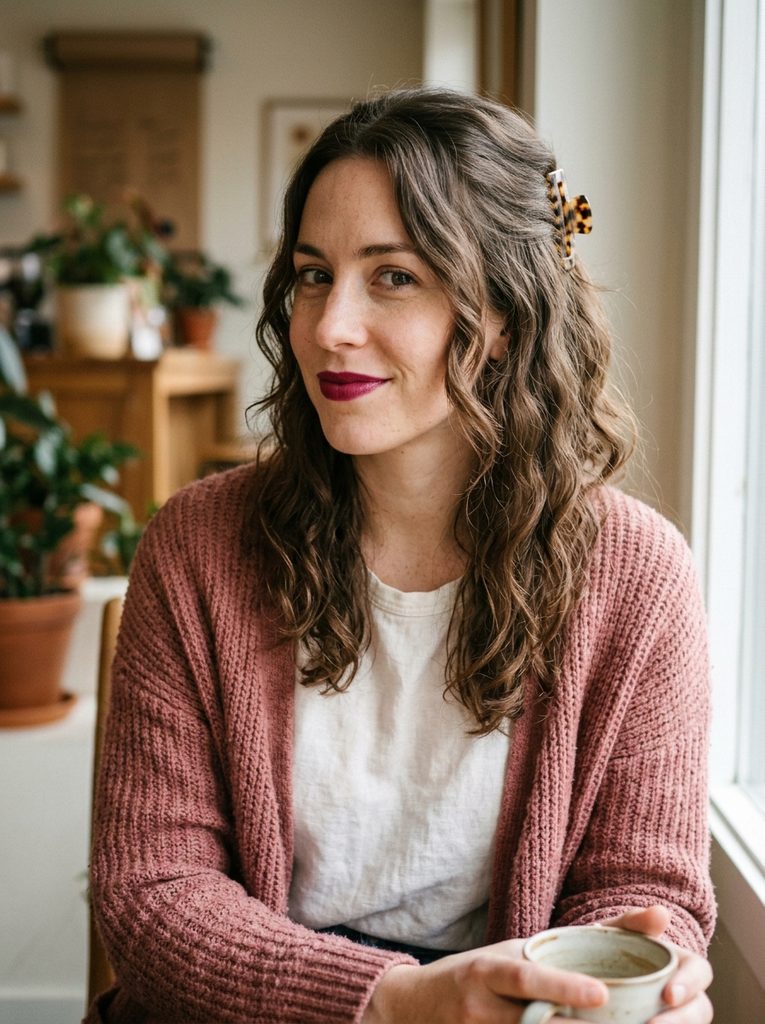
Loose waves, a low bun with a few strands left out, a half-up style with a ribbon or a tortoiseshell clip, and a soft braid are all fitting. A beret pairs well with a simple low ponytail or a straight bob. Looks that seem slightly undone suit the mood better than rigid, glossy styling.
Nails
Short, rounded nails in sheer milky shades, deep plum, muted green or ink blue fit with the palette. Subtle details such as a thin gold line or a tiny floral accent work if you want something extra, though plain is perfectly in keeping.
Makeup
Think soft and diffused. A light skin finish, a bit of blush on the cheeks, brushed-up brows, and a berry or rosewood lip suit most outfits. For evenings, a smudged brown or bronze liner adds depth without looking dramatic.
Fragrance and Finishing Touches
Some wearers like to finish the look with scents associated with paper, wood or tea, but this is purely a matter of taste. Neat, unfussy nails and well-kept hair will do more for the overall impression than any single product.
Building a Poetcore Wardrobe From What You Already Own
Because the look rewards worn-in clothes, you may be closer to it than you think. A short audit can show what is missing.
Start by pulling out every knit, blazer, collared shirt, midi skirt and pair of straight trousers in muted colors. Lay them on a bed and group them by palette. You will probably see one or two obvious combinations right away.
Next, note the gaps. If you have plenty of tops but no structured outer layer, a tweed or flannel blazer is the first purchase. If your wardrobe is full of bright colors, one or two neutral anchors, such as a camel coat or an ink-blue cardigan, will help tie things together.
Secondhand and vintage shops suit this aesthetic well, since older wool jackets and hand-knit sweaters often have the texture the trend values. Check seams, buttons and linings before buying, and try pieces on with your usual layers.
Treat each outfit as a short composition: one focal point, a few supporting textures, and a calm finish. Once you have three or four combinations that you like, repeat them. Poetcore is meant to feel personal, and repetition makes it more so.
FAQs
What are poetcore outfits?
Poetcore outfits are layered, textured looks inspired by reading, writing and poetry. They typically include knitwear, blazers, collared shirts, midi skirts, trousers, and accessories like ties, satchels and brooches, in muted, worn-in colors.
How is poetcore different from dark academia?
Dark academia tends toward a darker palette and a more formal, gothic mood. Poetcore is softer and more romantic, with lighter colors, relaxed tailoring and more emphasis on comfort and texture.
Can I wear poetcore if I prefer a minimal wardrobe?
Yes. A pared-back version might include one textured blazer, a good knit, straight trousers and a single accessory such as a loose tie. The look depends more on texture and proportion than on the number of pieces.
What colors suit poetcore best?
Oatmeal, navy, olive, rust, plum, bottle green, taupe and ivory are all dependable. Choose two or three that work together and repeat one of them within the outfit.
Which shoes work with the look?
Loafers, Mary Janes, brogues, ballet flats, and flat leather boots are the most natural fit. Pair them with tights or ribbed socks depending on the season.
Is poetcore suitable for work?
It can be, with a restrained approach. Stick to tailored blazers, collared shirts and muted colors, and add one small literary detail, such as a loose tie or a leather satchel.
How do I avoid looking like I am wearing a costume?
Limit the aesthetic to two or three pieces, mix eras, and keep the fit relaxed. Add modern basics, such as clean denim or simple shoes, to ground the outfit.
A Closing Page
Poetcore works because it asks very little of you. It wants soft fabrics, a few well-chosen details, and the confidence to wear them without explanation. If you remember the four ingredients of texture, borrowed proportion, one quirk and worn-in color, most outfits fall into place.
Start with a single blazer or sweater you already love, build one scene around it, and see how it feels to wear. The look improves with use, much like a favorite book.

Ella is a fashion and beauty writer who shares inspiring ideas about hairstyles, nail designs, wedding outfits, and seasonal fashion trends. She loves discovering fresh styles and creating…
View Author Profile →