

On this page
- Warmth Comes From Trapped Air and Blocked Wind, Not Thickness
- Where Winter Outfits Pick Up Bulk
- The Thin-and-Warm Fabric Toolkit
- A Coat That Does the Heavy Lifting
- Warm Legs, Clean Lines
- Peeks, Not Piles: Details That Add Polish Without Weight
- Shoes, Socks, and Salt
- Gloves, Hats, and Hair That Look Intentional
- Keeping Winter Knits Looking New
- Three Cold-Weather Outfits Built on These Ideas
- Frequently Asked Questions
There are two ways to get warm in winter. One is to add thickness. The other is to put the right material in the right place. The first tends to end in a silhouette that looks inflated. The second takes a little more thought, and it looks neat from the first step out the door.
Polished cold weather outfits do not depend on expensive pieces. They depend on knowing where warmth comes from, which parts of an outfit collect bulk, and which small finishing touches make a winter look appear deliberate.
What follows covers fabrics, coats, legs, accessories, boot care, and the upkeep that keeps knitwear looking sharp. It ends with three outfits and a short FAQ.
Warmth Comes From Trapped Air and Blocked Wind, Not Thickness
A winter outfit works in three ways. It traps a layer of warm air near the body, it blocks wind from stripping that air away, and it keeps dampness off the skin. Thickness helps with only the first, and not always efficiently.
This is why a chunky open knit can feel colder than a thin, dense one on a windy street, since the wind slips through the gaps. A fine-gauge merino sweater under a closely woven wool coat usually does more than a bulky sweater under a flimsy jacket, and it takes up far less room.
A useful order of thinking is wind first, air second, moisture third. Choose an outer layer with a tight weave, add one or two thin layers that hold warmth, and put something breathable next to the skin. The outfit looks slimmer because each layer has a defined job instead of adding general padding.

Where Winter Outfits Pick Up Bulk
Bulk collects in the same few places, and each one has a slim fix.
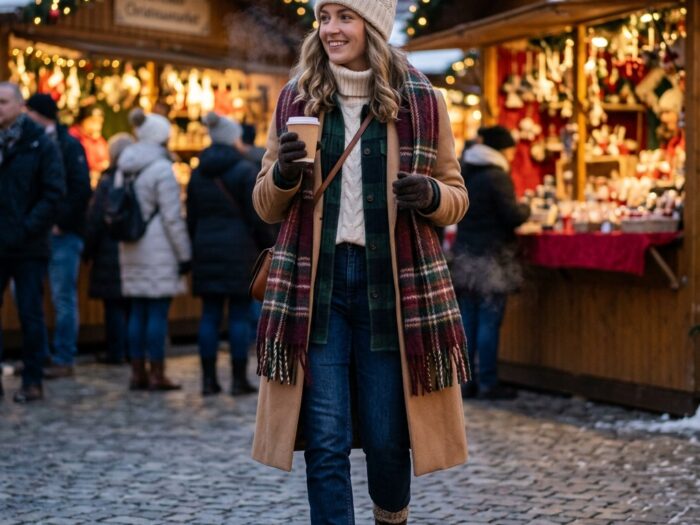
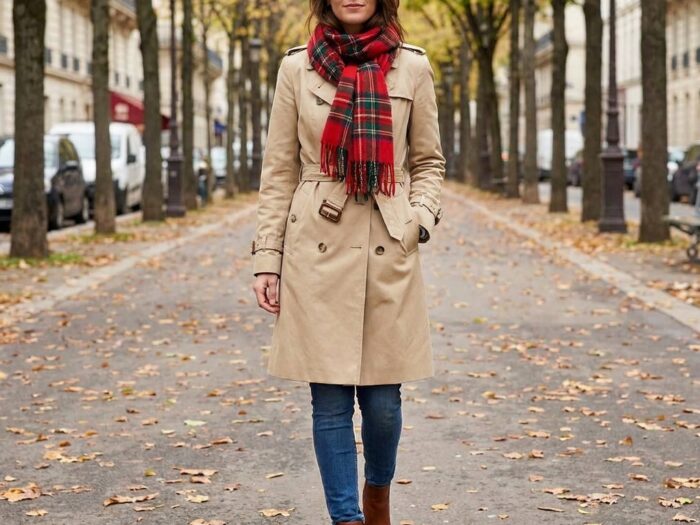
The neck. A thick scarf under a buttoned collar crowds the face. A fine turtleneck or a thin silk-and-wool scarf that tucks under the lapel stays flat, and the generous wrap can go outside the coat. The loops and tucks in this scarf styling guide for structured coats are designed to sit neatly beneath a collar.
The arms. Stacked sleeves create a stiff, tube-like look. Wear the thinnest warm layer closest to the arm and let the coat carry the weight.
The waist and hips. Tucked knits, leggings, and trousers gather at the waist, and loaded coat pockets add more. Tuck only the finest layer, and keep pockets for gloves rather than keys and bulky phones.
The ankles. A trouser hem bunched over a thick sock and a heavy boot shortens the leg. A straight hem that skims the top of the boot, or tights in place of an extra trouser layer, keeps the line clean.
The Thin-and-Warm Fabric Toolkit
Fabric choice does more for a slim outfit than any styling trick. These are the workhorses:
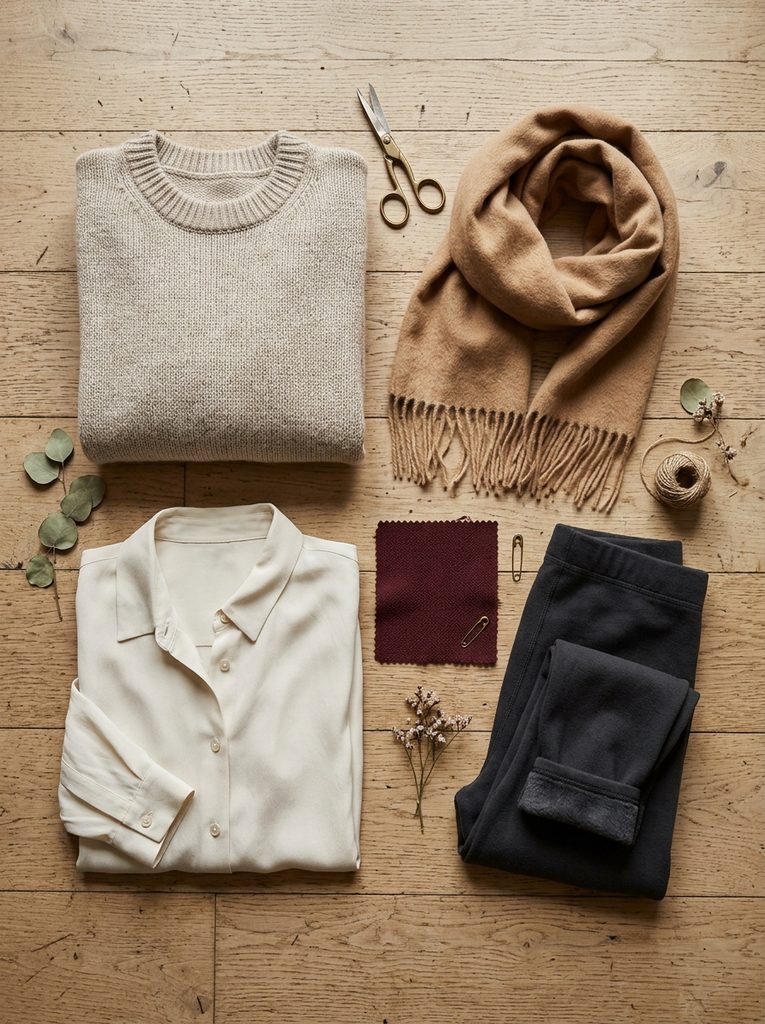
- Fine-gauge merino: soft, breathable, and warm for its weight, useful as a sweater, a turtleneck, or a base layer.
- Cashmere and cashmere blends: very warm for their thickness, with a smooth finish. They pill more readily, so care matters (more on that below).
- Wool crepe and gabardine: closely woven, so they block wind and hold a crisp line in trousers and skirts.
- Silk-wool blends: light and smooth, good for blouses and slip skirts that need warmth without volume.
- Fleece-lined or brushed tights: warmth under skirts and dresses with no change to the silhouette.
The ten-piece fall capsule wardrobe makes the same point about fine-gauge sweaters: a thin, closely knit one tucks into trousers and sits under a coat without visible weight.
The layer closest to your skin matters too. REI’s guide to base layers explains that a base layer sits next to the skin to help regulate temperature and wick moisture, and it recommends wool or synthetics over cotton, which dries slowly and insulates poorly. REI’s reviewers also note that merino can snag, so it pairs best with smooth fabrics. For everyday winter dressing, a lightweight or midweight merino top in a neutral shade disappears under almost anything.
A Coat That Does the Heavy Lifting
Choose the coat first. A well-made coat reduces how much you need underneath, which is the quickest route to a slim shape.
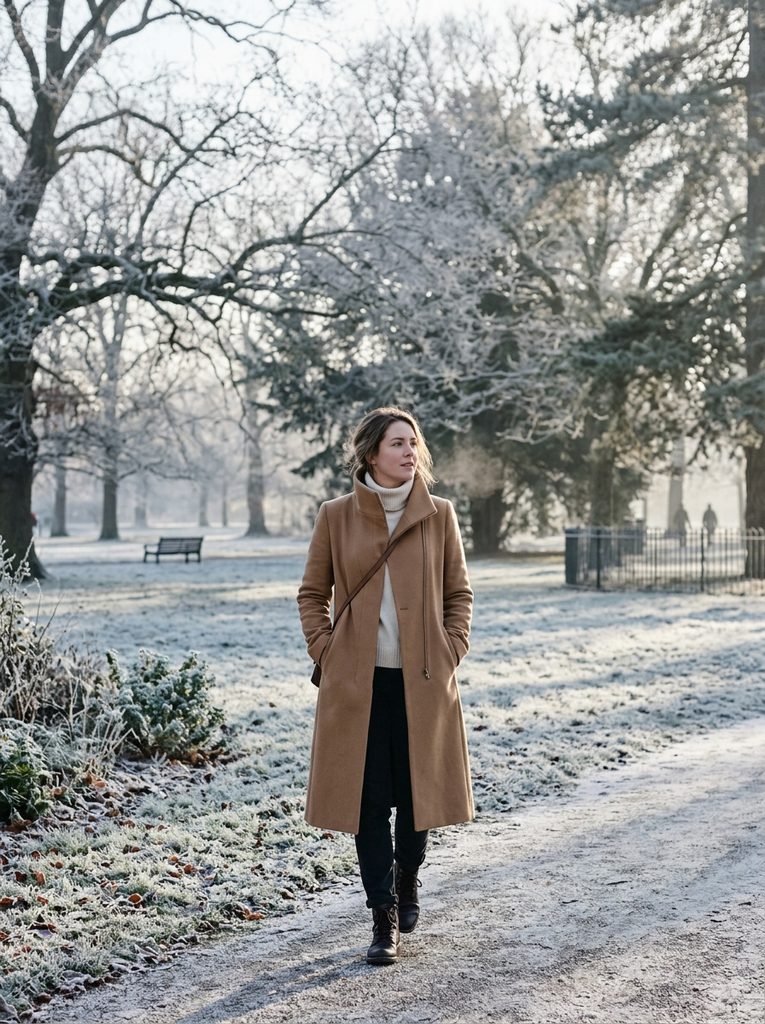
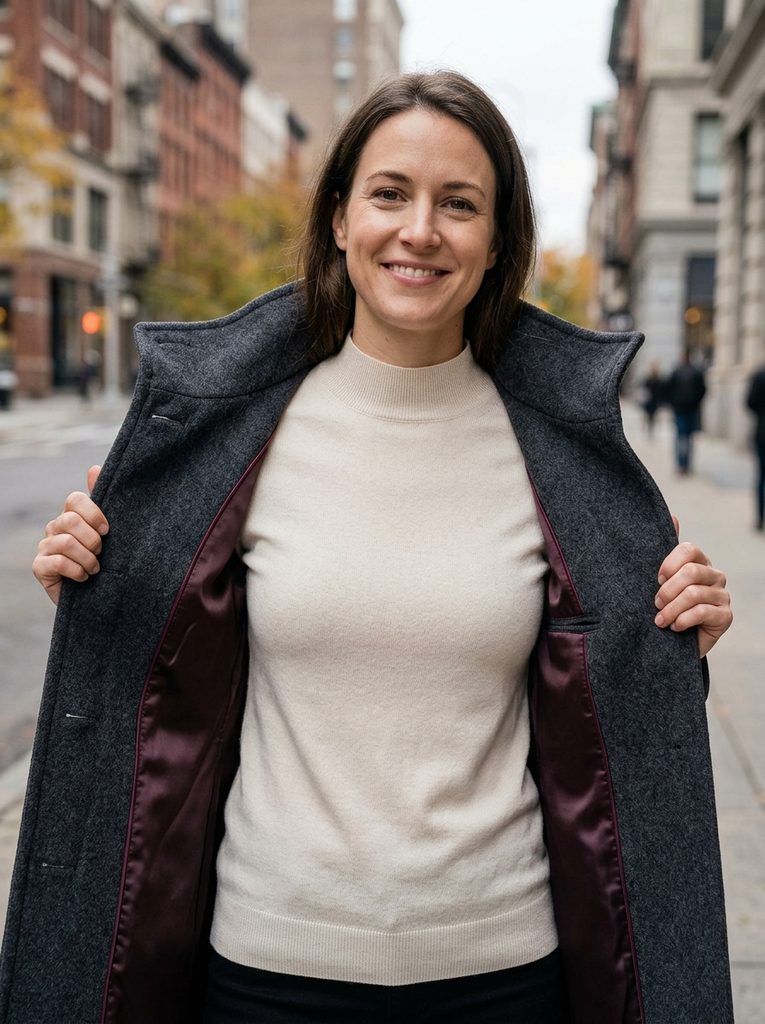
Wool and wool-cashmere coats in dense weaves block wind and keep a clean line. A smooth lining slides over knitwear without catching, and a tailored shoulder holds the shape. Knee to mid-calf lengths protect the thighs without swamping the frame, and a funnel collar or a high closure seals out wind without needing a bulky scarf.
Puffers can look polished too. Narrow quilting channels and a matte finish tend to look sleeker than wide, glossy baffles, and a hip to thigh length with a belt or drawcord waist adds shape. A dark neutral reads quieter than a bright, shiny shade.
Try coats on over the sweater you will actually wear. A coat that fits only over a thin tee pulls across the back once a knit goes underneath, while one bought far too large to cover everything can look shapeless.
Warm Legs, Clean Lines
Legs are where winter outfits often give up and add a second pair of trousers. A few better routes keep the line smooth.
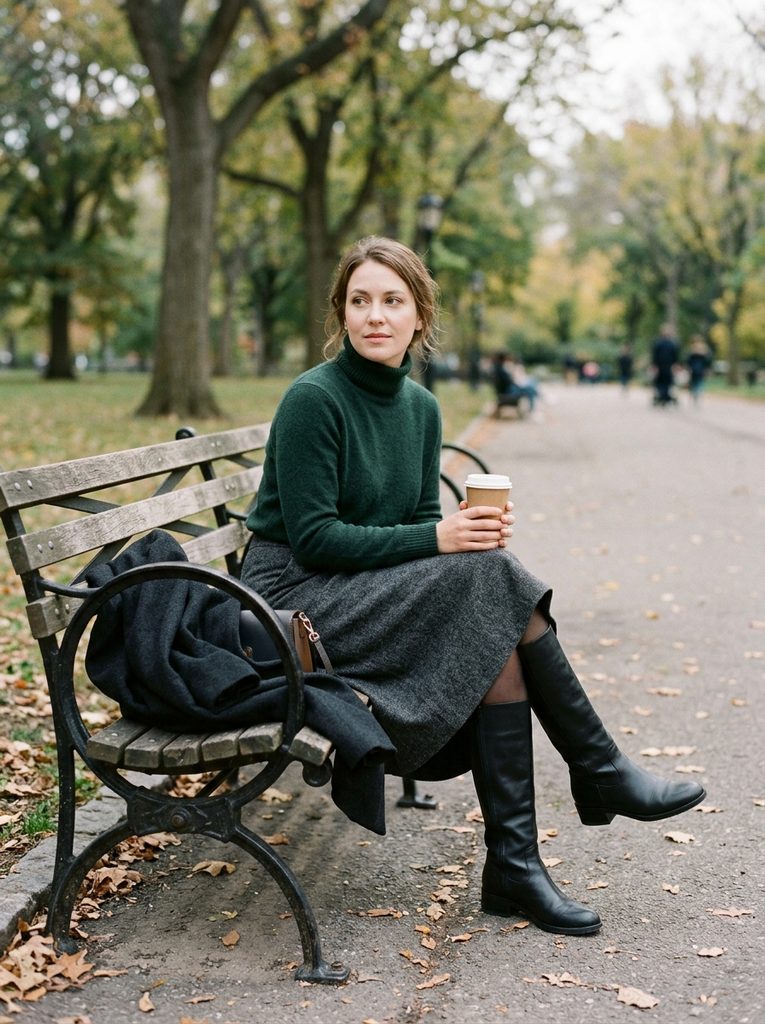
Fleece-lined or wool-blend tights under a midi skirt or a knit dress add real warmth with no visible bulk. Lined wool trousers hold heat and drape well, and a straight or gently tapered leg looks tidy over boots.
Static is the quiet enemy of winter polish. It makes skirts cling to tights and trousers ride up. A smooth lining or a slip under a wool skirt helps, natural fibers tend to cling less than some synthetics, and a light pass of anti-static spray inside a garment works for many people.
Match hosiery to the shoe rather than the skirt. Black tights with a black boot create one unbroken line, which lengthens the leg and removes the visual break at the ankle.
Peeks, Not Piles: Details That Add Polish Without Weight
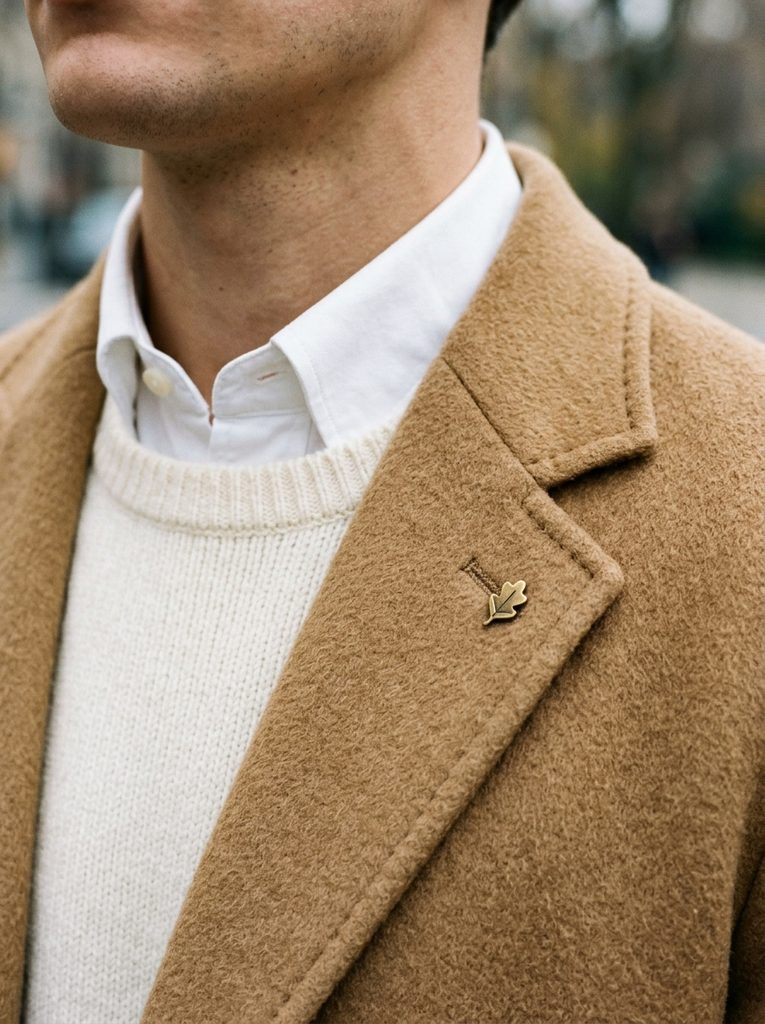
Polish in winter often comes from small glimpses rather than extra layers. A crisp shirt collar peeking above a crew-neck knit, or a shirt cuff extending past a sweater sleeve, adds structure and almost no thickness. A thin silk scarf knotted under the coat collar does the same job.
Light tones near the face help on grey days. Ivory, soft blue, or pale grey at the collar brightens the complexion and breaks up a dark palette.
Tonal dressing is the simplest polish tool. Wearing several shades from one color family, such as oatmeal, camel, and chocolate, makes layers look planned and avoids visual breaks that can make a figure look wider. This guide to neutral color combinations that read expensive offers pairings that suit winter light.
A small pin on a lapel is a last finishing note that adds character without any weight.
Shoes, Socks, and Salt
Slim winter boots exist. Look for smooth leather or suede, a lining in wool or fleece, a sleek toe, and a lugged but low sole. These keep feet warm without the clumpy look of a heavy snow boot. Pair them with thin merino socks instead of thick ones, and size the boot to allow for them.
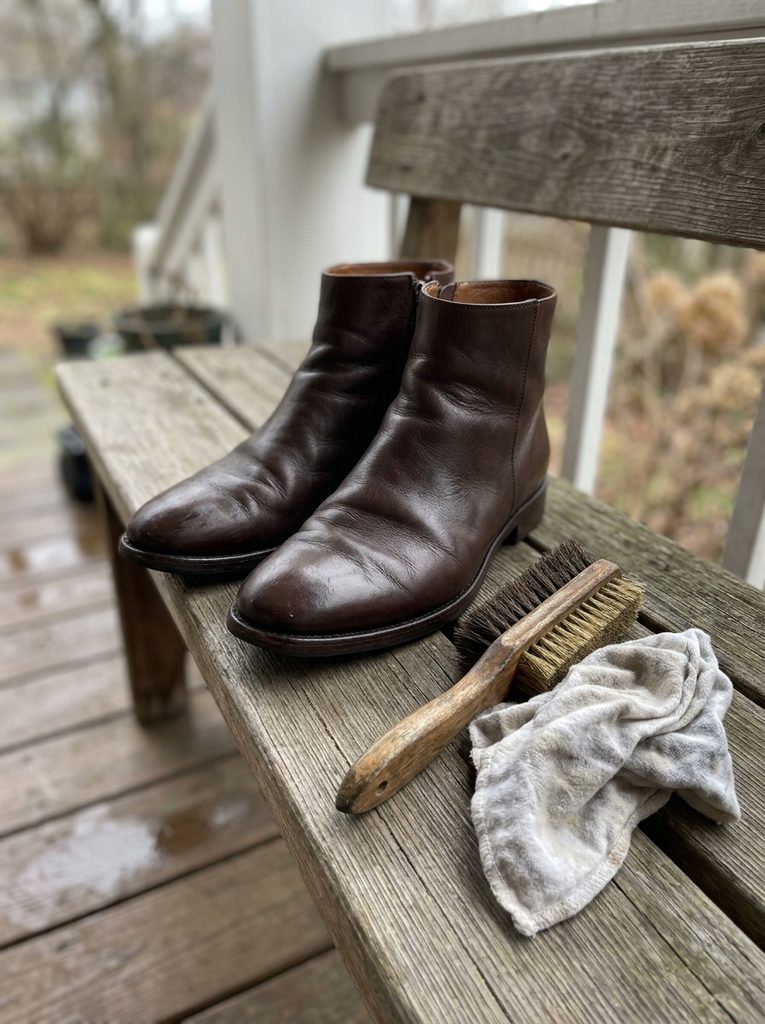
Polish also means upkeep. Road salt can leave pale marks on leather and suede, so wipe boots with a damp cloth soon after a wet day. Let them dry at room temperature, away from direct heat, which can stiffen and crack leather. A waterproofing spray applied before the season adds some protection, and a soft brush revives the nap on suede.
Pay attention to hems as well. Trousers that sit wet at the ankle drag down the whole look, so choose a hem that clears the pavement or tuck the trouser into the boot.
Gloves, Hats, and Hair That Look Intentional
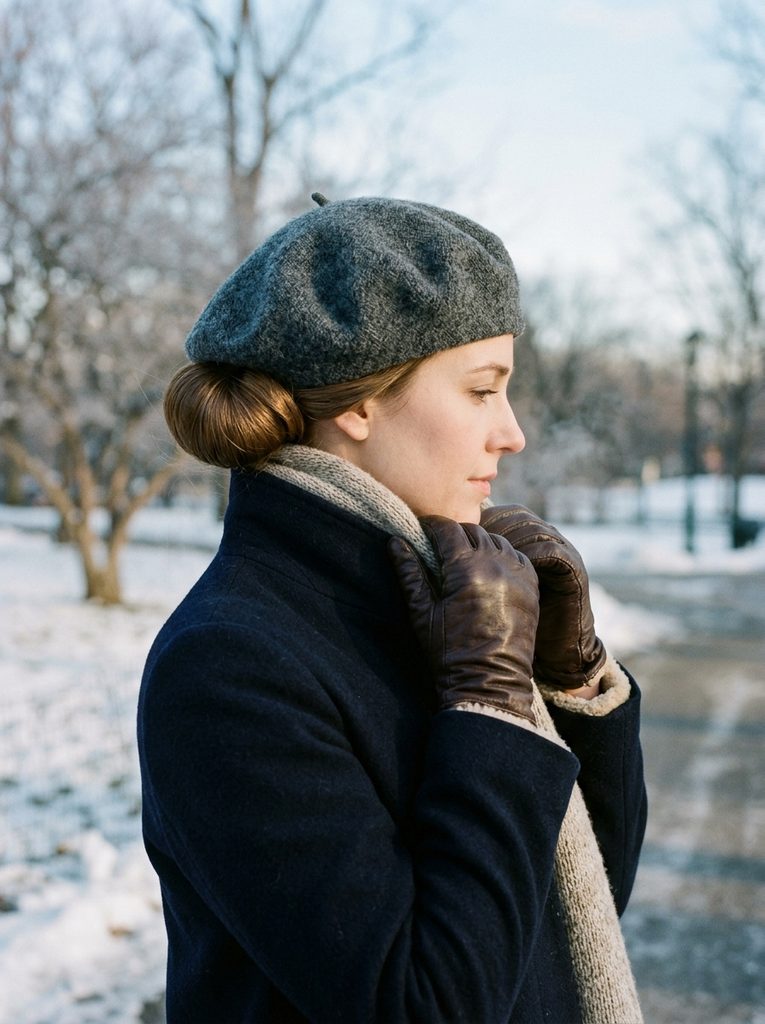
Accessories look more polished when they share a material family with the coat. Leather gloves with a thin cashmere or silk lining look refined and keep hands warm without a bulky shape. A fine-rib wool beanie or a beret sits closer to the head than a chunky knit and keeps hair in shape.
Hair takes the brunt of winter dressing, since wool collars and hats create friction and static. A drop of hair oil smoothed over the palms tames flyaways, and a quick brush after removing a hat revives the style. Low buns and braids hold up well under a hat.
Cold air can also dull the look of skin and lips, so a richer moisturizer and a lip balm are comfortable additions to a winter routine. Choose products that suit your own skin and preferences.
Keeping Winter Knits Looking New
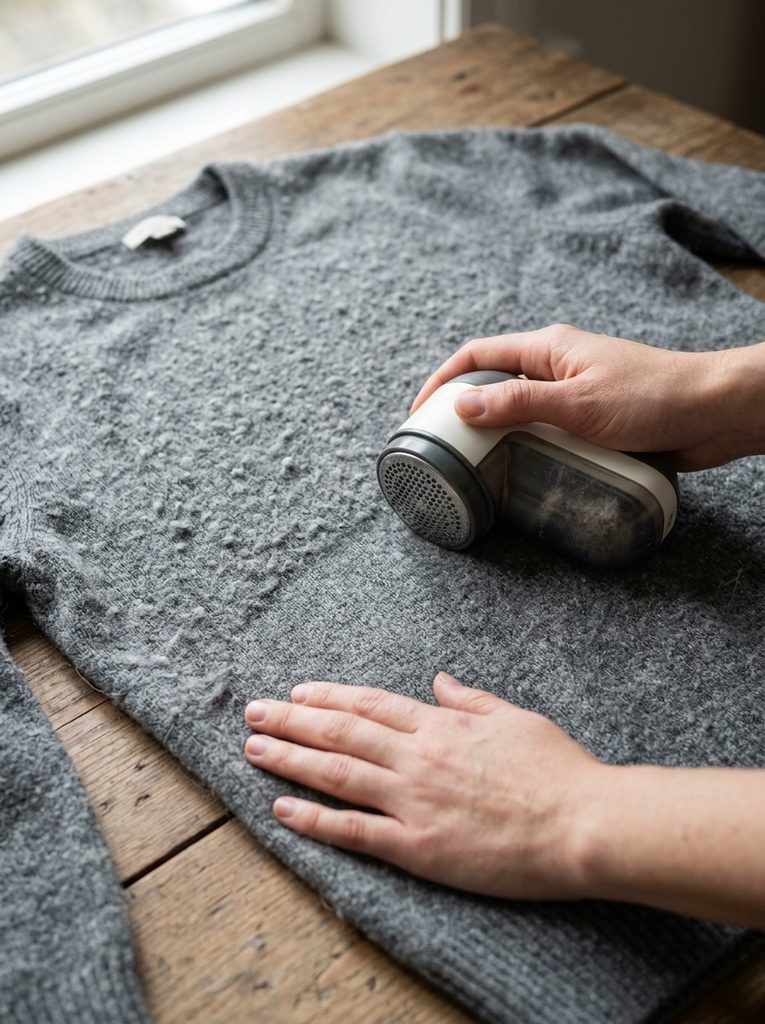
Even well-chosen pieces lose their polish when pilled, linty, or creased. Woolmark’s guide to pilling in wool explains that pills come from rubbing during wear, and they show up most around the elbows, armpits, sleeves, belly, and sides. The risk rises for active wearers and for anyone who sits for long hours at a desk.
Its tips include turning wool garments inside out before washing, skipping fabric softener, and minimizing abrasion. If pills do form, they can be removed by hand, with a gentle comb, or with a small fabric shaver.
Rest knitwear between wears so fibers can recover, and fold knits rather than hanging them to avoid shoulder bumps. A shoulder bag strap rubs the same spot every day, so switching shoulders spreads the wear. A soft clothes brush lifts lint from a wool coat, and a lint roller in the bag handles dark fabrics.
Three Cold-Weather Outfits Built on These Ideas
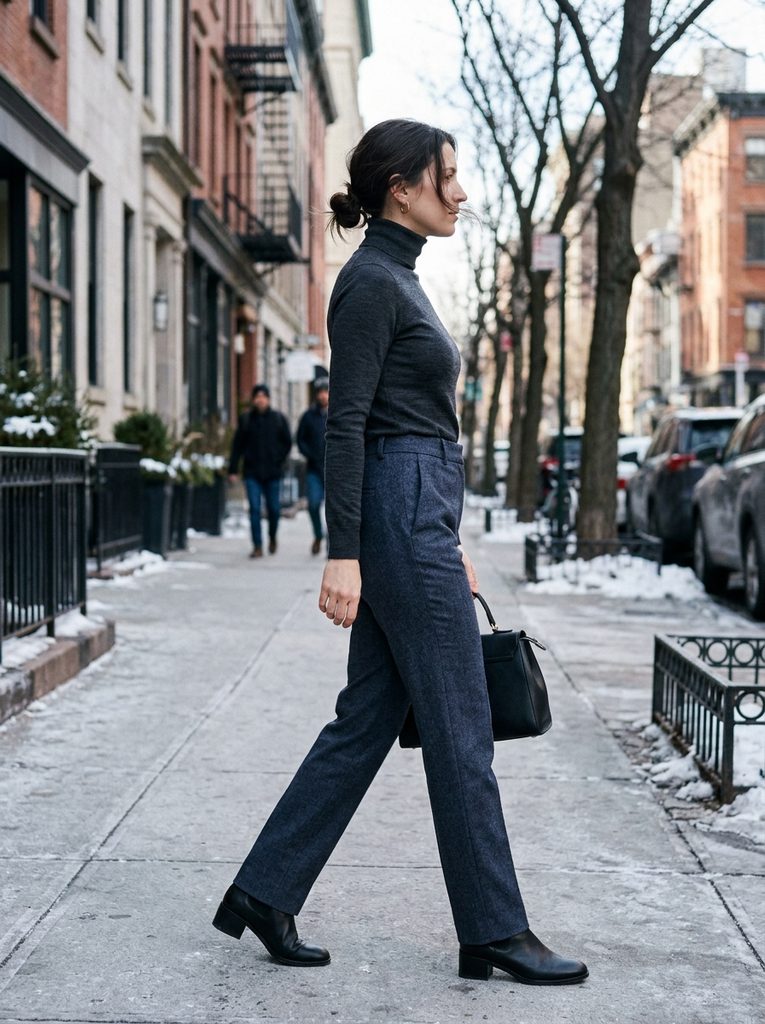
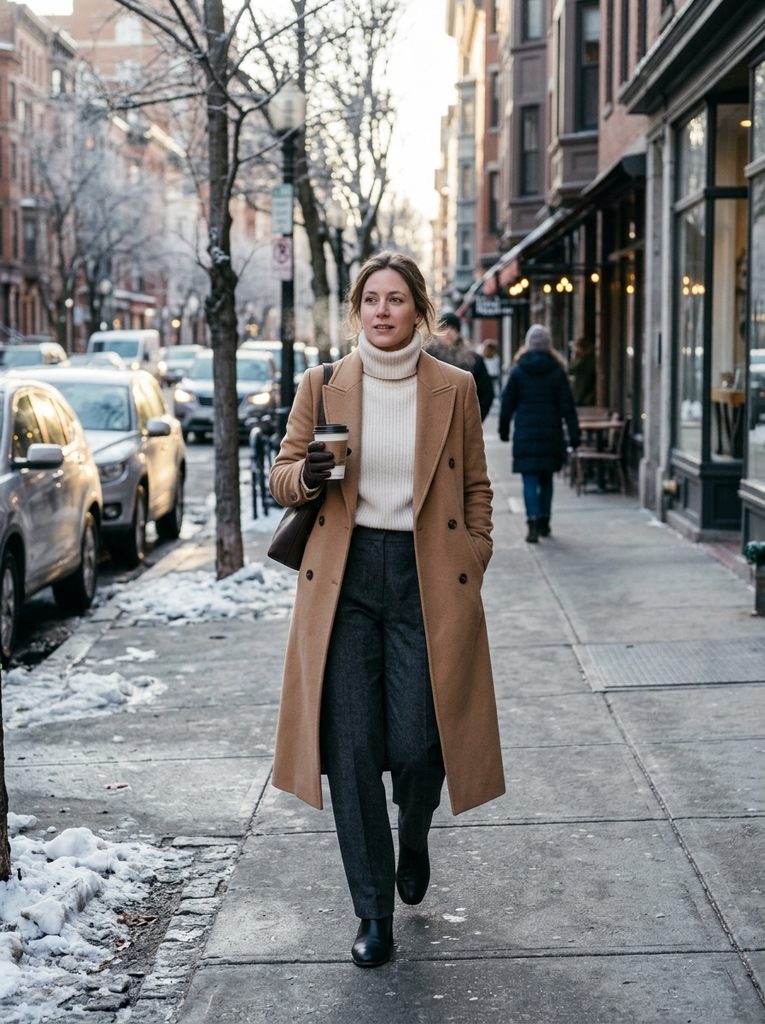
The weekday commute. Charcoal wool-crepe trousers, an ivory merino turtleneck, a camel wool coat with a smooth lining, leather gloves, and lined ankle boots. Everything is thin, dense, and in one tonal family. These office outfit formulas offer more combinations for the workweek.
The weekend errand run. Dark straight jeans, a fine-gauge grey crewneck over a thin base layer, a matte slim puffer with narrow channels and a belt, a wool beret, and lined leather sneakers or low lug-sole boots. The belt gives shape to the coat without adding weight.
The evening out. A lined wool midi skirt over fleece-lined tights, a silk-wool knit top, tall leather boots in the same color as the tights, a long coat in black or charcoal, and small earrings. The line runs unbroken from collar to boot.
Frequently Asked Questions
How can I stay warm in winter without looking bulky?
Put the volume in one place, usually the coat, and build the rest from thin, dense layers. Choose a closely woven outer layer to block wind, fine-gauge knits to trap warm air, and a breathable base layer next to the skin.
What is the warmest thin fabric for winter outfits?
Merino, cashmere, and wool blends are warm for their weight. Silk-wool blends and fleece-lined tights add warmth in slim form. The best choice depends on wind, damp, and how long you will be outside.
Is a puffer coat ever polished enough for work or evenings?
Yes, when the details are right. Narrow quilting channels, a matte finish, a tailored length, and a belted or shaped waist all make a puffer look sleeker, and a dark neutral shade reads more refined than a glossy bright one.
Should I size up a coat to fit over sweaters?
Try the coat on over a typical winter sweater rather than guessing. It should close without pulling across the back, and the shoulder seams should sit where they belong. If you need to go up more than one size, a thinner knit is usually the better fix.
Can I wear cotton in cold weather?
Cotton works well as a collar peek or an outer shirt. REI advises avoiding it next to the skin in cold conditions because it dries slowly and insulates poorly, so a merino or synthetic base layer is the better choice underneath.
How do I stop wool sweaters from pilling?
Pilling comes from rubbing, and no one can guarantee it will not happen. Woolmark suggests turning wool inside out before washing, avoiding fabric softener, and reducing abrasion, and pills that do appear can be removed by hand, with a gentle comb, or with a fabric shaver.

Ella is a fashion and beauty writer who shares inspiring ideas about hairstyles, nail designs, wedding outfits, and seasonal fashion trends. She loves discovering fresh styles and creating…
View Author Profile →