


On this page
- Rule 1: Choose the Coat Before Anything Else
- Rule 2: Read the Wind and Damp, Not Just the Temperature
- Rule 3: Plan for the Moment the Coat Comes Off
- Rule 4: Start With the Feet
- Rule 5: Cover the Gaps
- Rule 6: Layer Thin to Thick, Not the Other Way Around
- Rule 7: Let Texture Do the Work
- Rule 8: Add One Clear Color for Gray Days
- Rule 9: Protect Clothes From Winter’s Mess
- Rule 10: Repeat What Works
- Putting the Rules Together
Cold weather punishes careless planning faster than it punishes bad taste. A beautiful outfit falls apart when the wind cuts through it, when wet boots soak through by noon, or when the coat comes off in an overheated office and nothing underneath looks right.
This winter style guide treats dressing well in the cold as a set of small decisions. There are ten rules here, and each one solves a specific winter problem. None of them requires a large budget or a complete wardrobe overhaul. Most of them just change the order in which you think about getting dressed.
Read them as habits to try, not laws to follow. A few will feel obvious, and a few may change how you pack a bag or shop for a coat.

Rule 1: Choose the Coat Before Anything Else
In winter, the coat is what people see first and what you wear the longest. It sits over every outfit, so it sets the shape of the whole look. Deciding on it first makes every other choice easier.
Start with the coldest weather you regularly face, not the average day. A coat bought for mild days leaves you layering badly on the cold ones, and that is where most winter outfits go wrong.
What to check on a coat
- Shoulder seam: It should land near the edge of your shoulder. A seam that droops looks tired, even on a new coat.
- Sleeve room: Try it on over a thick knit, not a thin tee.
- Length: A coat that ends a few inches below your dress or skirt hem looks planned. One that stops at the same point as the hem looks like a mistake.
- Closure: Buttons and belts look neat. A zip is practical when the wind is strong.
Wool and wool blends hold a clean shape better than most puffy fabrics. A puffer still works, but a slim cut with a smooth finish looks far less bulky than a boxy one.

Rule 2: Read the Wind and Damp, Not Just the Temperature
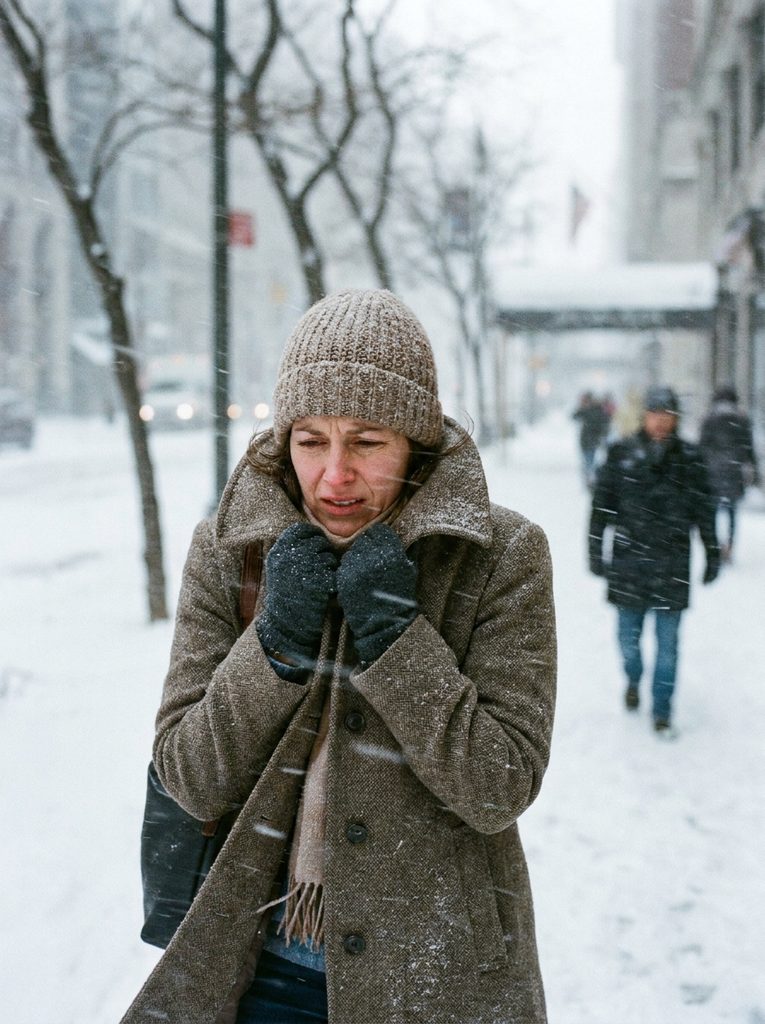
A forecast number tells only part of the story. Thirty degrees with still air feels very different from thirty degrees with a hard wind. The National Weather Service wind chill chart shows how moving air makes the same temperature feel colder on exposed skin.
Damp air does something similar. Wet fog or light drizzle can make a thin wool coat feel much colder than dry cold would.
Before choosing an outfit, check three things:
- the “feels like” temperature
- whether rain, sleet, or snow is likely
- how long you will be outside at once
A short walk to the car needs less than an hour at a bus stop. The same logic applies to outdoor events. The Christmas market outfit guide looks at why standing still outdoors needs a different plan from walking.
Rule 3: Plan for the Moment the Coat Comes Off
Most winter days include a coat-off moment. Offices, restaurants, shops, and homes are usually warm, and the outfit underneath becomes the whole look.
A simple test helps. Stand in front of a mirror without the coat. If the outfit looks complete, the plan works. If it looks like something that only works under outerwear, adjust one piece.
Some easy fixes:
- Choose a knit with a clean neckline, since a stretched collar shows right away.
- Tuck or half-tuck the top so the waist shows.
- Add a thin belt or a small piece of jewelry.
- Keep the layers thin enough that you do not overheat indoors.
The indoor outfit also has to handle a warm room. A thick sweater on a thick base layer can feel heavy within minutes, so use layers you can remove one at a time.

Rule 4: Start With the Feet
Cold feet ruin a day faster than almost anything else. They also decide how far you can walk and how long you can stay outside.
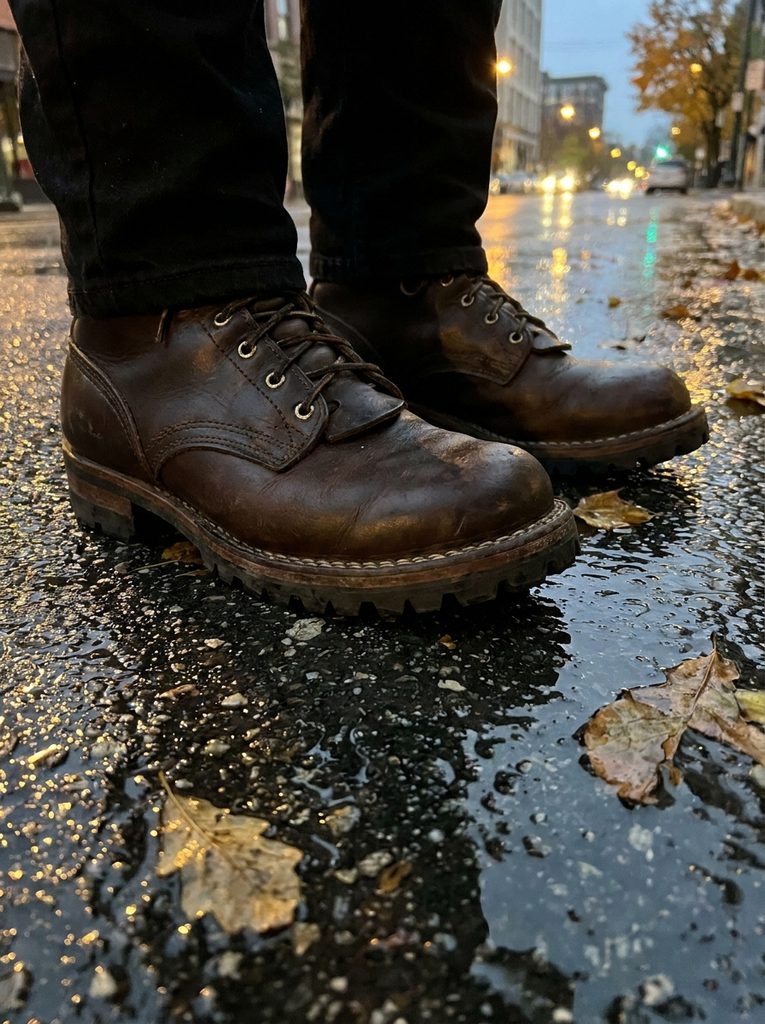
Look at the soles before the style. A smooth leather sole slips on ice and soaks up slush. A rubber or lugged sole grips better and stays drier. Chelsea boots, lace-up leather boots, and sleek rain-ready ankle boots can all look polished when the sole is sensible.
Socks and tights count
Wool or wool-blend socks keep feet warmer than cotton, which holds moisture. Under skirts and dresses, opaque tights in a matching shade give warmth and a smooth line. Fleece-lined styles look like plain tights from the outside.
Boot height also changes the outfit. The knee-high boot guide explains how different hem lengths sit with taller boots.
Rule 5: Cover the Gaps
Cold finds the spaces between pieces. The most common gaps are the neck, the wrists, and the strip of ankle between a trouser hem and a low shoe.
Each gap has a tidy answer:
- Neck: A turtleneck, a mock neck, or a scarf tucked into the coat closes the opening.
- Wrists: Gloves that overlap the sleeve end keep wind out. Sleeves should be long enough to meet them.
- Ankles: Longer trousers, boots, or socks that rise above the shoe remove the bare strip.
- Waist: A tucked-in layer stops cold air from sneaking under a short top.
These details also make outfits look finished. A neat scarf line and a sleeve that meets a glove read as intentional.

Rule 6: Layer Thin to Thick, Not the Other Way Around
The order of layers matters as much as the number. Thin, smooth pieces belong closest to the body, and thicker ones go outward. A thick sweater under a fitted blazer leaves the blazer pulling at the shoulders and the sleeves bunched.
A practical order looks like this:
- A fine base layer, such as a thin merino or a smooth cotton knit
- A mid layer with some warmth, such as a sweater or a lined vest
- A coat with enough room to fit the first two comfortably
Merino wool fibers are fine and soft, which is why the fabric is popular for thin layers worn next to the skin.
Try the sleeve test before leaving the house. Raise your arms and reach forward. If the coat sleeves ride up or the layers bunch, remove or swap one. The cold weather outfits with polish article covers more on keeping warmth without bulk.

Rule 7: Let Texture Do the Work
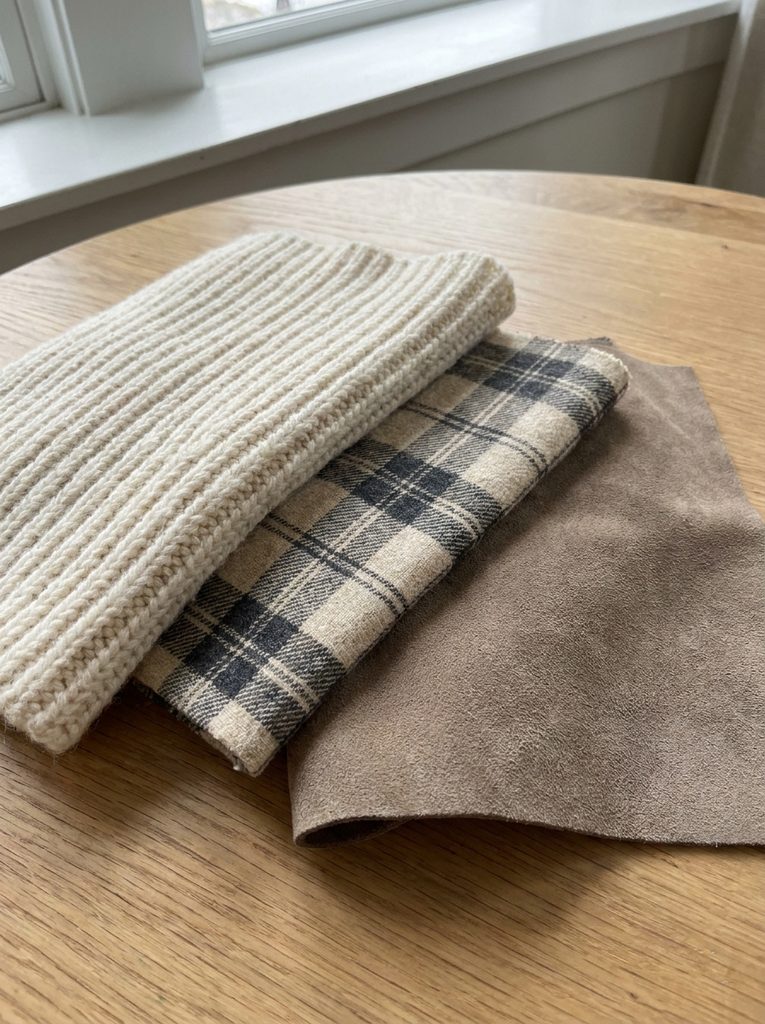
Winter palettes lean dark and neutral, which can look flat. Texture fills that gap without adding more pieces.
An outfit in one color can still feel rich if the fabrics vary. A charcoal wool coat over a ribbed charcoal knit and brushed flannel trousers has three surfaces in one shade. The eye finds depth, and the outfit feels more expensive than it is.
Textures that work well in cold weather:
- ribbed and cable knits
- brushed wool and flannel
- suede and smooth leather
- corduroy
- boucle and soft tweed
Keep the number of strong textures low. One bold texture, such as a boucle jacket, usually needs quieter pieces around it.
Rule 8: Add One Clear Color for Gray Days
Winter light is low and often gray. A wardrobe made only of black, navy, and charcoal can look heavy under that sky.
One clear color changes the feel of the whole outfit. It can be a scarf, a hat, gloves, or a knit. The color should be strong enough to notice but simple enough to repeat.
Colors that tend to work
- deep red or cranberry
- forest or bottle green
- cobalt or ink blue
- mustard or soft gold
- cream or ivory for contrast against dark layers
Choose the accent in an accessory first. It is easier to move from one outfit to another, and it costs less than replacing a coat. If the accent is a scarf, keep gloves and hat neutral.

Rule 9: Protect Clothes From Winter’s Mess
Winter is hard on clothing. Road salt leaves pale rings on boots and trouser hems. Slush splashes trousers. Dry indoor air makes knitwear cling and gather lint. These things can make a good outfit look worn out fast.
A few habits help:
- Salt marks: Wipe boots with a damp cloth soon after coming inside, then let them dry away from direct heat.
- Wet coats: Hang them on a wide hanger and let them dry fully before storing.
- Static: A light mist of water on the inside of a skirt or a quick wipe with a damp hand often calms it. A metal hanger run lightly over the fabric can also help.
- Lint: Keep a small roller in a drawer or bag, especially for dark wool.
- Pilling: A fabric comb removes it from knits before it spreads.
Check care labels before cleaning anything, because wool, cashmere, and leather have different needs. A quick steam usually refreshes winter fabrics between wears. The cozy winter outfits guide includes more on keeping knitwear in good shape.

Rule 10: Repeat What Works
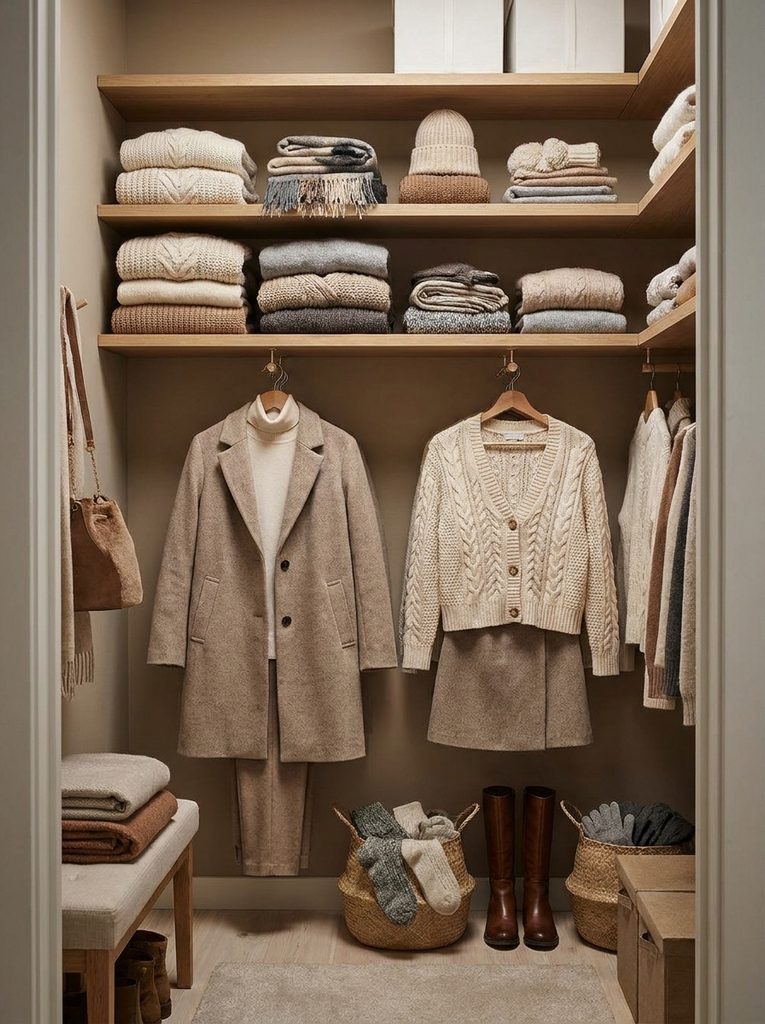
A good winter wardrobe is small and used often. People tend to wear a handful of outfits over and over in cold months, so those few outfits deserve the best pieces.
Write down three formulas that you already like. For example:
- coat, fine knit, straight trousers, ankle boots
- knit dress, opaque tights, tall boots, long scarf
- blazer, turtleneck, wide-leg trousers, loafers
Then vary one part at a time. Change the scarf, swap the bag, or try a different color of knit. The outfit feels new, and the decision stays easy on busy mornings.
For shopping, this approach points to what is actually missing. If three of your formulas need the same type of boot, that is worth buying. The winter capsule wardrobe with 15 pieces shows how a short list can cover many outfits.
Putting the Rules Together
The ten rules work as a quick morning check. Before leaving the house, run through them in order:
- Does the coat suit the real weather?
- Have I checked wind and damp?
- Does the outfit work without the coat?
- Are my feet warm and my soles safe?
- Are the neck, wrists, and ankles covered?
- Are the layers thin to thick?
- Is there some texture?
- Is there one clear color?
- Are my clothes clean and ready?
- Is this a formula I want to repeat?
That takes under a minute once it becomes a habit. Winter dressing then feels less like a daily argument with the weather and more like a short routine with a predictable result.
Dressing well in the cold is rarely about owning more. It is about making each piece do its job and putting the pieces in a sensible order.

Ella is a fashion and beauty writer who shares inspiring ideas about hairstyles, nail designs, wedding outfits, and seasonal fashion trends. She loves discovering fresh styles and creating…
View Author Profile →