


On this page
- Plaid Is a Grid: How Scale and Lines Behave on a Small Frame
- Four Classic Plaids and How Each One Sits
-
Nine Classic Plaid Holiday Outfits
- 1. The Red Tartan Pleated Mini
- 2. The Plaid Blazer on a Black Base
- 3. The Plaid Midi With Tall Boots
- 4. Windowpane Trousers With a Cream Sweater
- 5. The Belted Plaid Shirt Dress
- 6. The Plaid Coat Over All Black
- 7. The Waistcoat Over a White Shirt
- 8. The Plaid Scarf Doing the Work
- 9. The Plaid Party Dress for Dinner
- Pattern Matching, Hems, and Tailoring
- Pulling One Color From the Pattern
Plaid is a grid, and a grid works like a ruler. Lay it across a body and it measures everything: where the waist sits, how wide the hip looks, how long the leg runs before it meets the hem. On a taller frame there is plenty of room for the pattern to repeat. On a petite one, the grid takes up more of the picture, so small choices show up fast.
That is no reason to skip it. Plaid is one of the most reliable holiday fabrics there is, warm, familiar, and festive without a single sequin. It only needs a little planning around scale, line placement, and length. The nine outfits below put that planning into practice, using classic pieces that already belong in a winter wardrobe.

Plaid Is a Grid: How Scale and Lines Behave on a Small Frame
Scale comes first. The repeat is the distance before the same line shows up again. When that distance is wide compared with the body, the pattern reads as bold and graphic. When it is narrow, the pattern reads more like texture. A rough test: if one square of the check is wider than your palm, expect it to look large on a petite frame.
Large plaid is not off limits. It simply works better in small doses, such as a scarf, a vest, or a shirt worn open as a layer. Medium and small scales suit the bigger pieces, like skirts, trousers, and coats.
Line placement matters just as much. A thick horizontal bar that crosses the widest part of the hip draws the eye there. The same bar at the hem can cut the leg short. When shopping, hold the garment up in front of the mirror and look at where the heaviest lines land.
Direction also changes the effect. Plaids with strong vertical lines, like a windowpane trouser, stretch the body visually. Plaids with heavy horizontal bands do the opposite. Most classic plaids sit somewhere in between, so the cut of the garment ends up doing a lot of the work.
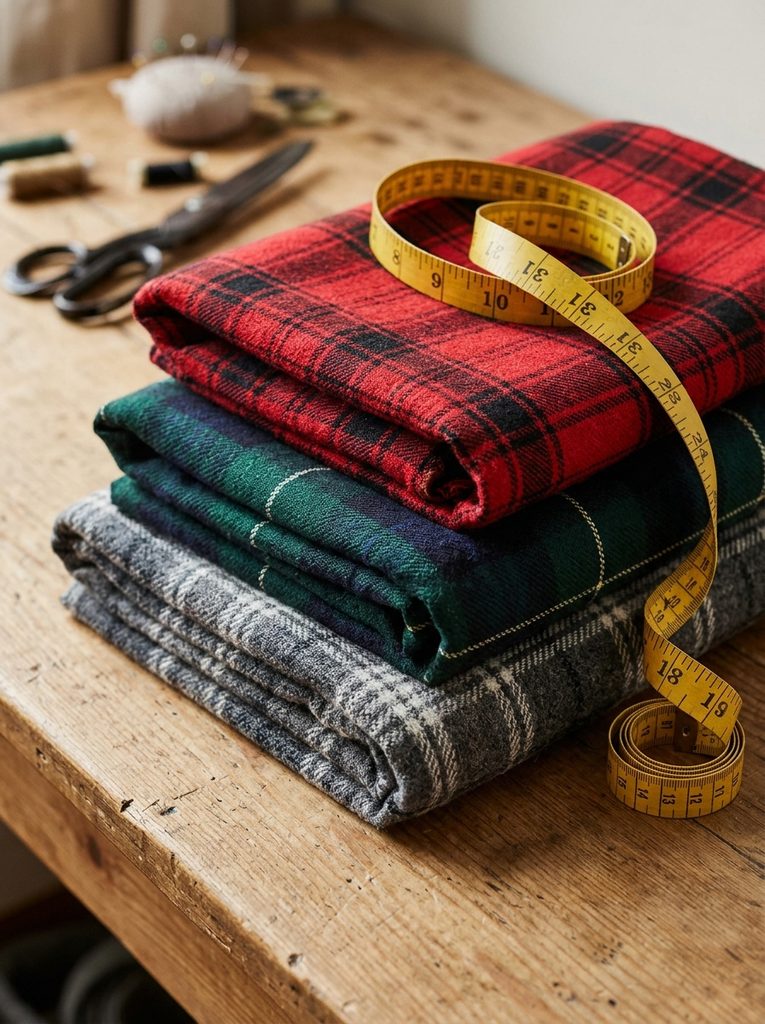
Four Classic Plaids and How Each One Sits
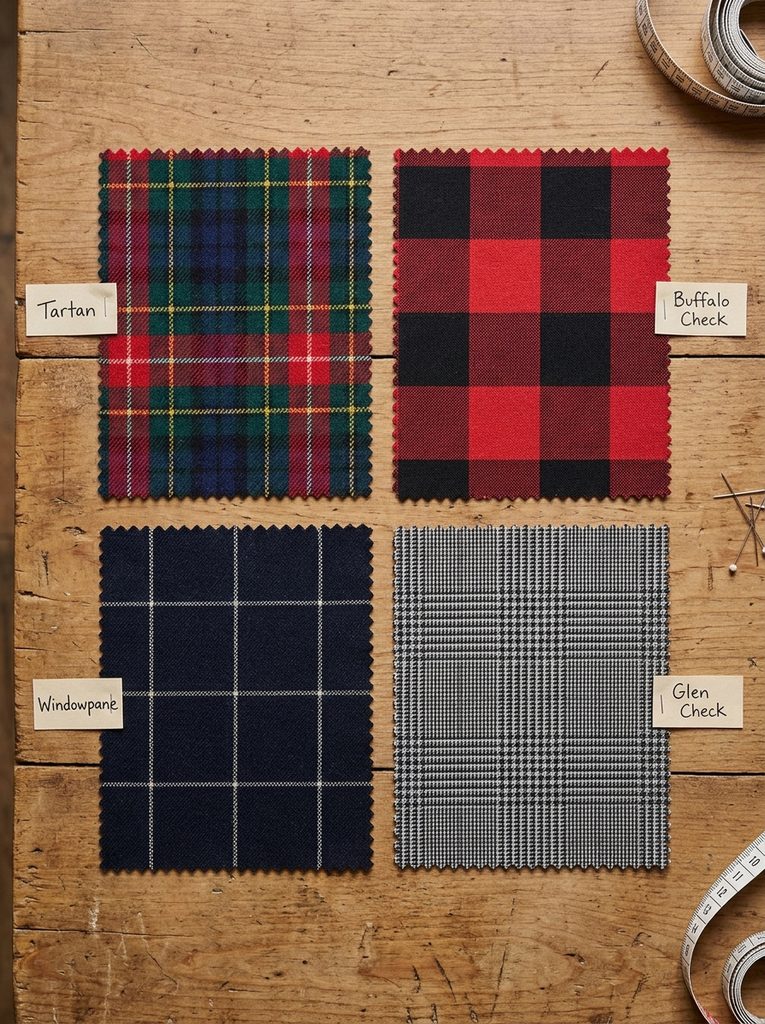
The word plaid covers a lot of ground. In North America it describes almost any pattern of crossing lines. Tartan is the narrower term. According to the National Records of Scotland, tartans are recorded in an official register, and many carry clan or regional meaning. For holiday dressing, the difference matters less than the look, so here are four patterns worth knowing.
Tartan. Multiple stripes cross to form a layered check, often in red, green, navy, and black. It looks richest in wool. Pick a medium scale, and keep the rest of the outfit solid.
Buffalo check. Large, two-color squares, usually red and black. It is the loudest of the four, and it suits scarves, shirts, and vests more than full skirts on a small frame.
Windowpane. Thin lines on a plain background, spaced widely. The plain space makes it feel calm, and it looks sharp in trousers and blazers.
Glen check. A small, woven check in neutral tones such as grey, camel, and cream. It is the quietest option and the easiest to wear for office holiday events.
Nine Classic Plaid Holiday Outfits
Each outfit below uses one plaid piece and keeps the other pieces plain. Think of the plaid as the single loud voice in the room.
1. The Red Tartan Pleated Mini
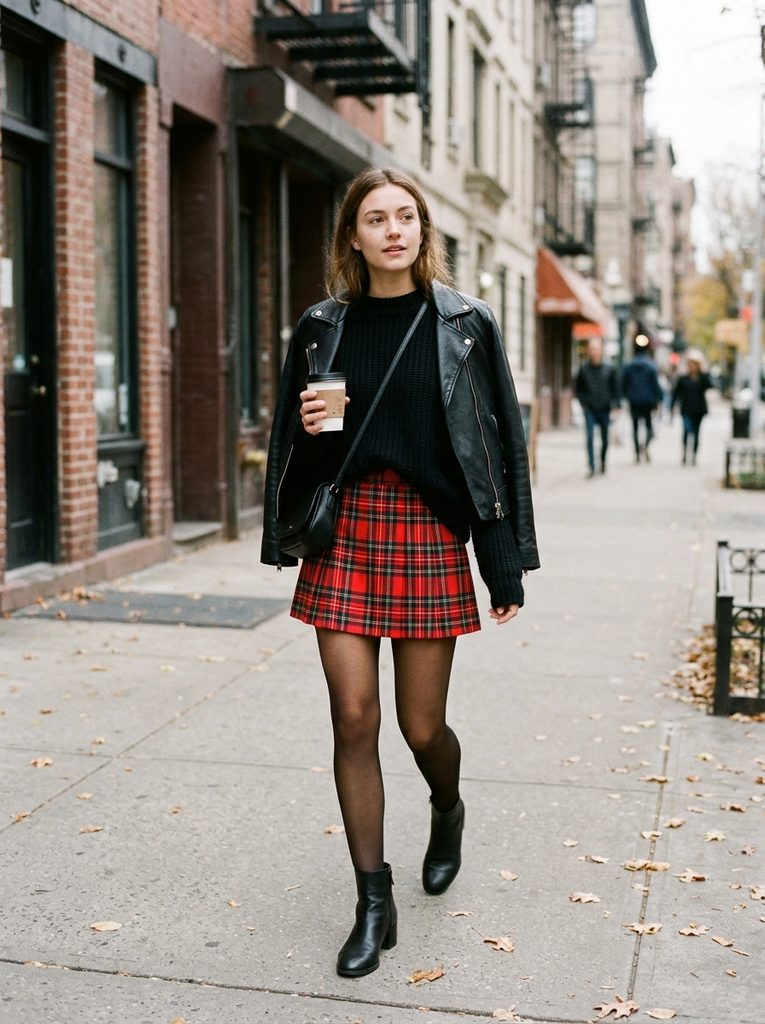
A red tartan pleated skirt in a kilt style, a fine black turtleneck tucked in, black opaque tights, and black ankle boots. The pleats stack the lines vertically, which keeps the pattern from widening the hip.
Choose a waist that sits high, so the skirt starts above the natural waist and the legs appear longer. Matching tights and boots complete the unbroken line.
2. The Plaid Blazer on a Black Base
A tailored plaid blazer, preferably in a Glen check with a thin red or blue overcheck, over a white tee, slim black trousers, and black loafers. The solid base gives the jacket room to be the focus.
The jacket should end at the hip, not below it, and the sleeves should stop at the wrist bone. A petite cut saves a lot of tailoring here.

3. The Plaid Midi With Tall Boots
Pair a plaid midi skirt with a fitted knit, tucked in, and tall boots that reach the hem. The boot tops meet the skirt and close the gap that a midi usually leaves on a short leg.
This relationship between boot height and hem is covered in more depth in the guide to knee-high boot outfits for every hemline length. The hem should land just below the knee, since longer cuts shorten the leg.

4. Windowpane Trousers With a Cream Sweater
Straight, ankle-length windowpane trousers in grey or charcoal, a cream cashmere or merino sweater, and pointed flats. The thin vertical lines lengthen the leg, and the open space between them keeps the pattern calm.
Tuck the sweater in or wear it fitted, and let a small amount of ankle show. Cream next to grey looks soft rather than stark.

5. The Belted Plaid Shirt Dress
A shirt dress in a muted tartan, with a slim leather belt at the natural waist, opaque tights, and ankle boots. Roll the sleeves to three-quarter length for a neater line.
A shirt dress can look shapeless without a belt, and the belt also breaks up the pattern so it does not run in one long block. Aim for a hem at the knee.

6. The Plaid Coat Over All Black
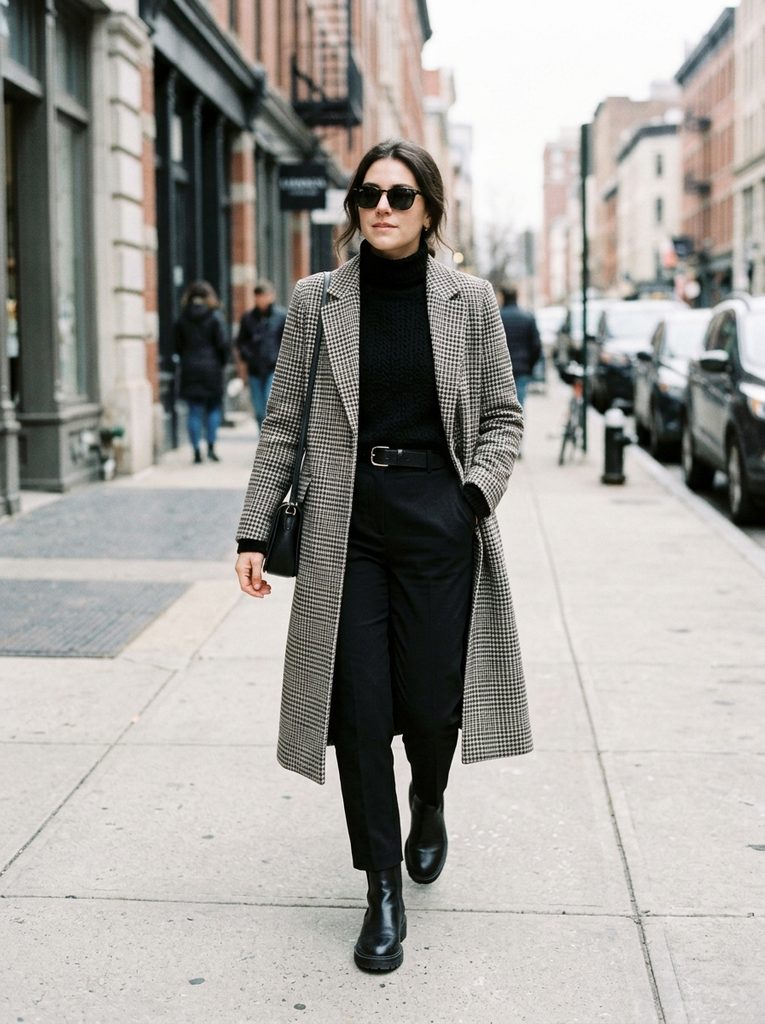
A single-breasted plaid coat in a small to medium check, ending at or just above the knee, worn over a black sweater, black trousers, and black boots. The black underneath lets the coat carry the pattern.
Look for narrow lapels and a clean shoulder. A coat that falls well below the knee can swallow a short frame, however warm it is.
7. The Waistcoat Over a White Shirt
A plaid waistcoat that ends at the waist, a crisp white shirt with the sleeves rolled, high-waisted black trousers, and loafers. The short length keeps the legs long, and the white shirt adds brightness around the face.
If the waistcoat is large in scale, it works because it covers only a small part of the body. Button it fully so it lies flat.

8. The Plaid Scarf Doing the Work
Sometimes the easiest route is a scarf. A buffalo check or tartan scarf draped over a solid camel or black wool coat adds the pattern without any commitment to a full piece. Tuck the ends inside the coat to keep the bulk down.
A lighter wool scarf suits a small frame better than a thick blanket style. For more ways to wear one, see the guide on scarf outfit ideas with trench coats, which covers draping and tucking in detail.

9. The Plaid Party Dress for Dinner
A fit-and-flare dress in dark green or navy tartan, with a clean neckline, opaque tights, and pointed pumps. The fitted waist and flared skirt show off the pattern without overwhelming the body.
For a quieter evening, the Christmas Eve outfit ideas offer another way to dress for a long night. If the plan is a busier calendar, the holiday party outfit guide shows how to cover several events with a few pieces.

Pattern Matching, Hems, and Tailoring
Plaid shows tailoring more than any other fabric, because the lines either match or they do not. A quick look at the seams tells you a lot about quality.
Check the center back of a skirt and the front of a jacket. The lines should meet across the seam without a jump. Poorly matched seams stand out in photographs, and they make an inexpensive piece look even cheaper.
Hemming needs extra care. Shortening a plaid skirt changes where the bars land at the bottom. Ask the tailor to finish the hem so a full line or a clean space falls at the edge, instead of a cut-off band of color.
Jackets and coats need attention at the sleeves. Shortening from the cuff keeps the pattern aligned at the shoulder. Length on a blazer or waistcoat also matters, since a petite cut keeps the buttons at the right level for a short torso. One petite styling guide suggests that a top ending near the hip bone suits a short torso better than something longer.
Fabric weight is the last check. Thick wool and flannel add bulk, particularly in dresses and coats. A lighter wool blend with a smooth finish hangs better and keeps the outline neat. Most wool plaid pieces do well with light steaming and a soft brush, and the care label will say whether dry cleaning is needed.
Pulling One Color From the Pattern
One of the simplest ways to make plaid look planned is to take a color from the pattern and repeat it in a solid piece. The trick is to pick the quietest color, not the loudest one.
In a red and green tartan with a thin navy line, for example, navy or deep green makes a better partner than red. A navy sweater, navy tights, or navy boots look rooted in the pattern without competing with it. The loud color stays where it started.
Shoes and tights work best when they match each other. A single color from the hem down gives the legs a long line, which is especially helpful in outfits with a skirt or dress.
Bags should stay small. A large tote next to a plaid piece makes the frame look even smaller, and the pattern already supplies plenty of visual weight. A compact shoulder bag in leather or suede in a deep, solid shade keeps the proportions balanced.
Jewelry can stay very simple. Plaid already has a lot going on, so small gold or pearl studs and a thin chain are enough.
Plaid has been a holiday staple for a long time because it holds up in nearly every setting. Once scale, line placement, and length are handled, one good piece can carry an entire season of parties, dinners, and cold walks home.

Ella is a fashion and beauty writer who shares inspiring ideas about hairstyles, nail designs, wedding outfits, and seasonal fashion trends. She loves discovering fresh styles and creating…
View Author Profile →