


On this page
Most people can name the coat they wish they had bought. It might be the one that shed its lining in January, or the puffer that looked sleek on the hanger and flat after one season. A coat does more daily work than almost anything else in a winter wardrobe, and it is the first thing anyone sees.
That makes the choice worth some thought. The ten styles below are organized by how they are built and what they suit, not by trend. For each one, there is a short note on what to look for, so the details are easy to check in a shop or on a product page.
Pricing is left out on purpose. A higher label does not always mean better construction, and a modest one can still be well made. The checks matter more than the number.

What “Premium” Actually Means in a Coat
The word appears on everything from mass-market parkas to hand-finished tailoring, so it helps to translate it into things you can inspect. A few features separate a well-made coat from one that only looks the part.
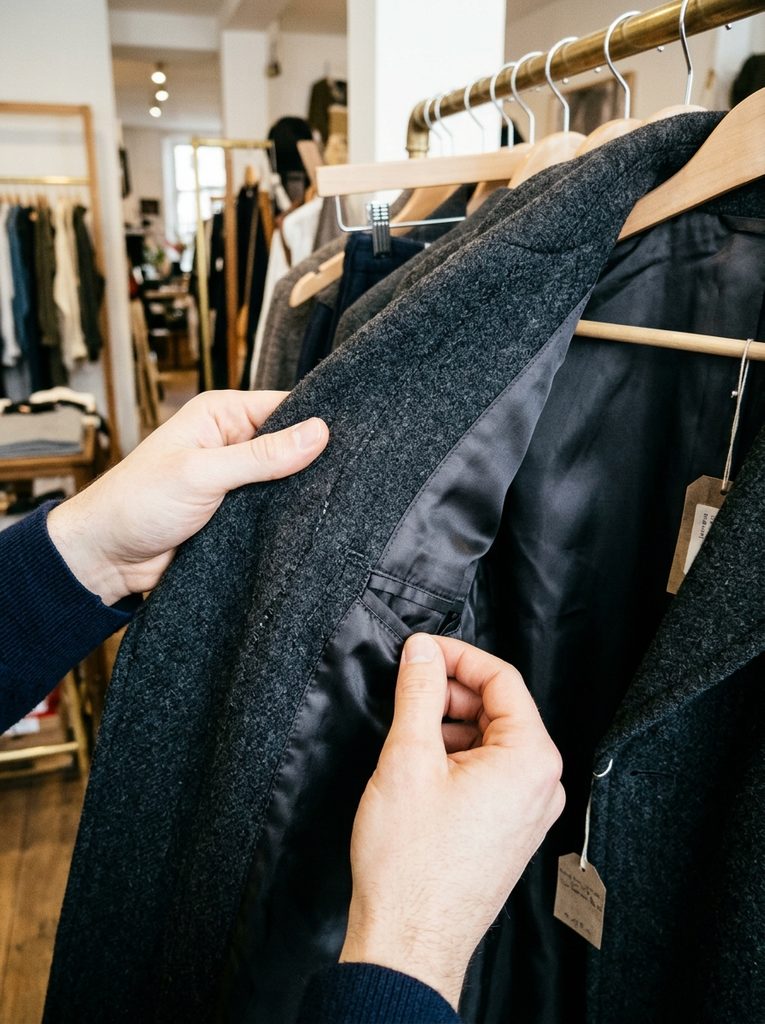
- Fabric weight and density. Wool should feel dense and springy, not thin or papery. Hold a corner up to the light. Very visible gaps in the weave often mean less warmth and faster wear.
- Lining. A smooth, fully attached lining helps a coat slide over knitwear. Look for neat stitching around the hem and the armholes.
- Seams and buttons. Buttons should sit firmly, with reinforcing thread behind them. Seams that pucker or show loose threads rarely improve with time.
- Shoulders and sleeves. The shoulder seam should rest where your own shoulder ends. Sleeves should allow a thick sweater underneath without pulling across the back.
- Pockets. Deep, well-placed pockets with a clean finish hold their shape. Shallow ones sag once a phone or gloves go in.
- Fill and shell, for insulated styles. Down is measured by fill power, which describes how much loft it has. A tightly woven outer shell keeps feathers from poking through.
Fit deserves its own mention. A coat should be tried on over the heaviest layer you plan to wear with it. It is much easier to find the right size once that layer is on.
Wool and Cashmere Classics
Wool has been the backbone of tailored winter outerwear for a long time, and these four styles use it in different ways.
1. The Double-Faced Wool Wrap Coat
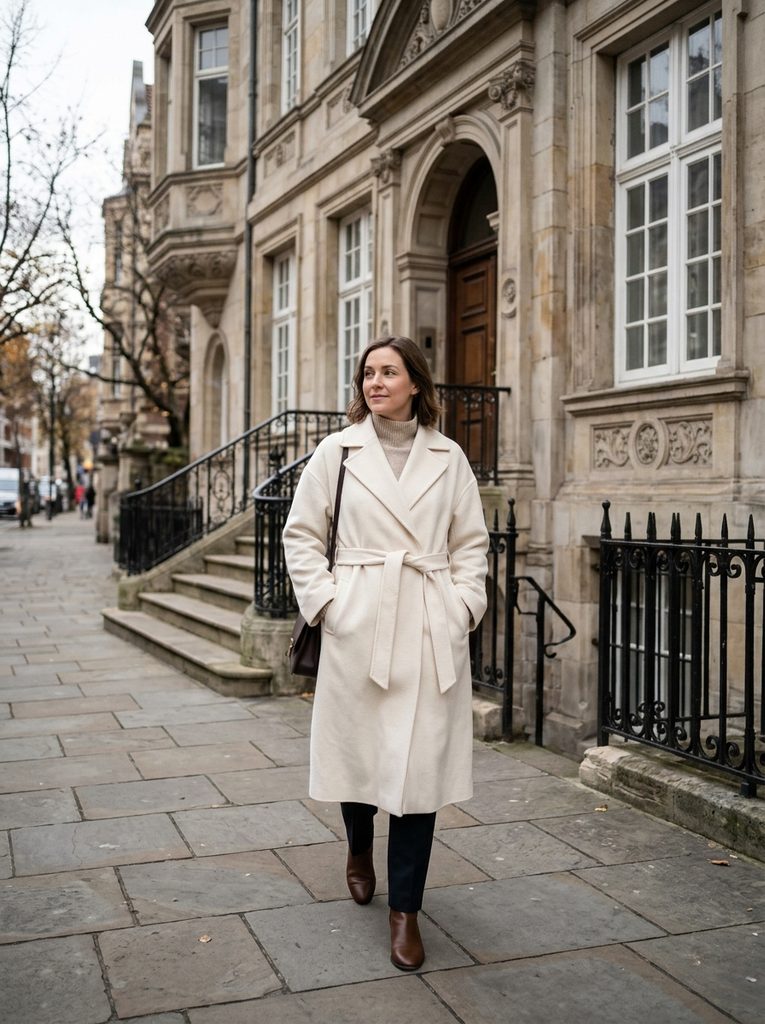
A double-faced coat is made from two layers of wool fabric joined together, so it needs no separate lining. The edges are often left raw or finished by hand, which gives the coat a clean look inside and out. Most versions tie at the waist or close with a hidden fastening.
This style suits anyone who wants a soft drape without hardware. It is warm yet light, and it works over dresses as easily as over trousers. Check the joining of the two layers at the hem, since that area shows wear first.
Best for: office commutes and dinners.
2. The Long Camel Single-Breasted Coat
Few coats look as calm as a long camel one. Single-breasted styles close with a row of buttons and sit straight from the shoulder to below the knee. The shape is clean, so the color does the talking.
Camel pairs with cream, gray, black, and denim, which makes it easy to wear often. Look for a notch lapel that lies flat, and a back vent that opens when you walk or sit. A coat that cannot flex at the hem will pull awkwardly on stairs.
Best for: daily wear across a full season.
3. The Cashmere-Blend Overcoat
Cashmere is soft and warm, but pure cashmere can pill and mark more easily at the elbows and under a bag strap. Blends with wool add structure and help the surface last. A tailored overcoat in this fabric has a smooth hand and a faint sheen.
Look at the fabric label for the blend ratio. Also run a palm lightly over the sleeve. A surface that already feels fuzzy in the shop may pill sooner than a smooth one. The darker shades, such as navy and charcoal, hide wear well.
Best for: formal plans and smart workwear.
4. The Wool Cocoon Coat
A cocoon coat has a rounded shape that narrows toward the hem, with a dropped or soft shoulder. It gives room for layers and has a sculptural line. Because the cut does the styling, the fabric should be substantial enough to hold the curve.
Longer sleeves are common, and a deep cuff can be turned back once. Try it with a bag on your shoulder, since a very wide cut can slip. A narrow trouser or a slim skirt beneath balances the volume.
Best for: relaxed city outfits and layering over knitwear.
Insulated Coats for Real Cold
When temperatures fall far below freezing, wool alone may not be enough. These three styles bring insulation or natural warmth.
5. The Long Down Parka
A long parka covers the thighs or knees and adds a hood, which makes it the sensible choice for harsh weather. Down feather is lightweight and traps heat well, and it is the common filling in this style. A higher fill power usually means more warmth for less weight.
Check three things. First, the baffles, which are the stitched channels that keep the filling in place, should be even. Second, the zip should run smoothly with a wind flap behind it. Third, the hood should adjust without blocking your side vision.
Best for: long outdoor walks and very cold climates.
6. The Matte Quilted Puffer
Not every puffer has to look like sports gear. A matte finish, a slimmer channel, and a clean hem make a quilted coat look refined. Hip-length and mid-thigh versions are both common, and the best ones skip large logos.
The key is the shell. A tight weave resists wind and light snow, and it avoids the crinkly sound of cheaper fabric. Try the coat with arms raised. If the hem rides up past your waist, it will do the same on a commute.
Best for: active days and travel. For airport comfort, chic airport outfits for long flights in cold weather shows how a coat like this fits into a longer journey.
7. The Shearling Aviator
Shearling is sheepskin with the wool left on one side. It insulates strongly and has a distinct texture. The aviator cut is short and boxy, with a wide collar that can be turned up against the wind.
It is a heavier piece, so try it on and move around. Also, suede-finished surfaces can stain, so take care in wet weather. A water-repellent treatment made for suede helps, but it is worth reading the maker’s instructions first. Shearling suits dry, cold days far better than slushy ones.
Best for: dry, freezing weather and weekend outfits.
Heritage Cuts With Staying Power
Some coats have been around for generations because their design simply works. These three have long histories and adapt well to modern wardrobes.
8. The Pea Coat
The pea coat is a short, double-breasted wool coat with wide lapels and vertical pockets. Its naval background explains the heavy fabric and the neat, upright collar. It ends at the hip or just below, so it is easy to move in.
A good pea coat has a firm collar that can be turned up. The buttons should be anchored well, since the double-breasted front takes more strain. Because it is short, it suits trousers and full skirts. A long skirt may peek out below the hem, which can look unbalanced.
Best for: walking, errands, and a neat shape that stays practical.
9. The Duffle Coat
The duffle coat is known for its toggle fastenings and a roomy hood, usually made from thick wool. Its relaxed shape gives plenty of space for layering. The toggles close with loops of rope or leather, which are easy to use with gloves.
Check the hood. It should lie flat when down and hold its shape when up. Also look at the toggles and loops, since replacing them takes effort. Navy, camel, and forest green all feel at home in this cut.
Best for: gentle winters and casual city days.
10. The Trench With a Winter Lining
A trench coat is better known as a rain layer, but a version with a removable insulated liner stretches into colder months. The belt, storm flap, and structured shoulders give it a sharp outline. The liner can be taken out in milder weather.
Look at how the liner attaches. Snap or zip fastenings should hold evenly, and the liner should not bunch at the hem. The coat itself should have a water-resistant finish, since rain and cold often arrive together.
Best for: wet winters and offices with dress codes.

Matching a Coat to Your Winter
The same coat will behave differently in different places. A short list of questions makes the decision easier.
How cold does it really get? Daily lows well below freezing call for down or shearling. Moderate cold, with the occasional frost, suits wool.
Is it wet or dry? Rain and slush favor a treated shell. Wool can handle light rain, but soaked wool is heavy and slow to dry.
How do you travel? A long walk to a station is not the same as a short run to a parked car. Hip-length coats suit driving, while longer ones protect legs on foot.
What do you wear underneath? A coat bought for office knitwear may feel tight over a bulky sweater. Consider the thickest layer you actually wear.
How many outfits will it cover? A neutral color works with more of your wardrobe. A brighter shade can be a joy, but it limits matching.
For a sense of how a coat fits into a wider cold-weather set, the winter capsule wardrobe offers a useful backdrop.

Finishing Touches That Complete a Coat
A good coat looks better with a few considered additions.
- Scarves. A wool or cashmere scarf in a close color adds warmth at the neck without fighting the coat.
- Gloves. Leather gloves with a soft lining suit tailored coats. Technical gloves suit puffers.
- Bags. A structured shoulder bag keeps the coat’s line clean. If you are unsure about size, the guide to handbag sizes worth owning is a handy reference.
- Boots. Ankle boots work with short and mid-length coats, and tall boots suit longer ones.
- Occasions. For festive outings, what to wear to a Christmas market shows how to dress for standing around in the cold.
Caring for a Coat So It Lasts
Even the best coat needs some attention to keep its shape.
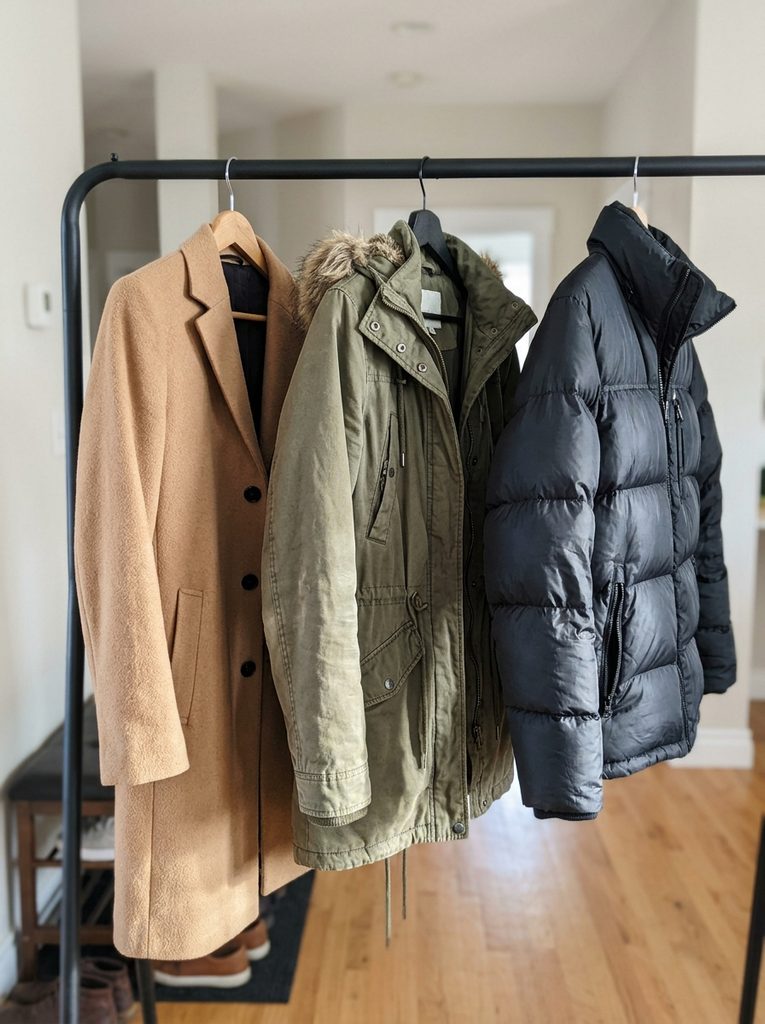
Brush wool coats gently after wearing, since dust and lint settle into the fibers. Hang them on a wide, curved hanger so the shoulders do not collapse. Leave a little space between coats in the wardrobe, because crowding creases the fabric.
For stains and cleaning, check the care label first. Many wool and cashmere coats are dry-clean only, and some down coats can be washed at home with the right product. A professional cleaner who handles outerwear is the safest option for delicate pieces.
At the end of the season, let the coat air out before storing it. Use a breathable garment bag instead of plastic, and keep shearling and wool somewhere cool and dry.

Choosing the One That Fits Your Winter
The best coat is the one that matches your weather, your routine, and the way you dress. A wrap coat will not replace a parka in a deep freeze, and a puffer may feel wrong at a formal dinner. Knowing the job the coat has to do makes the shortlist much shorter.
Start with the climate, then the fit over your thickest layer, and finally the details of the finish. Once those three agree, the right coat usually becomes clear.

Ella is a fashion and beauty writer who shares inspiring ideas about hairstyles, nail designs, wedding outfits, and seasonal fashion trends. She loves discovering fresh styles and creating…
View Author Profile →




2 Comments