


On this page
- Why February and March Need Their Own Approach
- Choose Fabrics That Handle Both Ends of the Day
- Build the Outfit Around a Mid-Layer
- Footwear That Makes the Transition Easier
- Color Choices for a Season in Between
- Office Outfits That Can Handle a Changing Day
- Weekend Outfits for Mild Afternoons
- Accessories That Carry the Season
- Patterns and Prints in a Transitional Season
- Putting It Together: A Few Practical Outfit Formulas
- Common Early Spring Mistakes
- Final Thoughts
- Frequently Asked Questions
February and March are awkward months for getting dressed. The morning can feel like January, with frost on the windshield and a wind that cuts through a thin coat. By early afternoon, the sun may be out, the air may feel mild, and a heavy wool layer suddenly seems like too much. Then the evening drops again. Most people solve this by guessing, and most guesses end with a sweater tied around the waist for half the day.
These months call for a different kind of planning. Instead of waiting for a clear seasonal switch, it helps to build outfits that can handle a temperature range of twenty degrees or more within one day. The ideas below focus on fabric weight, footwear, and color choices that carry you from the first cold hour to the last mild one, without changing your whole look.

Why February and March Need Their Own Approach
Early spring is not simply a softer version of winter. The light changes, the days get longer, and the colors people reach for start to shift. But the temperature still behaves like winter in many places, and the sunshine can be misleading.
This creates a particular styling challenge. Summer dressing is mostly about breathability. Deep winter dressing is about insulation. Early spring needs both at once, sometimes in the same outfit. The goal is not to choose between warm and light but to build outfits where each piece can do one of those jobs on its own.
It also helps to accept that the weather will not be consistent. Plan for the mornings and the evenings, not the midday forecast alone. If you walk to a train, stand at a bus stop, or spend time outdoors before lunch, the first hour of the day will shape how you feel for the rest of it.
Choose Fabrics That Handle Both Ends of the Day
Fabric is the most useful tool for early spring dressing. A well-chosen material can feel comfortable at 6 a.m. and still breathe by 2 p.m.
Fine merino wool is one of the most flexible options. It is warm enough for a cold morning but thin enough to wear under a light jacket, and it does not feel stuffy when the sun comes out. A fine-gauge merino sweater or turtleneck can carry an outfit from February into March with little adjustment.
Cotton twill and chambray also work well. They are structured enough to look neat, and they are light enough to wear without a heavy layer underneath. A cotton twill trench or a chambray shirt over a fitted tee suits mild afternoons and cool evenings.
Linen is a good choice for March, though it may feel too thin for February. A linen blazer over a knit top can be a practical bridge piece, since the knit provides warmth and the linen adds a crisp outline.
Some fabrics are better left for later in the season. Heavy velvet, thick boucle, and dense fleece can feel bulky once the temperature rises, and they tend to trap heat quickly indoors. Save them for the colder mornings and keep them out of your mid-day rotation.
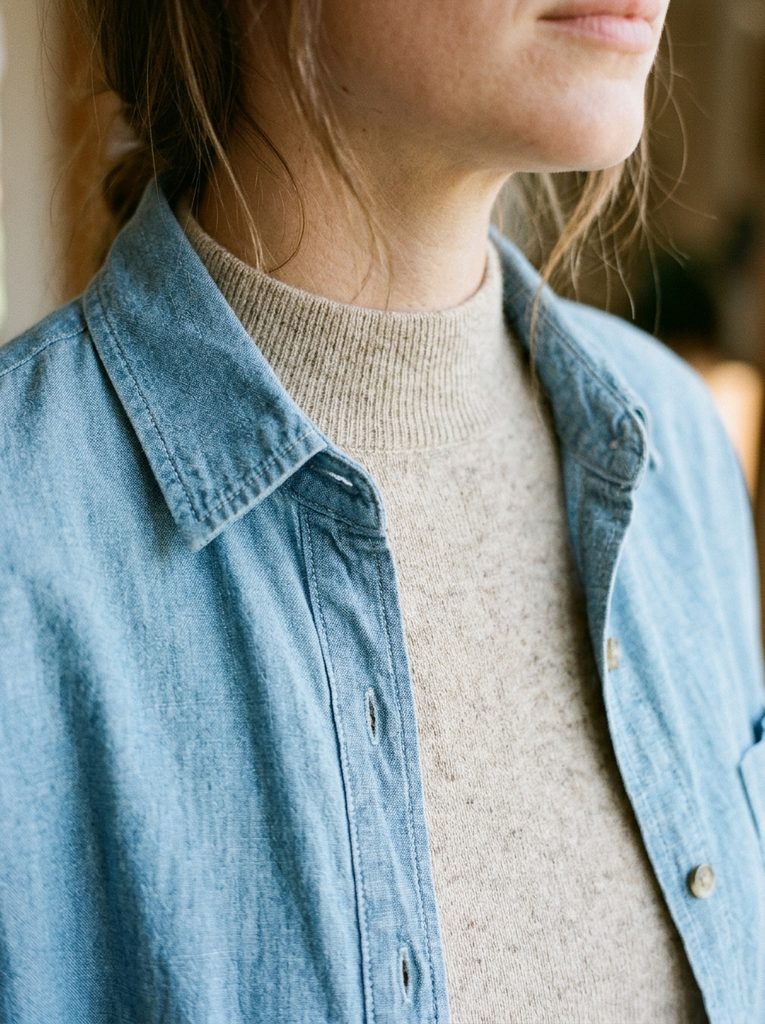
Build the Outfit Around a Mid-Layer
Early spring dressing often works best when the mid-layer does most of the work. The mid-layer sits between the base and the outer layer, and it can be easily removed or added as the day changes.
A cardigan is the simplest option. An open cardigan over a fitted tee or shirt looks relaxed, and it can be carried over one arm once the sun comes out. Choose a cardigan with a fine knit rather than a chunky one, since a lighter knit is easier to fold and store in a bag.
A lightweight overshirt is another strong choice. Overshirts in brushed cotton, wool blend, or fine corduroy can look sharp with trousers and boots, and they are structured enough to keep the body warm without the bulk of a full coat.
A thin blazer can also serve as a mid-layer. Wearing a blazer over a knit creates a clean, tailored outline that suits both office days and weekend errands. When the day warms, the blazer can come off without disrupting the rest of the outfit.
The mid-layer should always be the easiest piece to remove. If it takes a lot of effort to take off, it will likely stay on, even when you no longer need it.

Footwear That Makes the Transition Easier
Shoes are often the first thing that signals the change of season. In February, boots still feel right, but bare-ankle styles can look premature. In March, the balance tends to tip, and lighter footwear starts to look more natural.
A practical approach is to use a shoe that bridges the two. Ankle boots in a lighter leather or suede can work well in both months, especially in tan, taupe, or soft gray. Chelsea boots with a smooth finish also suit early spring, since they look neat with trousers and do not feel too heavy.
Loafers are another useful option. They feel lighter than boots but still provide enough coverage for cool mornings. Pair them with fine socks in February and with bare ankles or thin no-show socks in March. This small change alters the look without requiring a different shoe.
Ballet flats and slingbacks belong in March, particularly once the afternoons start to feel mild. Before then, they can be paired with opaque tights in a neutral shade to keep the look grounded for the season.
If you own knee-high boots, early spring is a good time to test their proportions. A slightly lighter knee-high style can look fresh with a midi dress or a tailored skirt. For more on how hemline length changes the look of tall boots, the guide to knee-high boot outfits for every hemline length explores this in more detail.

Color Choices for a Season in Between
Color can help outfits feel fresh without requiring new clothes. In February, colors tend to look best when they have some depth, such as deep navy, olive, or warm brown. These shades feel right in gray light and pair well with the layers still needed for cold mornings.
In March, the palette can gradually brighten. Soft sage, pale blue, ecru, and warm camel look more natural as daylight stretches. Pastels can appear at the edges of the outfit, such as in a scarf or a bag, before taking over larger pieces.
A useful method is to keep one anchor color from winter and add one new color from spring. A charcoal coat with a pale blue shirt is a simple combination that looks right in both months. A camel trench over a sage knit works as the weather lifts.
White is a helpful color in March, though it can look stark in February. A white shirt or a cream knit can brighten a neutral outfit without feeling out of season, especially when paired with darker trousers or a leather bag.

Office Outfits That Can Handle a Changing Day
Early spring office dressing requires a balance between professionalism and comfort. Cold commutes and warm offices can make a single outfit feel wrong by midday, so flexibility is important.
A tailored trouser in a mid-weight wool or a wool blend is a reliable base. Pair it with a fine knit or a crisp shirt, and add a blazer that can come off in the afternoon. A shell top or a sleeveless layering piece under the blazer can also help if the office runs warm.
Dresses can work well for early spring office days. A knit midi dress with a structured jacket or a cardigan gives the same flexibility as separates, and it avoids the need to coordinate multiple pieces. In February, add opaque tights. In March, switch to sheer tights or bare legs with a loafer or low pump.
For a more relaxed office environment, the guide to business casual versus smart casual can help clarify where the lines fall, which is useful when deciding how much structure an outfit needs.

Weekend Outfits for Mild Afternoons
Weekends in early spring tend to involve more walking, errands, and time outside. Comfort matters, but so does a sense of intention, since the outfit will be seen in cafés, parks, and shops.
A straight-leg denim in a medium wash is a useful starting point. In February, pair it with a fine knit and a coat that closes at the front. In March, swap the coat for a lightweight jacket or a trench, and keep the knit as a layer rather than the main piece.
Chinos or wide-leg trousers in a light neutral can feel fresh in March. Pair them with a striped or solid tee, a cardigan, and loafers or white sneakers. If the day is cold, add a thin scarf or a fine wool beanie.
Skirts are worth considering for March weekends. A midi skirt in corduroy or a soft pleated fabric works with tights in February and bare legs or ankle socks in March. Add a fitted knit and a light jacket for balance.

Accessories That Carry the Season
Accessories can mark the shift from winter to spring more clearly than clothing alone. They also tend to be easier to change.
Scarves are especially useful in early spring. A lightweight scarf in a silk or a fine cotton can add color and warmth on cool mornings, and it can be tucked into a bag once the afternoon warms. Choose a shade that repeats a color from the outfit so it feels intentional.
Hats are practical for February, particularly for people who walk or wait outside often. A fine knit beanie or a structured wool hat fits well with a tailored coat. In March, a hat can be replaced with a headband or a claw clip if the wind is mild.
Gloves become less necessary as the month progresses. Thin leather gloves or driving gloves can be a stylish option for early mornings, and they are easy to slip into a pocket.
Bags deserve attention too. A structured leather bag in a neutral tone suits both months. A woven straw or raffia bag belongs to March and later, and it can add texture to a simple outfit without looking too seasonal.
Jewelry works well in both months. In February, a heavier metal chain or a pair of hoops can look appropriate with a turtleneck. In March, lighter pieces like thin bracelets or small drop earrings suit the softer outfits. The principles for mixing metals are helpful here too, as explained in the article on mixing gold and silver jewelry.
Patterns and Prints in a Transitional Season
Patterns can feel out of place in February and very fitting in March. The shift is less about the pattern itself and more about its scale and color.
Small-scale stripes, fine checks, and subtle florals are easy to introduce early in the season. Pair them with a neutral layer, such as a camel coat or a navy blazer, to keep the look grounded. A striped knit under a denim jacket also works well and does not feel too bright.
By March, larger florals and brighter stripes can take a more central role. Use them on a dress or a skirt, and keep the outerwear simple. A bold print on top of a plain coat often looks more polished than a print layered under another pattern.
Avoid mixing too many prints at once. If the top has a pattern, keep the bottoms solid, and choose a bag or shoe in a plain finish.
Putting It Together: A Few Practical Outfit Formulas
Rather than building entire outfits from scratch each morning, it can help to have a few formulas ready. These can be adapted for February or March, depending on the weather and the mood.
A fine merino knit, straight-leg jeans, and ankle boots work well for early February. Add a wool coat for the morning and remove it by midday.
A tailored trouser, a fitted shirt, and a lightweight blazer suit office days in both months. Swap the blazer for a cardigan in the afternoon if the room is warm.
A cotton twill trench, a cardigan, and a midi skirt suit mild March days. Add loafers or flat sandals depending on how warm the day feels.
A knit midi dress, a structured jacket, and tights or bare legs can be adjusted through the season. Choose boots or flats based on the temperature.
Once these formulas feel comfortable, rotate one piece at a time. A new scarf, a different mid-layer, or a shift in footwear can make the outfit feel fresh without starting over.
Common Early Spring Mistakes
A few common mistakes can make early spring outfits feel off, even when each piece is well chosen.
Wearing a full summer look too early is one of the most frequent. Light fabrics and bare legs can be jarring on a cold morning, and they often lead to an uncomfortable commute.
Overlayering is another. Three or four pieces can feel bulky and make the body look heavier. Two well-chosen layers usually look neater and feel more comfortable.
Sticking with heavy winter fabrics too long can also make an outfit feel out of step. A chunky knit or thick wool coat in late March can look dated, even if it still feels warm in the morning.
Ignoring the lower half of the outfit is a quieter mistake. Trousers, skirts, and shoes set the tone for the season as much as tops and coats do.
Final Thoughts
Early spring dressing is less about changing everything at once and more about adjusting small details as the weather moves. A merino knit, a lighter blazer, a trench, or a change from boots to loafers can carry an outfit from a cold February morning to a mild March afternoon.
Pay attention to fabric weight, plan for the layer that comes off first, and let color shift gradually. The most successful transitional outfits look like they belong to the season they are worn in, even when the weather has not made up its mind.
Frequently Asked Questions
What should I wear in early spring when mornings are cold and afternoons are mild?
Start with a fine merino or cotton knit as the base, add a lightweight mid-layer such as a cardigan or blazer, and finish with a trench or light jacket. Choose one layer that can be easily removed during the day.
Can I wear dresses in February?
Yes. A knit midi dress or a fitted wool dress works well in February when paired with opaque tights and boots or closed-toe flats. Add a structured jacket for cold mornings.
What shoes work for both February and March?
Ankle boots in a lighter leather, loafers, and Chelsea boots are versatile across both months. Adjust socks or hosiery to match the temperature, and switch to flats or sandals later in March if the weather allows.
Which colors are best for early spring?
In February, deep navy, olive, camel, and charcoal suit the gray light and cooler days. In March, sage, pale blue, ecru, and soft pastels look more natural as the season brightens.
Is it too early to wear white in March?
Not at all. A white shirt, a cream knit, or a white sneaker can look fresh in March, especially when paired with darker neutrals to keep the outfit balanced.
How do I avoid looking overdressed for the season?
Keep the outfit simple, choose fabrics that suit the temperature, and avoid stacking too many layers. A single statement piece, such as a lightweight blazer or a colorful scarf, can add interest without looking out of place.

Ella is a fashion and beauty writer who shares inspiring ideas about hairstyles, nail designs, wedding outfits, and seasonal fashion trends. She loves discovering fresh styles and creating…
View Author Profile →


1 Comment