

On this page
- Why This Stretch of the Year Is Genuinely Harder to Dress For
- The Core Idea: Build in Layers You Can Actually Remove
- How Regional Climate Changes the Formula
- Fabrics That Adapt to Temperature Swings
- A Color Palette That Bridges Both Seasons
- Footwear That Works Across a Wide Temperature Range
- Outfit Formulas Worth Trying
- Accessories That Do Double Duty
- Packing for a Day You Cannot Fully Predict
- Dressing for Occasions During This Season
- What Tends to Work Against You During This Season
- A Simple Way to Plan an Outfit Each Morning
Some mornings call for a jacket. By early afternoon that same jacket is tied around a waist or stuffed into a bag. By evening, it goes back on, sometimes with an extra layer underneath. This is the reality of transitional weather, the stretch of the year when temperatures shift by ten or fifteen degrees within a single day and no single outfit feels right from sunrise to sunset.
Dressing for this stretch is not about picking between summer clothes and fall clothes. It is about building outfits that can flex as the day changes, without requiring an outfit change halfway through.
Why This Stretch of the Year Is Genuinely Harder to Dress For
Most seasonal dressing advice assumes a stable temperature range. Summer guides assume heat all day. Winter guides assume cold all day. Transitional weather breaks that assumption entirely.
A single day might start cool enough to need a scarf, warm up enough by midday to make that scarf feel unnecessary, and cool back down by evening in a way that catches people off guard on a walk home or a late dinner outside. Humidity adds another layer of complexity, since a warm, humid afternoon calls for different fabrics than a warm, dry one, even at the same temperature.
The result is that a single “right” outfit rarely exists during this window. What works instead is a system: a base that handles the warmest part of the day, and layers that can be added or removed as conditions shift.
The Core Idea: Build in Layers You Can Actually Remove
The single most useful principle for this kind of weather is choosing pieces that can be added or shed throughout the day without changing the outfit’s overall look.
Base Layer Choices
The base layer is whatever sits closest to the body and needs to be comfortable on its own during the warmest hours. A fitted tank, a lightweight knit, a sleeveless blouse, or a fine-gauge sweater all work well here, since each one can carry the outfit alone in the heat of the afternoon while still looking finished under something heavier later on.
Mid Layer Options
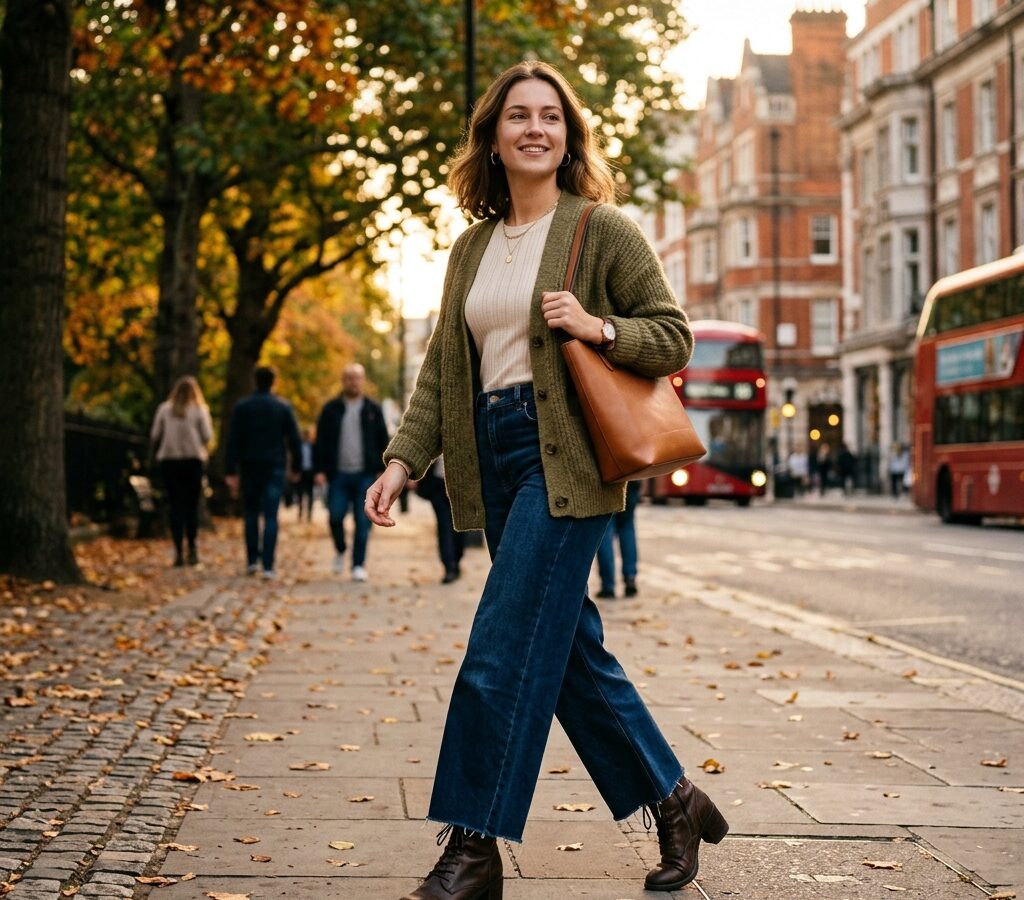
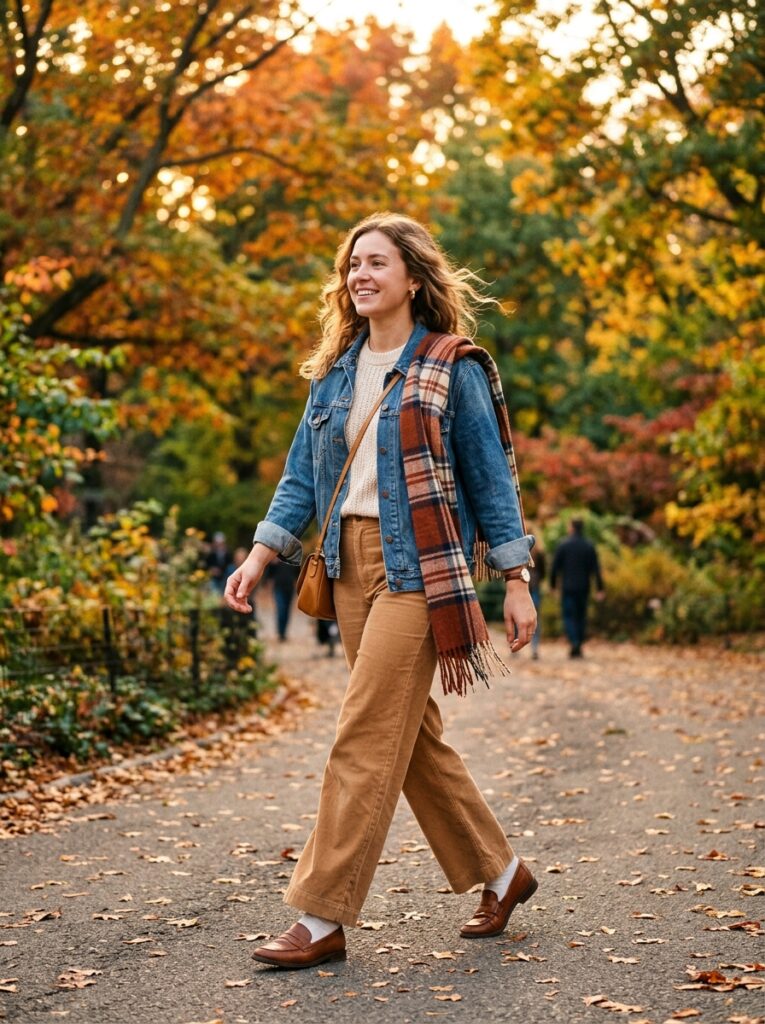
The mid layer is what turns a summer-ready base into something that can handle a cooler moment. Cardigans, overshirts, denim jackets, and oversized vests all fall into this category. Vests in particular have become a popular transitional piece because they add warmth across the torso without covering the arms, which keeps the whole look from feeling bulky.
Outer Layer for Cool Mornings and Evenings
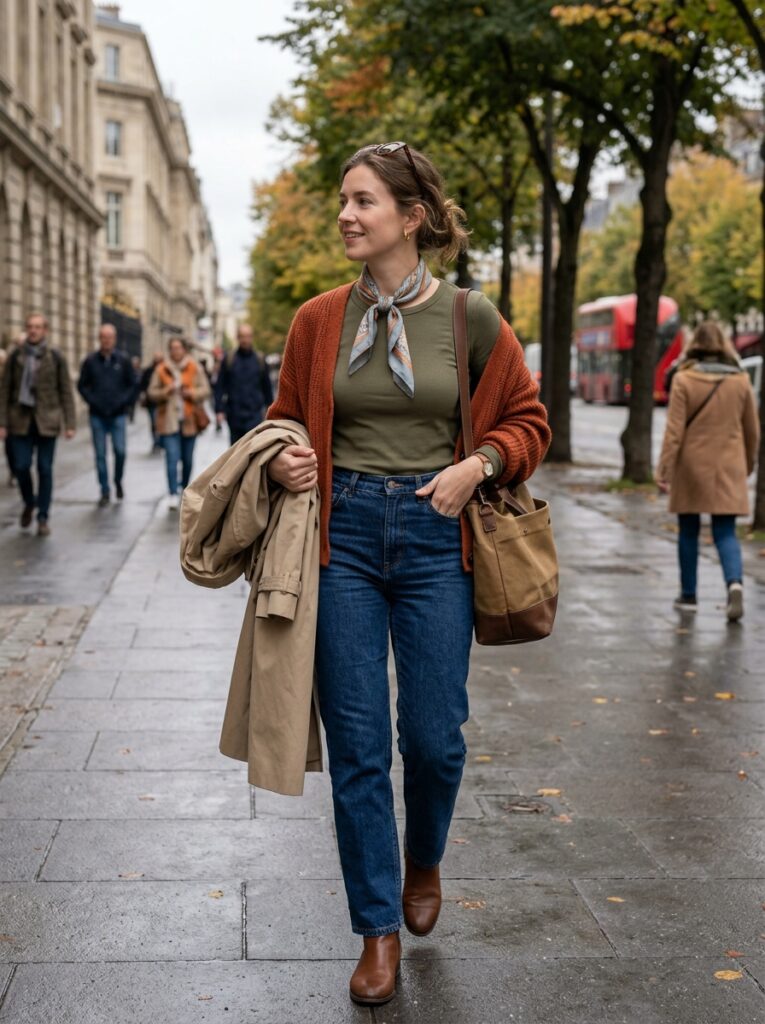
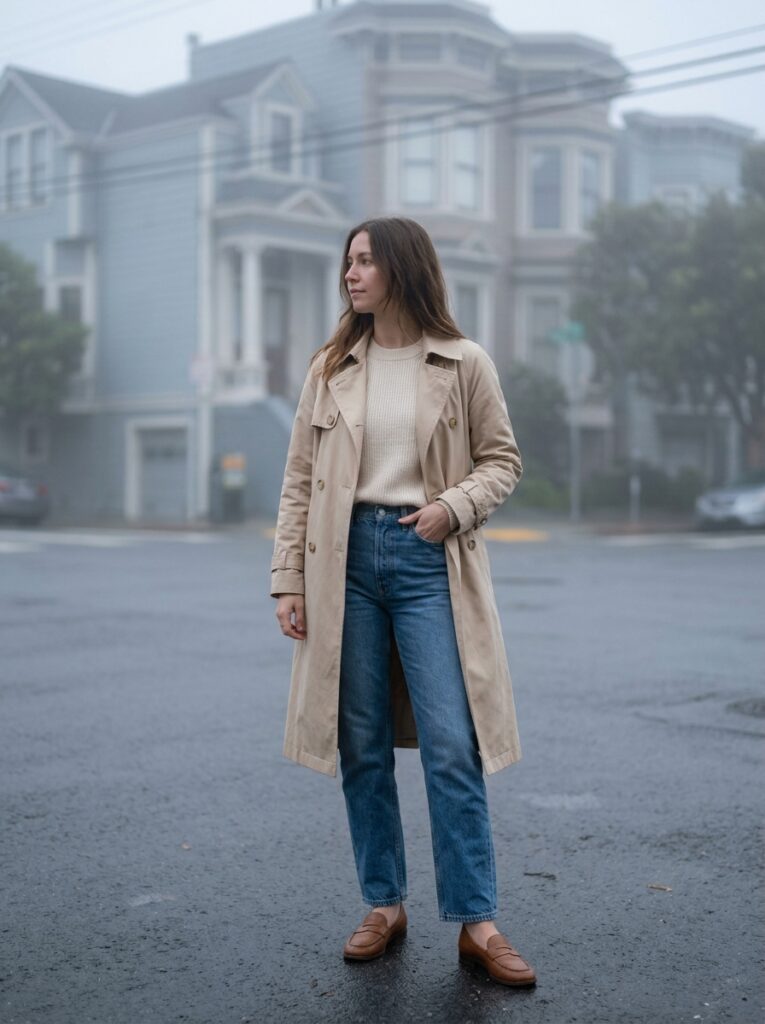
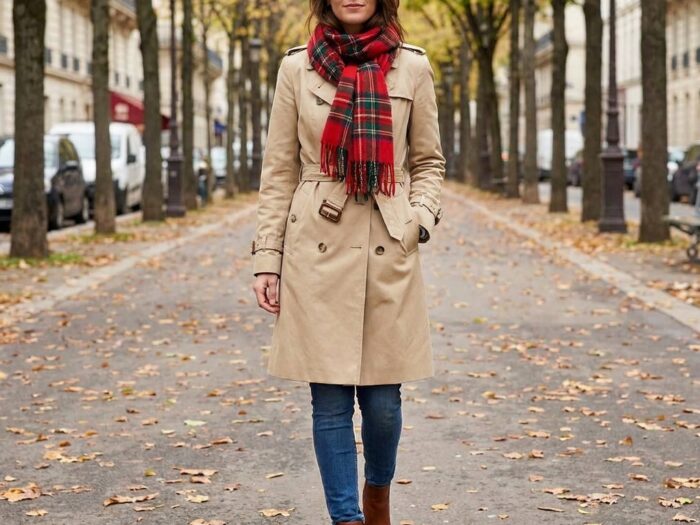
The outer layer is reserved for the coolest parts of the day, typically early morning or after sunset. A lightweight blazer, a trench coat, or a funnel neck jacket all serve this purpose without requiring the heavier wool or down pieces that belong to actual winter dressing. The goal is something warm enough to make a difference, but light enough to carry over an arm once the temperature climbs.
Layering this way, rather than choosing one single outfit for the whole day, is what actually solves the problem transitional weather creates.
How Regional Climate Changes the Formula
Transitional weather does not look the same everywhere, and the same layering principle needs slightly different execution depending on climate.
In drier, temperate regions, the shift between morning and afternoon tends to be a straightforward temperature swing, which makes the base-plus-removable-layer approach easy to apply almost exactly as described. A cardigan or light jacket added and removed once or twice a day usually covers the full range.
In more humid regions, the challenge is less about cold mornings and more about a season that stays warm during the day but cools noticeably after sunset, often alongside a shift from heavier rainfall to drier air. Breathable natural fibers matter even more here, since a humid afternoon in a heavy fabric feels far less comfortable than the same temperature in a dry climate. A lightweight cotton or linen base, with a layer added only in the evening, tends to work better than a system built around a cool morning that may not actually happen.
In regions with a pronounced monsoon-to-cooler-season shift, the transition often unfolds over several weeks rather than within a single day, which gives more room to introduce heavier pieces gradually rather than needing a fully adaptable outfit every single morning. Paying attention to the specific pattern in your own region, rather than following a generic seasonal guide built around one climate, tends to produce more comfortable results.
Fabrics That Adapt to Temperature Swings
Fabric choice matters as much as the layering strategy itself, since some materials handle shifting conditions far better than others.
- Lightweight wool and cashmere blends provide warmth without the bulk of heavier winter fabrics, which makes them useful for a mid layer that needs to work in both a cool morning and a mild afternoon.
- Structured cotton holds its shape well and breathes more than synthetic blends, making it a reliable choice for blazers and jackets worn during this stretch of the year.
- Suede and leather accents, whether in a jacket, a bag, or a pair of shoes, add a seasonal richness without requiring a full fabric change, since a small leather or suede detail reads as autumnal even on a warm day.
- Sheer or lightweight separates, like an organza blouse or a fine cotton shirt, work well underneath a heavier layer, since they add visual interest without adding heat.
Avoiding heavy, non-breathable synthetics is particularly useful during this period, since these fabrics tend to trap heat during the warm parts of the day and offer little real warmth once temperatures drop.
A Color Palette That Bridges Both Seasons
Color is one of the fastest ways to shift a look from summer to fall without changing the actual silhouette or fabric weight.
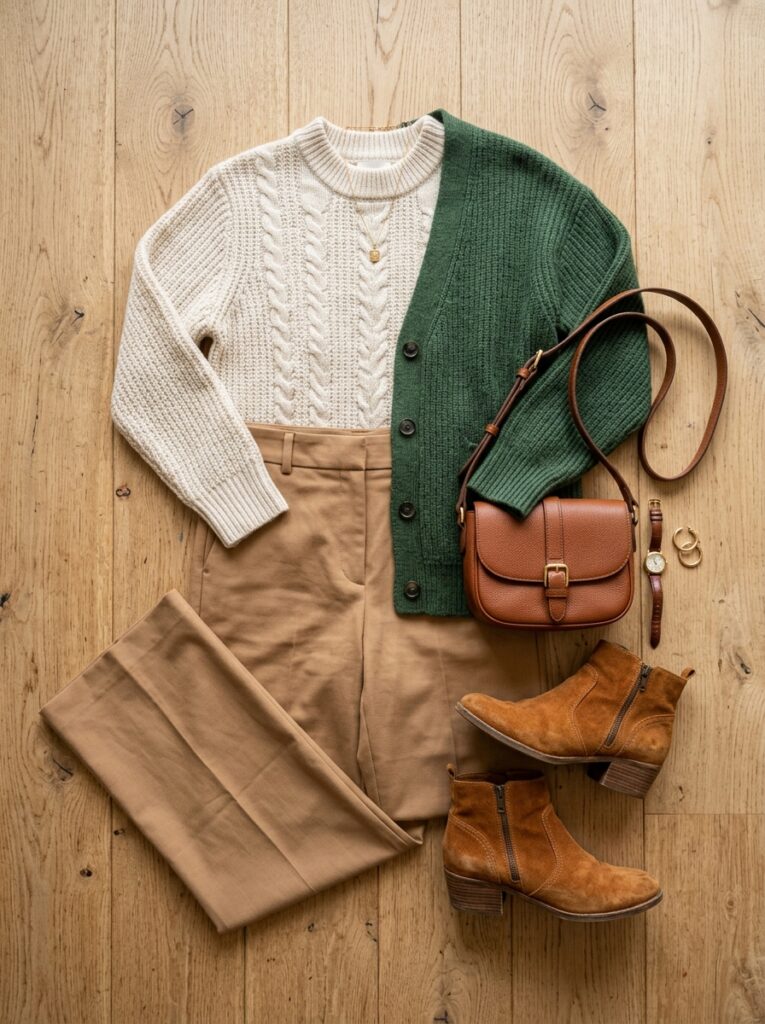
Earthy, deeper tones, oxblood, forest green, espresso brown, charcoal, and camel, tend to dominate this season’s transitional palettes. These colors read as autumnal even when paired with lightweight, warm-weather-appropriate fabrics, which makes them useful for bridging the two seasons visually.
This does not mean summer’s lighter neutrals need to disappear entirely. A cream or soft white base paired with one deeper-toned layer, like a charcoal cardigan or an oxblood scarf, often achieves the same transitional effect while keeping part of the outfit feeling light and warm-weather-friendly.
Footwear That Works Across a Wide Temperature Range
Shoes are often the last thing people think about when dressing for shifting weather, but the wrong pair can make an otherwise well-planned outfit feel wrong for half the day.
- Loafers work in both warm and cool conditions, pair easily with bare ankles or thin socks, and suit both casual and slightly dressed-up outfits.
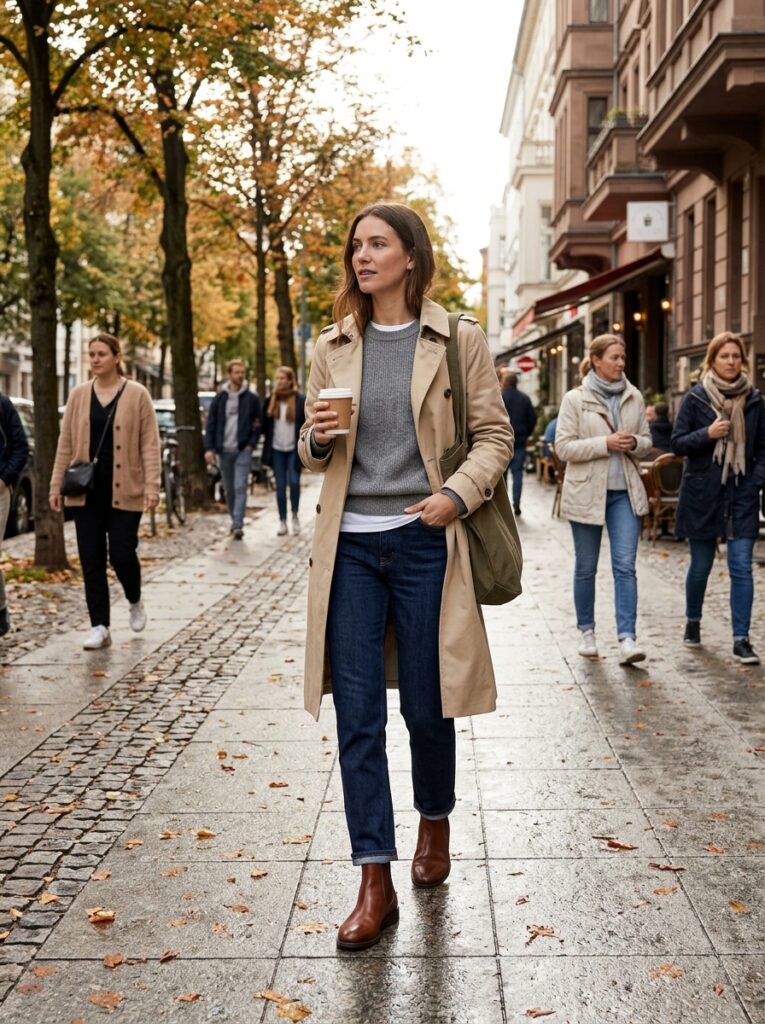
- Ankle boots offer more coverage for cooler mornings and evenings while still working with lighter clothing during the warmer hours of the day.
- Sneakers with no-show socks keep a casual outfit feeling warm-weather appropriate, while swapping in slightly thicker socks for cooler days extends the same shoe into cooler territory.
- Closed-toe flats bridge the gap between sandals and boots, offering more warmth than an open shoe without the heaviness of a full boot.
Choosing one adaptable pair, rather than switching shoes throughout the day, keeps the whole system simpler to manage.
Outfit Formulas Worth Trying
Bringing all of this together, here are specific combinations that tend to work well through a day of shifting temperatures.
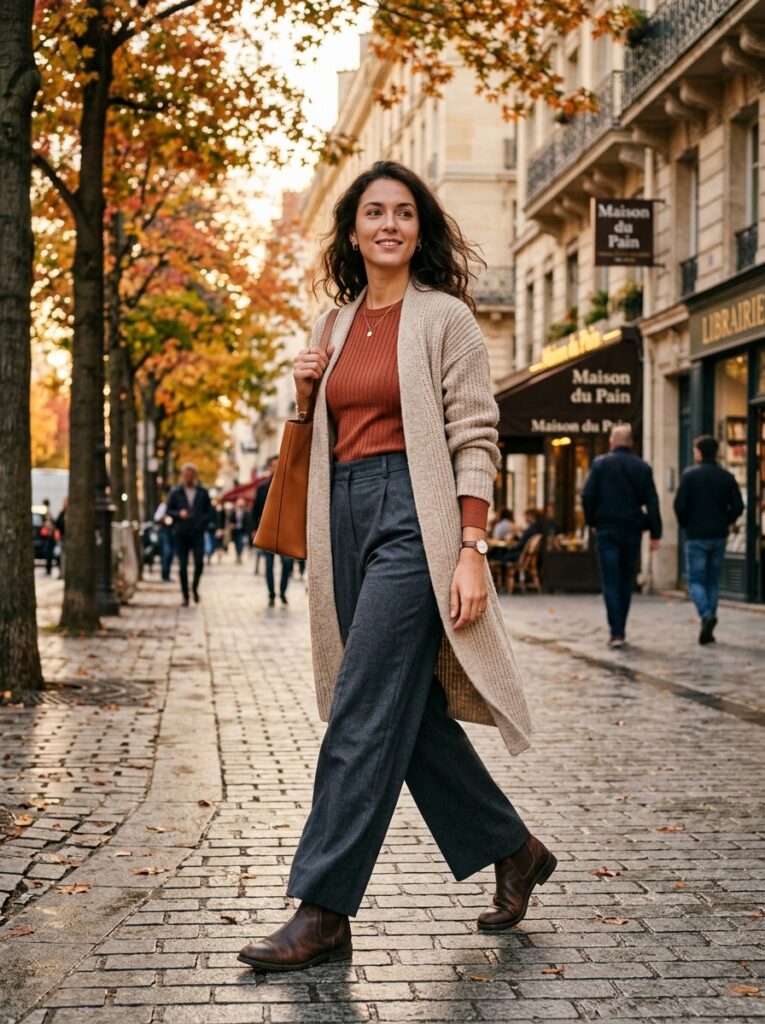
- Wide-leg trousers, fitted knit, and a blazer. Start with a fitted knit or lightweight blouse, add wide-leg trousers for a relaxed silhouette, and top with a blazer that can be removed once the day warms up. Ankle boots finish the look while keeping it grounded.
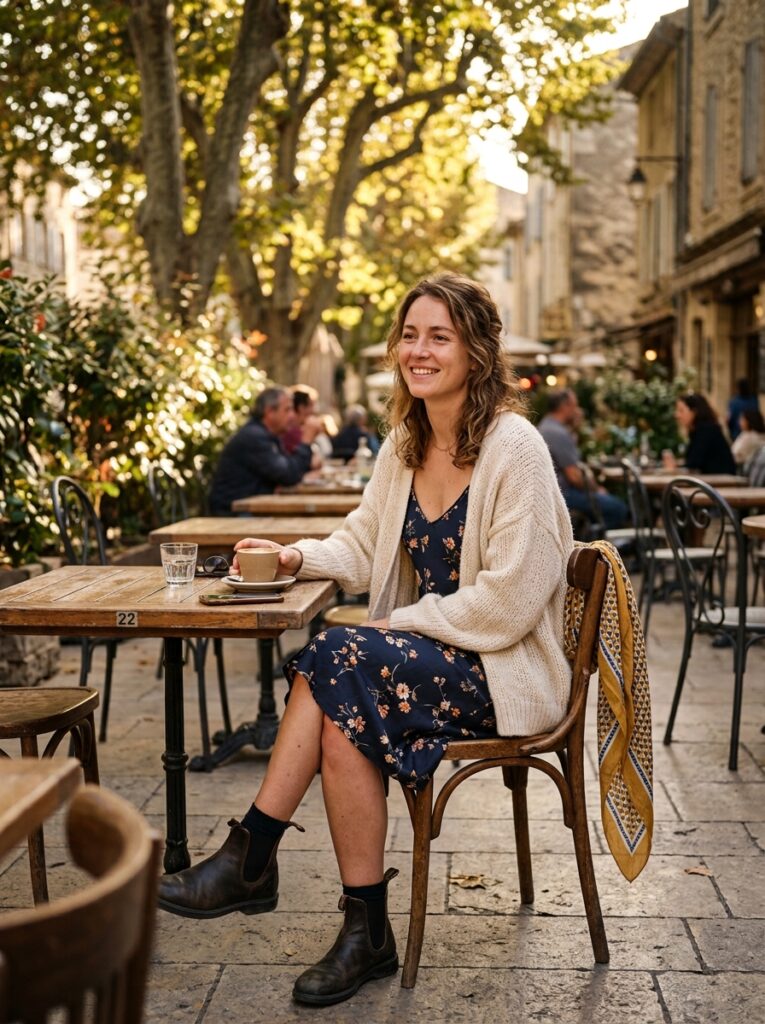
- Slip dress with a cardigan. A lightweight slip dress carries the outfit through the warmest hours, while an oversized cardigan added over the top handles cooler mornings and evenings without changing the overall silhouette.
- Denim shorts or a denim skirt under a fleece pullover. This combination plays warm-weather and cool-weather pieces against each other directly, letting the pullover come off entirely once temperatures rise.
- Sheer or lightweight blouse with a structured vest. Wearing a vest over a sheer top adds coverage and warmth to the torso while keeping the sleeves free, which avoids the overheated feeling a full jacket can create.
- Sundress with an oversized cardigan and boots. A summer sundress does not need to be retired the moment temperatures dip. Adding a long cardigan and swapping sandals for ankle boots turns the same dress into something that reads as appropriate for cooler weather.
- Midi skirt with a fine-gauge sweater and a trench. A satin or cotton midi skirt paired with a lightweight sweater on top, finished with a trench coat for the coolest parts of the day, works well for anything from an office to a dinner reservation.
Each of these formulas relies on the same underlying idea: a warm-weather base, and one or two layers that can come on or off as conditions shift.
Accessories That Do Double Duty
A few accessories are particularly useful during this stretch of the year because they add warmth or polish without requiring a full outfit change.
- A lightweight scarf, in cotton or a fine wool blend, can be worn loosely for style during warm hours and wrapped more fully for warmth once temperatures drop.
- A crossbody bag frees up the hands for carrying a jacket or cardigan that has been removed, which matters more during this season than it does when the weather stays consistent all day.
- Layerable jewelry, like a simple pendant or stacked rings, adds interest to a plain base layer without competing with whatever outer layer gets added later.
- A structured hat, whether a light straw option for midday sun or a soft felt style for cooler hours, can extend the range of a single outfit further than most people expect.
None of these require significant investment, but each one adds flexibility to an outfit that already has a solid layering foundation.
Packing for a Day You Cannot Fully Predict
On days with an especially wide temperature range, or when plans stretch from a morning commute into a late evening, carrying a small bag with one or two backup pieces solves problems before they start.
A compact tote or backpack with room for a folded cardigan and a light scarf covers most scenarios without adding much bulk. For anyone commuting by foot or public transport, a pair of socks that can be added to an otherwise warm-weather shoe is a small addition that makes a bigger difference than it sounds like it should, particularly once the sun goes down.
This kind of preparation matters most on days that involve moving between indoor and outdoor spaces repeatedly, since air conditioning, heating, and outdoor temperature rarely align. Rather than trying to predict the exact conditions in advance, packing a couple of adaptable pieces removes the guesswork entirely.
Dressing for Occasions During This Season
Transitional weather does not pause for special occasions, and a few adjustments help specific situations feel more considered.
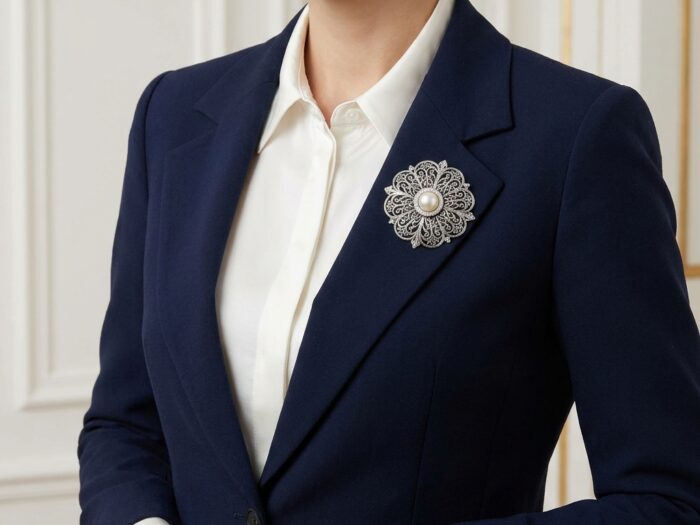
Fall tends to bring a steady run of weddings and formal gatherings, which raises its own version of the same layering question: something that photographs well and feels appropriate indoors, but that will not leave anyone shivering during an outdoor ceremony or ready room. A structured wrap, a tailored blazer in a rich color, or a shawl in a substantial fabric can be added over a warm-weather dress without disrupting the overall look. Anyone facing this exact situation might find it useful to browse wedding dress inspiration alongside outerwear options, since many formal transitional looks are built the same way as casual ones, just with more polished fabric choices.
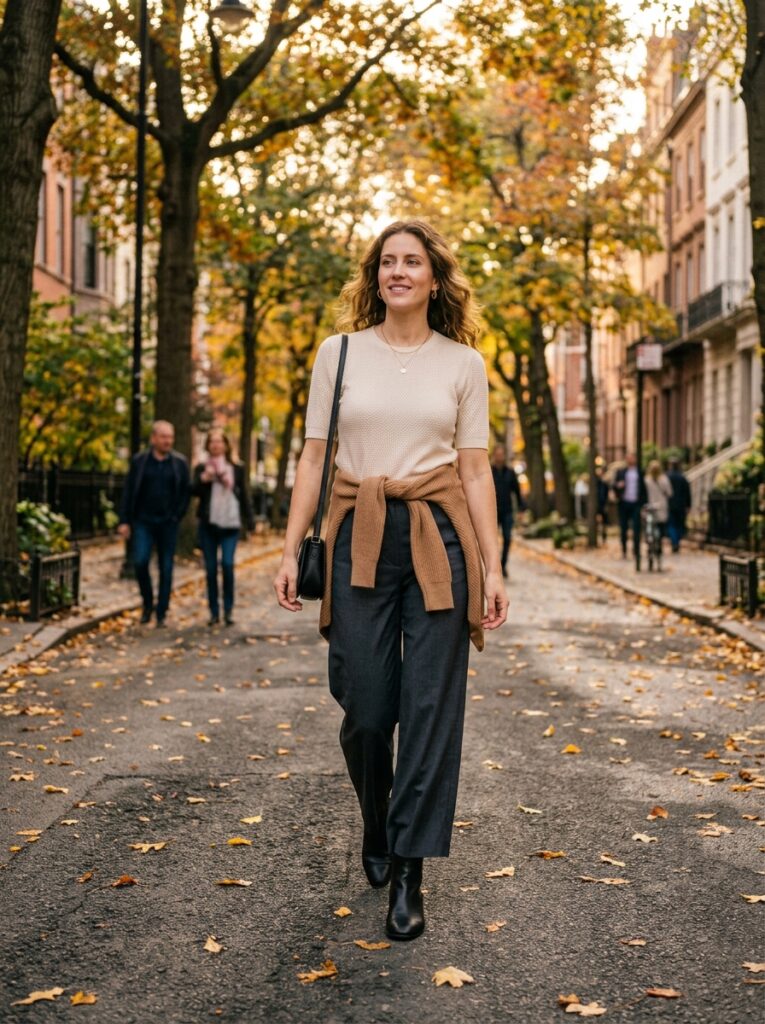
For everyday situations, the same logic applies at a smaller scale. An office outfit benefits from a blazer that can come off in a warm meeting room and go back on for a walk to the train. A weekend outfit benefits from a cardigan that can be tied around the waist for an afternoon walk and worn properly again once the sun starts to set.
What Tends to Work Against You During This Season
A handful of common choices make transitional weather harder to dress for than it needs to be.
- Committing to one heavy layer with no way to remove it. A wool sweater with no lighter layer underneath leaves no good option once the day warms up.
- Relying entirely on synthetic fabrics. These tend to trap heat during warm hours and provide little real insulation during cool ones, which makes them the least adaptable fabric choice for this season.
- Packing away all warm-weather pieces too early. Many transitional pieces, sundresses, sandals, lightweight blouses, still have plenty of use left once paired with the right layer on top.
- Choosing shoes for only one part of the day. Sandals that leave feet cold in the evening, or boots that feel too warm at midday, undercut an otherwise well-planned outfit.
- Forgetting that indoor and outdoor temperatures often differ significantly. An outfit that feels right walking outside can feel too warm in a heated indoor space, which is where a removable layer earns its place.
A Simple Way to Plan an Outfit Each Morning
For anyone facing a genuinely unpredictable day, a short mental checklist tends to produce better results than guessing.
- Check the temperature range for the whole day, not just the current moment, and note the difference between the warmest and coolest points.
- Choose a base layer that will feel comfortable during the warmest part of the day on its own.
- Add one mid layer that can come off entirely once temperatures rise, like a cardigan, vest, or overshirt.
- Pack or wear one outer layer for the coolest hours, choosing something light enough to carry once it is no longer needed.
- Pick footwear and one accessory, like a scarf or bag, that can adjust along with the rest of the outfit rather than locking it into one temperature range.
Working through these five steps takes only a few minutes, but it solves the core problem transitional weather creates: dressing for a day that refuses to stay the same from morning to night.
Weather that cannot make up its mind does not have to mean an outfit that cannot either. With the right base pieces, a couple of adaptable layers, and shoes that work across a wider range than usual, getting dressed during this stretch of the year becomes far less of a daily guessing game.
For more seasonal styling ideas beyond this particular weather challenge, the outfit ideas collection covers looks for other times of year as well.

Ella is a fashion and beauty writer who shares inspiring ideas about hairstyles, nail designs, wedding outfits, and seasonal fashion trends. She loves discovering fresh styles and creating…
View Author Profile →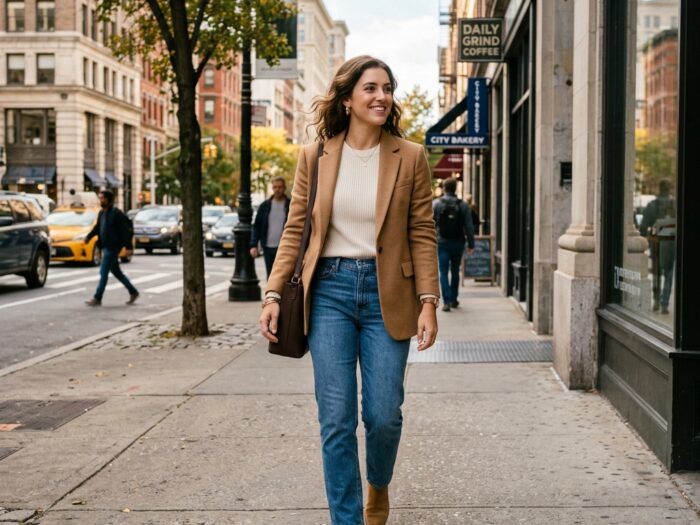

2 Comments