


Some mornings the outfit decision genuinely does not matter and still manages to take fifteen minutes. Nothing is wrong with the closet. Nothing needs ironing. The problem is just that too many pieces are technically available, and choosing between all of them at seven in the morning takes more mental effort than it should.
A formula solves this differently than a capsule wardrobe does. A capsule wardrobe narrows what you own. A formula narrows what you have to decide each morning, by fixing the structure of an outfit and only leaving room to swap one or two pieces within it. The result is an outfit that still looks considered, without asking for a single creative decision before coffee.
Why a Fixed Structure Works Better Than a Full Outfit Plan
Planning outfits in advance sounds efficient in theory and rarely survives contact with a real week. Plans get derailed by a stain, a meeting that got moved up, a load of laundry that did not finish in time. A formula is more resilient because it does not depend on specific garments being clean or available. It depends on categories.
A formula might read as trousers, plus a fitted top, plus a structured layer. Any trousers, any fitted top, any structured layer that follow the same color logic will complete it. This is a small shift in thinking, but it changes outfit planning from a memory exercise into something closer to filling in a template, which takes far less mental effort on a morning when effort is in short supply.
This idea overlaps with what psychologists call decision fatigue, a term coined by researcher Roy Baumeister to describe how the quality of decisions declines the more of them a person has already made that day. Clothing choices are rarely the most consequential decisions in anyone’s morning, but according to research on decision fatigue, removing small, repetitive choices from the day tends to preserve mental energy for the ones that actually matter, like the presentation at ten or the deadline before lunch.
Why One Formula Is Never Quite Enough
The temptation, once a formula clicks, is to lean on it every single day. This works for about a week before it starts to feel less like efficiency and more like a uniform nobody asked for.
A more sustainable approach keeps three or four formulas in rotation rather than one, each suited to a different kind of day. One formula for a normal desk day, one for a day with client meetings, one for something more relaxed, and one built for weather that will not cooperate. None of these need to be complicated. They just need to already exist in your head so that choosing between them takes seconds rather than minutes.
Formula One: Trousers, Fitted Top, Structured Layer
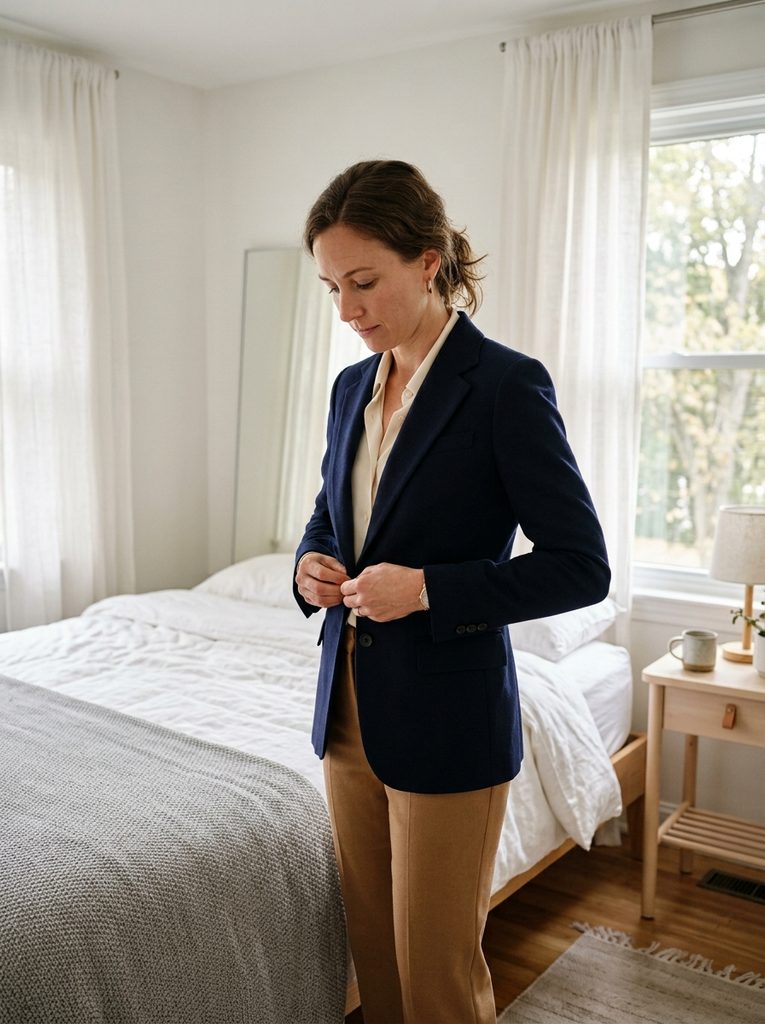
This is the formula most office wardrobes are quietly built around already, even without naming it. Tailored or wide-leg trousers, a fitted knit or blouse, and a blazer or structured cardigan on top.
What makes it repeatable is that none of the three pieces needs to match the others exactly. A navy blazer works over a cream top and camel trousers just as well as it works over a striped shirt and grey trousers, because the formula’s logic sits in the silhouette, not the specific color combination. Swapping the blazer for a longline cardigan shifts the whole outfit from formal to business casual without changing anything else.
This formula also travels well between seasons, which matters for anyone whose office temperature swings as unpredictably as the weather outside does. A blazer removed in a warm meeting room and put back on for the walk to the train solves the same problem indoors that a removable jacket solves outdoors.
Formula Two: The Monochrome Column
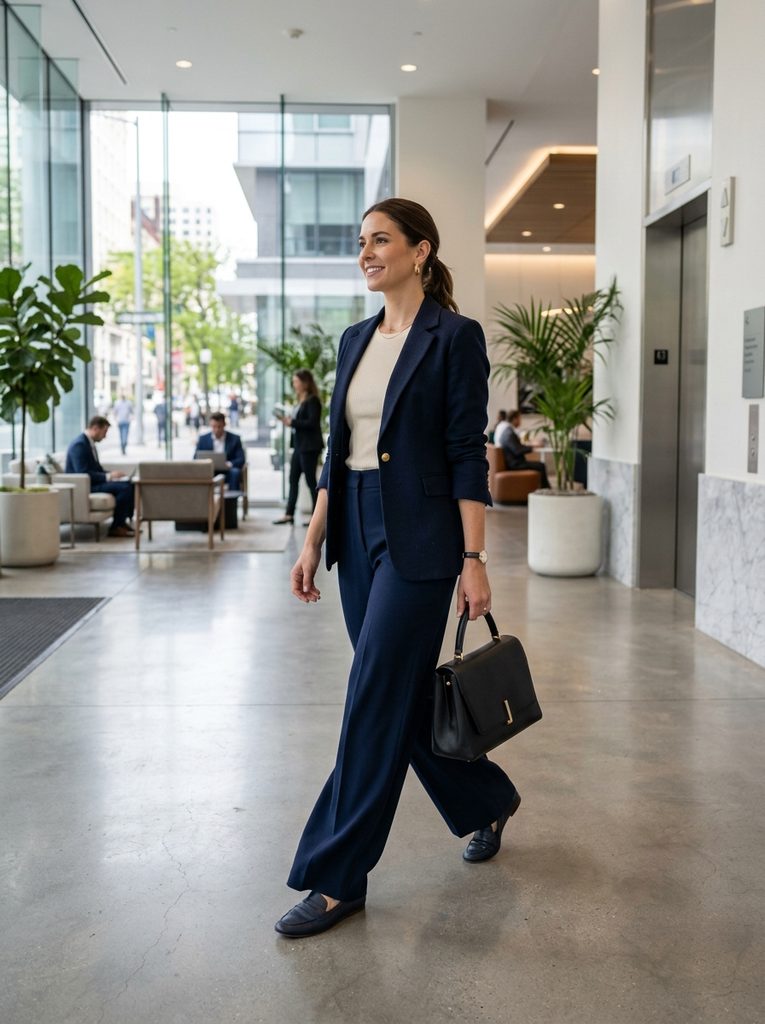
Dressing in a single color family, top to bottom, removes an entire category of decision-making, because there is no matching to think through. A charcoal sweater with charcoal trousers, or a camel blouse with camel wide-leg pants, reads as intentional rather than accidental, which is not always true of monochrome dressing in more casual settings.
The trick that keeps this formula from feeling flat is texture rather than color contrast. A matte knit against a slightly sheened trouser fabric, or a structured blazer against a fluid blouse, gives the eye something to register even when the palette stays completely uniform. Shoes and a bag in a slightly different neutral, rather than matching the outfit exactly, keep the whole look from reading as a costume.
This formula is particularly useful for days that start at the office and continue somewhere else afterward, since a single, cohesive color story tends to photograph and transition better than an outfit built from several competing tones.
Formula Three: Sweater and Structured Bottom
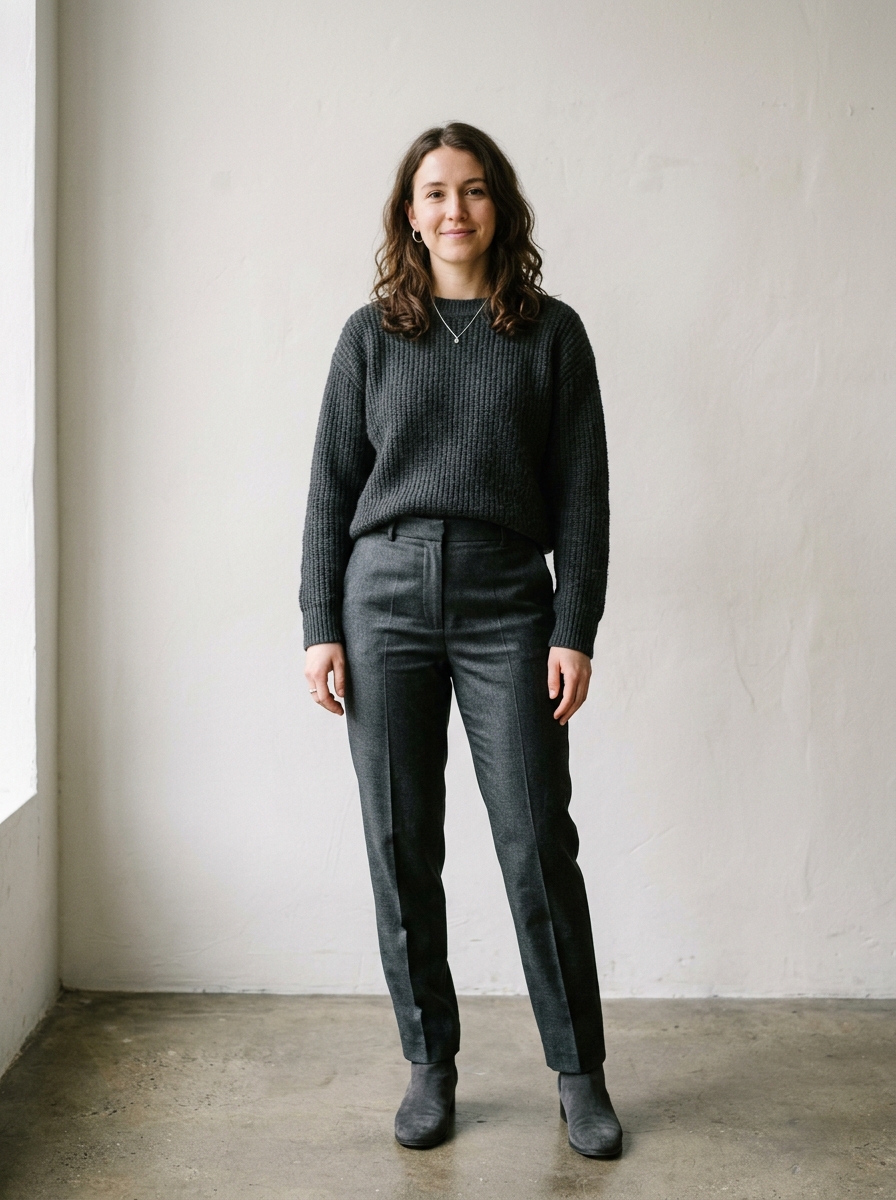
For offices with a more relaxed dress code, or days that do not involve client-facing meetings, a fine-gauge sweater paired with a structured bottom, a tailored skirt, straight-leg trousers, or dark denim, does most of the same work as the blazer formula with noticeably less effort.
The structure has to come from somewhere in this combination, since a soft sweater over soft trousers tends to lose shape and look undone rather than relaxed. A tailored or straight silhouette on the bottom half balances a loose knit on top, and swapping the sweater for a turtleneck on colder days extends the same formula further into the season without changing the underlying logic.
This is generally the fastest formula to execute on a genuinely rushed morning, since it involves fewer steps than layering a blazer over a base outfit, and it tolerates a slightly more casual finish without looking underdressed.

Formula Four: One Dress, One Layer
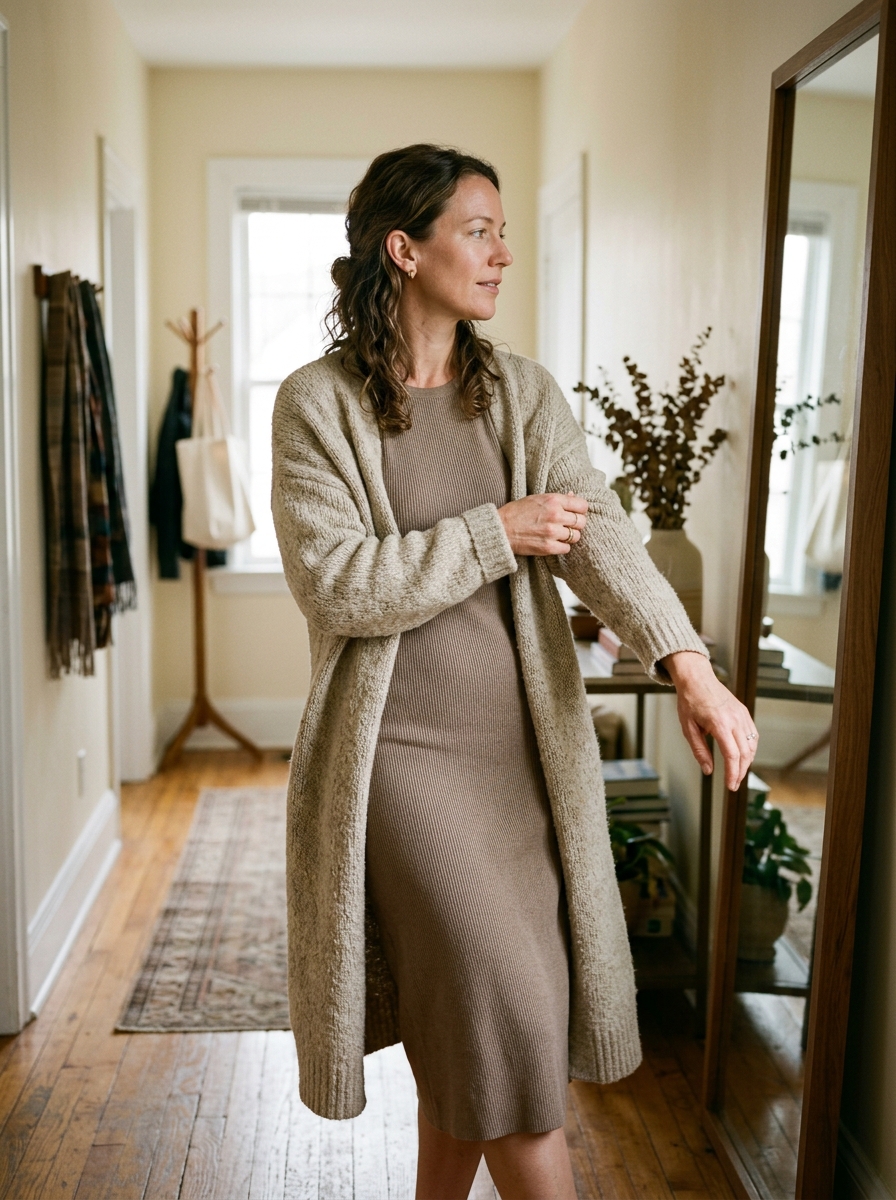
A single dress, paired with one structured or warm layer depending on the season, removes the most decisions of any formula on this list, since half the outfit is already solved by a single garment.
A knit or shirt dress works as the base here more reliably than something more fitted or occasion-specific, since it needs to hold up to a full office day, not just a photo. The layer on top, a blazer for polish, a cardigan for comfort, or a coat for warmth, is what adjusts the formula to the specific day without requiring a second garment decision underneath.
This formula pairs particularly well with the ten-piece capsule wardrobe approach, since a single well-chosen dress already does the job that two separate garments would otherwise need to do, freeing up more of the closet for other formulas during the week.
Adjusting Formulas to an Actual Dress Code
Not every office operates under the same expectations, and a formula that works perfectly in one setting can read as underdressed or overdressed in another.
In a formal or client-facing environment, the blazer formula tends to be the safest default, since a structured layer signals effort even when the rest of the outfit is simple. In a business casual setting, the sweater-and-structured-bottom formula usually strikes the right balance, professional enough for a meeting, comfortable enough for a full day at a desk. In a more creative or relaxed office, the monochrome formula gives room to experiment with color and texture while still looking put together, without needing the more rigid structure a blazer implies.
Rather than trying to find one universal formula, it helps to match each one to a specific dress code reality, so the right choice is obvious rather than something to reconsider every morning.
What Actually Derails a Formula on a Bad Morning
A formula fails less often because of the main pieces and more often because of the smaller decisions still hiding inside it.
Shoes that still require thought. A formula built around trousers and a blazer falls apart if the shoe choice takes as long as the rest of the outfit did. Settling on one or two go-to shoe options for each formula, rather than leaving that decision open every day, closes this gap.
Jewelry treated as a separate decision. A few pre-decided combinations, simple studs and a thin chain for most days, something slightly bolder for meetings, remove another layer of morning decision-making without much effort.
A bag that does not match the formula’s effort level. A structured bag elevates a casual formula; a casual tote can undercut a more polished one. Matching bag formality to outfit formula, rather than grabbing whatever bag has the day’s essentials already in it, keeps the whole look consistent.
Pieces that need last-minute ironing or steaming. A formula only saves time if every piece in it is actually ready to wear. Building formulas around fabrics that resist wrinkling, fine knits, structured cotton, wool blends, avoids the moment where a perfectly good plan gets derailed by a wrinkled blouse five minutes before leaving.
Prepping Formulas Ahead of a Hard Week
The mornings that most need a formula are usually the ones with the least time to think one through, which means the useful moment to plan is the night or weekend before, not the morning itself.
A short mental or written list, matching each formula to a day of the week based on what that day actually involves, removes the final layer of decision-making entirely. A client call on Tuesday gets the blazer formula. A day with back-to-back internal meetings gets the sweater and structured bottom. A day working mostly from a desk with no meetings gets the monochrome column, since comfort matters more than polish on those days.
This does not need to be rigid. The value is in having a default ready, not in following it exactly, so that a change in plans does not mean starting the outfit decision from zero.
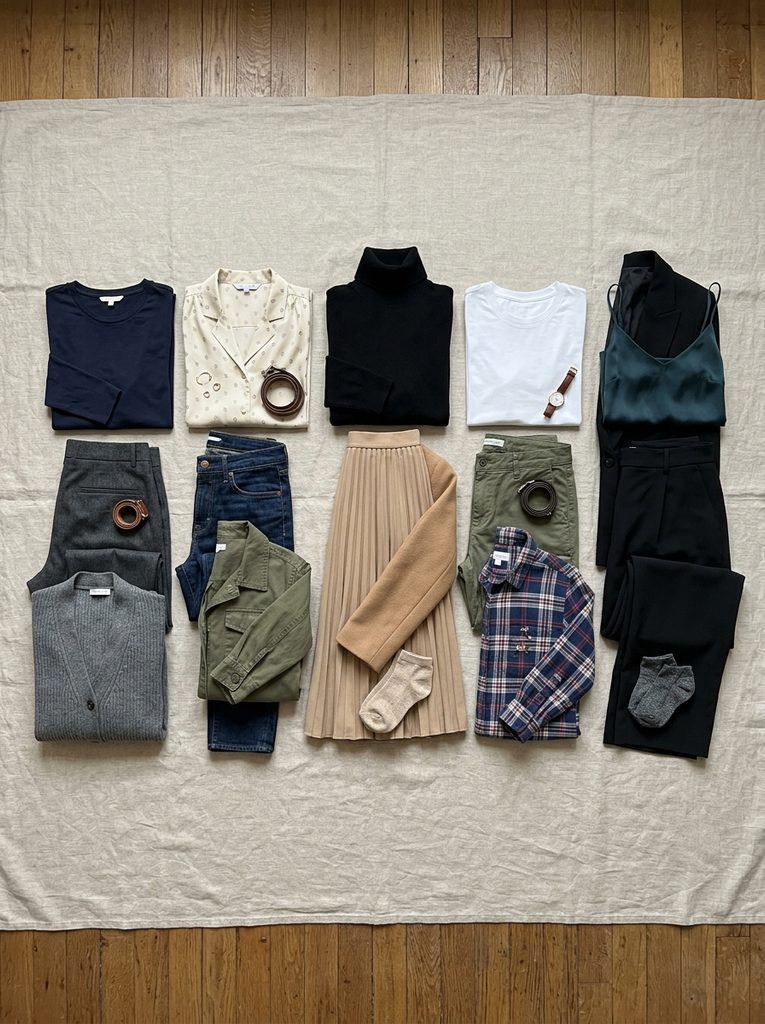
Keeping the Same Formula From Looking Repeated
A formula, by definition, gets worn often, which raises the fair concern that it will start to look obviously repeated. In practice, small details shift a formula’s appearance more than most people expect.
Changing which piece carries the color in an outfit, a colored top under neutral trousers one day, colored trousers under a neutral top the next, keeps the same formula from photographing identically each time. Rotating two or three blazers or cardigans within the same formula, rather than reaching for the same exact piece daily, adds enough variation that the structure reads as a style choice rather than a lack of options. A different lip color, a different scarf, or even nails in a slightly different tone can shift the overall impression of an outfit that is, at its core, built the same way it was worn two days earlier.
When It Makes Sense to Set the Formula Aside
Formulas exist to remove decisions on ordinary days, not to replace judgment entirely. A major presentation, an interview happening internally, or an event immediately after work are all situations where the extra ten minutes spent building something more specific to the occasion is worth spending.
Recognizing which mornings actually call for that extra effort, rather than defaulting to a formula out of habit, is what keeps the system useful instead of limiting. Most days genuinely do not need that level of consideration, and that is exactly the gap a good formula is meant to fill.
The Real Value of Having a Few Ready-Made Answers
None of these formulas are meant to replace a wardrobe’s full range or personality. They exist for the mornings when getting dressed needs to take five minutes instead of twenty, without the outfit looking like five minutes went into it.
Having three or four of these ready, matched loosely to the kind of day ahead, turns a repetitive decision into something closer to autopilot, which frees up the actual mental energy a demanding workday requires.

Ella is a fashion and beauty writer who shares inspiring ideas about hairstyles, nail designs, wedding outfits, and seasonal fashion trends. She loves discovering fresh styles and creating…
View Author Profile →
4 Comments