
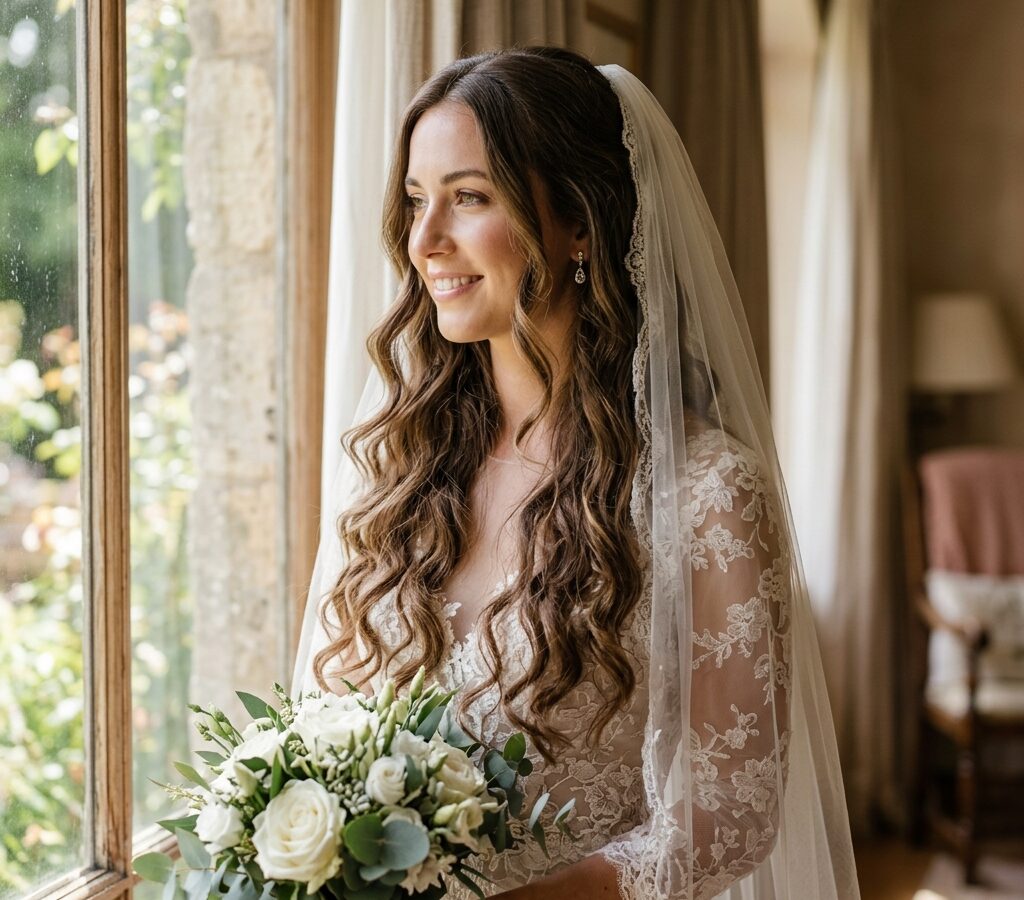
Ask most people to picture bridal hair and the same image comes to mind almost automatically: hair swept up, pinned into place, polished into a shape that stays exactly where it is put. That image is so common that brides who want their hair down, or only partly up, sometimes assume they are choosing the less traditional, slightly riskier option.
They are not. Down and half-up bridal styles have their own logic, their own preparation, and their own set of things that actually matter on the day, which is different from an updo’s set of concerns but no less real. The goal here is to walk through what makes a non-updo style genuinely hold up through a full wedding day, not just look good in the mirror before the ceremony starts.
Why the Updo Became the Default
Updos became the standard bridal recommendation for a practical reason more than an aesthetic one. Hair that is fully secured against the head tends to survive hugging, dancing, wind, and hours of movement more predictably than hair left loose, which is exactly the kind of promise a bride wants on a day with no do-overs.
That practicality is real, but it does not make an updo the only reliable option. Down and half-up styles can hold just as well when they are set up correctly, the difference is that the preparation happens earlier and relies more on the condition and texture of the hair itself than on pins alone.
What Actually Keeps a Down Hairstyle in Place All Day
This is the part most bridal hair guides skip past in favor of describing what different styles look like. The honest answer is that a down or half-up style surviving a full wedding day depends on decisions made well before the veil goes on.
Hair that is not too freshly washed holds better. Freshly cleaned hair is softer and more slippery, which makes curls and waves release faster and pins lose their grip sooner. Washing the day before, rather than the morning of, gives hair enough natural texture to hold a set.
Texture products matter more than heavy hairspray. A light volumizing mousse or texturizing spray applied before curling gives the hair something to grip onto, which is often the actual difference between a curl that lasts through the ceremony and one that has fallen flat by the time photos start. Heavy hairspray applied only at the end tends to weigh hair down rather than genuinely hold it.
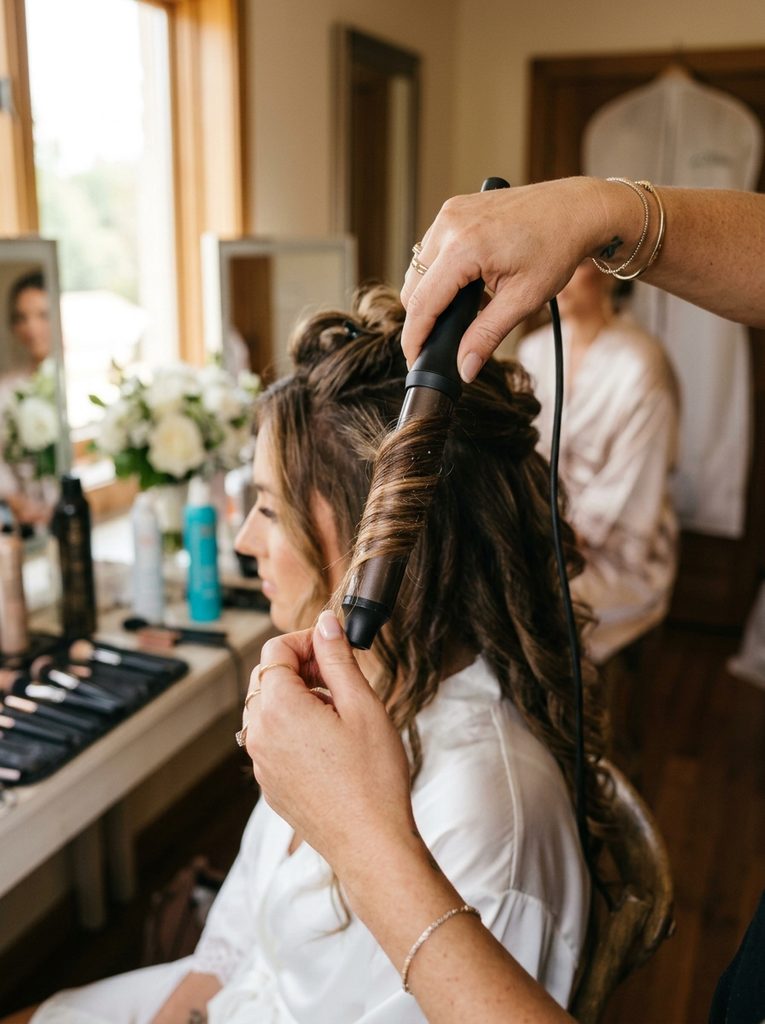
Full cooling time changes how long a curl survives. Curls set with a hot tool need time to cool completely in their shape before being brushed out or touched, since hair that is released while still warm resets almost immediately. A rushed styling appointment is one of the most common, and most avoidable, reasons a down style does not last.
Humidity and heat change the plan, not just the outcome. In warm or humid conditions, fully loose, second-day-style waves are more vulnerable to falling flat than curls with a bit more structure and hold product worked through them. This does not mean down hair is off the table in humid weather, it means the style needs slightly more built-in hold to begin with, something worth discussing directly with a stylist rather than discovering on the day.
Matching the Style to Hair Length and Texture
A style that looks effortless on one hair type can behave completely differently on another, which is why length and natural texture deserve more attention than most style inspiration boards give them.
Long, straight or wavy hair holds curls and waves well but tends to fall flatter by evening than shorter hair does, simply because of the weight pulling the curl pattern down. A slightly tighter curl set than the desired finished look, combined with a light texturizing spray at the roots, compensates for this over the course of a long day.
Shoulder-length hair and lobs actually hold soft waves and half-up styles particularly well, since there is less length for the weight of the hair to work against. This length also tends to photograph cleanly in both loose and half-up looks, which makes it one of the more forgiving lengths to plan around.
Naturally curly or coily hair generally holds its own shape better than straightened hair does when humidity is a factor, and working with the hair’s natural curl pattern rather than trying to override it tends to produce a more durable result. A stylist experienced with natural texture can enhance and define curls rather than fighting against them, which avoids the frustrating cycle of a style that looks polished for an hour and reverts by the ceremony.
Fine, thin hair benefits most from texture and volume products applied before any curling begins, since fine strands hold curl less naturally than coarser hair does. A few well-placed hidden pins at the crown, even in an otherwise fully down style, can add hours of extra hold without changing the overall look.
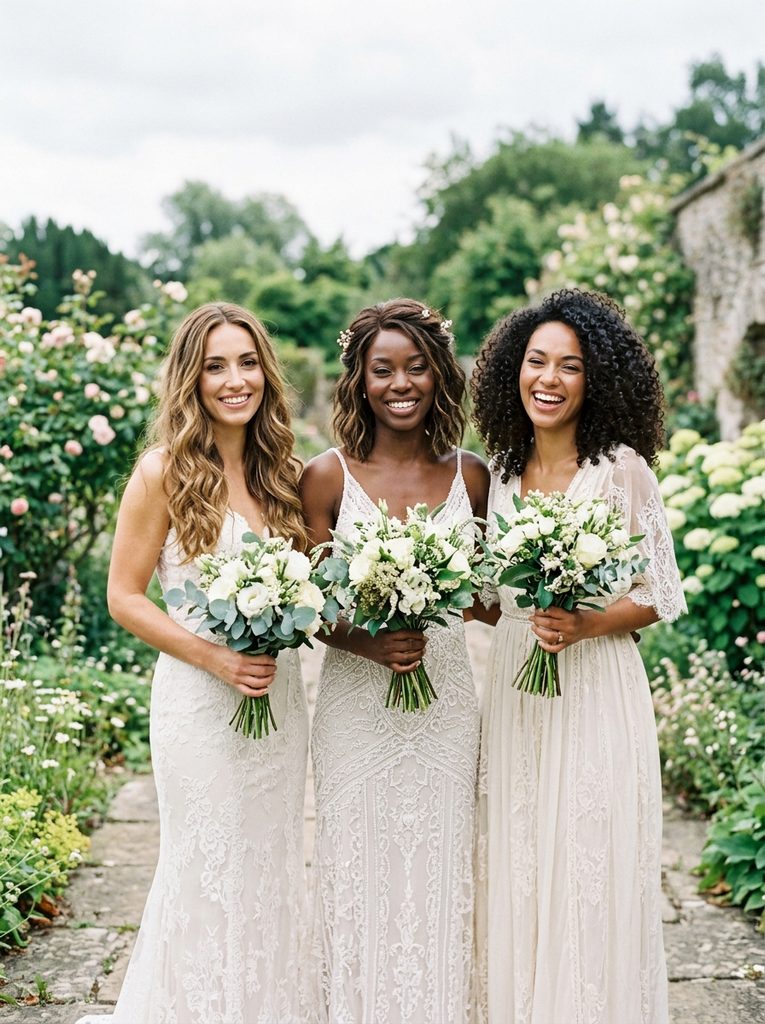
Half-Up Styles as a Middle Ground
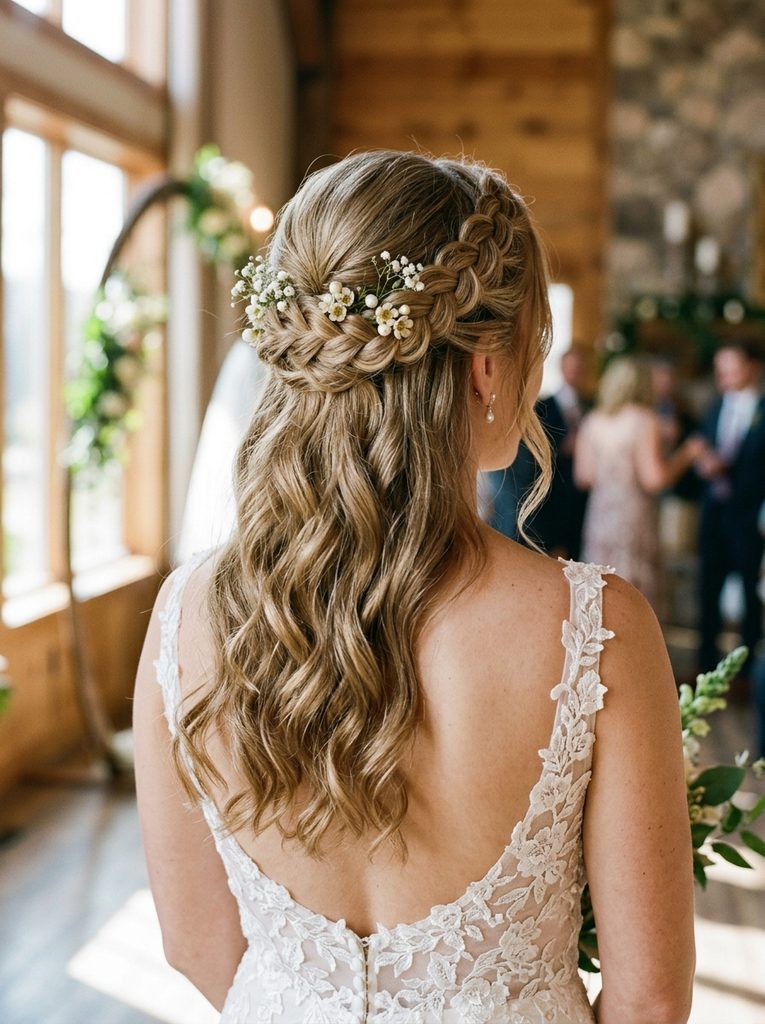
For brides who like the idea of hair down but want some assurance it will not need constant adjusting, a half-up style offers a genuine middle option rather than a compromise.
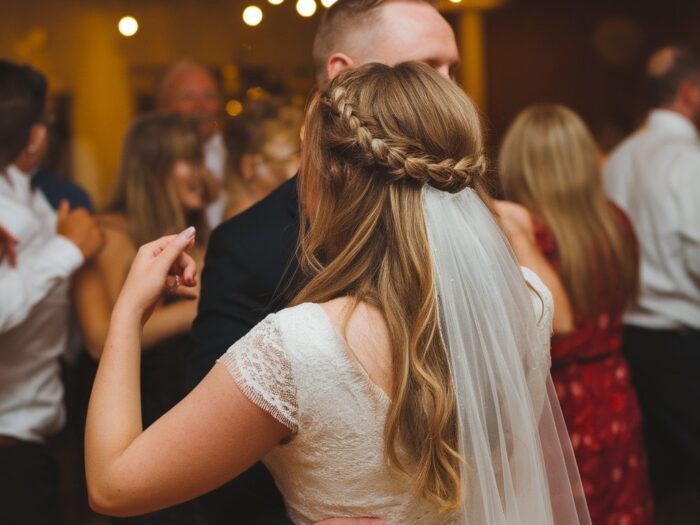
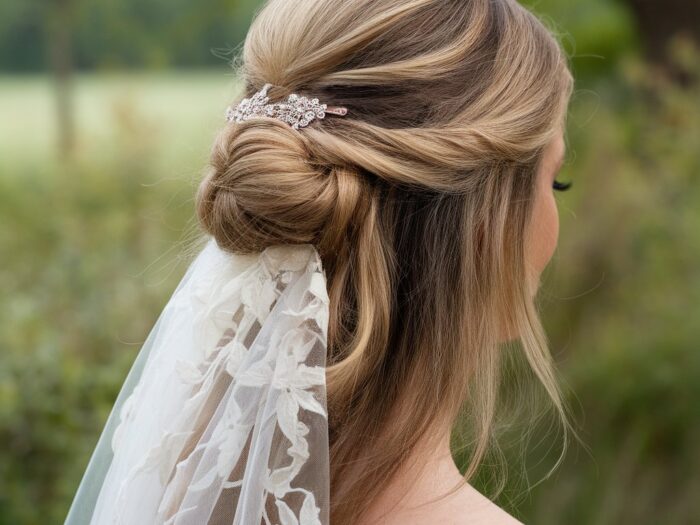
Securing the top section of hair, whether in a simple twist, a loose braid, or a pinned half-updo, gives the overall look structure at the crown while leaving movement and softness through the rest of the hair. This section is also where most of the practical benefit of an updo actually lives, since keeping hair off the face solves the majority of what people worry about with a fully down look. The bottom section can then be left with soft waves or curls, without needing to survive the entire day on its own.
This approach also tends to suit a wider range of veil placements and hair accessories than a fully loose style does, since there is a secured base to anchor a comb or pin into.
Working With a Veil or Headpiece Without an Updo
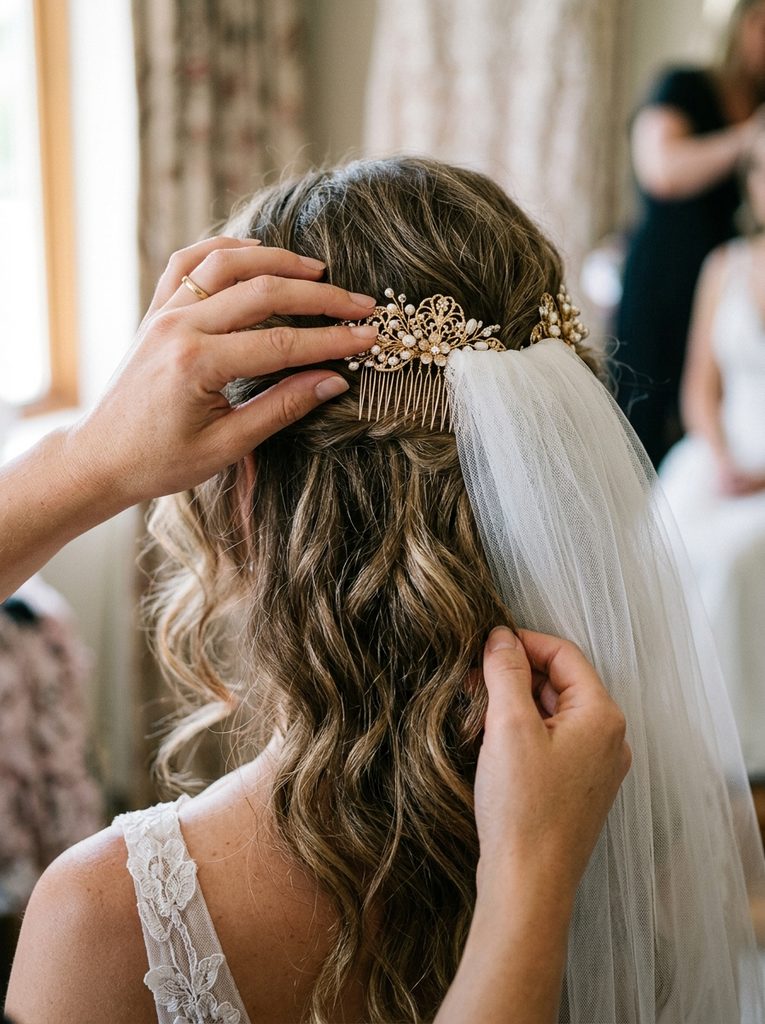
One of the more common concerns brides raise about skipping an updo is whether a veil will actually work with hair worn down. It does, though the placement and attachment method matter more than they would with an updo.
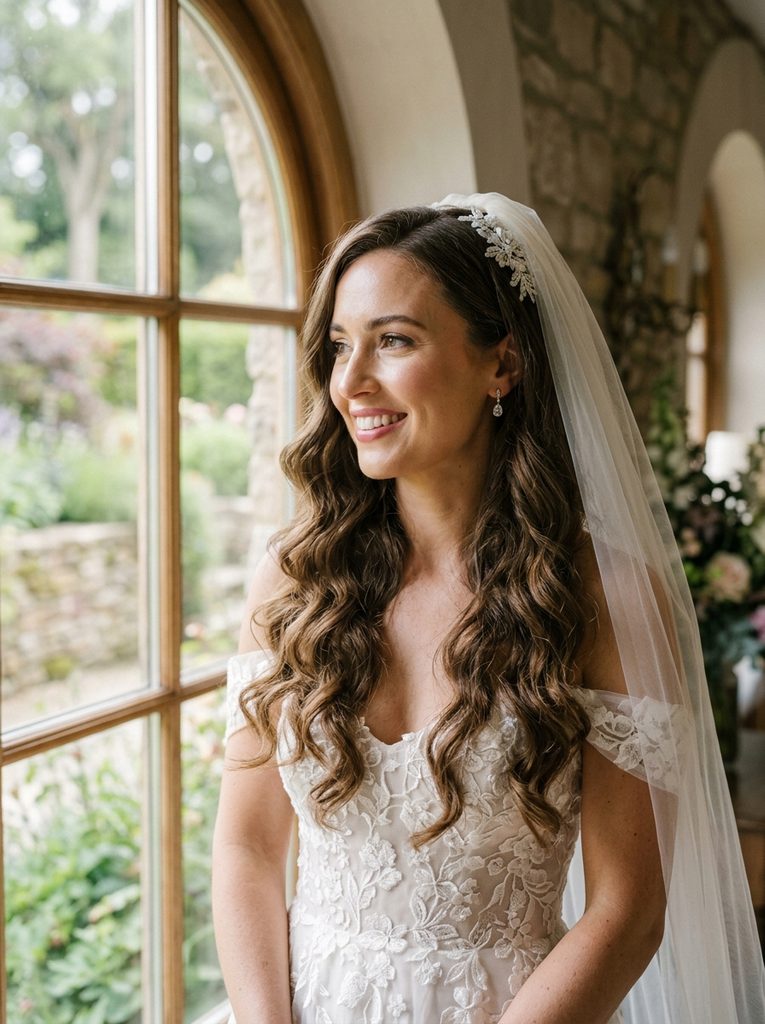
A veil attached at the crown, just behind where hair is naturally parted, tends to sit securely on down or half-up hair without disrupting the style underneath it. Combs with fine teeth anchor more securely into hair with some texture already built in, which is another reason texture products matter earlier in the process rather than being treated as a finishing step. For hair worn fully down, a slightly tighter section pinned invisibly beneath the veil comb gives it something to grip, even though the rest of the hair remains loose and visible.
Headpieces that sit lower, like a hair vine or a single-sided clip, tend to work even more naturally with down hairstyles, since they were designed around movement rather than a fixed, upswept shape.
Choosing a Style That Complements the Dress
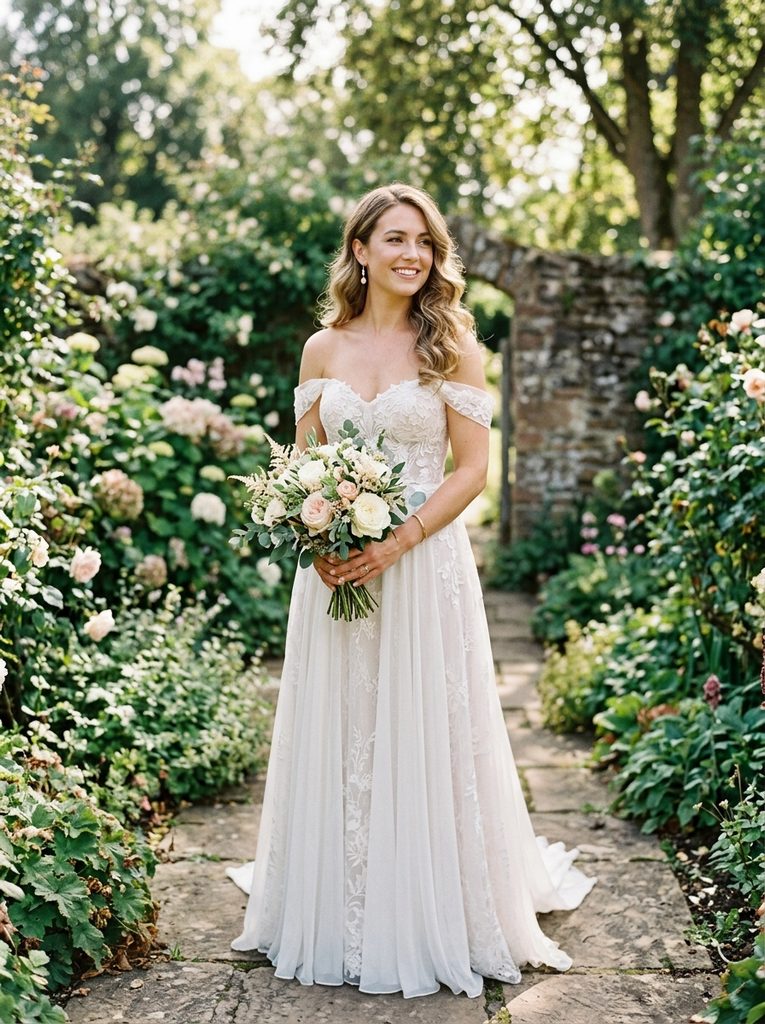
Hair and dress do not need to be planned entirely separately, and a few practical considerations make the two work together more intentionally. Necklines in particular play a large role here, since certain wedding dress necklines either benefit from hair kept off the shoulders or actually look better with hair framing them.
An off-the-shoulder or strapless neckline generally photographs well with either loose waves or a half-up style, since some hair falling over bare shoulders softens the line without hiding it entirely. A high neckline or one with intricate detail at the collarbone tends to benefit from hair swept slightly to one side or gathered loosely at the back, so the dress detail stays visible rather than competing with hair for attention. A deep V or plunging back detail is one of the few situations where a fully down style can work against the dress, since loose hair covering an open back defeats the purpose of the design, and a half-up or one-side style solves this without requiring a full updo.
What to Actually Test During a Hair Trial
A trial appointment for a down or half-up style needs to test different things than an updo trial does, and it is worth being specific about this with a stylist ahead of time.
Ask to see the style a few hours after it is finished, not just immediately after styling, since this is the real test of how it will hold. If the trial is scheduled back to back with other appointments, it can help to run errands or sit through a meal afterward before checking a mirror, rather than judging the style the moment the curling iron is set down.
Bring two or three clear reference photos rather than a wide, unfocused mood board, since a stylist working from a specific, consistent reference produces a more accurate preview than one working from several conflicting ideas. It also helps to be honest in the moment about small details that feel off, since minor adjustments are far easier to make during a trial than to request for the first time on the wedding morning.
Where Down Hairstyles Tend to Go Wrong
A handful of avoidable issues account for most of the disappointment brides describe after choosing a down or half-up style, and nearly all of them trace back to preparation rather than the style choice itself.
Styling on hair that is too clean. This is worth repeating because it is the single most common mistake. Freshly washed, product-free hair looks lovely in the mirror and holds almost nothing once movement, humidity, or a few hours pass.
No hidden structure anywhere in the style. Even the most relaxed, undone-looking down hairstyle usually has a few invisible pins holding key sections in place. A style with zero hidden support tends to look increasingly flat and shapeless as the day continues, regardless of how well it was curled that morning.
Ignoring the venue’s actual conditions. An outdoor ceremony in warm weather, a beach setting, or a venue known for humidity all call for more built-in hold than a climate-controlled indoor venue does. Planning the style around the specific day, not a general idea of what looks good, avoids most of the surprises that come up later.
Skipping a proper trial entirely. Down styles depend more heavily on how a stylist works with individual hair texture than updos do, since there is more visible hair to get right. A trial that only involves discussing photos, without an actual styling session, leaves too much to chance for a day that cannot be redone.
Choosing What Actually Feels Like You
An updo will always be a reliable, well-tested choice for a reason, but it is not the only one, and a down or half-up style handled with the right preparation holds up just as reliably through a full day of photos, a ceremony, and hours on a dance floor.
The details that matter most are rarely about which specific style looks the most romantic in a photo. They come down to hair condition, the right texture products, a properly tested trial, and a style chosen with the venue and dress in mind, all of which turn a beautiful idea into something that still looks like the bride by the end of the night.

Ella is a fashion and beauty writer who shares inspiring ideas about hairstyles, nail designs, wedding outfits, and seasonal fashion trends. She loves discovering fresh styles and creating…
View Author Profile →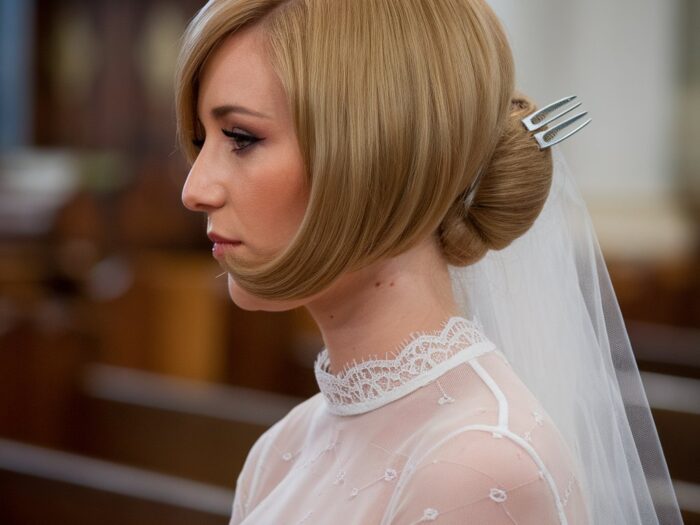
2 Comments