
On this page
- What Outdoor Summer Heat Actually Does to an Outfit
- Fabrics That Hold Up Once the Sun Is Overhead
- Silhouettes That Stay Put Through a Long Ceremony
- Color Choices for Heat, Sun Glare, and Photos
- Footwear for Grass, Gravel, and Standing Room
- Sun Protection That Still Looks Like an Outfit
- Hair and Makeup That Survive Heat and Humidity
- What Belongs in Your Bag, Not Just Your Closet
- Adjusting the Look Between Ceremony and Reception
- Common Mistakes at a Summer Outdoor Wedding
- Putting the Whole Outfit Together
An outdoor summer wedding invitation usually comes with a location, a time, and maybe a hint about the dress code. What it rarely mentions is that the ceremony seating will sit in direct sun for forty minutes, that the grass will be softer than it looks in photos, or that the temperature at 4 p.m. has almost nothing to do with how the evening will feel once the sun drops. Guests are left to fill in those details themselves, usually the week of the wedding, standing in front of a closet that suddenly looks full of the wrong options.
Most summer wedding guest advice focuses on what looks good in a photo. Fewer guides talk about what actually survives two or three hours outside, through a ceremony, a cocktail hour on a lawn, and a reception that may or may not move indoors. This piece works through the outfit from that angle: not just what looks right, but what holds up.
What Outdoor Summer Heat Actually Does to an Outfit
Heat changes an outfit in ways that are easy to underestimate from an air-conditioned bedroom the morning of the wedding.
Direct sun raises the felt temperature well above whatever the forecast says, particularly during a midday or early afternoon ceremony with no shade over the seating. Humidity adds a second layer to that problem, since a fabric that feels fine in dry heat can turn heavy and clingy the moment moisture enters the mix. Standing still for a ceremony is also harder on an outfit than walking around at a reception, because there is no airflow generated by movement to help a fabric breathe.
None of this means dressing down. It means choosing pieces that were built to handle heat rather than pieces that simply look like summer clothing. A linen-blend dress in a loose cut does more real work in ninety-degree sun than a fitted satin slip dress that reads as “summer” mainly because of its color.
Fabrics That Hold Up Once the Sun Is Overhead
Fabric choice matters more at an outdoor summer wedding than at almost any other kind of event, since there is no climate control to compensate for a poor choice.
Best Fabrics for Ceremony Seating in Direct Sun
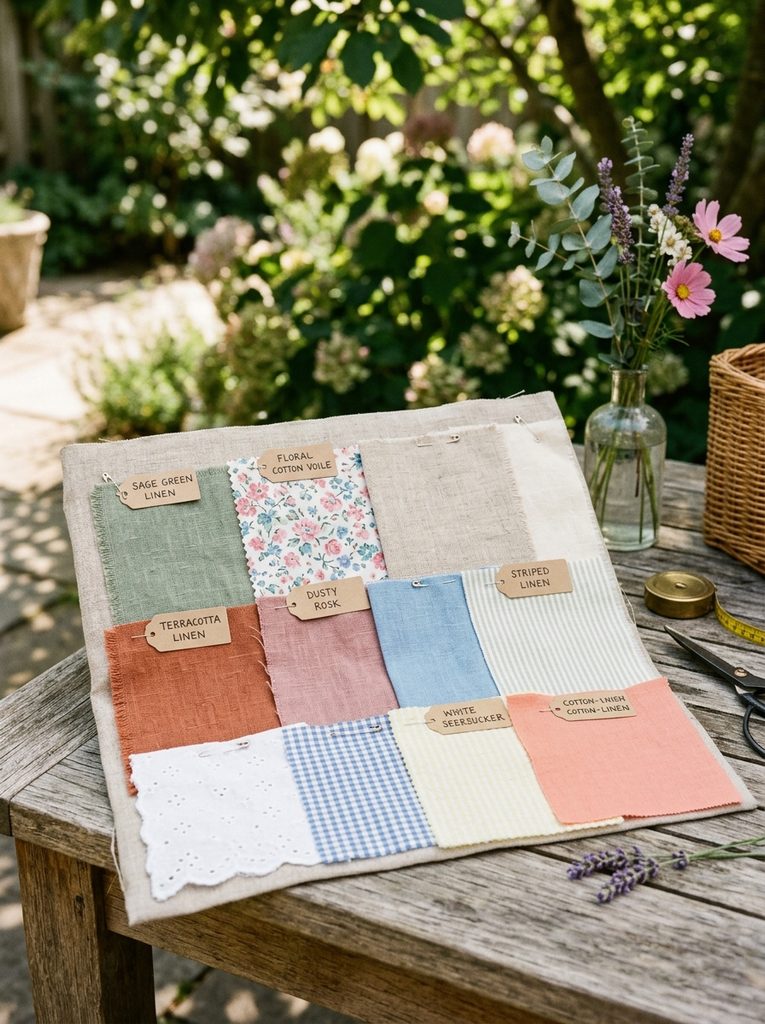
Linen and linen blends remain the most reliable option for outdoor heat, since the fiber allows air to move through the weave rather than trapping it against the skin. A slightly looser weave, the kind that lets a small amount of light through when held up to the sun, tends to breathe noticeably better than a tightly woven linen that looks smoother but performs closer to cotton.
Cotton voile, seersucker, and lightweight poplin follow closely behind. Seersucker in particular has a textured surface that keeps fabric from sticking to skin, which becomes more noticeable during a ceremony than most guests expect. Crepe, when it is a true lightweight crepe rather than a heavier polyester version marketed under the same name, drapes well without clinging and holds its shape through humidity better than most synthetic alternatives.
Fabrics to Avoid in High Heat
Polyester, rayon blends without a natural fiber base, and anything advertised as wrinkle-resistant tend to trap heat rather than release it, which makes a ceremony in direct sun feel considerably warmer than the same dress would in linen or cotton. Heavier satin and structured taffeta, while elegant for an evening reception, rarely make sense for an outdoor ceremony during the hottest part of the day, since both fabrics hold heat close to the body and show sweat more visibly than a matte, breathable alternative.
A fabric test worth doing before the wedding: hold the garment up to a window or a bright lamp. If very little light passes through, the weave is likely dense enough to trap heat during a long outdoor ceremony, regardless of how the fabric feels indoors.
Silhouettes That Stay Put Through a Long Ceremony
Fit does almost as much work as fabric when it comes to comfort in heat, since a silhouette that clings or restricts movement will feel warmer than one that allows air to circulate.
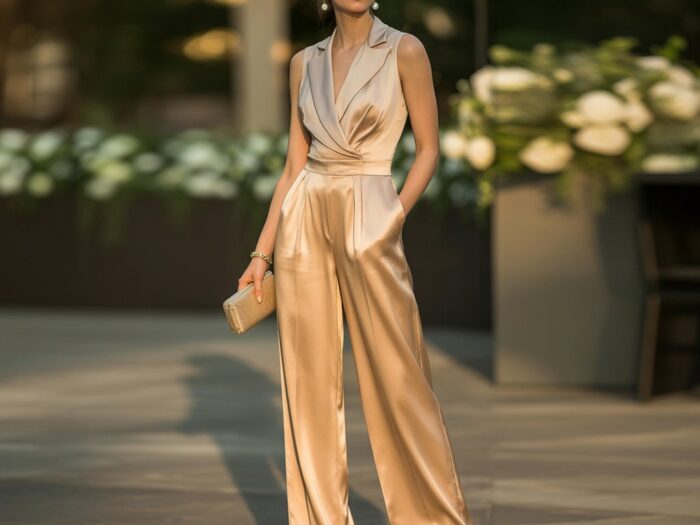
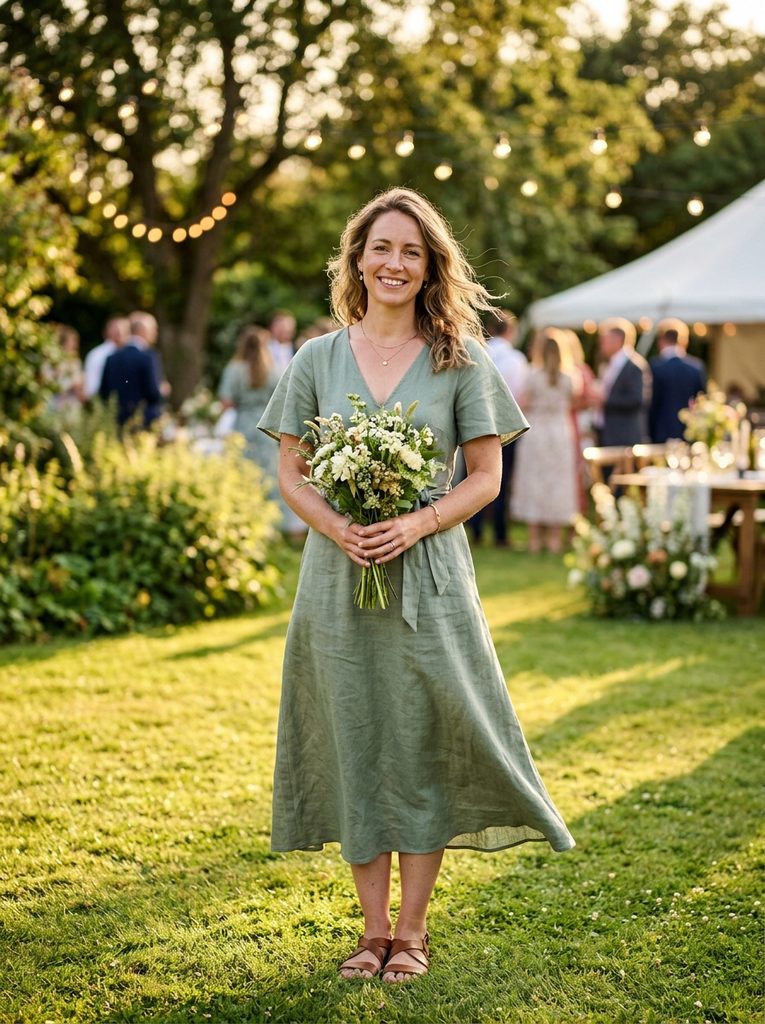
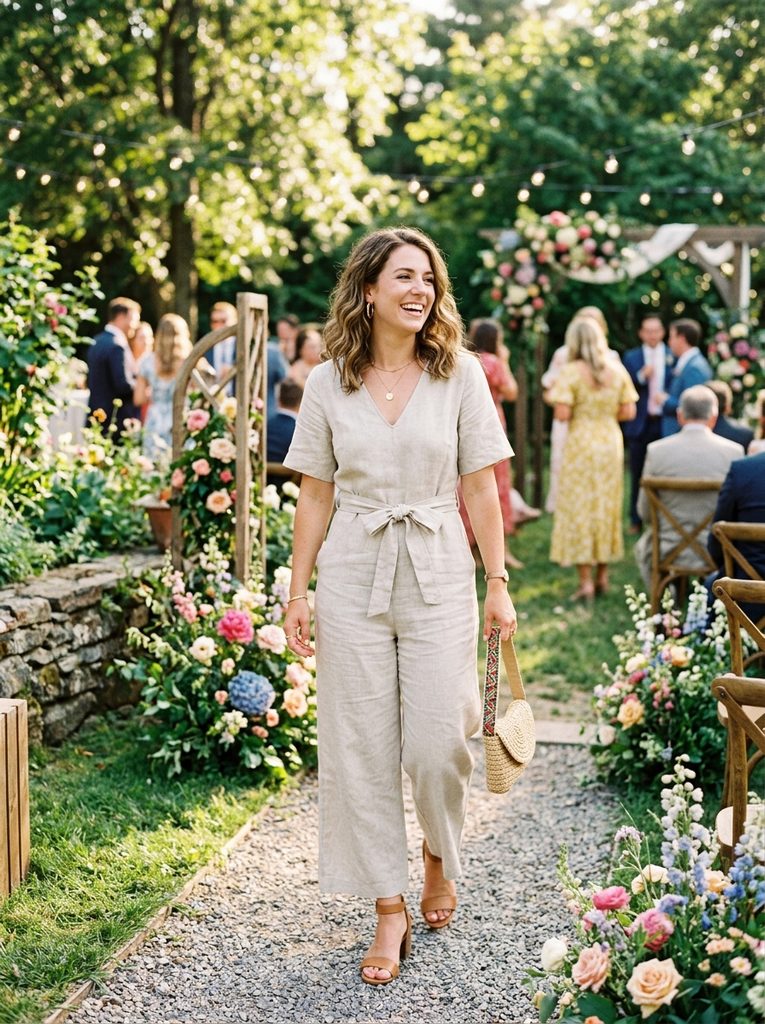
A relaxed A-line or a fit-and-flare silhouette works well for outdoor summer weddings because it skims rather than clings, particularly through the torso where heat tends to build first. Wide-leg jumpsuits in a lightweight fabric offer a similar benefit while giving more coverage than a dress, which some guests prefer for a ceremony in strong sun. Midi lengths generally outperform maxi lengths in grass or uneven terrain, since a floor-length hem tends to drag and pick up moisture from dew-covered lawns during morning or early evening ceremonies.
Structured waistbands and tight bodices, while flattering in photos taken standing still, become uncomfortable faster in heat than a softer, unstructured waist. A wrap dress or a dress with a soft, adjustable tie tends to stay comfortable through several hours outside better than one with a fitted, boned bodice.
Sleeves are worth reconsidering rather than avoiding entirely. A short flutter sleeve or a loose cap sleeve protects shoulders from direct sun without adding meaningful heat, which matters for anyone concerned about sunburn during a ceremony with no shade.
Color Choices for Heat, Sun Glare, and Photos
Color affects comfort in ways that go beyond simple style preference at an outdoor summer wedding.
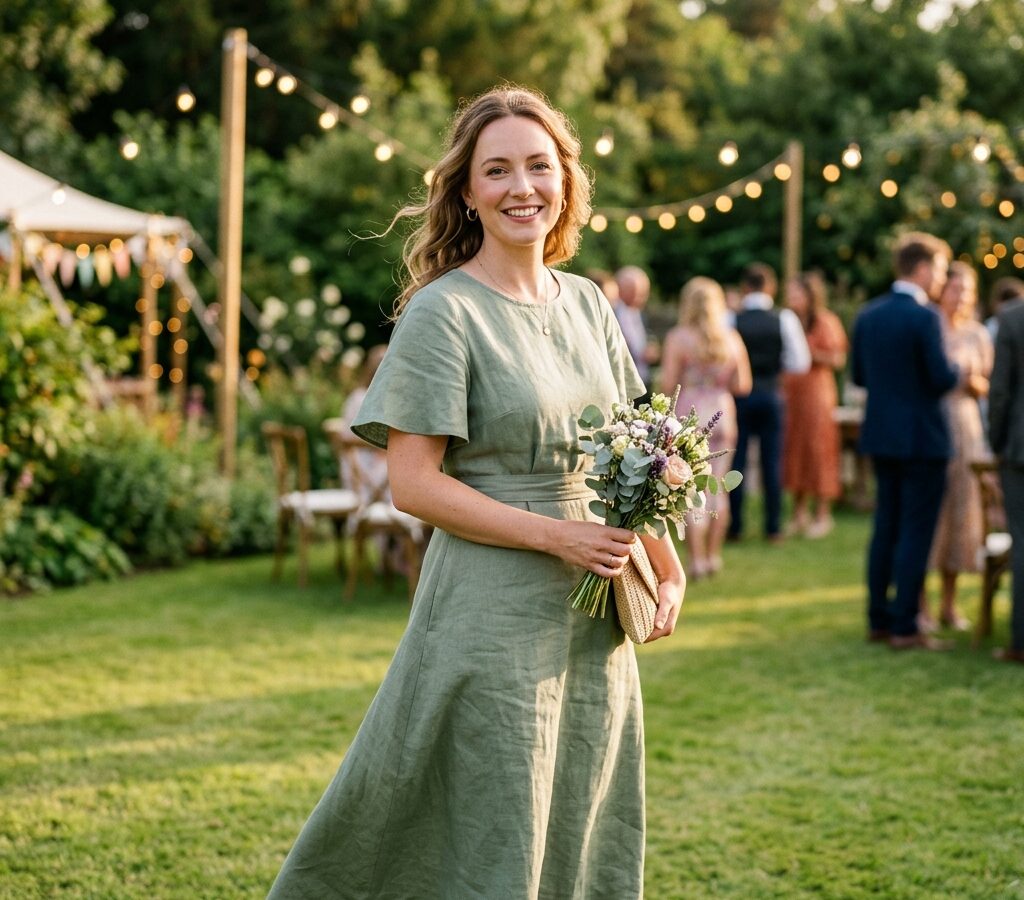
Darker colors absorb more heat from direct sunlight, which means a navy or black dress that looks perfectly appropriate for an evening wedding can feel noticeably warmer during an afternoon ceremony in full sun. Lighter shades, soft yellow, sage green, dusty blue, and warm terracotta, reflect more heat and tend to photograph well against outdoor greenery without competing with the wedding party’s palette.
White, ivory, and any shade close enough to be mistaken for a bridal color remain off-limits regardless of the venue or time of year, a rule that holds as firmly outdoors as it does at any indoor wedding. Beyond that, outdoor summer settings tend to favor colors found in nature, since a dress that already echoes the greenery, sky, or golden-hour lighting around it tends to look more intentional in photos than one that clashes with its surroundings.
Sun glare is worth a mention here too, since very bright white or neon shades can appear washed out or overexposed in strong midday sun, an effect photographers often flag with outdoor summer weddings specifically. A muted, saturated tone generally holds its color better in photographs than a stark, high-contrast one.
Footwear for Grass, Gravel, and Standing Room
Shoes create more real problems at an outdoor summer wedding than almost any other part of the outfit, since terrain, heat, and hours of standing all intersect here.
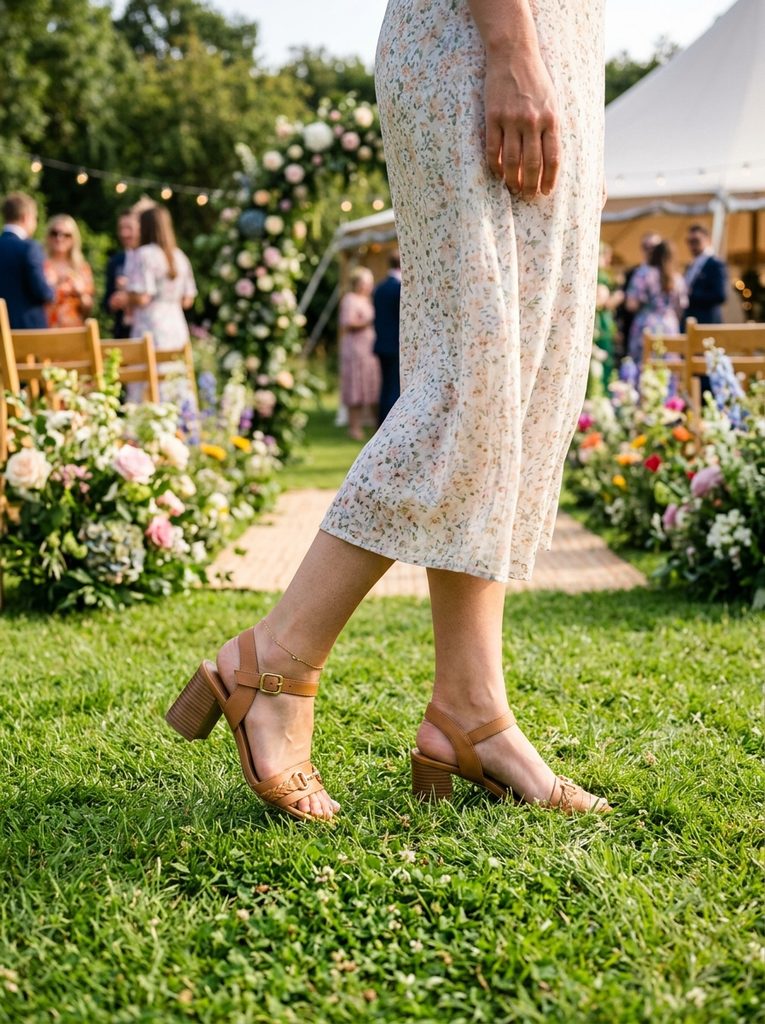
A block heel or wedge sinks far less into grass or soft ground than a thin stiletto, which makes it the more practical choice for a ceremony held on a lawn rather than a paved or indoor surface. Some venues now offer heel stoppers, small plastic caps that slide over a stiletto tip to prevent it from sinking, which are worth asking about ahead of time if a thin heel is non-negotiable. Espadrille wedges suit the season visually while offering more surface area than a traditional heel, though they can run warm in extreme heat due to their rope or canvas construction.
Sandals with proper arch support handle standing through a ceremony and moving across a reception lawn better than a flat, unsupported slide, which tends to cause discomfort well before the night ends. Closed-toe flats or block-heel mules work for guests who prefer more coverage without sacrificing stability on grass or gravel paths.
Bringing a small, foldable flat to swap into during the reception, tucked into a bag rather than worn from the start, solves the comfort problem for anyone unwilling to give up a dressier heel entirely for the ceremony photos.
Sun Protection That Still Looks Like an Outfit
Sun protection at an outdoor wedding often gets treated as an afterthought, but it can be built into the outfit itself rather than added on top of it.
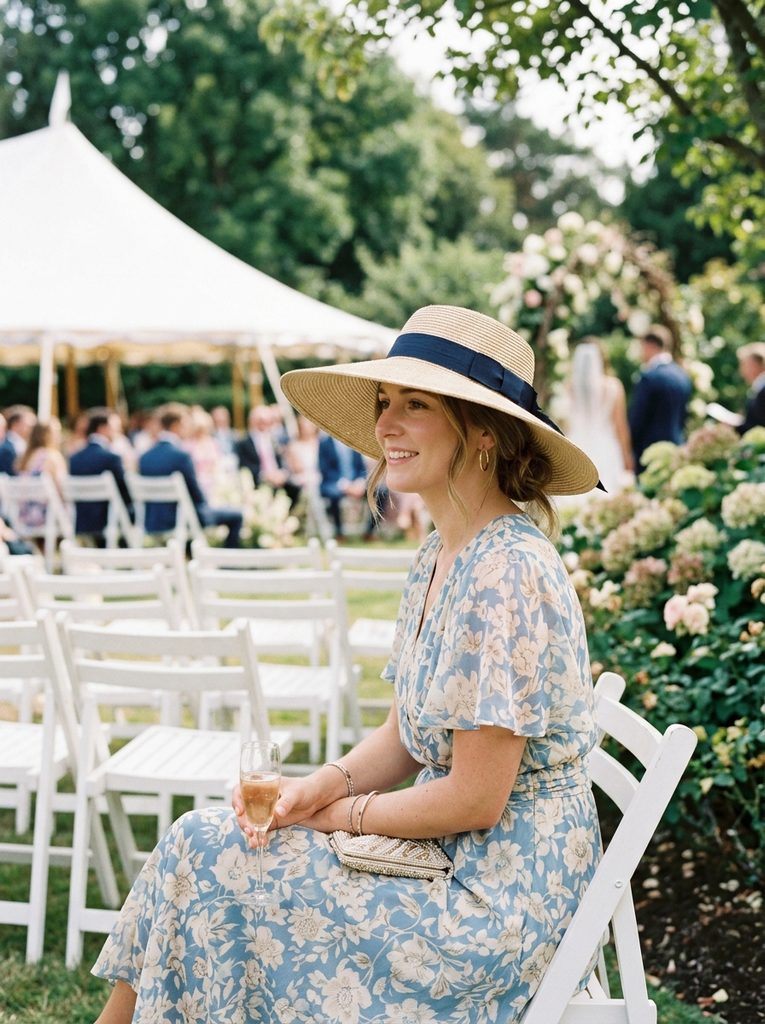
A wide-brimmed straw hat works at a garden or vineyard wedding in a way it would not at a more formal indoor event, and it does real work protecting the face and shoulders during a ceremony with no shade. A structured sun hat in a neutral straw tone tends to photograph better than a patterned one, since it reads as intentional rather than purely functional. For guests who prefer not to wear a hat through the ceremony, a lightweight, sheer wrap or shawl in a coordinating color offers some shoulder coverage while doubling as a layering piece once the sun sets and temperatures drop.
Sunglasses are generally fine for arrival and the reception lawn but worth removing during the ceremony itself, since most couples prefer guests visibly present rather than hidden behind dark lenses in photos. A pair with a warm-toned or tortoiseshell frame tends to suit outdoor summer settings more naturally than a stark black frame.
Sunscreen belongs in the routine, not just the bag. A lightweight, non-greasy formula applied under makeup avoids the shine that heavier sunscreens can create in outdoor lighting, and reapplying a stick or powder SPF discreetly during the reception protects skin without disturbing makeup.
Hair and Makeup That Survive Heat and Humidity
An outfit chosen carefully for heat can still be undone by hair and makeup that were not planned with the same conditions in mind.
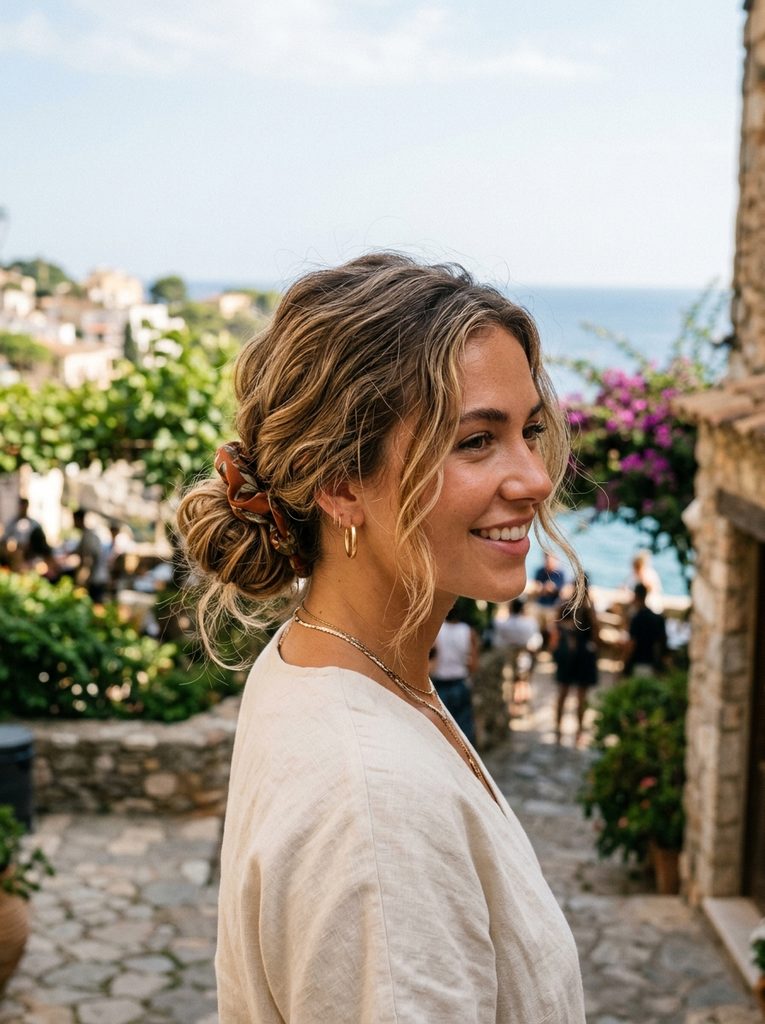
Loose, low-maintenance styles generally outperform intricate updos in high heat and humidity, since a style with movement built in tends to look intentional even as strands shift throughout the day. A low bun, a loose braid, or half-up styling with texture spray gives humidity somewhere to go without the whole look collapsing the way a sleek, flat-ironed style can once moisture enters the hair. A strong-hold, humidity-resistant setting spray at the roots makes a meaningful difference for anyone attending a ceremony scheduled during the hottest part of the day.
Makeup benefits from the same logic. A long-wear, matte or semi-matte base holds up better through heat than a dewy finish, which can slide by the time the ceremony ends. Waterproof mascara and a cream-to-powder blush formula resist the combination of heat and light perspiration better than their standard counterparts, and blotting papers carried in a small bag handle midday shine without requiring a full makeup reset.
What Belongs in Your Bag, Not Just Your Closet
A handful of small items make more difference to comfort at an outdoor summer wedding than most guests plan for in advance.
- A small handheld fan. Simple, foldable, and genuinely useful during a ceremony with no breeze, particularly for anyone seated in direct sun.
- Blotting papers and a travel-size setting spray. Both handle midday shine and humidity without requiring a bathroom trip to reapply makeup.
- A travel-size SPF stick. Easy to reapply over makeup during the reception without disturbing coverage.
- A folded flat or low-heeled shoe. Useful for anyone planning to dance or walk across grass later in the evening.
- A lightweight wrap or shawl. Doubles as sun protection during the ceremony and a layer once the temperature drops after sunset.
None of these require much space, and a small crossbody or clutch with enough room for two or three of these essentials solves most of the discomfort that catches guests off guard partway through the day. For anyone rethinking what size bag actually earns its place in a wardrobe, the guide to handbag sizes worth owning covers which shapes hold up best across different kinds of events, including ones that require carrying a few extra essentials.
Adjusting the Look Between Ceremony and Reception
Outdoor summer weddings often shift meaningfully in temperature and setting between the ceremony and the reception, and an outfit that accounts for both stages tends to feel more comfortable than one built only around the hottest part of the day.
Late afternoon and evening ceremonies cool down faster than they seem to during the day, especially once the sun starts setting behind a tree line or a barn roof. A lightweight cardigan, a linen blazer, or the wrap mentioned earlier earns its place here, since temperatures can drop ten degrees or more within an hour of sunset. Reapplying a bit of color to lips or cheeks before the reception begins also helps an outfit and makeup look feel fresh again after several hours outside, without needing a full touch-up.
Swapping a ceremony shoe for something more dance-friendly, or adjusting a wrap into a scarf once indoors, allows one core outfit to flex across a day that rarely stays the same temperature from start to finish. Guests attending a wedding with an outdoor ceremony followed by an indoor reception may also want to revisit how color choices shift under different lighting, since a shade that reads beautifully in daylight can look slightly different under warm indoor reception lighting later that evening.
Common Mistakes at a Summer Outdoor Wedding
A few choices consistently cause more discomfort than the heat itself, regardless of how well the rest of the outfit is planned.
- Choosing a fabric based on color rather than weave. A pale linen dress in the wrong weight can trap more heat than a slightly darker dress in a genuinely breathable weave.
- Wearing a thin stiletto without checking the venue’s terrain in advance. Grass, gravel, and cobblestone all punish a narrow heel in ways that are hard to fix once the ceremony has started.
- Skipping sun protection because the outfit already looks summery. A light-colored dress offers no real defense against sunburn on its own.
- Packing only for the hottest hour of the day. Evening temperature drops catch guests off guard more often than the midday heat does.
- Assuming humidity-proof hair only matters for very curly or very straight textures. Nearly every hair type shifts in high humidity, and planning for that in advance avoids a frustrating photo-timeline surprise.
Guests who normally lean toward a more traditional interpretation of wedding formality, closer to what suits an indoor or cooler-weather event, may find it useful to compare this approach with how a fall wedding without a stated dress code gets read, since the underlying logic of reading venue and setting carries over between seasons even though the fabric and color priorities shift considerably.
Putting the Whole Outfit Together
For anyone assembling a summer outdoor wedding guest outfit from scratch, a short sequence tends to work better than picking pieces in isolation.
Start with fabric rather than silhouette, since a breathable weave in linen, cotton voile, or lightweight crepe solves more comfort problems than any cut or color choice on its own. Choose a relaxed silhouette that allows some airflow, then pick a color that reflects rather than absorbs heat while steering clear of anything close to bridal white. Select footwear based on the venue’s actual terrain rather than the shoe that photographs best sitting still, and build in one small layer for the evening drop in temperature.
Finish with hair and makeup formulas built for heat and humidity rather than a look copied from an indoor event, and pack a small bag with the handful of essentials that solve most mid-event discomfort before it starts. None of this requires an elaborate shopping trip. It mostly means choosing the version of a familiar summer outfit that was actually built to survive a few hours outside, rather than one that simply looks like it was.

Ella is a fashion and beauty writer who shares inspiring ideas about hairstyles, nail designs, wedding outfits, and seasonal fashion trends. She loves discovering fresh styles and creating…
View Author Profile →