
On this page
- Why These Rules Still Matter in a More Casual Era
- White, Ivory, and Anything That Could Be Mistaken for Bridal
- Overly Casual Pieces That Undercut a Formal Occasion
- Costume-Like or Overly Trend-Driven Outfits
- Clothing That Competes With the Wedding Party
- Showing Too Much Skin for the Venue
- Fabrics and Silhouettes That Fight the Setting
- Accessories and Small Details Etiquette Still Frowns On
- What to Do When the Dress Code Feels Genuinely Unclear
- Bringing It All Together
Most wedding guest advice focuses on what to wear. Far fewer people talk about what quietly crosses a line, and why those lines exist in the first place. Etiquette around wedding attire isn’t about rigid tradition for its own sake. It comes from a simple idea: the day belongs to the couple, and a guest’s outfit should support that, not compete with it or work against the setting.
This guide looks at the specific choices that etiquette experts and wedding planners consistently flag as mistakes, along with the reasoning behind each one. Once the logic makes sense, deciding what to leave in the closet gets a lot easier, even for dress codes that feel vague or open to interpretation.
Why These Rules Still Matter in a More Casual Era
Fashion has gotten more relaxed almost everywhere else, so it’s fair to ask why wedding attire still comes with a defined set of restrictions.
The answer has less to do with fashion trends and more to do with the nature of the event itself. A wedding is a ceremony first, a celebration second, and a photographed, documented occasion third. According to the Emily Post Institute, guest clothing should suit an occasion that is fundamentally a formal ceremony, often held in a place of worship, even when the reception afterward feels more like a party. That context is exactly why the usual rules about casual dressing don’t fully apply here the way they might at a dinner party or a work event.
There’s also a practical layer. Wedding photos last for decades, get shared with people who weren’t there, and often include the same guests appearing in the background of dozens of shots. An outfit that reads as fine in the moment can look out of place in a formal photo album years later, which is part of why these etiquette norms have held up even as dress codes elsewhere have loosened.
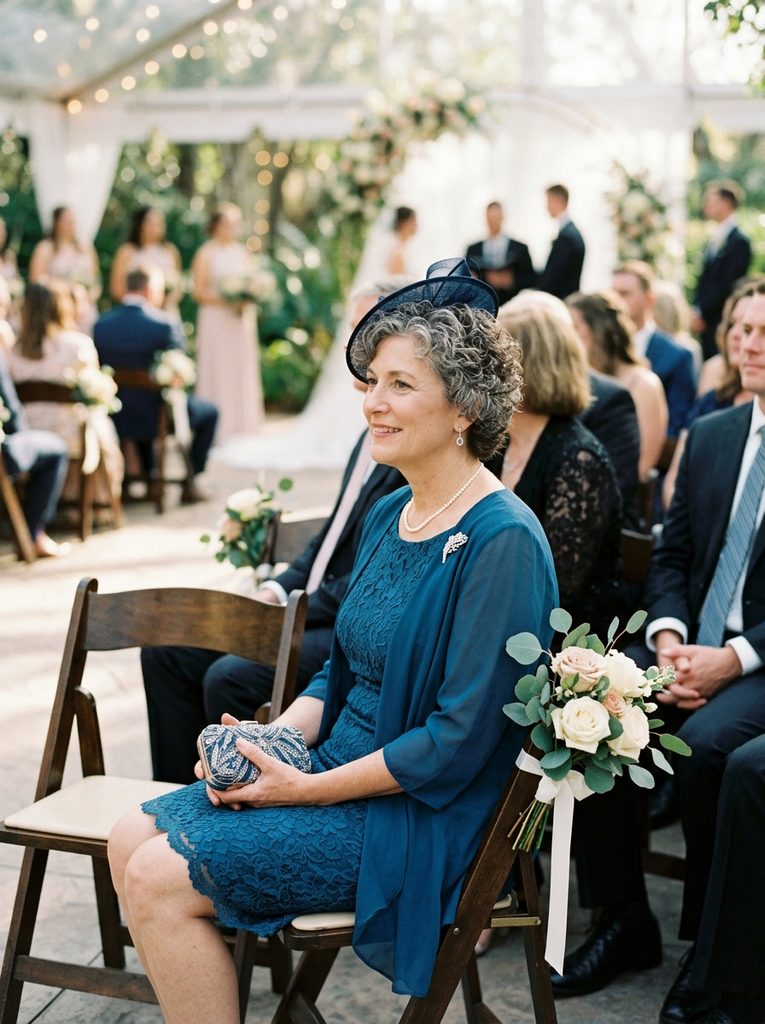
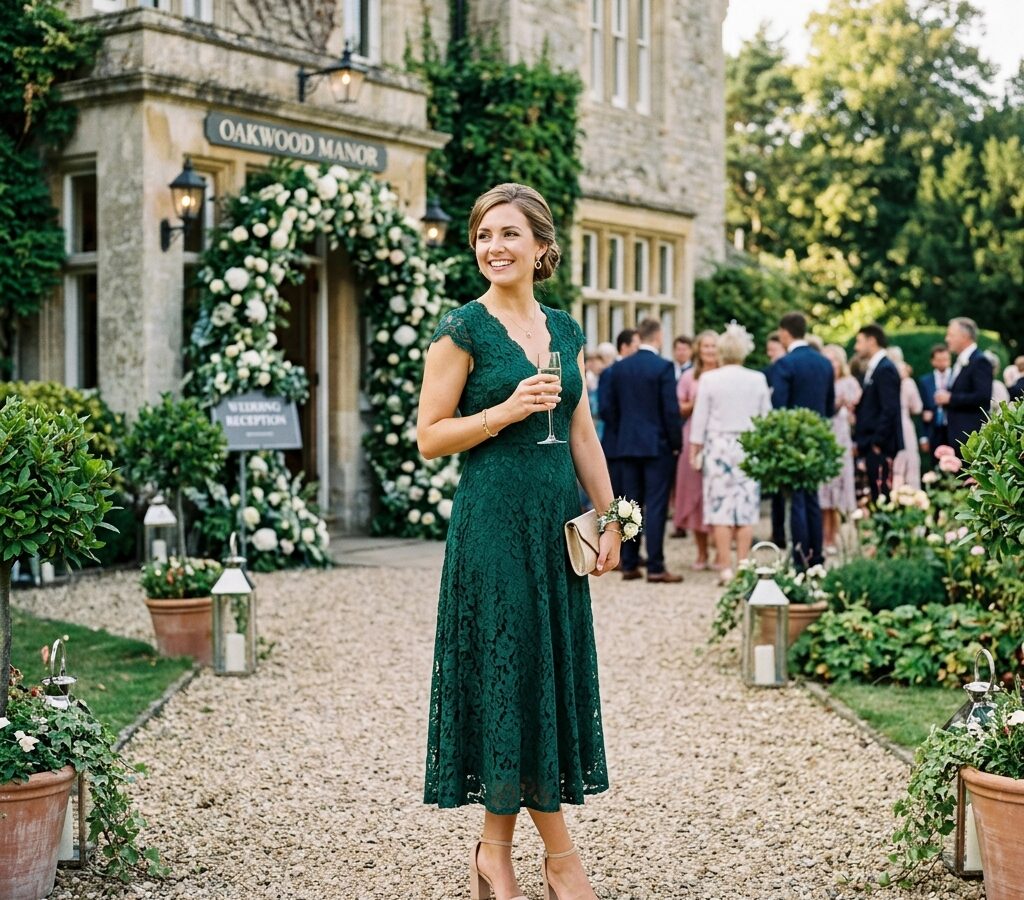
White, Ivory, and Anything That Could Be Mistaken for Bridal
This is the one rule almost everyone already knows, yet it still causes the most confusion in practice, mostly because “white” covers more ground than people assume.
A true white dress is the obvious one to avoid, but ivory, champagne, and pale blush shades sit close enough to bridal territory that they can create confusion in photos, particularly under warm indoor lighting or in a shot taken from a distance. A pattern that’s mostly white with small accents of color doesn’t fully solve the problem either, since it can still read as a light, bridal-adjacent piece once photographed next to the actual gown.
The safest approach is to treat anything that could be confused with the bride’s dress, even briefly and from across a room, as off the table. This isn’t about literal color-matching so much as protecting the one moment in the day meant to belong entirely to one person.
Overly Casual Pieces That Undercut a Formal Occasion
Dress codes vary from black tie to garden casual, but even the most relaxed wedding rarely means “wear what you’d wear to run errands.”
Denim, in Almost Any Form
Raw or distressed denim reads as everyday clothing no matter how it’s styled, and that casualness tends to stand out at a wedding even when the rest of an outfit is well put together. A dark, structured denim piece occasionally works for a genuinely casual backyard wedding that explicitly welcomes it, but as a general rule, denim is one of the easiest ways to look underdressed next to everyone else in the room.
Flip-Flops, Beach Sandals, and Athletic Sneakers
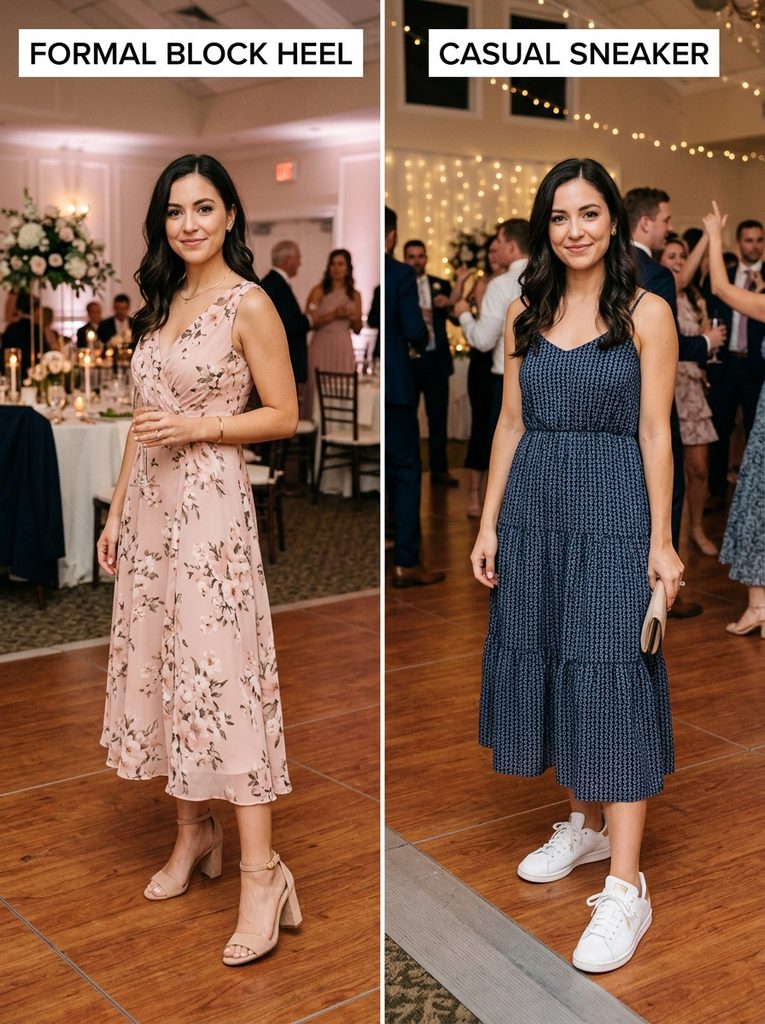
Footwear communicates formality almost as clearly as the outfit itself. Flip-flops and beach-style sandals rarely suit even a relaxed wedding, and sneakers, however clean or stylish, tend to flatten the formality of an otherwise appropriate outfit. A low block heel or a polished flat is a safer bet for anyone worried about comfort, especially for a ceremony held outdoors on grass or gravel.
Gym Wear and Anything Resembling Athleisure
Leggings, joggers, and structured athletic fabrics belong to a completely different dress category than wedding attire, even when a similar silhouette shows up in a dressier fabric elsewhere. The issue isn’t comfort itself, since plenty of formal fabrics move well and feel easy to wear. It’s that athletic fabric reads as sport-specific the moment it’s photographed next to tailored suits and formal dresses.
Costume-Like or Overly Trend-Driven Outfits
There’s a meaningful difference between a fashionable outfit and one that pulls focus for the wrong reasons, and weddings are one of the few remaining occasions where that distinction still carries real weight.
Sequins across an entire outfit, extreme cutouts, and anything built primarily to photograph as a standalone statement piece tend to compete with the couple rather than complement the event around them. The same goes for costume-adjacent choices, like an outfit built entirely around a single viral trend, that might work well at a party thrown for its own sake but feel jarring next to a couple’s formal ceremony photos.
This doesn’t mean guests need to dress conservatively or avoid personality altogether. A bold color, an interesting neckline, or a well-chosen accessory can still stand out without tipping into costume territory. The test worth applying is simple: would this outfit still make sense if it appeared in the couple’s wedding album next to everyone else’s more traditional choices, or would it look like it wandered in from a different event entirely.
Clothing That Competes With the Wedding Party
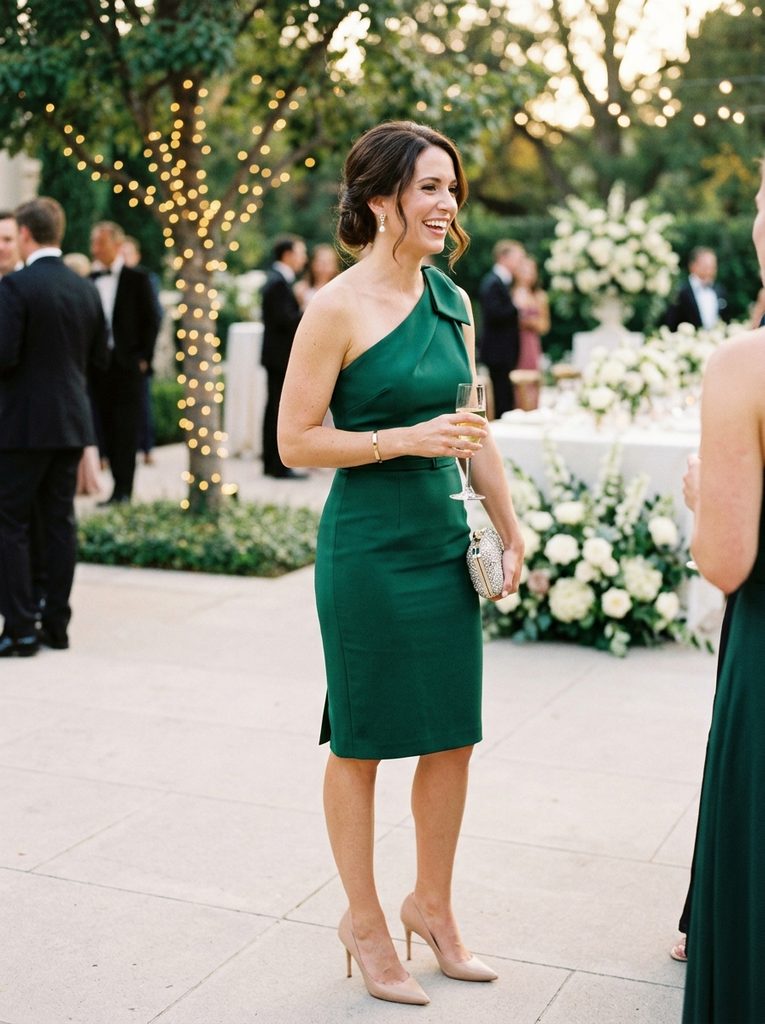
Guests aren’t expected to dress down deliberately, but there’s an unspoken agreement that the spotlight stays with the people getting married and the party standing beside them.
The All-Black Question
All-black outfits used to be a firm no at weddings, largely tied to older associations with mourning. That rule has softened considerably, and a well-tailored black dress or suit is now widely accepted at most modern weddings, particularly evening or black-tie events where dark colors are practically the default. The exception is a wedding with any stated religious or cultural tradition where black specifically signals mourning, which is worth checking for ahead of time rather than assuming the general rule applies everywhere.
Matching the Bridal Party by Accident
Bridesmaid and groomsmen colors aren’t always obvious from an invitation, but a guest showing up in the exact shade worn by the wedding party creates a confusing visual in photos, even when it’s a complete coincidence. Checking a couple’s wedding website, if one exists, or simply avoiding highly specific, unusual colors that seem likely to be a deliberate palette choice, helps sidestep this without much extra effort. Anyone building a color choice around skin tone and undertone rather than guessing can find useful groundwork in this guide to choosing colors that flatter different undertones, since the same logic that helps a bridal party choose flattering shades applies just as well to picking a guest color that won’t accidentally clash or match.
Showing Too Much Skin for the Venue
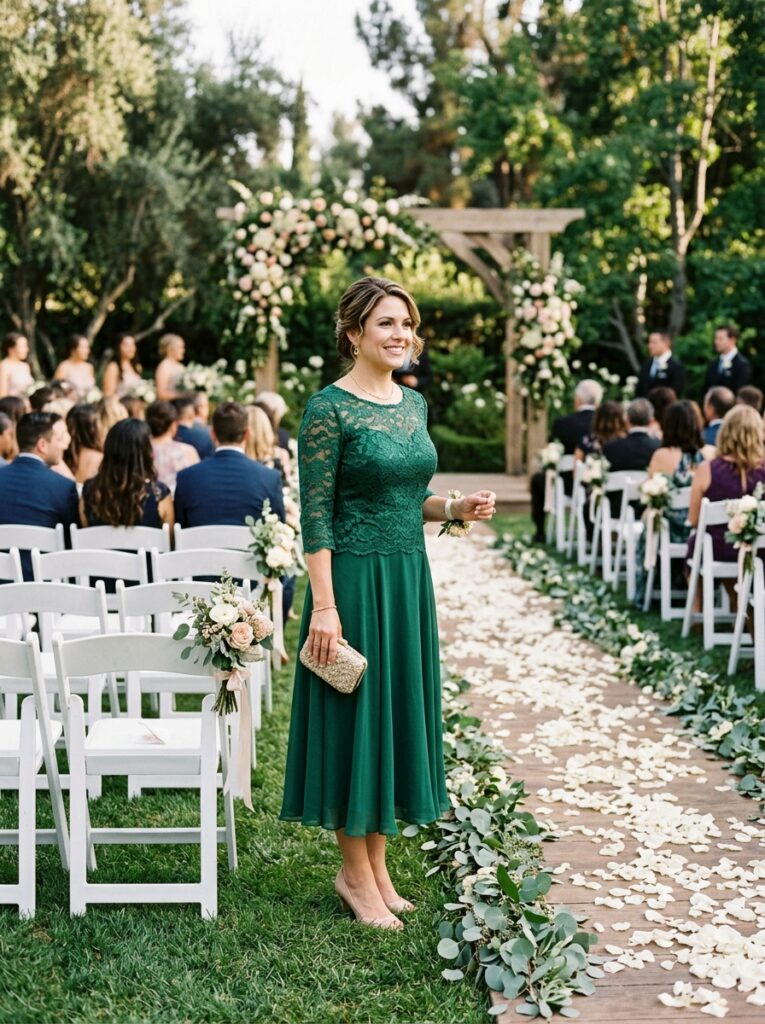
Necklines, hemlines, and cutouts all carry more weight at a wedding than they might at a typical evening event, particularly one held at a religious venue.
A short hemline or a fitted silhouette isn’t automatically inappropriate, but a combination of a very short hem, a plunging neckline, and a sheer or heavily cut-out fabric all at once tends to push an outfit past what most wedding settings call for, regardless of the stated dress code. Ceremonies held in a church, synagogue, or other religious space often come with their own unspoken or explicitly stated coverage expectations, which is worth checking on the invitation or wedding website before finalizing an outfit.
A useful approach is picking one focal point rather than several. A fitted, shorter dress with a higher neckline reads very differently than the same length paired with a low neckline and bare shoulders. Choosing where an outfit shows the most skin, and keeping everything else more covered, tends to look more intentional than an outfit that shows a little bit of everything at once.
Fabrics and Silhouettes That Fight the Setting
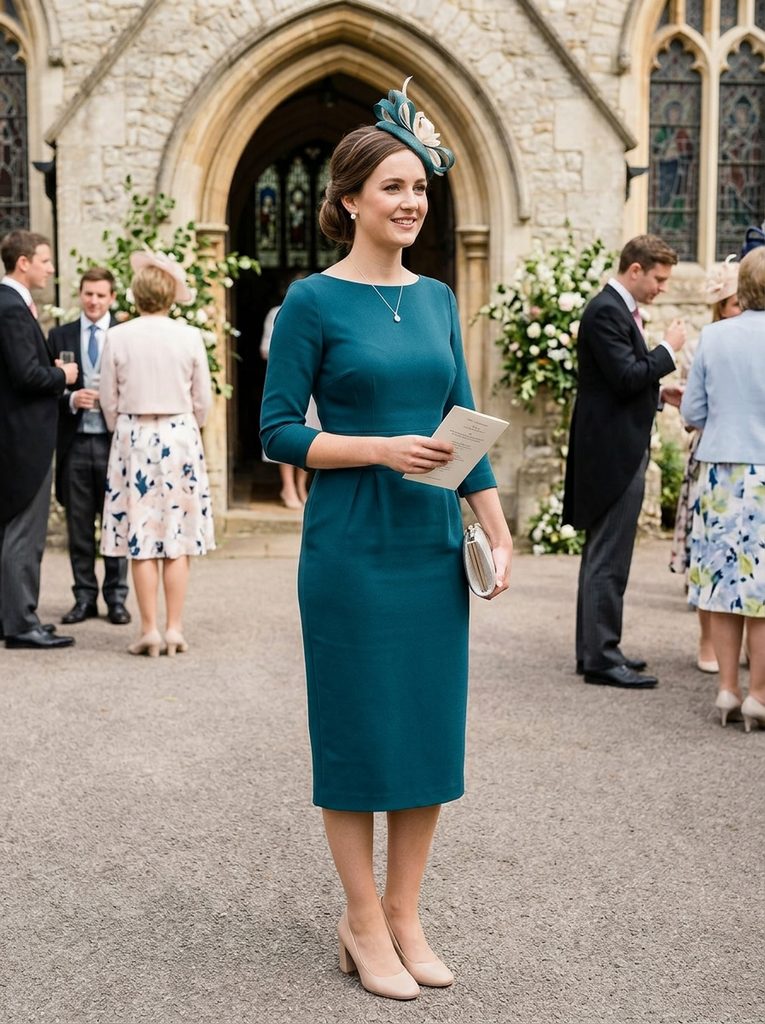
Etiquette around wedding attire isn’t only about formality. It’s also about practicality, since an outfit that ignores the physical setting can end up looking as out of place as one that ignores the dress code.
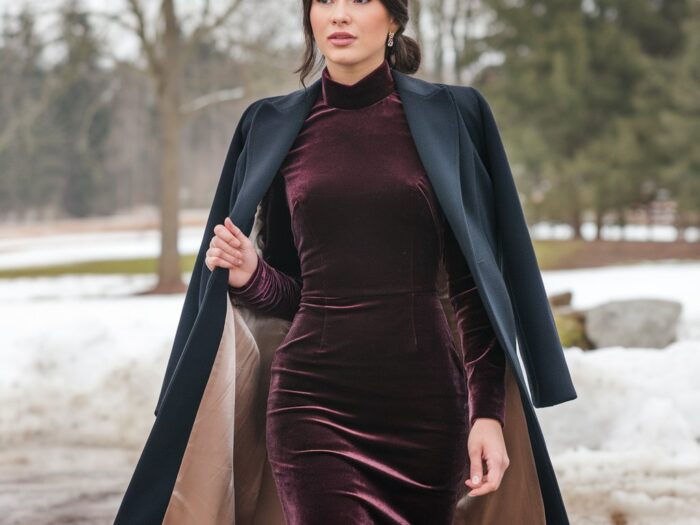
A heavy velvet gown might be exactly right for a formal winter ballroom wedding and completely wrong for an outdoor summer ceremony on a lawn. A thin, sheer summer dress that works beautifully for a garden wedding can look thin and out of place at a black-tie evening event held indoors. Stiletto heels look elegant on a ballroom floor and become a genuine liability on grass, gravel, or a cobblestone courtyard, regardless of how well they match the rest of the outfit.
Reading the venue alongside the dress code, rather than focusing on formality alone, tends to solve more wardrobe mistakes than either factor considered on its own. Guests navigating a wedding across multiple settings in a single day, an outdoor ceremony followed by an indoor reception, for instance, may find it useful to think through the kind of adaptable layering covered in this guide to outfits built for unpredictable weather and settings, since the same planning applies whether the shift is due to weather or simply moving between two very different spaces over the course of one event.
Accessories and Small Details Etiquette Still Frowns On
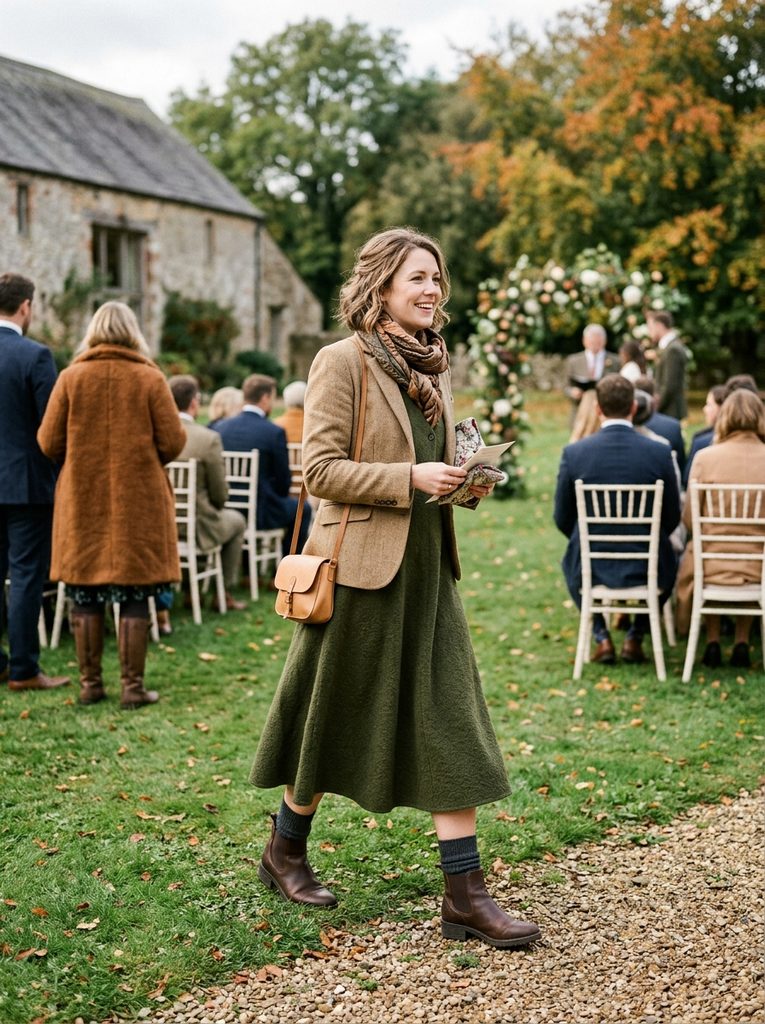
Outfit-level mistakes get most of the attention, but a handful of smaller choices carry more weight than guests often expect.
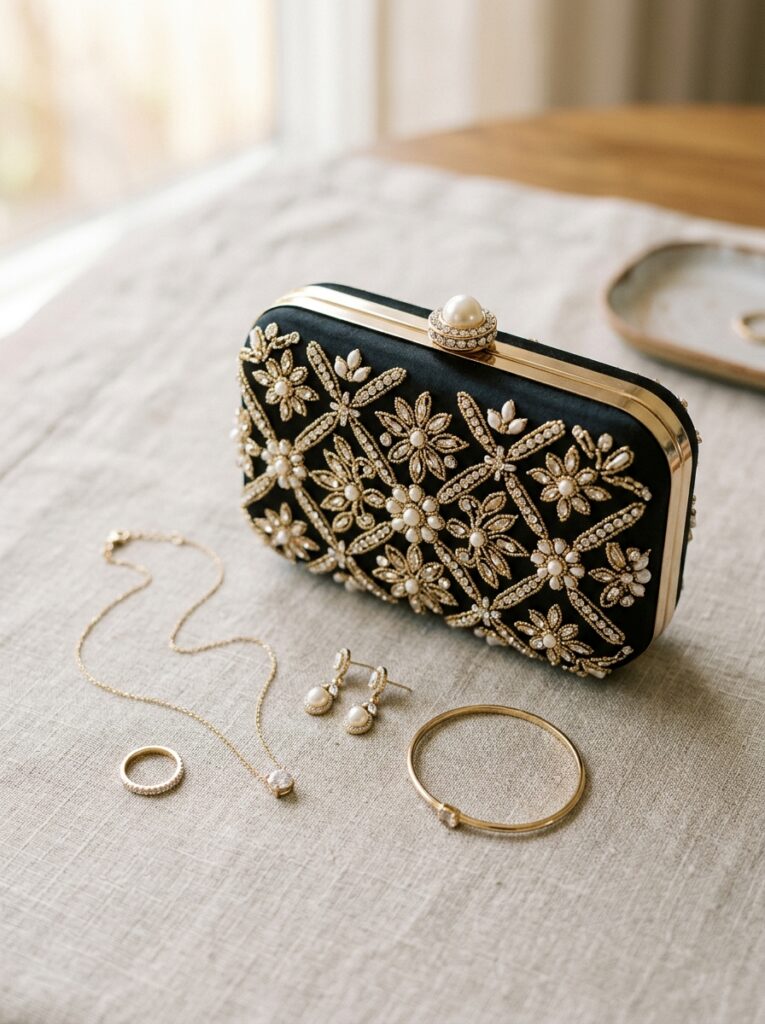
Strong perfume or cologne applied heavily enough to be noticeable from several feet away is a common but often overlooked etiquette misstep, particularly at an indoor reception where scent lingers in a way it wouldn’t outdoors. A bulky backpack or an oversized daily tote looks out of place carried through a formal ceremony, where a smaller, structured bag reads as far more considered. Guests unsure of what size to bring can find a useful breakdown in this guide to the handbag sizes worth owning, which covers how to choose a bag that suits the occasion rather than defaulting to whatever’s already packed for the day.
Novelty accessories, anything overtly branded, humorous, or built around a joke, rarely suit a wedding regardless of how well-intentioned they are. The same goes for hats large enough to obstruct another guest’s view during the ceremony, which is more of a practical courtesy issue than a strict fashion rule, but one that etiquette guides consistently mention for good reason.
What to Do When the Dress Code Feels Genuinely Unclear
Not every invitation spells out formality clearly, and etiquette rules around what to avoid become harder to apply when the baseline expectation itself is uncertain.
In that situation, it helps to default toward the more formal option rather than the more casual one. Being slightly overdressed at a relaxed wedding rarely draws much attention, while being visibly underdressed at a formal one tends to be far more noticeable and, for the guest wearing it, more uncomfortable. Checking the venue type, the time of day, and any wedding website details the couple has shared usually narrows things down faster than guessing based on the invitation’s wording alone.
It’s also worth remembering that etiquette rules exist to remove guesswork, not add pressure. None of the guidance above is about judging a guest’s taste. It’s about making sure attention stays where it belongs on the day itself, with an outfit that fits the room rather than one that has to be explained or apologized for once the photos come back.
Bringing It All Together
Most of what not to wear to a wedding comes down to a few consistent principles rather than a long list of arbitrary bans. Avoid anything close to bridal white, keep casual and athletic pieces out of the mix, choose coverage and silhouette with the specific venue in mind, and steer clear of outfits designed to be the loudest thing in the room. Everything else, color, personal style, even a bit of trend-driven flair, still has plenty of room to work within those boundaries.
Etiquette isn’t really about restriction for its own sake. It’s a shared understanding that makes the day easier for everyone involved, guests included, since knowing exactly what to avoid tends to make the rest of the decision that much simpler.

Ella is a fashion and beauty writer who shares inspiring ideas about hairstyles, nail designs, wedding outfits, and seasonal fashion trends. She loves discovering fresh styles and creating…
View Author Profile →