
On this page
- Why Identical Nails Often Look Less Intentional Than Coordinated Ones
- Building a Shared Palette Instead of a Single Shade
- Letting Finish Do the Differentiating Instead of Color
- Giving the Bride a Detail That Sets Her Manicure Apart
- Coordinating Shape Across Different Hand Sizes and Nail Beds
- Planning a Group Appointment That Actually Works
- How This Reads in Photographs
- Common Mistakes When Coordinating Bridal Party Nails
- Coordinated, Not Cloned
The instinct to coordinate nails across a wedding party usually starts with good intentions and ends with a group nail appointment where everyone leaves with the exact same polish from the exact same bottle. In photos, this often reads as flatter than intended, a wall of identical hands rather than a group that feels connected but individual. It also tends to fight against the fact that the bride is supposed to stand apart, even while looking like she belongs with the group around her.
Coordinated doesn’t have to mean identical. A shared color family, a consistent finish, or a repeated design element can tie a bridal party’s hands together in photos just as effectively as matching polish, while still leaving room for the bride’s manicure to read as distinctly hers and for individual bridesmaids to have something that actually suits their own hands and skin tone.
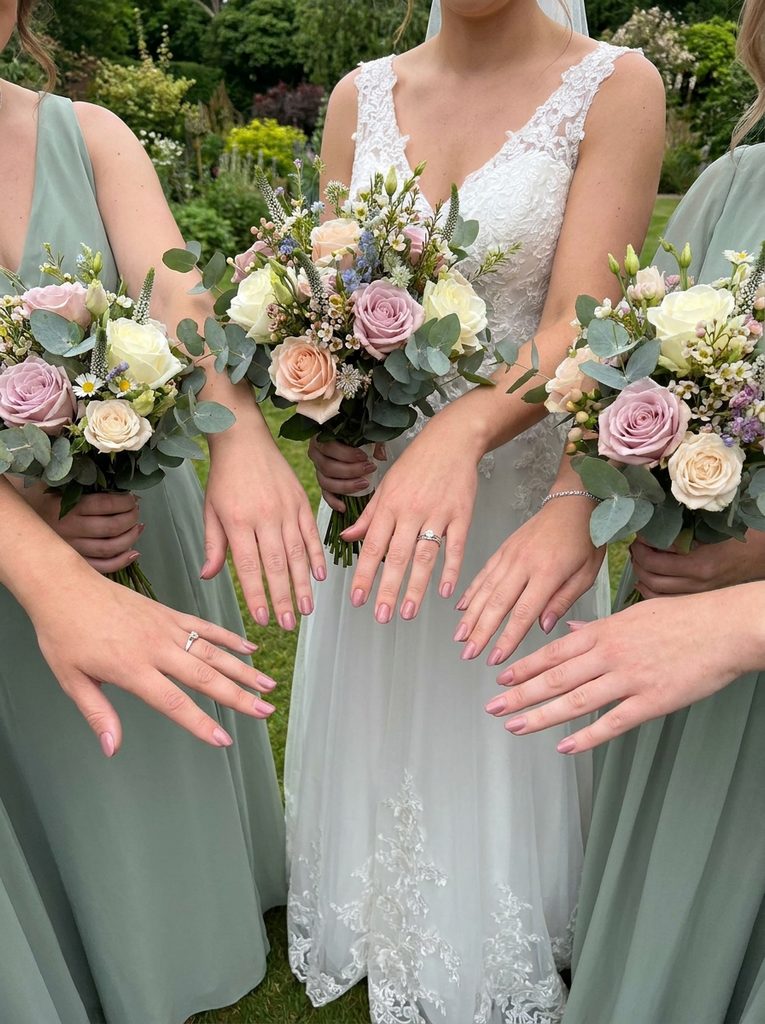
Why Identical Nails Often Look Less Intentional Than Coordinated Ones
A wedding party wearing the exact same nail color in the exact same finish can look less like a considered styling choice and more like everyone simply booked the same salon appointment. This isn’t true of every identical set, some brides genuinely want that uniform look and it can work well, but it’s worth understanding why it sometimes falls flat before deciding it’s the right approach.
Skin tone varies across any group of people, and a single nail color rarely performs identically across every hand wearing it, the same undertone logic that applies to choosing bridesmaid dress colors by skin tone applies just as directly to nail polish, since a shade that looks luminous against one skin tone can look slightly flat or mismatched against another. Beyond skin tone, identical polish also removes any visual hierarchy from the group’s hands in photos, since there’s no detail distinguishing the bride’s hands from anyone else’s when the camera catches the whole group at once, holding bouquets or linking arms for a photo.
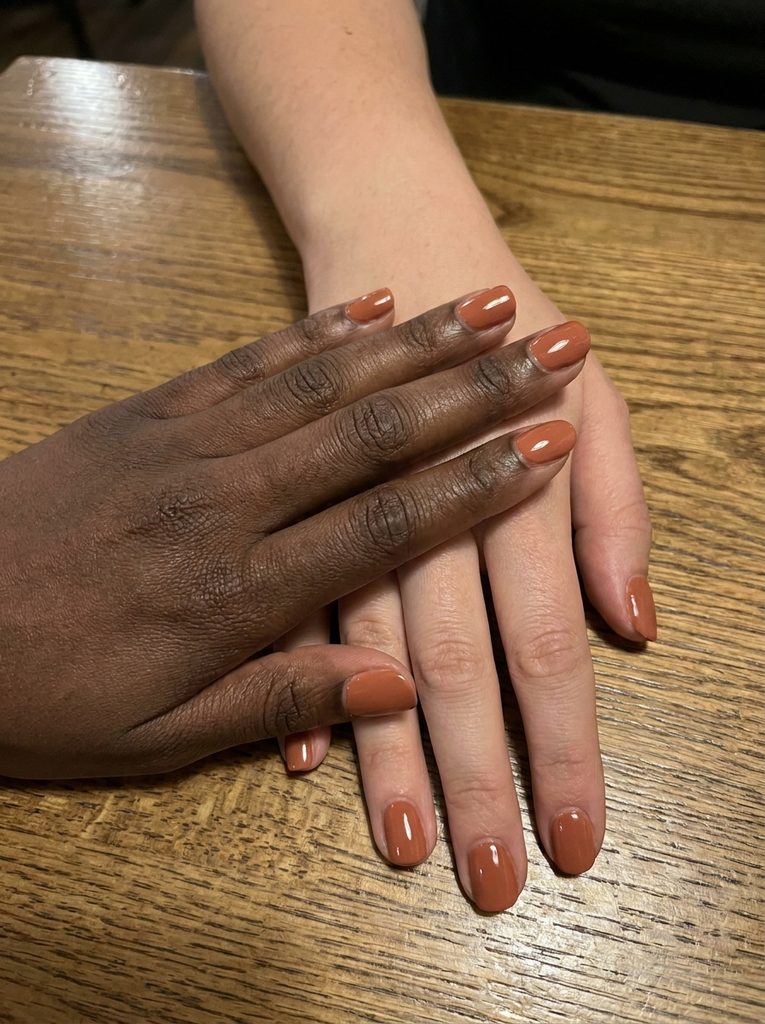
Building a Shared Palette Instead of a Single Shade
The more flexible approach starts with a color family or a mood rather than one specific polish bottle everyone wears identically. This gives the group visual cohesion without forcing every hand into the exact same shade.
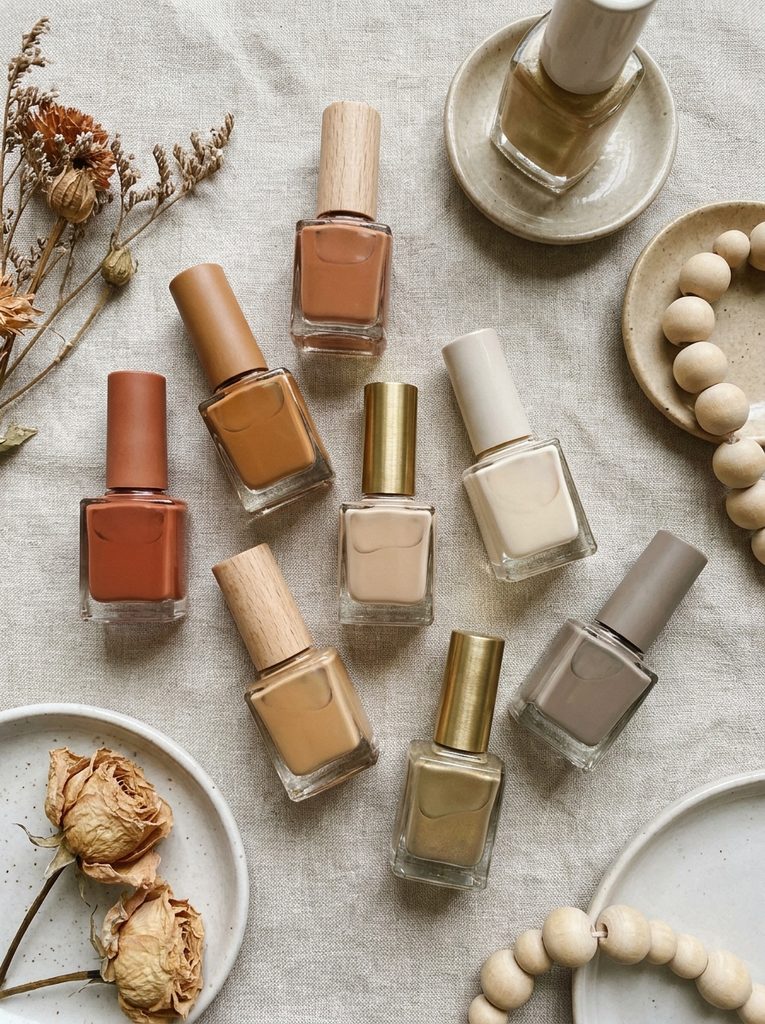
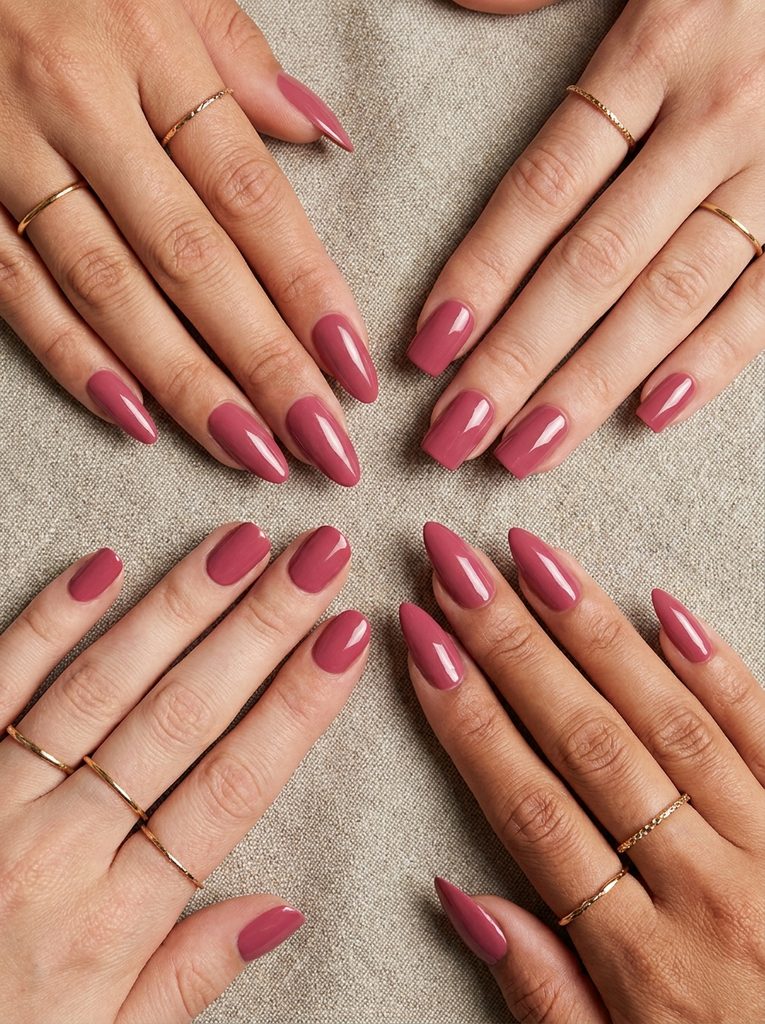
A palette built around warm neutrals, think soft blush, warm ivory, and a muted terracotta, lets each bridesmaid choose the specific shade within that family that suits her own skin tone, while the group still reads as coordinated in photos because the underlying color family is consistent. A cooler palette works the same way, soft lavender, dusty rose-mauve, and a pale silvery pink all sit close enough together that they photograph as a cohesive set even though no two hands are wearing an identical polish.
This approach mirrors how many wedding parties now handle bridesmaid dress colors, building a coordinated palette rather than a single non-negotiable shade, and applying that same logic to nails tends to produce a similarly flattering, more individually considered result.
Letting Finish Do the Differentiating Instead of Color
For brides who do want everyone in the same or a very similar color, finish offers another way to create distinction without abandoning the matching concept entirely.
A glossy finish on the bridesmaids paired with a slightly different glossy or soft shimmer finish on the bride creates a subtle but real visual separation, even when the underlying color is nearly identical. A matte finish across the bridal party with the bride wearing the same shade in a glossy or chrome finish accomplishes something similar, letting her hands catch light differently in photos without breaking from the group’s overall color story.
This kind of finish-based distinction tends to photograph more successfully than trying to explain a subtle color difference to a group of people getting ready on a tight morning schedule, since finish is usually easier for a nail technician to execute consistently across multiple people than fine-tuning slightly different shades for each person.
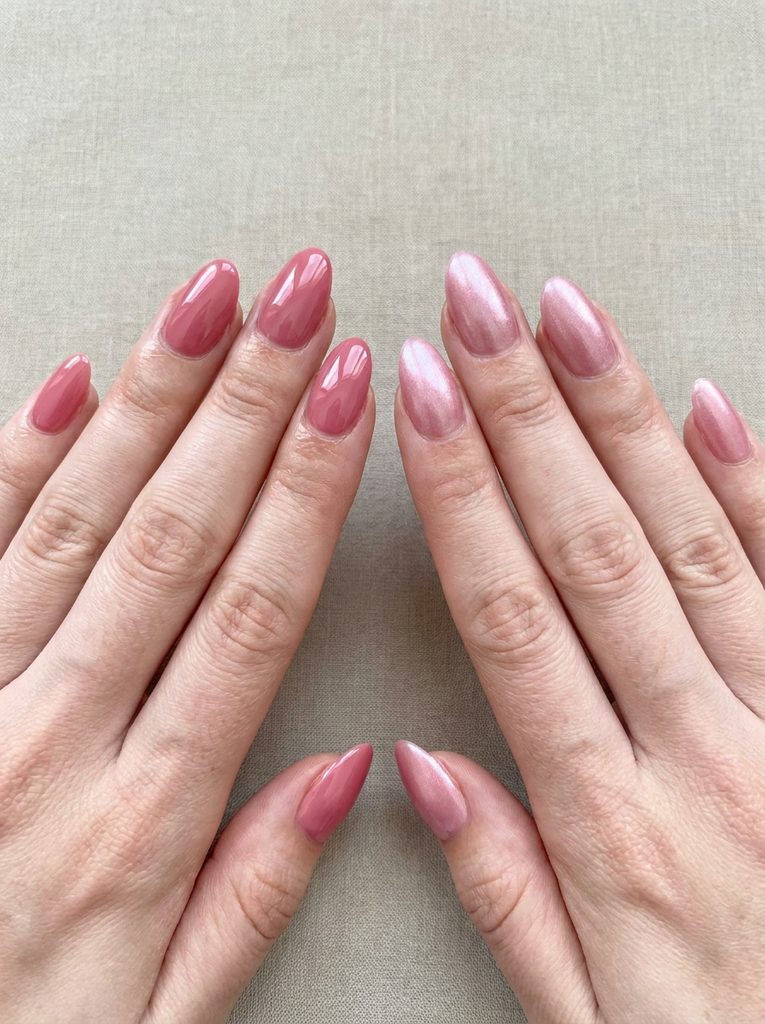
Giving the Bride a Detail That Sets Her Manicure Apart
Beyond color and finish, a specific design element reserved for the bride alone is one of the more common ways wedding parties handle this balance, and it tends to read clearly in photos without requiring the bride’s nails to look dramatically different from everyone else’s.
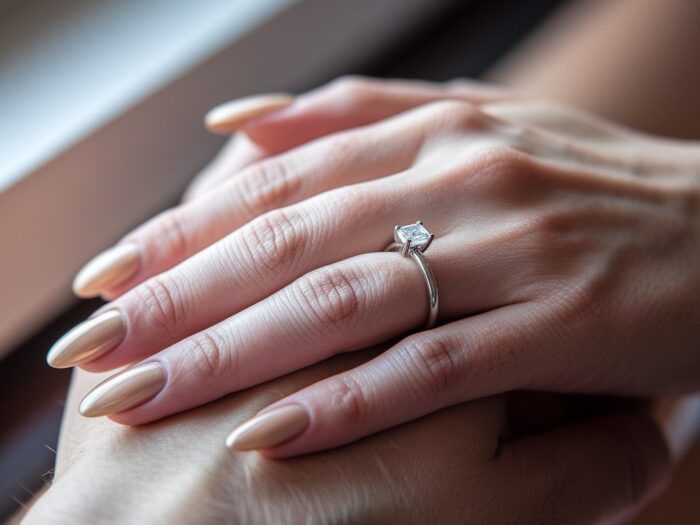
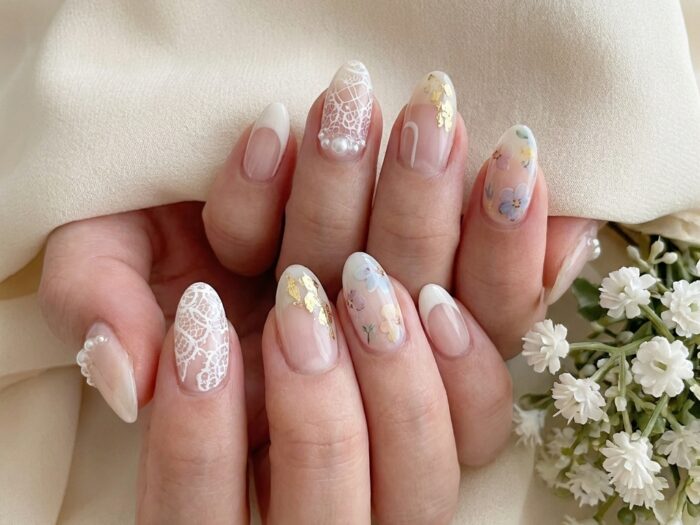
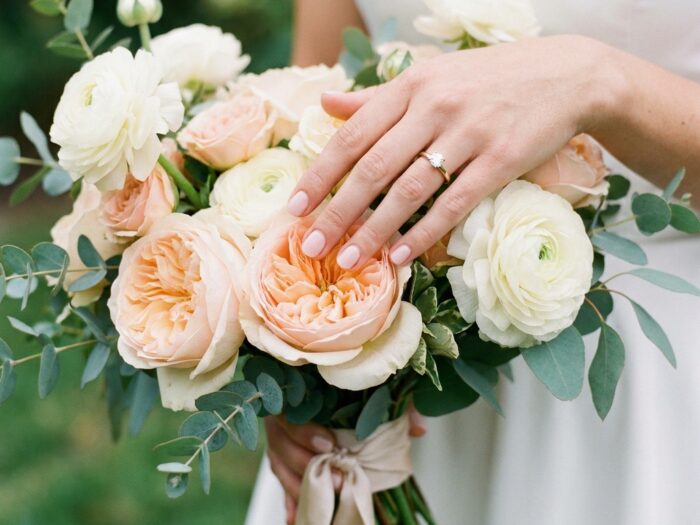
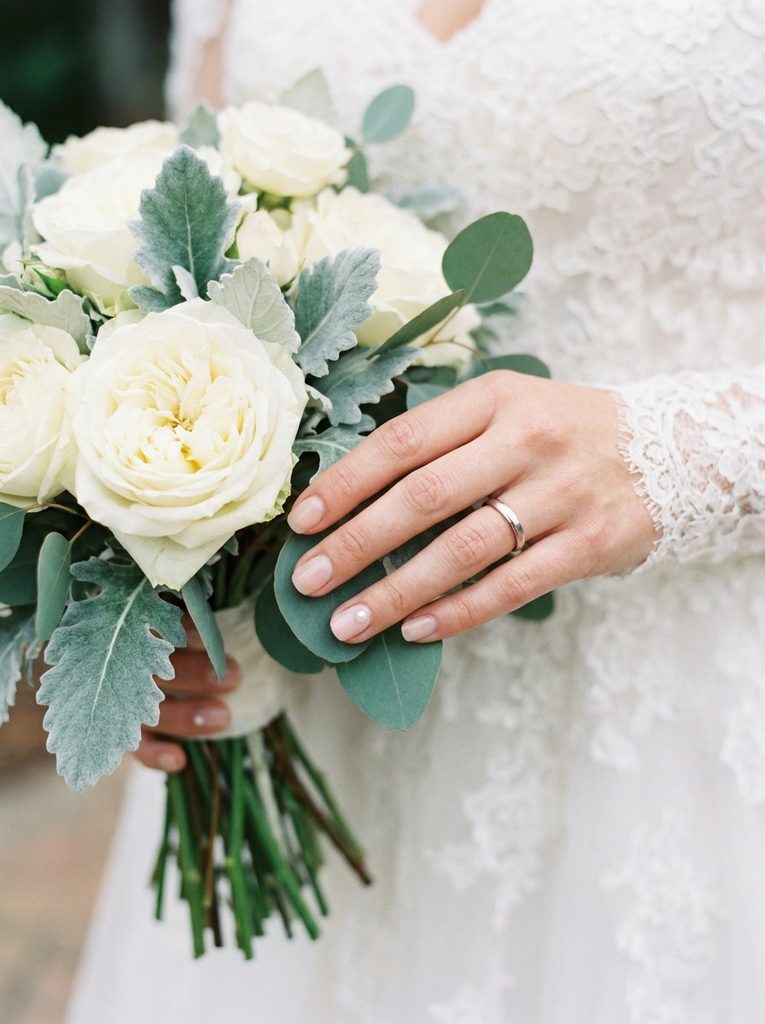
A single accent nail, often the ring finger, in a subtle design, a fine line of shimmer, a tiny cluster of pearls, or a barely-there French tip, gives the bride’s hands something distinctly hers while the rest of her manicure matches the bridesmaids’ shared palette. A slightly different shape, the bride in a soft almond while bridesmaids wear a round or squoval, achieves a similar effect through silhouette rather than added detail, which can feel more subtle for brides who don’t want any obvious embellishment.
Some brides choose the reverse approach, keeping their own manicure completely simple and letting the bridesmaids wear a slightly more decorated version of the shared palette, a small design detail or an accent nail the bridesmaids share as a marker of their role, while the bride’s hands stay quiet against the more ornate bouquet and dress she’s already wearing. Either direction works, the key is choosing one clear point of distinction rather than trying to vary color, finish, shape, and detail all at once, which tends to look more like inconsistency than intentional variation.
Coordinating Shape Across Different Hand Sizes and Nail Beds
Shape is often overlooked in these conversations, but a single shape rarely suits every hand in a wedding party equally well, and forcing one uniform shape across a group with genuinely different nail beds can work against the same cohesion the group is trying to achieve.
A shared length and a shared general shape family, rounded versus squared, tends to photograph as consistent even when the specific shape varies slightly to suit each bridesmaid’s actual nail bed. A bridesmaid with a naturally narrower nail bed may be better served by a soft oval than a strict square, even within a group that’s broadly coordinating around a rounded aesthetic, and allowing this kind of small individual adjustment usually produces a more polished-looking group than insisting on an identical shape regardless of fit.
Planning a Group Appointment That Actually Works
Coordinating a wedding party’s nails, especially with a palette-based rather than single-shade approach, takes a bit more planning at the appointment stage than simply booking everyone in for the same polish.
Bringing physical polish swatches, rather than relying on photos or verbal descriptions, to a group appointment makes it much easier for a nail technician to help each bridesmaid choose the specific shade within the shared palette that suits her own hand. Scheduling enough time for this kind of individualized selection, rather than assuming a group appointment will move as quickly as everyone getting the same single color, avoids a rushed, stressful morning that undercuts the whole point of taking care with this detail in the first place.
It also helps to designate one person, often the maid of honor or a bridesmaid with a good eye for color, to review the final palette selections together before appointments happen, checking that the chosen shades actually sit well together as a family rather than trusting that any shade from a loosely defined color range will automatically coordinate with the others.
How This Reads in Photographs
The final test of any coordinated nail approach is how it holds up in photos, and this is worth considering directly rather than assuming a palette that looks good in person will translate the same way on camera.
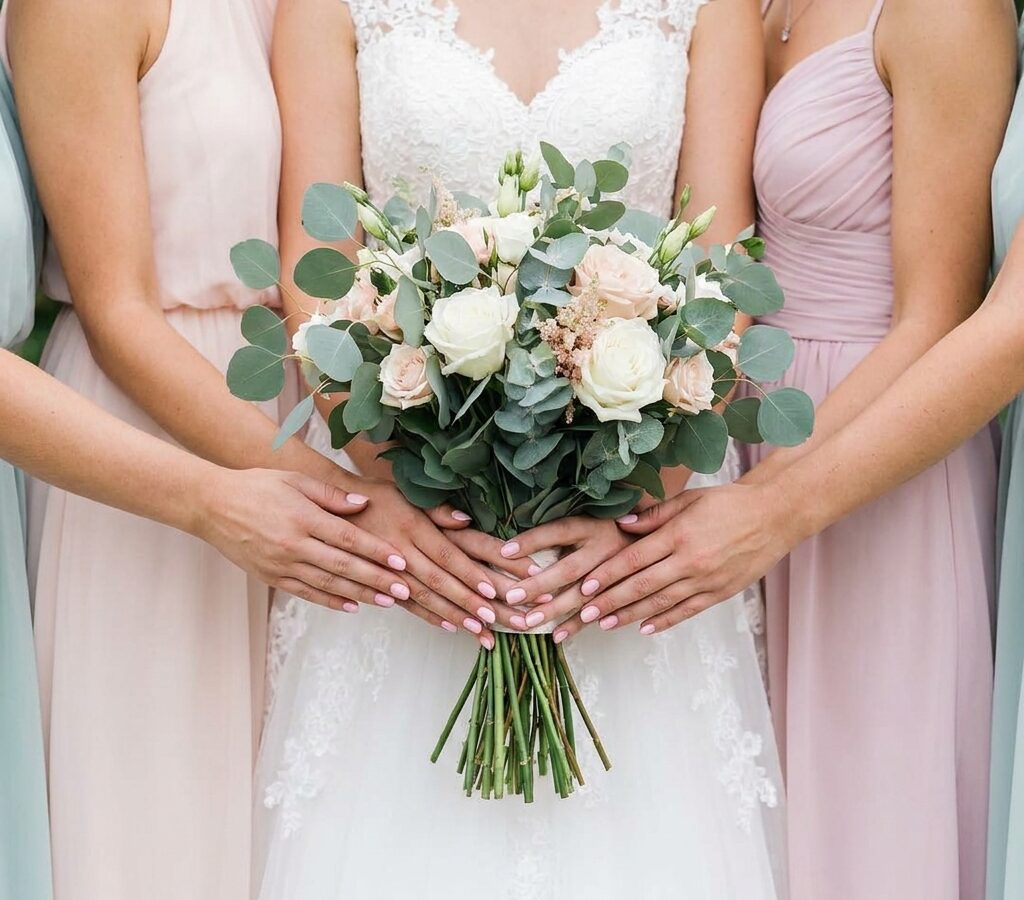
A tight group shot of interlocked or overlapping hands, a common bridal party pose, benefits from a palette with enough visual similarity that the hands read as a cohesive set even at a glance, which is part of why a genuinely unrelated set of colors, even if each individual shade is lovely, can look scattered rather than intentional in this specific kind of photo. A wider shot showing the full wedding party has more room for individual variation to read clearly, since there’s enough visual space between each person for subtle differences in shade or finish to register as intentional rather than accidental.
Common Mistakes When Coordinating Bridal Party Nails
A handful of recurring missteps tend to undercut an otherwise well-planned coordinated nail approach.
- Choosing a palette based on a mood board without testing it against the actual wedding party’s skin tones. A color family that looks cohesive in a flat-lay photo doesn’t always translate the same way once it’s on a range of different hands.
- Trying to vary too many elements at once. Changing color, finish, shape, and detail simultaneously between the bride and bridesmaids tends to look inconsistent rather than intentionally varied.
- Not scheduling enough time for individualized shade selection. A rushed group appointment often defaults back to identical polish simply because there isn’t time to do anything more considered.
- Forcing an identical nail shape across very different nail beds. This can work against a group’s overall polish more than it helps, even when the color palette itself is well coordinated.
- Deciding on the palette too close to the wedding date. Testing swatches against actual skin tones and finalizing individual shade choices benefits from the same lead time a bridesmaid dress color palette does, rather than being finalized the week of.
Coordinated, Not Cloned
A wedding party’s nails can absolutely feel connected without every hand wearing an identical manicure. A shared color family, a consistent finish, a single distinguishing detail reserved for the bride, or simply a coordinated shape family all achieve the same visual cohesion that identical polish provides, while leaving room for the bride to read as distinctly herself and for each bridesmaid’s manicure to actually suit her own hand.
For brides still finalizing the bridesmaids’ overall look, the guide to bridesmaid dress colors that work across every skin tone covers much of the same undertone logic in more depth, and it’s worth reading alongside nail planning since the two decisions tend to inform each other. The nail design collection is also a useful place to browse specific shades and finishes once a general palette direction feels settled.

Ella is a fashion and beauty writer who shares inspiring ideas about hairstyles, nail designs, wedding outfits, and seasonal fashion trends. She loves discovering fresh styles and creating…
View Author Profile →