
On this page
- Why Neckline Deserves a Place in Hair Planning
- Strapless and Sweetheart Necklines
- Off-the-Shoulder and Halter Necklines
- High Necklines and Illusion Necklines
- Square and Boat Necklines
- Building One Style That Flexes Across a Mixed Wedding Party
- What to Communicate to a Stylist Ahead of Group Appointments
- Common Mistakes When Planning Bridesmaid Hair Around Necklines
- Coordinated Hair That Still Respects Every Dress
Bridesmaid hair planning usually happens backward from how it should. A style gets chosen because it looks pretty in a single reference photo, and only later does anyone notice that it completely covers the delicate straps on one bridesmaid’s dress while leaving another bridesmaid’s high neckline looking oddly bare without any hair framing it. Neckline and hairstyle interact constantly in photos, and a style that flatters one dress can genuinely work against another, even when both dresses are the same color and from the same coordinated collection.
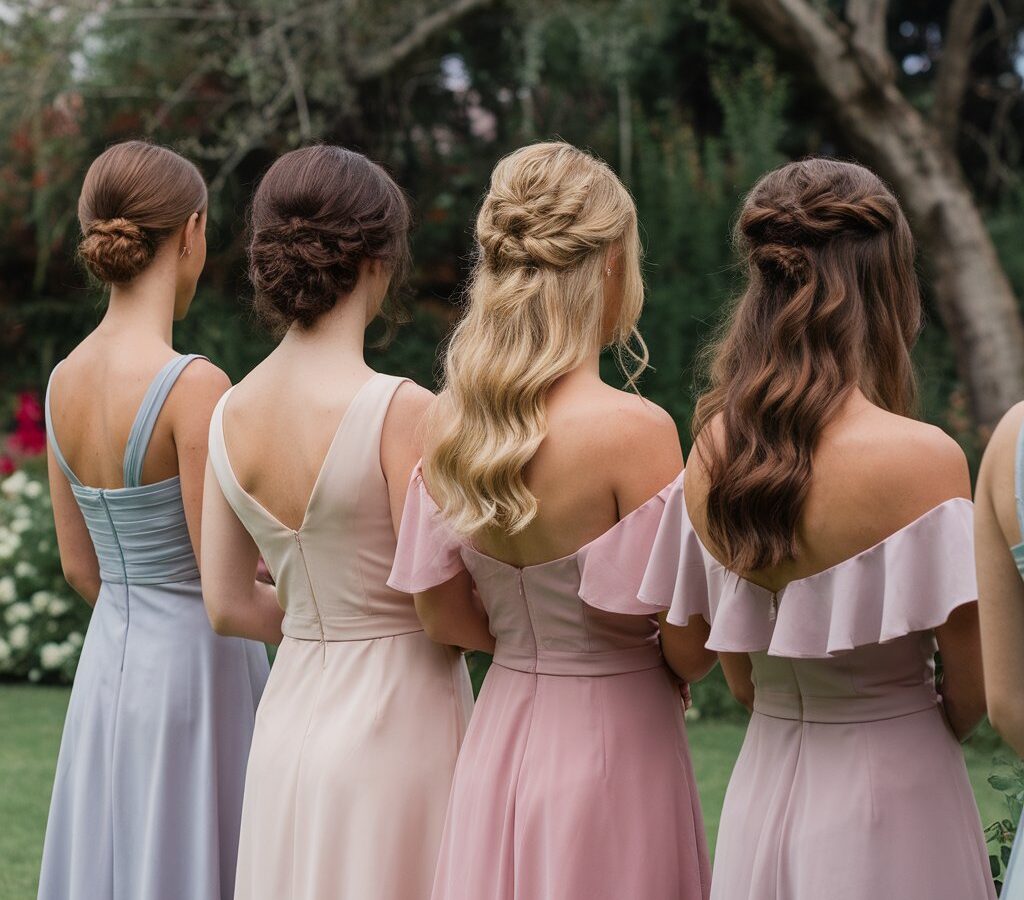
This becomes even more relevant for wedding parties that mix silhouettes within a shared color palette, increasingly common as brides let bridesmaids choose their own dress style within a set color family. A single hairstyle direction, chosen thoughtfully, can actually flatter a strapless dress, an off-the-shoulder one, and a high halter neckline all in the same wedding party, but only if the styling accounts for what each neckline actually needs.
Why Neckline Deserves a Place in Hair Planning
Neckline determines how much skin is visible at the collarbone and shoulders, and hair either works with that visible area or competes against it. A dramatic, structured neckline generally wants hair that doesn’t compete for attention in the same zone. A simpler, more minimal neckline often benefits from hair that adds some visual interest to that same space, since there’s less happening in the dress itself to hold the eye.
This is the same underlying logic that applies to how neckline interacts with hair for the bride’s own dress, just applied across an entire group of bridesmaids rather than one bride, which adds the extra complication of needing a style, or a flexible variation on one style, that reads as coordinated across several different dress shapes at once.
Strapless and Sweetheart Necklines
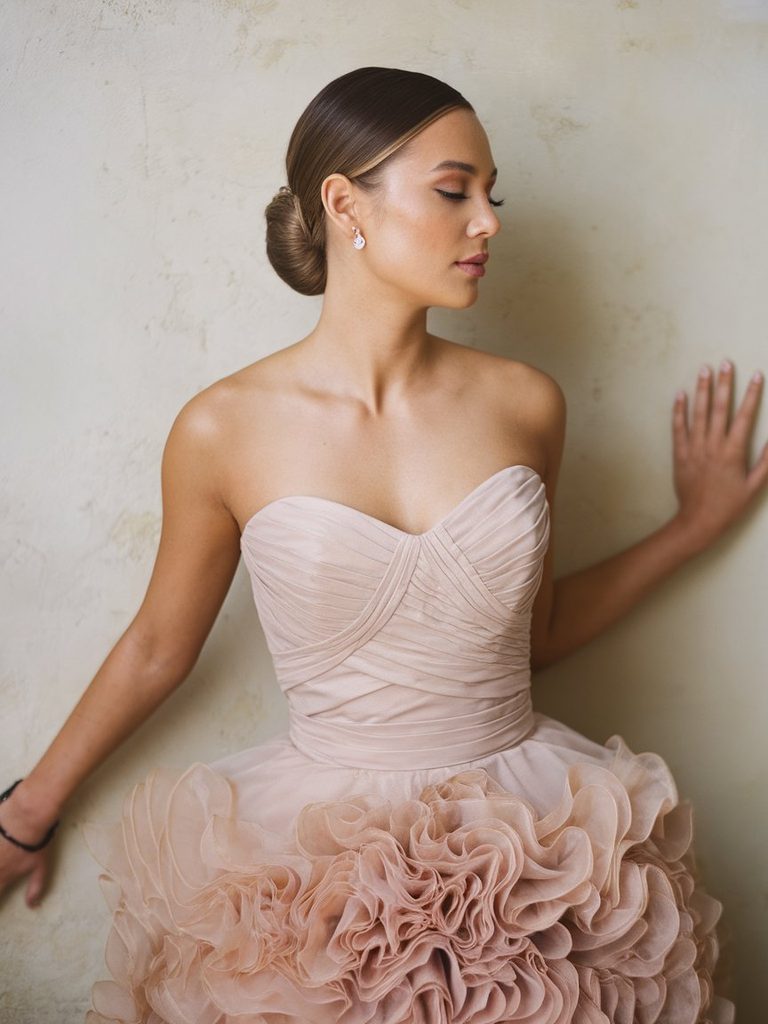
A strapless or sweetheart neckline creates a clean, uninterrupted line across the collarbone and shoulders, and hair that respects that line tends to photograph best.
An updo, whether a sleek low bun, a twisted chignon, or a textured pinned style, keeps the shoulders and collarbone fully visible, letting the dress’s clean line read clearly rather than competing with loose hair falling across it. A half-up style with the bottom section swept to one side rather than left centered also works well here, since it keeps most of the shoulder line open while still giving some softness through the hair itself.
Fully down, loose hair is the one style that tends to work against a strapless or sweetheart neckline specifically, since loose hair falling directly over bare shoulders can visually interrupt the clean line the neckline is designed to create. This doesn’t rule a down style out entirely, but it does mean styling it with a deliberate part or sweep to one side, rather than centered and falling naturally, keeps more of the neckline visible in photos.
Off-the-Shoulder and Halter Necklines
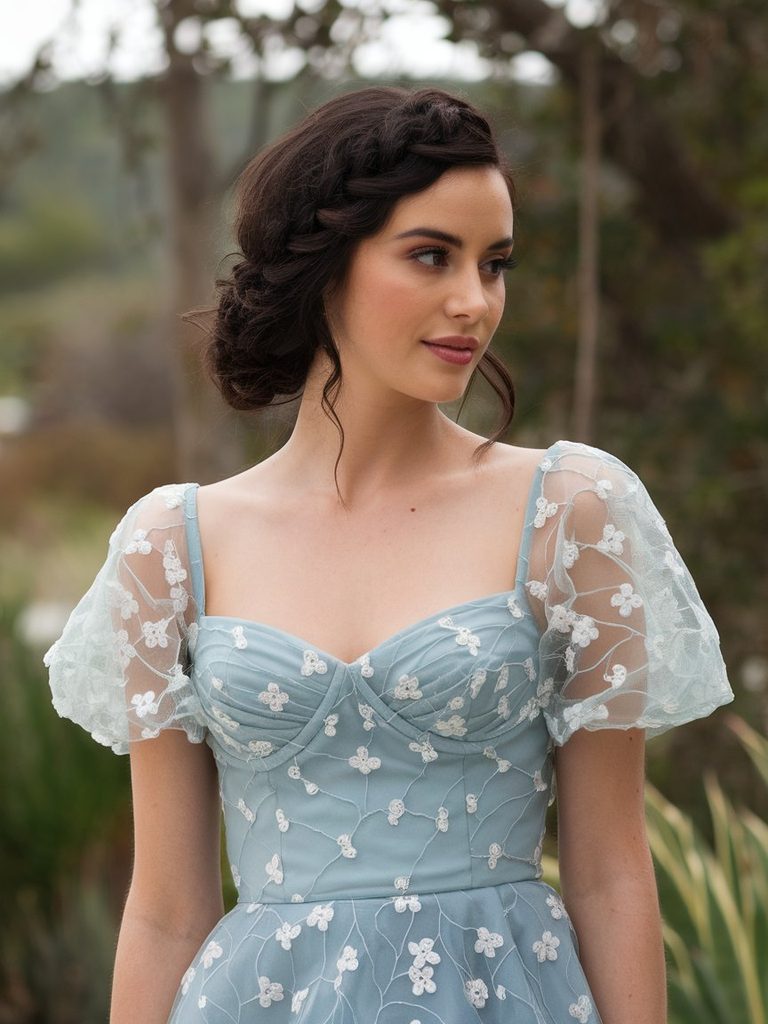
These necklines already draw the eye toward the shoulders and upper arms, which changes what hair needs to do compared to a strapless dress.
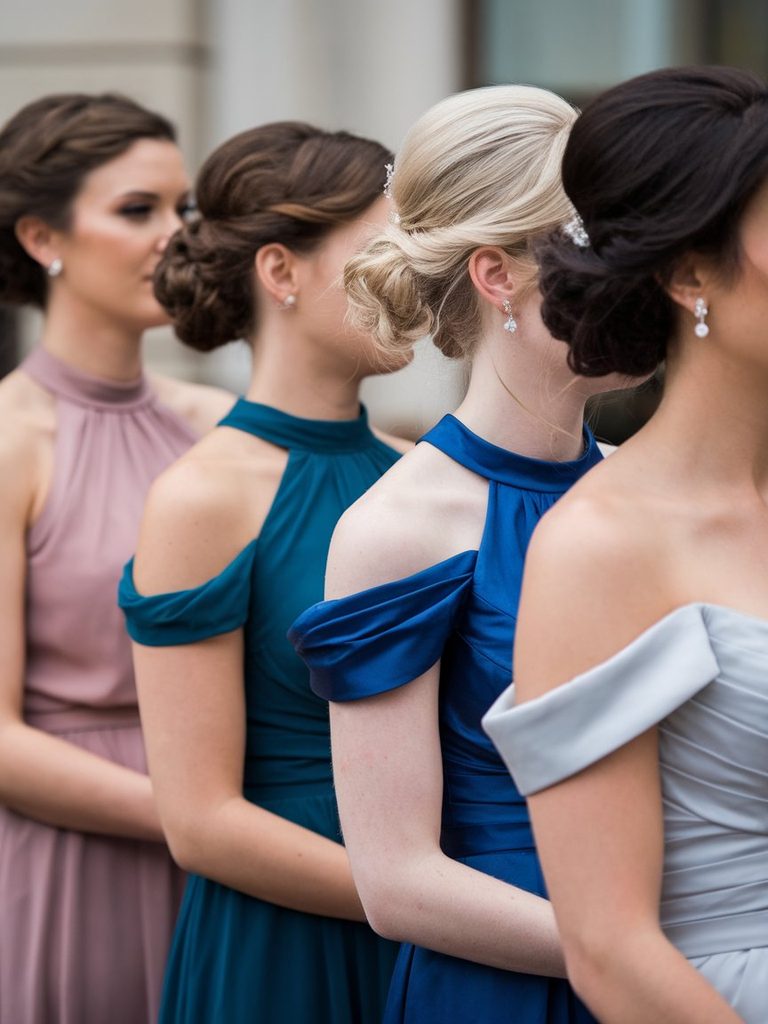
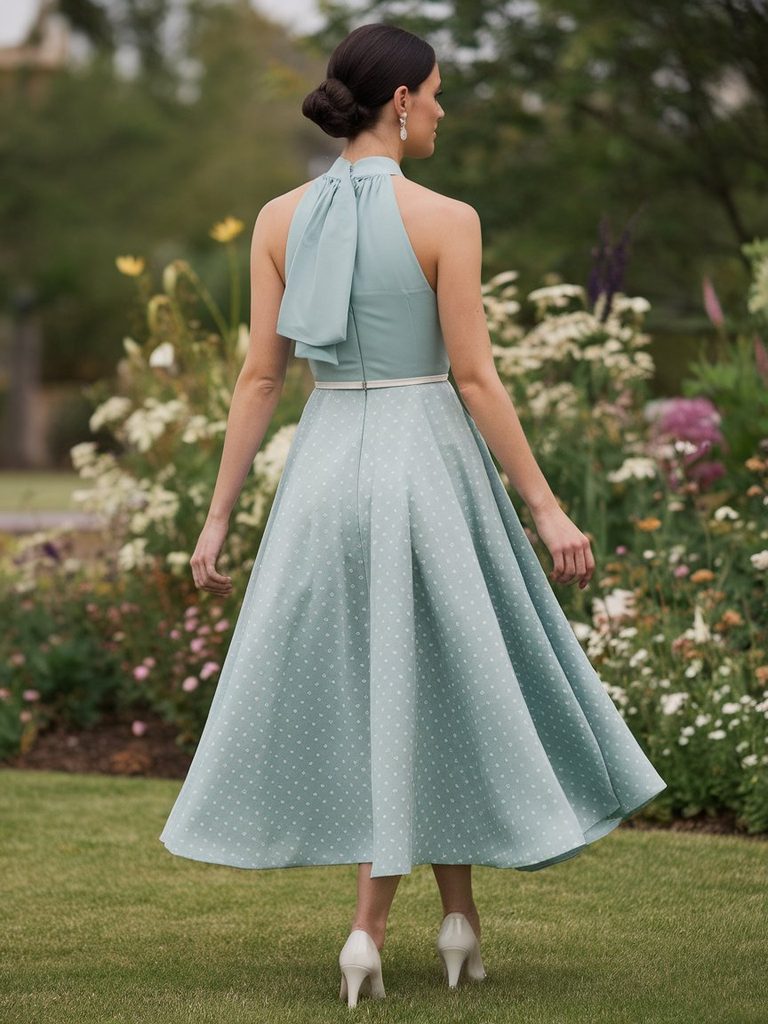
Loose waves or a soft half-up style actually complement an off-the-shoulder neckline well, since some hair falling naturally over one or both shoulders echoes the neckline’s own off-center visual weight rather than fighting against it. A halter neckline, which typically leaves the back fully exposed, benefits from hair kept off the back entirely, an updo or a half-up style with the bottom section secured rather than left hanging down the exposed back, since loose hair covering a deliberately open-back detail undermines the point of the dress design.
For bridesmaids in a halter dress specifically, checking the back of the hairstyle in a mirror, not just the front, matters more than it does for most other neckline types, since this is the one dress style where an otherwise flattering down or half-up style can genuinely obscure a design detail the dress was chosen for.
High Necklines and Illusion Necklines
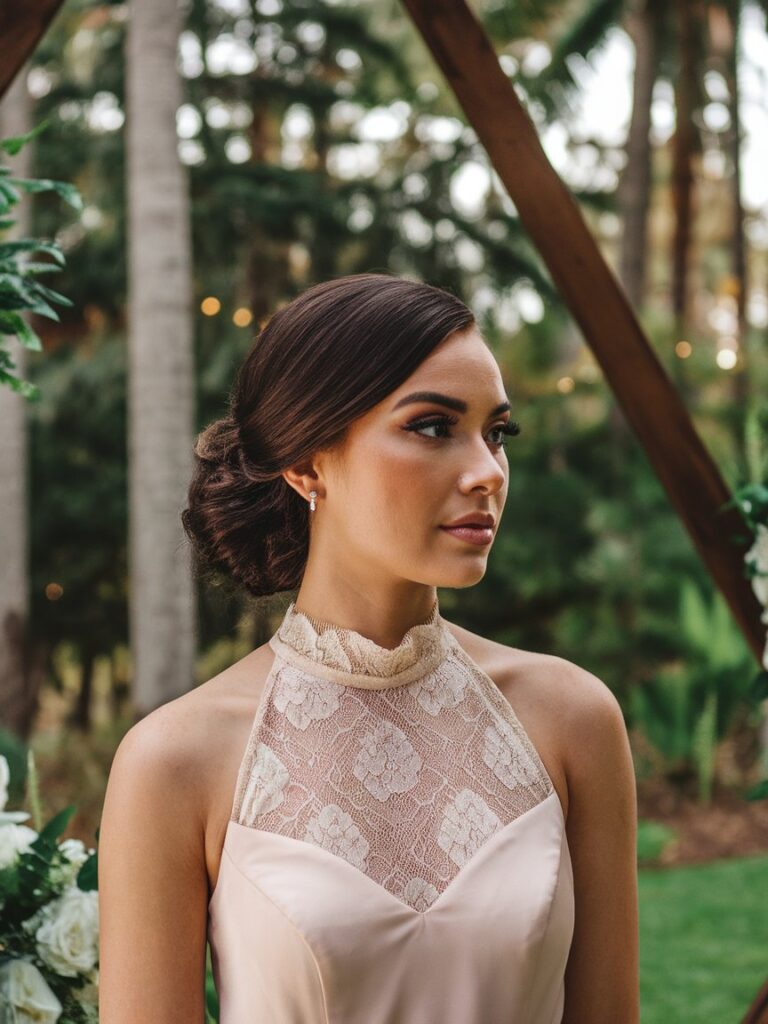
A high neckline, whether a fully covered collar or an illusion mesh panel at the collarbone, tends to benefit from hair that’s swept back or up rather than framing the face and neck heavily.
An updo or a half-up style with the front and sides pulled back cleanly lets a high neckline’s detail stay visible rather than getting visually crowded by hair falling around the same area. This is particularly relevant for illusion necklines with beading or lace detail at the collarbone, since that detail is often the entire reason the dress was chosen, and hair covering it defeats the purpose in photos.
A fully down style isn’t off the table here, but it works better with hair swept to one side and secured, rather than centered and falling forward on both sides, which would compete directly with a high neckline’s visual detail at the front and center of the chest.
Square and Boat Necklines
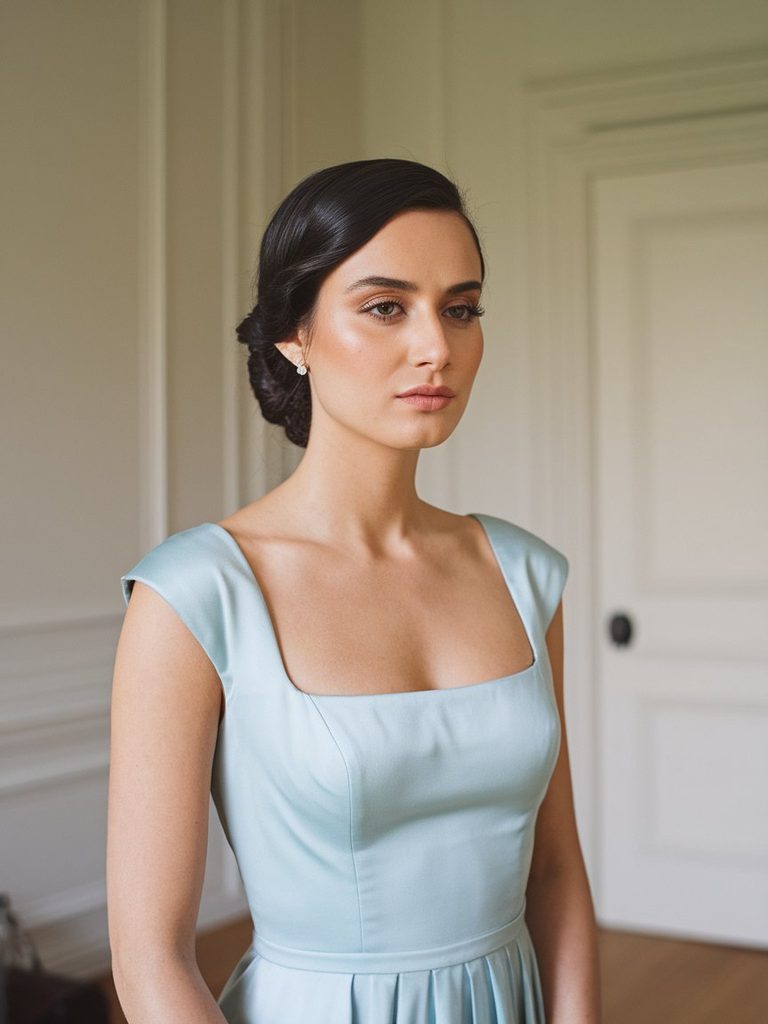
These necklines create strong, geometric horizontal lines across the chest, and hair styling here is less about avoiding competition and more about echoing or balancing that structure.
A sleek, structured updo, a smooth low bun or a polished twist, pairs particularly well with a square or boat neckline’s own clean geometry, since both elements share a similar sense of precision. Soft, loose waves can work here too, but they read as more effective when there’s some deliberate shape to them, a defined side part or waves set with a clear pattern, rather than an entirely undone, tousled texture that visually clashes with the neckline’s straight lines.
Building One Style That Flexes Across a Mixed Wedding Party
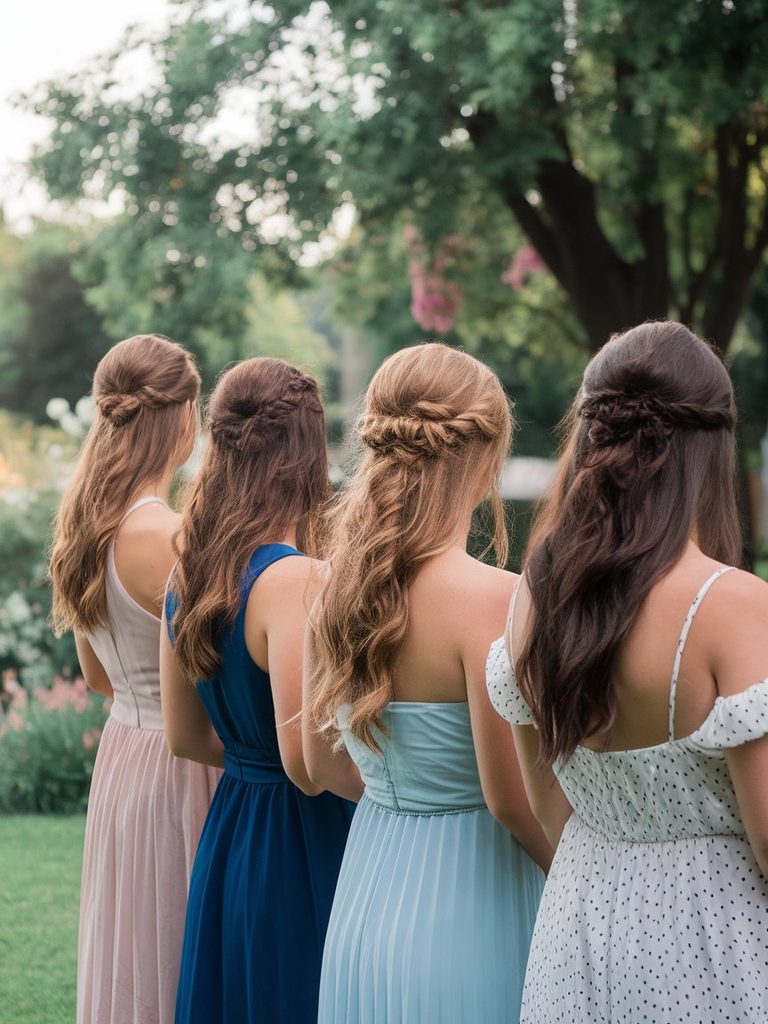
For wedding parties with genuinely different dress silhouettes across bridesmaids, choosing one rigid style for everyone often means it flatters some necklines and works against others. A more flexible approach starts with a shared base technique, letting a stylist adjust the specific placement and finishing details to suit each bridesmaid’s actual dress.
A shared half-up foundation, the crown section pulled back and secured in a consistent way across the whole group, with the bottom section styled differently for each bridesmaid, swept to one side for a halter dress, left centered for a strapless one, gives the group visual cohesion in photos while still respecting what each individual neckline needs. A shared updo base with variation in how much face-framing hair is left loose accomplishes something similar, keeping the overall silhouette consistent across the group while adjusting the small details that actually interact with each dress.
This kind of coordinated-but-flexible approach mirrors the same logic increasingly used for bridesmaid dress colors built around a shared palette rather than one identical shade, and for nails coordinated without being identical: a consistent underlying approach that still leaves room for what actually suits each individual in the group.
What to Communicate to a Stylist Ahead of Group Appointments
Because neckline-specific adjustments matter more in a bridesmaid hair appointment than they might for a single bride working with one dress, it’s worth being specific about this well before the actual appointment.
Sending a stylist photos of each bridesmaid’s actual dress, not just the shared color or general silhouette, lets them plan how much time and what specific adjustments each person will realistically need. It also helps to flag which bridesmaids have dresses with a notable back detail, an open back, a halter tie, or a low-cut spine, since hair needs a deliberate plan for the back of the style in these cases rather than only being considered from the front.
For wedding parties without the budget or scheduling flexibility for a fully custom style per bridesmaid, choosing the shared half-up or updo base described above and asking the stylist to make only the smaller finishing adjustments per dress is a realistic middle ground that still respects each neckline without requiring an entirely separate consultation for every person in the group.
Common Mistakes When Planning Bridesmaid Hair Around Necklines
A handful of recurring issues tend to undercut group hair planning even when the overall style choice was a reasonable one.
- Choosing a style based on one dress silhouette and applying it to everyone. A style chosen with only a strapless dress in mind can work directly against a halter or open-back dress worn by another bridesmaid in the same party.
- Not checking the back of the style for open-back or halter dresses. This is one of the most common oversights, since most hair planning conversations focus on how a style looks from the front.
- Assuming loose, down hair works universally. Down styles can look lovely, but they interact very differently with a strapless neckline than they do with a high, detailed illusion neckline.
- Skipping individual dress photos when briefing a stylist. A stylist working only from a shared color swatch or a general silhouette description can’t plan the specific adjustments each dress actually needs.
- Treating hair and dress choice as two completely separate decisions. The two interact directly in every photo the wedding party appears in together, which makes planning them in isolation a missed opportunity for a more polished overall look.
Coordinated Hair That Still Respects Every Dress
Bridesmaid hair doesn’t need to be identical to look coordinated, and it shouldn’t be chosen without considering the specific neckline each bridesmaid is actually wearing. A shared base technique, adjusted with a bit of thought for what each dress needs at the shoulders, collarbone, or back, produces a wedding party that reads as visually connected in photos while still looking genuinely flattering on every single person in it.
For brides working through the rest of the bridesmaid styling at the same time, the guide to bridesmaid dress colors that work across every skin tone is worth reading alongside this one, since dress color, silhouette, and hair all end up photographed together in the same frame throughout the day.

Ella is a fashion and beauty writer who shares inspiring ideas about hairstyles, nail designs, wedding outfits, and seasonal fashion trends. She loves discovering fresh styles and creating…
View Author Profile →