

On this page
- The Short Answer
- The Formality Ladder
- Three Dials That Separate the Two
- Same Pieces, Different Outcomes
- Business Casual in Practice
- Smart Casual in Practice
- Where Each Code Applies
- How to Read an Invitation or a Policy
- Moving Between the Two in Five Minutes
- Footwear, Bags and Jewelry: The Quiet Differences
- Colors and Fabrics That Work for Both
- Mistakes That Blur the Line
- A Small Wardrobe That Covers Both
-
FAQs
- What is the main difference between business casual and smart casual?
- Can I wear jeans for business casual?
- Are sneakers allowed in smart casual?
- Is a blazer necessary for either dress code?
- Which is more formal?
- What should I wear if the dress code is unclear?
- Can the same outfit work for both codes?
- Reading the Room
An invitation says “smart casual” and the office handbook says “business casual,” and both seem to mean something like “dress nicely but don’t overdo it.” Yet people who treat the two as identical often end up slightly out of step, either too stiff at a dinner or too relaxed at a client meeting.
The difference is real, though it is easier to feel than to define. This guide separates the two codes with practical tools: a formality ladder, three dials you can adjust, a side-by-side swap table and outfit formulas for each. By the end, you should be able to read any dress code line and know where to aim.
The Short Answer
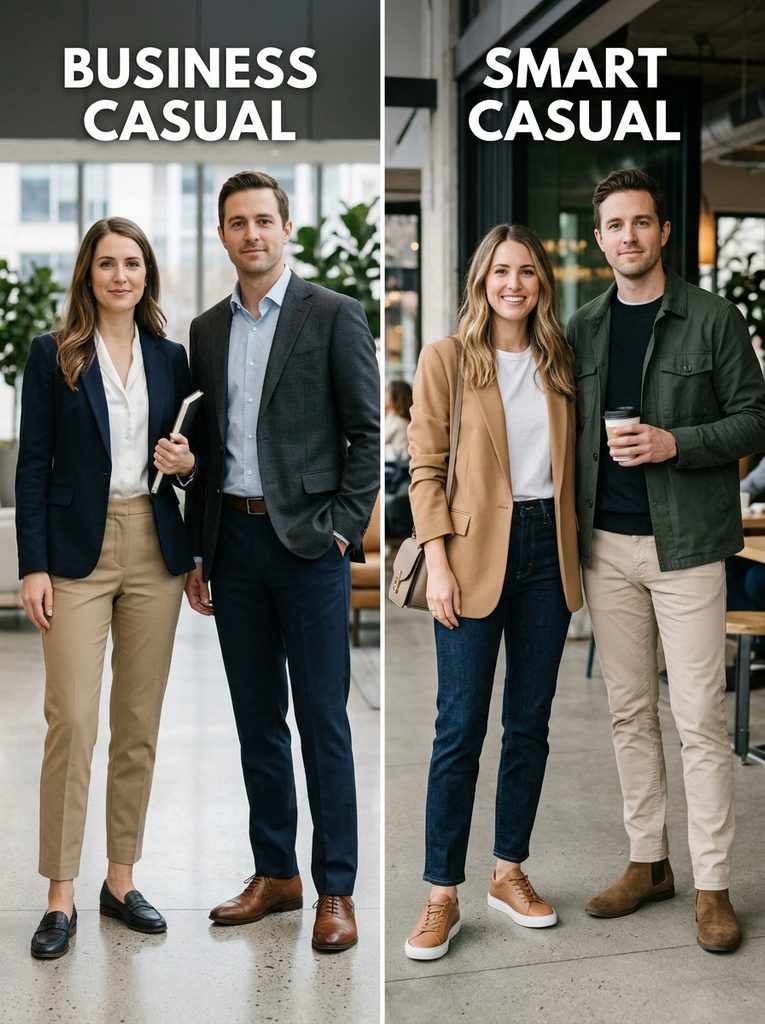
Business casual is professional dress with the suit removed. It is built for workplaces and meetings, where looking dependable matters. Smart casual is relaxed dress with extra care added. It suits social settings, creative workplaces and any occasion where looking polished matters more than looking corporate.
Put another way, business casual starts from work clothes and loosens them. Smart casual starts from everyday clothes and tightens them. Menswear writers at Rampley & Co describe the idea as a split of proportions, with business casual leaning mostly toward business and smart casual leaning mostly toward casual. That framing holds well for womenswear too.

The Formality Ladder
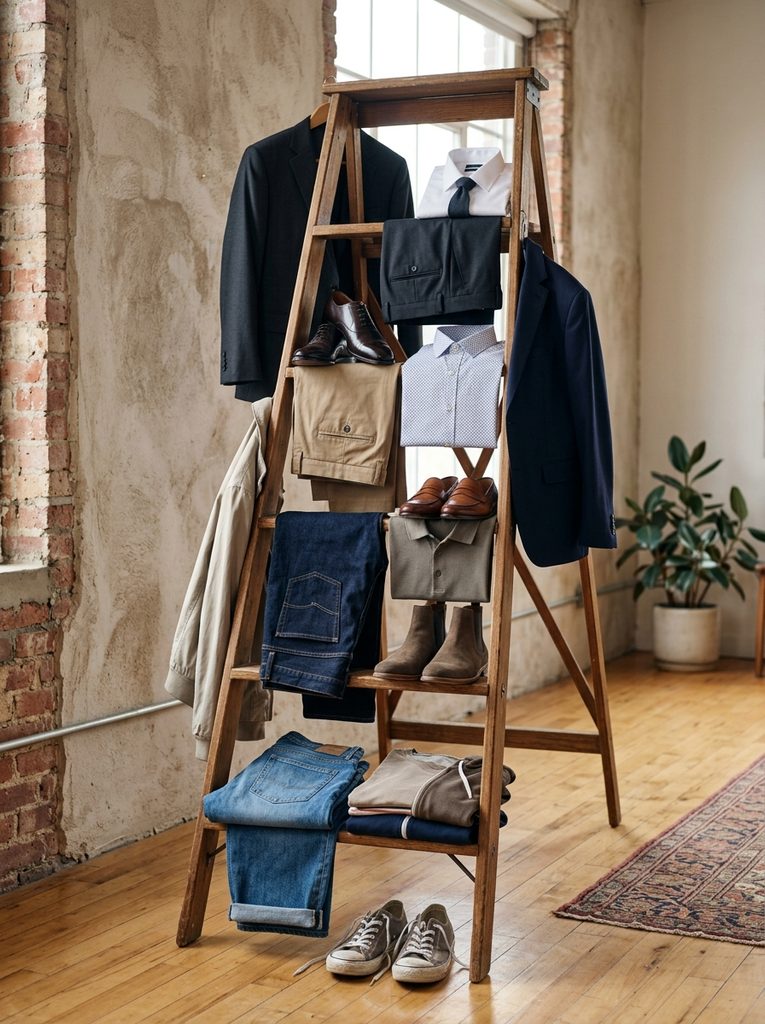
It helps to picture the dress codes on a ladder. XSuit’s guide to the two codes describes a similar progression: casual, then smart casual, then business casual, then business formal.
Casual covers jeans, tees, sneakers and anything comfortable. Smart casual is one rung up, with the same ingredients selected more carefully. Business casual sits above it and borrows from tailoring. Business formal is the suit, the matching set, the polished shoe.
Each rung changes the way pieces behave. A pair of dark jeans is acceptable at the first two rungs, borderline at the third in some offices, and out of place at the fourth. A leather loafer can appear in the top three. A blazer can appear in the middle two and defines the top one. Knowing the position of each item on the ladder removes most of the guesswork.
Three Dials That Separate the Two
Rather than memorizing lists, think of three settings you can turn up or down. Each one shifts an outfit along the ladder.
Dial One: Structure
Structure refers to how much the garment holds its own shape. A tailored blazer, a pleated trouser and a crisp collar all carry high structure. A soft cardigan, a relaxed tee and a drapey skirt carry low structure.
Business casual asks for more structure, especially in the shoulders and collar. Smart casual can handle less, so long as the fit is clean. If you are unsure, add one structured piece, such as a blazer or a stiff-collared shirt.
Dial Two: Surface
Surface is the fabric finish. Matte wool, fine cotton poplin, crepe and smooth leather read as formal. Denim, jersey, chunky knits, canvas and suede read as relaxed. Satin-feel fabrics sit in the middle and depend on the cut.
Business casual leans on smooth, matte surfaces. Smart casual happily mixes them, such as a silk-feel blouse with dark denim. A mix of textures is often what makes a smart casual outfit look chosen.
Dial Three: Signals
Signals are the small details that tell people how seriously you took the occasion: the shoe, the bag, the jewelry, the grooming. Polished leather shoes, a structured bag and discreet jewelry signal business. Clean white sneakers, a canvas tote and a bolder accessory signal smart casual.
Signals are the fastest way to change the tone of an outfit. Swapping sneakers for loafers can move the same jeans-and-blazer outfit a full rung up the ladder.
Same Pieces, Different Outcomes
Most wardrobes already contain the ingredients for both codes. What changes is the way each piece is chosen and paired. This table shows how the same categories shift.
| Piece | Business casual | Smart casual |
|---|---|---|
| Trousers | Wool-blend or crepe, pressed, straight or tapered | Chinos, corduroy or dark denim, cleaner cuts |
| Top | Poplin shirt, fine knit, silk-feel blouse | Tee, fitted knit, striped top, relaxed shirt |
| Layer | Tailored blazer, structured cardigan | Unstructured blazer, overshirt, denim jacket |
| Dress or skirt | Knee or midi length, structured fabric | Any flattering length, softer fabric |
| Shoes | Leather loafers, pumps, smart flats | Clean sneakers, boots, loafers, sandals |
| Bag | Structured tote or satchel | Crossbody, canvas tote, soft leather |
Notice that nothing here is forbidden in either column. The difference lies in degree: business casual narrows the range of choices, while smart casual widens it.
Business Casual in Practice
Business casual works best when each piece looks like it belongs in an office, though none of it needs to look like a uniform. Three formulas handle most days.
The Trouser and Blazer Base
Straight wool-blend trousers, a white or pale blue poplin shirt and a tailored blazer in navy or grey form the backbone. Add leather loafers and a structured tote. The color range stays quiet, and the interest comes from fit and fabric.
For variety, swap the shirt for a fine-gauge knit in a muted shade, or replace the blazer with a long cardigan that has a clean edge.
The Knit and Midi Skirt
A fitted knit tucked into a pleated or A-line midi skirt feels modern and professional. Choose a skirt in crepe or wool blend so it hangs smoothly. Opaque tights and low block heels or leather flats complete it.
The Structured Dress
A shirt dress, a blazer dress or a knit sheath with a belt gives you a one-piece answer. Keep the hem at or below the knee, and add a light jacket if the room runs cold. This formula takes seconds to assemble, which makes it a dependable fallback. For more variations, office outfit formulas for days you don’t want to think about getting dressed offers further combinations built on the same logic.

Smart Casual in Practice
Smart casual permits more of your own taste, but it asks for a clear sense of intention. Think of it as an everyday outfit with every detail checked.
Dark Denim, Elevated by Everything Else
Dark, unfaded jeans without rips are a cornerstone. Pair them with a silk-feel blouse or a fine knit, a camel blazer and loafers or clean leather sneakers. The denim keeps it relaxed, while the other pieces bring polish.
The Relaxed Tailoring Look
Wide-leg trousers in a soft wool or crepe, a ribbed tee or tucked-in bodysuit, and an unstructured blazer feel current without looking corporate. Add pointed flats or minimalist sandals. The proportions do the work.
The Casual Dress With Structure on Top
A cotton or jersey midi dress, a fitted denim or cropped jacket and ankle boots handle a daytime plan and an easy dinner. A scarf or a simple pendant adds a finishing detail.
The Weekend Version
A striped long-sleeve top, straight chinos, a light overshirt and white leather sneakers can pass for smart casual if everything fits well and looks fresh. For flexible weekend dressing, the combinations in weekend outfit ideas when you don’t know the plans apply here too.

Where Each Code Applies
Dress codes follow context. These are common settings and the code that usually fits them.
Traditional offices and client-facing roles. Business casual is the safer choice. A client meeting is the moment to lean toward the upper end of the code.
Creative, tech and hybrid workplaces. Smart casual is common, though policies differ. Observing what colleagues wear is often the best guide.
Job interviews. When the company’s culture is unknown, business casual is the safer choice. Many people go one step above the usual dress code for interviews.
Dinners, gallery openings and social events. Smart casual typically fits, with a small upgrade for evening, such as a better shoe or a jacket.
Networking events and conferences. Business casual works for formal formats. Smart casual works for relaxed or creative gatherings.
Travel and long days. Smart casual is flexible and comfortable. A structured layer can bring it closer to business casual if a meeting appears.

How to Read an Invitation or a Policy
Dress code lines are rarely precise, so look for clues.
Words like “professional,” “office-appropriate” or “client-ready” point toward business casual. Words like “polished,” “stylish” or “put together” point toward smart casual. A venue also tells you something: a restaurant with white tablecloths suggests a step up, while a casual café suggests a step down.
If the code is unclear, check the company’s published dress policy, or ask the host or a colleague. When there is no way to check, aim one rung higher than you expect. It is easier to remove a blazer than to produce one.
The same logic applies when the code is stated as a range. If a policy allows smart casual on Fridays, treat the rest of the week as business casual.
Moving Between the Two in Five Minutes
One of the benefits of understanding the dials is that you can shift an outfit quickly. Starting from a single base, small swaps move the look up or down.
To move up toward business casual: swap sneakers for loafers or flats, add a blazer, tuck in the top, and switch a canvas tote for a structured bag.
To move down toward smart casual: swap trousers for dark jeans, replace the poplin shirt with a knit or tee, roll the sleeves, and add a casual accessory like a scarf or a bold earring.
This is useful on days that begin in the office and end at dinner. A blazer, a pair of flats in your bag and one accessory swap can cover both. For planning pieces that work across contexts, a ten-piece fall capsule wardrobe that actually repeats well shows how a small set can stretch.

Footwear, Bags and Jewelry: The Quiet Differences
Accessories rarely get a mention in dress code descriptions, but they are the fastest way to tell the two apart.
Shoes
Leather loafers, pumps, low block heels and polished flat boots belong comfortably in business casual. Smart casual adds clean sneakers, suede boots and minimalist sandals. Whatever you choose, keep the shoes in good condition, as scuffed or worn pairs undermine either code.
Bags
A structured tote, a satchel or a top-handle bag signals business. A crossbody, a soft leather shoulder bag or a canvas tote suits smart casual. Size matters too, because an oversized bag can look unplanned in a meeting. For guidance on proportions, see the handbag sizes worth owning before you buy another one.
Jewelry and Details
Business casual favors restrained pieces such as small hoops, a simple watch and a delicate chain. Smart casual can take bolder statements, like a chunky bracelet, a sculptural earring or a patterned scarf. Rampley & Co’s piece on the two codes notes that accessories carry more weight in smart casual, because they supply the personality the clothes leave open.

Colors and Fabrics That Work for Both
A few choices travel well between the two codes.
Neutral colors: navy, grey, camel, cream, olive and black are easy to combine and read as polished in both settings.
Muted accents: burgundy, forest green and dusty blue add interest without looking loud.
Fabrics: wool blends, crepe, fine cotton and ponte hold their shape and resist creasing. They look professional in a meeting and relaxed with denim.
Patterns: small checks, fine stripes and subtle herringbone suit both. Large, bold prints sit more comfortably in smart casual.
Fit matters more than any single choice. A garment that is too tight or too loose looks careless in both codes, while a well-fitted one looks deliberate even when it is simple.

Mistakes That Blur the Line
A few habits cause most of the confusion.
Treating smart casual as casual with a nicer top. If the bottoms, shoes and bag are all everyday items, the polished top will look out of place.
Wearing a full suit for smart casual. A matching set can feel too formal and stiff. Separate the jacket from the trousers, or swap one half for something relaxed.
Letting business casual go shapeless. Soft, unstructured pieces everywhere can look sloppy in a professional setting. Add at least one structured item.
Ignoring condition. Wrinkled shirts, scuffed shoes and pilling knits show quickly, and both codes depend on a neat finish.
Overloading accessories. Too many bold items can make an outfit look busy. Choose one focal point.
Skipping the context check. The same outfit can suit one office and feel wrong in another. A quick look at what others wear helps.
A Small Wardrobe That Covers Both
You do not need two wardrobes. A dozen pieces handle both codes if they are chosen with care.
- A navy or grey blazer with a clean shoulder
- Two pairs of trousers: one wool-blend, one soft or wide-leg
- Dark, unfaded straight jeans
- A white poplin shirt and a striped or fine-knit top
- A fine-gauge sweater in a neutral shade
- A midi skirt in crepe or pleated fabric
- A structured dress
- Leather loafers and clean white sneakers
- A structured tote and a crossbody bag
Mix these pieces and shift the dials as needed. A blazer with trousers and loafers becomes business casual, while the same blazer with jeans and sneakers becomes smart casual.
FAQs
What is the main difference between business casual and smart casual?
Business casual is professional dress without a suit, aimed at workplaces and meetings. Smart casual is relaxed dress that looks carefully put together, with more room for personal style. Business casual is more structured, while smart casual is more flexible.
Can I wear jeans for business casual?
It depends on the workplace. Some offices accept dark, clean, well-fitted jeans, while others do not. Smart casual accepts them more widely. When in doubt, choose trousers.
Are sneakers allowed in smart casual?
Yes, if they are clean and simple, such as white leather sneakers. They are less common in business casual, where leather loafers, flats or pumps are the usual choice.
Is a blazer necessary for either dress code?
A blazer helps in both, but it is more central to business casual. In smart casual, you can substitute an overshirt, a denim jacket or a structured knit.
Which is more formal?
Business casual is generally more formal than smart casual. A common ladder runs from casual to smart casual to business casual to business formal.
What should I wear if the dress code is unclear?
Aim one step higher than you expect. A blazer and clean shoes can be adjusted down more easily than a casual outfit can be adjusted up.
Can the same outfit work for both codes?
Yes, with small swaps. Changing shoes, adding or removing a blazer and adjusting the bag can move one outfit between the two.
Reading the Room
The clearest way to tell the two codes apart is to ask who the outfit is for. Business casual faces outward, toward colleagues and clients who expect professionalism. Smart casual faces both directions, toward the occasion and toward your own taste.
Next time a dress code appears in an invitation or a policy, check the three dials and place the occasion on the ladder. A few small adjustments to structure, surface and signals will usually put you exactly where you need to be.

Ella is a fashion and beauty writer who shares inspiring ideas about hairstyles, nail designs, wedding outfits, and seasonal fashion trends. She loves discovering fresh styles and creating…
View Author Profile →
1 Comment