
On this page
- Dress for the Queue, Not the Stroll
- Three Layers, Each With a Job
- Keeping the Silhouette Neat Under All That Warmth
- Shoes for Cold Stone and Slick Cobbles
- Scarves, Hats, and Gloves: Where the Pretty Details Live
- Colors That Hold Up Under String Lights
- Fabrics and the Food Problem
- Dress for the Weather: Three Market Scenarios
- Match the Outfit to the Kind of Market
- Dressing Up Without Freezing
- Hair, Lips, and Hands in Cold Air
- A Bag That Keeps Both Hands Free
- Before You Walk Out the Door
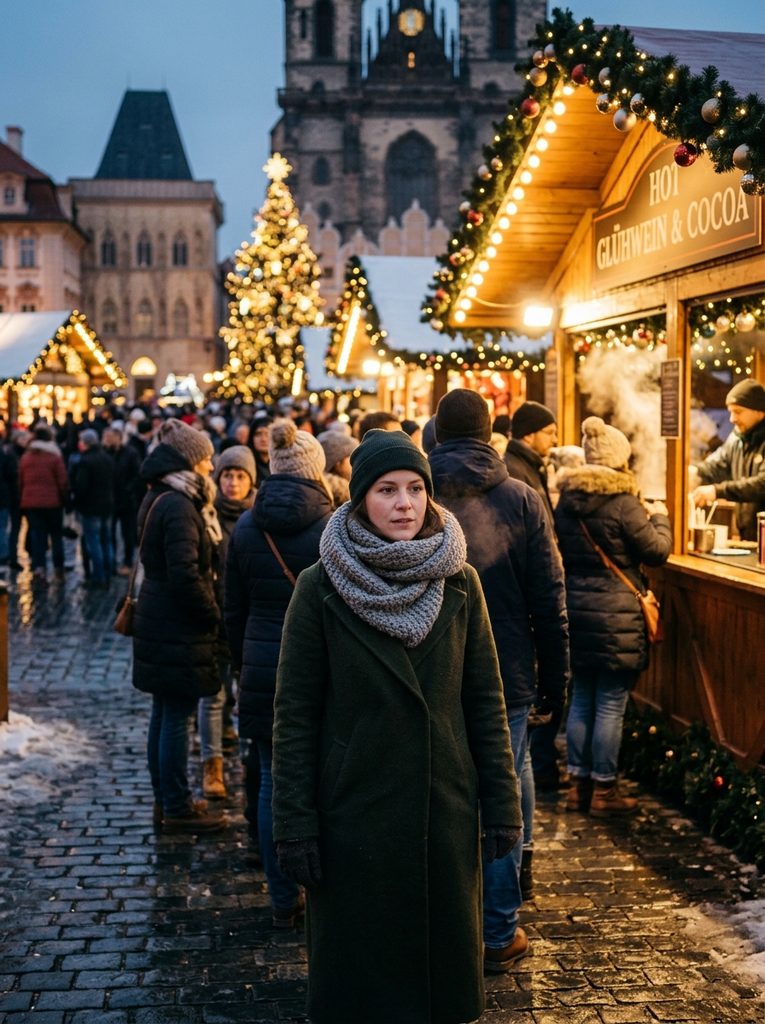
Most cold-weather outfit advice quietly assumes you are moving. A Christmas market breaks that assumption within ten minutes. You walk past a few stalls, stop for the mulled wine line, stop again to compare two hand-painted ornaments, then stand in the square while a brass band plays. By the second hour, the coat that felt perfect on the walk from the train station may not be doing enough.
That is the real puzzle behind what to wear to a Christmas market. The outfit has to hold heat while you stand still, cope with a sudden rush of warmth inside a chalet or café, and still look soft and festive in photographs taken under string lights.
What follows works through the problem one layer at a time, from the thin piece against your skin to the scarf, the shoes, the colors, and the small beauty details people tend to remember only when their lips feel dry. There are also three weather scenarios, so you can match the outfit to the forecast instead of guessing.
Dress for the Queue, Not the Stroll
Walking keeps the body warm with very little help from clothing. Standing in line for roasted almonds does the opposite. Heat drains quickly once you stop moving, and cold stone underfoot pulls even more away through the soles of your shoes.
Many markets also sit in open squares, which adds wind to the mix. Nuremberg’s Hauptmarkt is a well-known example: the Christkindlesmarkt there runs from 27 November to 24 December 2026 and fills the square with around 180 wooden stalls. Wind finds every gap at the collar, cuffs, and waist, so closing those gaps matters as much as adding layers.
A practical way to plan is to picture the longest wait of the day rather than the shortest walk. If you would be comfortable standing in a line for twenty minutes after dark, the rest of the visit takes care of itself.
The Indoor Swing
Stalls are open-air, but many market days also include a heated chalet, a crowded café, a shop, or a tram ride. Stepping from near freezing into a warm room is abrupt, and a sweater that felt ideal outside can suddenly feel heavy and itchy.
This is why several thinner layers usually beat one thick one. Choose a coat you can open with one hand, and a middle layer that looks complete without the coat, because you may spend a good while sitting in it with a hot drink.
Three Layers, Each With a Job
Warmth and prettiness do not have to compete. Giving each layer one clear job keeps the outfit practical and leaves the visible layers free to be decorative.
The Base: Thin, Close, and Quiet
Fine merino wool or a snug thermal top in cream, grey, or black sits against the skin and holds warmth without bulk. Wool is often preferred here because it handles damp better than cotton, which can feel clammy once you start to perspire. Choose a neckline that sits slightly lower than the sweater above it, so no edge peeks out unless you want it to.
For the legs, thin thermal tights or leggings under trousers or a skirt add warmth with almost no change to the silhouette. A matte finish is the safer pick, since shiny fabrics can show through a fine knit.
The Middle: Where Texture Does the Work
This is the layer people see once the coat opens, so it is the right place to be decorative. A cable-knit sweater, a fine turtleneck in a deep shade, or a cardigan over a collared shirt all read well in dim light. Texture shows up better than pattern when the only light comes from strings of bulbs.
Pieces from a fall capsule wardrobe, such as an oversized cardigan or a fitted turtleneck in a deep tone, slot into this layer easily if you already own them. Aim for a knit that feels soft at the neck, because it will sit against your skin for hours.
The Coat: Length, Closure, and Pockets
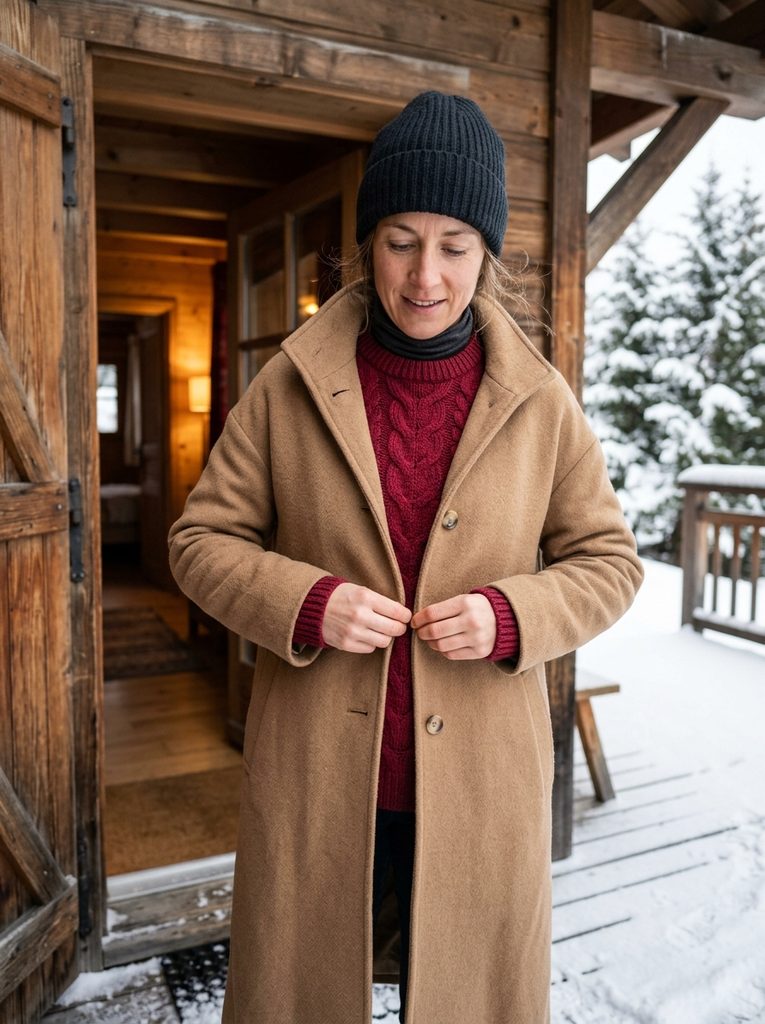
A lined wool coat that reaches the knee or beyond protects the thighs, which feel the wind more than most people expect. A long quilted or down coat with a defined waist is just as good, and it often copes with drizzle better. Look for a closure that seals at the throat, and for deep pockets that fit both a gloved hand and a phone.
Color matters less than cut here. A tailored shape in camel, chocolate, forest green, or charcoal looks polished beside wooden stalls and pine garlands, and it sits comfortably over almost any sweater underneath.
Keeping the Silhouette Neat Under All That Warmth
Layering for cold can add bulk in exactly the wrong places. A few small adjustments keep the shape intentional.
Sleeve room comes first. A chunky sweater under a close-cut coat bunches at the elbow and makes the arm feel stiff. Pair thick knits with a coat cut a little roomier through the sleeve, or switch to a fine-gauge knit if the coat is tailored.
Next, balance the volume. A padded coat, a big scarf, and a pom-pom hat can merge into one large shape. Let one piece be the statement and keep the others slim: a puffer with a close knit hat and a thin scarf, or a sleek wool coat with a generous scarf.
A belt over the coat defines the waist without changing how warm you are, and tucking scarf ends inside keeps the line clean. Tonal dressing in one color family, such as camel, cream, and tobacco, makes the layers look planned. Straight or slightly cropped trousers sit cleanly over boots, while full-length wide legs tend to gather slush at the hem.
Shoes for Cold Stone and Slick Cobbles
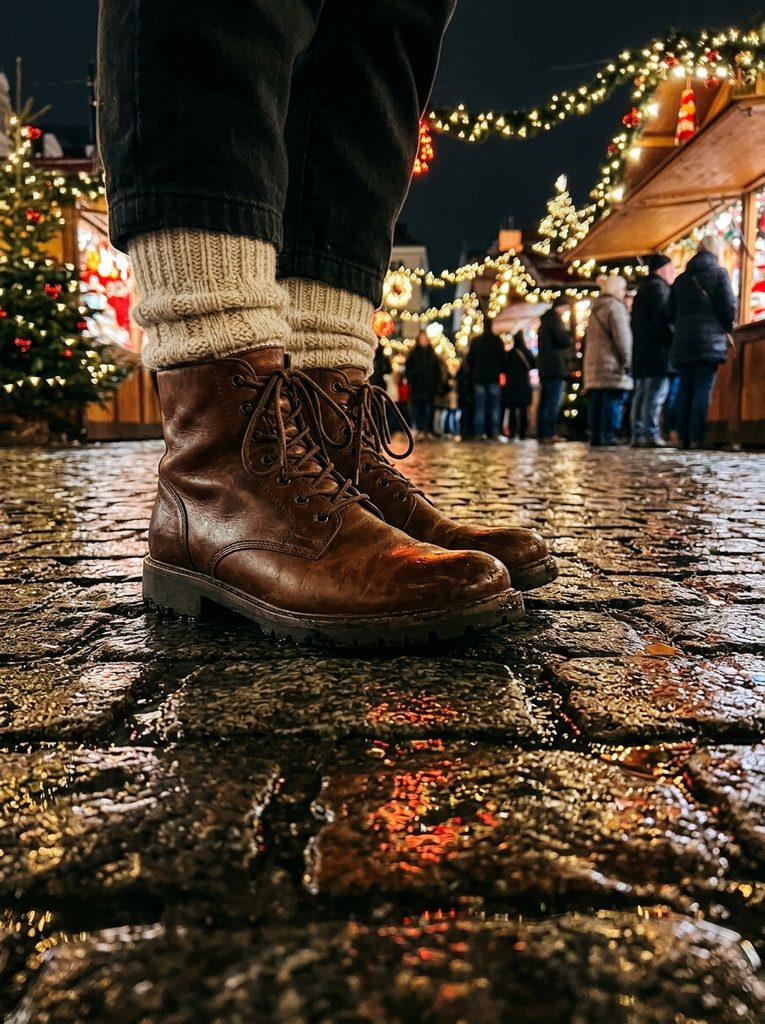
Feet get cold first and stay cold longest, so shoes deserve as much thought as the coat. Look for a closed, lined boot with a lugged sole that grips wet stone. Cobblestones can turn slippery with damp or frost, and smooth soles offer very little help.
Leave room for a thicker sock. A boot that fits snugly over thin socks has no space for wool ones, and a tight fit tends to feel colder than a roomy one because there is less trapped air. Ribbed socks in cream or oatmeal can fold over the boot cuff for a pretty detail that also adds warmth at the ankle.
Heels need care. Narrow stiletto heels can wedge between stones, while a low block heel is far steadier. Chunky-soled leather sneakers work for daytime if they are waterproofed, but suede and canvas soak through quickly in slush.
Break in any new boots before the trip. Market days mean long hours on foot, and stiff new leather is a poor companion. A thin felt or wool insole is an inexpensive way to add a barrier between your foot and the cold ground.
Scarves, Hats, and Gloves: Where the Pretty Details Live
These three pieces carry most of the festive mood. They sit at face and hand level, exactly where photographs and conversations happen.
The Scarf
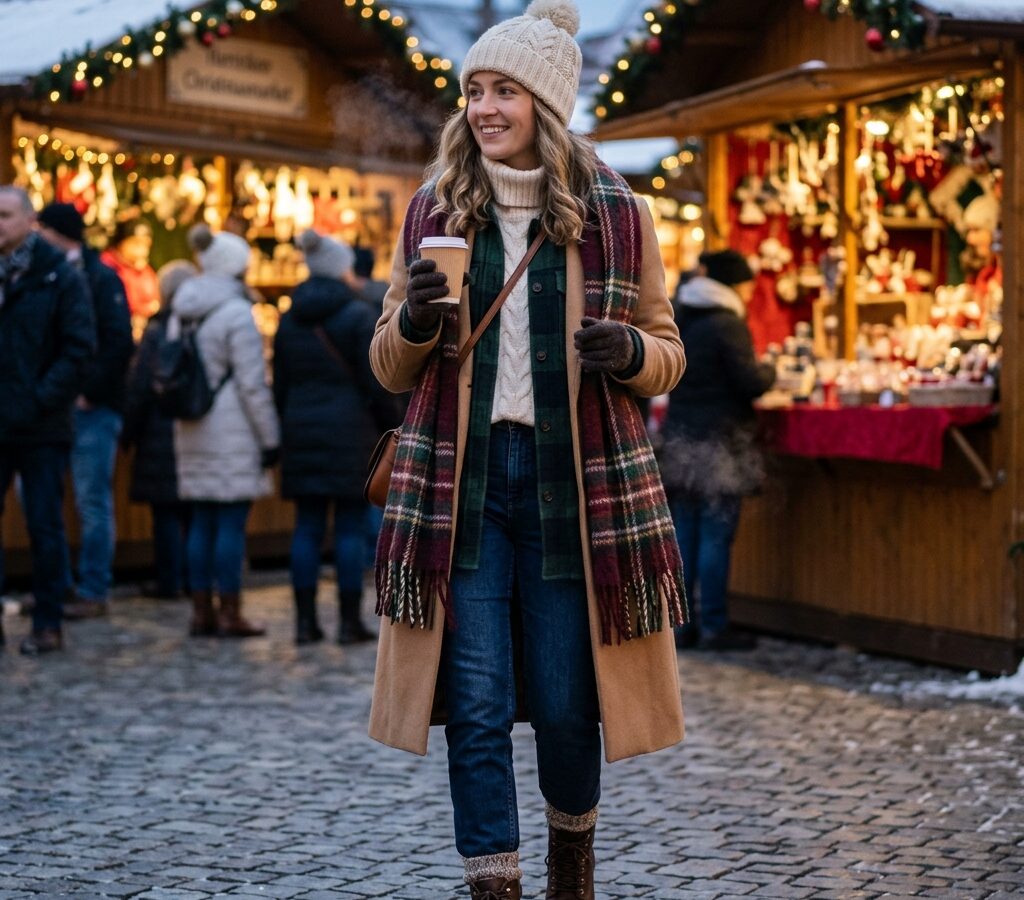
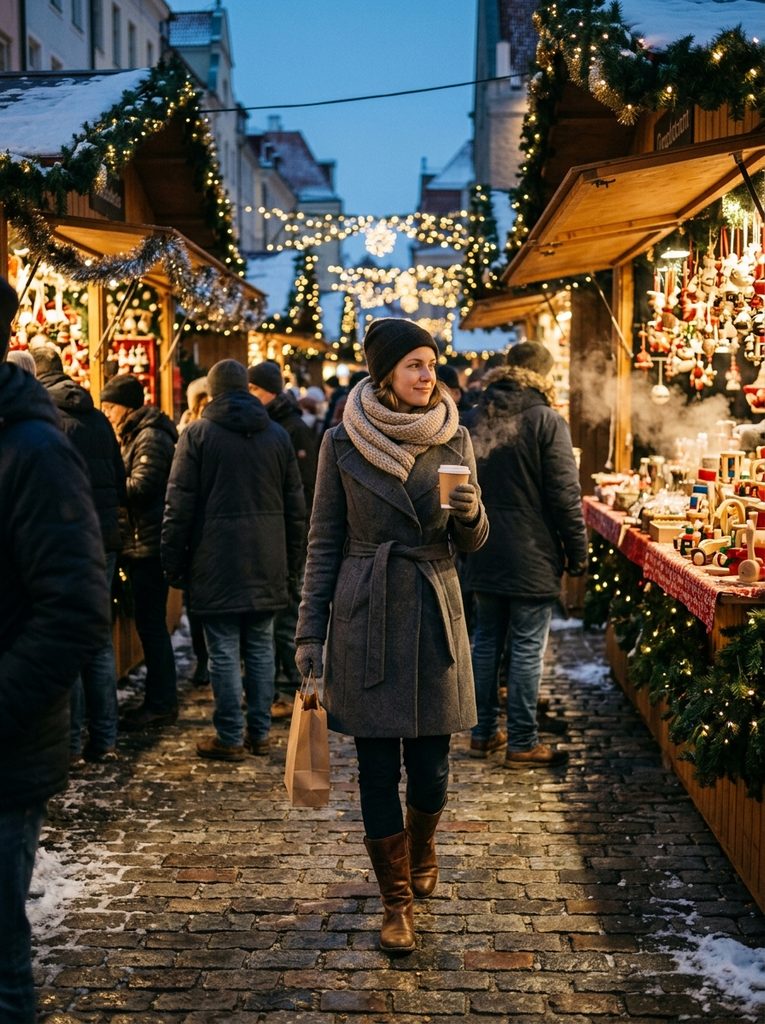
A wide wool scarf large enough to cover your chin and cross your chest does more for warmth than a thicker sweater would. It also adds color and texture right at face height. Loop it once, or tuck the ends inside the coat, so they stay clear of mugs and sugar.
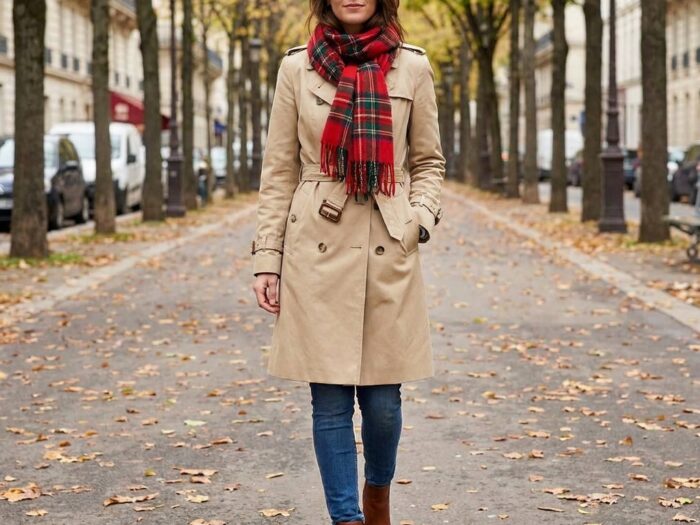
The looped and tucked styles in this scarf styling guide for structured coats are useful here, and they work as well with a wool coat as with the trench it was written around. On very windy days, a snug neck warmer under an open coat collar is a simple backup.
The Hat
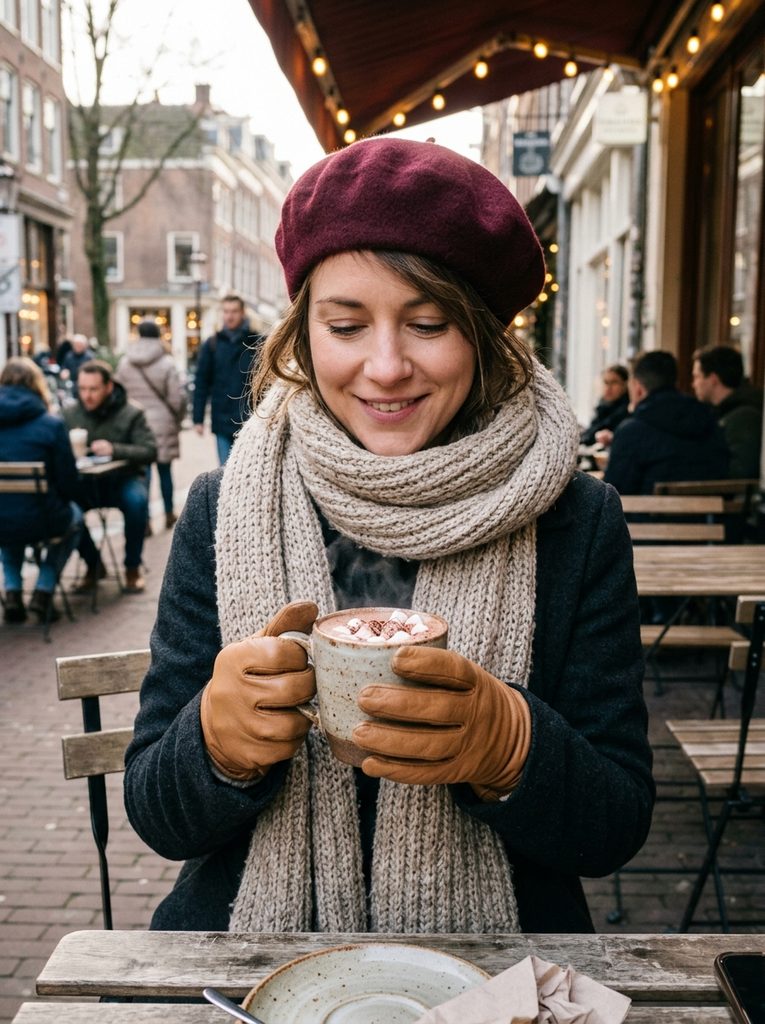
A beanie is the warmest option, a beret is the dressiest, and a knit headband protects the ears while leaving most of the hair visible. Whichever you choose, plan the hair underneath. A loose braid or a low bun survives a hat better than a style built on root volume, and a quick finger-comb brings it back after the hat comes off in a warm room.
Gloves and the Mug Problem
Mulled wine, hot chocolate, and paper bags of roasted nuts keep your hands busy all evening. Mittens are warmest but clumsy for paying at a stall, and fingerless gloves leave the fingertips exposed. A lined leather or knit glove with a grippy palm is the easiest middle path.
A paper cup also warms bare fingers on its own, so slipping a glove into a pocket for a minute at a time is a fair plan. Keep the pair clipped together or tucked in the same pocket, since single gloves vanish in crowds.
Colors That Hold Up Under String Lights
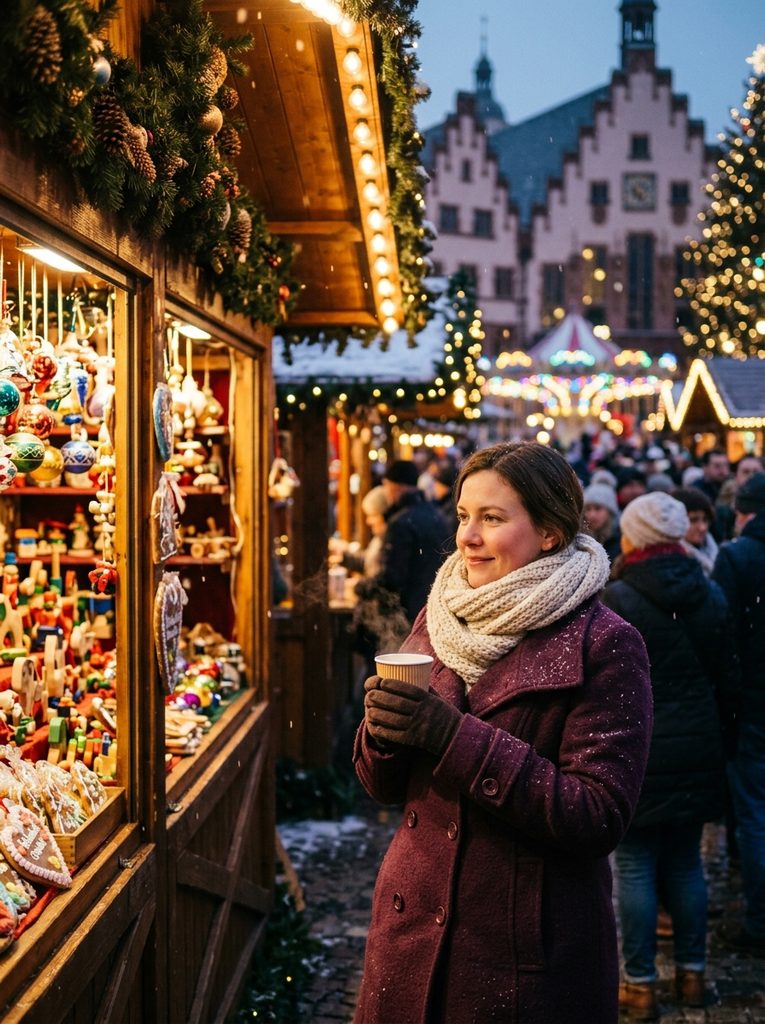
Warm bulbs tint everything gold. Cream drifts toward butter, bright white looks slightly yellowed, and pale grey can go flat. Mid-depth and deep shades keep their character far better: cranberry, bottle green, plum, chocolate brown, camel, and navy.
Red and green worn together at full strength can read as a costume. A better balance gives one color the lead and the other a supporting role, such as a burgundy coat with a dark green scarf, or a forest green knit with a cranberry hat. If the outfit is mostly neutral, put one warm color close to the face, where it also flatters in photographs.
All black is practical but can look heavy in low light, and a cream or oatmeal scarf breaks it up quickly. A single festive detail is usually enough, for example a fair isle border, a velvet hair ribbon, or a small brooch on the coat lapel.
Fabrics and the Food Problem
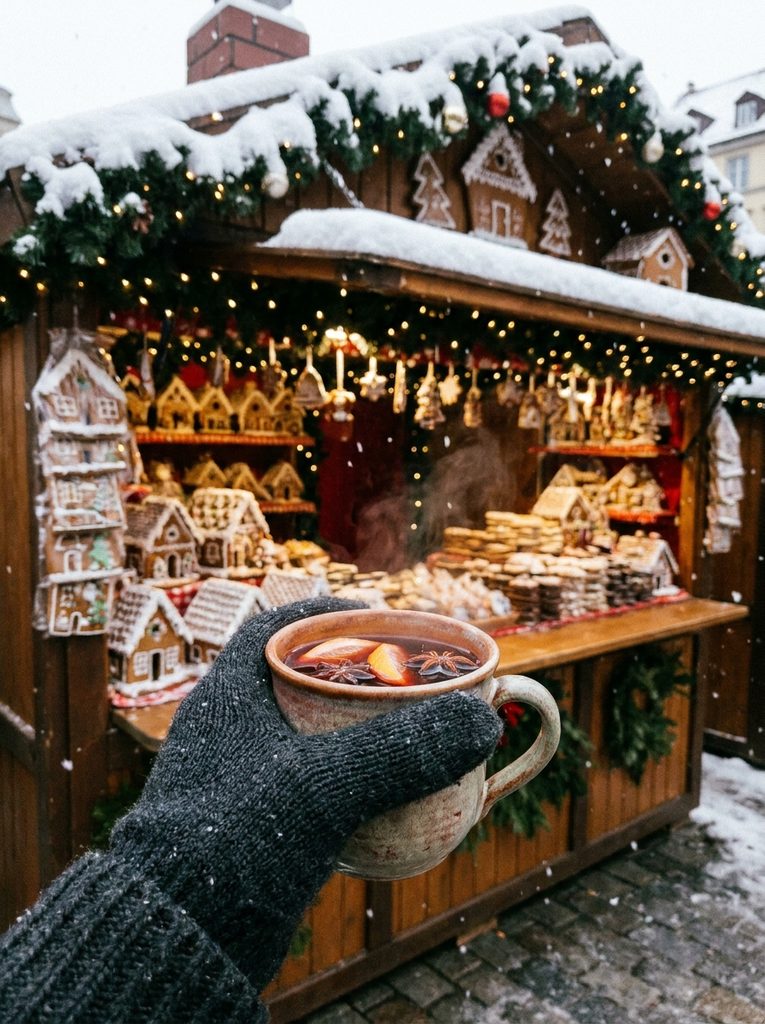
Markets are full of things that drip, sprinkle, and smoke: mulled wine, hot chocolate, powdered sugar, grilled sausages, roasted nuts. A little foresight in fabric choice saves a lot of fuss later.
Dark, tightly knitted wool hides crumbs and brushes off easily. Fluffy mohair and long-pile knits catch sugar and hold on to smoke, while pale suede and satin show water spots. Slim, snug cuffs also help, since a long loose sleeve has a way of finding the edge of a cup.
Wool has an advantage here. Woolmark describes it as naturally stain and odor resistant, and its guide on removing stains from wool covers wine and chocolate marks if the worst happens. Hold hot drinks away from your chest, and blot a spill instead of rubbing it.
Dress for the Weather: Three Market Scenarios
Forecast numbers are only a rough guide, since wind and damp change how cold the air feels. The three scenarios below use general bands and can be adjusted up or down.
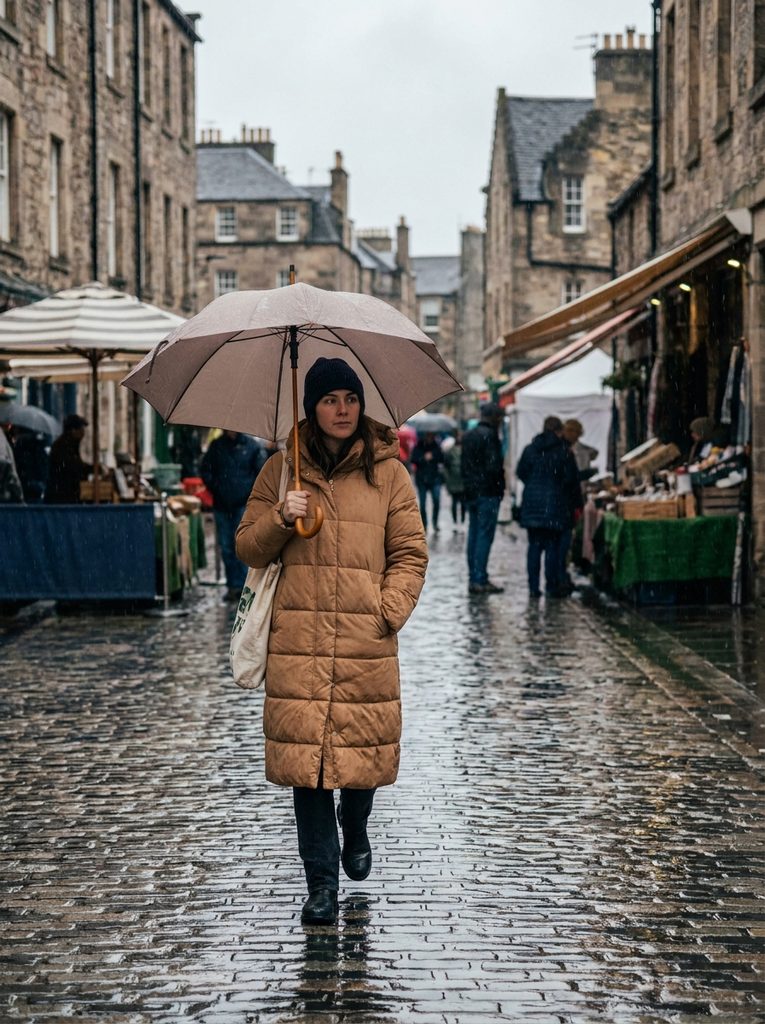
Cold and Damp, Around 0 to 5°C (32 to 41°F)
This is the classic market evening, with drizzle on the stones and visible breath. Start with a thin merino base, add a cable-knit sweater, and wear straight wool-blend trousers over thermal leggings. A lined coat with a water-resistant finish, waterproof lugged boots, wool socks, a wide scarf, and a beanie complete it. Avoid wide trouser hems, which drag through puddles.
Dry and Below Freezing
Dry cold feels crisp, but it bites. Use the same base, then add a warmer lower layer, such as fleece-lined leggings under trousers, and choose a longer padded coat that covers the hips. Mittens over thin liner gloves handle the coldest stretches, and a hat that covers the ears matters more than its style. Dry air also brings static, which is where a drop of hair oil earns its place.
Mild With an Evening Drop
Sunshine at midday can mislead. A medium-weight wool coat, a fine knit, and ankle boots cover the daylight hours, while a scarf and thin gloves in the bag cover the rest. Temperatures often fall faster after sunset than expected, and these small extras let you adjust without rebuilding the outfit.
Match the Outfit to the Kind of Market
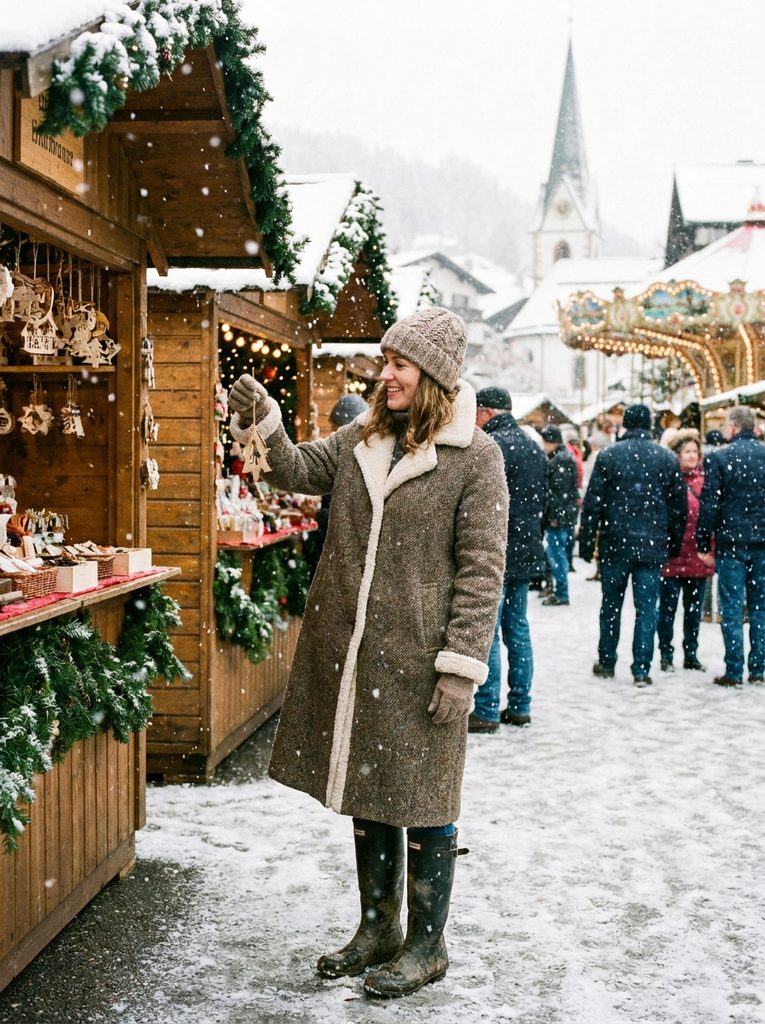
Not every market asks the same thing of an outfit. A small village market on grass or gravel is a mud question first, so waterproof boots with ankle coverage matter more than anything else. A large city market in a paved square leans on cobblestones and crowds, which makes steady shoes and a bag worn in front the priorities.
A full day trip with a train ride each way calls for easily adjustable layers and the most comfortable shoes you own. A market in a mountain town may bring real snow, which makes insulated, waterproof boots and a hood worth the extra weight in the suitcase.
In milder places, such as coastal cities where December is damp but not freezing, a wool coat over a thinner knit and a water-resistant finish beat heavy insulation. Check the forecast for your specific date, since the same city can feel quite different from one week to the next.
Dressing Up Without Freezing
Many market visits roll into dinner, a concert, or a family gathering. The coat and boots stay the same, while the middle layer and accessories change.
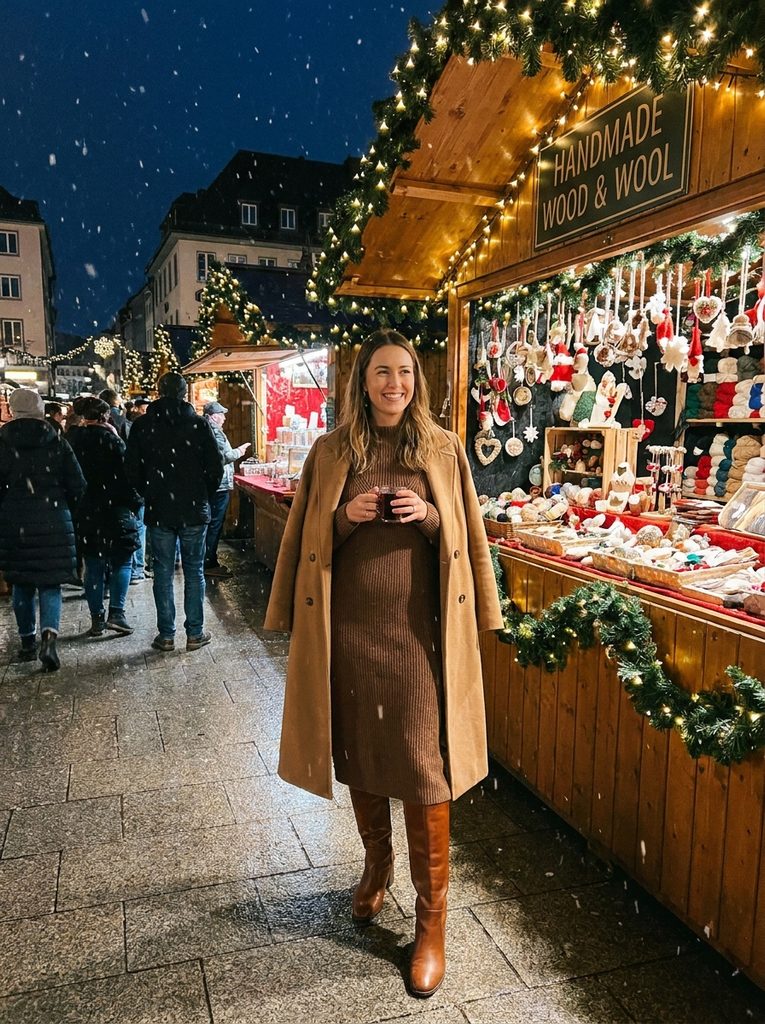
A knit midi dress with thermal tights and tall boots looks dressed up while keeping the legs covered. A velvet or satin midi skirt with a fine turtleneck works too, and thermal leggings underneath disappear beneath a long hem. Tights in the same tone as the boots lengthen the leg line. Satin blouses are lovely but show water spots, so they suit the evening after the market better than the market itself.
Keep jewelry small and secure: pearl or gold studs, small hoops, or a delicate ring. Long earrings catch on scarves and hat brims. If heels are part of the evening plan, carry them in a tote and wear boots until you arrive.
Hair, Lips, and Hands in Cold Air
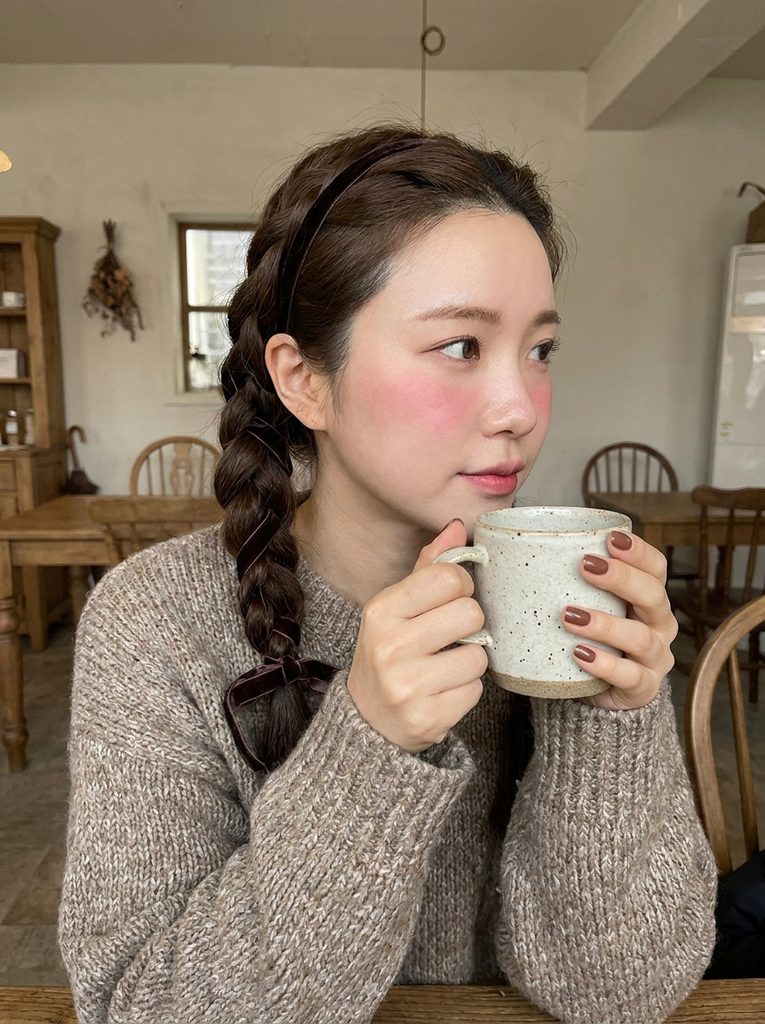
Hats flatten hair and cold air raises static. A tiny amount of hair oil smoothed between the palms tames flyaways, and styles such as a low braid, a side-parted bun, or a half-up look with a velvet ribbon hold up well under a hat.
Cold, windy air can dry the lips, so a balm applied before leaving the house is a comfortable habit. Cream blush gives a natural flush that reads well in warm light, and waterproof mascara is a practical call if cold air makes your eyes water. Choose products that suit your own skin and preferences.
Hands are on show more than expected, because gloves come off for paying and tasting. Short, rounded nails in glossy cocoa, cherry, or a milky neutral look neat and hide small chips. The palettes in this guide to minimalist winter nail colors suit the season well.
A Bag That Keeps Both Hands Free
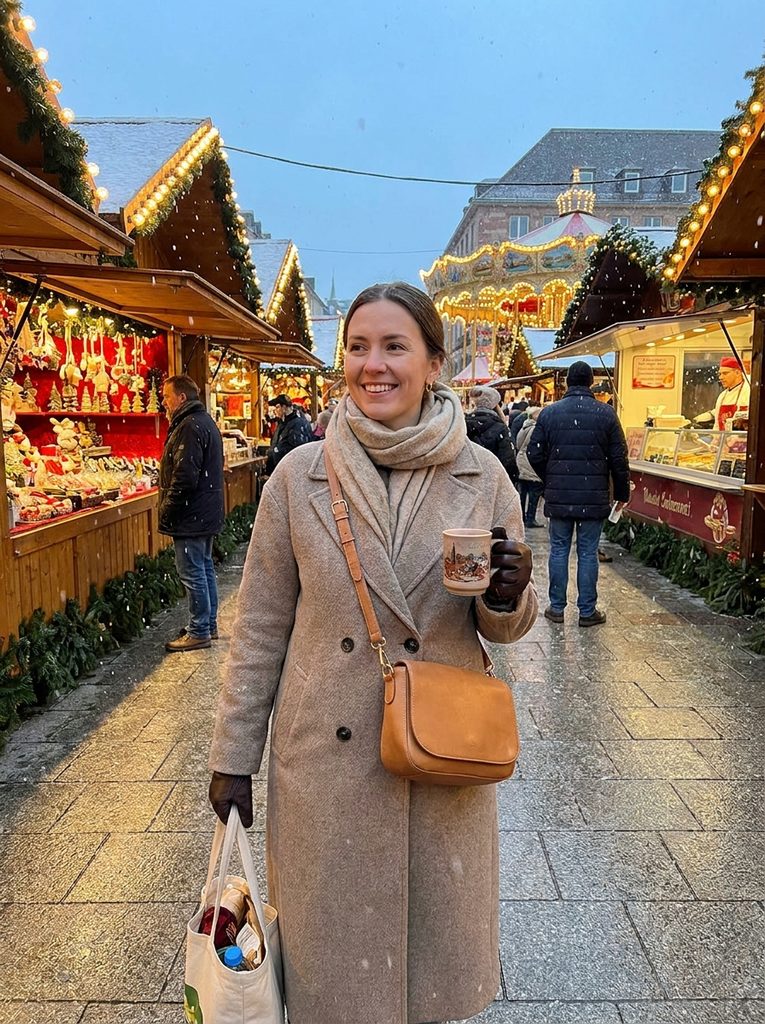
Between a mug, a paper bag of treats, and a handmade ornament, a handheld bag quickly becomes a nuisance. A crossbody in a mid size solves that. The handbag size guide describes structured mid-size bags as the most versatile category, and one holds a phone, cards, lip balm, and gloves without bulging. A zip or secure flap is worth having, and in crowds it is sensible to wear the bag in front.
A foldable tote is a good addition if you plan to buy breakable ornaments or pottery. A short pocket checklist also helps:
- Lip balm and a small hand cream
- Disposable hand warmers
- Pocket tissues
- A bank card and a little cash, since some stalls may prefer it
- A spare pair of thin socks for wet feet
Before You Walk Out the Door
Three quick checks catch most problems. Could you wait in line for twenty minutes after dark without wishing you had dressed differently? Does the outfit still look finished once the coat comes off? Can you hold a mug without it touching your sleeve or scarf?
A Christmas market is a slow outing built around small pleasures, so the clothes that serve it best are the ones you stop noticing. Settle the warmth first, then let a scarf and one good color do the festive work.

Ella is a fashion and beauty writer who shares inspiring ideas about hairstyles, nail designs, wedding outfits, and seasonal fashion trends. She loves discovering fresh styles and creating…
View Author Profile →