

On this page
- Start With Where the Hem Lands
- Hip-Length Coats: Quick and Easy
- Thigh-Length Coats: The Commuter Zone
- Knee-Length Coats: The Middle Ground
- Calf and Ankle Lengths: Maximum Coverage
- Reading a Label Without a Textile Degree
- What Premium Looks Like Up Close
- Keeping a Good Coat Good
- Pick a Length First, Then Argue About Color
Length is the first decision in any coat, and it rarely gets the attention that color does. A hem at the hip and a hem at the ankle are almost different garments. They keep different parts of the body warm, they move differently on stairs, and they change how every outfit underneath looks.
So this guide skips the usual “pick a fabric” approach. It walks down the body instead, from hip-length jackets to ankle-length coats, with ten premium styles along the way. Each one comes with notes on materials, construction, and what to wear with it.

Start With Where the Hem Lands
Think about a normal winter day. There is a walk to the station, a wait on a cold platform, a few hours indoors, and a walk back in the dark. A short coat handles the indoor part well and fails the platform. A long coat does the reverse.
Hem height also changes the outfit. A short coat keeps the leg line visible, which suits wide trousers and midi skirts. A long coat covers most of the outfit, so the shoes and the collar do the talking. Neither is better. They just solve different days.
Here is a rough map of how length connects to everything else.
| Hem length | Where it ends | Works well with | Watch out for |
|---|---|---|---|
| Hip | At or just below the hip bone | High-rise trousers, midi skirts, ankle boots | Cold thighs in wind |
| Upper thigh | A hand below the hip | Straight trousers, dark jeans, flat boots | Can crowd a long top |
| Knee | At or near the knee | Almost anything, including dresses | Bunching when seated |
| Calf | Mid-calf | Slim trousers, tall boots, narrow skirts | Hem dragging in slush |
| Ankle | Near the ankle bone | Fitted knits, chunky boots | Stairs and puddles |
“Premium” in the title points to the way a coat is made, not to a brand. Good fabric, clean seams, and sound lining matter whatever the label says. Whether a coat is worth its price depends on budget and how often it will be worn, so treat the styles below as ideas, not a shopping order.
Hip-Length Coats: Quick and Easy
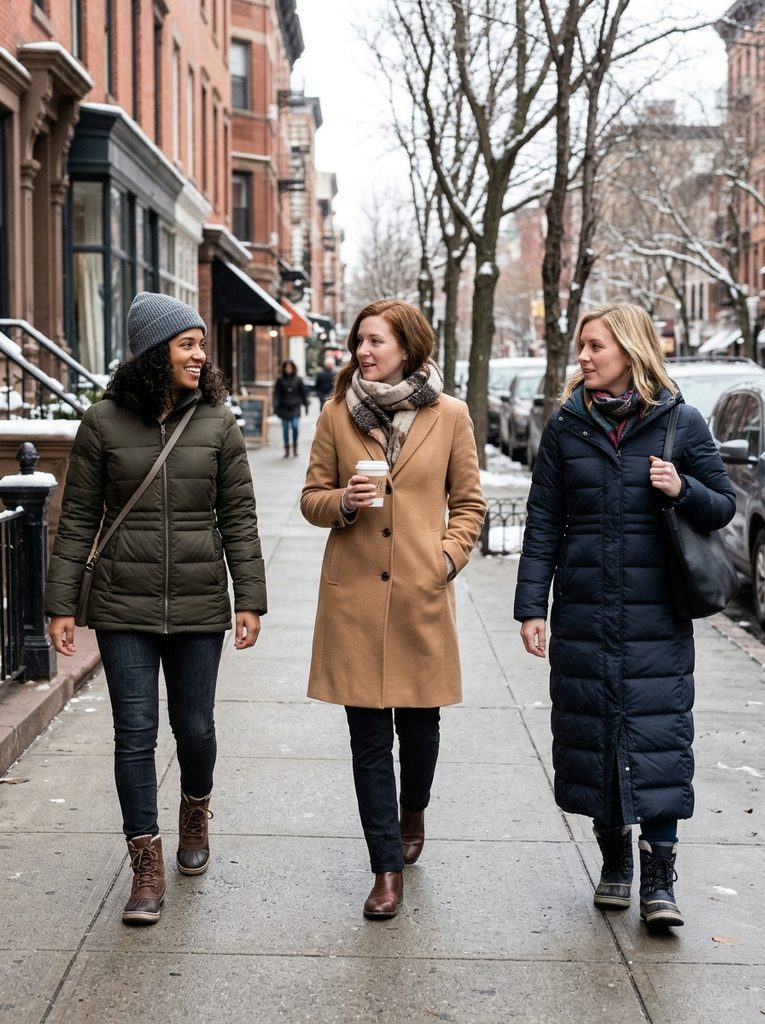
These are the coats for people who move a lot. They sit comfortably in a car, on a bike seat, or on a crowded train. The trade-off is simple. Everything below the hip is on its own, so warm trousers and boots matter more than usual.
Boiled Wool Jacket
Boiled wool is knitted wool that has been shrunk and pressed until the surface turns dense and felt-like. The fabric does not fray easily, so many jackets have raw, unfinished edges and almost no lining. It feels soft, holds a rounded shape, and drapes without stiffness.
This jacket suits high-rise trousers and long skirts, where the hip-length hem meets the waistband neatly. Oatmeal, grey, and deep green all look good in the heavier texture. The fabric blocks light wind but can feel thin on freezing days, so a fine merino layer underneath helps.
The Cropped Down Jacket in a Matte Shell
Short puffers can look sporty when the fabric is shiny. A matte shell in black, olive, or stone calms them down. The boxy shape ends at the hip, and the wide quilted channels give some volume without bulk.
Wide-leg trousers balance the shape well, since the volume sits at the top. Thick sweaters and even a heavy hoodie fit beneath it, and these hoodie outfits for women show how a hood can sit under a jacket without bunching. Because the legs stay exposed, lined trousers or thick tights are worth adding for long walks.
Thigh-Length Coats: The Commuter Zone
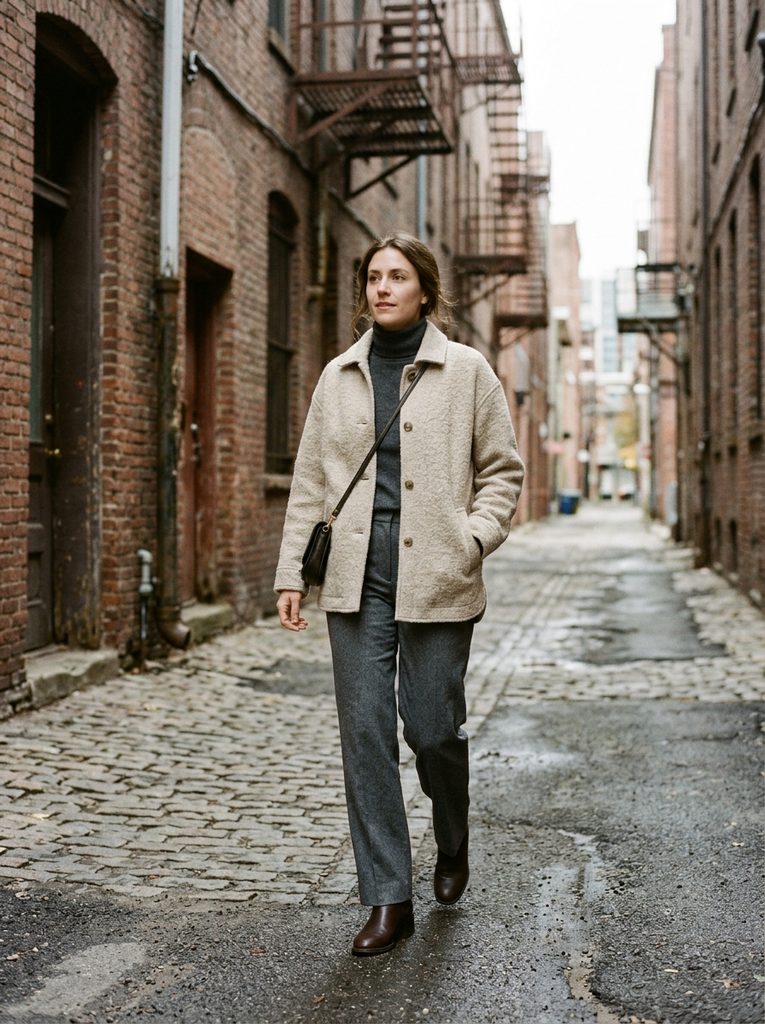
A hem a hand below the hip is the sweet spot for people who take coats on and off all day. It covers the top of the legs and still lets the stride stay natural.
The Wool Peacoat
The pea coat has a double-breasted front, wide lapels, and a body that sits close to the frame. A heavy wool with a slight sheen looks the sharpest, and a dense weave holds the shape through the season. Look for a collar that can stand up when buttoned, because a limp one leaves the neck bare.
It works well over straight trousers, dark jeans, or a pleated midi skirt with flat boots. On work days, a few go-to combinations from these office outfit formulas for low-effort mornings fit under it easily.
The Quilted or Water-Resistant Car Coat
A car coat is traditionally cut to be comfortable when seated, with a straighter body and a little more room. Modern versions often use a tightly woven cotton blend or a treated wool, with a light quilted lining.
The straight shape has no fuss. A single row of hidden buttons, a plain collar, and deep pockets are all it needs. Stone, navy, and olive suit it. It copes with drizzle better than most wool coats, though it will not replace a proper rain jacket in a downpour.

Knee-Length Coats: The Middle Ground
If only one length gets bought, this is the safest. It covers more than a short coat, yet it is easy to wear with dresses, boots, and everyday trousers. Three styles stand out.
The Camel Hair Polo Coat
The polo coat is a double-breasted, knee-length style traditionally made in camel hair. The fabric is soft, light for its warmth, and has a warm golden-tan color. Patch pockets, a half belt at the back, and wide lapels give it a relaxed but polished look.
Camel hair marks easily, so rain and car seats are its enemies. Wear it with cream knits, dark trousers, and loafers, or over a dark dress to make a calm contrast. Because the color is already warm, simple neutrals around it look best.
The Belted Cashmere-Blend Coat
A blend of wool and a little cashmere gives a coat a smoother, softer hand than plain wool. The belt defines the waist, and the fabric falls in clean folds below it. The look is quiet and a little formal.
It suits slim knits and tailored trousers. Softer fibers can pill with friction, so bags that rub against the hips are worth watching. A structured bag, such as the sizes covered in these handbag sizes worth owning, sits away from the fabric better than a slouchy one.
The Knee-Length Insulated Coat With a Hood
For anyone who stands outside a lot, this one earns its place. The fill is usually down or a synthetic alternative, held in horizontal or vertical channels. A knee-length cut covers the thighs, and a good hood with a drawcord handles wind.
The shell matters as much as the filling. A tightly woven fabric blocks wind and sheds light rain. A thin one lets cold through at the seams. Choose a muted color and a matte finish to keep it looking composed.
Calf and Ankle Lengths: Maximum Coverage
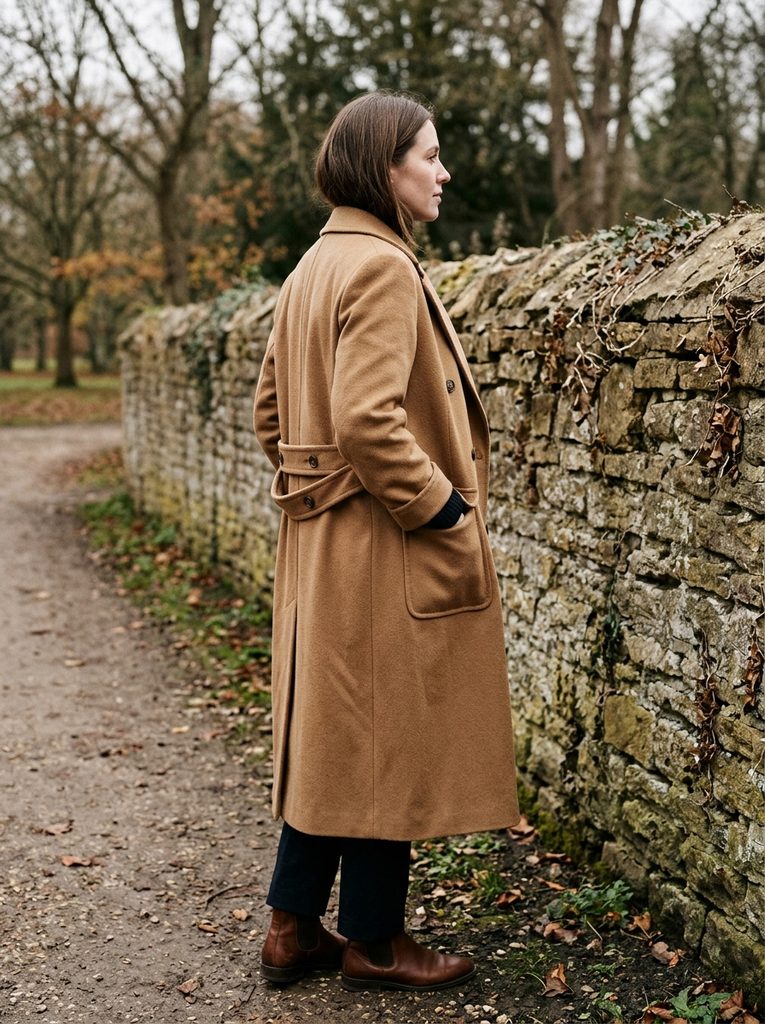
Longer coats feel dramatic, and they are also the most practical against wind. Nothing is exposed except the shoes. The cost is a bit more care on stairs, puddles, and car doors.
The Long Double-Breasted Wool Coat
Broad shoulders, a deep double-breasted front, and a hem near mid-calf create a strong shape. In a thick wool, it hangs like a column and needs very little styling. Black, charcoal, and dark brown all work.
Tall boots pair well because the boot top and the coat hem leave a clean gap or overlap. This guide to knee-high boot outfits across hemline lengths helps match boot height to a long hem. Keep sleeves long enough to cover the wrist bone, or the whole line looks short.
The Long Teddy or Faux Fur Coat
Soft pile fabric has real warmth, and it adds texture to winter outfits that can feel flat. A mid-calf teddy coat in cream, caramel, or grey looks cozy and slightly dramatic.
Let it be the one loud piece. Simple knits, straight trousers, and plain boots keep the outfit balanced. Pile fabrics can shed and pick up static, so a quick brush helps. They also suit dry cold better than wet snow, which can mat the fibers.
The Ankle-Length Down Coat
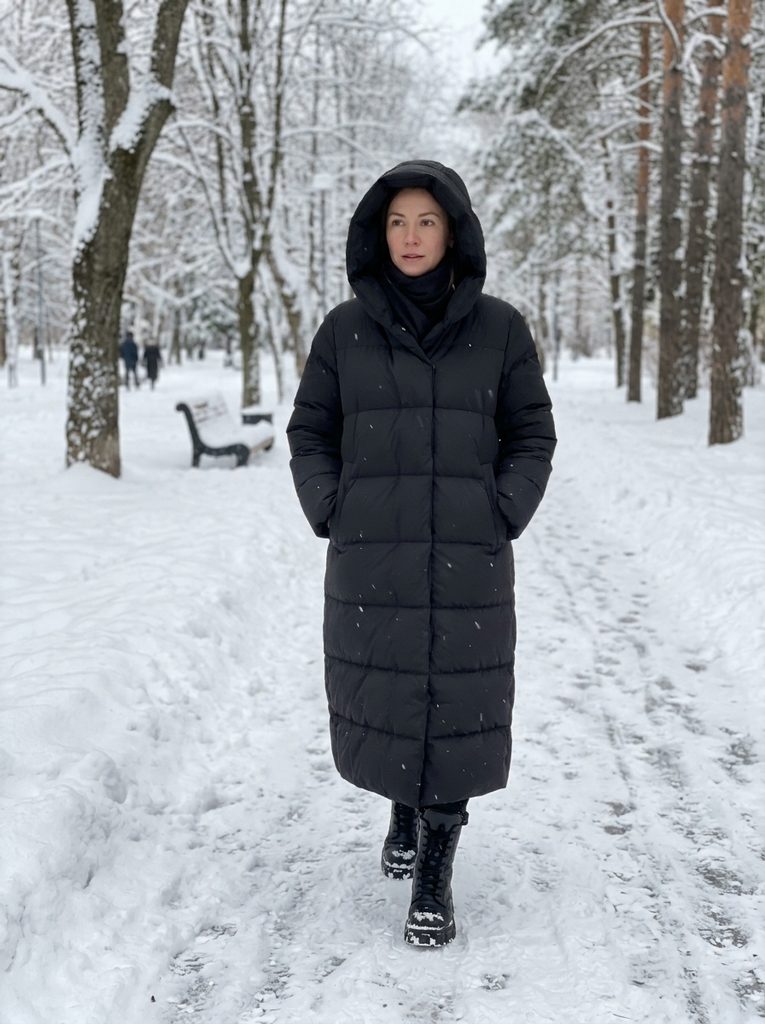
This is the coat for the coldest stretches. A hem near the ankles, a high collar, and a full quilted body make it feel like a wearable blanket. Black, olive, and deep navy look the cleanest.
Sleeves with an inner cuff keep wind out, and a storm flap over the zipper stops drafts. Because the hem sits so low, boots with some tread keep both the shoes and the coat safer on slippery ground. Fitted layers underneath prevent the whole outfit from looking oversized.
Reading a Label Without a Textile Degree
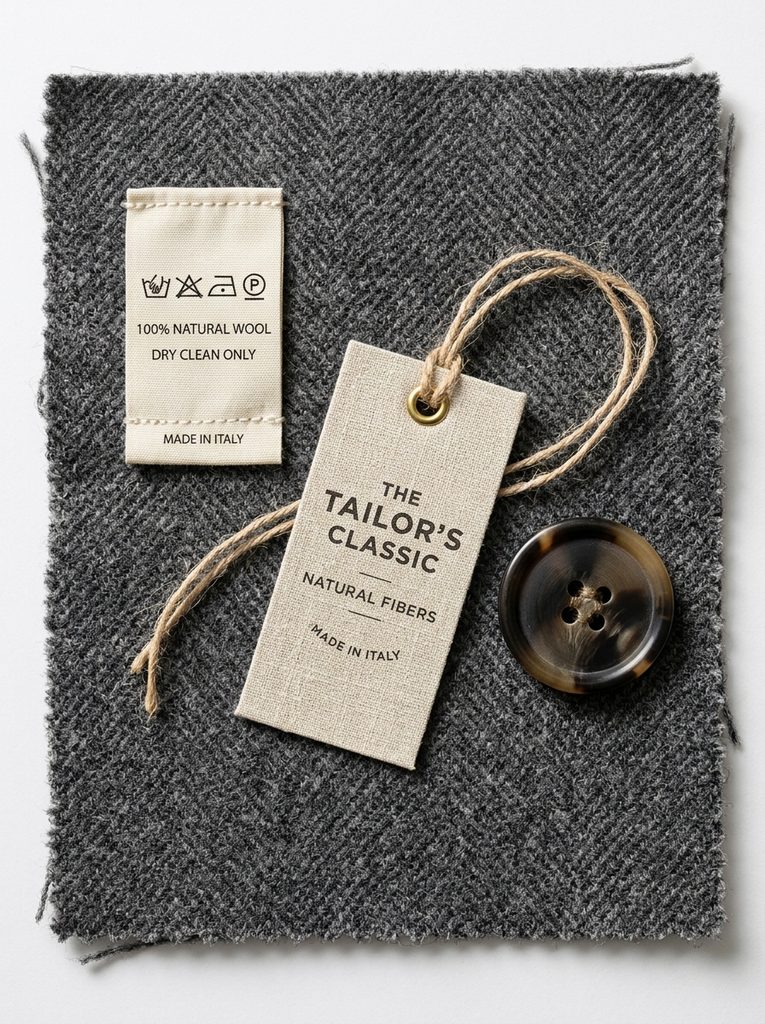
Labels hold more information than most shoppers use. A few lines are worth a quick look.
- Wool percentage. Higher wool content generally means better drape and warmth. A small share of nylon can add strength, while a large share of polyester can change how the fabric breathes and ages.
- Cashmere share. Even a modest amount softens the feel. It also makes the fabric more delicate, so expect gentler wear.
- Fill power. On down coats, fill power describes how much space an ounce of down fills. Higher numbers usually mean more warmth for less weight.
- Fill weight. This tells how much insulation is actually inside. A coat with high fill power but little fill may still feel thin.
- Water terms. “Water-resistant” is not the same as “waterproof.” The first handles light rain for a while, and the second blocks it almost entirely.
- Lining material. Cupro and viscose breathe better than polyester, which matters during long indoor stretches.
None of this needs an exact number to be useful. It just helps compare two coats that look alike on the rack.
What Premium Looks Like Up Close
Most of the difference sits in places that do not show from across a room.
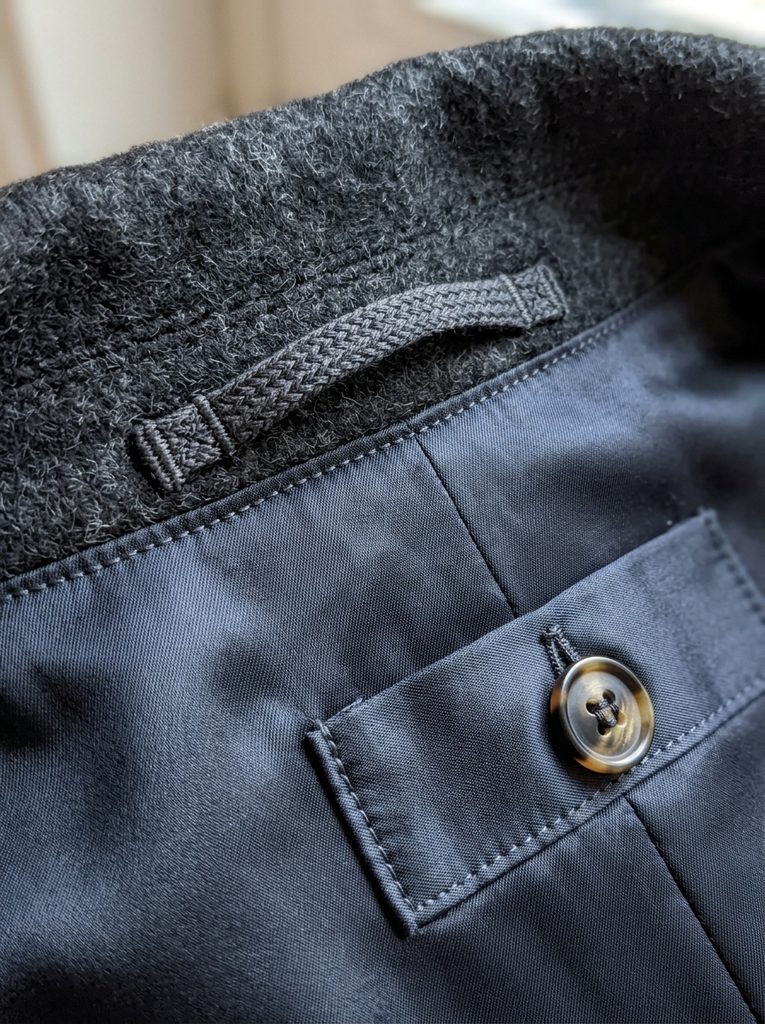
Start with the seams. They should lie flat, and stripes or checks should line up across the front and at the pockets. Check the inside too. Neat stitching around the lining and a small hanging loop at the neck are good signs.
Buttons come next. Horn, corozo, or well-finished metal feel heavier and look richer than glossy plastic. A thread shank, which is a small raised stem of thread under the button, lets the fabric sit flat when closed. Pockets should be deep enough to hold a phone without sagging. Sleeve length should allow for a thick knit, and the collar should close without pressing on the neck.
Those details are easy to test in a shop. They also explain why some coats stay sharp for years while others look tired after one season.
Keeping a Good Coat Good
A little routine goes a long way. Brush wool lightly with a soft clothes brush, and let the coat rest on a wide, shaped hanger between wears. Spot-clean small marks before sending it to a cleaner, since frequent cleaning can dull wool. For down, follow the care label, and let it dry fully so the filling does not clump.
When winter ends, store the coat in a breathable garment bag. Plastic traps moisture, and that is where trouble starts.
Pick a Length First, Then Argue About Color
The best winter coats for women are the ones that match a real day, not an imagined one. A long walk in sleet asks for something very different from a short office commute.
So start with the hem. Decide which length fits most of the week, then choose the fabric and the details that suit it. After that, a second coat in a different length can cover the days the first one cannot. Two coats, picked this way, handle most of winter.

Ella is a fashion and beauty writer who shares inspiring ideas about hairstyles, nail designs, wedding outfits, and seasonal fashion trends. She loves discovering fresh styles and creating…
View Author Profile →