
On this page
- Why Winter Changes the Color Conversation
- Deep Berry and Plum
- Dusty Rose and Blush in Heavier Fabrics
- Mushroom, Taupe, and Warm Gray
- Cobalt and Deep Blue Variations
- Oxblood and Burgundy
- Jewel-Tone Greens Without the Holiday Feel
- Choosing the Right Fabric for a Non-Black Dress
- Dressing for the Ceremony and Reception
- Etiquette Points Worth Remembering
- Sample Looks to Start From
-
Frequently Asked Questions
- Can I wear a color other than black to a winter wedding?
- What is the most flattering non-black color for winter?
- Are jewel tones always too bright for a formal wedding?
- Should I match my shoes to my dress?
- How can I keep warm in a non-black dress without adding bulk?
- Is it acceptable to wear a patterned dress?
- Making the Decision
Black is the default for most winter occasions, and for good reason. It is easy to wear, flatters most people, and rarely looks out of place. But when every guest reaches for the same dark dress, the room can start to look like a single outfit repeated thirty times. Choosing another color is a simple way to look like you put thought into the day, provided you pick one that suits the season and the venue.
This guide looks at colors and dress choices that work for winter weddings without relying on the usual red, emerald, and velvet. The goal is an outfit that feels fresh, warm, and appropriate for a couple who has invited you to celebrate with them.
Why Winter Changes the Color Conversation
Summer wedding guests have plenty of color freedom. Pastels, bright prints, and light fabrics suit the weather. Winter is different. The light is lower and often cooler, indoor spaces may be lit with candles or warm bulbs, and outdoor walks happen in cold air. A color that looks lively under a summer sun can look washed out or flat in a December evening.
Winter colors need to do two jobs at once. They should hold their own under dim or warm lighting, and they should suit the more substantial fabrics that the season calls for. Wool, crepe, heavy satin, and fine knits all take color differently. A dusty tone may look soft in a wool crepe and muddy in a thin jersey. Keep the fabric in mind as you choose the shade.
It also helps to think about the venue. A barn wedding with string lights and wooden beams can handle richer, earthier tones. A city hotel ballroom with mirrors and chandeliers suits cooler, cleaner shades. A church ceremony followed by a reception may call for something a little more subdued during the service.
Deep Berry and Plum
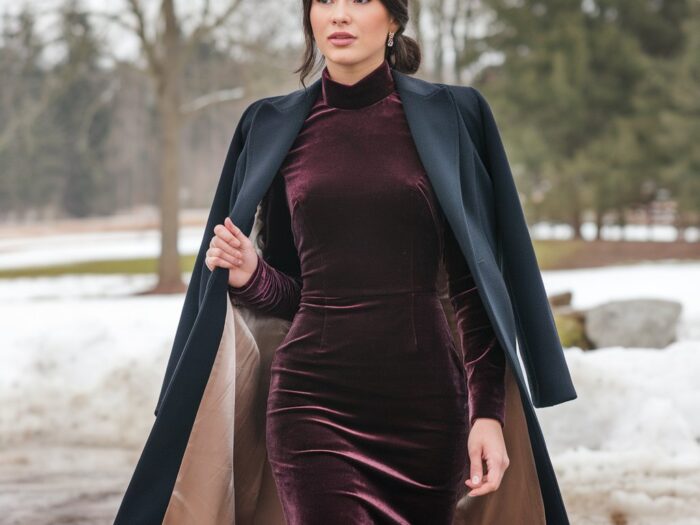
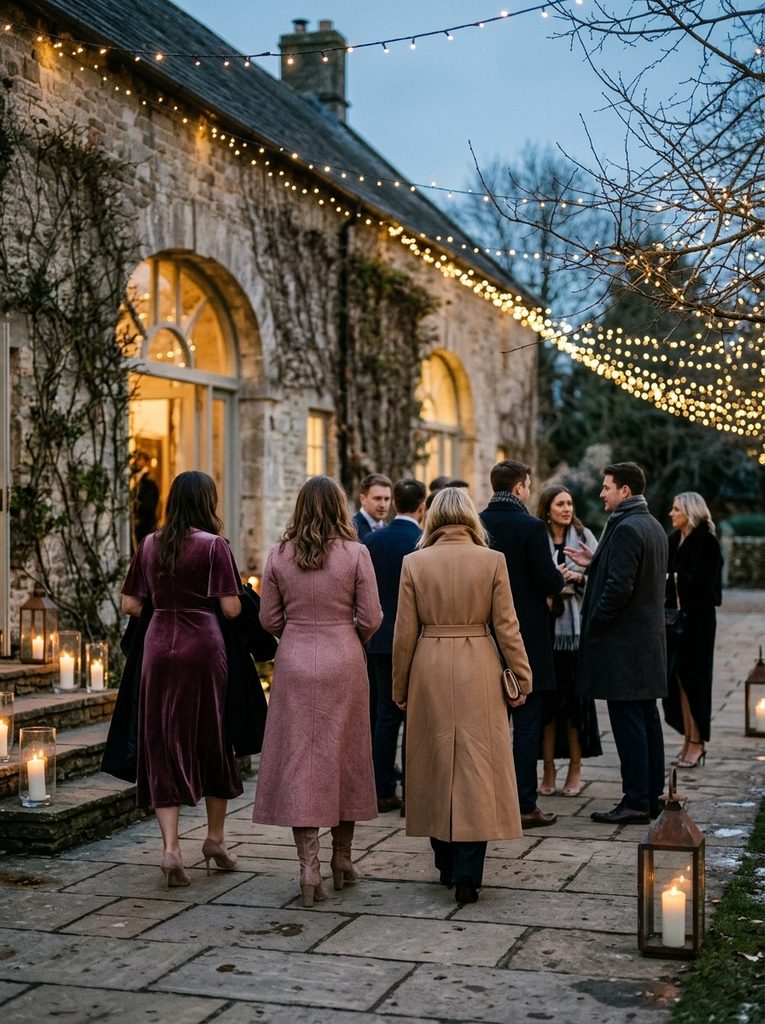
Plum and deep berry are close relatives of black in terms of weight, but they carry more warmth. In low light they often read as near-black, then reveal their color when the light hits them. That quality makes them a clever middle ground for guests who want to stay within a formal palette while avoiding the expected.
A plum midi dress in a matte crepe is a practical choice. It looks sophisticated during the ceremony and relaxed enough for the reception. Pair it with a silver or gunmetal clutch and simple drop earrings to keep the focus on the color.
Berry tones work well with warm neutrals. A deep raspberry or wine-colored knit dress can be layered under a camel coat, and the combination looks rich without feeling heavy. Be mindful of shine. A high-shine satin in plum can look dramatic at night, but a matte finish tends to suit daytime ceremonies better.
Dusty Rose and Blush in Heavier Fabrics
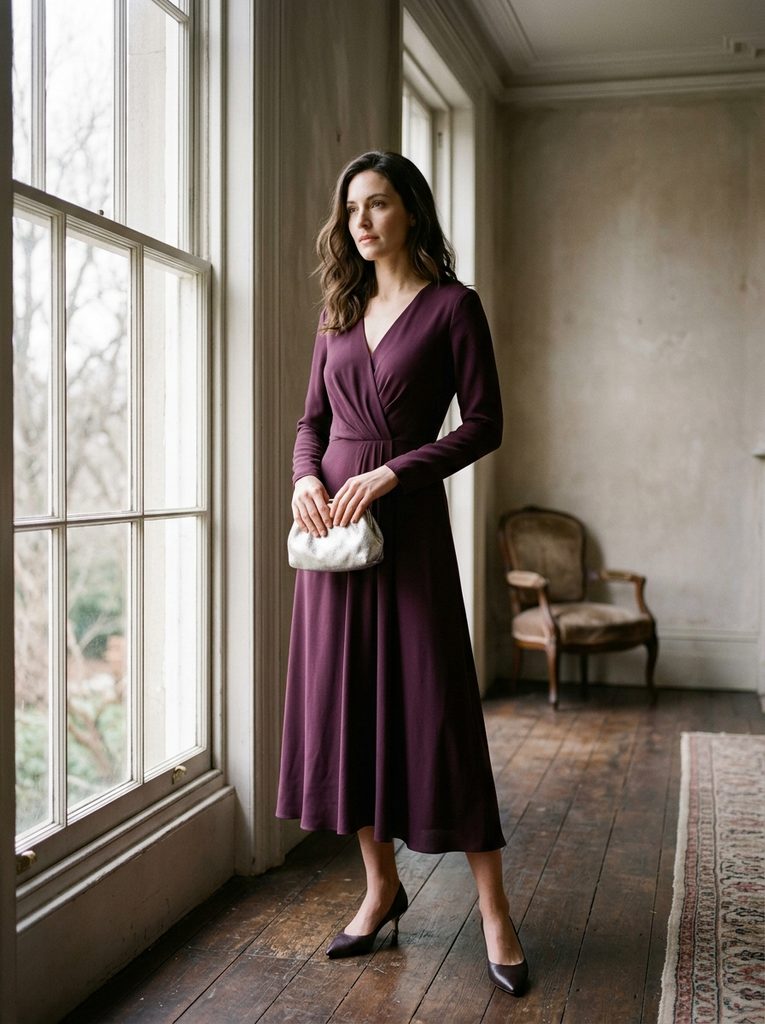
Pink is often seen as a spring or summer color, but dusty rose has a different personality. Its gray undertone makes it feel grounded rather than sugary, and it pairs well with the textures of winter.
The key is fabric. A dusty rose chiffon can feel too light for a cold venue, but the same shade in a structured wool crepe or a heavy satin looks deliberate and warm. Long sleeves in this shade are especially effective, since they keep the look seasonal without adding a separate layer.
Consider a blush-toned dress with a high neckline and a fitted bodice. Add a neutral wrap in camel or charcoal, and keep the shoes in a tone close to the dress or a shade darker. Overly bright pink accessories can break the calm of the look, so choose gold or pearl jewelry instead.

Mushroom, Taupe, and Warm Gray
Few colors get less attention than the soft neutrals between beige and gray. Mushroom, taupe, and warm gray look expensive in a way that bright colors sometimes do not, and they fit almost any venue.
These shades shine when the cut does the talking. A taupe column dress with a clean neckline, or a gray midi skirt paired with a fitted turtleneck, reads as tailored and quiet. The color stays out of the way while the silhouette takes center stage.
If you worry these tones are too plain, add texture. A ribbed knit, a pleated skirt, or a subtle metallic thread can give the outfit depth. Avoid pairing mushroom with a flat beige shoe, since the two can blend into one shapeless block. A contrasting darker shoe or a bag in a warm brown tends to sharpen the look.

Cobalt and Deep Blue Variations
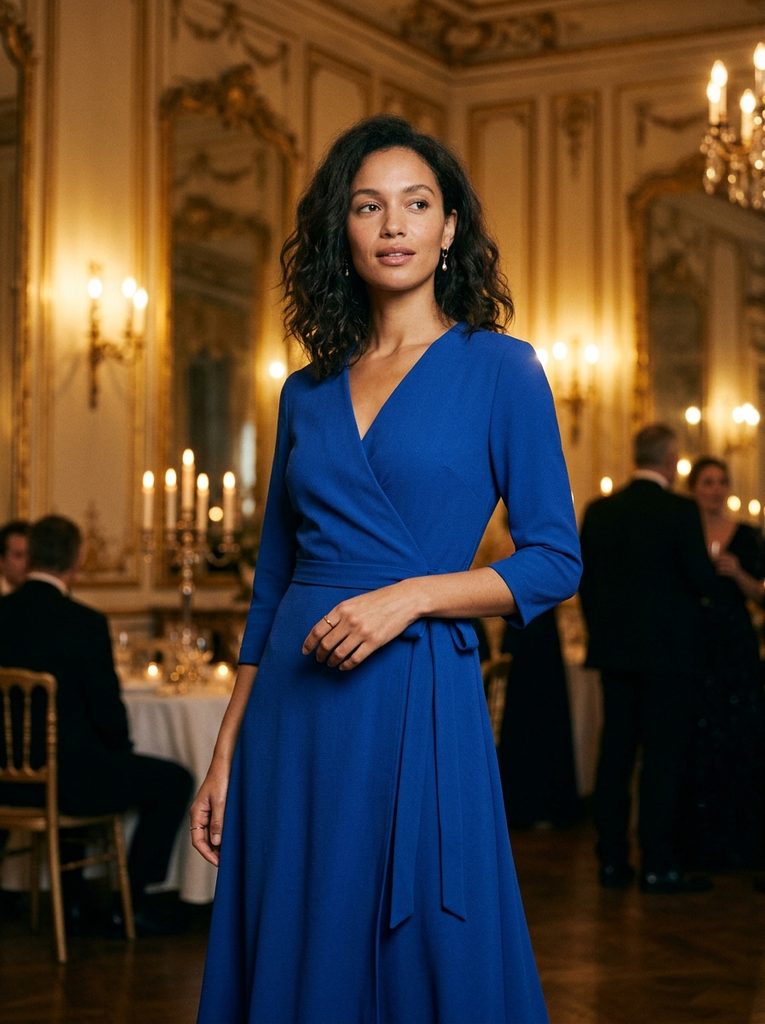
Blue is one of the most flexible colors for winter weddings, but many guests stop at navy. Cobalt and sapphire offer more energy while still looking seasonal. These shades read as confident without being loud, especially in a matte fabric.
A cobalt wrap dress in a fine crepe suits a reception with warm lighting, since the color stays vivid against gold and candlelight. A pleated blue midi skirt with a cream knit tucked in gives a cleaner, more understated version.
Be careful with very electric blues. In a dim room they can look harsh, and in photographs they can overpower the people around you. Choose a shade with a little depth, the kind that feels like a cool jewel rather than a neon sign.
Oxblood and Burgundy
Oxblood and burgundy are often grouped with festive colors, but they also work well for weddings. Their brown undertone keeps them from feeling too literal, and they sit comfortably alongside gold, cream, and dark metallics.
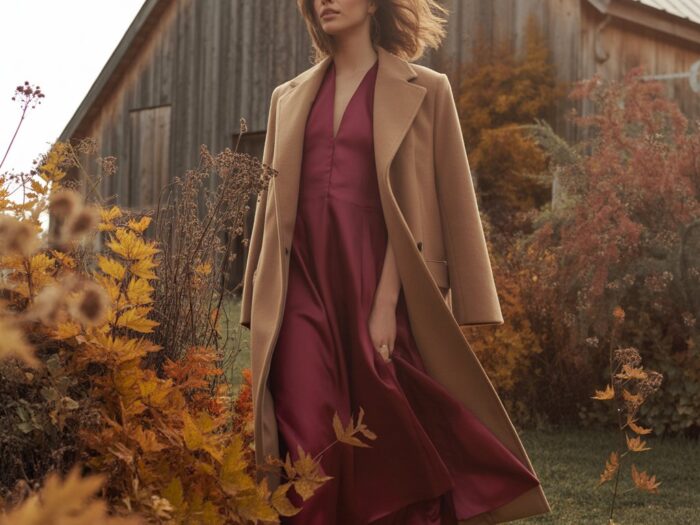
An oxblood dress with a soft sleeve and a defined waist looks rich in an ordinary evening light. For a more relaxed option, try a burgundy knit set, with a fitted top and wide-leg trousers. This works well for an afternoon ceremony followed by a daytime reception.
If you want more on pairing this shade with neutrals and metals, the guide on what colors go with burgundy in fall and winter covers those combinations in more depth.
Jewel-Tone Greens Without the Holiday Feel
Emerald and forest green show up on many winter guest lists, but deeper or more muted greens feel less seasonal and more refined. Olive, moss, and deep teal are all worth considering.
Olive is especially versatile. A satin slip dress or a fluid crepe midi in olive looks elegant with gold jewelry and tan accessories. Moss green works in a knit dress with a relaxed silhouette, and it suits daytime events where you want color without drama.
Deep teal sits between green and blue. It has enough color to stand out and enough coolness to feel modern. For a formal evening, a teal dress with a sleek back or a sculpted bodice gives the outfit a clear point of interest.
Choosing the Right Fabric for a Non-Black Dress
Color is only part of the decision. Fabric determines how the shade looks in person, how warm the dress feels, and how well it moves through a long day.
- Crepe holds color evenly and drapes well. It is a strong choice for midi and maxi dresses in plum, olive, or taupe.
- Satin adds light and movement, which can help a deep shade look luminous in the evening. It can also show every crease, so choose it when you can sit and stand comfortably in it.
- Wool and wool blends provide warmth and a matte finish. They suit blazers, dresses, and skirts in rich colors.
- Fine knits work well for layered looks and feel relaxed without looking casual when cut neatly.
- Velvet is a classic winter fabric, but it can become heavy in a warm room. A narrow panel or a single velvet piece paired with a simpler fabric is often easier to wear all evening.
Consider how the fabric reacts to light. Matte finishes hold color in dim settings, while shine catches light and can make a dress look brighter. Neither is better overall, but one may suit the venue more than the other.

Dressing for the Ceremony and Reception
Many winter weddings include a ceremony in a cold church or outdoor space, followed by a warmer reception. Your outfit needs to work through that change without requiring you to rebuild it between events.
A dress with sleeves or a sheer overlay gives you coverage during the ceremony and can be paired with a coat or wrap for the walk to the car. Once you are inside, you can remove the outer layer and keep the look intact.
Choose a coat that complements the dress rather than competing with it. A camel, charcoal, or cream wool coat works with most of the colors listed above. If you are wearing a bright or deep shade, a neutral coat keeps the combination balanced.
Shoes should be closed toe and comfortable enough for standing. Ankle boots with a stable heel, pointed flats in a dark tone, or block-heeled pumps are all practical choices. Keep the shoe color in a similar range to the dress or a neutral to avoid cutting the leg line awkwardly.
Etiquette Points Worth Remembering
Avoiding black does not mean ignoring the couple’s expectations. A few guidelines still matter.
Avoid white, ivory, and cream that could look like bridal wear. Even soft neutrals should be checked against the dress code, since a very pale cream dress can draw attention in a crowded room.
If the invitation specifies a color palette or a dress code, follow it first. Use the ideas here as a way to choose within those limits rather than as an override.
Be mindful of the bridal party. If you are unsure whether your shade might clash with bridesmaid dresses or the wedding colors, it is reasonable to ask a close friend in the wedding party. Many couples are happy to share their palette ahead of time.
Sample Looks to Start From
These combinations use the colors and fabrics above in practical ways. They can be adjusted for body shape, budget, and personal taste.
The Plum Crepe Midi
A long-sleeved plum crepe midi dress with a V-neck, paired with a charcoal wool coat, black ankle boots, and a silver clutch. The combination feels formal and seasonal, with enough color to stand out without overpowering the room.
The Dusty Rose Structure
A fitted dusty rose dress in wool crepe with a high neckline and a slightly flared skirt. Add a camel wrap, nude-brown pointed heels, and pearl drop earrings. This look suits an afternoon ceremony followed by a candlelit reception.
The Taupe Column
A taupe column dress with a clean neckline and a subtle ribbed texture. Layer it with a cream cardigan for the ceremony, then remove the cardigan for dinner. Choose a brown leather bag and gold hoops to add warmth.
The Cobalt Wrap
A cobalt wrap dress in fine crepe with three-quarter sleeves, worn with a cream long coat and tan knee-high boots. The dress carries the color, while the coat and boots keep the look grounded for a cold evening.

Frequently Asked Questions
Can I wear a color other than black to a winter wedding?
Yes. Most couples are happy to see guests in thoughtful colors. Stick to the dress code on the invitation, avoid white and ivory, and choose shades that suit the season and venue.
What is the most flattering non-black color for winter?
Flattering colors depend on skin tone and personal preference. Plum, dusty rose, and teal tend to work across many complexions. If you are unsure, try the shade in daylight and in warm indoor light before you buy.
Are jewel tones always too bright for a formal wedding?
Not necessarily. Deep jewel tones like plum, oxblood, and deep teal look formal when worn in matte fabrics and simple cuts. Bright, saturated shades are more suitable for casual or daytime events.
Should I match my shoes to my dress?
A close match can look elegant, but a neutral or a slightly darker shade often works better. The key is to avoid breaking the leg line with a shoe that is much lighter or more contrasting than the hem.
How can I keep warm in a non-black dress without adding bulk?
Choose fine knits, wool crepe, or lined dresses with sleeves. A tailored coat in a neutral shade adds warmth without competing with the color of the dress.
Is it acceptable to wear a patterned dress?
Patterns can work for winter weddings if they are subtle. Small florals in muted tones, geometric prints in deep shades, or texture-based patterns like jacquard are generally more suitable than bold, busy prints.
Making the Decision
Choosing a color other than black is ultimately about balance. You want the dress to feel like yours, to suit the season, and to respect the day. A shade like plum, dusty rose, or taupe can say a lot about your taste without requiring any explanation.
Start with the venue and the time of day, then choose a color and fabric that work together. Test the look in the light you will actually see, and make sure you can sit, stand, and move comfortably. A dress you feel good in will look better than one you chose only because it was unexpected.

Ella is a fashion and beauty writer who shares inspiring ideas about hairstyles, nail designs, wedding outfits, and seasonal fashion trends. She loves discovering fresh styles and creating…
View Author Profile →