

On this page
- What Lightweight Really Means for Spring
- Set the Color Rules Before You Buy Anything
-
The 12 Pieces
- 1. A Lightweight Trench or Cotton Jacket
- 2. An Unstructured Linen-Blend Blazer
- 3. A Crisp Cotton Shirt
- 4. A Fitted Cotton Tee
- 5. A Striped Knit Top
- 6. A Lightweight Cardigan
- 7. Straight-Leg Jeans in a Mid Wash
- 8. Tailored Cotton Trousers
- 9. A Flowing Midi Skirt
- 10. A Shirt Dress or Simple Midi Dress
- 11. Leather Flats or Loafers
- 12. Clean White Sneakers
- The Math Behind Mix and Match
- Eight Combinations Worth Trying First
- Extras That Do Not Count Toward the Twelve
- Planning for Weather Swings
- How to Fill the Gaps Without Overbuying
- Caring for Lightweight Fabrics
- A Closing Thought
Spring is the season when closets feel the most confusing. The mornings are cold enough for a coat, the afternoons are warm enough to regret it, and a sudden rain shower can undo a whole outfit. Heavy winter clothes feel wrong, but summer clothes are not ready to take over yet.
A small, well-chosen wardrobe handles this better than a large one. When every piece is light, easy to layer, and in a color that gets along with the others, getting dressed becomes a quick decision instead of a daily puzzle.
This guide lists twelve lightweight pieces and explains how they combine. It also covers the color rules that keep the set cohesive, a few ways to test each piece before buying, and how to handle the odd weather that spring tends to bring.

What Lightweight Really Means for Spring
Lightweight is about more than thin fabric. A good spring piece breathes, drapes without clinging, and does not feel stuffy when the sun comes out. It should also be able to handle a cool breeze without making you reach for a second layer immediately.
A few simple checks help when shopping or sorting through your closet:
- The light test. Hold the fabric up to a window. If it is nearly see-through, it may need a lining. If it blocks all light and feels heavy, it may be too warm for April.
- The squeeze test. Crush a corner in your hand for five seconds. Fabrics that spring back quickly will travel and sit better than those that stay creased.
- The weight test. A shirt or jacket that feels like a thick towel will not suit a warm afternoon.
Fabrics that tend to work well include cotton poplin, cotton twill, linen blends, lyocell, fine-gauge cotton knit, and light merino. Linen on its own looks lovely but wrinkles fast, so a blend with cotton or viscose often makes day-to-day wear easier.
Set the Color Rules Before You Buy Anything
Color does more for mix-and-match than any other factor. When pieces share a palette, nearly everything works with everything else.
A simple structure keeps things easy:
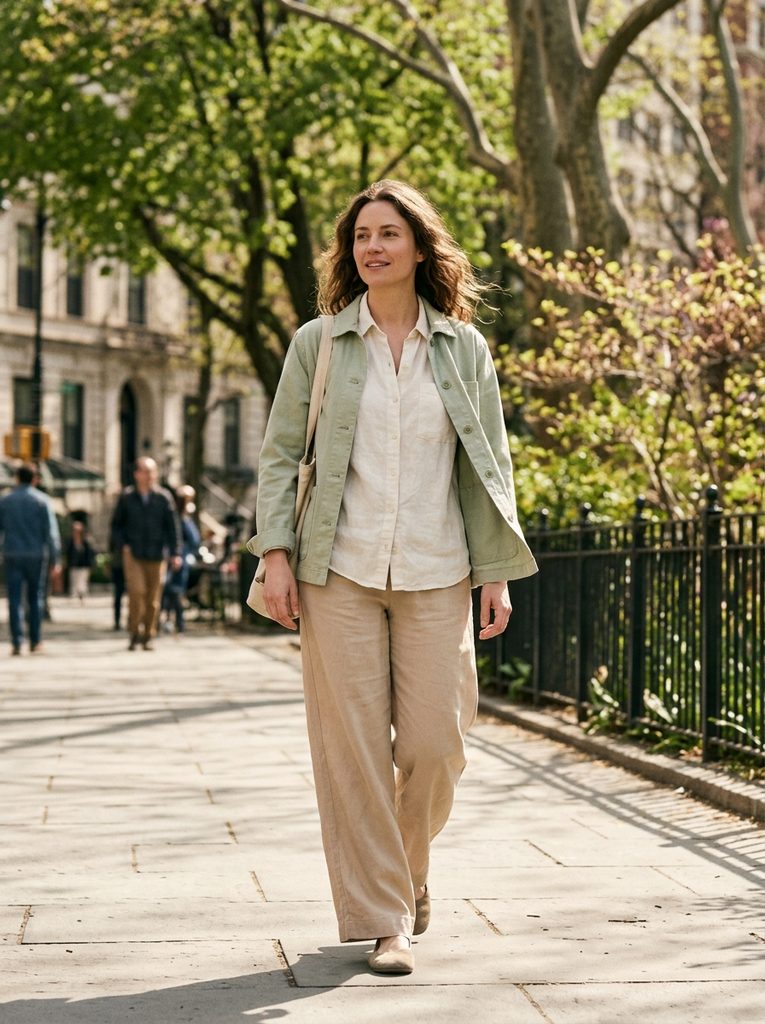
- Three base colors. These carry most of the wardrobe. Ivory, stone, and soft navy make a calm, flexible trio. Another option is cream, khaki, and denim blue.
- Two accent colors. These add life without taking over. Sage green and butter yellow suit spring well. Dusty rose and light blue are also friendly choices.
- One pattern. Stripes are the easiest, since they pair with nearly any solid. A small check or a subtle floral can work as well.
With this plan in place, a stray impulse buy is easy to spot. If a piece does not match any of the base or accent colors, it will probably end up unworn.

The 12 Pieces
Each piece below is chosen for weight, versatility, and ease of care. The note under each one shows what it combines with.
1. A Lightweight Trench or Cotton Jacket
This is the outer layer that handles most spring days. A trench in stone or sand, or a cotton-twill jacket with a clean shape, blocks wind and light rain without adding bulk. It works over dresses, shirts, and knits, and it folds into a tote when the afternoon warms up.
Mixes with: everything on this list.
2. An Unstructured Linen-Blend Blazer
A soft blazer with no heavy padding gives a polished finish to simple outfits. Choose a neutral such as oatmeal, ivory, or soft navy. It suits office days, dinners, and any moment when a tee and jeans need a little more shape.
Mixes with: jeans, trousers, the midi skirt, the shirt dress as an open layer.
3. A Crisp Cotton Shirt
White or pale blue works best. A well-cut poplin shirt can be buttoned up, worn open over a tee, tied at the waist, or tucked into trousers. Look for a collar that stands up on its own and sleeves long enough to roll.
Mixes with: all three bottoms, plus the blazer and cardigan.
4. A Fitted Cotton Tee
A good tee is the quiet workhorse. Pick a medium-weight cotton with a neckline that sits flat, in white, cream, or a soft gray. It should be thick enough not to show through, yet light enough to breathe.
Mixes with: jeans, trousers, skirt, and under any layer.
5. A Striped Knit Top
A fine cotton knit with navy and ivory stripes adds the pattern in your palette. Long sleeves are more useful in early spring, and a boat or crew neck keeps the shape simple. It dresses up with a blazer and relaxes with jeans.
Mixes with: jeans, trousers, skirt, trench.
6. A Lightweight Cardigan
A thin cotton or merino cardigan in a soft neutral or accent color is perfect for cool mornings and air-conditioned offices. Pick one with a relaxed fit that can be worn buttoned, open, or draped over the shoulders.
Mixes with: tee, shirt, dress, skirt.
7. Straight-Leg Jeans in a Mid Wash
A mid-blue wash looks fresher in spring than dark denim and goes with most colors. A straight leg with a bit of room is easy to wear and balances both fitted and loose tops. Choose a cotton-rich denim that is not too heavy.
Mixes with: every top and layer on the list.
8. Tailored Cotton Trousers
A pair in stone, sand, or soft navy with a straight or slightly wide leg gives a smarter option than jeans. Pleats add room, and a high waist keeps the line clean. They suit offices, brunches, and travel.
Mixes with: shirt, tee, striped knit, blazer, cardigan.
9. A Flowing Midi Skirt
A skirt that moves is a gentle contrast to the structured pieces in the set. Pleated, bias-cut, or lightly gathered styles all work. Choose a solid in one of your base or accent colors so it matches everything above the waist.
Mixes with: tee, shirt, striped knit, cardigan, trench.
10. A Shirt Dress or Simple Midi Dress
One dress covers days when you want to dress in one step. A cotton shirt dress with a belt can be worn alone, open as a light jacket, or under a cardigan. Pick a length that works with both flats and sneakers.
Mixes with: trench, cardigan, blazer, both pairs of shoes.
11. Leather Flats or Loafers
A smooth leather loafer or a ballet flat in tan, black, or cream makes most outfits look intentional. Choose a cushioned sole if you walk a lot. They suit trousers, dresses, and skirts with equal ease.
Mixes with: nearly everything except the most casual looks.
12. Clean White Sneakers
Minimal white leather or canvas sneakers keep the wardrobe relaxed. They suit jeans, the midi skirt, and the dress, and they handle long walking days. Keep them clean, since a worn pair undercuts a neat outfit.
Mixes with: jeans, skirt, dress, trousers in casual settings.

The Math Behind Mix and Match
A capsule works because the numbers add up quickly. Here is a simple way to see it.
- Three tops (shirt, tee, striped knit) and three bottoms (jeans, trousers, skirt) make nine base outfits.
- Four layer options (trench, blazer, cardigan, or none) multiplied by nine bases gives 36 outfits.
- The dress adds four more with the same layers.
- That totals about 40 combinations before you even change shoes.
Not every combination will feel right, and that is fine. If half of them work, you still have around twenty reliable outfits from twelve pieces.
Eight Combinations Worth Trying First
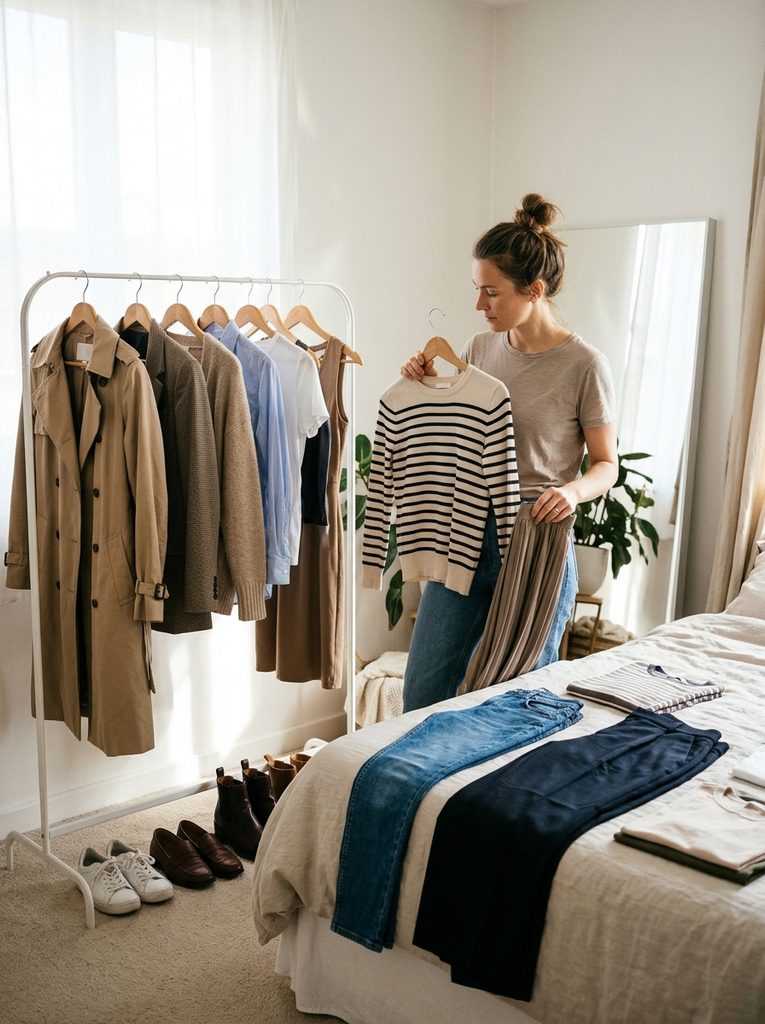
These pairings use only the pieces above and need no extra shopping.
- Striped knit, mid-wash jeans, white sneakers, trench.
- White shirt tucked into stone trousers, loafers, soft blazer.
- Tee, midi skirt, cardigan draped on the shoulders, flats.
- Shirt dress, belt, sneakers, cotton jacket for the commute.
- Tee, trousers, blazer, loafers for a workday.
- Striped knit, midi skirt, flats, trench for a rainy day.
- White shirt open over a tee, jeans, sneakers for a weekend errand run.
- Shirt dress under a cardigan with loafers for a dinner out.
For additional ideas about dressing during those awkward transitional weeks, the article on early spring outfit ideas for February and March looks at how to handle colder starts to the season.
Extras That Do Not Count Toward the Twelve
A capsule needs a few supporting items, and these are kept outside the main count so the list stays honest.
- A bag. A medium structured bag in tan or black goes with every outfit. The guide to handbag sizes worth owning can help decide which size suits your daily routine.
- A scarf. A light cotton or silk scarf adds color and warmth in one move.
- A belt. A slim leather belt shapes the dress and defines trousers.
- Sunglasses. A neutral frame suits all outfits.
- Simple jewelry. Small hoops and a fine chain are enough.
Planning for Weather Swings
Spring weather tends to change several times in one day. Layering is the answer, and the capsule is built for it.
For a cool morning that turns warm, start with a tee, add a cardigan, and carry the trench. Take layers off one by one as the temperature rises. For a rainy day, the trench and loafers handle most drizzle, and a small compact umbrella fits in any bag. When a warm spell arrives early, the tee, midi skirt, and sneakers carry you through with no extra layers.
Keep one reliable pair of shoes that can handle wet pavement. Leather loafers with rubber soles are a good option, and a quick coat of waterproofing spray protects them.
How to Fill the Gaps Without Overbuying
Before buying anything new, shop your own closet first. Lay out the twelve categories and mark which ones you already own in a usable form.
Then use a short checklist for anything new:
- Does it fit within the color plan?
- Does it work with at least three other pieces you own?
- Is the fabric light enough for a warm afternoon?
- Can you picture wearing it in three different ways?
- Does it fit well without alterations, or is the tailoring simple?
If an item fails two or more of these questions, it is likely to sit unused. Many people find it helpful to take a photo of any outfit that works, since a small folder of photos makes busy mornings easier. For those who also dress for the office, the guide to office outfit formulas for low-effort mornings shows ways to reuse the same pieces in a work setting.
Caring for Lightweight Fabrics
Light fabrics are easy to wear, but they need gentle handling.
- Wash cotton and linen blends in cool or warm water and hang them to dry, which cuts down on shrinking and wear.
- Steam shirts and dresses instead of ironing when possible. It is faster and gentler.
- Fold knitwear instead of hanging it, since hanging can stretch the shoulders.
- Store out-of-season pieces in breathable bags, away from direct sunlight.
- Clean leather shoes with a damp cloth and condition them every few months.
Check each care label before washing, since some linen blends or knits may need special treatment.
A Closing Thought
A spring capsule does not require a big budget or a new wardrobe. It asks for a clear palette, a few pieces in light fabrics, and a habit of building outfits from what you already have. Start with the layer that suits your climate, add the pieces that fill the gaps, and let the rest of the wardrobe grow slowly. For a look at how the same idea works in colder months, the guide to a winter capsule wardrobe with fifteen pieces takes a similar approach.

Ella is a fashion and beauty writer who shares inspiring ideas about hairstyles, nail designs, wedding outfits, and seasonal fashion trends. She loves discovering fresh styles and creating…
View Author Profile →