


On this page
- The Trip Has Five Temperature Zones
- Dress for the Seat First
- Bottoms That Still Look Sharp After Hours of Sitting
- Tops and Mid-Layers Built to Come Off
- The Coat Does Three Jobs
- Shoes for Security Lines and Slushy Sidewalks
- Wraps and Scarves That Double as Blankets
- Color and Detail Choices That Hide a Long Day
- Six Airport Outfits Worth Copying
- Flying From Cold to Warm, and Back Again
- Small Bag, Small Details
- The Last Hour Before Landing
- Mistakes That Make Airport Outfits Feel Off
- Quick Answers
- Chic Airport Outfits Come Down to a Few Choices
A winter flight asks one outfit to handle five different temperatures in a single day. The curb is freezing. The terminal is warm and crowded. The cabin turns cool once the engines settle. Then the arrival hall opens its doors and the cold hits again, or a wall of warm air if the trip ends somewhere sunny.
Most advice on chic airport outfits stops at “wear something comfortable.” That is fair, but it skips the real puzzle. A long-haul outfit has to look good at the gate and still look decent twelve hours later, and it has to stay adjustable the whole way through.
This guide builds the look around the journey instead of around a shopping list. It starts with the seat, works outward through each layer, and ends with six complete outfits to copy.

The Trip Has Five Temperature Zones
A long flight is really a chain of small climates. Each one asks something different from your clothes.
- The curb and walkway: cold, windy, sometimes wet
- The terminal: warm, busy, lots of walking
- Security: coats, belts, and shoes come off quickly
- The cabin: still air, a cool draft, hours of sitting
- Arrival: a different climate from the one you left
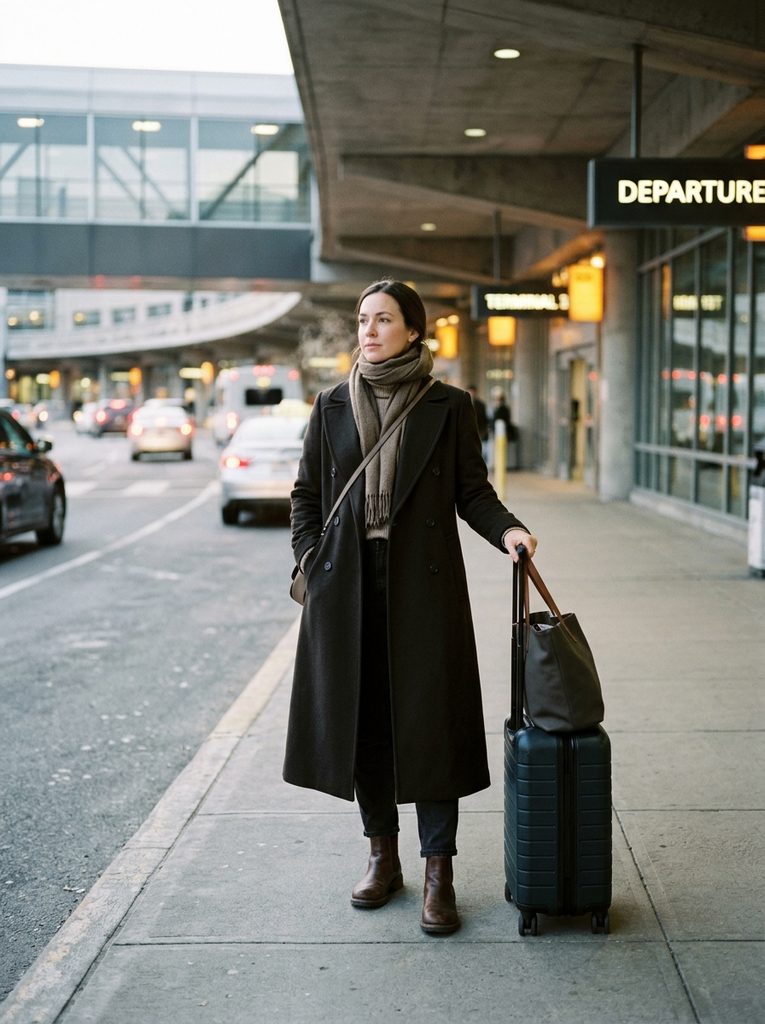
Thick outerwear matters at the curb and again on arrival. Light layers matter in the terminal. Easy-off shoes matter at security. Soft, stretchy fabric matters most in the cabin, because that is where the longest stretch of time goes.
So it makes sense to dress for the seat first and add everything else on top.
Dress for the Seat First
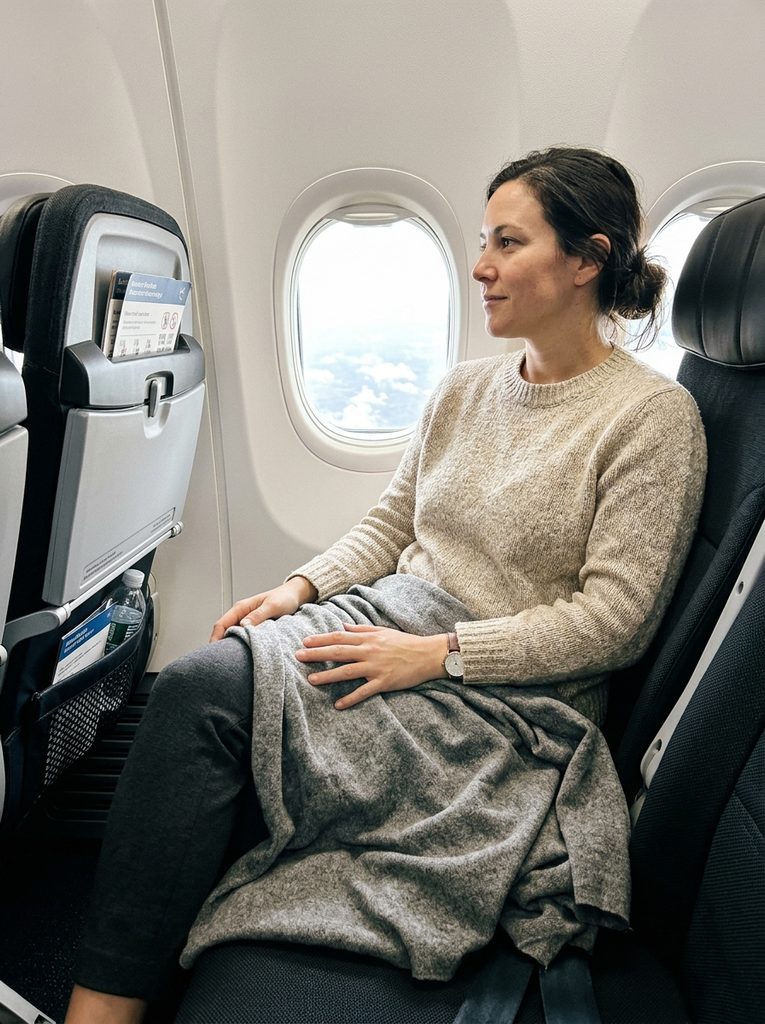
Sitting for ten hours shows problems that a mirror never does. A waistband that feels fine standing can dig in by hour three. A stiff pair of jeans can bag at the knees. A tight cuff can leave a mark on the wrist.
A quick home test helps. Sit in the outfit for fifteen minutes, then stand up and check a few things:
- Does the waistband stay comfortable while seated?
- Do the knees and seat keep their shape, or do they bag?
- Do the sleeves stay put when you lift your arms to reach a bag?
- Does the neckline sit flat without constant adjusting?
If any answer is no, swap that piece before the trip.
Fabrics That Cope With Long Hours
Some materials handle sitting better than others.
- Ponte and double knit keep their shape and resist wrinkles, so they look neat late in the day.
- Fine merino is warm without bulk and breathes better than most synthetics.
- Jersey with a little stretch moves with the body and folds small when a layer comes off.
- Brushed or fleece-backed knits feel soft, especially in matching sets.
Linen, stiff twill, and heavy satin crease fast. Scratchy wool against bare skin can also get irritating over many hours, so a soft layer underneath helps.
Bottoms That Still Look Sharp After Hours of Sitting
Trousers decide how the whole outfit feels. Four options stand out for long flights in cold weather.
Wide-Leg Knit Pants
These feel close to pajamas but read as styled, especially in a ribbed or heavier knit. The wide leg leaves room to shift positions, and the fabric drapes well over boots. A rise that sits at the natural waist keeps everything from sliding down.
Straight Ponte Trousers
Ponte gives the clean line of tailored trousers with the comfort of a knit. A straight leg looks neat with sneakers and boots alike. Black, charcoal, and chocolate brown hide small marks well.
Dark Stretch Jeans
Jeans can work if they have real stretch and a relaxed fit through the thigh. A dark wash hides wrinkles better than a light one. Skip any pair that feels firm at the waist while standing, since it will feel firmer when seated.
Knit Dresses With Thick Tights
A midi knit dress removes the waistband question entirely. Pair it with opaque or fleece-lined tights and a long coat. A longer hemline also avoids awkward moments in tight rows.

Tops and Mid-Layers Built to Come Off
Three thin layers usually beat one thick one. A heavy sweater leaves no options once the terminal warms up, while thin layers can be added or removed one at a time.
Start with a soft long-sleeve tee or a fine knit with a neckline that stays put. Add a mid-layer that looks good alone, such as a shawl-collar cardigan or a fine-gauge sweater. A turtleneck also works, since it covers the neck and makes a scarf optional.
Hem length matters more than people expect. A top that covers the hip stays down when arms go up, and it keeps the lower back covered against the seat. Sleeves should be long enough to reach the wrist without pulling when you reach overhead.
One more small point: avoid very fuzzy knits for the base layer. Mohair and loose angora shed onto dark coats and seat covers, and they can feel warm and itchy by hour six.
The Coat Does Three Jobs
On a long winter flight, the coat works as outerwear, a blanket, and sometimes a pillow. That changes what to look for.
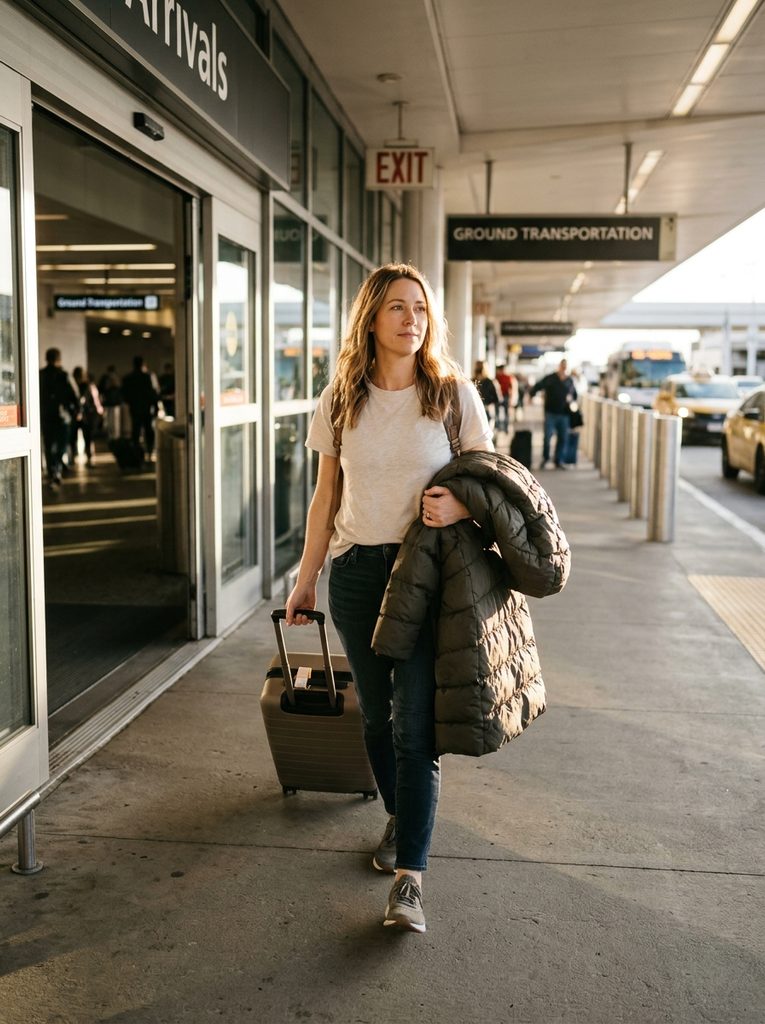
- Length: A knee-length coat covers the lap when draped over it in the cabin.
- Pockets: Deep or zip pockets keep a passport, phone, and boarding pass secure and easy to reach.
- Weight: Overhead bins are tight. A quilted coat compresses easily, while a stiff wool coat can crease when folded.
Good options include a long quilted coat, a wool wrap coat, a trench with a removable lining, or a short jacket with a shearling collar. Mid-tone shades such as camel, olive, and gray hide marks better than pale cream or pure black, which show lint.
A coat with a soft, wide collar has one more advantage. It can be turned up against a draft at the curb, and it acts as a light neck cushion in the seat.

Shoes for Security Lines and Slushy Sidewalks
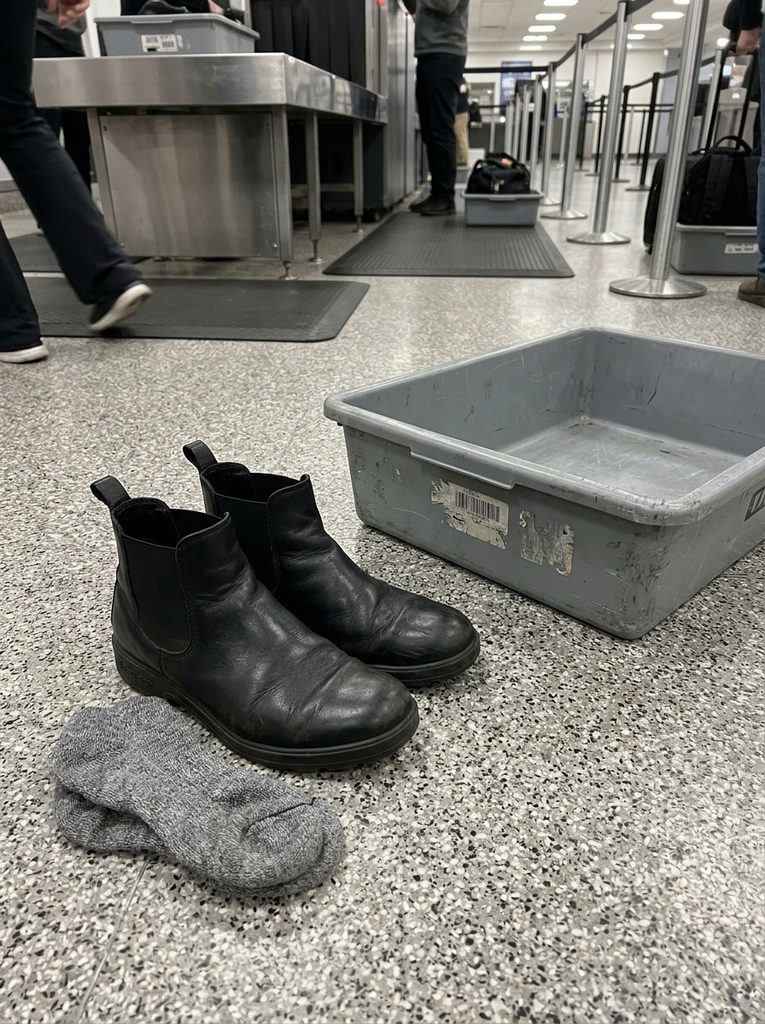
Checkpoints often ask for shoes off, so slip-on styles save time and fuss. Rules vary by airport and country, and the TSA website lists current screening policies for U.S. airports.
Three shoe types handle the day well:
- Slip-on ankle boots with an elastic side panel or a smooth zip look polished and keep feet dry on wet walkways.
- Loafers with thick socks suit mild climates or short walks from the curb.
- Sleek leather sneakers go with almost everything and handle long terminal walks.
Feet can feel snug after hours of sitting, so leave a little extra room. A fresh pair of socks in the bag also makes a noticeable difference halfway through the flight.
Boots with many laces, tall shafts, or tight calves slow things down at security. They can also feel restrictive in the seat.
Wraps and Scarves That Double as Blankets
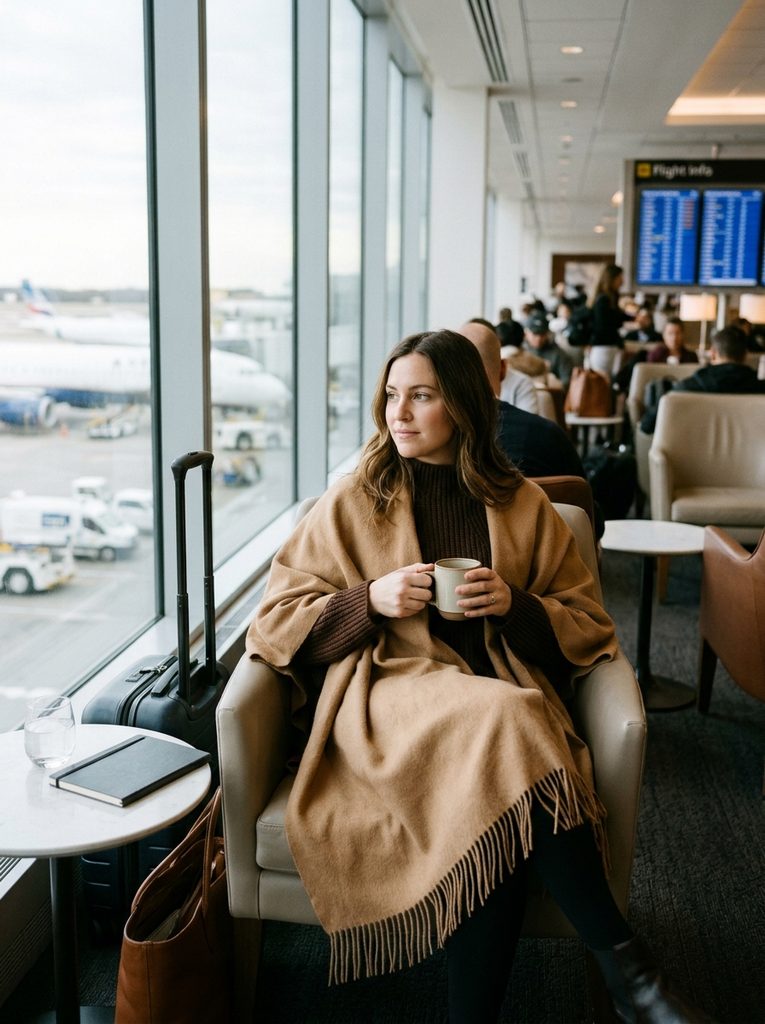
A large wrap in a wool or cashmere blend may be the most useful accessory on a winter flight. It works as a scarf at the curb, a blanket in the cabin, and a shawl over a plain outfit after landing.
Choose a solid color or a quiet check in a shade that matches the coat. The wrap should be large enough to cover the lap and shoulders without needing to be tucked in constantly.
A beanie and thin gloves can live in the coat pockets. They add warmth on arrival without taking up bag space, and they come off quickly in the terminal.
Color and Detail Choices That Hide a Long Day
After many hours, small marks show up. Lint from blankets, creases from the seat, and the odd coffee drop all collect on some colors faster than others.
Mid-tones and deep shades handle this well. Heather gray, oatmeal, chocolate, navy, forest green, and charcoal all stay neat. Pale cream looks lovely at the start but shows every speck by the end, and pure black can pick up lint.
Tone-on-tone dressing is an easy way to look put together. Two or three shades from the same family, such as oatmeal, camel, and tan, look intentional even when each piece is simple. Texture adds interest too, so a ribbed knit next to a smooth coat looks richer than flat fabric alone.
Six Airport Outfits Worth Copying
Each of these uses pieces that sit well, layer easily, and look calm in photos.
The Gray Knit Set
A matching ribbed top and wide-leg pants in heather gray, a long black wool coat, white leather sneakers, and a black zip-top tote.
Chocolate and Oatmeal
Chocolate ponte trousers, an oatmeal turtleneck, a tan shawl-collar cardigan, and slip-on leather ankle boots. A brown wrap handles the blanket duty.
Black Knit Dress and Long Coat
A ribbed midi dress, opaque fleece-lined tights, a long quilted coat in olive, and smooth boots. Small gold studs and a gray scarf finish it.
Navy Stretch Jeans and Trench
Dark stretch jeans, a white long-sleeve tee, a fine navy sweater, and a trench with a removable lining. Sleek sneakers keep it light on the feet.
Corduroy and Shearling
Wide-leg corduroy pants in olive, a thin cream knit, a short jacket with a shearling collar, and lug-sole boots with an easy zip. The corduroy texture hides creases well.
Tailored Joggers and a Knit Blazer
Charcoal ponte joggers with a clean cuff, a fitted tee, an unstructured knit blazer, and loafers with socks. This one suits a flight that lands straight into a meeting or a dinner.

Flying From Cold to Warm, and Back Again
Many winter trips cross climates. A flight from a snowy city to a beach town means the heavy coat is only needed for the first few hours. The reverse brings a sudden drop at the other end.
On a cold-to-warm trip, make the coat the only bulky piece. Everything under it should also work in warm weather: a light knit, soft trousers, and shoes that handle both slush and sun, such as leather sneakers. Once the cabin warms up, the coat can sit folded on the lap or under the seat.
On a warm-to-cold trip, pack the coat in a compressible form and bring it out before landing. A quilted style rolls small. A turtleneck or a scarf can go on at the gate, and a pair of wool socks in the bag pocket helps at the curb.
A thin base layer works in either climate, so keep one on both ways.
Small Bag, Small Details
A zip-top bag keeps items safe under the seat in front. A medium size usually holds a phone, wallet, passport, charger, and a book. The guide to handbag sizes worth owning explains how that size compares with others.
Useful extras tend to be small: lip balm, a travel-size hand cream, a spare hair tie, and fresh socks. Creams and balms often count as liquids at security, so check container sizes before packing.
Jewelry should stay light. Small studs or a thin chain look polished and pass through screening without fuss. Chunky bracelets can be left at home.
Hair is the last detail. A low bun, a braid, or a claw clip keeps hair off the face and still looks neat after a nap. It also needs no heat tools and very little touch-up.
The Last Hour Before Landing
Cabins and arrival halls rarely match, so a short reset is worth a few minutes.
- Put on fresh socks if the old ones feel damp or tired.
- Retie the hair and wipe the face with a small cloth.
- Check the arrival temperature and decide which layers go back on.
- Keep the coat and wrap within reach instead of in the overhead bin.
If the destination is warmer, stay in the base layers and carry the coat. If it is colder, put the coat on before leaving the seat.
Anyone heading out for a short break can pair these outfits with the carry-on plan in the long weekend capsule wardrobe guide. For everyday winter wear beyond the airport, the winter capsule wardrobe covers coats and knits that often overlap with travel outfits. The piece on cozy winter outfits shows how relaxed clothes can still look deliberate.
Mistakes That Make Airport Outfits Feel Off
- Wearing too many thick layers at once, then overheating in the terminal
- Breaking in new shoes on the day of the flight
- Choosing stiff jeans because they look sharp at home
- Letting a long scarf trail loose near seats and bags
- Dressing only for the destination and ignoring the weather at departure
- Putting everything in the carry-on and leaving nothing in the coat pockets
Quick Answers
What is the best fabric for a long flight in winter?
Soft knits with a little stretch tend to work best. Ponte, fine merino, and jersey blends stay comfortable while seated and resist wrinkles.
Can jeans work on a long flight?
Yes, if they have real stretch and a relaxed fit. A dark wash looks neater after hours of sitting, and a mid-rise avoids pressure at the waist.
How many layers should I wear?
Three thin layers plus a coat give the most flexibility. Each one can come off separately as the temperature changes.
What should go in the coat pockets?
A passport, phone, boarding pass, lip balm, and gloves are easy to keep there. That leaves the bag under the seat until it is needed.
Chic Airport Outfits Come Down to a Few Choices
Nothing about this look needs to be fancy. It needs a soft base, a few thin layers, a coat with real pockets, and shoes that come off quickly. Add a wrap that doubles as a blanket and choose colors that hide lint, and the outfit will still look composed after a long journey. A short sit-down test at home is usually enough to spot trouble before the trip starts.

Ella is a fashion and beauty writer who shares inspiring ideas about hairstyles, nail designs, wedding outfits, and seasonal fashion trends. She loves discovering fresh styles and creating…
View Author Profile →




1 Comment