

On this page
- How to Judge Whether a Piece Belongs
- Outerwear: Three Pieces for Different Kinds of Cold
- Tops and Knitwear: Five Pieces for Warmth and Shape
- Bottoms: Three Pieces That Cover Most Days
- Dress: One Piece That Works on Its Own
- Footwear: Two Pairs for Dry Days and Wet Ones
- Accessories: One Bag to Anchor the Look
- A Note on Scarves and Gloves
- How the Pieces Work Together
- Keeping the Capsule in Good Condition
- Adding Pieces Over Time
- Final Thoughts
-
Frequently Asked Questions
- Why fifteen pieces instead of ten or twenty?
- Can I build a winter capsule on a small budget?
- What colors should I choose for a winter capsule?
- Is a puffer jacket really necessary in a capsule wardrobe?
- How do I keep a winter capsule from looking repetitive?
- What if I live somewhere with very heavy snow?
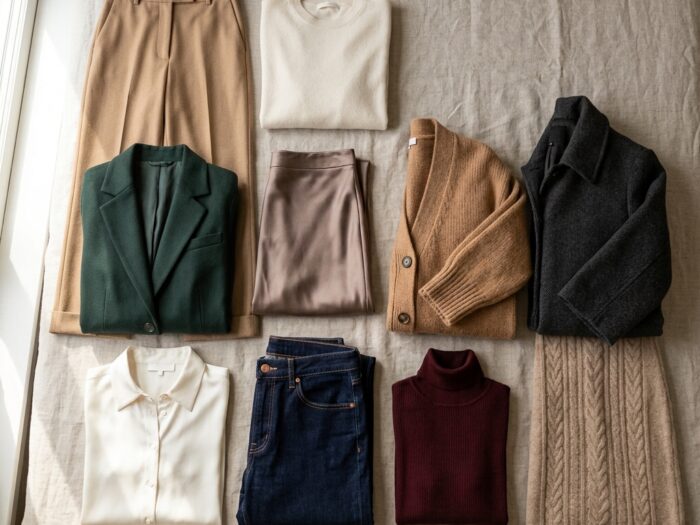
Most winter closets are not short on clothes. They are short on pieces that work together. A puffer coat that only goes with athletic leggings, a cream sweater that washes out next to every bag, a pair of boots that pinch after an hour: these are the items that fill the closet and then sit unworn when the temperature drops. A capsule wardrobe is a way to fix that by choosing fewer pieces and making each one earn its place.
This guide builds a fifteen-piece winter capsule around clear roles instead of a random list of trends. Each category has a job, each piece has a reason to exist, and the combinations are easy to repeat on busy mornings. The goal is not to own less for its own sake. It is to own pieces that carry you through cold commutes, office days, weekends, and evenings out without a constant search for something to wear.

How to Judge Whether a Piece Belongs
Before choosing any item, it helps to have a simple test. A capsule piece should work with at least three other pieces in the collection, and it should suit at least two kinds of days. A sweater that only works with one pair of trousers is a specialty item. A coat that looks wrong with everything else in the closet is a problem, even if it is warm.
Fabric matters as much as shape in winter. Wool, merino, cashmere, leather, and heavier cotton blends tend to handle cold weather and wear well over time. Synthetic fabrics can be useful for weatherproofing, but they often look flatter under daylight, so it is worth paying attention to how a piece will look when the light is low and grey.
Color is the last filter. A capsule works best when most pieces sit within one or two families, such as charcoal, camel, navy, cream, and deep brown. One or two accent shades can be added for interest, but they should be easy to combine with the neutrals.
With these tests in mind, the fifteen pieces below are grouped by role.
Outerwear: Three Pieces for Different Kinds of Cold
Winter outerwear has to do several things at once. It has to keep you warm, look right with what you wear underneath, and handle the weather you actually live in. Three coats or jackets can cover most situations without overlap.

1. A Long Wool Coat in Camel or Charcoal
This is the coat that carries the most visual weight in your outfits. A knee-length or slightly longer wool coat with a clean collar and a closure that sits well at the waist will look good over almost anything in the collection. Camel is the most versatile shade, since it works with navy, black, grey, cream, and brown. Charcoal is a close second and tends to look sharper with black boots and darker trousers.
Look for wool with some weight to it. Thin wool or wool blends with a high polyester content can look worn quickly, especially at the cuffs and collar. Check the lining too, since a good lining makes the coat easier to layer over knitwear.

2. An Insulated Puffer or Quilted Jacket
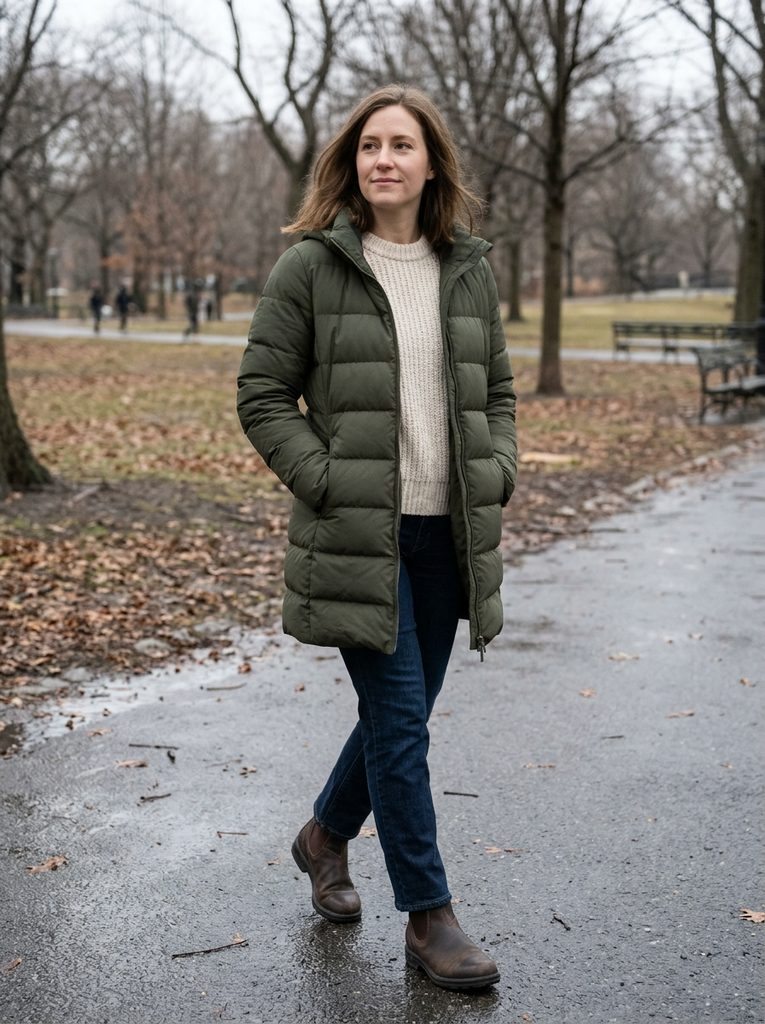
Not every winter day deserves a wool coat. For cold mornings, rain, slush, or long walks, an insulated jacket is more practical. Choose a shorter length or a mid-length style that covers the hips, and pick a neutral shade such as black, olive, or deep navy. A matte finish tends to look more refined than a high-gloss one, which can feel casual or sporty.
Keep the insulated jacket for days when the weather demands it. Wearing it with a sleek coat-and-trouser outfit can feel out of place, but it works well with knitwear, denim, and relaxed trousers.
3. A Leather or Suede Jacket
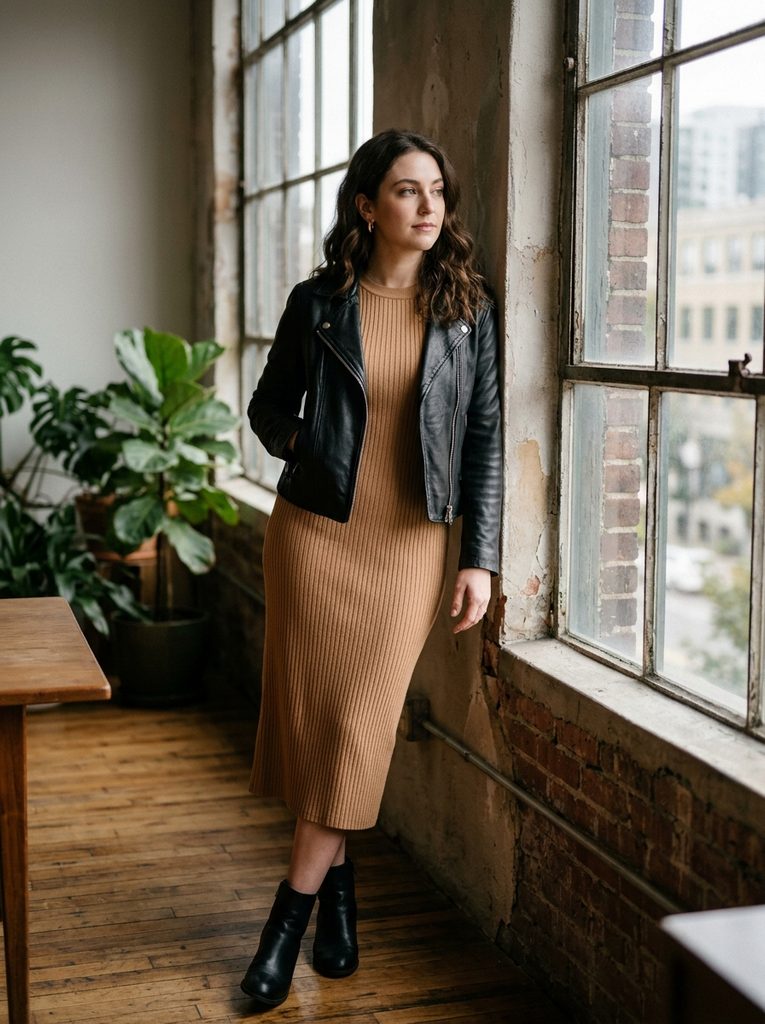
A leather or suede jacket adds structure and an edge to a winter capsule. It works over a turtleneck, with a sweater dress, or with fitted jeans. A moto style gives a sharper look, while a blouson or a simple zip-front jacket feels softer and easier to wear with knitwear. In winter, a leather jacket is also useful as a layer under a longer coat on cold days, though the fit should allow for this.
Choose a color close to black, dark brown, or cognac. Lighter shades show dirt more easily and can look stark in grey weather.

Tops and Knitwear: Five Pieces for Warmth and Shape
The top half of a winter capsule does most of the warming work. These five pieces offer different levels of warmth and structure, so they can be layered or worn alone.

4. A Fine Merino Crew Neck
A fine-gauge merino crew-neck sweater is the base of many winter outfits. It is thin enough to layer under a blazer or coat but warm enough to wear alone on a cool day. Merino also breathes well, which helps when you move from a cold street into a heated office or restaurant.
Choose cream, navy, grey, or black. Two of these in a slightly different shade can be more useful than one unusual color, since they work as a reliable base for almost any bottom.

5. A Ribbed or Fine-Gauge Turtleneck
A turtleneck adds a clean, finished line at the neck and works well under a blazer or a knit dress. It is also the piece that makes a cold day feel less exposed, since it covers the neck without needing a scarf. Choose a fitted style so it sits smoothly under other layers. If you want more warmth, a chunky turtleneck works as a standalone top, though it needs slimmer bottoms to balance it.

6. A Fitted Cardigan in a Substantial Knit
A cardigan can carry an outfit from office to weekend. Choose a fitted or semi-fitted cut in a dense knit rather than a thin or very loose one, since the denser fabric looks more polished and holds its shape. Button-front styles look neat over a blouse or a turtleneck, while a longer open cardigan suits relaxed days.
Stay with a neutral shade or a muted accent such as olive or dark rust. A cardigan in a bright color can compete with the rest of the outfit.

7. A Silk or Satin Blouse
Winter capsules can feel heavy without a lighter top to break up the texture. A silk or satin blouse adds sheen and softness, and it looks especially good under a blazer, a wool coat, or a cardigan worn open. Choose a shade that works with your neutrals, such as ivory, soft grey, or deep burgundy. A neckline with a collar or a soft tie front gives the blouse enough structure to sit well under knitwear.
Keep in mind that silk needs gentle care. Hand washing or dry cleaning is often recommended, so check the label before buying.

8. A Crisp Oxford Shirt
An oxford shirt is a practical piece for winter. It sits well under knitwear, looks neat with trousers, and adds a clean collar line near the face. Choose a white, pale blue, or grey shirt with a slightly heavier cotton weight, since thin cotton can look flimsy under a sweater.
Wear it open over a fine knit or buttoned under a cardigan. It also works as a layer under a turtleneck if you want a tailored look on a cold day, though this combination can be bulky, so keep the knit thin.

Bottoms: Three Pieces That Cover Most Days
Bottoms in a winter capsule should be durable, comfortable, and easy to dress up or down. These three cover work, weekends, and evenings.
9. Dark Straight-Leg Jeans
Dark denim in a straight or slightly tapered cut is a reliable everyday piece. It works with knitwear, boots, and coats, and it looks neat enough for most casual office settings. Choose a deep indigo or black wash, since lighter denim can look less suited to winter and shows wear more quickly in cold, wet conditions.
Check the rise and the length before buying. Jeans that are too long can bunch over boots, while jeans that sit too low can feel uncomfortable under thick knitwear.
10. Wool or Wool-Blend Trousers
Wool trousers are the backbone of a polished winter wardrobe. A straight or wide-leg cut in charcoal, navy, or camel works well with a blazer, a turtleneck, or a silk blouse. They also feel warmer than cotton trousers and tend to hold their crease better over the day.
Look for a mid-weight fabric. Very thin wool can look shiny at the seat and knees with regular wear, and very thick wool can feel stiff. A slight stretch can make them more comfortable for long days.
11. A Midi Skirt in Corduroy or Wool
A midi skirt adds variety to the bottom half of the capsule and gives you a way to wear tights and boots comfortably in winter. Corduroy is a useful choice because it looks soft and textured without being fussy. Wool is more formal and works well with a blouse or a fine knit.
Choose a shade that matches the rest of your neutrals, such as chocolate brown, deep green, or charcoal. A slit or a pleated detail can add movement, though a simple A-line or straight cut is usually easier to style.

Dress: One Piece That Works on Its Own
12. A Knit Midi Dress
A knit dress is one of the simplest ways to dress for winter. It covers the body, works with tights, and looks composed with boots or flats. A midi length suits the season better than a mini, since it balances well with knee-high or ankle boots.
Choose a fine or medium-weight knit in a solid color. A ribbed knit has a neat, structured look, while a slightly looser knit feels softer. Pair it with a structured jacket for the office or a cardigan for a more relaxed look. A belt can define the waist if the dress is loose.
Footwear: Two Pairs for Dry Days and Wet Ones
Shoes matter more in winter than in other seasons, since they handle cold, damp, and slush. Two pairs can cover most situations if they are chosen carefully.
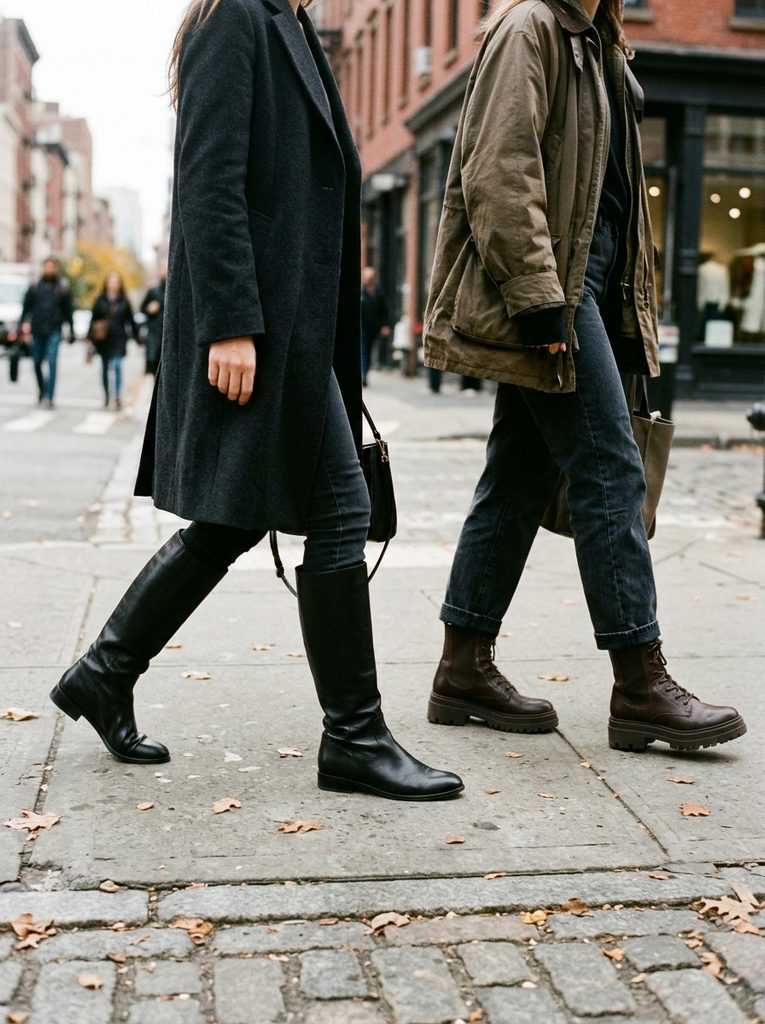
13. Leather Ankle or Knee-High Boots
A sleek leather boot in black, dark brown, or cognac is the dressier option. Ankle boots suit trousers, jeans, and midi skirts, while knee-high boots work best with dresses and skirts that sit above or just below the knee. Choose a heel height you can wear comfortably all day, since a boot you cannot walk in will go unworn.
Leather that is treated for water resistance is a good investment if you live somewhere wet. It also takes polish well and can be refreshed over several seasons.
14. A Weatherproof Lug-Sole Boot
For slush, rain, and icy pavements, a boot with a lug sole and a water-resistant upper is the practical choice. Choose a shape that is not too bulky, since a very chunky boot can overpower slim trousers. A boot in black, dark brown, or taupe is easy to style and looks more refined than a bright or novelty color.
This pair handles the days when the forecast is unclear and you need dry feet more than a perfect look. It can also pair well with jeans and an oversized knit for a relaxed weekend look.
Accessories: One Bag to Anchor the Look
15. A Structured Leather Bag
A structured leather bag in black, tan, or cognac holds its shape and gives an outfit a finished look. It works with a coat, a blazer, or a knit dress, and it does not need to be large. A medium-sized bag with a top handle and a crossbody strap is versatile, since it can be carried by hand on dressier days and worn across the body during the commute.
Choose a shade that matches at least one pair of shoes in the collection. Matching exactly is not necessary, but a close tone can make the outfits look coordinated.

A Note on Scarves and Gloves
These two items are not counted in the fifteen, but they are worth considering. A wool or cashmere scarf in a neutral shade adds warmth and an extra layer of color. A pair of leather or knit gloves keeps your hands warm on the coldest days and can be stored in a coat pocket when not needed. If you already own these, they can sit alongside the capsule without altering the count.
How the Pieces Work Together
The real value of a capsule comes from how easily the pieces combine. Here are a few examples to show how the collection can be used across different days.
A camel wool coat over a fine merino crew neck, dark straight-leg jeans, and leather ankle boots works for weekend errands, with the structured bag over one shoulder.
A charcoal wool trouser with a silk blouse, a fitted cardigan worn open, and the same leather boots creates a polished office look. Swap the cardigan for the leather jacket on a more relaxed day.
A knit midi dress with a turtleneck underneath, a leather jacket over the top, and knee-high boots suits an evening out. The bag and a thin scarf finish the outfit.
An oxford shirt under a fitted cardigan, dark jeans, and the weatherproof lug-sole boots covers a cold, wet day when comfort matters most. The puffer jacket goes over it for the commute.
A midi corduroy skirt with a fine knit, the leather jacket, and the ankle boots suits a casual lunch or a gallery visit. Add the bag and gloves for the walk home.
Each of these outfits uses at least three pieces from the capsule, and most of the pieces appear in more than one combination.
Keeping the Capsule in Good Condition
A capsule wardrobe is only as useful as the pieces are well cared for. Winter clothes need some attention to stay in good shape.
Store knitwear folded rather than hung, since hanging can stretch the shoulders over time. Use a fabric shaver or a gentle comb to remove pilling from merino and cardigans. Air wool coats between wears, and brush them lightly to lift dust from the fabric.
Leather boots and bags benefit from conditioning a few times each winter, especially if they are exposed to salt or rain. Store them with shoe trees if possible, and let damp pairs dry at room temperature rather than near a heater.
Rotate footwear so that each pair has time to dry out after wear. Two pairs used on alternate days tend to last longer than one pair worn every day.
Adding Pieces Over Time
Once the capsule feels settled, it can grow slowly. A new scarf, a different shade of cardigan, or a pair of gloves in a new color can add variety without disrupting the system. Change one piece at a time, and test each addition against the three-outfit rule before buying.
If a piece stops working, replace it rather than adding more items to fill the gap. A capsule works best when its boundaries stay clear.
Final Thoughts
A winter capsule wardrobe of fifteen pieces can handle most of the cold months without constant shopping or daily indecision. The key is to choose pieces by role, look for fabrics that suit winter, keep the color palette close, and make sure each item works with several others. Once the collection is in place, getting dressed becomes a matter of choosing a combination rather than starting from scratch.
If you are also planning the seasons on either side of winter, the fall capsule wardrobe with ten pieces shows how a similar system can carry into the colder shoulder months, and the long weekend capsule wardrobe offers a useful model for packing a smaller set of pieces for travel. For a more formal take on the office side of the collection, the guide to business casual versus smart casual can help you decide how much structure your workdays need.
Frequently Asked Questions
Why fifteen pieces instead of ten or twenty?
Fifteen gives enough variety for work, weekends, and evenings without creating too many combinations to manage. The exact number matters less than whether the pieces work together. If your climate is colder or your work requires more formal dressing, you may need a few more items.
Can I build a winter capsule on a small budget?
Yes. Focus on the three pieces that carry the most warmth and wear, such as the wool coat, the merino crew neck, and the leather boots. Secondhand wool, cashmere, and leather can be a practical way to find quality at a lower price. Quality matters more than brand names, so check the fabric and the construction before buying.
What colors should I choose for a winter capsule?
Stay within camel, charcoal, navy, cream, black, and deep brown for most pieces. Add one or two accent shades, such as olive, burgundy, or deep green, so the collection has some interest without losing coherence.
Is a puffer jacket really necessary in a capsule wardrobe?
It depends on your climate. If your winters are very cold or wet, an insulated jacket is a practical addition. If they are milder, you may be able to replace it with a second wool coat or a heavier knit layer.
How do I keep a winter capsule from looking repetitive?
Change accessories, swap the bag, switch between shoe styles, and vary the top layer. A different scarf or cardigan can change the mood of an outfit noticeably without adding new pieces.
What if I live somewhere with very heavy snow?
Consider adding a waterproof outer shell and insulated trousers to the capsule. These pieces can sit alongside the existing collection and be worn only on the coldest or wettest days, so they do not disrupt the everyday system.

Ella is a fashion and beauty writer who shares inspiring ideas about hairstyles, nail designs, wedding outfits, and seasonal fashion trends. She loves discovering fresh styles and creating…
View Author Profile →