
On this page
- Why Winter Wedding Photography Has Its Own Rules
- Building Warmth Into the Outfit, Not Just Over It
- Coats and Wraps That Photograph as Part of the Outfit
- Color and Texture Choices That Read Rich in Winter Light
- Footwear for Snow, Ice, and Indoor Venues
- The Coat-Check Problem: Dressing for Before and After
- Accessories That Add Warmth Without Looking Bulky
- Common Mistakes That Show Up in Winter Wedding Photos
- A Simple Formula for Winter Guest Dressing
Winter weddings come with a specific kind of styling tension. The season calls for rich fabrics and deep colors that photograph beautifully, but it also means real cold, often with an outdoor portrait session, a walk between ceremony and reception, or a cocktail hour held on a terrace before anyone thinks to check the weather. The result is a guest wardrobe problem that summer and fall weddings simply don’t create in the same way: how to stay warm enough to enjoy the day without burying a carefully chosen outfit under a coat that swallows it in every photo.
This isn’t really about picking a heavier fabric and calling it solved. Warmth and photographability work against each other more than guests expect, and the outfits that handle winter well tend to plan for both from the start rather than treating one as an afterthought to the other.
Why Winter Wedding Photography Has Its Own Rules
Photographers who shoot winter weddings regularly will say the same thing: cold weather changes how an outfit needs to be built, not just what it needs to include.
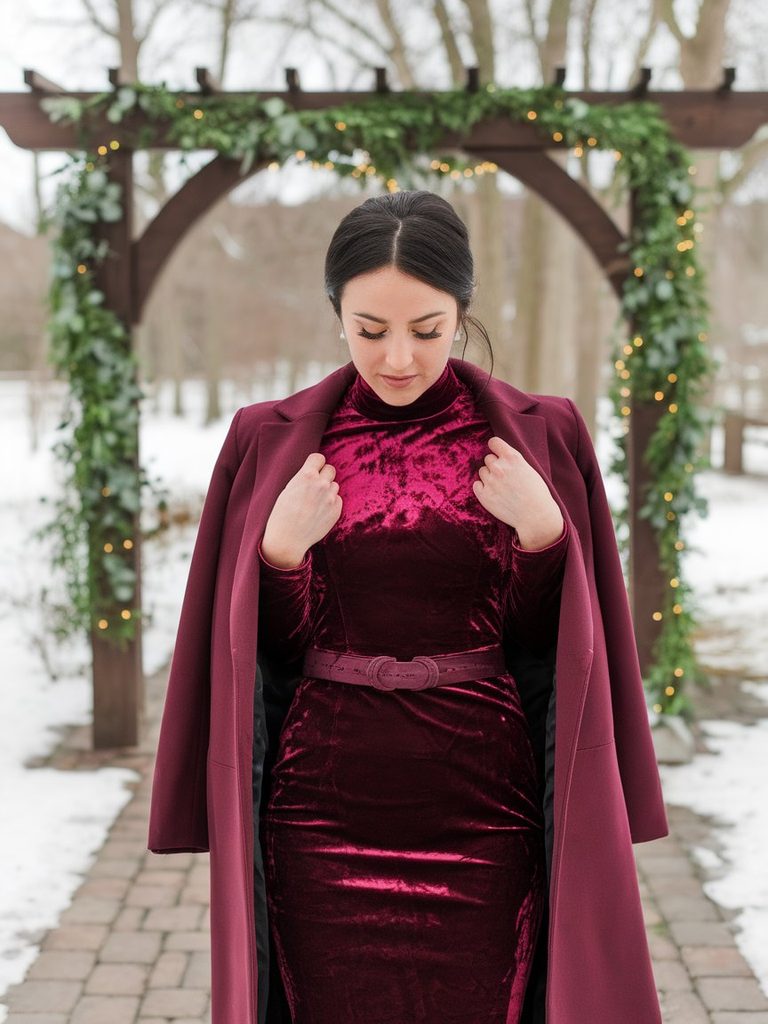
Outdoor portraits in winter light tend to happen fast, since neither the couple nor the guests want to linger in freezing temperatures longer than necessary. That means an outfit needs to look finished the moment it’s worn, without depending on a coat coming off first to reveal the “real” look underneath. Indoor venues also run warmer once a room fills with guests and heating adjusts for a crowd, which means an outfit built entirely around staying warm can end up looking overdressed for the reception even if it was exactly right for the walk from the car.
The practical result is that winter guest dressing works best when warmth is built into the outfit itself, through fabric weight and smart layering, rather than solved entirely with an outer coat that has to come off indoors and go back on outside.
Building Warmth Into the Outfit, Not Just Over It
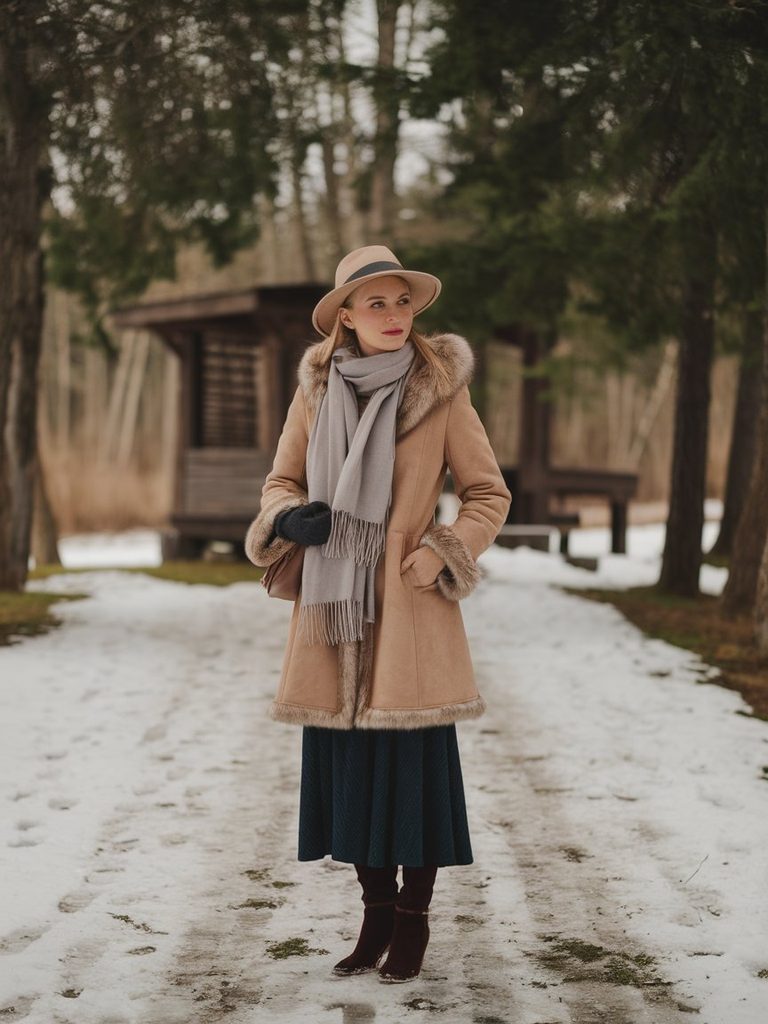
The most common mistake in winter wedding dressing is choosing a lightweight outfit and expecting a coat to compensate for it. A better approach starts with fabric choices warm enough to function on their own, with outerwear as a genuine addition rather than the only thing standing between an outfit and hypothermia.
Fabric Weight Matters More Than Layering Count
A heavier fabric does more for warmth than stacking several thin layers on top of each other, and it usually looks more intentional in photos too. Wool crepe, ponte knit, velvet, and a substantial midweight jersey all carry enough weight to hold their own in cold weather without needing a coat worn indoors to stay comfortable. A thin chiffon or lightweight cotton dress, by contrast, rarely works for winter regardless of how many layers get added over it, since the base garment itself was never built for the season.
This is a slightly different consideration than the fabric logic that applies to a milder fall wedding, where lighter seasonal fabrics still have room to work. Winter narrows that range considerably, and choosing a fabric that’s warm from the first layer out tends to solve more of the problem than any outer layer added afterward.
Base Layers That Don’t Show
A thin, seamless base layer, worn under a dress, jumpsuit, or trouser outfit, adds real warmth without changing the visible silhouette at all. Fine-gauge thermal fabric in a neutral tone disappears completely under most outer garments, which makes it one of the more efficient tools available for winter guest dressing, since it solves warmth without touching the outfit’s actual look.
Tights and hosiery do similar work for a dress or skirt-based outfit. A opaque tight in a color that matches the outfit rather than a plain black default keeps legs warm without breaking up the outfit’s visual line, which matters more in photos than most guests expect going in.
Coats and Wraps That Photograph as Part of the Outfit
The right outer layer looks like part of the outfit rather than something thrown on as an afterthought, and the difference usually comes down to fit and fabric rather than the basic concept of wearing a coat.
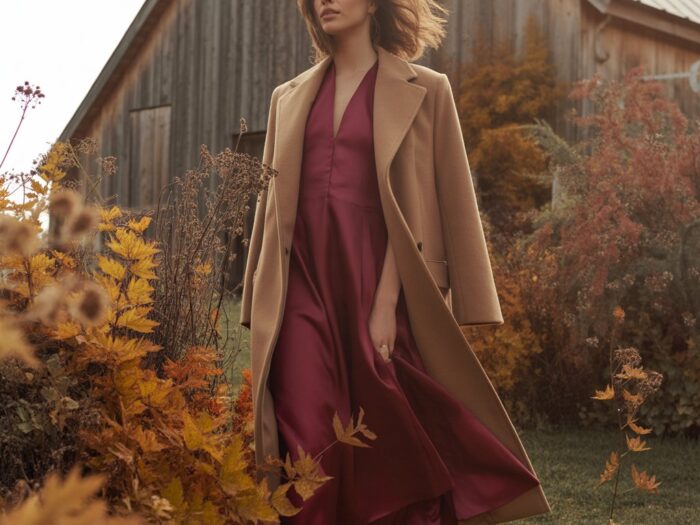
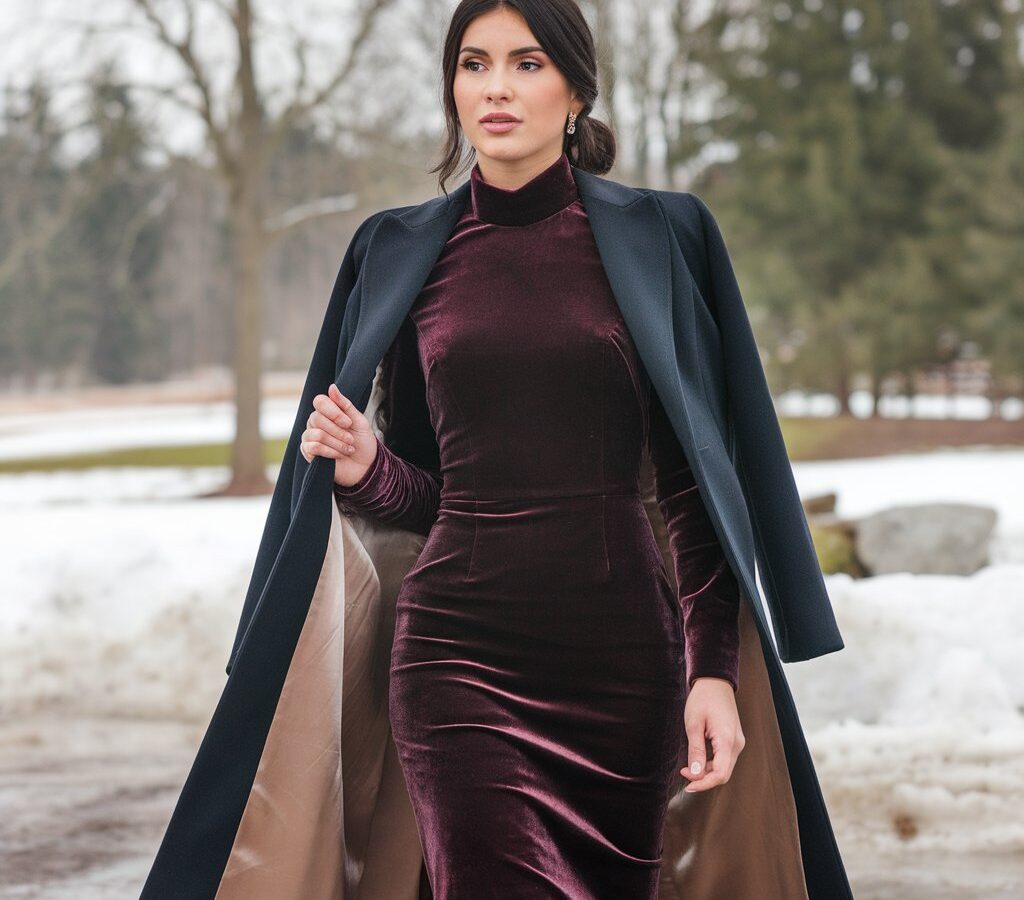
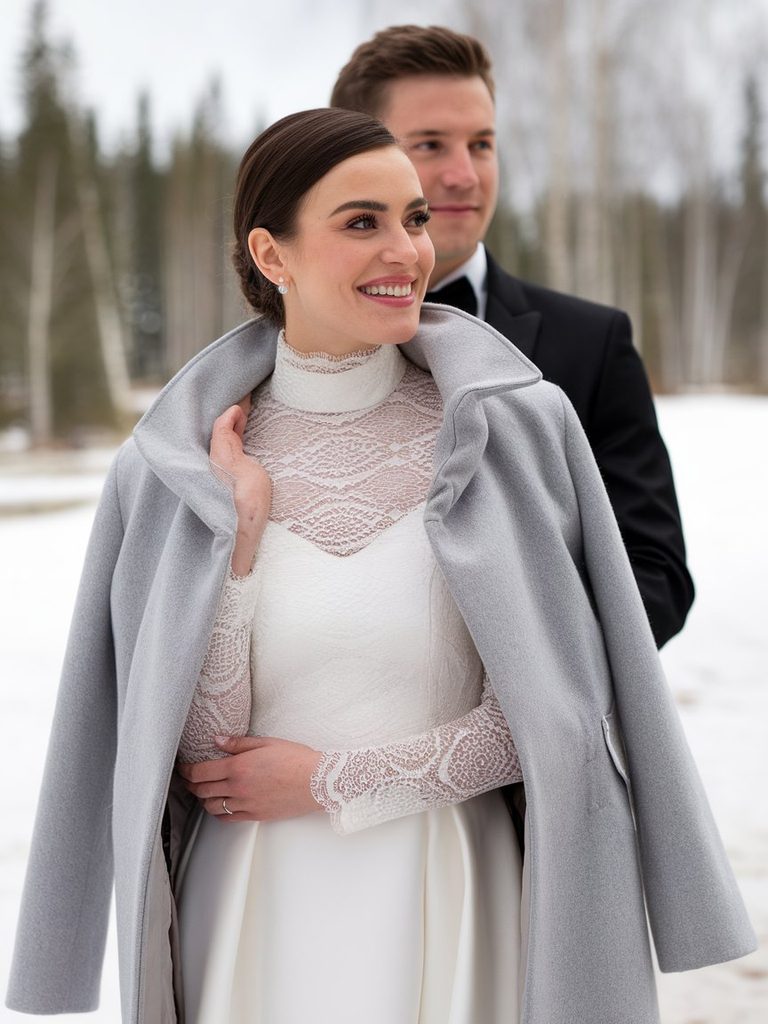
A tailored wool coat, cut close through the shoulders and waist rather than boxy or oversized, reads as considered in a way that a bulky puffer or a casual parka simply doesn’t, regardless of how warm either option actually is. A structured cape works particularly well over a fuller dress silhouette, since it adds warmth without competing with the shape underneath the way a fitted coat sleeve sometimes does. For guests who want the coat itself to photograph as a real part of the look, a color that coordinates with, rather than exactly matches, the outfit underneath tends to look more deliberate than an exact match or a plain black default.
A faux fur stole or a substantial wool wrap offers a middle option between a full coat and no outer layer at all, useful for a venue with a shorter outdoor walk or a guest attending a wedding with mostly indoor events. These pieces also tend to photograph better than a coat during any portion of the day spent partially covered, since a wrap can be draped loosely rather than fully buttoned, which reads more relaxed in candid shots.
Color and Texture Choices That Read Rich in Winter Light
Winter light, whether it’s the flat gray of an overcast afternoon or the warm glow of an evening reception, changes how color reads more dramatically than the light in other seasons.
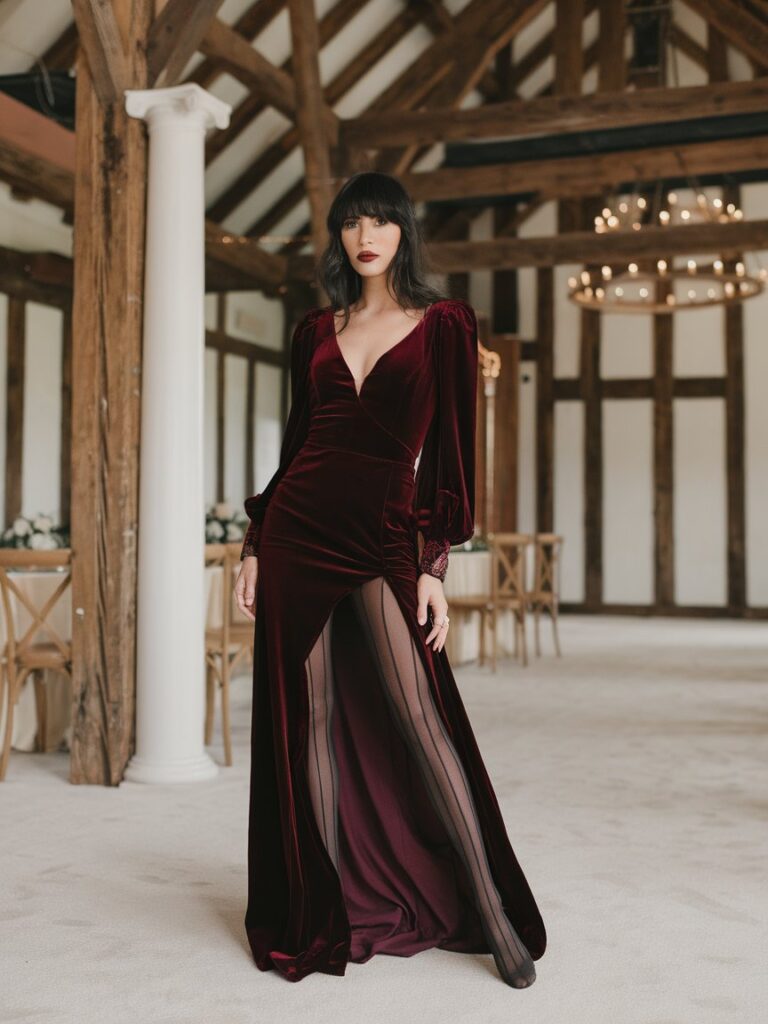
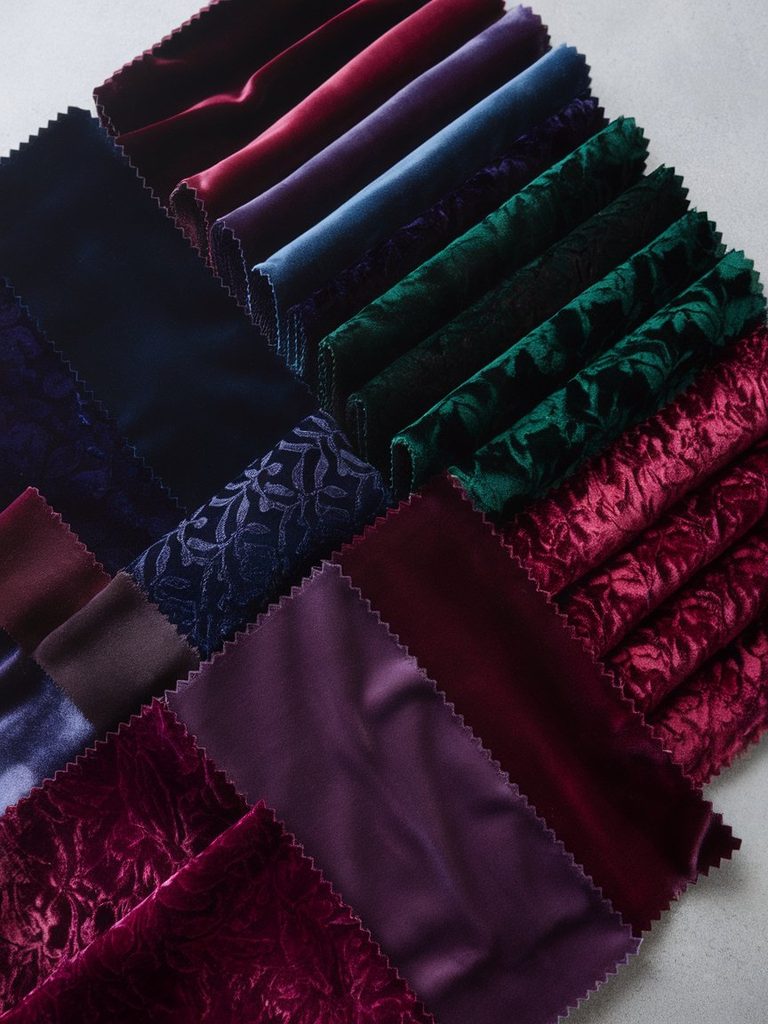
Deep jewel tones, emerald, sapphire, garnet, and a rich plum, hold their saturation well under winter’s dimmer natural light and read as genuinely festive without needing a bold, saturated shade to do it. Black remains a reliable, elegant default for winter weddings, particularly evening events, where it reads as intentional rather than somber. Warm metallics, a deep bronze or antique gold, photograph especially well under the warm, low lighting common at winter evening receptions, catching light in a way that a flat matte fabric doesn’t.
Texture carries more visual weight in winter than color alone. Velvet, brocade, and a subtle jacquard all add richness and depth that flat fabrics can’t match, which is part of why winter wedding outfits often look more elevated than an equivalent summer look built around the same silhouette and color. A single textured piece, a velvet blazer or a brocade skirt, paired with simpler fabrics elsewhere tends to look more considered than an outfit that tries to combine several heavily textured pieces at once.
Footwear for Snow, Ice, and Indoor Venues
Shoes carry more real risk at a winter wedding than at any other time of year, since the walk from a car to a venue entrance can involve snow, ice, or slush that most cocktail-appropriate shoes were never built to handle.
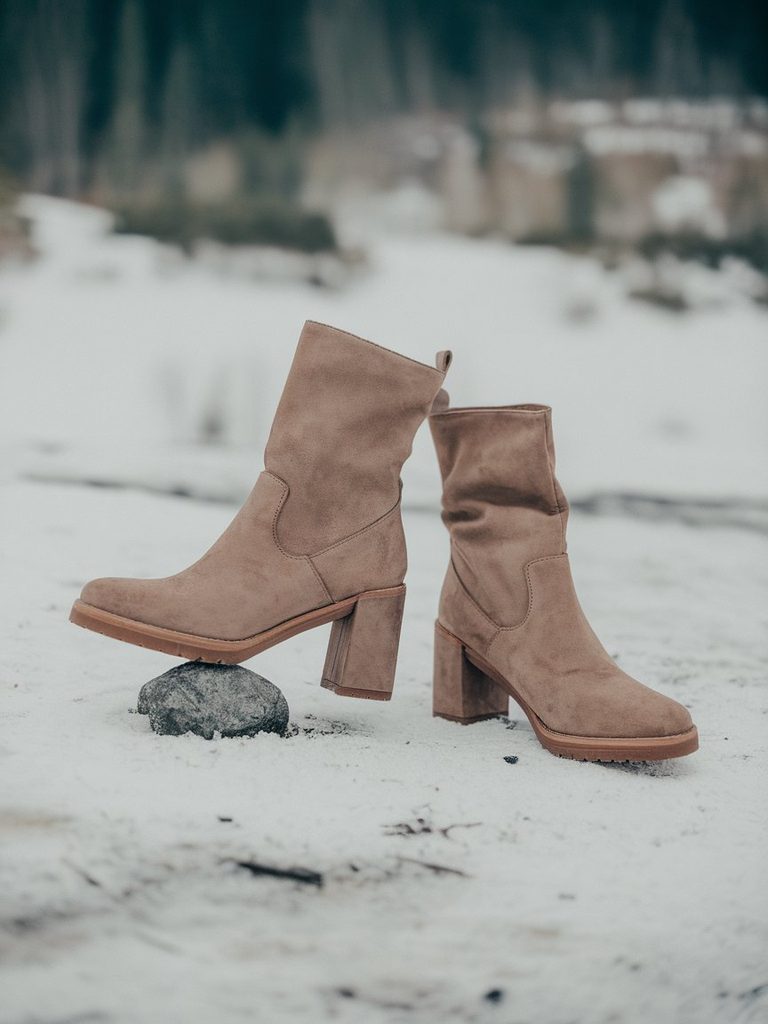
A block or wedge heel manages uneven, slippery ground far better than a thin stiletto, and it does so without sacrificing much in terms of formality. Closed-toe options in suede or leather suit winter both visually and practically, since an open-toe sandal rarely makes sense once temperatures drop, regardless of how warm the venue itself turns out to be. For guests genuinely concerned about ice or snow between the car and the door, packing a pair of stylish flats or low boots to wear until arrival, then swapping to the intended shoe just before entering, solves the practical problem without anyone seeing the compromise.
Boots deserve consideration too, particularly for a daytime or more casual winter wedding. A sleek ankle boot in suede or leather, worn under a midi dress or wide-leg trousers, reads as a legitimate cocktail-appropriate choice rather than a fallback, especially for a venue with any outdoor component. Guests weighing separates over a dress for a winter wedding specifically may find useful groundwork in this guide to cocktail attire built around trousers and jumpsuits instead of dresses, since fabric weight and boot pairings work almost identically whether the base outfit is a dress or a trouser-based look.
The Coat-Check Problem: Dressing for Before and After
Most winter weddings involve at least one moment where a coat comes off and the “real” outfit underneath needs to stand on its own, whether that’s at a coat check, during a receiving line, or simply once the reception warms up.
This is where the earlier point about building warmth into the base outfit rather than relying entirely on outerwear becomes practical rather than theoretical. An outfit warm enough to be comfortable without a coat, even briefly, holds up much better through this transition than one that depends on outerwear the entire time. Long sleeves, a higher neckline, or a heavier base fabric all help an outfit function on its own once the coat comes off, which matters for the significant portion of the day spent indoors at most winter weddings.
It’s worth thinking through this transition the same way a guest might plan for a wedding that spans very different settings in a single day. The general approach covered in this guide to outfits built for unpredictable weather and multiple settings applies just as directly to the shift between a cold outdoor arrival and a warm indoor reception as it does to any other weather-driven wardrobe planning.
Accessories That Add Warmth Without Looking Bulky
Small accessories often do more for practical warmth than guests expect, particularly for the parts of a winter wedding spent outdoors or in transit between spaces.
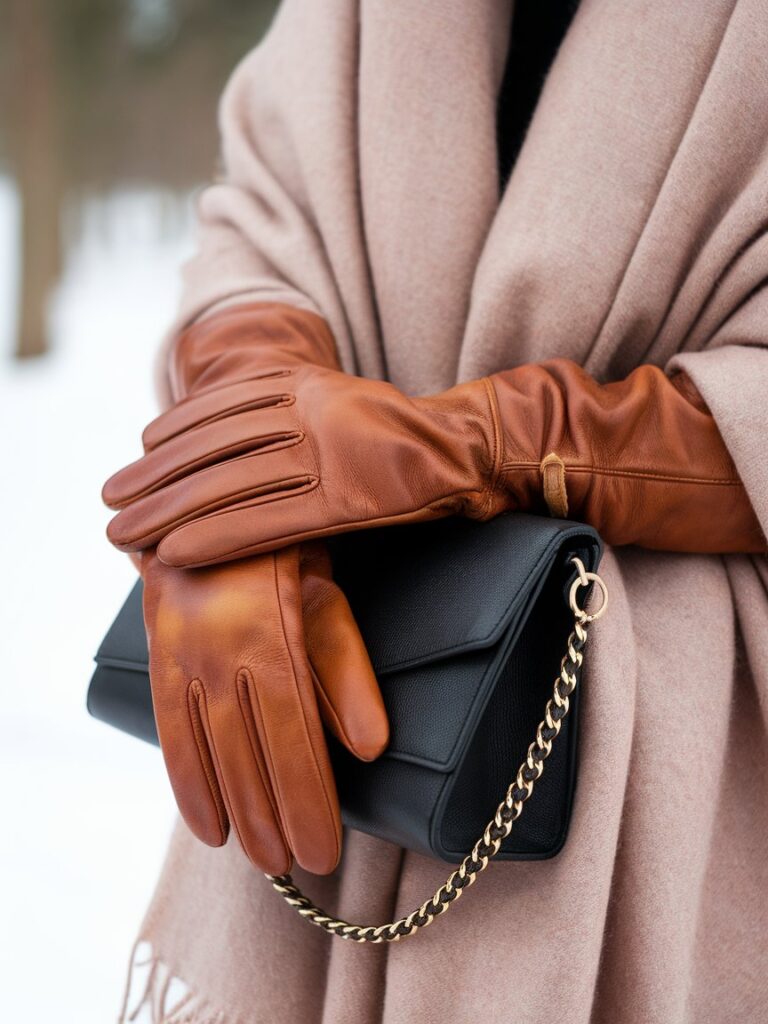
A pair of thin, elegant gloves, in leather or a fine knit rather than a bulky winter mitten, adds warmth to hands without looking out of place next to a cocktail-appropriate outfit, and they photograph well in ceremony and portrait shots too. A cashmere or wool scarf in a color that complements the outfit works similarly, and it can be removed easily indoors without disrupting the rest of the look the way a full coat sometimes does. A structured, smaller bag remains the better choice over a bulky winter tote, even at a season when practical concerns run higher than usual, since a bag sized for daily winter errands rarely suits a cocktail-appropriate outfit regardless of the temperature outside.
Hair and jewelry are worth considering separately from warmth, since winter weddings tend to involve more time spent indoors under warm lighting than outdoor summer events do. Richer, deeper-toned jewelry, a garnet or deep amber stone rather than a pale pastel, tends to suit the season’s color palette better and photographs more intentionally under the warmer, dimmer lighting common at winter receptions.
Common Mistakes That Show Up in Winter Wedding Photos
A handful of recurring choices tend to create problems specifically in winter wedding photography, even when the underlying outfit concept is sound.
- Relying entirely on a coat for warmth. A lightweight dress under a heavy coat looks fine outdoors but falls apart the moment the coat comes off indoors, which happens for most of the day at almost every winter wedding.
- Choosing a bulky, casual coat over a fitted one. A puffer or oversized parka photographs poorly next to formal attire, even when it’s the most practical option temperature-wise.
- Wearing open-toe shoes regardless of the season. This remains one of the more common mismatches between an outfit’s formality and its actual practicality once outdoor conditions are factored in.
- Skipping a plan for the walk between spaces. Ice, snow, and slush between a car and a venue entrance catch more guests off guard than the ceremony or reception itself.
- Choosing pastel or very pale colors that wash out under winter light. Colors that read beautifully in bright summer sun often look flat and underwhelming under the dimmer, cooler light typical of winter days.
A Simple Formula for Winter Guest Dressing
For guests who want a dependable starting point, a short formula tends to hold up across most winter wedding settings. Start with a base outfit in a fabric warm enough to function without a coat for at least short stretches, wool crepe, velvet, or a substantial knit rather than anything lightweight. Choose a deep jewel tone, black, or a warm metallic, since these hold their richness under winter’s flatter natural light better than pale or pastel shades do. Add a fitted coat or structured wrap in a coordinating color, closed-toe shoes with enough grip for ice or uneven ground, and thin gloves or a scarf for the walk between spaces.
None of this requires sacrificing how an outfit looks for the sake of staying warm. Most of the outfits that hold up well through an entire winter wedding, from arrival through the reception’s warmest hour, were built around warmth from the fabric out rather than treated as a summer look with a coat added on top. Guests weighing formality level alongside seasonal practicality may also find it useful to revisit the general etiquette guidance on what to avoid at a wedding, since most of those rules apply just as directly in winter as they do at any other time of year, layered on top of the season’s own practical demands.

Ella is a fashion and beauty writer who shares inspiring ideas about hairstyles, nail designs, wedding outfits, and seasonal fashion trends. She loves discovering fresh styles and creating…
View Author Profile →