

On this page
- Why Winter Changes the Veil Conversation
- Start With the Relationship Between Veil and Train
- Updos That Hold a Cathedral Veil
- Half-Up Styles for Movement and Warmth
- Loose Waves and Curls With a Veil
- Hair Accessories That Work With Winter Veils
- Placement: Where the Veil Should Attach
- Planning for Cold, Wind, and Static
- Working With a Stylist on Trial Runs
- Keeping the Look Through the Day
- Final Thoughts
- Frequently Asked Questions
Winter weddings have a particular atmosphere. Candlelight fills the room, coats hang near the entrance, and the church or venue often feels softer and more hushed than a summer ceremony. A cathedral veil or a long train can look breathtaking in that setting, but it also raises practical questions about hair. Heavy tulle needs something to hold it. A cold outdoor walk needs warmth. A ceremony that runs an hour needs a style that does not start drooping by the second reading.
This guide focuses on hairstyles that work with long veils and trains during the colder months. It covers updos, half-up styles, and loose textures, along with the placement decisions that tend to matter more than the style itself.

Why Winter Changes the Veil Conversation
In summer, a bride might choose a lightweight veil and a loose style that lets the air move through her hair. Winter tends to reverse those priorities. Fabrics are heavier, layers are more common, and the body often needs a little more coverage at the neck and shoulders.
Winter also brings a few practical quirks. Indoor heating can dry out hair and leave it prone to static, which makes a sheer veil cling to the dress or the wearer’s face. Outdoor ceremonies may involve wind, and a long veil can lift and tangle quickly. Some venues are cold even in the middle of the day, so a bride may want a style that works with a wrap, a shawl, or a faux fur layer.
None of these issues rule out a beautiful look. They simply shape the choices. A hairstyle that anchors the veil well, keeps the neck warm if needed, and holds up to a long day will serve a winter bride far better than one that looks lovely only in a studio photo.
Start With the Relationship Between Veil and Train
Before choosing a hairstyle, it helps to think about how the veil and the train relate to each other. A cathedral veil is typically the longest veil style, often extending past the train of the gown. A chapel veil usually reaches the floor, and a waltz or fingertip veil stops at shorter lengths. Each length creates a different silhouette, and each asks something slightly different of the hair.

Cathedral Length Versus Chapel Length
A cathedral veil makes a dramatic statement, and it works best with an updo or a secure half-up style. Its weight needs somewhere to go. If the veil is attached to a loose, low bun, it may slide over time. A higher or more structured base gives the veil a firmer anchor.
A chapel length veil is often more forgiving. It can work with a wider range of hairstyles, including soft waves, low buns, and braided half-up styles. Because it is shorter, it stays closer to the body and tends to move less during the ceremony.
When the Train Is the Real Focus
Some gowns have a sweeping train that deserves attention on its own. In that case, a bride may choose a shorter veil or a headpiece that frames the face without competing with the train. The hair becomes the bridge between the dress and the rest of the look, and it can be styled simply so that the silhouette stays clean.
If the gown has a dramatic back, a low chignon or a sleek bun can echo the lines of the dress. A soft braid can also draw the eye along the back of the neck, especially when the dress has a deep open back.
Updos That Hold a Cathedral Veil
Updos are the most common partner for a cathedral veil, and for good reason. They create a stable base, keep hair away from the neck, and show off the shape of the veil. In winter, an updo can also leave room for a wrap or a warm shawl without the hair getting caught in the layers.
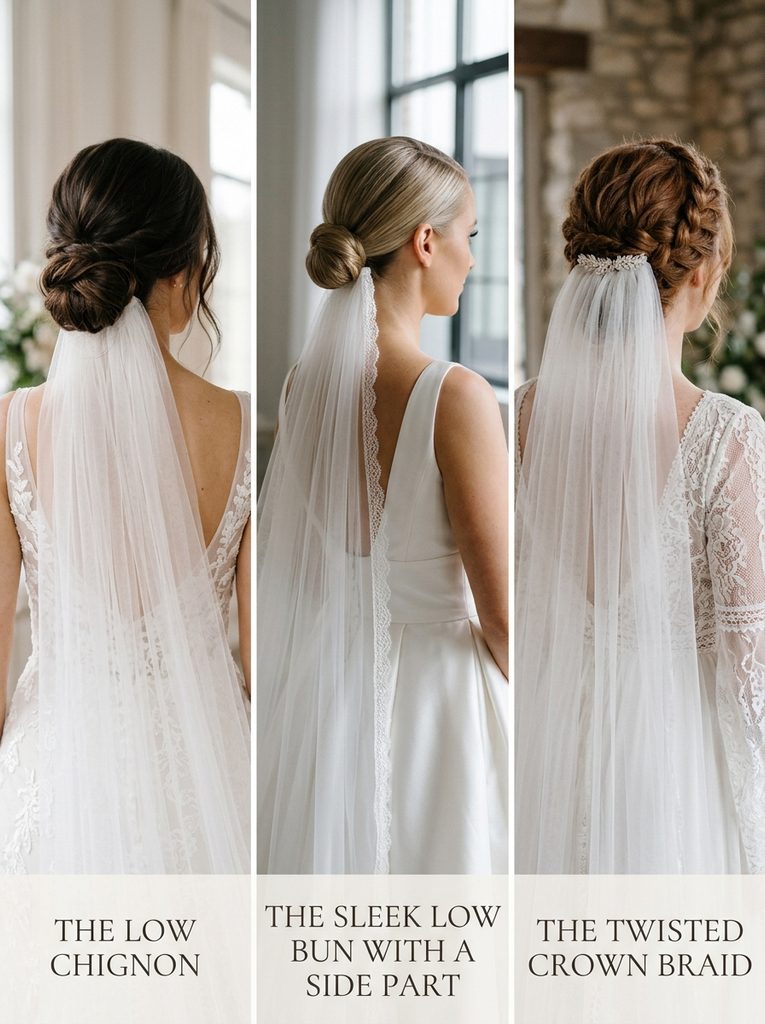
The Low Chignon
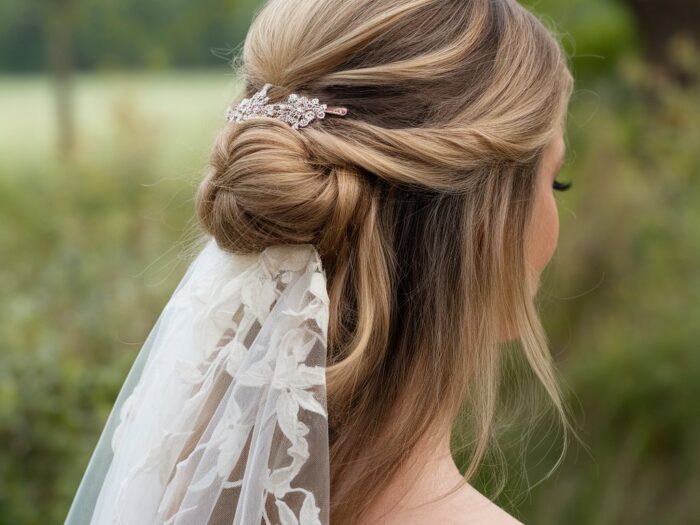
A low chignon sits at the nape of the neck and creates a classic, slightly romantic line. It works with almost every neckline, from a high collar to a sweetheart shape. For a cathedral veil, a smooth chignon with a few secure pins gives the veil a clean anchor point.
To keep the chignon from loosening during the day, start with well-prepared hair. Dry shampoo can add grip, and a light texturizing spray helps the pins hold. Bobby pins work best when placed in a crisscross pattern rather than straight into the bun.
The Sleek Low Bun With a Side Part
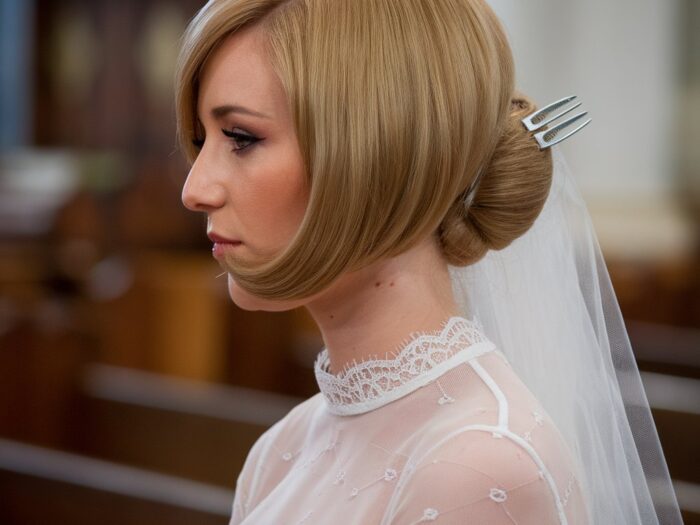
A sleek low bun with a deliberate side part feels modern and polished. It works well with a crisp, structured gown and a veil with a narrow lace border. The side part also gives the veil a clean line to follow, which can make the entire look feel more architectural.
This style can be sensitive to humidity and to flyaways, so a little hold spray and a smoothing product near the hairline are helpful. Keep the bun close to the head so it does not shift when the veil is placed.
The Twisted Crown Braid
A twisted crown braid wraps around the head like a soft halo. It suits a bride who wants the hair to feel strong and structured without appearing stiff. The braid also provides a secure base for a comb-style veil, since the comb can slide into the braid’s interior.
Winter weddings often suit a crown braid because it keeps the hair controlled in cooler air. It also frames the face, which can be helpful when the lighting is low and the room is warm.
Half-Up Styles for Movement and Warmth
Half-up styles offer a balance between structure and softness. The top layer of hair is pulled back, and the lower layer falls freely or is curled. In winter, this can be especially practical because the loose hair can sit over the shoulders for warmth and softness, while the top section keeps the veil secure.
The Soft Half-Up With Crown Volume
A soft half-up style gives the hair some lift at the crown. Gentle volume near the top makes the veil look full and dimensional. Pinning the veil into the crown can create a graceful line, especially with a cathedral length that falls far down the back.
Volume can be created with a large round brush for a few minutes, followed by a light backcombing at the crown. Use a soft brush to smooth the surface afterward, so the top looks refined rather than teased.
The Braided Half-Up
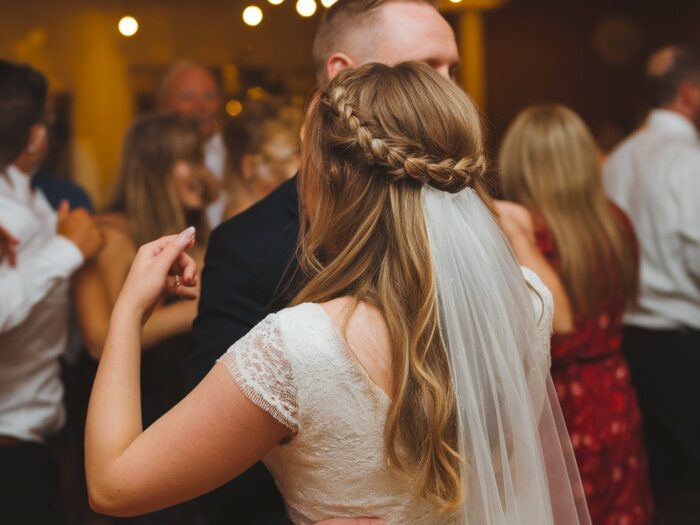
A braided half-up style brings a relaxed, romantic feel. A single braid running from one temple to the back of the head, or a pair of braids that meet at the crown, can hold the veil in place while leaving the rest of the hair loose.
This style suits a bride who wants a softer look without losing security. It also works well with a chapel or waltz veil. If a cathedral veil is chosen, the braid should be placed high enough to carry the weight comfortably.

Loose Waves and Curls With a Veil
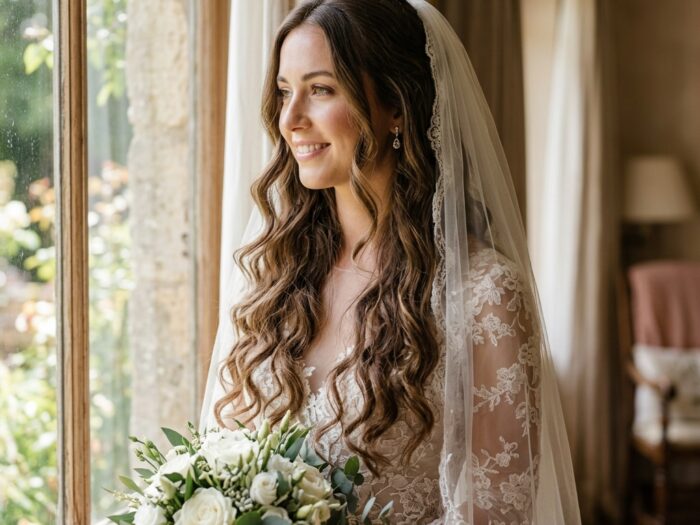
Loose waves and soft curls are popular for winter weddings because they feel warm and natural. They can also work with a veil, though the attachment needs more planning.
A veil secured to loose hair can slip if the curls are very soft or very slippery. Choose one of two approaches. Either secure the veil to a small, structured section at the crown with several combs, or create a base with a few pins hidden under the waves. Pin placement should be discreet but firm, and it should go into hair that has been sprayed lightly for grip.
If the veil is heavy, loose hair may look wonderful at the reception but feel stressful during the ceremony. Many brides take this into account by choosing a lighter veil for the ceremony and a different accessory for the rest of the day.

Hair Accessories That Work With Winter Veils
Accessories can add warmth and character to a winter bridal look. The best choices are those that hold the veil securely, suit the season, and complement the hair rather than fighting with it.
Pearl and crystal combs are a classic choice. They catch candlelight and sit well against darker or richer hair tones. Tulle or ribbon wraps can add softness, and velvet ribbon in a deep ivory or champagne shade feels suited to colder weather. Fresh flowers are rarely practical in winter, but dried or preserved blooms in muted colors, such as sage, dusty pink, or cream, can offer a seasonal touch.
Hair clips with a flat base are often more comfortable than tall or spiky designs, especially when they sit behind the ear or near the crown. If the veil has a comb, check that the comb teeth do not press uncomfortably against the scalp during a long day.

Placement: Where the Veil Should Attach
Placement is one of the most important decisions in veil styling. The same veil can look completely different depending on where it is attached.
A crown placement, where the veil sits at the top of the head, gives the most volume and drama. It works well with updos and high braids. A mid-crown placement, slightly behind the crown, often feels balanced and suits most face shapes. A lower placement, near the nape, creates a softer, more natural line and works with low buns and loose styles.
For cathedral veils, placement should take the weight into account. Attaching the veil too far forward can cause it to pull on the front of the head. Attaching it too far back can make it look heavy at the crown. A fitting before the wedding is the best time to test the balance.
Some brides also choose to attach the veil at two points, one at the crown and one at the nape. This can help the veil sit evenly and reduce the risk of slippage. Ask the stylist to check that the veil moves naturally when the bride turns her head.

Planning for Cold, Wind, and Static
Winter weddings call for a few practical extras that summer brides rarely need.
For cold weather, consider a pashmina or a lightweight shawl that can be draped over the shoulders during photos. Make sure the hairstyle leaves room for it. A low bun or a braid at the back usually works better than a style that sits heavily on the shoulders.
Wind is a common challenge for outdoor ceremonies. A cathedral veil can lift dramatically in a gust, which is beautiful for a moment but can tangle quickly. Ask the stylist to add extra pins at the base of the veil, and keep a small pin kit or a few extra bobby pins in a discreet place for touch-ups.
Static is another winter issue. Wool coats, knit gloves, and dry air can make a veil cling to the gown or the face. A light anti-static spray, used sparingly on the veil rather than the hair, can help. Some brides also keep a small detangling brush in their bag for quick fixes between photos.

Working With a Stylist on Trial Runs
A trial run is one of the most useful steps in planning a winter bridal hairstyle. Bring the veil, the comb or headpiece, and ideally a photo of the dress. Wear the neckline you plan to wear on the day, since the neckline shape can affect how the hair and veil look together.
During the trial, pay attention to how the style feels after an hour or two. Notice whether the pins create discomfort, whether the veil sits comfortably, and whether the hair stays in place when you turn your head or lower it. Some brides also test the look in the light they expect at the venue, since candlelight, warm bulbs, and daylight can change how a hairstyle reads.
Bring clear reference images, but keep them flexible. A photo of a low bun may look different on a different hair texture, so ask the stylist how the style can be adapted to your natural hair.
Keeping the Look Through the Day
A winter wedding can run long, and hair needs to hold up through photos, dinner, and dancing. A few habits help.
Before the ceremony, have a small kit ready with extra pins, a travel-size hairspray, a comb, and a clear plastic bag or pouch to protect the veil while you are moving between spaces. If you plan to change into a different hairstyle or remove the veil for the reception, decide in advance so the stylist can plan the second look.
Be mindful of heat. Winter venues can be warm once they fill with guests, and a tight updo can feel uncomfortable or cause the hair to slip. Loosen the pins slightly if needed, and keep a bit of hair spray nearby for quick touch-ups.
Finally, plan a moment for yourself between the ceremony and the reception. A few minutes to check the veil and hair in a mirror can make the difference between a look that holds and one that quietly loosens.
Final Thoughts
A winter bride’s hairstyle does more than frame the face. It has to anchor the veil, respond to the cold, handle the wind, and still look graceful in a long line of photographs. The most successful choices usually balance structure and softness. A low chignon, a crown braid, or a soft half-up style can all carry a cathedral veil beautifully when placed with care.
Start with the veil length and the gown’s train, then choose the hairstyle that supports both. Test the look in real conditions, and keep a few practical tools close by. A winter wedding can be as elegant as any other season, and the right hair and veil combination can make the day feel complete.
For more inspiration on the gown itself, the guide to wedding dress necklines and body shape explains how the neckline can change the way an updo or half-up style sits. You can also browse the bridal hairstyles collection for additional ideas that suit different hair lengths and textures.
Frequently Asked Questions
Can I wear a cathedral veil with a short haircut?
Yes, though the attachment will look different. A short cut may suit a shorter veil, such as a fingertip or blusher style, or a cathedral veil attached with a sturdy comb at the crown. Ask a stylist to check the weight and balance during a trial.
Is a low bun better than an updo for a heavy veil?
A low bun can work well if the base is secure and close to the head. Higher styles often feel more stable with cathedral veils because the weight sits higher. A low bun can still work, especially with a chapel length veil.
How do I keep a veil from slipping in a winter wind?
Use several secure attachment points, add a few extra pins at the base, and choose a hairstyle with enough grip to hold the comb. A light texturizing spray can also help hair grab pins more effectively.
Should the veil match my hair color?
Not necessarily. Many brides choose a veil in ivory, champagne, or white, which tends to suit most hair shades. The veil should complement the dress and the overall palette rather than match the hair exactly.
Can I wear a veil with loose winter waves?
Yes. Secure the veil to a small section at the crown or to a braided base hidden under the waves. Lightly sprayed hair holds pins better than very soft or freshly washed hair.
What should I bring to a trial run?
Bring the veil, any comb or headpiece you plan to use, a photo of the gown, and ideally the neckline you will wear on the day. Wear the outfit or a similar top so the stylist can see how the hairstyle sits with your shoulders.

Ella is a fashion and beauty writer who shares inspiring ideas about hairstyles, nail designs, wedding outfits, and seasonal fashion trends. She loves discovering fresh styles and creating…
View Author Profile →