

On this page
Most spring outfits fail at one specific moment. It is not the cold morning, when everything is buttoned up, and it is not the sunny afternoon either. It is the middle part of the day, when one layer comes off and what is left looks unfinished.
That small problem explains why a closet full of nice clothes can still feel useless in March and April. The pieces were bought one at a time, so they only work as complete outfits. Remove the jacket and the whole look falls apart.
This guide builds a lightweight spring wardrobe the other way around. Twelve pieces are chosen so that every layer can stand on its own, and every combination still looks deliberate when something comes off.

The Three-Stage Test
Before any piece goes into the capsule, it has to pass a simple check. Picture one outfit at three stages:
- Stage one: every layer on, as you leave the house.
- Stage two: the outer layer removed.
- Stage three: only the base left, for warm rooms and sunny afternoons.
A good spring outfit looks finished at all three. A weak one looks good at stage one and awkward at stage three. A thick, oversized cardigan over a plain undershirt is a common example. With the cardigan on it looks cozy, but without it, the undershirt looks like underwear.
The test also explains why spring clothes should be light. Layers that get carried around all day need to fold small and stay wrinkle-free. A heavy piece becomes a burden the moment the sun comes out.
Keep this test in mind for the rest of the list. Every item below was picked because it passes at two stages out of three, ideally all of them.
Pick One Color to Repeat
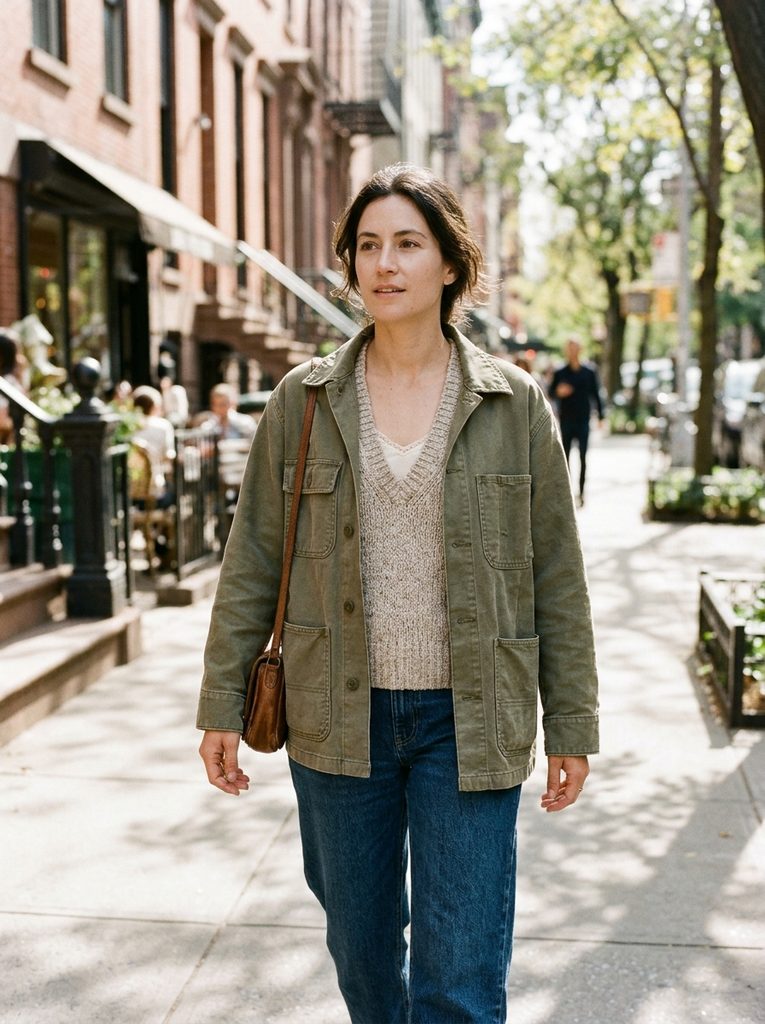
Color planning usually means choosing a palette. That helps, but a palette alone does not guarantee that outfits look connected. A better trick is to choose one shade and repeat it on purpose.
Start by deciding on a warm or cool direction. Then pick four neutrals inside it, and one “echo” color that shows up in at least three pieces.
- Warm direction: oat, ecru, warm white, and caramel, with olive as the echo color.
- Cool direction: soft gray, cool white, faded denim blue, and charcoal, with slate blue as the echo color.
The echo color does quiet work. When olive appears in an overshirt, a pair of shoes, and a knit vest, those pieces look related even if they are never worn together. The eye picks up the repetition and reads the outfit as planned.
Mixing warm and cool is possible, but it takes more care. For a first capsule, staying in one direction removes most of the guesswork.
Reading a Fabric Label for Spring
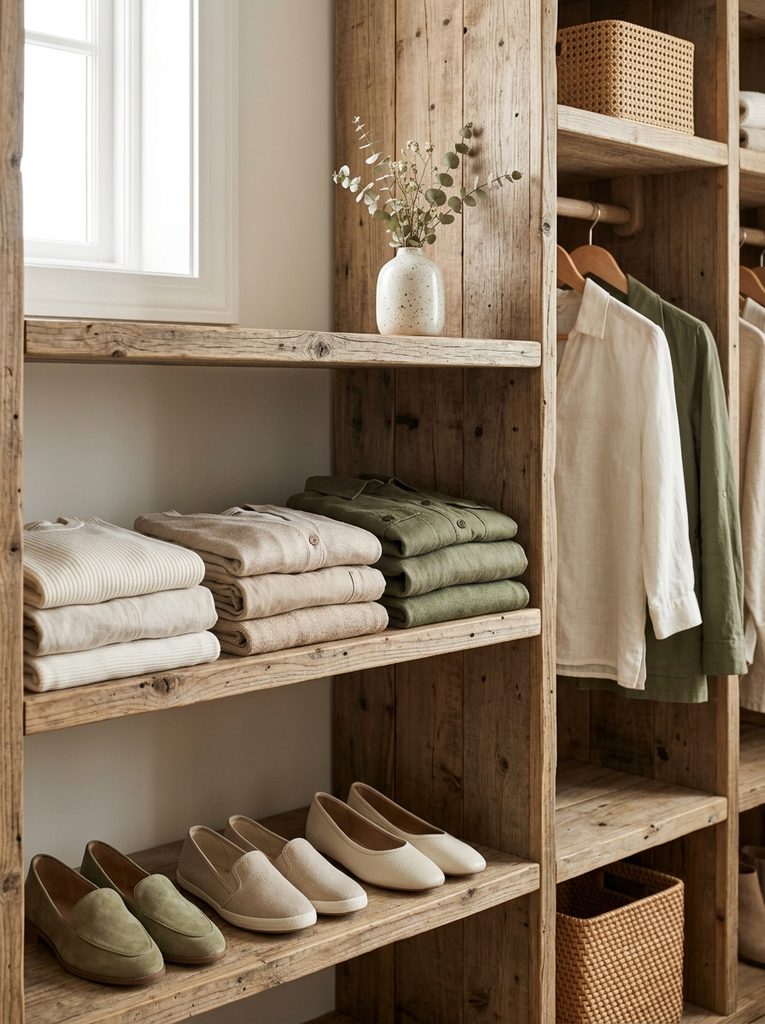
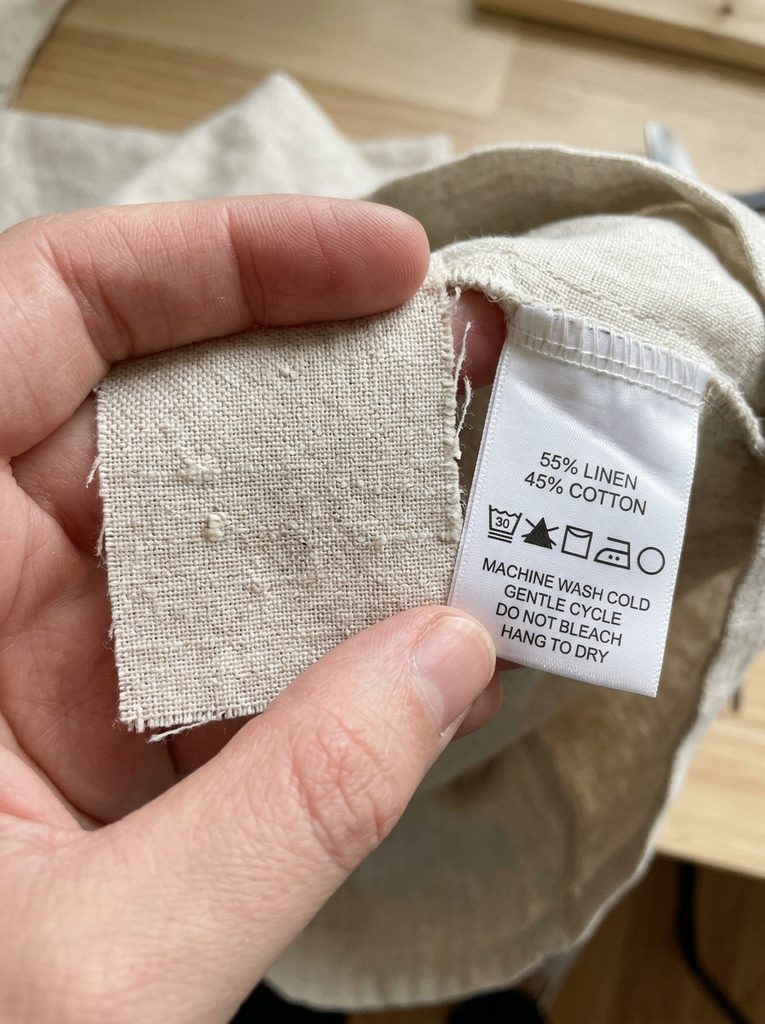
Fabric decides how a piece feels at 3 p.m., which matters more than how it looks on a hanger. A few label details help.
- Linen blends: Pure linen creases fast. A blend with cotton or viscose keeps the airy feel and holds its shape better.
- Lyocell: Made from wood pulp, it drapes softly and stays cool. It suits skirts, camisoles, and wide-leg pants.
- Cotton knits: Fine-gauge cotton breathes well and does not cling. Look for ribbing or an open texture rather than a dense, thick knit.
- Fully synthetic fabrics: These often trap heat. A small share of polyester or elastane is fine for stretch, but a piece made entirely of it can feel stuffy on a warm day.
Texture matters as well. A capsule made only of smooth fabrics looks flat, and one made only of rough fabrics looks busy. Aim for a mix of three feels: something crisp, something soft, and something with a slight sheen. That variety keeps repeated outfits from looking identical.
The 12 Pieces, Sorted by Stage
The list below follows the three-stage idea. Base pieces come first, since they are what remains when the layers come off. Then come the middle layers, one outer layer, the lower half, and shoes.
Stage One: Four Base Pieces
These are worn closest to the body and often worn alone. They need to look good by themselves.
1. A Ribbed Shell Tank in Ecru
A sleeveless top with a high, round neckline is the cleanest base for hot days. Ribbed cotton keeps its shape without clinging. Under an overshirt, it adds almost no bulk. On its own, with wide-leg pants, it looks calm and intentional.
2. A Short-Sleeve Knit Polo
A fine cotton polo is a tee with better manners. The collar adds structure, which makes a simple outfit look more finished. It tucks neatly into pants or a skirt, and it sits well under a vest. Choose a soft, slightly loose fit rather than a sporty one.
3. A Matte Satin Camisole
Matte matters here. A glossy camisole can look evening-only, while a matte one works with daytime pieces too. Wear it under an overshirt, or alone with ecru jeans for a dressed-up casual look. A relaxed cut with thin adjustable straps is easy to live in.
4. A Fine Long-Sleeve Knit Crew
This is the early-spring base, for weeks when bare arms still feel too ambitious. Look for fine ribbing, a pointelle pattern, or an open-weave knit in a light cotton blend. The sleeves should push up easily, since they will be shoved to the elbows by lunchtime.

Stage Two: Two Middle Layers
Middle layers add warmth without turning the outfit into a coat situation. They also give you something to remove.
5. A Washed Cotton Overshirt
An overshirt is heavier than a blouse and lighter than a jacket. Worn open, it frames a base top. Buttoned up, it becomes a top on its own. Tied around the waist or tossed in a tote, it travels well. Pick the echo color here if you can, such as olive or slate blue.
6. A Sleeveless Knit Vest
A vest warms the core, which is what most people actually feel in cool air, while leaving the arms free. It layers over a polo, a camisole, or a crew knit. A boxy, cropped, or slightly long shape all work, as long as the knit stays thin and drapes well.
Stage Three: One Outer Layer
7. An Unlined Chore Jacket
One outer layer is enough when it is well chosen. A cotton twill chore jacket blocks wind, handles light drizzle in a pinch, and looks right over every other piece on the list. The lack of lining keeps it light for warmer afternoons. A neutral shade lets the overshirt and vest stand out in the echo color.
For heavier rain, a compact packable shell can live in a bag as an extra, outside the twelve.

The Lower Half: Three Anchors
8. Wide-Leg Linen-Blend Pants
Pull-on pants with a soft waistband are easy to wear all day. The wide leg balances fitted tops, and the fabric moves in a breeze. Let the hem skim the top of your shoes. Cream, oat, or stone shades are the easiest to pair.
9. Ecru Jeans
Off-white denim looks fresher in spring than classic blue and works with nearly everything. A straight leg with a bit of room keeps the look relaxed. One caution: pale denim shows marks easily, so a thicker, more opaque fabric is worth the extra weight.
10. A Satin Slip Skirt
A bias-cut midi skirt adds movement and a little shine. It looks best when paired with something matte and textured, such as the polo or the overshirt. Try not to match its fabric exactly to the camisole, or the two can read as a set.

Shoes: Two Pairs
11. Leather Mary Jane Flats
A rounded toe and a thin strap give a flat shoe some personality. They suit the slip skirt, the wide-leg pants, and the ecru jeans. A cushioned insole is worth checking for, since flats can feel thin on long days.
12. Flat Leather Slide Sandals
For the warmest days, a simple slide with a padded footbed takes the place of closed shoes. Tan, black, or the echo color are all good choices. Keep the strap design plain so the shoe works with both pants and skirts.
A Quick Pairing Map
With twelve pieces, the number of combinations grows quickly. Four base tops and three lower pieces already make twelve outfits, and adding shoes and layers pushes that much higher. Not all of them will look right, so three simple rules help sort them.
- Pair one crisp item with one soft item. Crisp cotton with a drapey skirt, or a ribbed tank with relaxed linen pants, gives contrast that feels balanced.
- Keep the echo color in every outfit. One olive or slate piece per look is enough to tie it together.
- Balance volume. Wide-leg pants want a fitted top. A flowing slip skirt works with something structured, like the polo or the overshirt buttoned up.
If an outfit breaks two of these rules, swap one piece and try again.
Six Outfits That Pass the Test
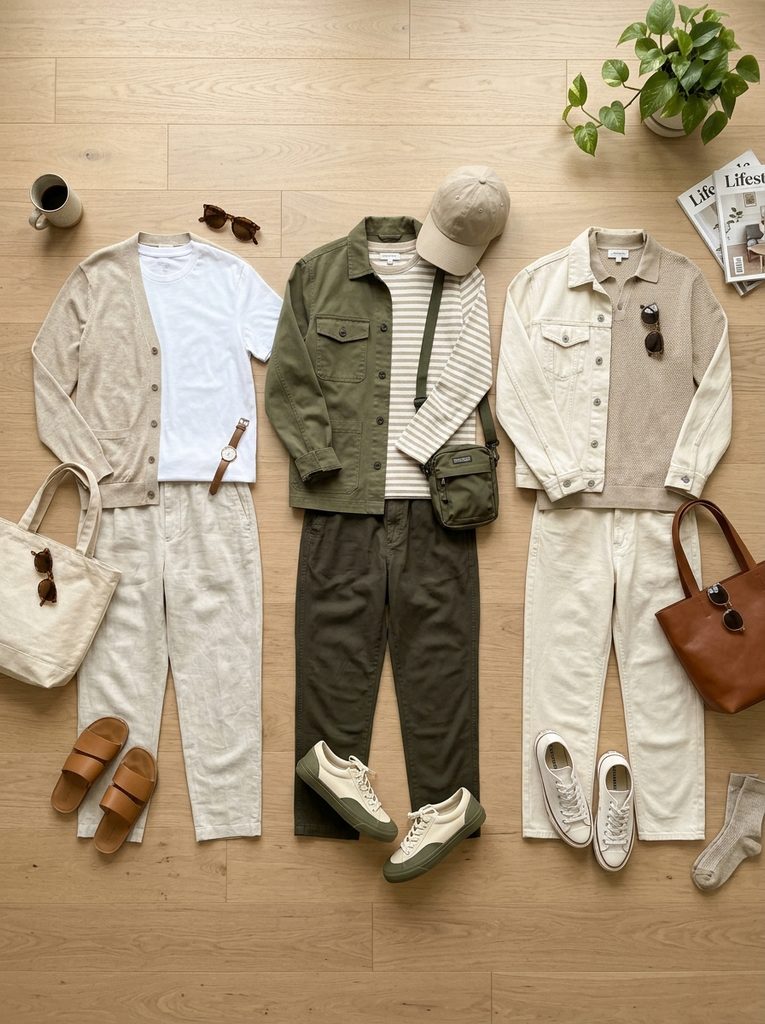
Each combination below shows how the outfit looks at all three stages.
- Crew knit, ecru jeans, Mary Janes. Add the vest and the chore jacket for a cold start. Drop the jacket for the office. Without the vest, the knit and jeans still look tidy.
- Polo, wide-leg pants, slides. Add the overshirt open on a breezy day. Take it off and the polo and pants still look complete.
- Camisole, ecru jeans, slides. Layer the overshirt on top for evening. Without it, this is a simple warm-weather outfit.
- Shell tank, slip skirt, Mary Janes. Add the vest and the chore jacket for a dinner. Without them, it works for a long daytime walk.
- Crew knit, slip skirt, flats. Add the overshirt for a cool morning. Without it, the knit and skirt balance fitted and flowing shapes.
- Polo tucked into wide-leg pants, vest, Mary Janes. Add the chore jacket for a commute. Without the jacket, the vest carries the look.
Wearing the Same Twelve From March to May
A wardrobe that works in March can feel too heavy by May, and one that suits May can feel too thin in March. The same twelve pieces can handle both, because the weight is shifted through layering rather than replacing pieces.
In early spring, stack the layers. The knit crew goes under the vest, then the overshirt, then the chore jacket. Pair it with jeans or the wide-leg pants. In the middle weeks, drop to two layers, usually a polo with the overshirt or a crew knit with the vest.
By late spring, the base pieces carry the outfit. The shell tank, the camisole, and the polo come forward, while the overshirt gets tied around the waist or carried. The jacket may stay home on many days.
For more ideas on handling in-between weather, the article on transitional outfits for weather that cannot make up its mind covers more daily layering scenarios.

What to Buy First
Not everyone starts from zero. Check the closet first, then fill gaps in this order. The order matters because early purchases set the rules for the later ones.
- The lower half. Pants, jeans, and the skirt define the palette. Choose these first.
- Two or three base tops. Match them to the lower half and the echo color.
- The chore jacket. It needs to sit well over everything bought so far.
- Shoes. Test them with each lower piece before committing.
- The vest and overshirt. These come last because they are the easiest to find in a matching tone.
If workdays are part of the plan, the guide to office outfit formulas for days you do not want to think about getting dressed shows how a small set of pieces can be reused for work. The same repeating logic also appears in the ten-piece fall capsule wardrobe, which is a useful reference for the following season.

Mistakes That Make a Capsule Feel Flat
A small wardrobe can get dull quickly if a few habits creep in. These are the most common ones.
- Too many pieces in the same shape. If every top is fitted and every bottom is slim, outfits start to look alike. Mix fitted and loose on purpose.
- Skipping texture. Twelve smooth pieces make a dull wardrobe. Include ribbing, satin, twill, and open knits.
- Buying a one-use piece. If an item only works with one other item, it is a special-occasion purchase, not a capsule piece.
- Forgetting shoes. Shoes change an outfit more than most people expect. Two good pairs make twelve pieces feel larger.
- Washing too hot. Delicate blends and knits last longer with cooler washes and air drying. The care advice at Love Your Clothes is a helpful place to check fabric-specific tips.
It also helps to look at how a brand makes its clothes before buying in bulk. Sites such as Good On You rate brands on materials and production, which can make it easier to choose pieces that will last the whole season and beyond.
A Final Word
A lightweight spring wardrobe does not need to be large. It needs to be built so that taking a layer off never ruins the outfit. The three-stage test, one echo color, and a mix of textures cover most of what makes a small set of clothes work.
For a different take on the same idea, built around a color plan and a trench, the earlier spring capsule wardrobe with twelve lightweight pieces offers a second list to compare against. Taken together, the two approaches give plenty of room to build something that fits your own spring days.

Ella is a fashion and beauty writer who shares inspiring ideas about hairstyles, nail designs, wedding outfits, and seasonal fashion trends. She loves discovering fresh styles and creating…
View Author Profile →