


On this page
- Why a Weekend Needs Its Own Rules
- Three Questions to Answer Before You Pack
- The Outfit Math
- Choose a Palette of Three Before Anything Goes in the Bag
- Two Versions of the Same Plan
- The Travel Day Outfit: Wear Your Heaviest Pieces
- Plan by Moment, Not by Day
- Shoes: Two Pairs and One Rule
- Choosing Fabrics That Survive a Suitcase
- How to Pack the Bag
- The Small Bag Inside the Big One
- Beauty and Hair in a Carry-On
- Check the Bag Rules Before You Buy or Pack
- Packing Mistakes That Waste Space
- A Complete Packing List
-
FAQs
- How many outfits can I make from a long weekend capsule wardrobe?
- How many clothes do I need for a three-night trip?
- What should I wear on the plane?
- Is it better to roll or fold clothes?
- What colors work best for a capsule travel wardrobe?
- Can I fit a dressy outfit in a carry-on?
- What is the best carry-on size?
- Leave a Little Room
Three nights away rarely call for more than a dozen garments. Most packing mistakes come from planning for every possible outfit instead of the few that will actually happen. A long weekend has a short script: travel, a full day out, a dinner, maybe a slow morning, and the trip home.
This guide builds a long weekend capsule wardrobe around that script. You will find a simple formula for choosing pieces, two climate versions of the same plan, ideas for what to wear on the plane, and a full packing list at the end. Everything is sized to fit in a single carry-on, with room left over for something you buy along the way.

Why a Weekend Needs Its Own Rules
A capsule wardrobe at home spreads across a season, and you can swap pieces in and out. A travel capsule has no such flexibility. Once the zip closes, the wardrobe is fixed, so each item has to do at least two jobs.
That changes how you shop your own closet. A piece that looks wonderful but works with only one other item stays home. A piece that is slightly plain but pairs with everything goes in. If you want the home version of this thinking, a ten-piece fall capsule wardrobe that actually repeats well covers building a seasonal set. Here the aim is narrower: a fixed set for a fixed trip.
Three Questions to Answer Before You Pack
Skip the mood board for a moment. These three answers shape the whole bag.
What is the schedule? Write down the real plans: a hike, a museum day, a restaurant booking, a wedding brunch. Casual trips need fewer dressy pieces, and city breaks tend to need more polish.
Can you wash or refresh anything? If the accommodation has laundry access, you can pack fewer tops. If not, plan on one fresh top per day, with lower layers repeated.
What will the weather do? Check the forecast a few days ahead and pack for the range, not the average. A trip with a 10-degree swing needs layers, not extra outfits.
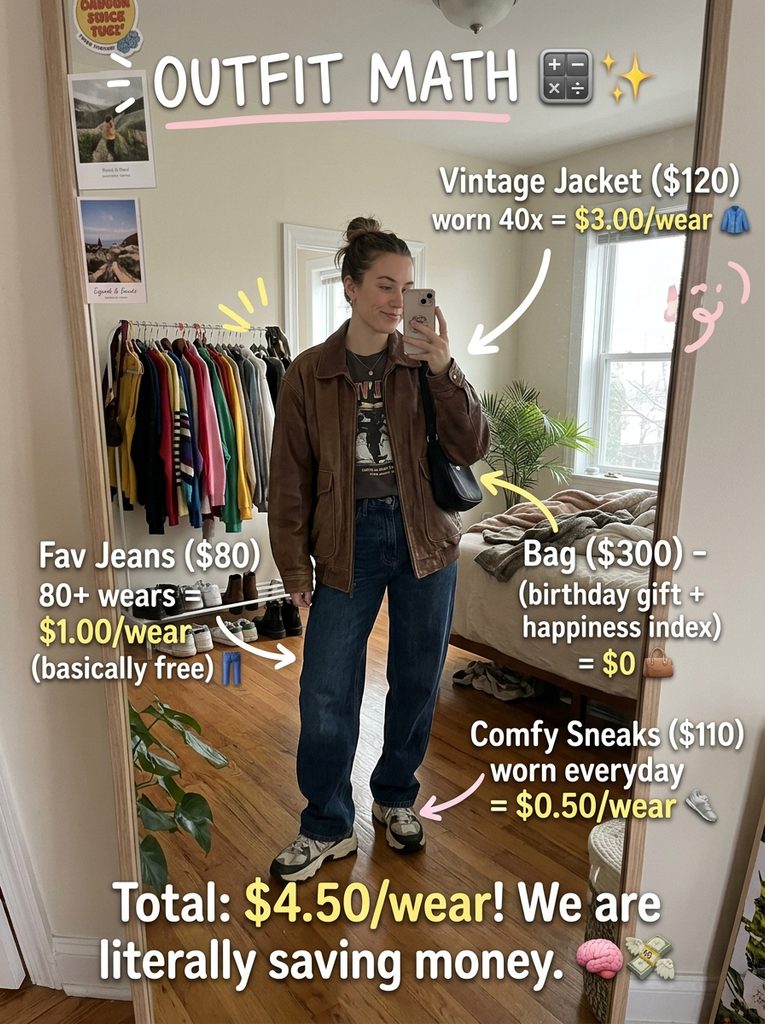
The Outfit Math
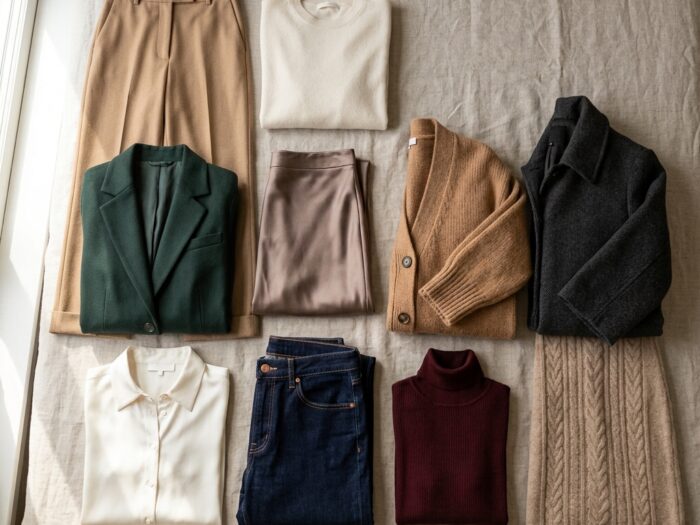
A small set of well-chosen pieces produces many more outfits than the number of items suggests. This breakdown covers a typical three-night trip.
| Category | Pieces | Role |
|---|---|---|
| Tops | 4 | Two plain, one patterned, one dressier |
| Bottoms | 2 | One trouser or jean, one skirt or second trouser |
| One-piece | 1 | A dress or jumpsuit for the evening |
| Layers | 2 | A knit and a light jacket or blazer |
| Shoes | 2 | One walking pair, one dressier pair |
| Outerwear | 1 | Worn on the travel day |
Ten garments and two pairs of shoes, plus a coat you wear on the plane, can produce around nine distinct outfits once layers are mixed in. The key is that every top works with both bottoms and at least one layer.
Choosing Tops
Four tops is the sweet spot for three nights. Pick two in a solid, quiet color, one with a subtle print or stripe, and one that looks right in a restaurant, such as a silk-feel blouse or a fine knit. Avoid very structured tops that crease easily when folded.
Choosing Bottoms
Select one pair that goes with everything, such as dark straight jeans or tailored trousers, and a second with a different texture or length, such as a pleated midi skirt. Both should sit comfortably through a long day of walking and sitting.
Choosing Layers
A mid-weight knit and a light jacket cover most conditions. The jacket should look good over the dress and over a casual tee. A structured blazer or a clean overshirt tends to work harder than a decorative cardigan.
The One-Piece
A dress or jumpsuit solves the evening question in a single hanger-free item. Choose a fabric that resists wrinkles, such as a ponte knit, a crepe or a jersey blend. Pick a shape that works with your layers: a midi in a solid color is usually the easiest.
Choose a Palette of Three Before Anything Goes in the Bag
Color is the quietest packing tool. If every piece belongs to the same small family, every top can meet every bottom without thought.
Pick one base color, one companion, and one accent. For example: navy as the base, cream as the companion, and rust as the accent. Dark base pieces go on the bottom half, light companions near the face, and the accent appears in one or two small places, such as a scarf and a top.
Neutral palettes are the easiest. If you prefer more color, restrict yourself to one bold shade and let the rest recede. Prints are fine in small doses, though one pattern per bag is usually plenty.
Two Versions of the Same Plan
The same structure adapts to temperature. Here are two complete lists, both built on the formula above.
Cool-Weather Weekend
- Tops: Cream ribbed tee, white poplin shirt, navy fine-knit sweater, striped long-sleeve top
- Bottoms: Dark straight jeans, charcoal pleated midi skirt
- One-piece: Navy knit midi dress
- Layers: Camel blazer, grey wool cardigan
- Worn on the plane: Long trench or wool coat, ankle boots
- Extra shoe: Leather loafers or flat ankle boots
- Accessories: Scarf, sheer and opaque tights, small crossbody bag
Warm-Weather Weekend
- Tops: White cotton tee, linen-blend shirt, silk-feel camisole, breton stripe top
- Bottoms: Light-wash straight jeans, cotton midi skirt
- One-piece: Printed or solid wrap dress
- Layers: Light unstructured blazer, thin cotton cardigan
- Worn on the plane: Overshirt or light trench, comfortable sneakers
- Extra shoe: Leather sandals or low block heels
- Accessories: Scarf in a lightweight fabric, sunglasses, small crossbody
If your trip crosses seasons, the layering ideas in transitional outfits for weather that can’t make up its mind help you plan for temperature swings.

The Travel Day Outfit: Wear Your Heaviest Pieces
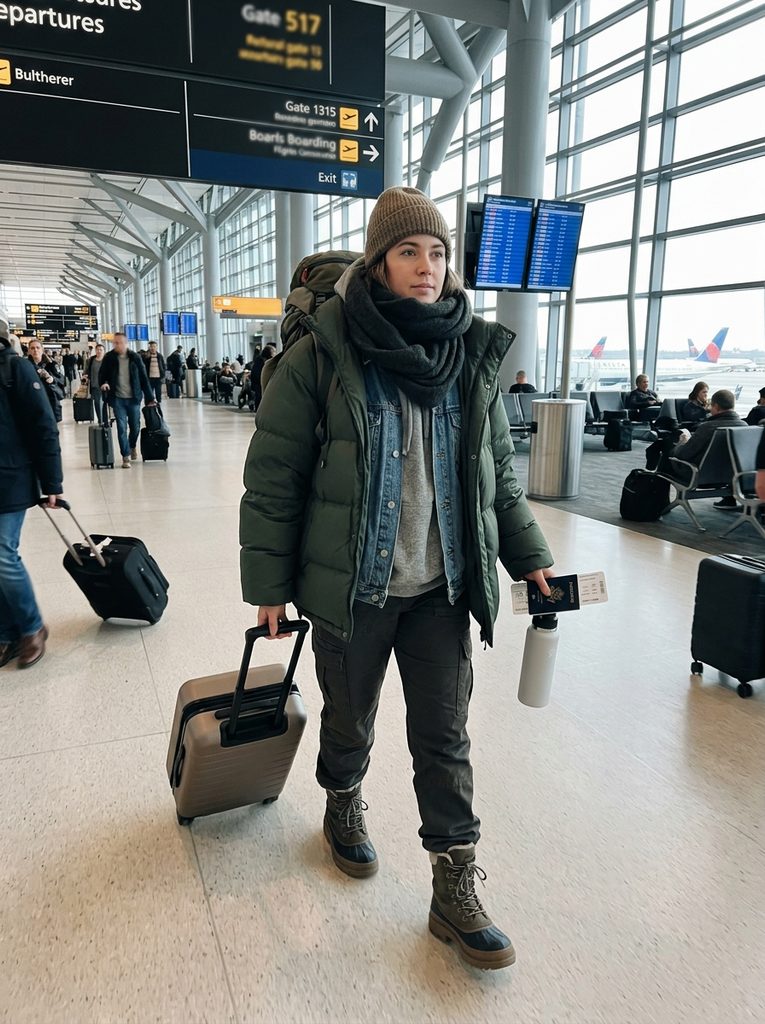
The airport outfit is the most valuable real estate in your packing plan. Anything you wear takes up no room in the bag. So the heaviest coat, the bulkiest shoes and the thickest knit should all go on your body at the airport.
A good travel outfit has comfortable trousers or jeans with some stretch, a breathable top, a layer you can remove, and a coat or jacket with deep pockets. Shoes should slip on and off at security without drama. Choose colors that hide small stains and creases.
Think about temperature extremes, too. Cabins can be cold and terminals can be warm, so a lightweight scarf or wrap that doubles as a blanket is a useful addition. It also doubles as a styling piece later in the trip.
Plan by Moment, Not by Day
Many packing lists go day by day, which can lead to over-packing. A better method is to plan around moments, because several days may share the same type of outfit.
Arrival and Settling In
You will likely wear the travel outfit again, or a close variation. Swap the coat for a lighter layer if you are heading to dinner straight from the station.
The Big Day Out
This is the most walking-heavy part of the trip. Use the most comfortable bottoms, a plain top, and your walking shoes. Layers should be easy to take on and off.
Dinner
The one-piece or the dressier top with a skirt works here. A blazer adds polish quickly. Swap the shoes if you brought a dressier pair, and add one small accessory, such as earrings or a scarf.
The Slow Morning
Repeat a bottom from earlier, choose a fresh top, and add a knit or overshirt. This is the day to repeat items without worry.
Departure
Re-wear the travel outfit, or wear pieces you have already worn that can handle another day. Since you will be in transit again, comfort comes first.
For more ideas about dressing when plans are loose, weekend outfit ideas when you don’t know the plans shows how a few flexible pieces can handle several situations.
Shoes: Two Pairs and One Rule
Shoes take up more room than almost anything else in a carry-on, so limit yourself to two pairs, plus the pair you wear. The rule is simple: every pair must work with every outfit.
Choose one pair designed for comfort and distance, such as cushioned sneakers or sturdy flat boots. Choose a second pair that handles dressier plans, such as loafers, low block heels or simple flats. In neutral colors such as black, tan or white, each pair is much more likely to match every outfit.
If you can wear only one pair, choose a comfortable leather option that can handle a restaurant and a long walk. Place shoes sole to sole in a bag at the bottom of the case, and use the inside of each shoe for small items like socks or jewelry pouches.

Choosing Fabrics That Survive a Suitcase
Fabric choice can matter as much as fit. Some materials spring back after folding, and others hold every crease.
Knits and jersey generally resist wrinkling and fold small. They suit tops, dresses and layers.
Ponte and thick crepe keep their shape and hide creases, which makes them good for trousers and dresses.
Wool blends recover well and handle temperature changes, though heavy wool takes up space.
Cotton poplin looks crisp but may need steaming. A hang in a steamy bathroom often helps.
Linen is breathable but creases easily. If you love it, accept a relaxed finish rather than fight it.
Silk and satin-feel fabrics pack small but can show water marks and folds, so keep them in a separate pouch.
Fabric care labels are the best guide to how a garment tolerates washing and steaming, so check them before you pack.
How to Pack the Bag
Packing order affects both space and the state of your clothes. These steps work for most soft and hard-sided carry-ons.
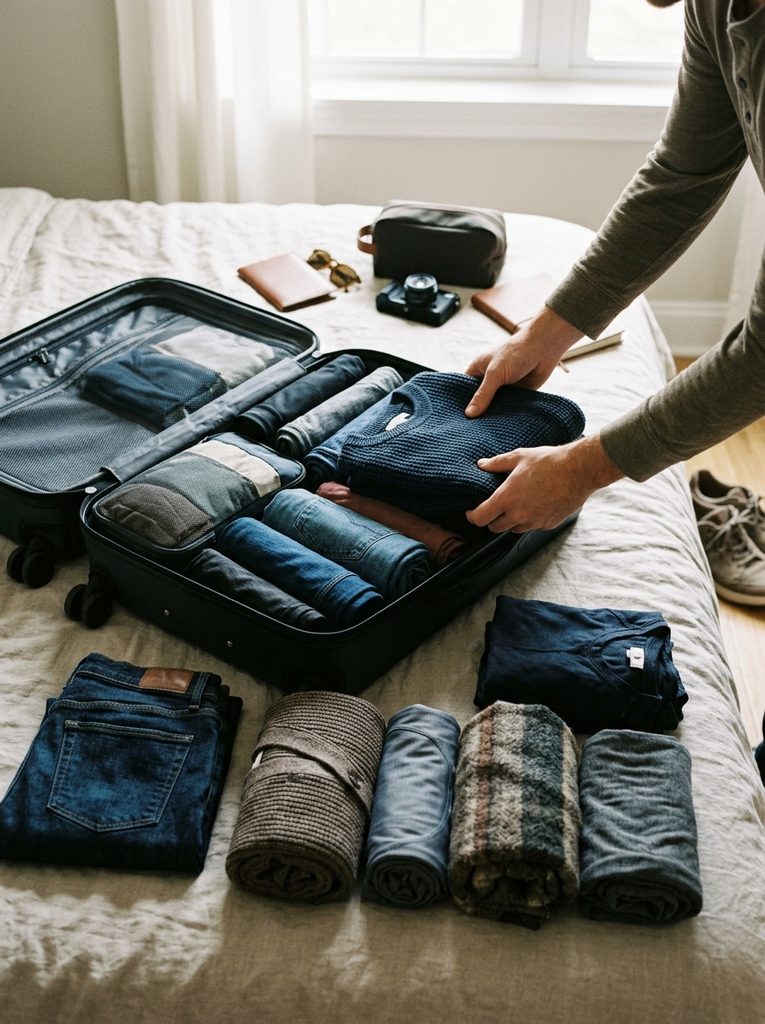
Start with the heaviest items at the base. Put shoes near the wheel end of a rolling case, so the weight sits low and the bag stays stable.
Fold structured pieces; roll soft ones. Blazers, shirts and trousers keep their shape better when folded, ideally with one garment wrapped around another to soften creases. Knits, tees and jersey dresses roll compactly.
Use packing cubes or pouches. Group by type: tops in one, bottoms in another, underwear and sleepwear in a third. This makes it easy to find things and to repack quickly.
Fill the gaps. Stuff socks, belts and small accessories into shoes and corners.
Keep the essentials accessible. Chargers, documents, medications and a spare top in your personal item mean you are covered if the main bag is delayed or gate-checked.

The Small Bag Inside the Big One
A carry-on setup often includes a personal item, such as a tote or a crossbody. Choose one that works on the plane and on the trip: a structured bag with a zip, enough room for a phone, wallet, passport and a small book. If it also looks right at dinner, you can skip packing a second purse.
Proportion matters, so a bag that is too large will crowd the main case, while one that is too small leaves you carrying items in your hands. The handbag sizes worth owning before you buy another one offers a useful guide for choosing a size.
Beauty and Hair in a Carry-On
Beauty items can quietly take up half a bag. A short, deliberate kit saves room and keeps things easy to manage. These suggestions are about convenience, not about any particular product or skin concern.
- Decant your regular cleanser, moisturizer and any hair product into small bottles.
- Choose multi-use items, such as a tinted balm that works on lips and cheeks.
- Bring a minimal makeup set: one base product, one blush, one mascara, one lip color.
- Pack a few hair accessories, such as a claw clip, a few pins and a silk-feel scrunchie, which change a style without heat tools.
- Place anything liquid in a clear pouch at the top of the bag.
Liquid rules differ by airport and country, so check the current limits for your route before you go. ByMetz’s carry-on guide covers size, weight and liquid points in one place.

Check the Bag Rules Before You Buy or Pack
Carry-on limits vary by airline, fare type and sometimes route. A bag that fits one carrier may be too large for another, and budget fares often restrict you to a smaller personal item. If you are flying more than one airline, plan for the strictest one.
TravelFreak maintains a searchable carry-on size guide listing limits for many airlines, which can help before you buy luggage. Always confirm the current rules with your airline shortly before departure, since policies change.
Remember that handles, wheels and external pockets can count toward the measurements, so measure the full bag, not just the main body.
Packing Mistakes That Waste Space
A few habits show up again and again.
Packing for “just in case” outfits. Each backup item takes space and rarely gets worn. One versatile layer usually covers the same situation.
Bringing too many shoes. Two pairs beat four, and the extra pairs add weight fast.
Choosing one-off pieces. A bold item that matches only one other piece may stay in the bag the whole trip.
Forgetting to wear the heaviest items. The coat, boots and thick knit belong on your body, not in the case.
Overlooking weight. Some airlines weigh carry-ons. Heavy items like shoes, denim and toiletries add up quickly.
Leaving no room to return. Souvenirs, a new scarf or a bakery box need somewhere to go. Aim to leave a little space at the start.
A Complete Packing List
Here is a version of the list in one place, built for a cool, city-focused long weekend.
- 4 tops: ribbed tee, poplin shirt, fine-knit sweater, striped long-sleeve
- 2 bottoms: dark jeans, pleated midi skirt
- 1 dress: knit or crepe midi
- 2 layers: blazer and cardigan
- 1 pair of loafers or flats, 1 pair of walking shoes
- 3 to 4 sets of underwear and socks, plus sleepwear
- 1 scarf, 1 belt, 2 pairs of earrings
- 1 crossbody bag for the trip
- Decanted toiletries and a small makeup pouch
- Charger, adapter and travel documents
Worn on the plane: coat, boots or sneakers, comfortable trousers and a top.
FAQs
How many outfits can I make from a long weekend capsule wardrobe?
A set of about ten garments, two pairs of shoes and one coat can produce around nine outfits when you mix and layer them. Each top should work with both bottoms and at least one layer.
How many clothes do I need for a three-night trip?
Roughly four tops, two bottoms, one dress or jumpsuit, and two layers are enough for most trips. Add underwear, socks and sleepwear based on whether you can do laundry.
What should I wear on the plane?
Wear your bulkiest items, such as your coat, boots or sneakers, and a comfortable pair of trousers. Choose a breathable layer you can remove, and shoes that are easy to take off at security.
Is it better to roll or fold clothes?
Soft items like tees, knits and jersey dresses roll well. Structured items like blazers and shirts keep their shape better when folded. A mix of both usually works best.
What colors work best for a capsule travel wardrobe?
A palette of one base color, one companion and one accent keeps everything compatible. Neutrals such as navy, cream, grey and camel are the easiest to combine.
Can I fit a dressy outfit in a carry-on?
Yes. Choose a wrinkle-resistant dress or a dressier top that pairs with your existing bottoms, and add a blazer and small accessories. This usually takes up less space than a separate formal outfit.
What is the best carry-on size?
Sizes vary by airline. Many carriers allow bags around 55 by 40 by 20 centimeters, but limits differ, so check your airline’s current rules before you pack.
Leave a Little Room
A good packing list should feel slightly generous once the bag is closed. If the case bulges, something can go. If you can still slide a hand in along the edge, you have enough space for a souvenir or a purchase.
Lay everything out on the bed, remove two items, and check that each remaining piece works with at least two others. Zip the bag, lift it, and walk across the room. If it feels manageable now, it will feel better when you reach the station.

Ella is a fashion and beauty writer who shares inspiring ideas about hairstyles, nail designs, wedding outfits, and seasonal fashion trends. She loves discovering fresh styles and creating…
View Author Profile →

2 Comments