
On this page
- Why Heat Pushes Outfits Toward Casual
- Five Signals of a Put-Together Summer Outfit
- Fabrics That Stay Crisp When It Is Hot
- Light Tones, One Family
-
The 10 Pieces
- 1. A Sleeveless Poplin Shell With a Structured Neckline
- 2. A Short-Sleeve Camp-Collar Shirt
- 3. A Square-Neck Cotton Top
- 4. Pleated Tailored Shorts
- 5. Tapered Linen-Blend Trousers
- 6. A Straight Poplin Midi Skirt
- 7. A Sleeveless Linen-Blend Sheath Dress
- 8. A Three-Quarter-Sleeve Unlined Jacket
- 9. A Leather Sandal With an Ankle Strap
- 10. An Almond-Toe Slingback Flat
- How the Pieces Pair
- Five Hot-Day Scenarios
- Details That Do the Quiet Work
- Mistakes That Pull Outfits Back Toward Casual
- Final Thoughts
Hot weather changes what getting dressed means. The goal shifts from looking good to staying comfortable, and somewhere along the way outfits start to slide toward beachwear. Flip-flops turn up at lunch meetings. A shapeless tank stands in for a proper top. Everything is soft, thin, and creased.
None of that is wrong in itself. But plenty of people want to stay cool and still look like they made an effort, whether the setting is an office, a dinner, a family event, or just personal taste. The two goals can sit together, though they need a different kind of planning.
This summer capsule wardrobe is built around that balance. It uses ten breathable pieces chosen for structure as much as for airiness, so the clothes stay sharp when the temperature climbs.

Why Heat Pushes Outfits Toward Casual
Before choosing pieces, it helps to see what actually causes the casual look. It is rarely one big thing. Usually, a few small habits stack up.
- Limp fabric. Thin jersey loses its shape fast and shows every crease after an hour of sitting.
- Clingy fit. In heat, close-fitting clothes feel worse, so people reach for baggy ones with no shape at all.
- Shapeless shoes. Flat rubber soles and open straps with no structure make an outfit read as beach or pool.
- Skipped details. Wrinkled hems, stretched necklines, and visible straps are easier to ignore when it is hot, and they are the first things a polished look loses.
The fix is not to wear heavier clothes. It is to choose cool fabrics that still hold a shape, and to pay attention to a handful of details that signal effort.

Five Signals of a Put-Together Summer Outfit
Polished outfits tend to share a few traits, even when the clothes are simple. Think of these as a quick checklist. Each outfit in this guide hits at least three of the five.
- A defined neckline or shoulder. A square neck, a small collar, or a crisp armhole gives the top half of an outfit a clear edge. Scooped, stretched necklines do the opposite.
- A clear hem. Shorts that end at a deliberate point, trousers with a clean ankle line, and skirts with a straight, pressed hem all look planned. Frayed or uneven hems look accidental.
- Tonal color. Wearing shades from the same family, such as ivory, sand, and tan, creates a long, calm line. The eye reads it as coordinated.
- A shoe with a shape. A strap at the ankle, a slim heel counter, or a leather upper gives a shoe structure. It separates a sandal from a slide.
- One structured object. A bag with a firm shape, a thin leather belt, or a light jacket adds a sharp point to an otherwise soft outfit.

Fabrics That Stay Crisp When It Is Hot
Thin does not have to mean limp. Some fabrics are airy and still hold a clean line, and those are the ones worth building around.
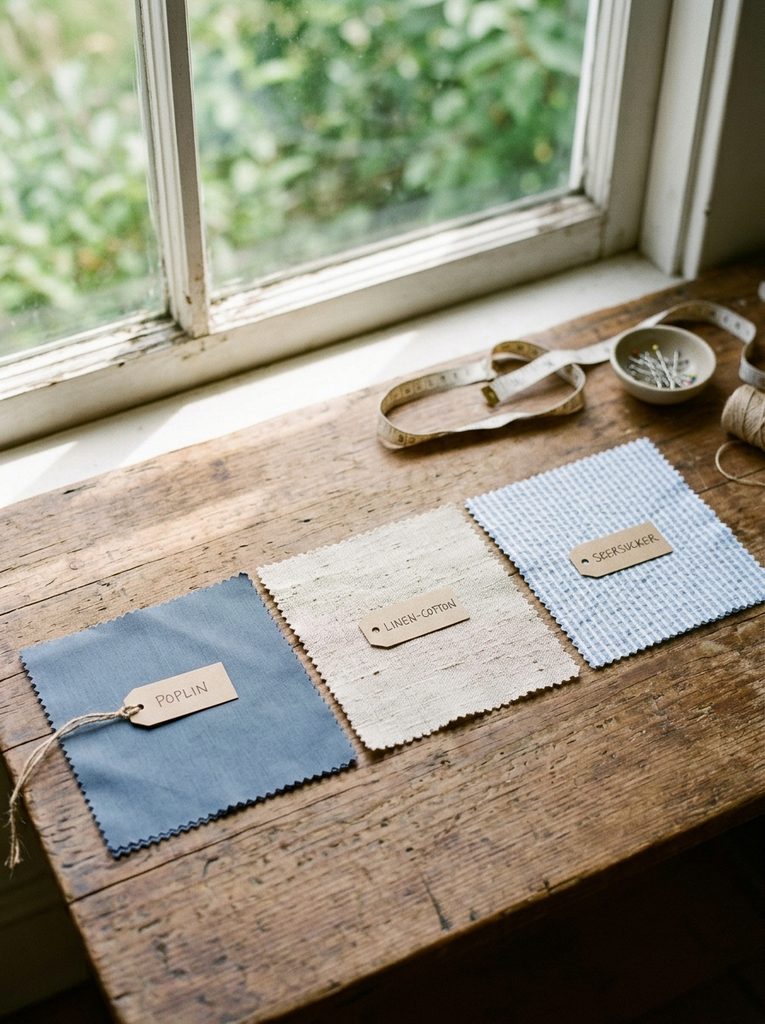
- Cotton poplin. A tight, flat weave that feels light on skin and keeps a crisp surface. It suits shirts, shells, and skirts.
- Cotton-linen blends. These keep the breezy feel of linen but crease less than pure linen. A blend with a bit of cotton or viscose is easier to wear all day.
- Lyocell and cupro. Both drape smoothly and feel cool to the touch. They work well for trousers and dresses that need to move without clinging.
- Seersucker. The puckered stripe lifts the fabric off the skin, which helps airflow, and the texture hides small creases.
Be careful with very thin jersey, fully synthetic fabrics, and anything almost sheer. They tend to trap heat, cling, or need a lining.
One simple check is the sit test. Sit in a chair for ten minutes, stand up, and look at the fabric in a mirror. If it looks like a map of the chair, it will look that way all day.
Light Tones, One Family
Light colors reflect more sunlight, so they often feel cooler outdoors than dark ones. They also suit summer light well. The trick is to avoid a patchwork of unrelated shades.
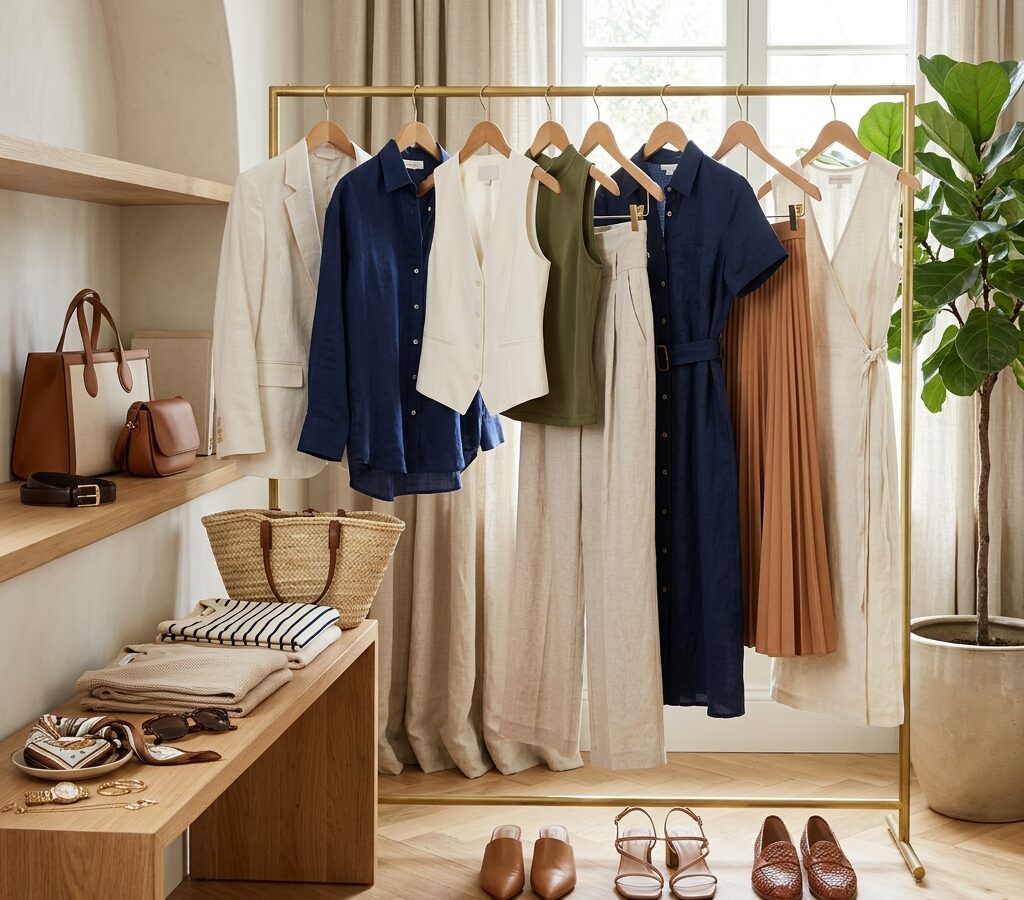
Tonal dressing is the easiest method. Choose one color family and use two or three depths of it in the same outfit. For example, an ivory top, sand trousers, and tan sandals make a smooth, tall line that looks deliberate.
A few families that work well:
- Sand: ivory, sand, tan, and a deeper brown for shoes or a belt.
- Blue: white, pale blue, mid blue, and navy for contrast.
- Green: stone, sage, and olive, with one cream piece to lighten the mix.
If you like pattern, keep it to one piece per outfit. A thin stripe or a small check pairs well with solid tones in the same family, and it keeps the capsule flexible.
The 10 Pieces
Each piece below was chosen for breathability, structure, and how well it pairs with others. Shoes and a bag are included, since they have a large effect on whether an outfit looks casual.
1. A Sleeveless Poplin Shell With a Structured Neckline
Look for a square, boat, or slightly high neck, with armholes cut close enough to stay neat. The crisp cotton keeps its shape without any lining. This piece works on its own in heat and under a jacket in cooler rooms.
2. A Short-Sleeve Camp-Collar Shirt
A relaxed shirt in cotton-linen or lyocell adds ease without turning sloppy. Wear it tucked or untucked, open over the shell, or buttoned to the top. The collar gives the neckline a frame, which is the main reason it looks polished.
3. A Square-Neck Cotton Top
A snug but not tight top with a flat square neckline looks clean in warm weather. Choose a mid-weight cotton that is not see-through. It pairs with every bottom on the list and stays neat under a light jacket.
4. Pleated Tailored Shorts
City shorts that end at the mid-thigh or just above the knee are the most polished way to wear shorts. A pleat adds shape, and a defined waistband keeps them from looking like loungewear. Cotton twill or linen blends work best.
5. Tapered Linen-Blend Trousers
Trousers with a gentle taper and an ankle-length hem look sharp and still let air move. A mid-weight linen blend resists creasing better than pure linen. Choose a color in your tonal family, such as sand or stone.
6. A Straight Poplin Midi Skirt
A column skirt, one that falls straight rather than swinging, gives a sleek, grown-up look in heat. The poplin holds its line and does not cling. A back slit or small vent makes walking easier.
7. A Sleeveless Linen-Blend Sheath Dress
A dress with simple lines and a clear waist or seam covers a whole outfit in one move. Choose a lined or opaque fabric, and a length that sits at or just below the knee. It looks clean alone and pairs well with the jacket.
8. A Three-Quarter-Sleeve Unlined Jacket
Many hot places have cold, air-conditioned indoor spaces. An unlined jacket in cotton, linen, or a light blend adds structure and covers bare arms without any weight. Sleeves that end at the forearm look neat when pushed up.
9. A Leather Sandal With an Ankle Strap
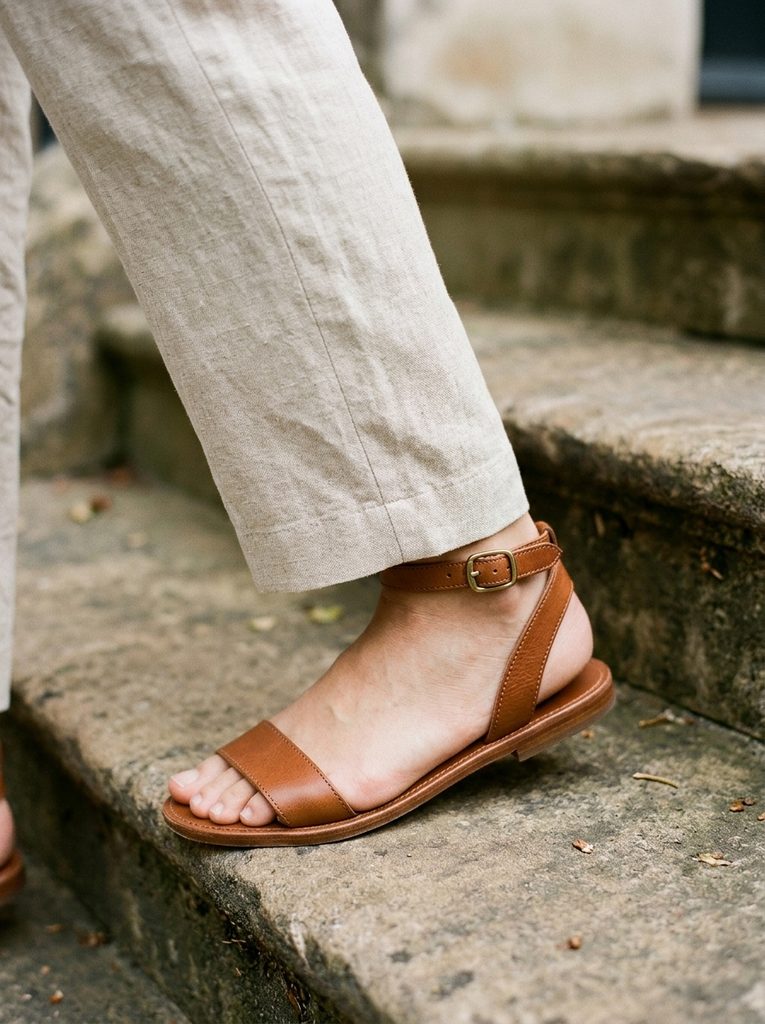
A flat or low block heel with an ankle strap holds the foot in place and looks like a shoe, not a beach item. Tan, black, or a deep brown works with most outfits. Check that the footbed is padded for long days.
10. An Almond-Toe Slingback Flat
A closed toe with an open heel is cooler than a full shoe but still reads as dressed. Leather or a smooth canvas are both good choices. It suits trousers, skirts, and the dress equally well.
A bag is not counted in the ten. A small, structured tote in a neutral tone ties the whole set together. The guide to handbag sizes worth owning can help you pick a size that suits your day.

How the Pieces Pair
With ten pieces, the number of combinations grows fast. Three tops and three bottoms alone make nine outfits, and the dress, jacket, and two shoe options multiply that further. Not every pairing is equally good, so a few rules keep things simple.
- Mix a fitted piece with a looser one. A fitted shell works with relaxed trousers, and a loose camp shirt looks better over a straight skirt.
- Match the level of crispness. Poplin, linen blends, and twill sit well together. A crisp shirt with a very limp bottom looks uneven.
- Stay inside one color family. Tonal outfits almost always pass the polish test.
If an outfit breaks two of these rules, change one piece before leaving the house.

Five Hot-Day Scenarios
Real days rarely look the same, so here is how the capsule handles five common ones.
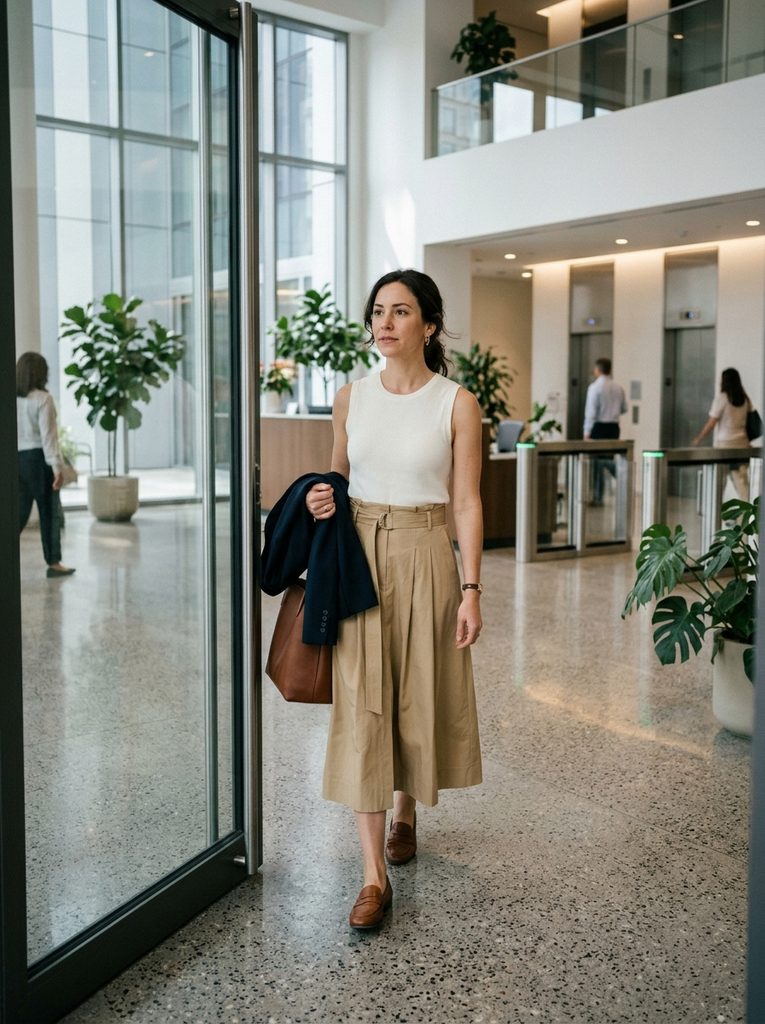
- A crowded commute. Square-neck top, tapered trousers, and slingback flats. The top breathes, and the trousers look neat after a long ride.
- An outdoor lunch. Camp-collar shirt over the shell, pleated shorts, and ankle-strap sandals. Casual in feel, but clearly dressed.
- An office with strong air conditioning. Shell, poplin skirt, and the three-quarter-sleeve jacket. Keep the jacket on at the desk and carry it outdoors.
- An evening on a warm night. Sheath dress, ankle-strap sandals, and a structured bag. Add the jacket if the air cools down.
- A travel day. Square-neck top, trousers, flats, and the jacket in the bag. Everything resists wrinkles and layers without bulk.
For a closer look at where polished casual ends and business wear begins, the guide to business casual versus smart casual explains how much structure each setting usually calls for. If work is part of your summer plan, the office outfit formulas offer more ways to repeat the same pieces. For trips, the long weekend capsule wardrobe shows how to pack a small set in a carry-on.
Details That Do the Quiet Work
Once the pieces are in place, small habits keep them looking sharp.
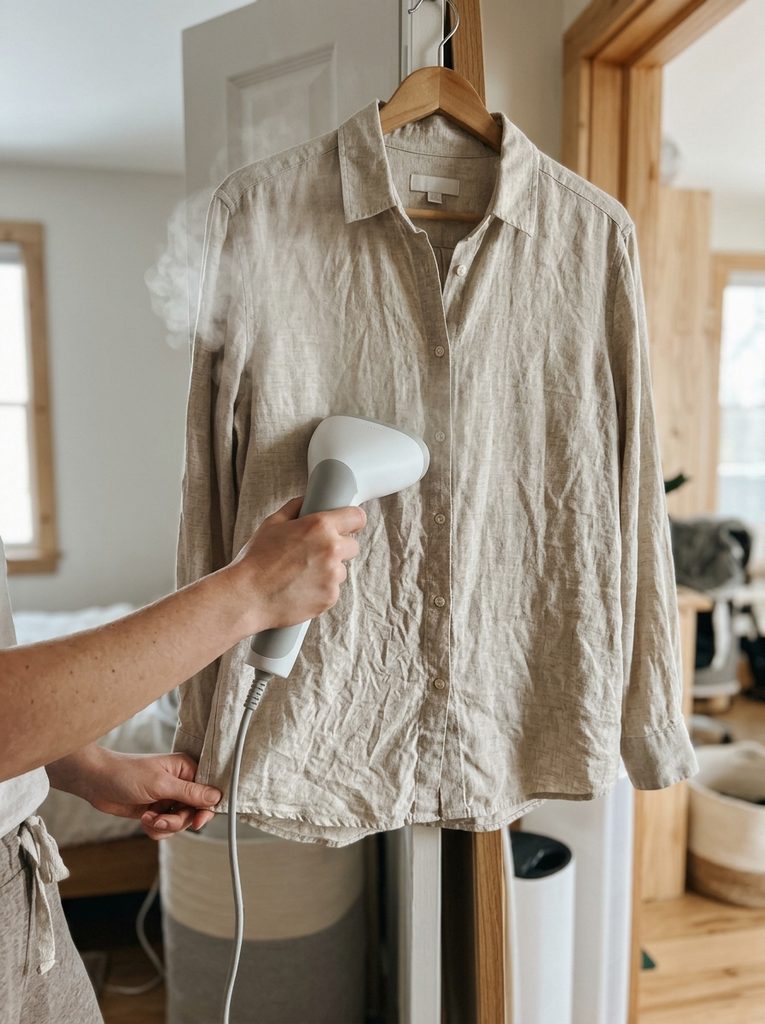
- Steam, do not press. A handheld steamer or a hot shower room releases creases faster and treats light fabrics more gently than an iron.
- Check the hem. Hems tend to catch and unravel in summer, since people wear fewer layers. Fix them before they show.
- Keep underlayers invisible. Choose pieces that match skin tone and sit flat under fabric, so straps and seams do not show through light colors.
- Choose small jewelry. Studs, a thin chain, or a slim bracelet add polish without adding heat.
- Carry a lint roller or small cloth. Light colors show dust and fibers easily, especially after sitting.
Mistakes That Pull Outfits Back Toward Casual
A few habits undo a good capsule quickly.
- Wearing flip-flops with tailored pieces. A rubber sole next to a pressed hem looks mismatched. Choose a strapped leather sandal instead.
- Choosing the thinnest fabric available. Very thin cloth wrinkles, clings, and shows through. A slightly firmer fabric stays cooler in practice because it sits away from the skin.
- Mixing too many colors. Heat already makes outfits feel busy. One family keeps things calm.
- Letting the wardrobe fray. Light fabrics wear out faster when washed hot. Cool washes and air drying help, and the care tips at Love Your Clothes cover fabric-specific advice.
- Buying cheap, then replacing it. Summer pieces take a lot of washing. Checking materials and construction before buying pays off, and a resource like Good On You rates brands on how their clothes are made.
Final Thoughts
A summer capsule wardrobe for hot weather does not need heavy clothes or lots of layers. It needs fabrics that breathe and hold a shape, a color family that stays calm, and a few structured details that show some care. With ten pieces and a short checklist, outfits can stay cool and still look put together, even on the hottest days.
Start with the pieces that match your daily routine, then fill in the rest slowly. Over a few weeks, the set will begin to feel like a simple system, and getting dressed in the heat will take far less thought.

Ella is a fashion and beauty writer who shares inspiring ideas about hairstyles, nail designs, wedding outfits, and seasonal fashion trends. She loves discovering fresh styles and creating…
View Author Profile →