

On this page
- Why “Suits Every Face” Needs a Second Look
- Find Your Face Shape Before You Pick a Length
- Curtain Bangs by Face Shape
- When Your Face Sits Between Two Shapes
- Forehead Height, Cowlicks, and Other Things a Face Chart Ignores
- A Length Map From Brow to Chin
- Parting Choices: Center, Soft Off-Center, and Everything Between
- Curtain Bangs With Different Hair Lengths
- Glasses, Color, and Styling Around the Fringe
- Small Mistakes That Make Bangs Look Off
- Choosing With Less Guesswork
Curtain bangs get recommended to nearly everyone. That advice is true, but it doesn’t help much. The soft, center-parted fringe does flatter a wide range of faces. Whether it flatters yours depends on length, thickness, and how quickly the bangs sweep away from the part. Change any of those by half an inch and the same cut can read like a different haircut.
This guide works from the opposite direction. Instead of asking whether curtain bangs suit you, it asks what each face shape needs from them. Some faces need extra length in the overall look. Others need softer edges, or a little more width near the temples. Once you know what the bangs should do, the details are easier to choose.
Below you will find a quick way to identify your shape, a plan for seven common shapes, and a few factors that matter more than any chart, including forehead height, cowlicks, and glasses.

Why “Suits Every Face” Needs a Second Look
Curtain bangs part in the middle and sweep outward, which leaves a soft opening around the forehead. That shape is gentler than a blunt fringe, so it forgives a lot. It also leaves plenty of room for adjustment, and that is where face shape comes in.
Three details change the result more than the name of the cut does:
- Length: where the shortest piece ends, anywhere from the brow to the chin.
- Density: how much hair goes into the fringe, from a see-through wisp to a fuller curtain.
- Sweep: how fast the bangs move away from the part and blend into the sides.
Face shape works best as a starting point. Who What Wear makes the point that anyone can wear whichever cut they like, whatever their face shape. The shape simply helps you choose between versions. It is not a gate that decides who gets bangs.

Find Your Face Shape Before You Pick a Length
Pull your hair back and stand in even light, facing a mirror or a camera straight on. Then compare four things: the width of your forehead, the width across your cheekbones, the width of your jaw, and the distance from hairline to chin. Some people trace their outline on the mirror with a washable marker to see it more clearly.
A rough readout looks like this:
- Oval: length is about one and a half times the width, with gentle curves and a slightly narrower jaw.
- Round: length and width are close, with soft curves and no sharp corners.
- Square: length and width are close, but the jaw and forehead have strong, straighter lines.
- Heart: the forehead is the widest part, and the chin is narrow.
- Diamond: the cheekbones are widest, while the forehead and jaw are both narrower.
- Long: the face is clearly longer than it is wide, with similar widths at forehead, cheeks, and jaw.
- Pear: the jaw is wider than the forehead.
Many people land between two of these. That is normal, and a later section covers how to handle it.
Curtain Bangs by Face Shape
Each shape below has one main goal and a few ways to reach it. Treat them as starting points to take into a salon, not strict rules.
Oval Faces
Oval faces already have balanced proportions, so the bangs don’t need to correct anything. The decision comes down to mood. Eyelid-length bangs look classic and frame the eyes. Cheekbone-length bangs look softer and more relaxed.
One caution applies here. A very thick, heavy fringe can make an oval face look slightly shorter than it is. A lighter curtain keeps the proportions intact. A slightly off-center part also works well if you want something less symmetrical.

Round Faces
The goal for round faces is to create the look of length and soften the width at the cheeks. Davines suggests longer curtain bangs that begin around the cheekbones, which adds vertical length and softens the sides of the face.
Keep the sweep long and slim, with ends that angle downward past the cheekbones. That makes the lines run up and down instead of across. Short, thick pieces that sit flat on the forehead tend to stress width, so they are worth avoiding. Keeping volume at the crown, rather than at the sides, also helps.
Square Faces
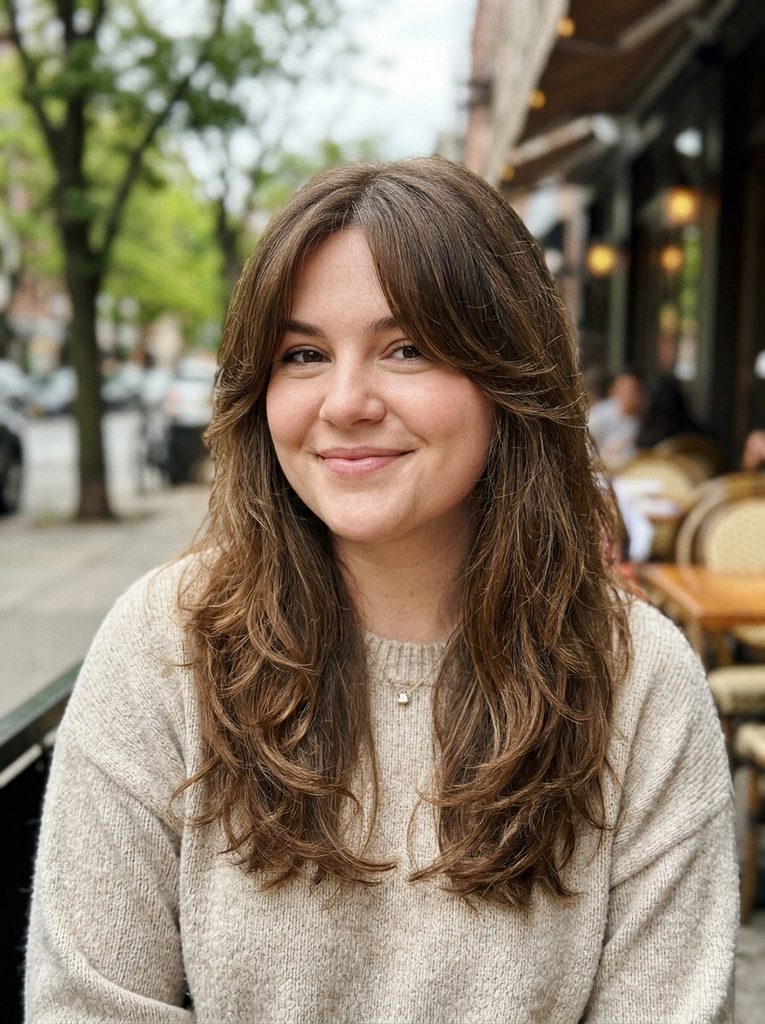
Square faces have strong corners at the forehead and jaw. The bangs can soften them. Wispy, feathered curtains work well, especially when the ends curve past the temples and move toward the jaw.
Rounded, slightly longer pieces that skim the cheekbones add curves where the face has angles. Blunt or geometric edges tend to repeat the lines that are already there. Loose waves in the face-framing hair can carry the softer effect further down.

Heart-Shaped Faces
With a wide forehead and a narrow chin, the aim is to play down the forehead and add a little fullness lower on the face. Longer, side-swept curtain bangs that start low and blend into the hair around the jaw work well. They break up the forehead width without covering it completely.
Keep the bangs light near the brow. Short, thick fringe can make the forehead look even wider. Fuller layers near the chin then give the lower half of the face more presence, which restores balance.

Diamond Faces
Diamond faces have wide, defined cheekbones and a narrower forehead and jaw. Here the bangs can add some width at the top and soften the cheekbone line. Slightly fuller curtains that start a bit higher do this well.
Pay attention to where the ends land. Bangs that finish exactly at the widest part of the cheekbones point straight at it. Ends that fall just below the cheekbones, with a slight inward curl, look softer. Light layering through the sides also stops the cheek area from standing out too much.

Long or Oblong Faces
Long faces benefit from bangs that shorten the overall look. Fuller, slightly heavier curtain bangs that sit closer to the brow do this best, particularly when they extend toward the temples. The extra width at the top breaks up the vertical line.
Very long, thin, straight pieces can stretch the face further, so they usually work against the goal. Some volume at the sides of the hair also helps. A center part with generous sweeps tends to look balanced here.

Pear or Triangle Faces
When the jaw is wider than the forehead, the bangs can build width at the top. Fuller, wider-set curtains that begin higher and extend toward the temples draw the eye upward. Ends that stop at the cheekbones, or just above the jaw, keep attention away from the widest point.
Bangs that end right at the jawline do the opposite, because they add emphasis where the face is already widest. Soft volume at the crown can support the same effect.

When Your Face Sits Between Two Shapes
Blends are common. A face can be round with a squarish jaw, or heart-shaped with high cheekbones. Instead of forcing a single label, pick the goal that matters most and combine the advice.
For a round-square blend, take the length advice from the round shape and the soft, rounded edges from the square shape. For a heart-diamond blend, take the lighter forehead coverage from heart and the slight inward curl from diamond. The result is a hybrid fringe that matches your actual face, not a textbook one.
If you cannot decide, start longer. Bangs are easy to shorten and impossible to extend, so a cautious first cut leaves room to adjust after a week or two of styling.

Forehead Height, Cowlicks, and Other Things a Face Chart Ignores
Face shape charts leave out several details that affect how bangs behave.
- Forehead height: A tall forehead usually suits fuller bangs that sit a little lower. A shorter forehead often looks better with a lighter, wispier fringe that begins further back, so it doesn’t feel crowded.
- Cowlicks: Hair that grows in a swirl at the front hairline can push bangs in an unexpected direction. Leaving the fringe slightly longer adds weight, which helps it lie flat.
- Receding temples: If the hairline sits further back at the temples, curtain bangs that start a little further back can cover the gap without looking heavy.
- Brow position: Bangs that hit right at the eyes can be irritating, especially for people with lower brows. Ending a touch above or below the lash line often feels more comfortable.
These details also explain why two people with the same face shape can leave the salon with different results. The chart is a guide, and the hairline fills in the rest.
A Length Map From Brow to Chin
Length is the single biggest dial. Here is how the main stopping points tend to read:
- Brow level: The shortest option. It looks graphic and puts the eyes in focus, and it suits oval and some long faces best.
- Eyelid or lash level: The classic length. It frames the eyes and works on most shapes, especially when the sweep is soft.
- Cheekbone level: Softer and more relaxed. It is friendly to round, square, and heart-shaped faces.
- Chin level: Barely bangs at all. They blend into face-framing layers and give a gentle effect for anyone nervous about a visible fringe.
Remember that bangs look shorter when they are dry than when they are wet. Straight styling makes them look longer, and curling or waving pulls them up. Ask for a length that works the way you plan to style them.
Parting Choices: Center, Soft Off-Center, and Everything Between
A true center part gives the symmetrical, classic curtain shape. It suits faces with balanced features and looks especially clean on oval and long shapes.
A slightly off-center part breaks up symmetry, which can flatter faces where one side differs from the other. It also changes how much forehead shows. A deeper side part turns curtain bangs into a side-swept fringe, which can be useful for heart and diamond faces.
Try a few parts at home before the cut. Your hair’s natural fall will show which direction it prefers, and that saves a lot of fighting with the fringe later.

Curtain Bangs With Different Hair Lengths
The same bangs look different depending on what surrounds them.
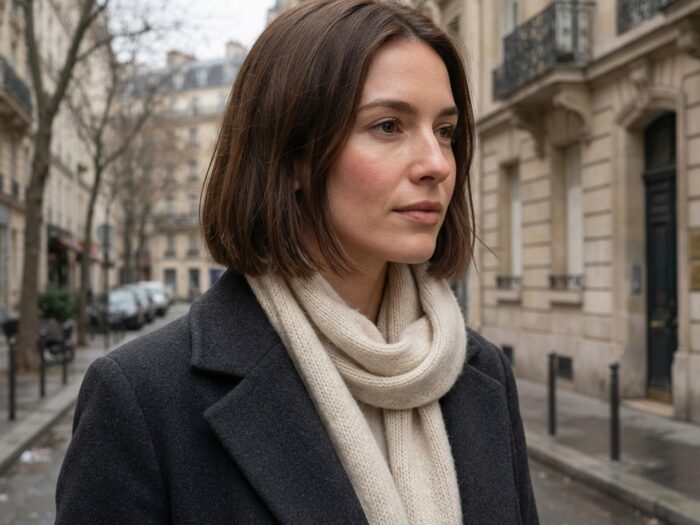
On short hair, curtain bangs blend into chin-length sides and create a soft, retro feel. A bob with this fringe is covered in more detail in the curtain fringe version of the French bob.
On mid-length hair, such as a lob, the bangs act as a bridge between the face and the length. They keep the cut from looking flat at the front.
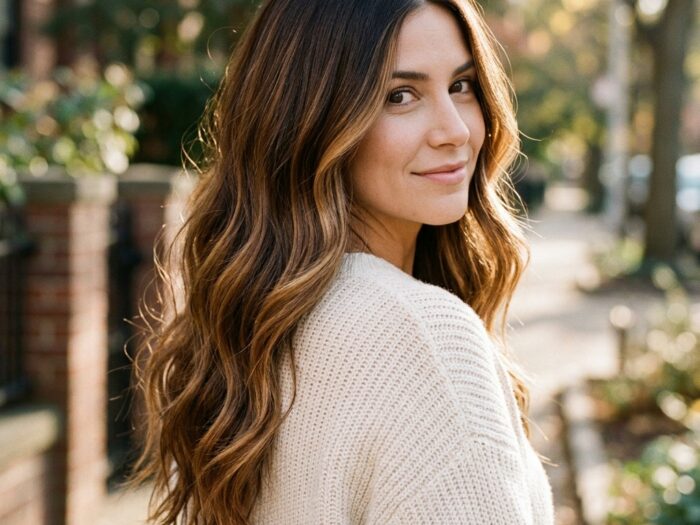
On long hair, curtain bangs can add shape without losing length. This is a popular choice for anyone who wants a change but isn’t ready for a big cut. If your hair is fine, a lighter fringe helps, and long hairstyles that make thin hair look fuller offers more ideas for adding body around the face.
Glasses, Color, and Styling Around the Fringe
Glasses can complicate bangs. Fringe that rests on the frames tends to curl up or flip at the ends. Cheekbone-length curtains pass below most frames, while very short ones may sit above them. Test a length with your glasses on before you settle.
Color changes how visible the fringe is. Lighter pieces around the face draw attention to the bangs, while a single flat shade keeps them subtle. If you’re planning a color change anyway, hair colors for fall and winter gives a sense of which tones are in rotation.
Styling matters too. A round brush, directed away from the face, gives the sweep. Skipping heavy products near the roots keeps the fringe light.

Small Mistakes That Make Bangs Look Off
A few habits cause most of the regret:
- Cutting too short too fast. A first cut that is shorter than planned is hard to fix.
- Copying a photo without checking the face. A fringe that looks soft on one face may look heavy on another.
- Ignoring the daily routine. Bangs usually need a few minutes of styling. Choose a version that matches the time you actually have.
- Skipping trims. Curtain bangs lose their shape as they grow. A quick tidy between full appointments keeps the sweep clean.
- Layering on product. Oil and heavy creams make the fringe separate into strands.
If you decide to grow them out, pin the bangs to the sides as they lengthen, and ask for small trims that blend them into the surrounding layers. The in-between stage is shorter than most people expect.
Choosing With Less Guesswork
Curtain bangs work across face shapes because they can be adjusted, not because one version fits everyone. Length, density, and sweep are the controls. Face shape tells you which way to turn them.
Start by identifying your shape, then pick the goal that matters most for your face. Longer for round, softer for square, lighter on top for heart, fuller for long. Bring a few photos to the salon, and check how the bangs look from the side and when dry. If you also like layered styles, the butterfly cut pairs naturally with curtain bangs and is worth a look.
The best fringe is the one that feels easy to wear every day. Give it a couple of weeks to settle before deciding whether it needs a change.

Ella is a fashion and beauty writer who shares inspiring ideas about hairstyles, nail designs, wedding outfits, and seasonal fashion trends. She loves discovering fresh styles and creating…
View Author Profile →