


On this page
- Start With the Collar Line
- Short Cuts That Clear the Collar
- Mid-Length Cuts That Meet the Collar
- Long Cuts That Pass the Collar
- Sleek Cuts for Textured Hair
- Keeping a Sleek Finish in Dry, Cold Air
- Pairing a Cut With the Coat It Will Live Under
- Choosing the One That Lasts Through February
- Frequently Asked Questions
Winter asks more of a haircut than any other season. Hair spends its days under beanies, against scarf wool, and brushed by coat collars, in air dry enough to make loose strands lift. A cut that looks flawless in the salon mirror can look scruffy by the time you reach the train platform.
Sleek cuts hold up better because the shape does the work instead of the styling. A clean perimeter and weight placed where the hair actually falls help it recover quickly after a hat comes off. The twelve winter haircuts for women below are sorted by one practical question: where does the hair end in relation to your collar? That detail affects how you dress, how you wear outerwear, and how much smoothing you will do each morning.

Start With the Collar Line
Every winter haircut ends up touching something: a scarf, a hood, a turtleneck, a coat collar. The point where the hair stops decides how often that contact happens. Hair that ends above the jaw rarely touches anything. Hair that ends at the shoulders meets a collar all day. Hair that falls past the shoulder blades can be tucked inside outerwear or worn over it.
Contact matters because friction and dry air work together. Cold outdoor air and heated indoor air leave hair short on moisture, and static builds easily when a hat comes off. Ends that rub a collar can also roughen, which is the opposite of sleek.
The twelve cuts here fall into four groups: short cuts that clear the collar, mid-length cuts that meet it, long cuts that pass it, and cuts built around textured hair. Each one is chosen for its shape, because a smooth finish lasts longest when the cut itself supports it.

Short Cuts That Clear the Collar
Short hair avoids most winter friction because nothing rubs the ends. The challenge sits at the crown, where hats press hair flat. These three shapes are cut to recover from that.
1. The Sleek Pixie With a Longer Top
Short at the sides and nape, with enough length on top to comb back or to one side, this pixie reads as polished rather than boyish. The longer top is the winter detail. When a beanie flattens it, a few seconds of finger combing and a pea-sized amount of smoothing cream bring it back into line.
Keep the nape tapered so the cut sits cleanly above a scarf. Ears are more exposed in this shape, so a headband or earmuffs may be more useful here than a full hat.

2. The Bixie
The bixie sits between a bob and a pixie. It is cropped around the nape, a little longer through the sides, and often finished with a long, swept fringe. For a sleek version, ask for the layers to be cut fine and close, then smooth the fringe to one side with a light serum.
Because nothing reaches the collar, hood friction stays minimal, and the short layers settle back after a hat without much help. It tends to work best on straight to slightly wavy hair.

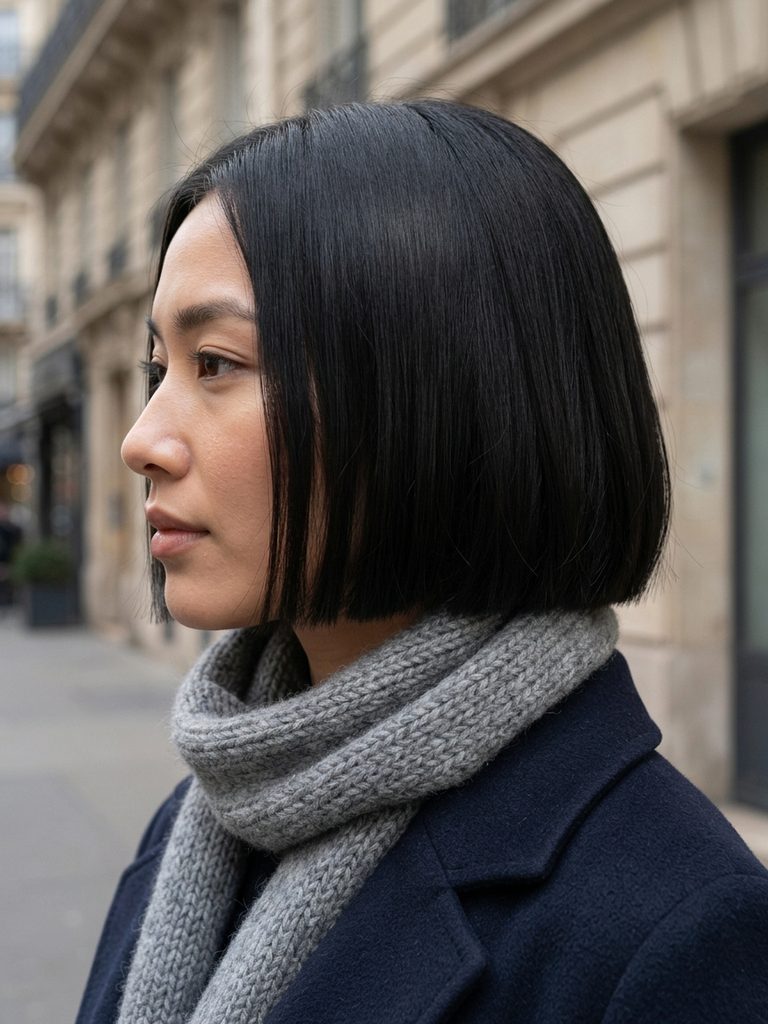
3. The Glass Bob
A glass bob is a chin-length, one-length cut with a dense, blunt edge and a high-shine finish. The straight perimeter does most of the visual work, so the cut looks sharp with a plain center or side part and nothing else. It also keeps hair above scarves and collars, which prevents the outward flick that catches many longer bobs.
A blunt edge can make fine hair look fuller, a point covered further in these bob haircuts that work for fine, flat hair. After a hat, mist the roots lightly and brush the hair back into place with a paddle brush.
Mid-Length Cuts That Meet the Collar
Shoulder length is where winter gets complicated. Ends that land on a collar tend to push outward, and the result is a flick that looks accidental. These three cuts are shaped either to curve with that contact or to work around it.
4. The Blunt Collarbone Lob
A lob that skims the collarbone is among the most versatile sleek cuts for cold months. Ask for the ends to be cut straight across, then have the stylist check how they behave when the hair rests against a coat collar. A slight inward curve, set with a round brush, keeps the ends from flicking out.
A deep side part adds structure and stops the cut from looking flat against a high neckline. It pairs especially well with open lapels and crew necks.

5. The A-Line Lob
An A-line lob is shorter at the back and a little longer at the front, usually by an inch or two. The shorter back reduces contact with collars and scarves, while the longer front pieces frame the face and lie smoothly over knitwear.
The angle gives the cut direction without any visible layering, which suits people who want shape but not texture. Keep the graduation subtle for winter. A steep angle can look severe against bulky outerwear.

6. The Turned-Under Shoulder Cut
This is a one-length cut with a lightly beveled edge, so the ends curve inward on their own. The result is a rounded, smooth finish that tolerates scarf contact, since the ends already point toward the neck. It differs from a shag, which relies on separation and movement, because this version stays calm and contained.
Blow-drying with a medium round brush and finishing with a blast of cool air helps the curve set. It is a practical choice for hair that spends most of the season wrapped in wool.

Long Cuts That Pass the Collar
Long hair can tuck into a coat or fall over it. The risk shifts from flicked ends to static and tangles, so an even, smooth shape matters more than ever.
7. The Blunt One-Length Long Cut
A long cut with a straight-across hem is the simplest sleek option, and that simplicity is the appeal. The clean line looks intentional whether the hair is worn over a coat or tucked inside it. With no layers to separate, static is easier to manage using a leave-in conditioner on the mid-lengths and ends.
If your hair is on the thinner side, a blunt hem can make the ends look fuller than a heavily layered finish. The ideas in long hairstyles that make thin hair look fuller cover how to handle the top and crown.

8. Long Hair With Invisible Layers
Invisible layers are cut inside the hair rather than on the surface, so the outline stays smooth while the weight lightens. In winter this reduces bulk where a scarf or collar presses against the hair, which makes bundling up less awkward.
Any face-framing pieces are kept long and soft, usually starting below the chin. Ask for movement that is hidden in the interior so the surface stays glossy after a hat comes off.

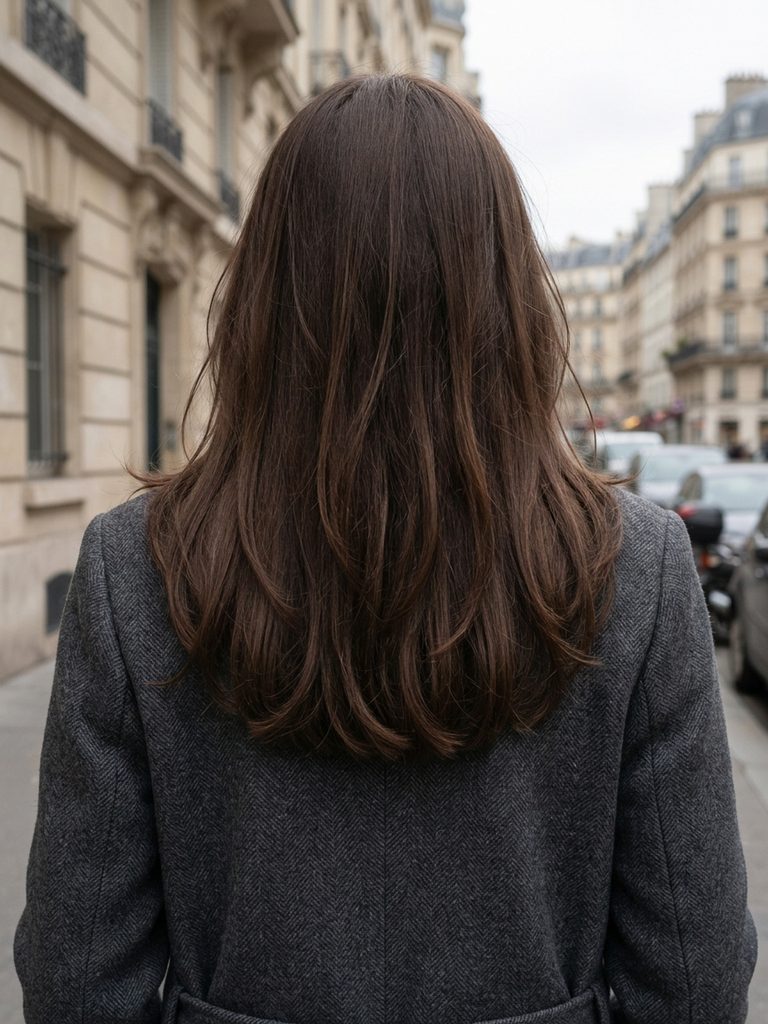
9. The Soft U-Shape
A soft U-shape rounds the back of long hair so the center falls slightly longer than the sides, without forming a sharp point. When the hair is pulled over a coat collar, the shape settles into a neat curve instead of a hard horizontal line. It also looks tidy when worn down over a thick scarf.
Keep the curve gentle. A deep V can look dramatic, but it may need more frequent trims to hold its point.
Sleek Cuts for Textured Hair
Smooth finishes behave differently on coily and curly textures, so these three are built around textured hair instead of adapting straight-hair cuts. The shared idea is a clear shape first, with polish added through finishing.
10. The Silk-Press Lob
A silk press smooths textured hair with heat, and a lob length keeps the result light and swingy at the shoulders. The cut is usually blunt, with the stylist trimming after the press so the ends hang evenly.
Heat is the trade-off. It helps to ask your stylist how often a repeat press is reasonable and to use a heat protectant each time. On days between presses, softer low-heat styles give the hair a break.

11. The Sleek Tapered Crop
A tapered crop keeps the sides and nape short and neat while leaving the top a little longer, with the natural curl or coil pattern intact. Clean edges give it the sleek look, since the sharp outline contrasts with the soft texture on top.
The cut sits well above scarves and under hats. A defined top usually bounces back after a hat with a light spritz of water and a conditioning cream. Regular edge-ups keep the outline crisp.

12. Gloss-Defined Curls at the Collarbone
Here the sleek effect comes from definition rather than straightness. The cut is shaped round and even, ideally trimmed dry so the stylist can see where each curl lands. A cream followed by a light gel gives a smooth, shiny cast once any stiffness is scrunched out.
Hats with a smooth lining may limit friction against the curl pattern. If a high collar bothers the curls, ask for the length to land slightly above it.

Keeping a Sleek Finish in Dry, Cold Air
A well-cut shape can still lose its smoothness if the hair itself is dry. Cleveland Clinic’s winter hair guide explains that static appears when moisture cannot penetrate the strands, which dry winter air and product buildup both make more likely. Keeping hair moisturized is the main fix, because hydrated hair is heavier and less prone to lifting.
A few habits support that:
- Use a conditioner suited to your hair type after every wash, plus a leave-in on the mid-lengths and ends.
- Brush with a wide-tooth brush, starting at the ends and working upward.
- Wait until hair is less damp before combing, since wet strands are more fragile.
- Limit hot tools where possible, and air dry when the schedule allows.
Ponytails under a hat deserve one more note. The same guide advises choosing fabric-covered bands over rubber ones, since rubber can cause breakage, particularly on fine or color-treated hair.
Blunt edges show split ends quickly, so trim timing matters for these cuts. The guide suggests trims at roughly six-week intervals to remove damaged ends, though your stylist can judge the right rhythm for your hair. For extra shine between appointments, a clear gloss adds light without changing the shade, and the fall and winter hair colors guide explains how glossing fits into color upkeep.

Pairing a Cut With the Coat It Will Live Under
A haircut spends most of the season next to outerwear, so it helps to match the two. Hoods press the crown and push long hair forward. High collars catch length. Open lapels leave the neckline free for a lob.
- Hooded parka: a bixie, a glass bob, or the turned-under shoulder cut, since all three recover quickly after the hood comes down.
- Funnel-neck or high-collar coat: a soft U-shape or invisible layers, tucked inside the collar or lifted out in one motion.
- Notch-lapel overcoat: the blunt collarbone lob or the A-line lob, which sit neatly against tailored collars.
- Chunky knit scarf: a sleek pixie, a tapered crop, or a glass bob, which stay clear of bulky wool.
Coat length changes the overall proportions too, and the guide to long winter coat outfits shows how midi and maxi hems balance a look from head to toe.
Choosing the One That Lasts Through February
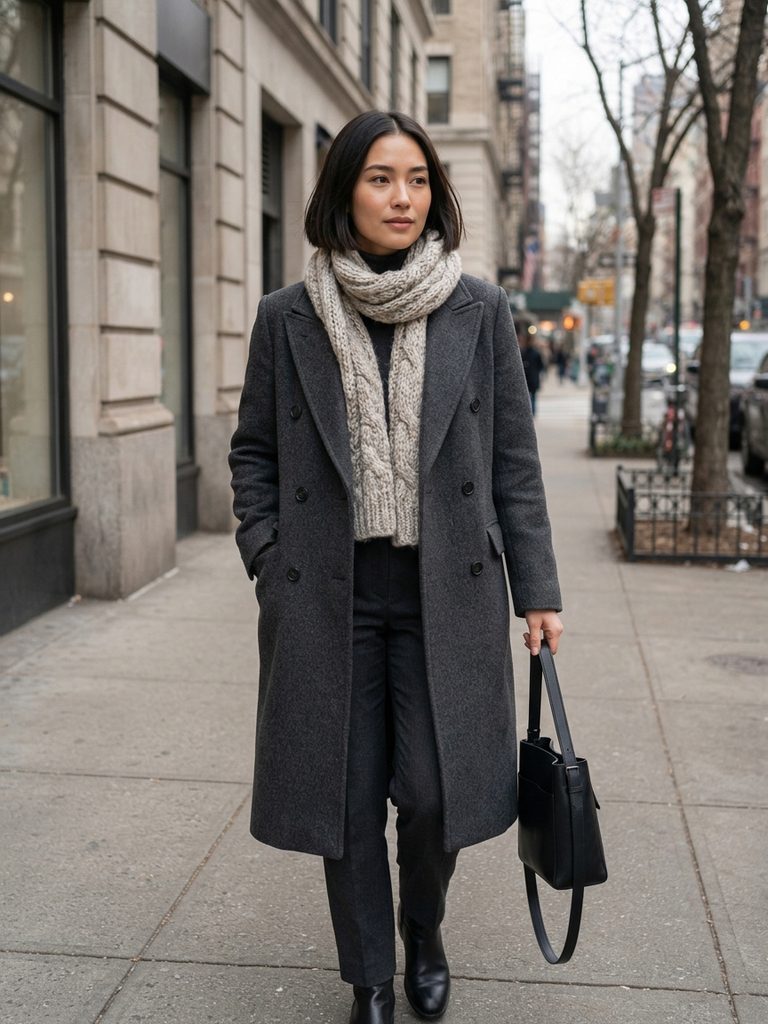
A haircut has to survive the worst day of its season, not the best one. Picture a gray Tuesday with a hat, a scarf, and an overheated office. If the cut looks acceptable in that scenario, it will look excellent on the easy days.
Use that test as a filter. Decide which collar zone suits your routine, then choose the shape that handles friction best in that zone. Finish matters last, because gloss, cream, and a good brush can be adjusted week by week, while length cannot.
Frequently Asked Questions
What is the best haircut for winter?
There is no single best option, but blunt, cleanly shaped cuts tend to hold up well in cold weather. A glass bob, a blunt lob, or a one-length long cut keeps a smooth outline even after hats and scarves.
Are short or long haircuts better for winter?
Both work. Short cuts clear the collar and avoid scarf friction, while long hair can tuck into a coat for warmth. The better choice depends on how much styling and static control you want.
How do I stop hat hair from ruining a sleek cut?
Choose a shape that recovers easily, such as a bixie or a turned-under lob. After removing a hat, mist the roots lightly, then brush or finger comb the hair back into place. A hat with a smooth lining may also reduce friction.
How often should I trim a sleek winter cut?
Cleveland Clinic’s winter hair guide suggests trims at about six-week intervals to remove damaged ends. Blunt cuts show wear faster than layered ones, so ask your stylist what schedule fits your hair.
Can fine hair wear a blunt winter cut?
Yes. A blunt edge can make fine hair look denser at the ends. Keep the length at the chin or collarbone and avoid heavy products that weigh the hair down.
Do sleek cuts need a lot of heat styling?
Not necessarily. Many of these shapes rely on the cut itself, so a brief blow-dry with a round brush or an air-dry with a smoothing cream is often enough. Limiting heat is generally kinder to hair in dry winter air.

Ella is a fashion and beauty writer who shares inspiring ideas about hairstyles, nail designs, wedding outfits, and seasonal fashion trends. She loves discovering fresh styles and creating…
View Author Profile →




1 Comment