

On this page
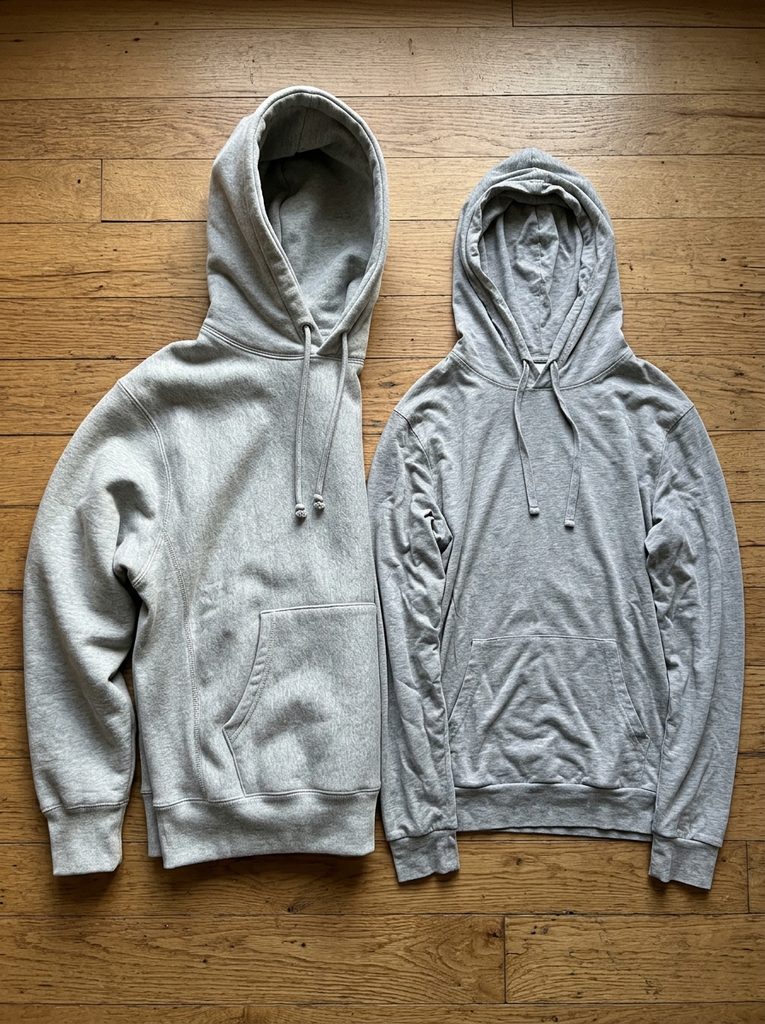
Pick up two hoodies that look identical on the rack, and one of them will feel heavier. Turn them inside out and the gap grows. One has seams that lie flat and ribbing that snaps back. The other has loose stitching and a hood that already droops.
That gap is what a higher price is meant to cover, though it does not always do so. This guide to the best hoodies for women sorts ten premium picks by what the money actually buys: fabric, construction, and fit. Each pick comes with what to look for, what to wear with it, and the trade-offs that come with it. Whether any of them is worth the spend depends on budget and how often it will be worn.

What the Extra Money Actually Buys
A hoodie is a simple garment, so there is nowhere to hide. Three things separate a premium one from an ordinary one.
Fabric. Weight, fiber, and finish decide how a hoodie feels and how it ages. Fabric weight is often given in grams per square meter, shortened to gsm. A higher number means a thicker, denser cloth. Heavy is not always better, since a very heavy hoodie can feel stiff indoors. Still, the number is a handy way to compare two hoodies that look alike.
Build. This covers stitching, seams, ribbing, and hood shape. Good construction rarely draws attention. It shows up as a collar that stays put, cuffs that do not stretch out, and a hem that does not ride up.
Fit. A well-cut hoodie has proportions that were planned, not just scaled up. The shoulder drop, sleeve length, and body width all relate to each other. Cheap oversized hoodies are often a standard cut in a bigger size, and the difference shows in the sleeves and hem.
The ten picks below follow this order. Four lean on fabric, three on construction, and three on fit.
Picks Built Around Fabric
These hoodies earn their place through what they are made of. The fabric changes how they feel against the skin, how they hang, and how they look after many washes.
1. The Heavyweight Loopback Cotton Hoodie
Loopback is the classic hoodie fabric. The outside is smooth, and the inside has tiny loops of yarn, which hold warmth and give the cloth body. In heavyweight versions, often starting somewhere around 400 gsm, the fabric hangs straight and keeps its shape instead of clinging.
Expect a firm feel at first. These hoodies soften with wear, and the shape stays clean. They suit straight trousers, dark jeans, and long coats. The trade-off is weight and drying time, so a heavyweight loopback is better for cold days than for mild ones.
2. The Brushed Organic Cotton Fleece Hoodie
Organic cotton is grown without synthetic pesticides, and many premium hoodies use it for that reason. In fleece form, the inside is brushed to create a soft, fuzzy surface, which feels gentle against the skin.
Look for a dense brush that sits evenly, with no bald patches near the underarms. Longer cotton fibers tend to pill less than short ones, so a label that mentions long-staple cotton is a good sign. This pick works well for relaxed weekends and travel days. A mid-weight fleece also layers easily under a coat.
3. The Merino Wool Knit Hoodie
Here the hoodie moves from sweatshirt territory into knitwear. Merino wool has fine fibers that feel softer than coarse wool, and it breathes well. It also resists odor, so a merino hoodie can be worn several times between washes.
The surface looks refined, almost like a cardigan with a hood. That makes it a good fit for wearing under a blazer or a wool coat. Wash it gently, according to the label, and dry it flat. This is the most delicate pick on the list, though it is also the one that looks the most polished.
4. The Cashmere-Blend Hoodie
Cashmere comes from the soft undercoat of cashmere goats. Pure cashmere is delicate, so many hoodies blend it with wool or cotton for durability. The blend keeps most of the softness and adds strength.
The result is light, warm, and quiet in color. Oatmeal, grey, and soft navy suit it best. Because the fibers are fine, friction from bag straps and seat belts can cause pilling, so gentle handling helps. A cashmere-blend hoodie suits calm, dressed-down days where softness counts more than toughness.

Picks Built Around Construction
These hoodies look simple, yet the work happens in places that are easy to miss. They tend to last longer and sit better.
5. The Garment-Dyed Hoodie
In garment dyeing, the hoodie is sewn first and colored afterward. The seams, thread, and fabric take the dye slightly differently, which gives a soft, lived-in tone. No two pieces look exactly alike, and colors such as faded olive, clay, or washed black have a natural depth.
The finish tends to look broken in from day one. It suits casual outfits best, since the softened color leans relaxed. One practical point: dye can bleed in the first few washes, so washing it separately is a sensible step.
6. The Flatlock-Seam Reinforced Hoodie
A flatlock seam lies flat against the fabric instead of forming a ridge. This reduces rubbing on the shoulders and under the arms, and it gives the hoodie a smooth, even look from the outside.
Reinforced stress points add to it. These include tape along the neck seam, extra stitching at pocket corners, and gussets under the arms. Ribbing that contains a little stretch fiber keeps cuffs and hems snug after many wears. None of this is flashy. It is simply what keeps a hoodie from looking tired after one season.
7. The Structured Three-Panel Hood Hoodie
The hood is the most common weak point. A cheap one flops, folds, or twists. A well-made one is cut from multiple panels and often doubled, so it keeps a rounded shape whether it is up or down.
Check for metal eyelets, a flat or round cord that lies tidy, and a seam that follows the curve of the head. When folded down, the hood should sit as a soft cowl behind the neck. That shape also helps under a coat collar, which is worth thinking about when choosing among the best winter coats for women.

Picks Built Around Fit
A great fabric still looks wrong when the shape is off. These three picks lean on cut and proportion.
8. The Boxy Cropped Zip Hoodie
A cropped hoodie ends at the waist or just below. The best versions have a boxy body, a heavy metal zipper, and a hem band with enough weight to sit flat. They pair neatly with high-rise trousers, midi skirts, and long skirts, since the hem meets the waistband cleanly.
Test the zipper. It should glide without waves along the front, and the zip tape should not pucker. A thin zip is one of the first things to give out on a cropped style. This pick works best for anyone who prefers visible waistlines.
9. The Oversized Drop-Shoulder Hoodie
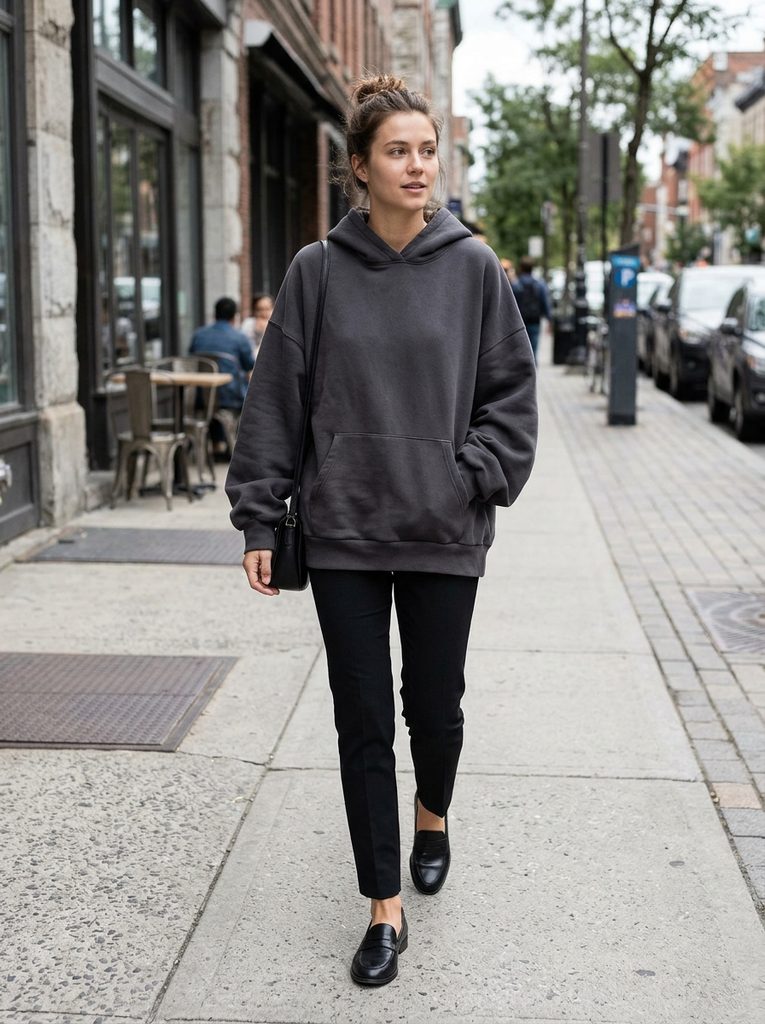
Oversized works when the proportions are planned. The shoulder seam drops on purpose, the sleeves run long with a snug cuff, and the body is wide without growing wider at the hem. Cheaper versions often look like a larger size, with sleeves that hang past the fingers and a body that balloons.
This is the pick for layering over fitted pieces. For plenty of ways to wear it, the guide to hoodie outfits for women covers pairings with trousers, skirts, and coats. A slim bottom half keeps the proportions in check.
10. The Quarter-Zip Funnel-Neck Hybrid
This style sits between a hoodie and a pullover. It has a short zip at the chest, a tall funnel collar, and sometimes a small hood. The zip gives quick temperature control, and the high collar adds warmth around the neck.
It suits travel days particularly well, since it adjusts from a cold terminal to a warm cabin. The layering ideas in these chic airport outfits for long flights in cold weather fit it nicely. Because the neckline is tidy, it also looks neater under jackets than a standard hoodie.
Which Pick Suits Which Habit
Sometimes the simplest route is to start with how the hoodie will be used. A quick map helps.
- Cold daily commutes: the heavyweight loopback (1) or the structured hood style (7).
- Soft, quiet weekends: the brushed organic fleece (2) or the cashmere blend (4).
- Dressier settings: the merino knit hoodie (3), which sits under blazers and coats without bulk.
- A relaxed, worn-in look: the garment-dyed style (5).
- Heavy rotation, frequent washing: the flatlock reinforced hoodie (6).
- High-waisted outfits: the cropped zip (8).
- Layering over fitted clothes: the oversized drop-shoulder (9).
- Travel and shifting temperatures: the quarter-zip hybrid (10).
Most closets only need one or two of these. A pair that covers both cold days and calm days is plenty.
Checks to Run Before Paying a Premium
A few quick tests work in a shop or at home with a returned parcel. They take a minute each.
The stretch test. Pull the cuff gently and release. The ribbing should snap back. If it stays loose, it will only get worse.
The light test. Hold the fabric up toward a window. A dense cloth blocks most light, while a thin one shows the weave.
The inside-out check. Turn the hoodie inside out. Seams should be even, with no loose threads, and the inner surface should look consistent.
The hood check. Lay the hoodie flat. The hood should lie symmetrically, with the cord holes at matching heights.
The label read. Look at fiber content and, if listed, fabric weight. A premium label usually says more, not less, about what the hoodie is made of.
Keeping a Good Hoodie Looking Good
Premium fabric benefits from a little extra care.
- Wash inside out, with similar colors, in cool water.
- Skip heavy fabric softener, which can coat fibers and flatten the surface.
- Dry flat or on low heat, since high heat can warp ribbing.
- Remove pilling gently with a fabric shaver once the surface looks fuzzy.
- Fold it for storage instead of hanging it, so the shoulders do not stretch.
For wool and cashmere blends, follow the label first. Hand washing and flat drying are common instructions.
A Good Hoodie Rewards Attention
The best hoodies for women do not shout about being premium. They show it in the way they hang, the way the hood sits, and the way the fabric looks after the twentieth wash.
Start with the pick that matches the way the hoodie will be used most often. Check the fabric, the seams, and the hood before anything else. A few small details tell the story, and once they are spotted, comparing two hoodies becomes much easier.

Ella is a fashion and beauty writer who shares inspiring ideas about hairstyles, nail designs, wedding outfits, and seasonal fashion trends. She loves discovering fresh styles and creating…
View Author Profile →